Kirjojen hintavertailu. Mukana 12 016 292 kirjaa ja 12 kauppaa.

Kirjahaku

Etsi kirjoja tekijän nimen, kirjan nimen tai ISBN:n perusteella.

1000 tulosta hakusanalla David Musick

Stuart Davis (Musician)

Stuart Davis (Musician)

VDM Publishing House
2010
nidottu
Observera att förlaget som ger ut denna produkt baserar innehållet i sina produkter på fria källor som Wikipedia. Boken är med stor sannolikhet endast ett utdrag ur dessa informationskällor, alltså inte en vanlig bok i den bemärkelsen.
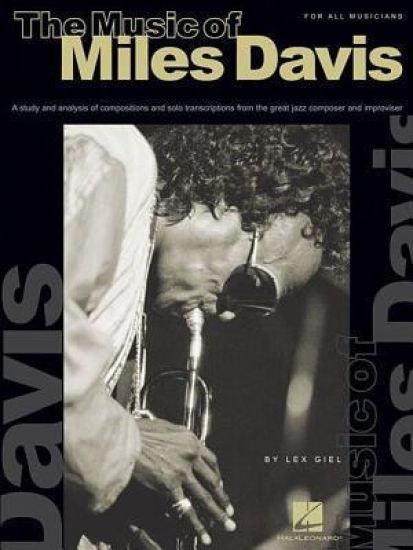
The Music of Miles Davis: A Study & Analysis of Compositions & Solo Transcriptions from the Great Jazz Composer and Improvisor
(Jazz Instruction). A complete musical analysis of one of the greatest jazz masters of all time. This comprehensive text studies and analyzes the works, provides transcriptions of the solos, and much more. For all music enthusiasts. Songs covered include: All Blues * Four * Freddie Freeloader * My Funny Valentine * Nardis * So What * Solar * Stella by Starlight * Tune Up * and more
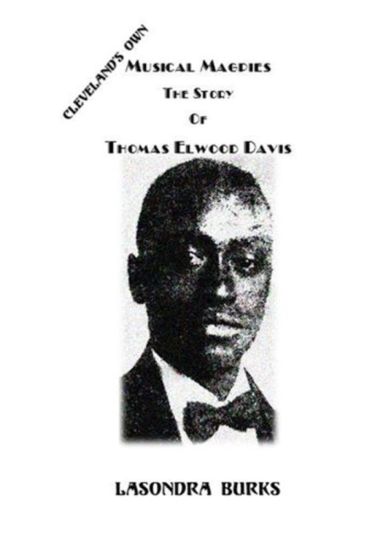
Musical Magpies The Story of Thomas Elwood Davis
Thomas Elwood Davis was born in Mount Pleasant Ohio and grew up in Cadiz, Ohio. He made his way to Cleveland Ohio and teamed up with John Sherman Copeland. In 1917 the two created one of the best musical groups out of Cleveland. The Musical Magpies entertained in 48 states and Canada. They made people of all nationalities dance in clubs, hotels, halls, parks, and even the Cleveland Rams football games. They were on many radio shows from various stations. They were also recording artists They recorded their vaudeville music for Victor Records. The Musical Magpies entertained and had a musical career that lasted 40 years.
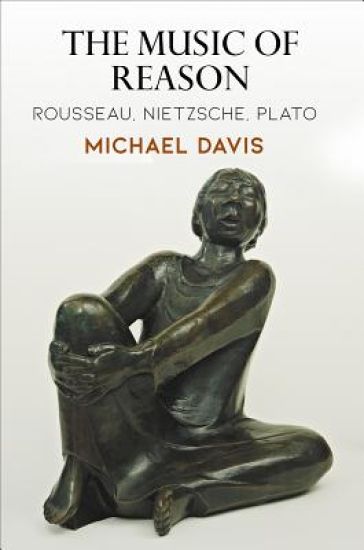
The Music of Reason

The Music of Reason

Michael Davis

University of Pennsylvania Press
2019
sidottu
In recent years, the field of cognitive psychology has begun to explore the rootedness of rational thinking in subrational inspiration, insight, or instinct-a kind of prediscursive hunch that leaps ahead and guides rational thought before the reasoning human being is even aware of it. In The Music of Reason, Michael Davis shows that this "musical" quality of thinking is something that leading philosophers have long been aware of and explored with great depth and subtlety. Focusing on the work of three thinkers traditionally viewed as among the most poetic of philosophers-Rousseau, Nietzsche, and Plato-Davis reveals the complex and profound ways in which they each plumbed the depths of reason's "prerational" foundations. Davis first examines Rousseau's Essay on the Origins of Languages: Where Something Is Said About Melody and Musical Imitation and Nietzsche's The Birth of Tragedy Out of the Spirit of Music to demonstrate that revealing the truth, or achieving individual enlightenment, requires poetic techniques such as irony, indirection, and ambiguity. How philosophers say things is as worthy of our attention as what they say. Turning to Plato's Lesser Hippias, Davis then reconsiders the relation between truth-telling and lying, finding the Platonic dialogue to be an artful synthesis of music and reason. The "ancient quarrel between philosophy and poetry" that Plato placed near the core of this thinking suggests a tension between the rational (scientific) and the nonrational (poetic), or between the true and the beautiful-the one clear and definite, the other allusive and musical. Contemplating language in Rousseau, the Dionysian in Nietzsche, and playfulness in Plato, The Music of Reason explores how what we might initially perceive as irrational and so antithetical to reason is, in fact, constitutive of it.
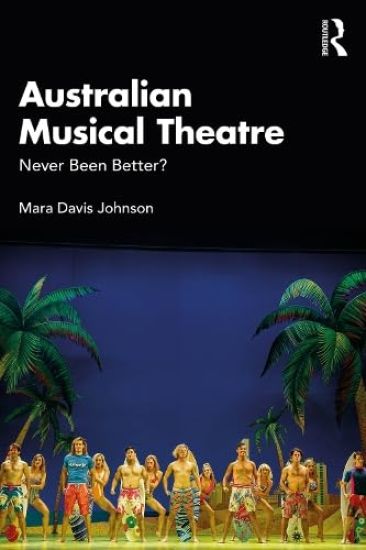
Australian Musical Theatre

Australian Musical Theatre

Mara Davis Johnson

TAYLOR FRANCIS LTD
2025
nidottu
Australian Musical Theatre: Never Been Better? is the first sustained scholarly analysis of the Australian musical in the twenty-first century. In the past, the Australian musical has been much maligned: plagued by the sceptre of ‘The Great Australian Musical’ and dogged by recurring concerns about the content and quality of the genre. In this book, Mara Davis Johnson assesses these concerns and argues that they are unfounded. Through detailed analysis of six musicals, she showcases the breadth and diversity of contemporary Australian musical theatre productions. The book demonstrates how these performances stage a repertory of tropes, characters, places, stories, fixations, and myths that produce a national imaginary for Australia. Methodologically, the book takes a holistic and multi-disciplinary approach that honours the hybrid nature of the musical and its broad cultural appeal. This makes for an accessible, wide-ranging discussion that will appeal to scholars in diverse fields. The book will be an essential resource for scholars and students of musical theatre, theatre and performance studies, and Australian cultural studies and history.
Australian Musical Theatre

Australian Musical Theatre

Mara Davis Johnson

TAYLOR FRANCIS LTD
2025
sidottu
Australian Musical Theatre: Never Been Better? is the first sustained scholarly analysis of the Australian musical in the twenty-first century. In the past, the Australian musical has been much maligned: plagued by the sceptre of ‘The Great Australian Musical’ and dogged by recurring concerns about the content and quality of the genre. In this book, Mara Davis Johnson assesses these concerns and argues that they are unfounded. Through detailed analysis of six musicals, she showcases the breadth and diversity of contemporary Australian musical theatre productions. The book demonstrates how these performances stage a repertory of tropes, characters, places, stories, fixations, and myths that produce a national imaginary for Australia. Methodologically, the book takes a holistic and multi-disciplinary approach that honours the hybrid nature of the musical and its broad cultural appeal. This makes for an accessible, wide-ranging discussion that will appeal to scholars in diverse fields. The book will be an essential resource for scholars and students of musical theatre, theatre and performance studies, and Australian cultural studies and history.
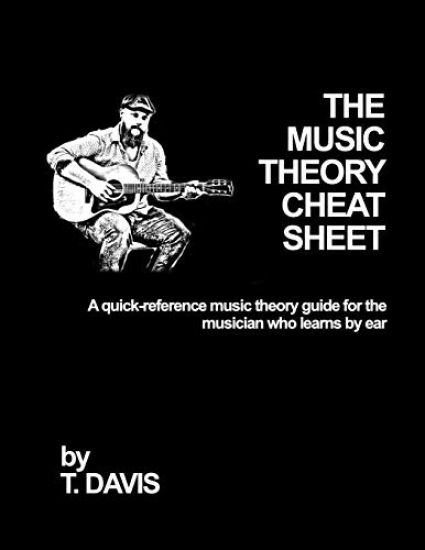
The Music Theory Cheat Sheet: A Quick-Reference Music Theory Guide for the Musician Who Learns by Ear
The Music Theory Cheat Sheet was created primarily to help everyday musicians, songwriters, and composers quickly and efficiently learn the relationship between the modes of the major, natural minor, jazz minor (melodic minor), and harmonic minor scales, as well as have a readily-accessible view of all the modes of these scales in one place. When I was first introduced to modes they were shown to me based on the key of C major. While this was a helpful first step, I found it to be a very limited representation of how the modes interact. Without seeing them all in relationship to each other, and without reference material that placed them side-by-side in every key, it was hard to begin applying them to my compositions and performances.Enter... The Music Theory Cheat SheetIn the first section of TMTCS readers will find individual pages each with a chart dedicated to the major, natural minor, jazz minor and harmonic minor scales. Contained in each chart are the seven modes of the scale in every key -- beginning with C and ordered chromatically. Each mode contains the chord of each scale degree with the first extension (or seventh), as well as the notes contained within each chord. This section concludes with a chart containing every mode of the Major Scale in every key ordered by the Circle of Fifths.The second section of TMTCS contains a series of pages each with an individual chord progression with the chords listed in order in every key -- beginning with C and ordered chromatically. This section begins with simple, common chord progressions found in popular music and gradually gets more advanced, with chord progressions commonly found in jazz. Each chord listed includes the name of the chord, as well as the notes contained in the chord up to the seventh. Finally, there is a chart at the very end of the book containing all the Secondary Dominant and Secondary Diminished Seventh Resolutions in every key. It is my hope that this quick-reference guide will serve as a helpful tool for musicians of all skill levels, allowing them to incorporate a working knowledge of the modes and chord progressions contained in this book into their own work.
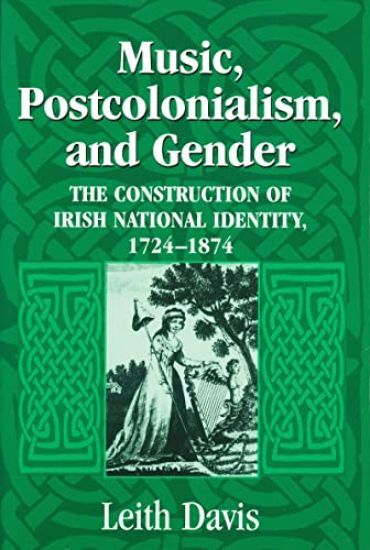
Music, Postcolonialism, and Gender

Music, Postcolonialism, and Gender

Leith Davis

University of Notre Dame Press
2005
sidottu
In Music, Postcolonialism, and Gender, Leith Davis studies the construction of Irish national identity from the early eighteenth until the mid-nineteenth centuries, focusing in particular on how texts concerning Irish music, as well as the social settings within which those texts emerged, contributed to the imagining of Ireland as "the Land of Song." Through her considerations of Irish music collections by the Neals, Edward Bunting, and George Petrie; antiquarian tracts and translations by Joseph Cooper Walker, Charlotte Brooke, and James Hardiman; and lyrics and literary works by Sidney Owenson, Thomas Moore, Samuel Lover, and Dion Boucicault, Davis suggests that music served as an ideal means through which to address the ambiguous and ever-changing terms of the colonial relationship between Ireland and England. Davis also explores the gender issues so closely related to the discourses on both music and national identity during the time, and the influence of print culture and consumer capitalism on the representation of Irish music at home and abroad. She argues that the emergence of a mass market for culture reconfigured the gendered ambiguities already inherent in the discourses on Irish music and identity. Davis's book will appeal to scholars within Irish studies, postcolonial studies, gender studies, print culture, new British history, eighteenth- and nineteenth-century studies, and ethnomusicology.
Music, Postcolonialism, and Gender

Music, Postcolonialism, and Gender

Leith Davis

University of Notre Dame Press
2005
nidottu
In Music, Postcolonialism, and Gender, Leith Davis studies the construction of Irish national identity from the early eighteenth until the mid-nineteenth centuries, focusing in particular on how texts concerning Irish music, as well as the social settings within which those texts emerged, contributed to the imagining of Ireland as "the Land of Song." Through her considerations of Irish music collections by the Neals, Edward Bunting, and George Petrie; antiquarian tracts and translations by Joseph Cooper Walker, Charlotte Brooke, and James Hardiman; and lyrics and literary works by Sidney Owenson, Thomas Moore, Samuel Lover, and Dion Boucicault, Davis suggests that music served as an ideal means through which to address the ambiguous and ever-changing terms of the colonial relationship between Ireland and England. Davis also explores the gender issues so closely related to the discourses on both music and national identity during the time, and the influence of print culture and consumer capitalism on the representation of Irish music at home and abroad. She argues that the emergence of a mass market for culture reconfigured the gendered ambiguities already inherent in the discourses on Irish music and identity. Davis's book will appeal to scholars within Irish studies, postcolonial studies, gender studies, print culture, new British history, eighteenth- and nineteenth-century studies, and ethnomusicology.
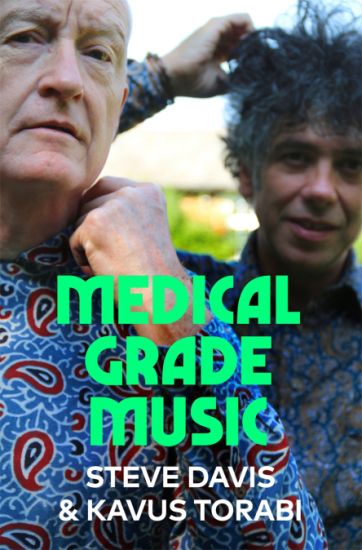
Medical Grade Music

Medical Grade Music

Steve Davis; Kavus Torabi

White Rabbit
2021
sidottu
The story of two outsiders and obsessives whose collision prompted an evangelistic alliance on the furthest frontiers of underground music.Steve Davis first met Kavus Torabi - guitarist with Gong, Guapo, Cardiacs and Knifeworld - in the mid-2000's at a gig by French underground rock legends Magma. Over the next few years, this unlikely duo's shared affinity for visionary psychedelic music would become the foundation of not only a firm friendship, but also the most infectiously inclusive broadcasting style since the much-mourned death of John Peel. In their weekly radio shows and a one-of-a-kind live DJ roadshow which included a legendary appearance at Glastonbury, Steve and Kavus mapped out a musical landscape of rare enchantment, where the only passport needed was a pair of open ears. No-one, least of all Davis and Torabi themselves, was expecting the 6-time former World Snooker champion and a British-Iranian underground rock musician to become one of the most trusted brands in British alternative music.As Steve and Kavus were starting to get to grips with the challenge of their newfound status, events took a further unexpected turn. Suddenly they found themselves in a band together. And not just any band ... as two thirds of Britain's (if not the world's) leading harmonium, guitar and analogue synth power-trio (with Michael J.York of Coil)The Utopia Strong, the two friends found themselves plunging into a vortex of spontaneous compositional excitement. How Steve and Kavus pulled this off is just one of the many questions MEDICAL GRADE MUSIC will try to answer. Part sonic memoir, part Socratic dialogue, part gonzo mission to the heart of what makes music truly psychedelic this book is the first work of joint autobiography to ever trace the evolution of a life-changing friendship through the discographies of Gentle Giant and Voivod. From the chip-shops of Plumstead to the the wildest shores of Plymouth's nineties thrash scene. it's a funny and fearless buddy movie of the soul, with a soundtrack that will make your eyes bleed.