Kirjojen hintavertailu. Mukana 11 699 587 kirjaa ja 12 kauppaa.

Kirjahaku

Etsi kirjoja tekijän nimen, kirjan nimen tai ISBN:n perusteella.

1000 tulosta hakusanalla Deborah Cook

Complete Mathematics for Cambridge Lower Secondary Teacher Pack 2 (First Edition)
The Complete Mathematics 2 Teacher Pack provides support for the previous Cambridge Lower Secondary Mathematics curriculum. The pack is written by an experienced author and supports teachers in delivering the curriculum. It includes customisable digital exercises, extension work to stretch students, progression test to develop learners' confidence and answers for the Student Book and Homework Book.
The Myth of Mars and Venus

The Myth of Mars and Venus

Deborah Cameron

Oxford University Press
2007
sidottu
Popular assumptions about gender and communication - famously summed up in the title of the massively influential 1992 bestseller 'Men Are From Mars, Women Are From Venus' - can have unforeseen but far-reaching consequences in many spheres of life, from attitudes to the phenomenon of 'date-rape' to expectations of achievement at school, and potential discrimination in the work-place. In this wide-ranging and thoroughly readable book, Deborah Cameron, Rupert Murdoch Professor of Language and Communication at Oxford University and author of a number of leading texts in the field of language and gender studies, draws on over 30 years of scientific research to explain what we really know and to demonstrate how this is often very different from the accounts we are familiar with from recent popular writing. Ambitious in scope and exceptionally accessible, The Myth of Mars and Venus tells it like it is: widely accepted attitudes from the past and from other cultures are at heart related to assumptions about language and the place of men and women in society; and there is as much similarity and variation within each gender as between men and women, often associated with social roles and relationships. The author goes on to consider the influence of Darwinian theories of natural selection and the notion that girls and boys are socialized during childhood into different ways of using language, before addressing problems of 'miscommunication' surrounding, for example, sex and consent to sex, and women's relative lack of success in work and politics. Arguing that what linguistic differences there are between men and women are driven by the need to construct and project personal meaning and identity, Cameron concludes that we have an urgent need to think about gender in more complex ways than the prevailing myths and stereotypes allow.
The Teacher's Guide to Grammar

The Teacher's Guide to Grammar

Deborah Cameron

Oxford University Press
2007
nidottu
The Teacher's Guide to Grammar is unique in focusing directly on the aspects of grammar that teachers need to know. Assuming little or no formal linguistic education, this concise and accessible book provides the necessary background knowledge required in the classroom context. There are detailed chapters on the nuts and bolts of language: words, morphology, sentences, phrases, verbs, and clauses. Other important educational issues concerned in the teaching of English are discussed: the grammatical variation that differentiates standard and non-standard English; how grammar varies in relation to the purpose and audience of a text; and the different grammatical characteristics of different languages. Throughout, illustrations are given using examples from the real spoken and written language produced by learners. Here are the essentials every English and literacy teacher needs to know about grammar in one practical and relevant guide.
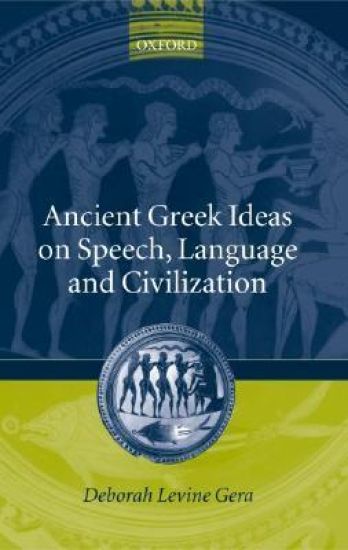
Ancient Greek Ideas on Speech, Language, and Civilization

Ancient Greek Ideas on Speech, Language, and Civilization

Deborah Levine Gera

Oxford University Press
2003
sidottu
The source and nature of earliest speech and civilization are puzzles which have intrigued people for many centuries. This study explores ancient Greek views on the source and nature of the world's first society and first language. Two of the book's chapters are based on close readings of passages in Homer and Herodotus, while the remaining chapters are broader surveys of a variety of Greek literary texts. Topics covered include the nature of the language used both by men and animals in the idyllic golden age, accounts of humans' ascent to civilized life and their acquisition of language, and exotic creatures and peoples who have only limited linguistic capacities. Discussions of Enlightenment thinkers and modern theories of glottogenesis and language acquisition set Greek assumptions in a wider perspective.
Handel's Israelite Oratorio Libretti

Handel's Israelite Oratorio Libretti

Deborah W. Rooke

Oxford University Press
2012
sidottu
Handel's Israelite oratorios are today little known among non-specialists, but in their own day they were unique, pioneering and extremely popular. Dating from the period 1732-1752, they combine the musical conventions of Italian opera with dramatic plots in English that are adaptations of Old Testament narratives. They constitute a form of biblical interpretation, but to date, there has been no thoroughgoing study of the theological ideas or the attitudes towards the biblical text that might be conveyed in the oratorios' libretti. This book aims to fill that gap from an interdisciplinary perspective. Combining the insights of present-day biblical studies with those of Handelian studies, Deborah W. Rooke examines the libretti of ten oratorios - Esther, Deborah, Athalia, Saul, Samson, Joseph and his Brethren, Judas Macchabaeus, Solomon, Susanna and Jephtha - and evaluates the relationship between each libretto and the biblical story on which it is based. Rooke comments on each biblical text from a modern scholarly perspective, and then compares the modern interpretation with the version of the biblical narrative that appears in the relevant libretto. Where the libretto is based on a prior dramatic or literary adaptation of the biblical narrative, she also discusses the prior adaptation and how it relates to both the biblical text and the corresponding oratorio libretto. In this way the distinctive nuances of the oratorio libretti are highlighted, and each libretto is then analysed and interpreted in the light of eighteenth-century religion, scholarship, culture and politics. The result is a fascinating exploration not only of the oratorio libretti but also of how culture and context determines the nature of biblical interpretation.
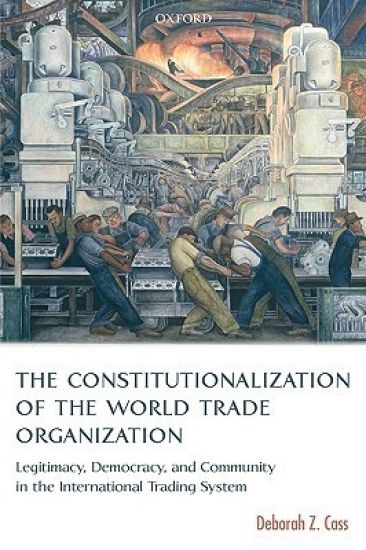
The Constitutionalization of the World Trade Organization

The Constitutionalization of the World Trade Organization

Deborah Z. Cass

Oxford University Press
2005
sidottu
This is a book about the constitutionalization of the World Trade Organization, and the contemporary development of institutional forms and democratic ideas associated with constitutionalism within the world trading system. It is about constitutionalization enthusiasts who promote institutions, management techniques, rights discourse and quasi-judicial power to construct a constitution for the WTO. It is about constitutional skeptics who fear the effect the phenomenon of constitutionalization is having on the autonomy of states, the capacity of the WTO to consider non-economic and non-free-trade goals, and democratic processes at the WTO and within the nation-state. The aim of the study, then, is to disentangle debates about the various meanings of the term 'constitution' when it used to apply to the World Trade Organization, and to reflect upon the significance of those meanings for more general international law conceptions of constitutions. Cass argues that the WTO is not and should not be described as a constitution, either by the standards of any received account of that term, or by the lights of any of the current WTO models. Under these definitions serious issues of legitimacy, democracy and community are at stake. The WTO would lack a proper political structure to balance the work of its judicial bodies; it may curtail the ability of states to decide matters of national economic interest; it lacks authorization by a coherent political community; and, it risks an emphasis upon economic goals and pure free trade over other, equally important, social values. Instead, Cass argues that what is needed is a constitutionalized WTO which considers the economic development needs of states and takes account of the skewed playing field of international trade and its effect on the economic prospects of developing countries. In short, trading democracy, legitimacy and community and not trading constitutionalization, are the biggest challenges facing the WTO.
The Constitutionalization of the World Trade Organization

The Constitutionalization of the World Trade Organization

Deborah Z. Cass

Oxford University Press
2005
nidottu
This is a book about the constitutionalization of the World Trade Organization, and the contemporary development of institutional forms and democratic ideas associated with constitutionalism within the world trading system. It is about constitutionalization enthusiasts who promote institutions, management techniques, rights discourse and quasi-judicial power to construct a constitution for the WTO. It is about constitutional skeptics who fear the effect the phenomenon of constitutionalization is having on the autonomy of states, the capacity of the WTO to consider non-economic and non-free-trade goals, and democratic processes at the WTO and within the nation-state. The aim of the study, then, is to disentangle debates about the various meanings of the term 'constitution' when it used to apply to the World Trade Organization, and to reflect upon the significance of those meanings for more general international law conceptions of constitutions. Cass argues that the WTO is not and should not be described as a constitution, either by the standards of any received account of that term, or by the lights of any of the current WTO models. Under these definitions serious issues of legitimacy, democracy and community are at stake. The WTO would lack a proper political structure to balance the work of its judicial bodies; it may curtail the ability of states to decide matters of national economic interest; it lacks authorization by a coherent political community; and, it risks an emphasis upon economic goals and pure free trade over other, equally important, social values. Instead, Cass argues that what is needed is a constitutionalized WTO which considers the economic development needs of states and takes account of the skewed playing field of international trade and its effect on the economic prospects of developing countries. In short, trading democracy, legitimacy and community and not trading constitutionalization, are the biggest challenges facing the WTO.
What Women Want

What Women Want

Deborah L. Rhode

Oxford University Press Inc
2014
sidottu
American women fare worse than men on virtually every major dimension of social status, financial wellbeing, and physical safety. Sexual violence remains common, and reproductive rights are by no means secure. Women assume disproportionate burdens in the home and pay a heavy price in the workplace. Yet these issues are not political priorities, and worse, there is a lack of consensus that there still is a serious problem, or at least one that women have any reason or capacity to address. This 'no problem' problem helps explain why women fail to mobilize around issues that materially affect the quality of their lives. Why is this, why does it matter, and how can we best respond? What Women Want focuses on the policy agenda for women. Deborah L. Rhode, one of the nation's leading scholars on women and law, brings to the discussion a broad array of interdisciplinary research as well as interviews with heads of leading women's organizations. Key questions addressed include whether the women's movement is stalled. What are the major obstacles it confronts? What are its key priorities and what strategies might advance them? In addressing those questions, the book explores virtually all of the major policy issues confronting women. Topics include employment and appearance discrimination, the gender gap in pay and leadership opportunities, work/family policies, childcare, divorce, same- sex marriage, sexual harassment, domestic violence, rape, trafficking, abortion, poverty, and politics. Discussion focuses on the capacities and limits of law as a strategy for social change. Why, despite four decades of enforcement of equal employment legislation, is women's workplace status so far from equal? Why, despite a quarter century's effort at reforming rape law, is America's rate of reported rape the second highest in the developed world? Part of the problem lies in the absence of political mobilization around such issues and the underrepresentation of women in public office. This path-breaking book explores how women can and should act on what they want.
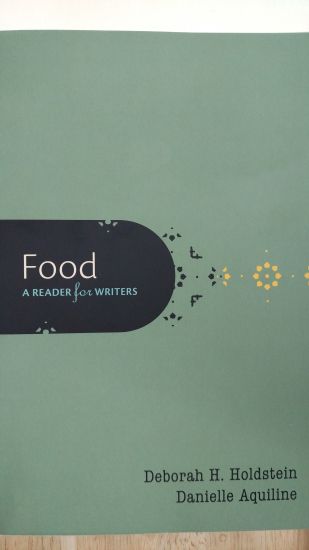
Food: A Reader for Writers

Food: A Reader for Writers

Deborah H. Holdstein; Danielle Aquiline

Oxford University Press
2014
nidottu
Read. Write. Oxford. From the hearty dishes of the American South to hotly debated GMOs, Food: A Reader for Writers serves up articles from a wide range of cultures, economic strata, and moments in time. It covers food's relationship to such topics as memory and identity, politics and health, the environment and economy, and travel and worldviews. Developed for courses in first-year writing, Food: A Reader for Writers includes an interdisciplinary mix of public, academic, and cultural reading selections, providing students with the rhetorical knowledge and analytical strategies required to participate effectively in discussions about food and culture. Food: A Reader for Writers is part of a series of brief, single-topic readers from Oxford University Press designed for today's college writing courses. Each reader in this series approaches a topic of contemporary conversation from multiple perspectives.
Will Africa Feed China?

Will Africa Feed China?

Deborah Brautigam

Oxford University Press Inc
2016
sidottu
Is China building a new empire in rural Africa? Over the past decade, China's meteoric rise on the continent has raised a drumbeat of alarm. China has 9 percent of the world's arable land, 6 percent of its water, and over 20 percent of its people. Africa's savannahs and river basins host the planet's largest expanses of underutilized land and water. Few topics are as controversial and emotionally charged as the belief that the Chinese government is aggressively buying up huge tracts of prime African land to grow food to ship back to China. In Will Africa Feed China?, Deborah Brautigam, one of the world's leading experts on China and Africa, probes the myths and realities behind the media headlines. Her careful research challenges the conventional wisdom; as she shows, Chinese farming investments are in fact surprisingly limited, and land acquisitions modest. Defying expectations, China actually exports more food to Africa than it imports. Is this picture likely to change? African governments are pushing hard for foreign capital, and China is building a portfolio of tools to allow its agribusiness firms to "go global." International concerns about "land grabbing" are well-justified. Yet to feed its own growing population, rural Africa must move from subsistence to commercial agriculture. What role will China play? Moving from the halls of power in Beijing to remote irrigated rice paddies of Africa, Will Africa Feed China? introduces the people and the politics that will shape the future of this engagement: the state-owned Chinese agribusiness firms that pioneered African farming in the 1960s and the entrepreneurial private investors who followed them. Their fascinating stories, and those of the African farmers and officials who are their counterparts, ground Brautigam's deeply informative, deftly balanced reporting. Forcefully argued and empirically rich, Will Africa Feed China? will be a landmark work, shedding new light on China's evolving global quest for food security and Africa's possibilities for structural transformation.
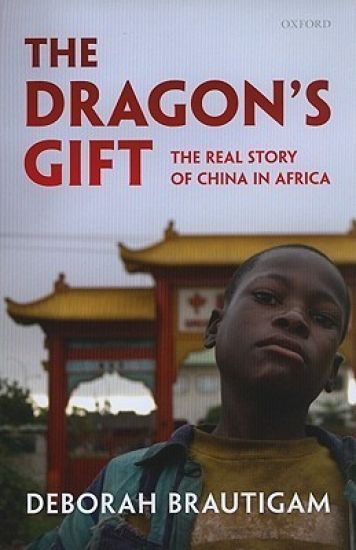
The Dragon's Gift

The Dragon's Gift

Deborah Brautigam

Oxford University Press
2009
sidottu
Is China a rogue donor, as some media pundits suggest? Or is China helping the developing world pave a pathway out of poverty, as the Chinese claim? In the last few years, China's aid program has leapt out of the shadows. Media reports about huge aid packages, support for pariah regimes, regiments of Chinese labor, and the ruthless exploitation of workers and natural resources in some of the poorest countries in the world sparked fierce debates. These debates, however, took place with very few hard facts. China's tradition of secrecy about its aid fueled rumors and speculation, making it difficult to gauge the risks and opportunities provided by China's growing embrace. This well-timed book, by one of the world's leading experts, provides the first comprehensive account of China's aid and economic cooperation overseas. Deborah Brautigam tackles the myths and realities, explaining what the Chinese are doing, how they do it, how much aid they give, and how it all fits into their "going global" strategy. Drawing on three decades of experience in China and Africa, and hundreds of interviews in Africa, China, Europe and the US, Brautigam shines new light on a topic of great interest. China has ended poverty for hundreds of millions of its own citizens. Will Chinese engagement benefit Africa? Using hard data and a series of vivid stories ranging across agriculture, industry, natural resources, and governance, Brautigam's fascinating book provides an answer. It is essential reading for anyone concerned with China's rise, and what it might mean for the challenge of ending poverty in Africa.
The Myth of Mars and Venus

The Myth of Mars and Venus

Deborah Cameron

Oxford University Press
2008
nidottu
Popular assumptions about gender and communication - famously summed up in the title of the massively influential 1992 bestseller Men Are From Mars, Women Are From Venus - can have unforeseen but far-reaching consequences in many spheres of life, from attitudes to the phenomenon of 'date-rape' to expectations of achievement at school, and potential discrimination in the work-place. In this wide-ranging and thoroughly readable book, Deborah Cameron, Rupert Murdoch Professor of Language and Communication at Oxford University and author of a number of leading texts in the field of language and gender studies, draws on over 30 years of scientific research to explain what we really know and to demonstrate how this is often very different from the accounts we are familiar with from recent popular writing. Ambitious in scope and exceptionally accessible, The Myth of Mars and Venus tells it like it is: widely accepted attitudes from the past and from other cultures are at heart related to assumptions about language and the place of men and women in society; and there is as much similarity and variation within each gender as between men and women, often associated with social roles and relationships. The author goes on to consider the influence of Darwinian theories of natural selection and the notion that girls and boys are socialized during childhood into different ways of using language, before addressing problems of 'miscommunication' surrounding, for example, sex and consent to sex, and women's relative lack of success in work and politics. Arguing that what linguistic differences there are between men and women are driven by the need to construct and project personal meaning and identity, Cameron concludes that we have an urgent need to think about gender in more complex ways than the prevailing myths and stereotypes allow. A compelling and insightful read for anyone with an interest in communication, language, and the sexes.
Letters of Credit and Demand Guarantees: Defences to Payment
This book is the first to provide an extensive analysis of the range of defences to payment under letters of credit and demand guarantees. It considers the extent to which different defences undermine the abstraction of these instruments. This is a fundamental issue, since letters of credit and demand guarantees are designed to be abstract, or autonomous, from the underlying contract that called for their use. The purpose of that abstraction is to provide certainty of payment, but the various defences diminish that certainty. The book examines the spectrum of defences that are frequently litigated and debated in international practice: fraud in the documents, nullity, fraud affecting deferred payment letters of credit, fraud as no honest belief, unconscionable conduct and illegality. Vitally, the book provides analysis of the relevant judicial decisions and offers clear practical guidance on which defences are most suitable for each instrument. As the instruments are heavily used in international trade, this work is particularly suited to financial and commercial law practitioners who draft agreements, as well as those who advise on disputes concerning these instruments. Accessible and engaging, the book is also relevant for academics and students.
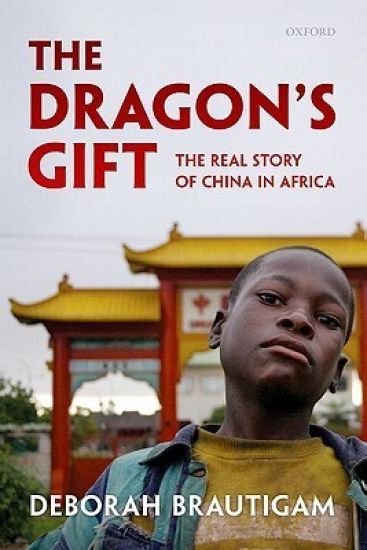
The Dragon's Gift

The Dragon's Gift

Deborah Brautigam

Oxford University Press
2011
nidottu
Is China a rogue donor, as some media pundits suggest? Or is China helping the developing world pave a pathway out of poverty, as the Chinese claim? In the last few years, China's aid program has leapt out of the shadows. Media reports about huge aid packages, support for pariah regimes, regiments of Chinese labor, and the ruthless exploitation of workers and natural resources in some of the poorest countries in the world sparked fierce debates. These debates, however, took place with very few hard facts. China's tradition of secrecy about its aid fueled rumors and speculation, making it difficult to gauge the risks and opportunities provided by China's growing embrace. This well-timed book, by one of the world's leading experts, provides the first comprehensive account of China's aid and economic cooperation overseas. Deborah Brautigam tackles the myths and realities, explaining what the Chinese are doing, how they do it, how much aid they give, and how it all fits into their "going global" strategy. Drawing on three decades of experience in China and Africa, and hundreds of interviews in Africa, China, Europe and the US, Brautigam shines new light on a topic of great interest. China has ended poverty for hundreds of millions of its own citizens. Will Chinese engagement benefit Africa? Using hard data and a series of vivid stories ranging across agriculture, industry, natural resources, and governance, Brautigam's fascinating book provides an answer. It is essential reading for anyone concerned with China's rise, and what it might mean for the challenge of ending poverty in Africa.
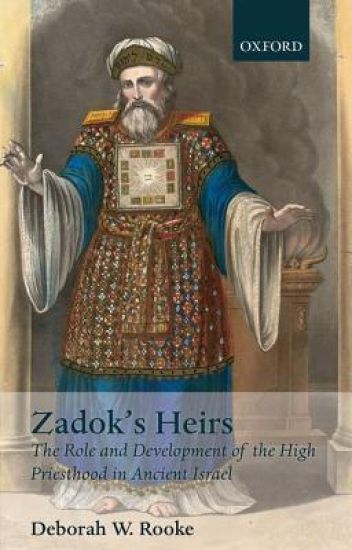
Zadok's Heirs

Zadok's Heirs

Deborah W. Rooke

Oxford University Press
2012
nidottu
This unique study is the first systematic examination to be undertaken of the high priesthood in ancient Israel, from the earliest local chief priests in the pre-monarchic period down to the Hasmonaean priest-kings in the first century BCE. Deborah Rooke argues that, contrary to received scholarly opinion, the high priesthood was fundamentally a religious office which in and of itself bestowed no civil responsibilities upon its holders, and that not until the time of the Maccabean revolt does the high priest appear as the sole figure of leadership for the nation. However, even the Maccabean / Hasmonaean high priesthood was effectively a reversion to the monarchic model of sacral kingship which had existed several centuries earlier in the pre-exilic period, rather than being an extension of the powers of the high priesthood itself. The idea that high priesthood per se bestowed the power to rule should therefore be reconsidered.
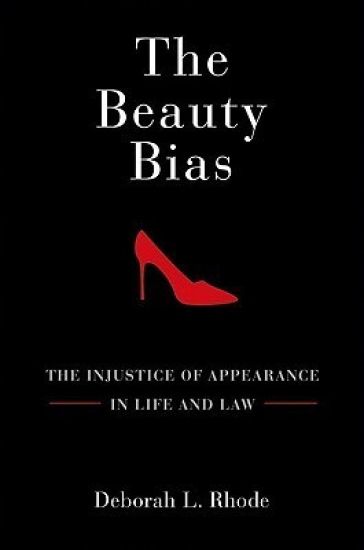
The Beauty Bias

The Beauty Bias

Deborah L. Rhode

Oxford University Press Inc
2011
nidottu
"It hurts to be beautiful" has been a cliche for centuries. What has been far less appreciated is how much it hurts not to be beautiful. The Beauty Bias explores our cultural preoccupation with attractiveness, the costs it imposes, and the responses it demands. Beauty may be only skin deep, but the damages associated with its absence go much deeper. Unattractive individuals are less likely to be hired and promoted, and are assumed less likely to have desirable traits, such as goodness, kindness, and honesty. Three quarters of women consider appearance important to their self image and over a third rank it as the most important factor. Although appearance can be a significant source of pleasure, its price can also be excessive, not only in time and money, but also in physical and psychological health. Our annual global investment in appearance totals close to $200 billion. Many individuals experience stigma, discrimination, and related difficulties, such as eating disorders, depression, and risky dieting and cosmetic procedures. Women bear a vastly disproportionate share of these costs, in part because they face standards more exacting than those for men, and pay greater penalties for falling short. The Beauty Bias explores the social, biological, market, and media forces that have contributed to appearance-related problems, as well as feminism's difficulties in confronting them. The book also reviews why it matters. Appearance-related bias infringes fundamental rights, compromises merit principles, reinforces debilitating stereotypes, and compounds the disadvantages of race, class, and gender. Yet only one state and a half dozen localities explicitly prohibit such discrimination. The Beauty Bias provides the first systematic survey of how appearance laws work in practice, and a compelling argument for extending their reach. The book offers case histories of invidious discrimination and a plausible legal and political strategy for addressing them. Our prejudices run deep, but we can do far more to promote realistic and healthy images of attractiveness, and to reduce the price of their pursuit.
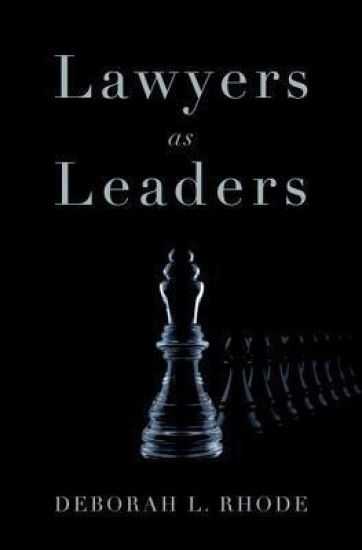
Lawyers as Leaders

Lawyers as Leaders

Deborah L. Rhode

Oxford University Press Inc
2013
sidottu
No occupation in America supplies a greater proportion of leaders than law. They obviously lead law firms, but they also sit at the helm of a vast and diverse array of businesses across America, including 10 percent of S & P 500 firms. And of course, a strikingly large percentage of our political leaders are attorneys, including half the members of Congress. This raises two obvious questions: why do we look to lawyers to lead, and why do so many of them prove to be so untrustworthy and unprepared? In Lawyers as Leaders, eminent law professor Deborah Rhode not only answers these questions but crafts an essential manual for attorneys who need to develop better leadership skills. She contends that the legal profession attracts a large number of individuals with the ambition and analytic capabilities to be leaders, but often fails to develop other qualities that are essential to their effectiveness. The focus of legal education and the reward structure of legal practice undervalue the interpersonal skills and ethical commitments necessary for successful leadership. Although some lawyers are sufficiently gifted to need little reinforcement, Rhode shows that the vast majority of law school graduates need to develop the leadership characteristics that she profiles. They know it too. According to one survey, almost 90 percent of attorneys stated that their law schools did not teach them leadership skills. Given the importance of the topic, it is surprising how little the profession has done to develop leadership skills. The first serious treatment of the subject, Lawyers as Leaders will be essential to law school instructors who teach leadership courses (a growing field) and any attorney who finds him or herself in a management position.
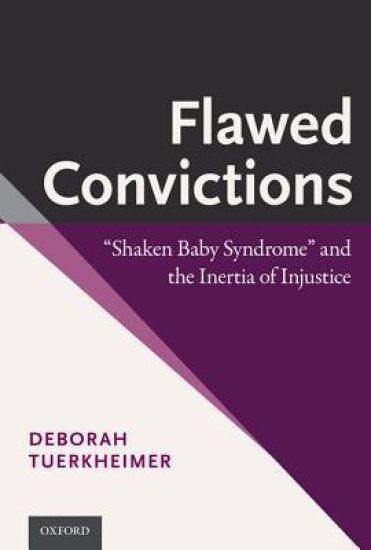
Flawed Convictions

Flawed Convictions

Deborah Tuerkheimer

Oxford University Press Inc
2014
sidottu
The emergence of Shaken Baby Syndrome (SBS) presents an object lesson in the dangers that lie at the intersection of science and criminal law. As often occurs in the context of scientific knowledge, understandings of SBS have evolved. We now know that the diagnostic triad alone does not prove beyond a reasonable doubt that an infant was abused, or that the last person with the baby was responsible for the babys condition. Nevertheless, our legal system has failed to absorb this new consensus. As a result, innocent parents and caregivers remain incarcerated and, perhaps more perplexingly, triad-only prosecutions continue even to this day. Flawed Convictions: Shaken Baby Syndrome and the Inertia of Injustice is the first book to survey the scientific, cultural, and legal history of Shaken Baby Syndrome from inception to formal dissolution. It exposes extraordinary failings in the criminal justice systems treatment of what is, in essence, a medical diagnosis of murder. The story of SBS highlights fundamental inadequacies in the legal response to science dependent prosecution. A proposed restructuring of the law contends with the uncertainty of scientific knowledge.
Family Secrets: Shame and Privacy in Modern Britain

Family Secrets: Shame and Privacy in Modern Britain

Deborah Cohen

Oxford University Press
2013
sidottu
We live today in a culture of full disclosure, where tell-all memoirs top the best-seller lists, transparency is lauded, and privacy seems imperiled. But how did we get here? Exploring scores of previously sealed records, Family Secrets offers a sweeping account of how shame--and the relationship between secrecy and openness--has changed over the last two centuries in Britain. Deborah Cohen uses detailed sketches of individual families as the basis for comparing different sorts of social stigma. She takes readers inside an Edinburgh town house, where a genteel maiden frets with her brother over their niece's downy upper lip, a darkening shadow that might betray the girl's Eurasian heritage; to a Liverpool railway platform, where a heartbroken mother hands over her eight-year old illegitimate son for adoption; to a town in the Cotswolds, where a queer vicar brings to his bank vault a diary--sewed up in calico, wrapped in parchment--that chronicles his sexual longings. Cohen explores what families in the past chose to keep secret and why. She excavates the tangled history of privacy and secrecy to explain why privacy is now viewed as a hallowed right while secrets are condemned as destructive. In delving into the dynamics of shame and guilt, Family Secrets explores the part that families, so often regarded as the agents of repression, have played in the transformation of social mores from the Victorian era to the present day. Written with compassion and keen insight, this is a bold new argument about the sea-changes that took place behind closed doors.