Kirjojen hintavertailu. Mukana 12 083 983 kirjaa ja 12 kauppaa.

Kirjahaku

Etsi kirjoja tekijän nimen, kirjan nimen tai ISBN:n perusteella.

1000 tulosta hakusanalla Dimitris Plantzos

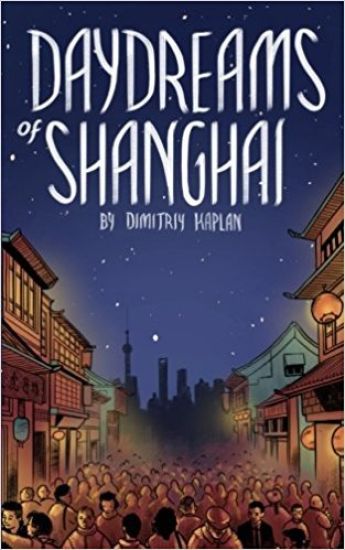
Daydreams of Shanghai

Daydreams of Shanghai

Dimitriy Kaplan

Dimitriy Kaplan Publishing
2017
pokkari
Chinese factory workers. A police captain with a deformed leg. American alcoholics in Shanghai. Babies pooping in garbage cans. "Daydreams of Shanghai" is a Kickstarter funded project- 103% funded in January 2017 with dozens of copies pre-ordered. Ting, an employee at a large Chinese cigarette factory, must weave through the obstacles presented by modern day communism and corruption. She dreams of escaping the polluted and hopeless city of Huangyan to start anew in a wealthy metropolis. Harry is an old American alcoholic that arrives in Shanghai to teach English at the "Happy Family English School." He encounters Chinese culture at its most absurd and American culture at its most degenerated, while dealing with a recent divorce. "Daydreams of Shanghai" is a rare and unfiltered look into modern Chinese culture, as well as that of the scarcely seen expatriate community slowly growing in China. Based on true events, the novella explores intricacies of the dark side of the earth in critical detail. "This is definitely a book "-lonely man "I've always thought about visiting China..."-unknown "Hearing Kaplan's account of what happened really makes me want to reevaluate my life."-former American coworker in China "This is from the darkest and wickedest corners of my brother's memory chest. 'What happens in China-stays in China, ' and this is my only chance to learn those secrets. However, it's no secret that I puked a few times when reading the first few chapters and our parents are so outraged that they stopped answering Dimitriy's calls. At this point, our only daydream is that he stops this nonsense nightmare by getting obsessed with a hobby more benign than sharing the traumas he survived in China."-Concerned Sister "You're f**king sick."-Editor

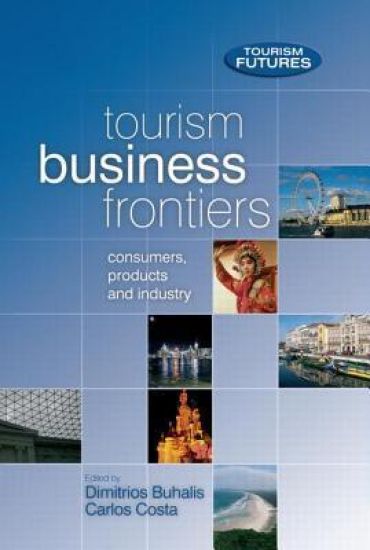
Tourism Business Frontiers

Tourism Business Frontiers

Dimitrios Buhalis; Carlos Costa; Francesca Ford

Butterworth-Heinemann Ltd
2005
sidottu
As the global tourism industry continues to expand and to become more complex, it is vital that those in the industry are equipped with a thorough knowledge of all topics involved. New Tourism Consumers Products and Industry: Present and Future Issues provides this comprehensive coverage and more. Written by a team of globally renowned thinkers and researchers, it not only provides a brief historical overview of tourism, but delves deeper, to discuss emerging trends, consumer types and looks at the way the industry itself is changing and developing. It provides the manager of tomorrow with the ability to look beyond normal planning horizons and identify potential opportunities from these changes. New Tourism Consumers Products and Industry: Present and Future Issues is part of a two part set with its companion text, Tourism Dynamics, Challenges and Tools: Present and Future Issues which takes the reader on a logical progression to look at issues relating to the external environment in which the tourism industry functions. Both texts thereby provide the reader with a complete set of tools and knowledge recognise the key areas of growth and change, and the ability to use the new tools and technologies available to develop them and maximise business potential.
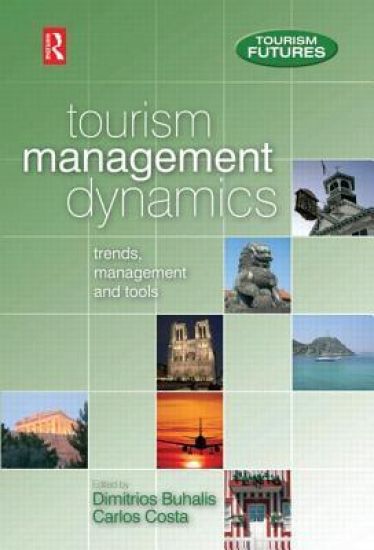
Tourism Management Dynamics

Tourism Management Dynamics

Dimitrios Buhalis; Carlos Costa

Butterworth-Heinemann Ltd
2005
sidottu
As the global tourism industry continues to expand and to become more complex, it is vital that those in the industry identify trends early and design proactive strategies to gain competitive advantage. Tourism Futures: dynamics, challenges and tools provides the readers with a comprehensive insight of the changes in the external business environment, and equips them with new managerial techniques and tools in order to adapt and profit from these changes and into the future. Written by a team of globally renowned thinkers and researchers, it provides the manager of tomorrow with the ability to look beyond normal planning horizons and identify potential opportunities from change. Tourism Futures: dynamics, challenges and tools is part of a two part set with its companion text, Tourism Futures: the emerging business which takes the reader on a logical progression to look at new products, new consumers and new industry. Both texts thereby provide the reader with a complete set of tools and knowledge to enable them to recognise the key areas of growth and change, and the ability to use the new tools and technologies available to develop them and maximise business potential.
Uncertain Accommodation

Uncertain Accommodation

Dimitrios Panagos

University of British Columbia Press
2016
sidottu
In 1982, after decades of determined mobilization by Aboriginal groups and their allies, the government of Canada formally recognized Aboriginal rights within its Constitution. The move reflected a consensus that states should and could use constitutionally enshrined group rights to protect and accommodate subnational groups within their borders. Decades later, however, almost no one is happy with the current state of Aboriginal rights in Canada, nor is there a consensus on what is wrong with these rights or how they can be fixed. Uncertain Accommodation tells the story of what went wrong.Dimitrios Panagos argues that the failure of Canada's Aboriginal rights jurisprudence is ultimately rooted in our inability to agree on what aboriginality means. Through incisive analysis of judicial decisions, legal submissions, and academic debates, he reveals the plurality of conceptions of aboriginality put forth over the past three decades and shows how the vision of Aboriginal identity promoted and protected is that of the Supreme Court of Canada itself. Panagos concludes that there can be no justice as long as the state continues to safeguard a set of values and interests defined by non-Aboriginal people.
Uncertain Accommodation

Uncertain Accommodation

Dimitrios Panagos

University of British Columbia Press
2017
pokkari
In 1982, after decades of determined mobilization by Aboriginal groups and their allies, the government of Canada formally recognized Aboriginal rights within its Constitution. The move reflected a consensus that states should and could use constitutionally enshrined group rights to protect and accommodate subnational groups within their borders. Decades later, however, almost no one is happy with the current state of Aboriginal rights in Canada, nor is there a consensus on what is wrong with these rights or how they can be fixed. Uncertain Accommodation tells the story of what went wrong.Dimitrios Panagos argues that the failure of Canada's Aboriginal rights jurisprudence is ultimately rooted in our inability to agree on what aboriginality means. Through incisive analysis of judicial decisions, legal submissions, and academic debates, he reveals the plurality of conceptions of aboriginality put forth over the past three decades and shows how the vision of Aboriginal identity promoted and protected is that of the Supreme Court of Canada itself. Panagos concludes that there can be no justice as long as the state continues to safeguard a set of values and interests defined by non-Aboriginal people.
Global Alliances in Tourism and Hospitality Management

Global Alliances in Tourism and Hospitality Management

Dimitrios Buhalis; John C Crotts

Routledge Member of the Taylor and Francis Group
2000
sidottu
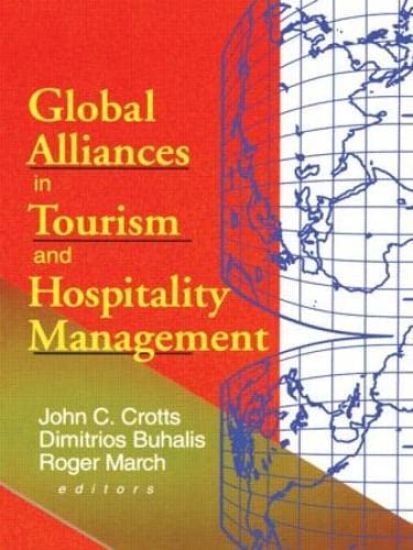
Target your business strategies to fit specific tourist cultures!Since Thomas Cook packaged the first tour in 1841, hospitality and tourism enterprises have forged long-term alliances with one another. Yet research suggests that most such alliances will fail. What goes wrong? How can tourism professionals take advantage of all the benefits of international cooperation while minimizing the potentially disastrous risks of failure? Global Alliances in Tourism and Hospitality Management provides empirical research, case studies, and theory to help you make the right decisions about this potentially high-profit strategy.To compete in the world travel market, a firm must increase its ability to reach, serve, and satisfy its target markets, while lowering costs. Making an alliance is often the most efficient and effective way to reach these twin goals. However, many firms make alliances without sufficient planning and end up paying the price in failed tours, dissatisfied customers, and damaged reputation. The five critical questions that must be answered before creating a partnership include:Do we want to partner? Do we have an ability to partner? With whom do we partner? How do we partner? How do we sustain and renew a partnership over time?Global Alliances in Tourism and Hospitality Management offers specific, detailed ideas and research on vital topics, including: deciding how and when to form alliances handling multicultural management issues identifying the basic elements of successful--and not so successful--partnerships discovering the effects of culture on purchasing decisions dealing with conflicts within alliances ensuring cross-agency cooperationThe development and management of alliances is a critical skill. Global Alliances in Tourism and Hospitality Management provides you with the strategies you need to build successful alliances. International in scope, this informative guide will help marketers, managers, and other professionals in the hospitality industry to lower company costs, raise profits, and gain strategic advantages in diversified markets.
Global Alliances in Tourism and Hospitality Management

Global Alliances in Tourism and Hospitality Management

Dimitrios Buhalis; John C Crotts

Routledge Member of the Taylor and Francis Group
2000
nidottu
Target your business strategies to fit specific tourist cultures!Since Thomas Cook packaged the first tour in 1841, hospitality and tourism enterprises have forged long-term alliances with one another. Yet research suggests that most such alliances will fail. What goes wrong? How can tourism professionals take advantage of all the benefits of international cooperation while minimizing the potentially disastrous risks of failure? Global Alliances in Tourism and Hospitality Management provides empirical research, case studies, and theory to help you make the right decisions about this potentially high-profit strategy.To compete in the world travel market, a firm must increase its ability to reach, serve, and satisfy its target markets, while lowering costs. Making an alliance is often the most efficient and effective way to reach these twin goals. However, many firms make alliances without sufficient planning and end up paying the price in failed tours, dissatisfied customers, and damaged reputation. The five critical questions that must be answered before creating a partnership include:Do we want to partner? Do we have an ability to partner? With whom do we partner? How do we partner? How do we sustain and renew a partnership over time?Global Alliances in Tourism and Hospitality Management offers specific, detailed ideas and research on vital topics, including: deciding how and when to form alliances handling multicultural management issues identifying the basic elements of successful--and not so successful--partnerships discovering the effects of culture on purchasing decisions dealing with conflicts within alliances ensuring cross-agency cooperationThe development and management of alliances is a critical skill. Global Alliances in Tourism and Hospitality Management provides you with the strategies you need to build successful alliances. International in scope, this informative guide will help marketers, managers, and other professionals in the hospitality industry to lower company costs, raise profits, and gain strategic advantages in diversified markets.
OmeGA

OmeGA

Dimitri Knjazew

Springer
2002
sidottu
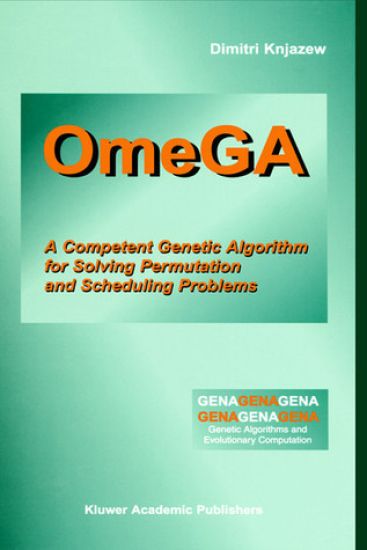
OmeGA: A Competent Genetic Algorithm for Solving Permutation and Scheduling Problems addresses two increasingly important areas in GA implementation and practice. OmeGA, or the ordering messy genetic algorithm, combines some of the latest in competent GA technology to solve scheduling and other permutation problems. Competent GAs are those designed for principled solutions of hard problems, quickly, reliably, and accurately. Permutation and scheduling problems are difficult combinatorial optimization problems with commercial import across a variety of industries. This book approaches both subjects systematically and clearly. The first part of the book presents the clearest description of messy GAs written to date along with an innovative adaptation of the method to ordering problems. The second part of the book investigates the algorithm on boundedly difficult test functions, showing principled scale up as problems become harder and longer. Finally, the book applies the algorithm to a test function drawn from the literature of scheduling.
Daily Life of the Egyptian Gods

Daily Life of the Egyptian Gods

Dimitri Meeks; Christine Favard-Meeks

Cornell University Press
1996
sidottu
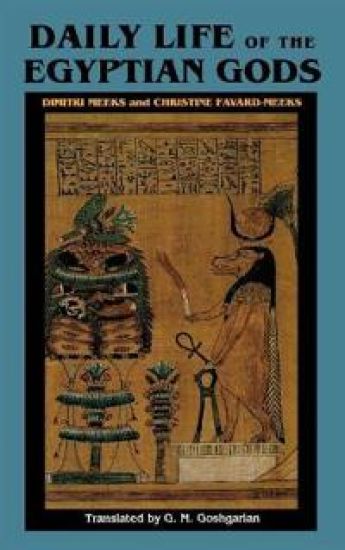
This is the first English translation of a highly appealing volume originally published in French in 1993. Informed by a sense of wonderment at divine doings, it treats the ancient Egyptian gods as if they were an ethnic group that captured the fancy of ethnologists or sociologists. The book begins with a discussion of the gods' community as a society unto itself. The authors describe the structures of the society of the gods and some of the conflicts that frequently upset it, with individual gods acting to protect their own positions in an established hierarchy and struggling to gain power over their fellows. The nature of their immortal but not invulnerable bodies, their pleasures, and their needs are considered. What did they eat, the authors ask, and did they feel pain? The second part of the book cites familiar traditions and little-known texts to explain the relationship of the gods to the pharaoh, who was believed to represent them on earth. By performing appropriate rites, the pharaoh maintained a delicate equilibrium, balancing the sky home of the sun god, the underworld of Osiris and the dead, and the earth itself. While each world was autonomous and had its own mythological context, the separate spheres were also interdependent, requiring the sun's daily course and the pharaoh's ritual actions to ensure the cohesion of the universe.
Daily Life of the Egyptian Gods

Daily Life of the Egyptian Gods

Dimitri Meeks; Christine Favard-Meeks

Cornell University Press
1996
pokkari
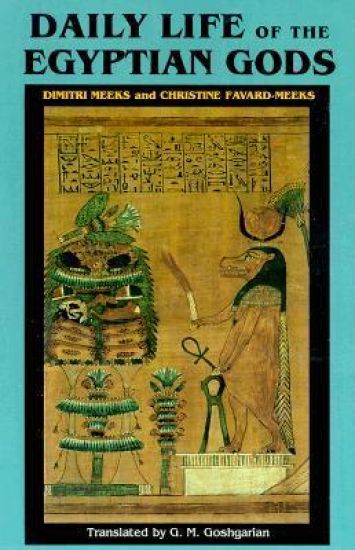
This is the first English translation of a highly appealing volume originally published in French in 1993. Informed by a sense of wonderment at divine doings, it treats the ancient Egyptian gods as if they were an ethnic group that captured the fancy of ethnologists or sociologists. The book begins with a discussion of the gods' community as a society unto itself. The authors describe the structures of the society of the gods and some of the conflicts that frequently upset it, with individual gods acting to protect their own positions in an established hierarchy and struggling to gain power over their fellows. The nature of their immortal but not invulnerable bodies, their pleasures, and their needs are considered. What did they eat, the authors ask, and did they feel pain? The second part of the book cites familiar traditions and little-known texts to explain the relationship of the gods to the pharaoh, who was believed to represent them on earth. By performing appropriate rites, the pharaoh maintained a delicate equilibrium, balancing the sky home of the sun god, the underworld of Osiris and the dead, and the earth itself. While each world was autonomous and had its own mythological context, the separate spheres were also interdependent, requiring the sun's daily course and the pharaoh's ritual actions to ensure the cohesion of the universe.
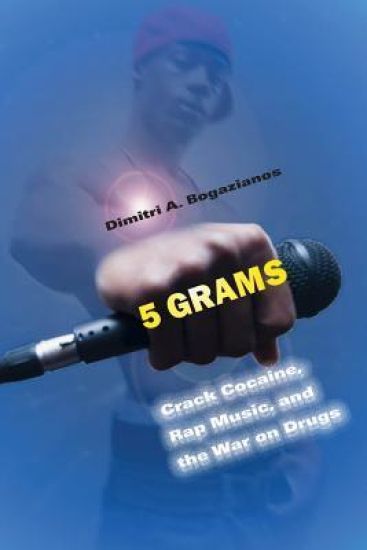
5 Grams

5 Grams

Dimitri A. Bogazianos

New York University Press
2011
sidottu
In 2010, President Barack Obama signed a law repealing one of the most controversial policies in American criminal justice history: the one hundred to one sentencing disparity between crack cocaine and powder whereby someone convicted of "simply" possessing five grams of crack—the equivalent of a few sugar packets—had been required by law to serve no less than five years in prison. In this highly original work, Dimitri A. Bogazianos draws on various sources to examine the profound symbolic consequences of America's reliance on this punishment structure, tracing the rich cultural linkages between America's War on Drugs, and the creative contributions of those directly affected by its destructive effects. Focusing primarily on lyrics that emerged in 1990s New York rap, which critiqued the music industry for being corrupt, unjust, and criminal, Bogazianos shows how many rappers began drawing parallels between the "rap game" and the "crack game." He argues that the symbolism of crack in rap's stance towards its own commercialization represents a moral debate that is far bigger than hip hop culture, highlighting the degree to which crack cocaine—although a drug long in decline—has come to represent the entire paradoxical predicament of punishment in the U.S. today.
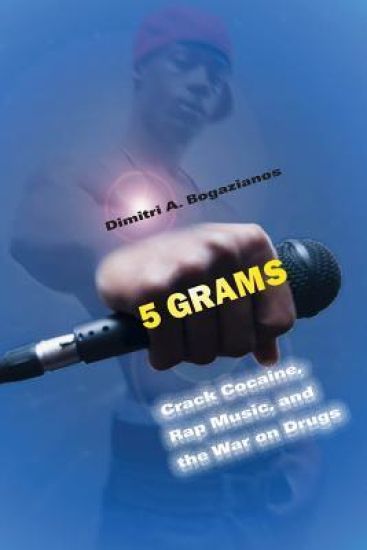
5 Grams

5 Grams

Dimitri A. Bogazianos

New York University Press
2011
pokkari
In 2010, President Barack Obama signed a law repealing one of the most controversial policies in American criminal justice history: the one hundred to one sentencing disparity between crack cocaine and powder whereby someone convicted of "simply" possessing five grams of crack—the equivalent of a few sugar packets—had been required by law to serve no less than five years in prison. In this highly original work, Dimitri A. Bogazianos draws on various sources to examine the profound symbolic consequences of America's reliance on this punishment structure, tracing the rich cultural linkages between America's War on Drugs, and the creative contributions of those directly affected by its destructive effects. Focusing primarily on lyrics that emerged in 1990s New York rap, which critiqued the music industry for being corrupt, unjust, and criminal, Bogazianos shows how many rappers began drawing parallels between the "rap game" and the "crack game." He argues that the symbolism of crack in rap's stance towards its own commercialization represents a moral debate that is far bigger than hip hop culture, highlighting the degree to which crack cocaine—although a drug long in decline—has come to represent the entire paradoxical predicament of punishment in the U.S. today.
The Tenets of Cognitive Existentialism

The Tenets of Cognitive Existentialism

Dimitri Ginev

Ohio University Press
2011
sidottu
In The Tenets of Cognitive Existentialism, Dimitri Ginev draws on developments in hermeneutic phenomenology and other programs in hermeneutic philosophy to inform an interpretative approach to scientific practices. At stake is the question of whether it is possible to integrate forms of reflection upon the ontological difference in the cognitive structure of scientific research. A positive answer would have implied a proof that (pace Heidegger) "science is able to think." This book is an extended version of such a proof. Against those who claim that modern science is doomed to be exclusively committed to the nexus of objectivism and instrumental rationality, the interpretative theory of scientific practices reveals science's potentiality of hermeneutic self-reflection. Scientific research that takes into consideration the ontological difference has resources to enter into a dialogue with Nature. Ginev offers a critique of postmodern tendencies in the philosophy of science, and sets out arguments for a feminist hermeneutics of scientific research.
Tourism Distribution Channels

Tourism Distribution Channels

Dimitrios Buhalis; Eric Laws

Cengage Learning
2001
nidottu
This title looks at all the issues involves in the distribution of the tourism product. Contemporary case studies are considered from multiple theoretical perspectives, including: industry network theory; relationship marketing; industry structre; value chain approaches; and systems theory.
Once Upon a Diamond

Once Upon a Diamond

Dimitri; Carolina Herrera

Rizzoli International Publications
2020
sidottu
Renowned jewelry designer Prince Dimitri of Yugoslavia recounts the enthralling exploits of his beloved family members and describes their extraordinary jewelry collections. Among the many royals whose stories are richly illustrated in this volume are his paternal grandparents Prince Regent Paul and Princess Olga of Yugoslavia; Grand Duke Vladimir and Grand Duchess Maria Pavlovna of Russia; his great-grandparents Prince Nicolas and Princess Helen of Greece as well as his maternal grandparents King Umberto II and Queen Marie-Jose of Italy. The exquisite photography and family albums of Grand Duchess Elena of Russia (later Princess of Greece and Prince Dimitri s great-grandmother) present remarkable never-before-seen images of prerevolutionary life of the Russian imperial family, their court, and their many European royal family members and friends. This luxurious tome also includes exclusive and previously unpublished designs by Prince Dimitri, which juxtapose uncommon materials and color in imaginative yet timeless forms.
Brice Marden: Marbles and Drawings

Brice Marden: Marbles and Drawings

Dimitrio Antonitsis

Rizzoli International Publications
2021
sidottu
In 1981, while summering on the island of Hydra, Greece, Brice Marden began painting on small fragments of marble from local quarries. These compositions marked a transitional moment in his career. Marden has continued to make marble paintings since that time, describing his strategy as taking an accident and turning it into a form. This volume commemorates an exhibition of the artist s marble paintings presented at Gagosian, Athens, in 2020 his first solo exhibition in Greece in four decades. To complement the marbles, Marden selected a small group of ink drawings on paper and a six-panel painting, Free Painting 3 (2017). Together with full views and details of individual works, this beautifully illustrated volume features installation photography and a new essay by Dimitrios Antonitsis, in English and Greek, that considers the marble paintings in the context of the artist s long connection to Hydra.
Greek Philosophers in the Arabic Tradition
Professor Gutas deals here with the lives, sayings, thought, and doctrines of Greek philosophers drawn from sources preserved in medieval Arabic translations and for the most part not extant in the original. The Arabic texts, some of which are edited here for the first time, are translated throughout and richly annotated with the purpose of making the material accessible to classical scholars and historians of ancient and medieval philosophy. Also discussed are the modalities of transmission from Greek into Arabic, the diffusion of the translated material within the Arabic tradition, the nature of the Arabic sources containing the material, and methodological questions relating to Graeco-Arabic textual criticism. The philosophers treated include the Presocratics and minor schools such as Cynicism, Plato, Aristotle and the early Peripatos, and thinkers of late antiquity. A final article presents texts on the malady of love drawn from both the medical and philosophical (problemata physica) traditions.