Kirjojen hintavertailu. Mukana 12 186 836 kirjaa ja 12 kauppaa.

Kirjahaku

Etsi kirjoja tekijän nimen, kirjan nimen tai ISBN:n perusteella.

1000 tulosta hakusanalla Duncan Heaster

Utopia

Utopia

Duncan Bell; Douglas Mao

Oxford University Press
2026
nidottu
Ideal societies, better worlds, more just and peaceful ways of living: these have long been the stuff of human beings' social dreaming. In this compact volume, two leading scholars from different disciplines join to consider the life of utopian imagining within the frame of literature and politics. Duncan Bell, a political scientist and intellectual historian, opens the book with a critical overview of the Anglophone utopian tradition and a fresh definition of utopia. He then shows how the threat of technological annihilation, and the promise of transcendence of human limitations, has shaped utopian and dystopian writing of the last hundred years. Douglas Mao, a scholar of literature, begins the second part of the book by delving into utopian literature's vexed relation to sentimental feeling, especially as this is signalled by speculation on how inhabitants of utopia themselves would read literary works. He then shows how utopian writing's orientation to problem-solving puts it into surprising relation with both politics and literature in general. An interview in which the two authors compare their methods and conclusions closes out the book.
Utopia

Utopia

Duncan Bell; Douglas Mao

Oxford University Press
2026
sidottu
Ideal societies, better worlds, more just and peaceful ways of living: these have long been the stuff of human beings' social dreaming. In this compact volume, two leading scholars from different disciplines join to consider the life of utopian imagining within the frame of literature and politics. Duncan Bell, a political scientist and intellectual historian, opens the book with a critical overview of the Anglophone utopian tradition and a fresh definition of utopia. He then shows how the threat of technological annihilation, and the promise of transcendence of human limitations, has shaped utopian and dystopian writing of the last hundred years. Douglas Mao, a scholar of literature, begins the second part of the book by delving into utopian literature's vexed relation to sentimental feeling, especially as this is signalled by speculation on how inhabitants of utopia themselves would read literary works. He then shows how utopian writing's orientation to problem-solving puts it into surprising relation with both politics and literature in general. An interview in which the two authors compare their methods and conclusions closes out the book.
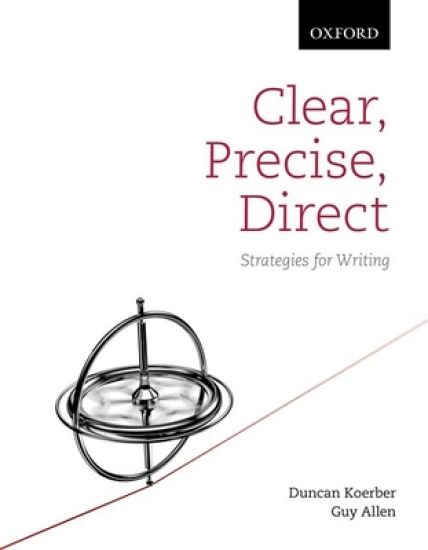
Clear, Precise, Direct

Clear, Precise, Direct

Duncan Koerber; Guy Allen

Oxford University Press, Canada
2014
nidottu
Clear, Precise, Direct provides a concise set of strategies to help students improve their writing skills at the sentence level with a focus on application and revision. Students will learn the key principles of clear, effective writing and practice applying them to their own work through a series of lessons, exercises, and peer writing samples.
Police Family Liaison

Police Family Liaison

Duncan McGarry; Kevin Smith

Oxford University Press
2011
nidottu
This new book is the first practical guide to the sensitive topic of family liaison, aimed directly at the police. The text focuses on the key role that family liaison plays in the police service, explains how the role has developed and provides practitioners with a clear understanding of why relatives and friends are entitled to the highest standard of response from the police but also why no investigation can be truly effective without this relationship being supported, resourced and supervised throughout. The book covers a wide range of important issues including the development and delivery of training, operating protocols, contacting and establishing relationships with the family, management and mass fatalities. Highly practical, the book includes examples, illustrative diagrams, summary sections and checklists, plus a wide range of case study chapters based on key events, including the the Ladbroke Grove Rail Crash, the 2004 Tsunami, the Bali Bombings, the September 11th attacks and the London Bombings of July 7th. This book is a must for all those who work in this difficult area. The Blackstone's Practical Policing Series is a collection of highly practical, up-to-date titles covering a range of essential subjects in today's policing arena. Developed from a detailed understanding of police information needs, this series seeks to explain the relevant law, practice and procedure from a police officer's perspective.
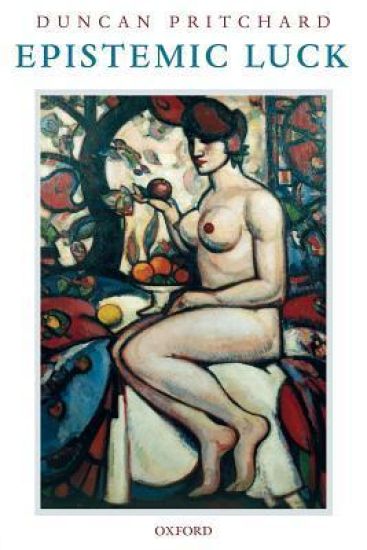
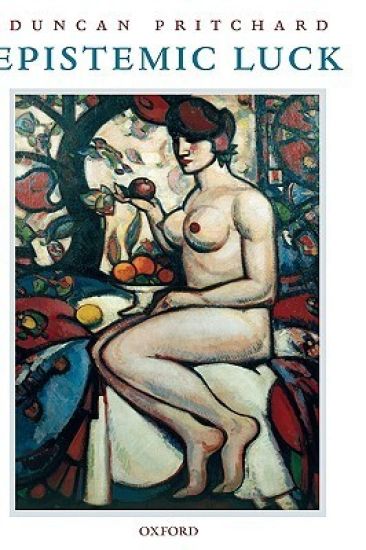
Epistemic Luck

Epistemic Luck

Duncan Pritchard

Clarendon Press
2007
nidottu
One of the key supposed 'platitudes' of contemporary epistemology is the claim that knowledge excludes luck. One can see the attraction of such a claim, in that knowledge is something that one can take credit for - it is an achievement of sorts - and yet luck undermines genuine achievement. The problem, however, is that luck seems to be an all-pervasive feature of our epistemic enterprises, which tempts us to think that either scepticism is true and that we don't know very much, or else that luck is compatible with knowledge after all. In this book, Duncan Pritchard argues that we do not need to choose between these two austere alternatives, since a closer examination of what is involved in the notion of epistemic luck reveals varieties of luck that are compatible with knowledge possession and varieties that aren't. Moreover, Pritchard shows that a more nuanced understanding of the relationship between luck and knowledge can cast light on many of the most central topics in contemporary epistemology. These topics include: the externalism/internalism distinction; virtue epistemology; the problem of scepticism; metaepistemological scepticism; modal epistemology; and the problem of moral luck. All epistemologists will need to come to terms with Pritchard's original and incisive contribution.
Statistical Methods in Environmental Epidemiology

Statistical Methods in Environmental Epidemiology

Duncan C. Thomas

Oxford University Press
2009
sidottu
Environmental epidemiology is the study of the environmental causes of disease in populations and how these risks vary in relation to intensity and duration of exposure and other factors like genetic susceptibility. As such, it is the basic science upon which governmental safety standards and compensation policies for environmental and occupational exposure are based. Profusely illustrated with examples from the epidemiologic literature on ionizing radiation and air pollution, this text provides a systematic treatment of the statistical challenges that arise in environmental health studies and the use epidemiologic data in formulating public policy, at a level suitable for graduate students and epidemiologic researchers. After a general overview of study design and statistical methods for epidemiology generally, the book goes on to address the problems that are unique to environmental health studies, special-purpose designs like two-phase case-control studies and countermatching, statistical methods for modeling exposure-time-response relationships, longitudinal and time-series studies, spatial and ecologic methods, exposure measurement error, interactions, and mechanistic models. It also discusses studies aimed at evaluating the public health benefits of interventions to improve the environment, the use of epidemiologic data to establish environmental safety standards and compensation policy, and concludes with emerging problems in reproductive epidemiology, natural and man-made disasters like global warming, and the global burden of environmentally caused disease. No other book provides such a broad perspective on the methodological challenges in this field at a level accessible to both epidemiologists and statisticians.
The Dynamics of Strategy

The Dynamics of Strategy

Duncan A. Robertson; Adrián A. Caldart

Oxford University Press
2009
sidottu
As the life span of business models reduces, firms have had to review their strategic intent, develop strategic initiatives in fast and imaginative ways, and engage in major reorganization. This book examines the dynamics of strategy and helps to make sense of the processes of strategizing and organizing in a dynamic environment. The Dynamics of Strategy draws on theoretical perspectives that enable readers to describe and understand the dynamics of the firm's competitive landscape, the dynamics of the organizational landscape, and the interdependencies between these landscapes. The book combines research rooted in economics and organizational theory, and also builds on interdisciplinary studies using a wide range of research paradigms and methods. This broad range of theoretical perspectives allows a comprehensive analysis of the complex and multidimensional problems facing the contemporary fi rm. In order to help the reader connect sound theory with the reality of strategy, theoretical discussion is illustrated with case studies of fi rms from a wide range of industries. Written for managers and management students, The Dynamics of Strategy provides a roadmap to understanding the dynamics of organizing and strategizing.
The Dynamics of Strategy

The Dynamics of Strategy

Duncan A. Robertson; Adrián A. Caldart

Oxford University Press
2009
nidottu
As the life span of business models reduces, firms have had to review their strategic intent, develop strategic initiatives in fast and imaginative ways, and engage in major reorganization. This book examines the dynamics of strategy and helps to make sense of the processes of strategizing and organizing in a dynamic environment. The Dynamics of Strategy draws on theoretical perspectives that enable readers to describe and understand the dynamics of the firm's competitive landscape, the dynamics of the organizational landscape, and the interdependencies between these landscapes. The book combines research rooted in economics and organizational theory, and also builds on interdisciplinary studies using a wide range of research paradigms and methods. This broad range of theoretical perspectives allows a comprehensive analysis of the complex and multidimensional problems facing the contemporary fi rm. In order to help the reader connect sound theory with the reality of strategy, theoretical discussion is illustrated with case studies of fi rms from a wide range of industries. Written for managers and management students, The Dynamics of Strategy provides a roadmap to understanding the dynamics of organizing and strategizing.
Nietzsche and Proust

Nietzsche and Proust

Duncan Large

Clarendon Press
2001
sidottu
This book combines a Nietzschean reading of Proust's novel A la recherche du temps perdu with a Proustian reading of time and transcendence in Nietzsche's philosophy. Drawing in particular on Gilles Deleuze's early studies of the two writers, it argues (against Jacques Derrida and Julia Kristeva) that they pursue a parallel programme of overcoming post-Kantian idealism through an emphasis on the materiality of the body and the 'genealogy' of its interpretations. 'Proust's perspectivism' is analysed in the context of Nietzsche's radical epistemological relativism, the key themes of involuntary memory and eternal recurrence are read together as elements in a shared aesthetics of self-creation, and in conclusion the complex temporalities of Nietzsche and Proust's 'untimely' texts are shown to issue into the problematics of the 'postmodern'.
State Liability in Tort

State Liability in Tort

Duncan Fairgrieve

Oxford University Press
2003
sidottu
This work examines financial compensation for wrongs committed by public bodies including medical negligence, educational errors, child abuse by local authority carers, and police misconduct. Recent English cases are analysed and compared with European decisions. Explanation is given of ways of gaining compensation outside the courts.
Epistemic Luck

Epistemic Luck

Duncan Pritchard

Clarendon Press
2005
sidottu
One of the key supposed 'platitudes' of contemporary epistemology is the claim that knowledge excludes luck. One can see the attraction of such a claim, in that knowledge is something that one can take credit for - it is an achievement of sorts - and yet luck undermines genuine achievement. The problem, however, is that luck seems to be an all-pervasive feature of our epistemic enterprises, which tempts us to think that either scepticism is true and that we don't know very much, or else that luck is compatible with knowledge after all. In this book, Duncan Pritchard argues that we do not need to choose between these two austere alternatives, since a closer examination of what is involved in the notion of epistemic luck reveals varieties of luck that are compatible with knowledge possession and varieties that aren't. Moreover, Pritchard shows that a more nuanced understanding of the relationship between luck and knowledge can cast light on many of the most central topics in contemporary epistemology. These topics include: the externalism/internalism distinction; virtue epistemology; the problem of scepticism; metaepistemological scepticism; modal epistemology; and the problem of moral luck. All epistemologists will need to come to terms with Pritchard's original and incisive contribution.
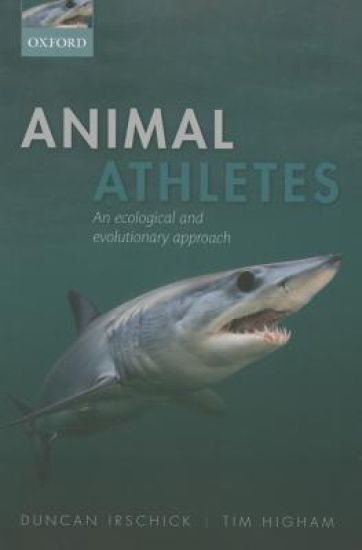
Animal Athletes

Animal Athletes

Duncan J. Irschick; Timothy E. Higham

Oxford University Press
2015
sidottu
Animals perform many athletic tasks to an amazing degree of accomplishment: not only spectacular feats of running and jumping but also routine actions that ensure survival such as feeding, vocalization, diving, flying, and many more. The study of performance capacity (defined as the ability of an animal to conduct a key task) is of great interest to both ecologists and evolutionary biologists. At an ecological level, how well individuals perform often dictates opportunities for reproduction, occupation of preferred territories, or capturing prey. Therefore, variation in performance capacities can be a key determinant of variation in fitness within animal populations. At an evolutionary level, variation in function often follows closely from variation in form, and therefore enables animals to invade novel habitats, or to overtake other species. This novel book examines how and why animal athletes have evolved. It uses examples from across the animal kingdom and integrates them in the broader context of ecology and evolution, thereby identifying common themes that transcend taxonomic divisions. Animal Athletes is an accessible textbook of particular relevance to undergraduates, graduate students, researchers, and professionals in the fields of evolutionary biology, ecology, vertebrate morphology, and functional, morphology,and will also appeal to the interested layperson.
Animal Athletes

Animal Athletes

Duncan J. Irschick; Timothy E. Higham

Oxford University Press
2015
nidottu
Animals perform many athletic tasks to an amazing degree of accomplishment: not only spectacular feats of running and jumping but also routine actions that ensure survival such as feeding, vocalization, diving, flying, and many more. The study of performance capacity (defined as the ability of an animal to conduct a key task) is of great interest to both ecologists and evolutionary biologists. At an ecological level, how well individuals perform often dictates opportunities for reproduction, occupation of preferred territories, or capturing prey. Therefore, variation in performance capacities can be a key determinant of variation in fitness within animal populations. At an evolutionary level, variation in function often follows closely from variation in form, and therefore enables animals to invade novel habitats, or to overtake other species. This novel book examines how and why animal athletes have evolved. It uses examples from across the animal kingdom and integrates them in the broader context of ecology and evolution, thereby identifying common themes that transcend taxonomic divisions. Animal Athletes is an accessible textbook of particular relevance to undergraduates, graduate students, researchers, and professionals in the fields of evolutionary biology, ecology, vertebrate morphology, and functional morphology, and will also appeal to the interested layperson.
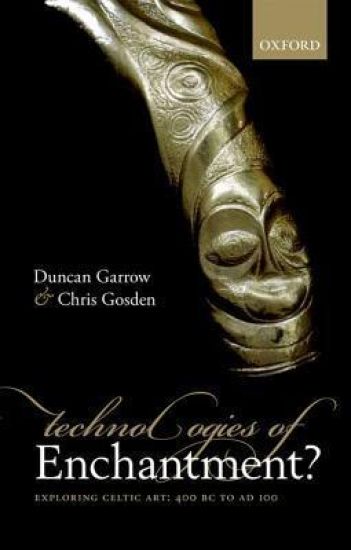
Technologies of Enchantment?

Technologies of Enchantment?

Duncan Garrow; Chris Gosden

Oxford University Press
2012
sidottu
While Celtic art includes some of the most famous archaeological artefacts in the British Isles, such as the Battersea shield or the gold torcs from Snettisham, it has often been considered from an art historical point of view. Technologies of Enchantment? Exploring Celtic Art attempts to connect Celtic art to its archaeological context, looking at how it was made, used, and deposited. Based on the first comprehensive database of Celtic art, it brings together current theories concerning the links between people and artefacts found in many areas of the social sciences. The authors argue that Celtic art was deliberately complex and ambiguous so that it could be used to negotiate social position and relations in an inherently unstable Iron Age world, especially in developing new forms of identity with the coming of the Romans. Placing the decorated metalwork of the later Iron Age in a long-term perspective of metal objects from the Bronze Age onwards, the volume pays special attention to the nature of deposition and focuses on settlements, hoards, and burials -- including Celtic art objects' links with other artefact classes, such as iron objects and coins. A unique feature of the book is that it pursues trends beyond the Roman invasion, highlighting stylistic continuities and differences in the nature and use of fine metalwork.
William Hazlitt

William Hazlitt

Duncan Wu

Oxford University Press
2008
sidottu
Romanticism is where the modern age begins, and Hazlitt was its most articulate spokesman. No one else had the ability to see it whole; no one else knew so many of its politicians, poets, and philosophers. By interpreting it for his contemporaries, he speaks to us of ourselves - of the culture and world we now inhabit. Perhaps the most important development of his time, the creation of a mass media, is one that now dominates our lives. Hazlitt's livelihoo was dependent on it. As the biography argues, he took political sketch-writing to a new level, invented sports commentary as we know it, and created the essay-form as practised by Clive James, Gore Vidal, and Michael Foot. Duncan Wu's profile of one of the greatest journalists in the language draws on over a decade of archival research in libraries across Britain and North America, to reveal for the first time such matters as why Godwin broke with Hazlitt; how Hazlitt came to know Sir John Soane and J. M. W. Turner; the true nature of Hazlitt's dealings with Thomas Medwin, and what the likes of Joseph Farington and Sir Thomas Lawrence thought of him. In addition, it sheds new light on Hazlitt's dealings with such figures as Francis Jeffrey, Robert Stodart, John M'Creery, Henry Crabb Robinson, Joseph Parkes, John Cam Hobhouse, and Stendhal. It benefits also from Wu's New Writings of William Hazlitt, many of which make their appearance here, illuminating hitherto obscure passages of Hazlitt's life.
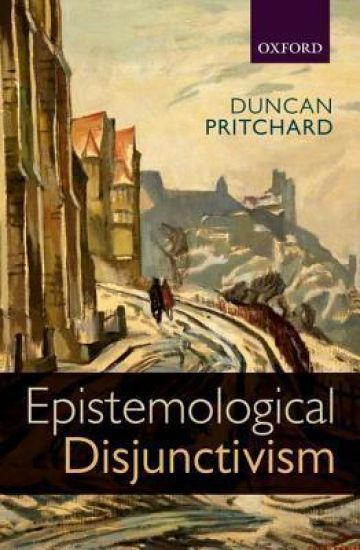
Epistemological Disjunctivism

Epistemological Disjunctivism

Duncan Pritchard

Oxford University Press
2012
sidottu
Duncan Pritchard offers an original defence of epistemological disjunctivism. This is an account of perceptual knowledge which contends that such knowledge is paradigmatically constituted by a true belief that enjoys rational support which is both factive and reflectively accessible to the agent. In particular, in a case of paradigmatic perceptual knowledge that p, the subject's rational support for believing that p is that she sees that p, where this rational support is both reflectively accessible and factive (i.e., it entails p). Such an account of perceptual knowledge poses a radical challenge to contemporary epistemology, since by the lights of standard views in epistemology this proposal is simply incoherent. Pritchard's aim in Epistemological Disjunctivism is to show that this proposal is theoretically viable (i.e., that it does not succumb to the problems that it appears to face), and also to demonstrate that this is an account of perceptual knowledge which we would want to endorse if it were available on account of its tremendous theoretical potential. In particular, he argues that epistemological disjunctivism offers a way through the impasse between epistemic externalism and internalism, and also provides the foundation for a distinctive response to the problem of radical scepticism.
Oxford Handbook of Practical Drug Therapy

Oxford Handbook of Practical Drug Therapy

Duncan Richards; Jeffrey Aronson; D. John Reynolds; Jamie Coleman

Oxford University Press
2011
muu
Safe and effective prescribing is a cornerstone of proper patient care. There has in recent years been a significant increase in the numbers of healthcare professionals able to prescribe; however, sources of drug information tend to focus on only one area of prescribing. The Oxford Handbook of Practical Drug Therapy links practical information about how to use medicines with concise details about the pharmacology of a drug, and the principles of clinical pharmacology that govern its action. The overall structure of this handbook is similar to the UK national formulary, with topics on each drug arranged broadly by therapeutic category. When a drug has several different uses, these are brought together in a single topic, allowing the reader to appreciate its full range of actions, whether therapeutic or adverse. Each drugs topic provides information in a clearly laid out and standardised form, and includes a graphical representation of the pharmacological actions of the drug, and its potential uses, practical advice on a drug's major indications, a list of common and serious adverse effects, major drug-drug interactions, practical advice on monitoring for therapeutic and adverse effects, and what to tell the patient. Teaching points throughout the text draw out pharmacological principles, so that readers can increase their basic knowledge by linking theory with practical examples. Also included are several boxes giving guidance on the approach to therapy of specific diseases an clinical problems. In some cases, algorithms for the treatment of medical emergencies are given, and this new edition features case histories throughout the text to illustrate the issues one may face in practical prescribing. The Oxford Handbook of Practical Drug Therapy brings together for the first time in a single book really practical information on safe prescribing, with the background knowledge that underpins clinical pharmacology. Fully revised with new guidance and important safety information, this book is aimed primarily at medical students and trainees, it will also be invaluable to family doctors, clinical pharmacists, and nurse prescribers.
The Nature and Value of Knowledge

The Nature and Value of Knowledge

Duncan Pritchard; Alan Millar; Adrian Haddock

Oxford University Press
2010
sidottu
This volume comprises three distinct investigations into the relationship between the nature and the value of knowledge. Each is written by one of the authors in consultation with the other two. 'Knowledge and Understanding' (by Duncan Pritchard) critically examines virtue-theoretic responses to the problem of the value of knowledge, and argues that the finally valuable cognitive state is not knowledge but understanding. 'Knowledge and Recognition' (by Alan Millar) develops an account of knowledge in which the idea of a recognitional ability plays a prominent role, and argues that this account enables us better to understand knowledge and its value. 'Knowledge and Action' (by Adrian Haddock) argues for an account of knowledge and justification which explains why knowledge is valuable, and enables us to make sense of the knowledge we have of our intentional actions.
Blackstone's Guide to the Criminal Procedure Rules

Blackstone's Guide to the Criminal Procedure Rules

Duncan Atkinson; Tim Moloney QC

Oxford University Press
2011
nidottu
The Blackstone's Guide Series delivers concise and accessible books covering the latest legislative changes and amendments. Published soon after enactment, they offer expert commentary by leading names on the scope, extent and effects of the legislation, plus a full copy of the Act itself. They offer a cost-effective solution to key information needs and are the perfect companion for any practitioner needing to get up to speed with the latest changes. The Criminal Procedure Rules govern all aspects of criminal procedure in all criminal courts. The Rules were designed to bring about a cultural change and all those involved in the criminal justice system are affected by the new regime. While many practitioners initially thought that they would have little impact upon the criminal courts, they have become an essential litigation framework. They consolidate all procedural rules with new provisions aimed at increasing efficiency and improving case management. Amendments to the rules made since their introduction render them a cradle to grave pathway that practitioners must follow, codifying rules previously contained in hundreds of different documents. The new edition of this Guide provides a full, clear analysis of the Rules, and places them in context, tracking the development of the rules since their introduction in 2005. Following the structure of the Rules, and including checklists of time limits and key tasks to be performed, the Blackstone's Guide to the Criminal Procedure Rules is an essential purchase for criminal practitioners, magistrates, and judges. The Guide contains the full updated Criminal Procedure Rules 2010, and the Consolidated Criminal Practice Direction, providing a comprehensive and up-to-date collection of relevant procedural materials.
William Hazlitt

William Hazlitt

Duncan Wu

Oxford University Press
2010
nidottu
Romanticism is where the modern age begins, and Hazlitt was its most articulate spokesman. No one else had the ability to see it whole; no one else knew so many of its politicians, poets, and philosophers. By interpreting it for his contemporaries, he speaks to us of ourselves - of the culture and world we now inhabit. Perhaps the most important development of his time, the creation of a mass media, is one that now dominates our lives. Hazlitt's livelihood was dependent on it. As the biography argues, he took political sketch-writing to a new level, invented sports commentary as we know it, and created the essay-form as practised by Clive James, Gore Vidal, and Michael Foot. Duncan Wu's profile of one of the greatest journalists in the language draws on over a decade of archival research in libraries across Britain and North America, to reveal for the first time such matters as why Godwin broke with Hazlitt; how Hazlitt came to know Sir John Soane and J. M. W. Turner; the true nature of Hazlitt's dealings with Thomas Medwin, and what the likes of Joseph Farington and Sir Thomas Lawrence thought of him. In addition, it sheds new light on Hazlitt's dealings with such figures as Francis Jeffrey, Robert Stodart, John M'Creery, Henry Crabb Robinson, Joseph Parkes, John Cam Hobhouse, and Stendhal. It benefits also from Wu's New Writings of William Hazlitt, many of which make their appearance here, illuminating hitherto obscure passages of Hazlitt's life.