Kirjojen hintavertailu. Mukana 12 016 292 kirjaa ja 12 kauppaa.

Kirjahaku

Etsi kirjoja tekijän nimen, kirjan nimen tai ISBN:n perusteella.

1000 tulosta hakusanalla E. W. Simson

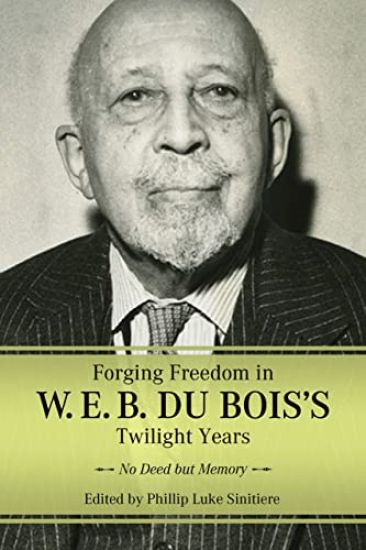
Forging Freedom in W. E. B. Du Bois's Twilight Years
Contributions by Murali Balaji, Charisse Burden-Stelly, Christopher Cameron, Carlton Dwayne Floyd, Robert Greene II, Andre E. Johnson, Werner Lange, Lisa J. McLeod, Jodi Melamed, Tyler Monson, Eric Porter, Reiland Rabaka, Thomas Ehrlich Reifer, Camesha Scruggs, and Phillip Luke Sinitiere Although the career of W. E. B. Du Bois was remarkable in its entirety, a large majority of scholarship focuses on the first five or six decades. Overlooked and understudied, the closing three decades of Du Bois’s career reflect a generative period of his life in terms of teaching, travel, activism, and publications. Forging Freedom in W. E. B. Du Bois's Twilight Years: No Deed but Memory proposes to narrate the political, social, and cultural significance of Du Bois’s career during the controversial closing three decades of his life.. Du Bois’s twilight years were tremendously controversial: his persistent criticism of the collusion between capitalism and racism and his choice to join the Communist Party in late 1961 raised the ire of many. At the time, Du Bois’s strident advocacy of socialism and turn to communism during the Cold War oriented most scholars away from delving into his late career. While only a few scholars have engaged the productivity of Du Bois’s later years, the fact is that an anticommunist, antiradical animus has followed Du Bois in the half century since his death. As a result, Du Bois scholarship remains impoverished to the extent that academics neglect his later years. The essays in Forging Freedom in W. E. B. Du Bois's Twilight Years detail selected aspects of Du Bois’s later decades and their particular connection to American social, political, and cultural history between the 1930s and the 1960s. While international concerns and a global perspective also fundamentally defined Du Bois’s latter years, chronicling his final decades in a US context presents fresh insight into his twilight years. Du Bois’s commitment to freedom’s flourishing during this period animated the Black freedom struggle’s war against white supremacy. Ultimately, this book demonstrates that the durability of Du Bois’s intellectual achievements remains relevant to the twenty-first century.

Cosmopolitanism in the Fictive Imagination of W. E. B. Du Bois
This book traces W.E.B. Du Bois’s fictionalization of history in his five major works of fiction and in his debut short story The Souls of Black Folk through a thematic framework of cosmopolitanism. In texts like The Negro and Black Folk: Then and Now, Du Bois argues that the human race originated from a single source, a claim authenticated by anthropologists and the Human Genome Project. This book breaks new ground by demonstrating the fashion in which the variants of cosmopolitanism become a profound theme in Du Bois’s contribution to fiction. In general, cosmopolitanism claims that people belong to a single community informed by common moral values, function through a shared economic nomenclature, and are part of political systems grounded in mutual respect. This book addresses Du Bois’s works as important additions to the academy and makes a significant contribution to literature by first demonstrating the way in which fiction could be utilized in discussing historical accounts in order to reach a global audience. “The Coming of John”, The Quest of the Silver Fleece, Dark Princess: A Romance, and The Black Flame, an important trilogy published sequentially as The Ordeal of Mansart, Mansart Builds a School, and Worlds of Color are grounded in historical occurrences and administer as social histories providing commentary on Reconstruction, Jim Crow segregation, African American leadership, school desegregation, the Pan-African movement, imperialism, and colonialism in Africa, Asia, and the Caribbean.
Cosmopolitanism in the Fictive Imagination of W. E. B. Du Bois
This book traces W.E.B. Du Bois’s fictionalization of history in his five major works of fiction and in his debut short story The Souls of Black Folk through a thematic framework of cosmopolitanism. In texts like The Negro and Black Folk: Then and Now, Du Bois argues that the human race originated from a single source, a claim authenticated by anthropologists and the Human Genome Project. This book breaks new ground by demonstrating the fashion in which the variants of cosmopolitanism become a profound theme in Du Bois’s contribution to fiction. In general, cosmopolitanism claims that people belong to a single community informed by common moral values, function through a shared economic nomenclature, and are part of political systems grounded in mutual respect. This book addresses Du Bois’s works as important additions to the academy and makes a significant contribution to literature by first demonstrating the way in which fiction could be utilized in discussing historical accounts in order to reach a global audience. “The Coming of John”, The Quest of the Silver Fleece, Dark Princess: A Romance, and The Black Flame, an important trilogy published sequentially as The Ordeal of Mansart, Mansart Builds a School, and Worlds of Color are grounded in historical occurrences and administer as social histories providing commentary on Reconstruction, Jim Crow segregation, African American leadership, school desegregation, the Pan-African movement, imperialism, and colonialism in Africa, Asia, and the Caribbean.
Don't Be Scared... W R I T E !: Aspiring writers' friend
Have you got a burning ambition to write a book, but worried and unsure what to do or where to start? Have you got brilliant fascinating imagination for your book and need a little help in developing into a better writer? Then this is your book Writing your first book is always a challenge to many of us. Some of us have the confidence to float like a butterfly while some of us need that push towards our goals and this book was written solely with the aim of pushing you forward to write your first book and do everything with confidence.I decided to write this book to offer self-help topic and encourage others to find time to write a book. The writing of this book was inspired by the many friends who had the desire to write a book but didn't know where to start or do after writing the book. I decided to help them and at the same time share this knowledge with the world, especially those interested in writing their own book. There are times when we need a helping friend in order to explore the areas that we are not used to and this book is your vehicle to explore your writing skills, so keep writing and never stop Whatever comes into your mind, write it down, put it somewhere safe and sort everything later on.Over the past year, I spent my time researching and talking to other writers about the pitfalls and fascinating world of writing a book and of course helping others. I am happy to say I have finally put pen to paper and wrote this lovely book to help new aspiring writers face their fears of publishing their very first book. This book covers many topics including promoting your own book, marketing, formatting, proofreading and designing a book cover. Anyone can become a writer as long as they have an idea of what they want to write about. It takes a special kind of a person to finish writing a book and getting it published. Most new writers lack the confidence and self-belief to self-publish their writing or their first book; they don't know where to start, whom to talk to or just basically where to begin; well, you are in luck with this little book.There are many written books that never get to see the light of day; maybe the writer gave up in the end through frustration and perhaps disappointments and rejections from book publishing houses. Don't limit your potential as a writer worrying about how and where to publish your book or books. Read this book for ideas so you too can grow as a writer and perhaps an entrepreneur. You are only limited in your abilities when you put limits in your potential, expand on your potential and allow your talents, skills and abilities to shine.
The Autobiography of W. E. B. Du Bois: Great Barrington Edition

The Autobiography of W. E. B. Du Bois: Great Barrington Edition

W. E. B. Du Bois

Berkshire Publishing Group LLC
2022
nidottu
This edition of The Autobiography of W. E. B. Du Bois is the first to be arranged and dedicated in accordance with Du Bois's manuscript notes. It begins with these words: "I was born by a golden river and in the shadow of two great hills, five years after the Emancipation Proclamation which began the freeing of American Negro Slaves." Du Bois was born in the town where Berkshire Publishing Group is located. His autobiography tells the story of a little boy, the only Black boy in his school, who became the first African American PhD at Harvard, an educator, editor, and activist, and a writer of expressive, lyrical, and accessible prose. In this book, he explains why he chose to become a communist. While the communism he praised did not turn out to offer the utopia so many hoped for, the problems he identified are still with us. His reasoning will resonant with modern readers who share his frustration with the continued inequities in our society.The Autobiography is a fascinating and often horrifying look at the experience of a Black man in America. Literary critic Irving Howe called it "a classic of American narrative, . . . packed with information and opinion about the early years of Negro protest." But, like many, he found the later chapters, in which Du Bois reflects the official Communist views of the times, to read "as if they came from the very heart of a mimeograph machine." But these chapters, too, are part of US history. The short essay on Communism is especially worth reading it speaks to issues on our minds today, and puts Du Bois's communism in context. His reasoning, and emotion, will resonant with modern readers who share his frustration with the continued inequities in our society. While the Communism he praised did not turn out to offer the utopia so many hoped for, the problems he identified are still with us.And now that the chapters about his early life are in their proper place, we hope readers will note the personal and revelatory tone of the chapter "My Character." Along with an analysis of his own character, not always favorable, he discusses his sexual experience, including early ignorance, being raped as a young man by an unhappy landlady, and never convincing his wife that sexual relations were "the most beautiful of human experiences."Berkshire Publishing Group was founded in Great Barrington, the small western Massachusetts town where Du Bois was born and educated. He wrote eloquently about the town and its people, and he is remembered today as the most influential graduate of the town's schools. Berkshire is known for its focus on international issues, especially world history. We were thrilled when we learned that Du Bois had wanted to create an Encyclopedia Africana since we have specialized in similar projects. Equally relevant was hearing from Thomas Bender, a leading scholar of transnational history, that Du Bois's Harvard dissertation on the Atlantic slave trade was one of the first publications that could truly be called transnational history.
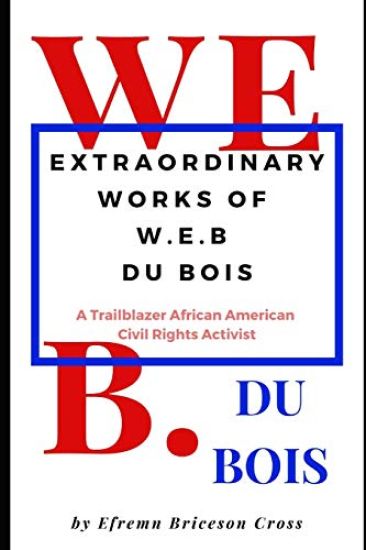
Extraordinary Works of W. E. B Du Bois: A Trailblazer African American Civil Rights Activist
Explore in-depth discovery for the extraordinary works of W. E. B. Du Bois, a trailblazer destine to be proclaimed as one of the greatest African American Civil Rights activists in history.A complete real-time review through his eyes as an African American civil rights activist, sociologist, historian, writer, editor, poet, freemason, and scholar.
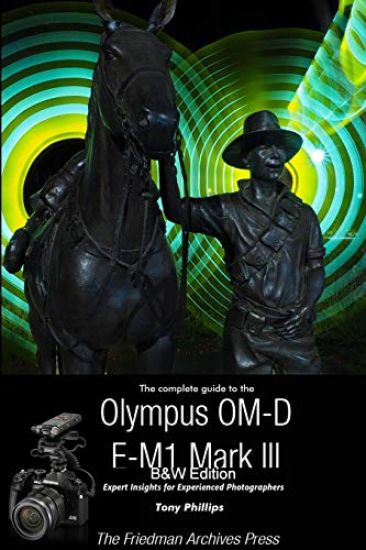
The Complete Guide To The Olympus OM-D E-M1 Mark III (B&W Edition)
The Olympus E-M1 III in plain English It is the Manual on Steroids and much more... In it, I assume you are a photographer, so I don't dive too deeply in to the basics of photography. Everything comes with clear tutorials and examples. So if you're uncertain about anything your E-M1 III does, grab this book It's packed with clear tutorials and examples, with over 500 tips, tricks, and tweaks to help you master photography with your camera. In this detailed and easy-to-read reference, professional photographer Tony Phillips simplifies the complexity and provides the shortest learning curve for this infinitely-configurable camera. This 460-page, full-color e-book: * Is packed with over 500 tips and tricks to help you master photography with an E-M1 III. * Includes all the author's camera settings - with explanations. * Explains why all glass (Olympus lenses) are not born equal. * Provides an explanation of every function in plain English, with relevant menu items grouped together so you can get a good feel for all of the features' dependencies. * Includes a step-by-step guide to Wi-Fi & the Smart Phone app, including cool things to do with it. * Explores movie mode. * Has a great, rational exploration of RAW vs JPG.