Kirjojen hintavertailu. Mukana 11 627 220 kirjaa ja 12 kauppaa.

Kirjahaku

Etsi kirjoja tekijän nimen, kirjan nimen tai ISBN:n perusteella.

1000 tulosta hakusanalla Edgard Auguin

Edgar G. Ulmer

Edgar G. Ulmer

Lexington Books
2008
sidottu
Edgar G. Ulmer: Detour on Poverty Row illuminates the work of this under-appreciated film auteur through 21 new essays penned by a range of scholars from around the globe. Ulmer, an immigrant to Hollywood who fell from grace in Tinseltown after only one studio film, became one of the reigning directors of Poverty Row B-movies. Structured in four sections, Part I examines various contexts important to Ulmer's career, such as his work at the Producers Releasing Corporation (PRC), and his work in exploitation films and ethnic cinema. Part II analyzes Ulmer's film noirs, featuring an emphasis on Detour (1945) and Murder Is My Beat (1955). Part III covers a variety of Ulmer's individual films, ranging from Bluebeard (1944) and Carnegie Hall (1947) to The Man from Planet X (1951) and Daughter of Dr. Jekyll (1957). Part IV concludes the volume with a case study of The Black Cat (1934), offering three different analyses of Ulmer's landmark horror film.
Edgar G. Ulmer

Edgar G. Ulmer

Lexington Books
2009
nidottu
Edgar G. Ulmer: Detour on Poverty Row illuminates the work of this under-appreciated film auteur through 21 new essays penned by a range of scholars from around the globe. Ulmer, an immigrant to Hollywood who fell from grace in Tinseltown after only one studio film, became one of the reigning directors of Poverty Row B-movies. Structured in four sections, Part I examines various contexts important to Ulmer's career, such as his work at the Producers Releasing Corporation (PRC), and his work in exploitation films and ethnic cinema. Part II analyzes Ulmer's film noirs, featuring an emphasis on Detour (1945) and Murder Is My Beat (1955). Part III covers a variety of Ulmer's individual films, ranging from Bluebeard (1944) and Carnegie Hall (1947) to The Man from Planet X (1951) and Daughter of Dr. Jekyll (1957). Part IV concludes the volume with a case study of The Black Cat (1934), offering three different analyses of Ulmer's landmark horror film.
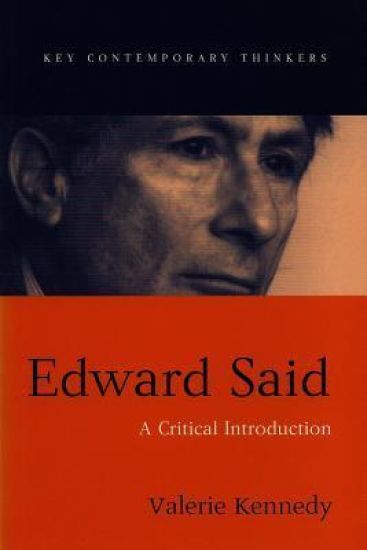
Edward Said

Edward Said

Valerie Kennedy

Polity Press
2000
nidottu
Edward Said is one of the foremost thinkers writing today. His work as a literary and cultural critic, a political commentator, and the champion of the cause of Palestinian rights has given him a unique position in western intellectual life. This new book is a major exploration and assessment of his writings in all these main areas. Focusing on Said's insistence on the connection between literature, politics and culture, Kennedy offers an overview and assessment of the main strands of Said's work, drawing out the links and contradictions between each area. The book begins with an examination of Orientalism, one of the founding texts of post-colonial studies. Kennedy looks at the book in detail, probing both its strengths and weaknesses, and linking it to its sequel, Culture and Imperialism. She then examines Said's work on the Palestinian people, with his emphasis on the need for a Palestinian narrative to counter pro-Israeli accounts of the Middle East, and his searing criticisms of US, Israeli, and even Arab governments. The book closes with an examination of Said's importance in the field of post-colonial studies, notably colonial discourse analysis and post-colonial theory, and his significance as a public intellectual. This book will be of great interest to anyone studying post-colonialism, literary theory, politics, and the Middle East, as well as anyone interested in Said's writings.
Edward Hicks: Pacifist Bishop at War
The story of outspoken pacifist bishop Edward Hicks throws new light on the problems of conscience created by World War One. Edward Hicks, Bishop of Lincoln, was already regarded as a maverick for his stance on the education of women, teetotalism, social justice, and votes for everyone. He came from a different class to that of most bishops. When war came, he was a rare dissenting voice amidst the Church's vocal support for its morality. Acclaimed author G. R. Evans draws upon Hicks's detailed diaries to reveal Edward Hicks as a man battling with his own conscience and principles, not least at seeing his sons go off to fight - one never to return. This is a fascinating glimpse into the impact the War had on an individual and those around him, who waited at home - and tried to hold onto their humanity.
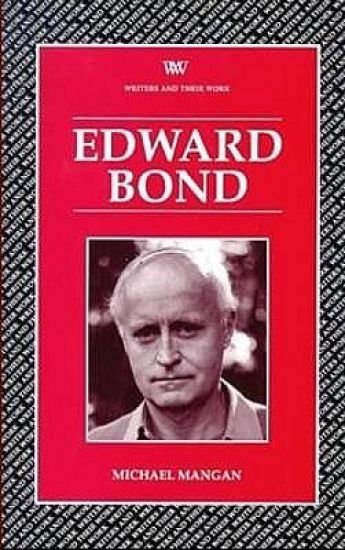
Edward Bond

Edward Bond

Michael Mangan

Liverpool University Press
1998
pokkari
Edward Bond has been, since his controversial arrival on the theatrical scene in 1965, one of Britain’s most distinctive and important theatre writers. This study examines his work, from The Pope’s Wedding (1962) to Coffee (1995). It gives an overview of the development of his distinctive dramatic language and style, and looks at his experiments with various theatrical forms and genres. It examines, too, the ways in which Bond’s insistence upon the necessity of the drama as an agent of social evolution have determined his development as a dramatist. There are sections which situate Bond’s work within its wider theatrical and political contexts, and which explore his concerns with issues such as violence, technology and social evolution, as they are expressed in plays such as Saved (1965), and Lear (1971). The study also deals with Bond’s continual dialogue with our cultural history – with the ways in which he rewrites classic plays and plunders familiar theatrical genres in order to demythologize the past.
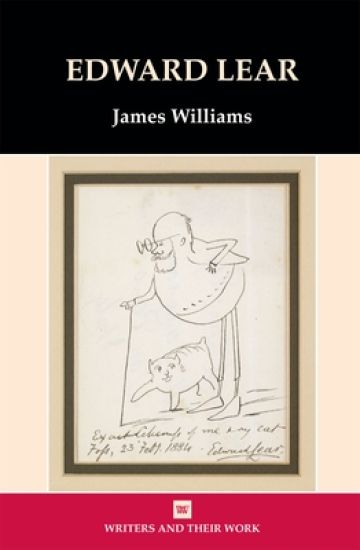
Edward Lear

Edward Lear

James Williams

Liverpool University Press
2018
sidottu
Edward Lear wrote a well-known autobiographical poem that begins ‘How pleasant to know Mr Lear!’ But how well do we really know him? On the one hand he is, in John Ashbery’s words, ‘one of the most popular poets who ever lived’; on the other hand he has often been overlooked or marginalized by scholars and in literary histories. James Williams’s account, the first book-length critical study of the poet since the 1980s, sets out to re-introduce Lear and to accord him his proper place: as a major Victorian figure of continuing appeal and relevance, and especially as a poet of beauty, comedy, and profound ingenuity. Williams approaches Lear’s work thematically, tracing some of its most fundamental subjects and situations. Grounded in attentive close readings, Williams also connects Lear’s nonsense with his various other creative endeavours: as a zoological illustrator and landscape painter, a travel writer, and a prolific diarist and correspondent.
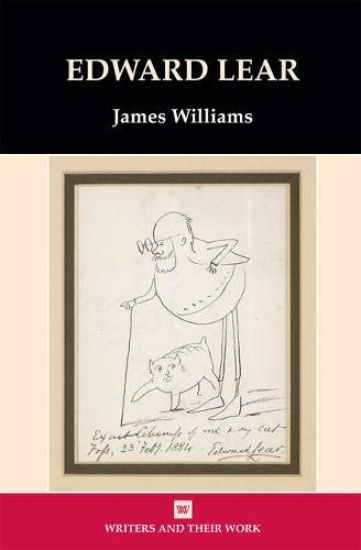
Edward Lear

Edward Lear

James Williams

Liverpool University Press
2018
nidottu
Edward Lear wrote a well-known autobiographical poem that begins ‘How pleasant to know Mr Lear!’ But how well do we really know him? On the one hand he is, in John Ashbery’s words, ‘one of the most popular poets who ever lived’; on the other hand he has often been overlooked or marginalized by scholars and in literary histories. James Williams’s account, the first book-length critical study of the poet since the 1980s, sets out to re-introduce Lear and to accord him his proper place: as a major Victorian figure of continuing appeal and relevance, and especially as a poet of beauty, comedy, and profound ingenuity. Williams approaches Lear’s work thematically, tracing some of its most fundamental subjects and situations. Grounded in attentive close readings, Williams also connects Lear’s nonsense with his various other creative endeavours: as a zoological illustrator and landscape painter, a travel writer, and a prolific diarist and correspondent.
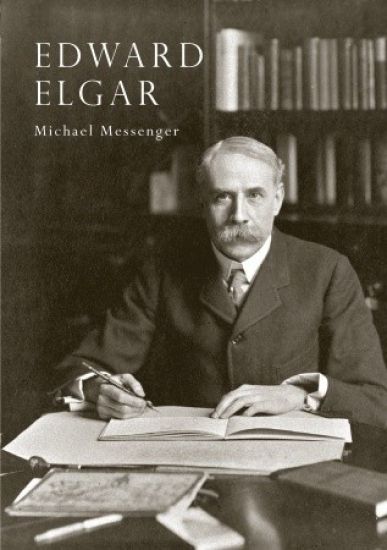
Edward Elgar

Edward Elgar

Messenger Michael

Shire Publications
2005
nidottu
Forever linked to the Last Night of the Proms, the Three Choirs Festival in Gloucester, Hereford and Worcester cathedrals, and his evocative 'Enigma Variations', Edward Elgar's music is a joy to chorcal societies and orchestras worldwide. The son of a piano tuner, born in a tiny cottage in Worcestershire, brought up as a Roman Catholic in Protestant England, withut university education or formal musical training, Elgar overcame these disadvantages to become the most famous British composer of his generation.
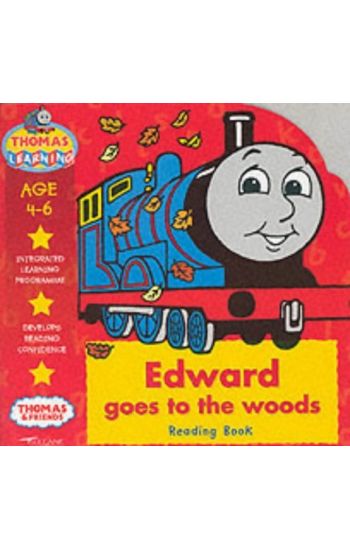
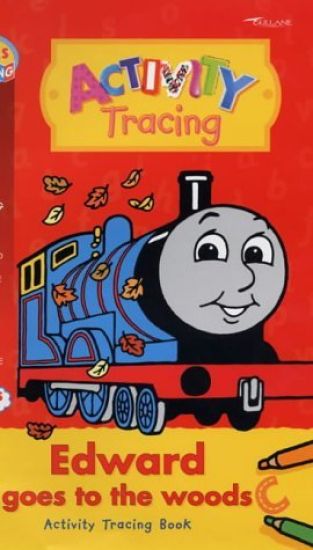
Edward Goes to the Woods
This exciting new Learning Programme Series has been researched and developed by Betty Root, a leading educational specialist. Thomas is a character who will immediately engage the attention of young children, and will be an important factor in helping them to learn.
Edward Goes to the Woods

Edward Goes to the Woods

EGMONT CHILDRENS BOOKS
2002
nidottu
This exciting new Learning Programme Series has been researched and developed by Betty Root, a leading educational specialist. Thomas is a character who will immediately engage the attention of young children, and will be an important factor in helping them to learn.
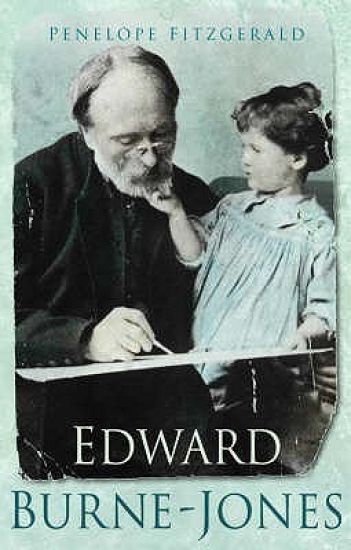
Edward Burne-Jones

Edward Burne-Jones

Penelope Fitzgerald

Sutton Publishing Ltd
2003
nidottu
Edward Burne-Jones is well known as a Pre-Raphelite painter, but little is known about his life. Here, in her first book, Penelope Fitzgerald paints a portrait of one of the most interesting and individual of all Victorian artists.
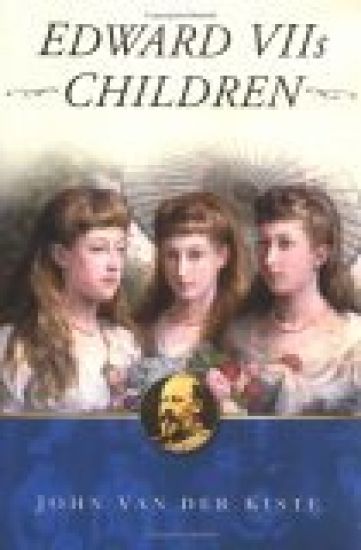
Edward VII's Children

Edward VII's Children

John Van der Kiste

Sutton Publishing Ltd
1980
pokkari
King Edward VII and Queen Alexandra had six children. Of the five who reached maturity, only one, the future King George V, has received much attention from biographers. The eldest son, Albert Victor, Duke of Clarence, a backward youth and a subject of scandal, died before he was thirty. The three princesses, Louise, Princess Royal and Duchess of Fife, the lifelong spinster Victoria, and Maud, Queen of Norway, were never well-known to the British public during their lifetime. In this detailed and fascinating account, John Van der Kiste has drawn upon previously unpublished correspondence from the Royal Archives, Windsor, to reveal for the first time the part this hitherto neglected group of characters played in supporting the royal family and crown during a period of transition from the Victorian age to the uncertain twentieth century.
Edward Lear

Edward Lear

Vivien Noakes

Sutton Publishing Ltd
2004
sidottu
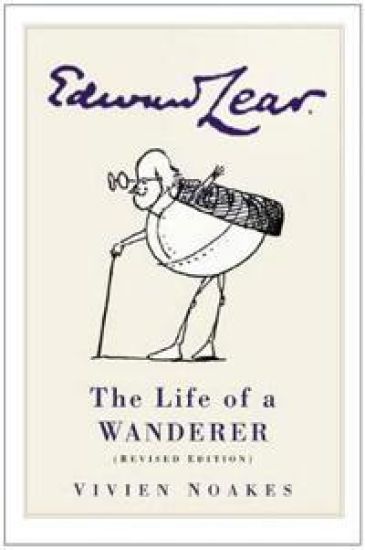
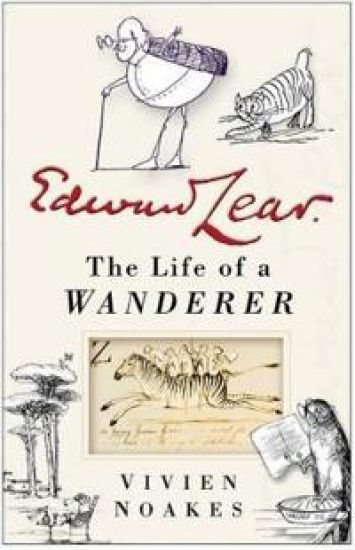
There was an Old Man of Tobago Lived long on rice, gruel and sago But at last, to his bliss The physician said this To a roast leg of mutton you may go. This original limerick inspired Lear to create more than one hundred in his First Book of Nonsense. Written to amuse the children of his patron, the Earl of Derby, the book far exceeded the author's expectations - reaching 19 printings in his lifetime, becoming top in the Pall Mall Gazette's 'List of the Best Hundred Authors' (chosen by John Ruskin), and going on to amuse children and adults up to the present day. Yet, as Vivien Noakes reveals, there was much more to Lear than his acclaimed limericks and cartoons. The youngest but one of 21 children, Lear had a constant struggle against ill-health, loneliness and depression throughout his life. An innovator in art and literature, he was born both out of time and out of place, finding the narrowness and provincialism of life in England stultifying and travelling constantly in order to find a climate and a culture that suited him. The story of Lear's life is both deeply poignant and hugely uplifting. This new edition of Vivian Noakes's highly acclaimed biography is completely revised
Edward Lear

Edward Lear

Vivien Noakes

Sutton Publishing Ltd
2006
nidottu
Edward Lear is famous as the author of "A Book of Nonsense" and of the timeless children's songs, "The Owl and the Pussycat" and "The Jumblies". Yet, for this gentle genius, infectious merriment mingled with a deep sadness. Who is the man behind the nonsense? Born the twentieth of twenty-one children, he was rejected by his mother and brought up by his eldest sister. Almost entirely self-taught, at the age of nineteen Lear published "Illustrations of the Family of Psittacidae, or Parrots", one the finest books of ornithological illustration ever produced. Then, at the age of twenty-five, he turned his back on this early success to become a traveller and landscape painter. Largely unrecognized during his lifetime, he is now considered to be one of the finest painters of the Victoria age. Always an outsider, yet at ease with the noblest in the land, Lear was a friend of the Pre-Raphaelites and of Tennyson, and was drawing master to Queen Victoria. Loved by the children whom he entertained with his songs and stories, he was an innovator in both literature and art, bringing the largely oral tradition of Nonsense into the literary fold, and accompanying his verses with powerful but simple drawings that were revolutionary in their day and set the pattern for modern cartoon illustration.
Edward Thomas

Edward Thomas

Eleanor Farjeon

Sutton Publishing Ltd
2008
nidottu
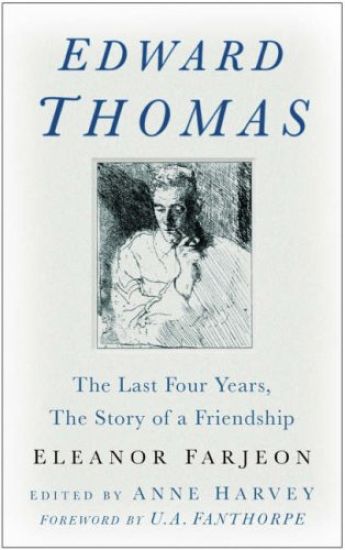
Eleanor Farjeon, first met Edward Thomas in 1912, when her brother invited him to tea. It was the beginning of a deep friendship between the shy 31-year-old woman and the reserved writer. Though he died at the Battle of Arras in 1917, it was a friendship which for Eleanor did not end with his death, but lived beyond in his letters and poems. This double memoir uses Edward's letters and Eleanor's diaries and linking commentary to provide a candid account of their developing friendship. Edward was often deeply depressed but Eleanor also shows another side to his character, capturing moments of joy and humour. She offers a unique account of Thomas' development as a poet, including the momentous meeting with American poet Robert Frost whose encouragement led to Thomas' first poems. Thomas describes for her his family, his friendships with other writers, including D.H. Lawrence, and provides a detailed account of his First World War experiences. First published in 1948, this is an acclaimed classic. This edition, published for the 90th anniversary of Thomas' death, includes an introduction by Anne Harvey, a selection of Eleanor's sonnets, and "Walking Tom", the little-known poem about Edward by Clifford Bax and Herbert Farjeon.
Edward V

Edward V

Michael Hicks

The History Press Ltd
2003
nidottu
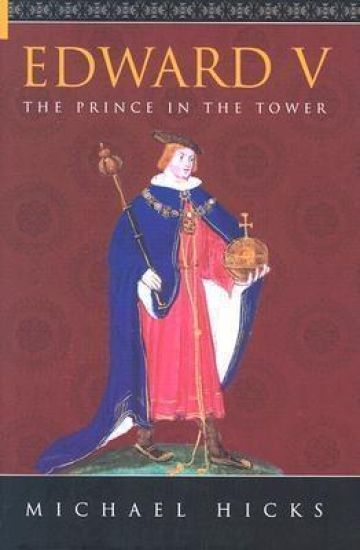
Memorable not for his life but his death, Edward V is probably better known as one of the Princes in the Tower, the supposed victim of his uncle, Richard III. Though he was never crowned, Edward reigned for 77 days until Richard made himself his nephew's Lord Protector before imprisoning him and his younger brother Richard in the Tower of London. Michael Hicks presents to us the backdrop to this tragically short life--Edward's parents, the contemporary political scenery, his own remarkable achievements--and reveals how he was both the hope of a dynasty and an integral cause of that dynasty's collapse.
Edward III

Edward III

W M Ormrod

The History Press Ltd
2004
nidottu
The fifty-year reign of one of England's most charismatic leaders is assessed in this lucid and incisive work. W.M. Ormrod traces Edward's life from his birth, when the very future of the monarchy in England was under threat, to his death when he was regarded throughout Europe as the very model of an ideal monarch.
Edgar

Edgar

Peter Rex

The History Press Ltd
2007
sidottu
Edgar is the youngest son of King Edmund of Wessex. Although he became known as Edgar 'the Peaceable' he ruled England with an iron rod. His strict government was backed up by a naval force which deterred invasion by the Vikings. This work tells the story of a Anglo-Saxon monarch who became the first King of a united England in 959.