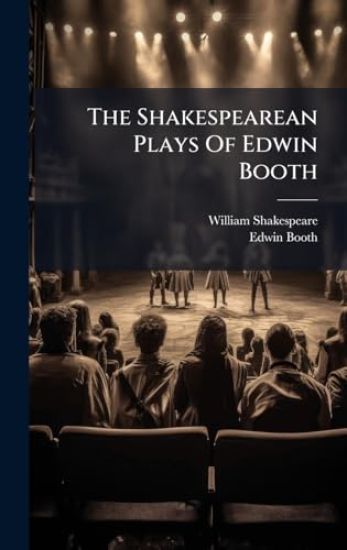
This collection, "The Shakespearean Plays Of Edwin Booth," showcases the celebrated 19th-century American actor Edwin Booth's interpretations of some of Shakespeare's most iconic works. Included are "Othello," "Richard II," "Richard III," "Henry VIII," "Much Ado About Nothing," and "Katharine and Petruchio." Booth, renowned for his nuanced portrayals and commanding stage presence, brings a unique perspective to these timeless dramas. This volume offers a glimpse into the rich theatrical history of the 19th century and the enduring legacy of Shakespearean performance. Scholars and enthusiasts alike will appreciate this compilation for its historical significance and the insight it provides into the art of acting and the interpretation of Shakespeare's plays. This work has been selected by scholars as being culturally important, and is part of the knowledge base of civilization as we know it. This work was reproduced from the original artifact, and remains as true to the original work as possible. Therefore, you will see the original copyright references, library stamps (as most of these works have been housed in our most important libraries around the world), and other notations in the work. This work is in the public domain in the United States of America, and possibly other nations. Within the United States, you may freely copy and distribute this work, as no entity (individual or corporate) has a copyright on the body of the work. As a reproduction of a historical artifact, this work may contain missing or blurred pages, poor pictures, errant marks, etc. Scholars believe, and we concur, that this work is important enough to be preserved, reproduced, and made generally available to the public. We appreciate your support of the preservation process, and thank you for being an important part of keeping this knowledge alive and relevant.
The Resettlement Administration, Farm Security Administration and Office of War Information in combination produced the largest documentary project in history. Over 100,000 photographs were taken, covering all aspects of life. This project enhanced the reputations of established photographers like Walker Evans and Ben Shahn, and it launched the careers of Dorothea Lange and Gordon Parks. Less well known photographers also captured scenes of American life that are moving, dramatic and evocative. This volume features the work of two of them, Ted Jung and Edwin Locke. Jung's small portfolio includes scenes of rural poverty captured with remarkable sympathy and respect for human dignity. Locke, who spent several years as personal secretary to Roy Stryker, who headed the documentary projects, also accepted a few assignments, and captured the beauty of New England, as well as the plight of African-American flood victims in Arkansas.
Sir John Edwin Sandys (1844–1922) was a highly esteemed Classical scholar known primarily for his History of Classical Scholarship and editions of various Classical texts. This biography, first published in 1933 and written by fellow Classicist N. G. L. Hammond, reproduces some of Sandys' correspondence and the diaries he kept during his many voyages around the Mediterranean. This book will be of value to anyone with an interest in Sandys' legacy and the history of classical scholarship.
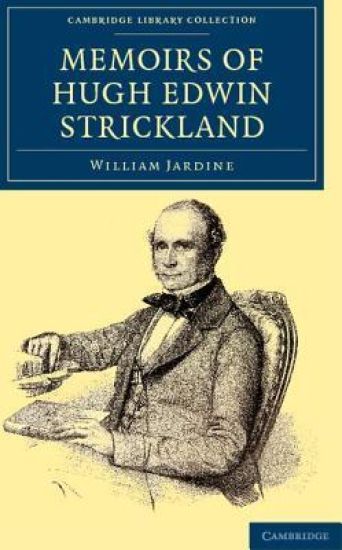
Published in 1858, this memoir recounts the life and work of the natural historian and geologist Hugh Edwin Strickland (1811–53). Written by his father-in-law, the Scottish naturalist Sir William Jardine (1800–74), the book covers Strickland's early childhood, his education at Oxford, his involvement in and influence upon the establishment of the Ray Society and his notable academic pursuits in natural history before his life was tragically cut short by a freak railway accident in 1853, when he was just forty-two. The reader will gain an insight into Strickland's character, his scientific acquaintances, including Henslow and Darwin, and his wide-ranging interests in the area of natural history, including geology, zoology, palaeontology and especially ornithology, demonstrated by his study The Dodo and its Kindred (1848). Drawing upon revealing and informative extracts from Strickland's journals throughout, the book also contains a wide selection of Strickland's shorter scientific writings.
Maxwell Fry and Jane Drew were pioneers of Modern Architecture in Britain and its former colonies from the late 1920s through to the early 1970s. As a barometer of twentieth century architecture, their work traces the major cultural developments of that century from the development of modernism, its spread into the late-colonial arena and finally, to its re-evaluation that resulted in a more expressive, formalist approach in the post-war era. This book thoroughly examines Fry and Drew's highly influential 'Tropical Architecture' in West Africa and India, whilst also discussing their British work, such as their post World War II projects for the Festival of Britain, Harlow New Town, Pilkington Brothers’ Headquarters and Coychurch Crematorium. It highlights the collaborative nature of Fry and Drew's work, including schemes undertaken with Elizabeth Denby, Walter Gropius, Denys Lasdun, Pierre Jeanneret and Le Corbusier. Positioning their architecture, writing and educational endeavours within a wider context, this book illustrates the significant artistic and cultural contributions made by Fry and Drew throughout their lengthy careers.
Edwin Sutherland is the acknowledged father of American criminology. This is the first full-length analysis of his work and his person. Unlike the European schools of criminology, which sought to locate deviant behavior within the deep structures of the economy, Sutherland eschewed such explanations in favor of proximate and observable causes. He located the sources of crime in the association and interaction of specific groups of people. For Sutherland, crime as a way of life results from an individual's attachment to criminals for whom criminal acts are a measure of success no less than a way of life.In a series of publications, Sutherland expanded the horizons of the classic "Chicago School" of interactionists, and in the process founded criminology as a separate area of research while locating it firmly within sociology. As the authors show, Sutherland's work was inspired by strong moral concerns and a sense of the needs of society for social order without falling prey to either blaming the victim or pandering to sentiment about the joys of criminal life. In this sense, he is a model of the sociological tradition long deserving of the biography acknowledging his role as a master and pioneer.Yet Gaylord and Galliher have written more than an intellectual biography. They take seriously the need to fit Sutherland and his "theory of differential association" into a social and historical context. They are also aware and critically straightforward about the limitations of Sutherland's work in criminology, but place both his achievements and their limitations in a fully developed analytical context.