From Simon & Schuster, When We Deal with Children is Fritz Redl's exploration of the children as addressed in selected writings covering multiple topics in the field.When We Deal with Children is Fritz Redl's collection including writings on the ongoing crisis in the children's field as well as ego disturbances and ego support.
As industries worldwide move toward consolidation, niche companies need to take advantage of strategies that are forward-thinking and anticipate new trends. Beating the Global Consolidation Endgame identifies nine key strategies that niche companies must master in order to outperform their markets and gain the largest benefits from consolidation. It draws from a landmark study conducted by global management consulting firm A.T. Kearney of more than 600,000 small to mid-sized niche companies over a 15-year period. A.T. Kearney thought leaders Dr. Fritz Kroeger, Dr. Andrej Vizjak, and Michael Moriarty reveal nine successful Endgame niche strategies while explaining how these strategies are most viable at certain points during consolidation. In order to time the strategies accurately, all decision makers must know what stage of industry consolidation they're in, along with the implications of each stage. This ensures a company's survival and success against global consolidators.Taking you through the Merger Endgame Theory lifecycle, the authors show you how to develop stable niche strategies by:Determining your industry's Endgame position and expected evolution of consolidation in coming yearsIdentifying industry sectors with comparable models to illuminate strategic success factors for your sectorKnowing the strengths and weaknesses of Endgame consolidation winners and losersSpotting potential market splits and new configurations for the value-creation chainDetermining the best niche options and the best sequence for executing themThese action steps are supported by case studies of leading companies around the world, including BMW, NetJets, Swatch, Ducati, and KPMG--which show how these niche fighters developed competitive advantage, survived market collapses, and delivered superior customer service while increasing their market share.
Get inside the massive search engine and learn how to make Google's enormous power work for you to find exactly what you need. This book helps you discover what librarians and researchers know and learn the best tactics and strategies for finding information on the Web, using Google search. It includes coverage of little-known Google features, such as the bargain-searching Froogle, a news service, an image search service, and more.
Corruption undermines nearly all key legal and developmental priorities today, including the effective functioning of democratic institutions and honest elections; environmental protection; human rights and human security; international development programs; and fair competition for global trade and investment. This book chronicles the global anticorruption steps taken since the movement advanced after the end of the Cold War. It provides a realistic assessment of the present state of affairs by critically evaluating what existing anticorruption programs and treaties have accomplished and documenting their shortcomings, while developing an action agenda for the next decade. The authors argue that reformative action is imperative, and the forces of globalization and digital communication will level the playing field and erode the secrecy corruption requires. They define corruption, document its effects, discuss the initiatives that changed public perception, analyze the lessons learned, and then evaluate how to move forward with existing initiatives charting a new path with new, differentiated strategies.
Corruption undermines nearly all key legal and developmental priorities today, including the effective functioning of democratic institutions and honest elections; environmental protection; human rights and human security; international development programs; and fair competition for global trade and investment. This book chronicles the global anticorruption steps taken since the movement advanced after the end of the Cold War. It provides a realistic assessment of the present state of affairs by critically evaluating what existing anticorruption programs and treaties have accomplished and documenting their shortcomings, while developing an action agenda for the next decade. The authors argue that reformative action is imperative, and the forces of globalization and digital communication will level the playing field and erode the secrecy corruption requires. They define corruption, document its effects, discuss the initiatives that changed public perception, analyze the lessons learned, and then evaluate how to move forward with existing initiatives charting a new path with new, differentiated strategies.
The problem-solving capacity, and hence the democratic legitimacy, of national governments is being weakened by the dual processes of legal and economic integration in Europe; and the loss is not fully compensated by the development of effective and legitimate problem-solving capabilities at the European level. Professor Scharpf supports his position by examining the normative underpinnings of democratic legitimacy and by a detailed analysis of the structural asymmetry between the effectiveness of the legal instruments of `negative integration' which prevents governments from interfering with the free movements of goods, services, capital, and persons and the political constraints impeding positive political action at the European level. This is particularly true for policies pertaining to the welfare state. Governing in Europe explores strategies at the national level that could succeed in maintaining welfare state goals even under conditions of international economic competition, and it also discusses the conditions under which European policy could play a protective and enabling role with regard to these national solutions. The author suggests that if these opportunities should be used, multi-level governance in Europe could indeed regain both effectiveness and legitimacy.
The problem-solving capacity, and hence the democratic legitimacy, of national governments is being weakened by the dual processes of legal and economic integration in Europe; and the loss is not fully compensated by the development of effective and legitimate problem-solving capabilities at the European level. Professor Scharpf supports his position by examining the normative underpinnings of democratic legitimacy and by a detailed analysis of the structural asymmetry between the effectiveness of the legal instruments of `negative integration' which prevents governments from interfering with the free movements of goods, services, capital, and persons and the political constraints impeding positive political action at the European level. This is particularly true for policies pertaining to the welfare state. Governing in Europe explores strategies at the national level that could succeed in maintaining welfare state goals even under conditions of international economic competition, and it also discusses the conditions under which European policy could play a protective and enabling role with regard to these national solutions. The author suggests that if these opportunities should be used, multi-level governance in Europe could indeed regain both effectiveness and legitimacy.
The book gives an up to date overview of various aspects of multidimensional continued fractions, which are here defined through iteration of piecewise fractional linear maps. This includes the algorithms of Jacobi-Perron, Güting, Brun, and Selmer but it also includes continued fractions on simplices which are related to interval exchange maps or the Parry-Daniels map. New classes of subtractive algorithms are also included and the metric properties of these algorithms can be therefore investigated by methods of ergodic theory. The recent connection between multiplicative ergodic theory and Diophantine approximation presented, as well as several results on convergence and Perron's approach to periodicity, which has never appeared in book despite being published in 1907. Further chapters include the basic properties of continued fractions in the complex plane, connections with Hausdorff dimension and the Kuzmin theory for multidimensional maps.
The general consensus among philosophers is that the use of torture is never justified. In "Terrorism, Ticking Time-Bombs, and Torture", Fritz Allhoff demonstrates the weakness of the case against torture; while allowing that torture constitutes a moral wrong, he nevertheless argues that, in exceptional cases, it represents the lesser of two evils. Allhoff does not take this position lightly. He begins by examining the way terrorism challenges traditional norms, discussing the morality of various practices of torture, and critically exploring the infamous ticking time-bomb scenario. After carefully considering these issues from a purely philosophical perspective, he turns to the empirical ramifications of his arguments, addressing criticisms of torture and analyzing the impact its adoption could have on democracy, institutional structures, and foreign policy. The crucial questions of how to justly authorize torture and how to set limits on its use make up the final section of this timely, provocative, and carefully argued book.
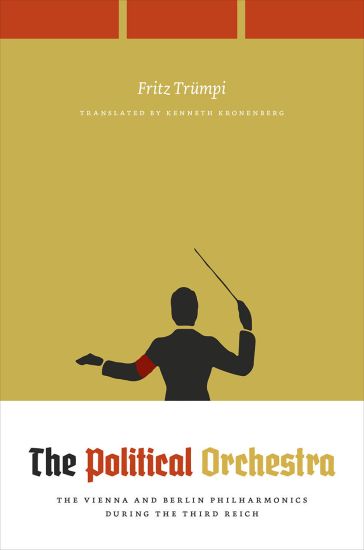
This is a groundbreaking study of the prestigious Berlin and Vienna Philharmonics during the Third Reich. Making extensive use of archival material, including some discussed here for the very first time, Fritz Tr mpi offers new insight into the orchestras' place in the larger political constellation. Tr mpi looks first at the decades preceding National Socialist rule, when the competing orchestras, whose rivalry mirrored a larger rivalry between Berlin and Vienna, were called on to represent "superior" Austro-German music and were integrated into the administrative and social structures of their respective cities becoming vulnerable to political manipulation in the process. He then turns to the Nazi period, when the orchestras came to play a major role. As he shows, each philharmonic, in its own unique way, became a tool of soft power by showcasing Germanic culture through the mass media, performances for troops and the general public, and fictional representations in literature and film. Accompanying these propaganda efforts was an increasing radicalization of the orchestras, which ranged from the dismissal of Jewish members to the programming of ideologically appropriate repertory all in the name of racial and cultural purity. Richly documented and refreshingly nuanced, The Political Orchestra is a bold exploration of the ties between music and politics under fascism.
Max Weber was one of the most influential and creative intellectual forces of the twentieth century. In his methodology of the social sciences, he both exposed the flaws and solidified the foundations of the German historical tradition. Throughout his life, he saw bureaucracy as a serious obstacle to cultural vitality but as an inescapable part of organizational rationality. And in his most famous essay, on the Protestant ethic, he uncovered the psychological underpinnings of capitalism and modern occupational life.This searching work offers the first comprehensive introduction to Weber's thought for students and newcomers. Fritz Ringer locates Weber in his historical context, relating his ideas to the controversies and politics of his day. Ringer also considers the importance of Weber to contemporary life, discussing his insights into the limits of scholarly research and the future of Western capitalist societies. Weber, Ringer reminds us, believed in democracy, liberalism, and fundamental human rights; his ethic of responsibility remains as vital to our historical moment as it was to his own.A concise and incisive look at the man and personality behind the thought, Max Weber is a masterful outing in intellectual biography and social theory.
This is a groundbreaking study of the prestigious Berlin and Vienna Philharmonics during the Third Reich. Making extensive use of archival material, including some discussed here for the first time, Fritz Trümpi offers new insight into the orchestras’ place in the larger political constellation. Trümpi looks first at the decades preceding National Socialist rule, when the competing orchestras, whose rivalry mirrored a larger rivalry between Berlin and Vienna, were called on to represent “superior” Austro-German music and were integrated into the administrative and social structures of their respective cities—becoming vulnerable to political manipulation in the process. He then turns to the Nazi period, when the orchestras came to play a major role in cultural policies. As he shows, the philharmonics, in their own unique ways, strengthened National Socialist dominance through their showcasing of Germanic culture in the mass media, performances for troops and the general public, and fictional representations in literature and film. Accompanying these propaganda efforts was an increasing politicization of the orchestras, which ranged from the dismissal of Jewish members to the programming of ideologically appropriate repertory—all in the name of racial and cultural purity. Richly documented and refreshingly nuanced, The Political Orchestra is a bold exploration of the ties between music and politics under fascism.
Fritz Stern argues that the best way to describe the character of Imperial Germany after 1878 is "illiberal", which describes the German commitment in mind and policy against any further concession to democracy. Stern argues that from Bismarck to the end of World War II, German society embraced the impulse toward totalitarianism that this illiberal stance fostered. He also examines the efforts of German scholars to explain the phenomenon of Nazism, the attempt of the German people to come to terms with their past, and the failure of illiberalism in the 1950s.
Fritz Stern argues that the best way to describe the character of Imperial Germany after 1878 is "illiberal", which describes the German commitment in mind and policy against any further concession to democracy. Stern argues that from Bismarck to the end of World War II, German society embraced the impulse toward totalitarianism that this illiberal stance fostered. He also examines the efforts of German scholars to explain the phenomenon of Nazism, the attempt of the German people to come to terms with their past, and the failure of illiberalism in the 1950s.