Kirjojen hintavertailu. Mukana 12 390 323 kirjaa ja 12 kauppaa.

Kirjahaku

Etsi kirjoja tekijän nimen, kirjan nimen tai ISBN:n perusteella.

1000 tulosta hakusanalla Gardner McFall

Language Selection and Switching in Strasbourg

Language Selection and Switching in Strasbourg

Penelope Gardner-Chloros

Clarendon Press
1991
sidottu
The term `code-switching' is used to describe the mixing of different language varieties which often results from language contact. Penelope Gardner-Chloros presents the first full-length study of code-switching in a European context. Throughout history, Alsace has been a meeting point of the Roman and Germanic worlds. In spite of its marked regional character, it has been alternately claimed by France and Germany, each anxious to assimilate the region to its own national and linguistic identity. Today most of the population still speak a Germanic dialect, alternating with French which is the language of public life, education, and the media. The author lived in Strasbourg from 1981 to 1988. She describes this exemplar of code-switching not only as a linguist, but also as someone attuned to the many layers of significance which this mode of speech has in the Alsatian community.
Global Migrants, Local Lives

Global Migrants, Local Lives

Katy Gardner

Clarendon Press
1995
sidottu
Long-term migration is one of the most important factors in the formation of cultural identities in the modern world. Immigrant communities are usually studied in the context of the country people have migrated to; Katy Gardner, however, looks at the neglected `sending' side of the equation. In the sending communities, out-migration has become a central economic and social resource - the route to social, as well as physical, mobility, transforming those who gain access to it. Dr Gardner examines the cultural context and effects of the long-term migration from Bangladesh to Britain and the Middle East, drawing on her fieldwork in the Sylhet district,an area of exceptional migration. Major aspects of Bangledeshi life such as land, family structure, marriage and religion - all of which have been affected by the heavy out-migration - are covered in detail, and the transformation of the social structure is mapped. In focusing on local ideology, this book shows how local cultural meanings are constantly negotiated and contested by different groups in the context of rapid economic change. At the heart of this important contribution to the anthropology of migration is a presentation of the dynamic nature of migration and the concomitant possibility of self-transformation it holds for migrant cultures.
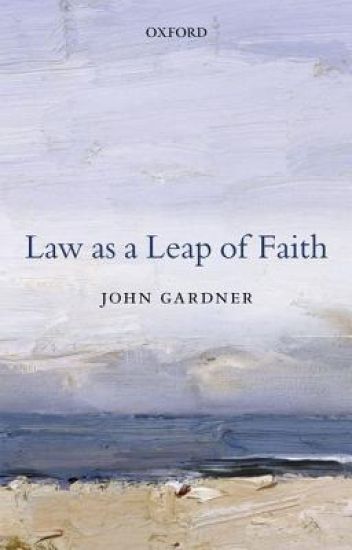
Law as a Leap of Faith

Law as a Leap of Faith

John Gardner

Oxford University Press
2014
nidottu
How do laws resemble rules of games, moral rules, personal rules, rules found in religious teachings, school rules, and so on? Are laws rules at all? Are they all made by human beings? And if so how should we go about interpreting them? How are they organized into systems, and what does it mean for these systems to have 'constitutions'? Should everyone want to live under a system of law? Is there a special kind of 'legal justice'? Does it consist simply in applying the law of the system? And how does it relate to the ideal of 'the rule of law'? These and other classic questions in the philosophy of law form the subject-matter of Law as a Leap of Faith. In this book John Gardner collects, revisits, and supplements fifteen years of celebrated writings on general questions about law and legal systems - writings in which he attempts, without loss of philosophical finesse or insight, to cut through some of the technicalities with which the subject has become encrusted in the late twentieth century. Taking his agenda broadly from H.L.A. Hart's The Concept of Law (1961), Gardner shows how the key ideas in that work live on, and how they have been and can still be improved in modest ways to meet important criticisms - in some cases by concession, in some cases by circumvention, and in some cases by restatement. In the process Gardner engages with key ideas of other modern giants of the subject including Kelsen, Holmes, Raz, and Dworkin. Most importantly he presents the main elements of his own unique and refreshingly direct way of thinking about law, brought together in one place for the first time.
From Personal Life to Private Law

From Personal Life to Private Law

John Gardner

Oxford University Press
2018
sidottu
Mounting a lawsuit against someone who has wronged you is a prospect no less fearful than being on the receiving end of such a lawsuit. Litigation in the courts has a reputation for being a byzantine process far removed from ordinary life, often failing to address people's real grievances while adding to their pain. Yes, there is money to be had if you win. But beyond that, what is it all in aid of? In this book John Gardner argues that, in spite of their legal intricacy, many of the questions that perennially occupy the courts in civil cases are actually timeless puzzles about the human condition. The architecture of the law of torts and the law of contract turns out to track the contours of personal life much more closely than you might expect. Using a wide range of examples from literature and life as well as law, Gardner explores big questions about our relationships to our own pasts and our own futures as well as to other people. What are friends for? Why does it matter how your actions turn out? What is the good of saying sorry? Why regret your mistakes? How can anyone be compensated for an irreversible loss? Why would you want to hold onto the life you already have? And what does any of this have to do with all those protracted legal disputes about damaged cars, ruined holidays, and leaky roofs?
From Personal Life to Private Law

From Personal Life to Private Law

John Gardner

Oxford University Press
2019
nidottu
Mounting a lawsuit against someone who has wronged you is a prospect no less fearful than being on the receiving end of such a lawsuit. Litigation in the courts has a reputation for being a byzantine process far removed from ordinary life, often failing to address people's real grievances while adding to their pain. Yes, there is money to be had if you win. But beyond that, what is it all in aid of? In this book John Gardner argues that, in spite of their legal intricacy, many of the questions that perennially occupy the courts in civil cases are actually timeless puzzles about the human condition. The architecture of the law of torts and the law of contract turns out to track the contours of personal life much more closely than you might expect. Using a wide range of examples from literature and life as well as law, Gardner explores big questions about our relationships to our own pasts and our own futures as well as to other people. What are friends for? Why does it matter how your actions turn out? What is the good of saying sorry? Why regret your mistakes? How can anyone be compensated for an irreversible loss? Why would you want to hold onto the life you already have? And what does any of this have to do with all those protracted legal disputes about damaged cars, ruined holidays, and leaky roofs?
Torts and Other Wrongs

Torts and Other Wrongs

John Gardner

Oxford University Press
2019
sidottu
Torts and other Wrongs is a collection of eleven of the author's essays on the theory of the law of torts and its place in the law more generally. Two new essays accompany nine previously published pieces, a number of which are already established classics of theoretical writing on private law. Together they range across the distinction between torts and other wrongs, the moral significance of outcomes, the nature and role of corrective and distributive justice, the justification of strict liability, the nature of the reasonable person standard, and the role of public policy in tort adjudication. Though focussed on the law of torts, the wide-ranging analysis in each chapter will speak to theorists of private law more generally.
Torts and Other Wrongs

Torts and Other Wrongs

John Gardner

Oxford University Press
2021
nidottu
Torts and other Wrongs is a collection of eleven of the author's essays on the theory of the law of torts and its place in the law more generally. Two new essays accompany nine previously published pieces, a number of which are already established classics of theoretical writing on private law. Together they range across the distinction between torts and other wrongs, the moral significance of outcomes, the nature and role of corrective and distributive justice, the justification
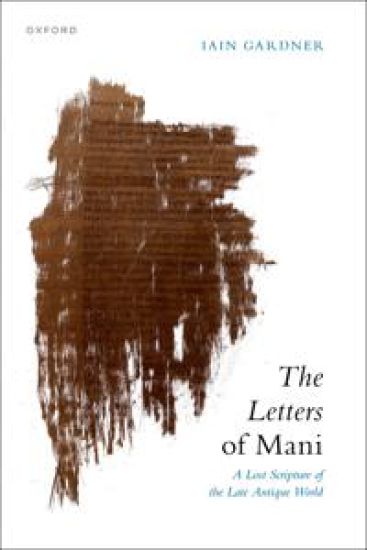
The Letters of Mani

The Letters of Mani

Iain Gardner

Oxford University Press
2026
sidottu
Mani or Manichaios was a major religious figure in early Sasanian Mesopotamia (third century CE) renowned as a healer, a visionary, an artist, and a public sage. The community that he founded, the religion of Manichaeism, spread across Eurasia from the late Roman world of the Mediterranean to south China, where it lasted into the early modern period. Due to its prominent success in Central Asia through the latter part of the first millennium, it played a major role as a conduit for ideas, literatures, and practices between east and west. Mani authored many letters in Aramaic during the years of his public mission (ca. 240–270s CE). These letters were collected together to become one 'book' in his new scriptures and the letters were regarded as canonical by followers of Manichaeism. They were translated into numerous languages and read for centuries as guides to life and faith, as well as being utilized in liturgical contexts. No complete version of The Letters survives from antiquity, but there are many remnants and quotations scattered across a diverse set of sources and languages: lengthy citations from individual letters in Latin preserved by Augustine of Hippo and his circle; codex pages preserved in Coptic and Middle Persian recovered during the twentieth century from Egypt and Xinjiang; references throughout other Manichaean literature in Coptic, Sogdian, Uighur, Chinese etc.; a list of titles preserved in Arabic by Ibn al-Nadim; and forgeries used in polemical texts that circulated in the ancient world. This major new study, the first ever dedicated to the topic, contains both a detailed study of the available evidence and a new English translation of all the relevant texts, citations, and allusions. A considerable amount of the material included is either entirely new to scholarship or only known to a small circle of specialists working on original manuscripts in diverse languages.
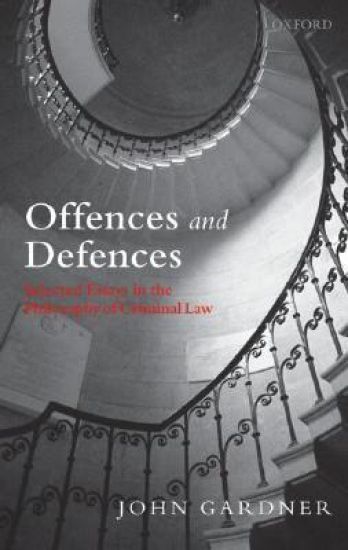
Offences and Defences

Offences and Defences

John Gardner

Oxford University Press
2007
sidottu
John Gardner's writings on the theory of criminal law have had a significant impact on the way that this subject is understood by legal scholars and philosophers. This book collects together a selection of his best-known and most provocative pieces. John Gardner tackles persistent and troublesome questions about the philosophical foundations of the criminal law. Which wrongs are suitable to be crimes and why? What are the conditions of criminal responsibility, and how do they relate to the conditions of moral responsibility? What does it take to be complicit in another's wrongdoing? Should crimes ever be excused, and if so, on what basis? How, if at all, should the criminal law adapt to conditions of social and cultural diversity? The issues raised in these essays have a significance extending beyond the law. What does it mean to be a responsible agent and why does it matter? Is my moral character only or mostly my own business? Is there a difference between being reasonable and being rational? These and many other moral problems lurk in the background of the criminal law, and the pieces in this book bring them into the foreground. Theoretical writings on the criminal law have often been dominated by a preoccupation with the justification of criminal punishment. This work is different. Although it discusses the legitimacy of criminal punishment it proceeds on the footing that the criminal law does many important things apart from punishing people. In particular, Gardner argues that the criminal law provides an important forum for people to explain themselves. Such a forum would be important, argues Gardner, even if criminal punishment were to be abolished.
Offences and Defences

Offences and Defences

John Gardner

Oxford University Press
2007
nidottu
John Gardner's writings on the theory of criminal law have had a significant impact on the way that this subject is understood by legal scholars and philosophers. This book collects together a selection of his best-known and most provocative pieces. John Gardner tackles persistent and troublesome questions about the philosophical foundations of the criminal law. Which wrongs are suitable to be crimes and why? What are the conditions of criminal responsibility, and how do they relate to the conditions of moral responsibility? What does it take to be complicit in another's wrongdoing? Should crimes ever be excused, and if so, on what basis? How, if at all, should the criminal law adapt to conditions of social and cultural diversity? The issues raised in these essays have a significance extending beyond the law. What does it mean to be a responsible agent and why does it matter? Is my moral character only or mostly my own business? Is there a difference between being reasonable and being rational? These and many other moral problems lurk in the background of the criminal law, and the pieces in this book bring them into the foreground. Theoretical writings on the criminal law have often been dominated by a preoccupation with the justification of criminal punishment. This work is different. Although it discusses the legitimacy of criminal punishment it proceeds on the footing that the criminal law does many important things apart from punishing people. In particular, Gardner argues that the criminal law provides an important forum for people to explain themselves. Such a forum would be important, argues Gardner, even if criminal punishment were to be abolished.
An Introduction to the Law of Trusts

An Introduction to the Law of Trusts

Simon Gardner

Oxford University Press
2011
sidottu
A comprehensive, stimulating introduction to trusts law, which provides readers with a clear conceptual framework to aid understanding of this challenging area of the law. Aimed at readers studying trusts at an undergraduate level, it provides a succinct and enlightening account of this area of the law. Concise and clear, this book also identifies and discusses many analytical perspectives, encouraging a deeper understanding of the issues at hand. It offers an outstanding treatment of specific areas, in particular remedial constructive trusts and trusts of family homes. Ideal for providing a broad background to the issues before embarking on an in-depth study of trusts, it can also be used to help the reader to develop their understanding. For those looking to challenge themselves, detailed footnotes highlight further issues and point the direction for future reading. Fully revised to take into account the Charities Act 2006, judicial developments through case law, and recent academic work in this area, this new edition in the renowned Clarendon Law Series offers a well-written, careful, and insightful introduction to the law of trusts.
An Introduction to the Law of Trusts

An Introduction to the Law of Trusts

Simon Gardner

Oxford University Press
2011
nidottu
A comprehensive, stimulating introduction to trusts law, which provides readers with a clear conceptual framework to aid understanding of this challenging area of the law. Aimed at readers studying trusts at an undergraduate level, it provides a succinct and enlightening account of this area of the law. Concise and clear, this book also identifies and discusses many analytical perspectives, encouraging a deeper understanding of the issues at hand. It offers an outstanding treatment of specific areas, in particular remedial constructive trusts and trusts of family homes. Ideal for providing a broad background to the issues before embarking on an in-depth study of trusts, it can also be used to help the reader to develop their understanding. For those looking to challenge themselves, detailed footnotes highlight further issues and point the direction for future reading. Fully revised to take into account the Charities Act 2006, judicial developments through case law, and recent academic work in this area, this new edition in the renowned Clarendon Law Series offers a well-written, careful, and insightful introduction to the law of trusts.
Law as a Leap of Faith

Law as a Leap of Faith

John Gardner

Oxford University Press
2012
sidottu
How do laws resemble rules of games, moral rules, personal rules, rules found in religious teachings, school rules, and so on? Are laws rules at all? Are they all made by human beings? And if so how should we go about interpreting them? How are they organized into systems, and what does it mean for these systems to have 'constitutions'? Should everyone want to live under a system of law? Is there a special kind of 'legal justice'? Does it consist simply in applying the law of the system? And how does it relate to the ideal of 'the rule of law'? These and other classic questions in the philosophy of law form the subject-matter of Law as a Leap of Faith. In this book John Gardner collects, revisits, and supplements fifteen years of celebrated writings on general questions about law and legal systems - writings in which he attempts, without loss of philosophical finesse or insight, to cut through some of the technicalities with which the subject has become encrusted in the late twentieth century. Taking his agenda broadly from H.L.A. Hart's The Concept of Law (1961), Gardner shows how the key ideas in that work live on, and how they have been and can still be improved in modest ways to meet important criticisms - in some cases by concession, in some cases by circumvention, and in some cases by restatement. In the process Gardner engages with key ideas of other modern giants of the subject including Kelsen, Holmes, Raz, and Dworkin. Most importantly he presents the main elements of his own unique and refreshingly direct way of thinking about law, brought together in one place for the first time.
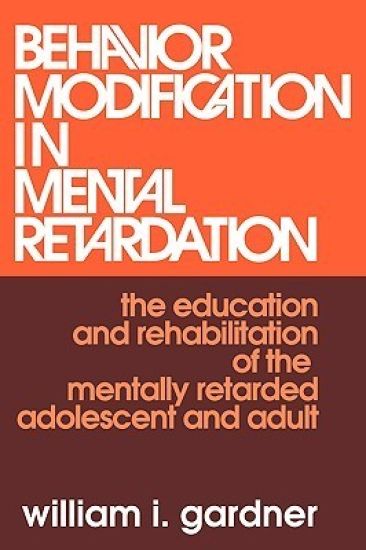
Behavior Modification in Mental Retardation

Behavior Modification in Mental Retardation

William Gardner

AldineTransaction
2006
nidottu
In this important book, one of the most exciting and promising developments in clinical psychology-behavior modification is applied to the treatment of the mentally retarded, particularly those whose behavior poses difficult problems for institutions. Professor Gardner presents an easily intelligible yet detailed account of the concepts and practices of behavior modification and the underlying learning systems, with numerous clinical illustrations of applying specific techniques to various educational and rehabilitation problems. A thorough discussion of the inadequacies of the psychological evaluation systems normally used in education and rehabilitation is offered, along with an alternative behavior analysis approach that provides a method of translating evaluation data into treatment practices. In explaining behavior analysis, the author takes into account the limited behavioral repertoire of the retarded and environmental deficits. Individual chapters on respondent, operant, and observational learning, and a detailed discussion of a functional analysis approach to evaluation, are included. Proven behavior modification strategies are presented along with a review of related research and clinical studies. The book closes with a detailed description of a research program for the design and testing of sheltered workshop systems for the retarded and emotionally disturbed. The positive approach inherent in the belief that behavior is modifiable-even in the severely limited retarded-is in marked contrast to the pessimism of other systems of therapy, education, and training. Also, the author has concentrated throughout on making the book understandable to clinicians and students with no previous knowledge of behavior modification. Besides serving as a valuable handbook for all treatment personnel, the book can also be used as a basic text for various courses dealing with mental retardation.
Sir Gawain and the Green Knight – In a Modern English Version with a Critical Introduction
The adventures and challenges of Sir Gawain, King Arthur's nephew and a knight at the Round Table, including his duel with the mysterious Green Knight, are among the oldest and best known of Arthurian stories. Here the distinguished author and poet John Gardner has captured the humor, elegance, and richness of the original Middle English in flowing modern verse translations of this literary masterpiece. Besides the tale of "Sir Gawain and the Green Knight", this edition includes Gardner's substantial introduction to the works of the Gawain poet: his worldview and the conventions and traditions found in the poems, as well as an analysis of his poetic forms.
The Warrior

The Warrior

Ryan Gardner

Tellwell Talent
2021
pokkari
Everyone comes across road blocks in life, mountains they need to overcome, sadness, anger, heartbreaks, whatever, that they need to push through. Battles, so to speak.This book takes you through a battle that lasted for eleven years: the battle with cancer. A young warrior starts the journey at just sixteen years old, facing more obstacles along the way. Although the fight has been a hard one, the warrior realizes there is light at the end of the tunnel. Overcoming the hardships is worth it.Poetry has always been my outlet and I want to share some of them with you. I hope this helps you get through whatever battle you're fighting. I hope to help you see that through it all, it will be okay.Raw and riveting, this book shows you that if you fight hard enough you can get over the mountain. You can get through the journey. You can win the war.
The Warrior

The Warrior

Ryan Gardner

Tellwell Talent
2021
sidottu
Everyone comes across road blocks in life, mountains they need to overcome, sadness, anger, heartbreaks, whatever, that they need to push through. Battles, so to speak.This book takes you through a battle that lasted for eleven years: the battle with cancer. A young warrior starts the journey at just sixteen years old, facing more obstacles along the way. Although the fight has been a hard one, the warrior realizes there is light at the end of the tunnel. Overcoming the hardships is worth it.Poetry has always been my outlet and I want to share some of them with you. I hope this helps you get through whatever battle you're fighting. I hope to help you see that through it all, it will be okay.Raw and riveting, this book shows you that if you fight hard enough you can get over the mountain. You can get through the journey. You can win the war.
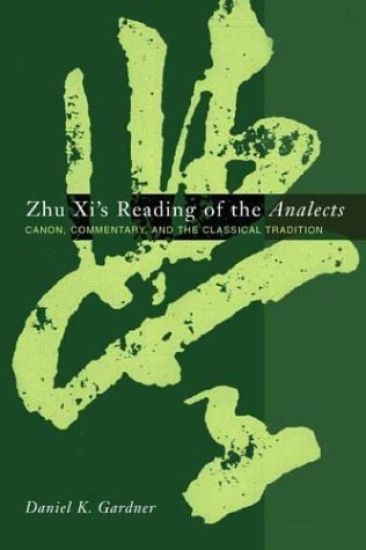
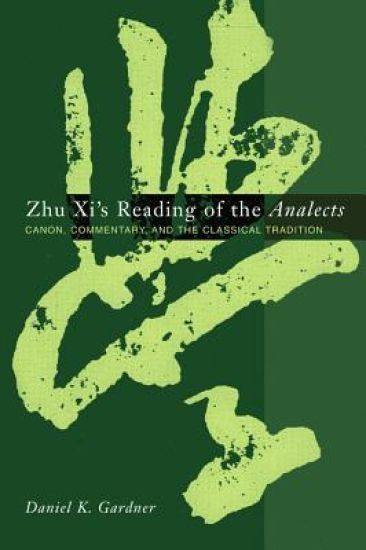
Zhu Xi's Reading of the Analects

Zhu Xi's Reading of the Analects

Daniel Gardner

Columbia University Press
2003
sidottu
The Analects is a compendium of the sayings of Confucius (551-479 b.c.e.), transcribed and passed down by his disciples. How it came to be transformed by Zhu Xi (1130-1200) into one of the most philosophically significant texts in the Confucian tradition is the subject of this book. Scholarly attention in China had long been devoted to the Analects. By the time of Zhu Xi, a rich history of commentary had grown up around it. But Zhu, claiming that the Analects was one of the authoritative texts in the canon and should be read before all others, gave it a still more privileged status in the tradition. He spent decades preparing an extended interlinear commentary on it. Sustained by a newer, more elaborate language of metaphysics, Zhu's commentary on the Analects marked a significant shift in the philosophical orientation of Confucianism-a shift that redefined the Confucian tradition for the next eight centuries, not only in China, but in Japan and Korea well. Gardner's translations and analysis of Zhu Xi's commentary on the Analects show one of China's great thinkers in an interesting and complex act of philosophical negotiation. Through an interlinear, line-by-line "dialogue" with Confucius, Zhu effected a reconciliation of the teachings of the Master, commentary by later exegetes, and contemporary philosophical concerns of Song-dynasty scholars. By comparing Zhu's reading of the Analects with the earlier standard reading by He Yan (190-249), Gardner illuminates what is dramatically new in Zhu Xi's interpretation of the Analects. A pioneering study of Zhu Xi's reading of the Analects, this book demonstrates how commentary is both informed by a text and informs future readings, and highlights the importance of interlinear commentary as a genre in Chinese philosophy.
Zhu Xi's Reading of the Analects

Zhu Xi's Reading of the Analects

Daniel Gardner

Columbia University Press
2003
pokkari
The Analects is a compendium of the sayings of Confucius (551-479 b.c.e.), transcribed and passed down by his disciples. How it came to be transformed by Zhu Xi (1130-1200) into one of the most philosophically significant texts in the Confucian tradition is the subject of this book. Scholarly attention in China had long been devoted to the Analects. By the time of Zhu Xi, a rich history of commentary had grown up around it. But Zhu, claiming that the Analects was one of the authoritative texts in the canon and should be read before all others, gave it a still more privileged status in the tradition. He spent decades preparing an extended interlinear commentary on it. Sustained by a newer, more elaborate language of metaphysics, Zhu's commentary on the Analects marked a significant shift in the philosophical orientation of Confucianism-a shift that redefined the Confucian tradition for the next eight centuries, not only in China, but in Japan and Korea well. Gardner's translations and analysis of Zhu Xi's commentary on the Analects show one of China's great thinkers in an interesting and complex act of philosophical negotiation. Through an interlinear, line-by-line "dialogue" with Confucius, Zhu effected a reconciliation of the teachings of the Master, commentary by later exegetes, and contemporary philosophical concerns of Song-dynasty scholars. By comparing Zhu's reading of the Analects with the earlier standard reading by He Yan (190-249), Gardner illuminates what is dramatically new in Zhu Xi's interpretation of the Analects. A pioneering study of Zhu Xi's reading of the Analects, this book demonstrates how commentary is both informed by a text and informs future readings, and highlights the importance of interlinear commentary as a genre in Chinese philosophy.