""The Life And Times Of St. Gregory, The Illuminator: The Founder And Patron Saint Of The Armenian Church"" by Solomon C. Malan is a biographical account of the life of Saint Gregory, who is revered as the founder and patron saint of the Armenian Church. The book provides a comprehensive overview of the saint's life, from his early years as a nobleman in Armenia to his conversion to Christianity and eventual rise to become the leader of the Armenian Church.The author explores the historical context of Saint Gregory's life, including the political and religious landscape of Armenia during the 4th century AD. Malan also delves into the theological and spiritual beliefs of Saint Gregory, highlighting his contributions to the development of the Armenian Church and his role in spreading Christianity throughout the region.Throughout the book, Malan draws on a variety of sources, including ancient texts, historical accounts, and legends surrounding the life of Saint Gregory. The author also provides insights into the cultural and social customs of Armenia during this time, giving readers a deeper understanding of the saint's life and legacy.Overall, ""The Life And Times Of St. Gregory, The Illuminator"" is a fascinating and informative read for anyone interested in the history of Christianity or the cultural heritage of Armenia.This Is A New Release Of The Original 1868 Edition.This scarce antiquarian book is a facsimile reprint of the old original and may contain some imperfections such as library marks and notations. Because we believe this work is culturally important, we have made it available as part of our commitment for protecting, preserving, and promoting the world's literature in affordable, high quality, modern editions, that are true to their original work.
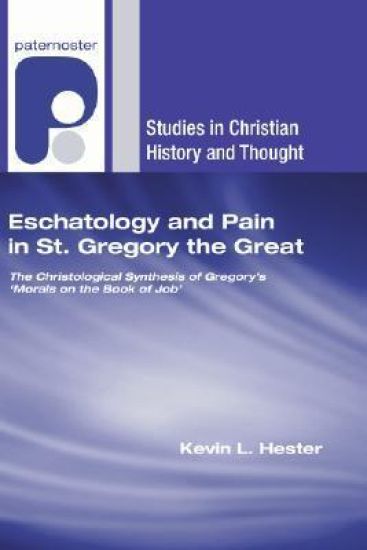
This work seeks to demonstrate that Gregory's spirituality forms and is formed by his theology and especially his understanding of the person and work of Christ. His spirituality is that of a contemplative looking for Christ and finding him in the pain of this world. Gregory's theological emphases of the experience of pain and eschatology found in his Moralia in Iob find their connection in his Christology. In contemplative union with Christ the pain of this life will make sense and in the last judgment the great mystery of the divine purpose will be revealed.
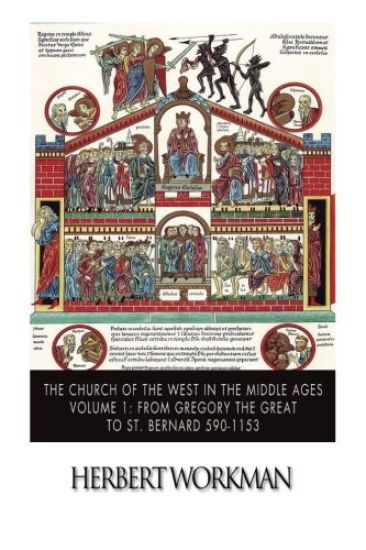
This is a history of Christian Church in the centuries after the death of Christ, and the way in which it spread across Europe. From the preface: "IN this second and concluding volume I bring down the story of the Church of the West in the "Middle Ages" to the transfer of the Papacy to Avignon. History, as Freeman has taught us, is continuous, and all breaks are unreal. Nevertheless, the transfer of the Papacy marks the virtual close of the "Middle Ages," and the beginning of a new epoch. With this new chapter in the history of the Church of Christ I purpose dealing in a future study of the Reformation, using the word to indicate not merely the resultant, but the various divergent forces of which it was the outcome. For the Reformation that succeeded is one with, and can only be understood by its relation to the reformation that failed; Wyclif must not be isolated from Luther, nor Constance from Worms. But if further defence be needed for ending the "Middle Ages" with Avignon., I must refer the reader to what I have written. My object in this and other volumes will not be so much to give the details of events, -for this I shall refer the reader to suitable "Authorities,"-as to indicate the forces and tendencies, external and internal, whereby the Church has been moulded for good or evil. I write under the conviction that history is a progress and not a cycle, and that every generation contributes something to the spiritual heritage of mankind. Such progress involves the continuity of the one life of the Spirit manifesting Himself in different ways in different ages. Controversy, therefore, is far from my purpose. The business of the historian is to put his readers into the standpoint of the past; not to throw mud from the dunghills of pride. It does not become the heirs of all the ages to find nothing but blame for the centuries into whose labours they have entered, by whose mistakes they have profited. The Pharisee may stand in the porch of History as well as in the Temple of God.
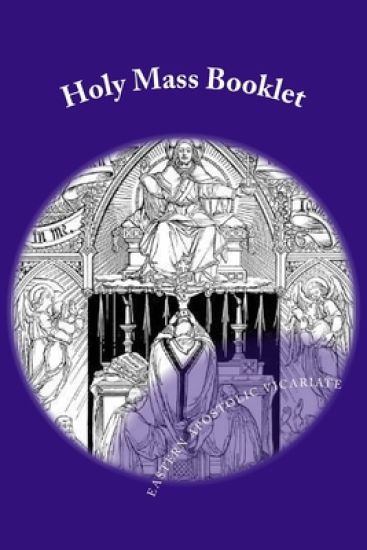
The traditional Holy Mass is celebrated in Latin as it always had been over the centuries. For pastoral reasons, the celebration in the vernacular language may be allowed either in its entirety or in part. As an option, some adjustments have been made in order to allow better participation of the congregation and to express the communal aspect of the Holy Eucharist. No change, however, has been made to basic rubrics or the text of the Liturgy itself.
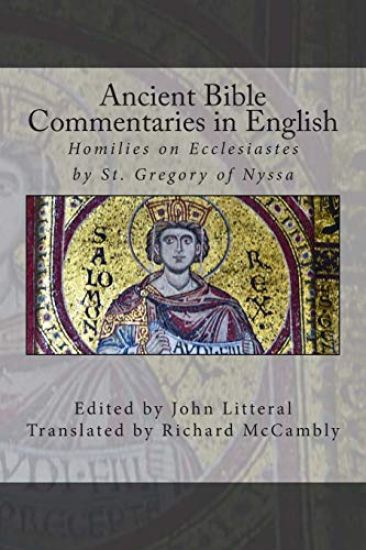
How, exactly, do we find the words to talk about Trinity? How do the three Persons of the Trinity, (Father, Son, and Spirit), interrelate? Why is it so difficult for us to grasp the mystery of the Trinity? Almost all of us have a hard time answering these questions. Some may casually look at Christians and see polytheism and yet are mystified at how vehemently Christians refuse to be labeled as such. Worse, perhaps, is that Christians themselves experience difficulty articulating how the doctrine of the Trinity impacts theology and their lives. For Christians, the Trinity impacts every part of Christian life and thought. Yet these questions, misunderstandings, and difficulties are not new. In fact, since the very beginning of the Christian Church, these same difficulties have encountered and countered, but it was not until the Cappadocian Father, Gregory of Nyssa, wrote a casual letter to a friend explaining why Christians are not polytheists and that the Christian Church had the linguistic tools to approach the task of understanding the Biblical doctrine of the Trinity. In this letter, we can join Gregory of Nyssa and learn what to say about the Trinity, and how to go about saying it, by following how Gregory does this.
This work seeks to demonstrate that Gregory's spirituality forms and is formed by his theology and especially his understanding of the person and work of Christ. His spirituality is that of a contemplative looking for Christ and finding him in the pain of this world. Gregory's theological emphases of the experience of pain and eschatology found in his Moralia in Iob find their connection in his Christology. In contemplative union with Christ the pain of this life will make sense and in the last judgment the great mystery of the divine purpose will be revealed.
This volume explores the Greco-Roman and Jewish origins of the New Testament and early Christianity. It pays particular attention to the gospels and the traditions which places those sacred texts.
Epistemological theories of the patristic authors seldom attract attention of the researchers. This unfortunate status quo contrasts with a crucial place of the theory of knowledge in the thought of such prominent authors as Origen and the Cappadocian fathers. This book surveys the patristic epistemological discourse in its various settings. In the context of the Church history it revolves around the Eunomian controversy, Eunomius’ language theory and Gregory Nazianzen’s cognitive theory, where the ideas of Apostle Paul were creatively combined with the Peripatetic teaching. In the framework of Biblical exegesis, it touches upon the issues of the textual criticism of the Homeric and Jewish scholarship, which had significantly shaped Origen’s paradigm of the Biblical studies.