Kirjojen hintavertailu. Mukana 11 628 262 kirjaa ja 12 kauppaa.

Kirjahaku

Etsi kirjoja tekijän nimen, kirjan nimen tai ISBN:n perusteella.

1000 tulosta hakusanalla Helene Musso

Hyperdream

Hyperdream

Hélène Cixous

Polity Press
2009
nidottu
Hyperdream is a major new novel by celebrated French author Hélène Cixous. It is a literary tour de force, returning anew to challenge necessity itself, the most implacable of human certainties: you die in the end – and that’s the end. For you, for me. But what if? What if death did not inevitably spell the end of life? Hyperdream invests this fragile, tentative suspension of disbelief with the sheer force of its poetic audacity, inventing a sort of magic telephone: a wireless lifeline against all the odds to the dearly departed. It is a book about time, age, love and the greatest loss. A book which turns on death: on the question or the moment of death, depending on it, expecting it, living off it, taking place at once before and after, but at the same time turning against it, contesting it, outwriting it hopefully, desperately, performatively, as an interruptible interruption. Hyperdream is a book of mourning, but also of morning, a tragedy-with-comedy and a universal family romance in which it transpires that the narrator is the veritable offspring of a “treasure of literature” in the form of a bed, purchased by her mother from a certain W. Benjamin in 1934, slept on for 40 years by her brother and dreamt of by her friend “J.D.”
Zero's Neighbour

Zero's Neighbour

Hélène Cixous

Polity Press
2010
sidottu
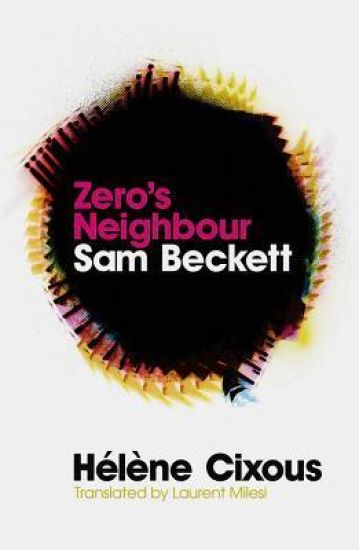
Zero's Neighbour is Hélène Cixous's tribute to the minimalist genius of the artist in exile who courted nothingness in his writing like nobody else: Samuel Beckett. In this unabashedly personal odyssey through a sizeable range of his novels, plays and poems, Cixous celebrates Beckett’s linguistic flair and the poignant, powerful thrust of his stylistic terseness, and passionately declares her love for his unrivalled expression of the meaningless ‘precious little’ of life, its unfathomable banality ending in chaos and death. Poised between a critical essay and a textual performance across two languages adapting Beckett's own literary vein, this book will appeal to scholars, critics and creative writers as well as students of the ‘grey self-Sam’. Its allusive intertextual insights will also prove to be of critical relevance to readers of Dante and Proust, among other literary figures, as much as to those appreciative of Cixous’s own inimitable genius for dissecting the quintessence of the life and works of a ‘neighbourly’ artist.
Zero's Neighbour

Zero's Neighbour

Hélène Cixous

Polity Press
2010
nidottu
Zero's Neighbour is Hélène Cixous's tribute to the minimalist genius of the artist in exile who courted nothingness in his writing like nobody else: Samuel Beckett. In this unabashedly personal odyssey through a sizeable range of his novels, plays and poems, Cixous celebrates Beckett’s linguistic flair and the poignant, powerful thrust of his stylistic terseness, and passionately declares her love for his unrivalled expression of the meaningless ‘precious little’ of life, its unfathomable banality ending in chaos and death. Poised between a critical essay and a textual performance across two languages adapting Beckett's own literary vein, this book will appeal to scholars, critics and creative writers as well as students of the ‘grey self-Sam’. Its allusive intertextual insights will also prove to be of critical relevance to readers of Dante and Proust, among other literary figures, as much as to those appreciative of Cixous’s own inimitable genius for dissecting the quintessence of the life and works of a ‘neighbourly’ artist.
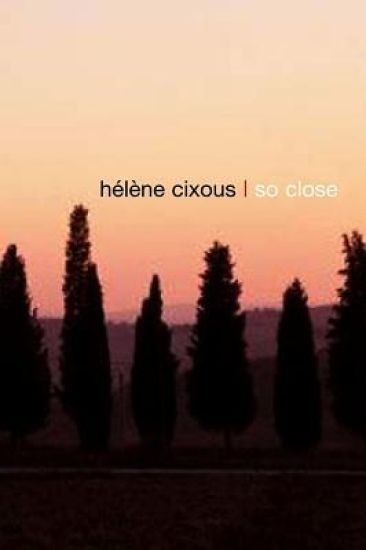
So Close

So Close

Hélène Cixous

Polity Press
2009
sidottu
In So Close, the internationally renowned writer Hélène Cixous recounts a return to her native Algeria after a more than thirty-year absence. Before she can decide to go, she must sift through large parts of her past in a land where she never felt at home and, from a young age, knew she must leave. Above all, she must confront the depths of her mother’s rejection of the country that had rejected her despite years of devotion to the poor women of Algiers. As she is struggling with this decision, she receives a message from Zohra Drif, with whom she has had no contact since their school days, which was just before Zohra joined the Algerian FLN and become a heroine in the uprising against French rule in her homeland. They meet in Paris for the first time in more than fifty years and soon afterward the narrator departs for Algiers. The latter part of the narrative brings a rush of sensations, impressions, memories, and new encounters as the narrator revisits sites from her past in Algiers and especially in Oran, the city of her birth, the city of the family’s happiness before her father’s death when she was a young girl. The quest to find his grave again in the overgrown Jewish cemetery of Algiers leads to a startlingly moving scene that closes the voyage and the book.
So Close

So Close

Hélène Cixous

Polity Press
2009
nidottu
In So Close, the internationally renowned writer Hélène Cixous recounts a return to her native Algeria after a more than thirty-year absence. Before she can decide to go, she must sift through large parts of her past in a land where she never felt at home and, from a young age, knew she must leave. Above all, she must confront the depths of her mother’s rejection of the country that had rejected her despite years of devotion to the poor women of Algiers. As she is struggling with this decision, she receives a message from Zohra Drif, with whom she has had no contact since their school days, which was just before Zohra joined the Algerian FLN and become a heroine in the uprising against French rule in her homeland. They meet in Paris for the first time in more than fifty years and soon afterward the narrator departs for Algiers. The latter part of the narrative brings a rush of sensations, impressions, memories, and new encounters as the narrator revisits sites from her past in Algiers and especially in Oran, the city of her birth, the city of the family’s happiness before her father’s death when she was a young girl. The quest to find his grave again in the overgrown Jewish cemetery of Algiers leads to a startlingly moving scene that closes the voyage and the book.
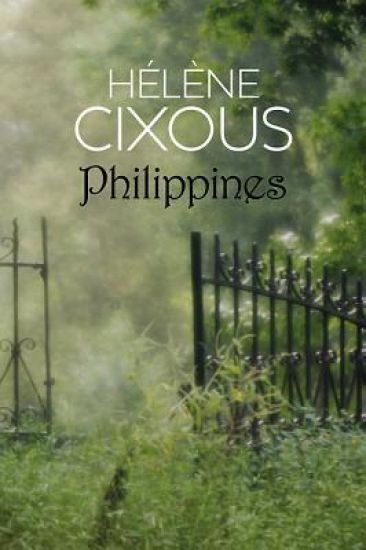
Philippines

Philippines

Hélène Cixous

Polity Press
2010
sidottu
Philippines is Hélène Cixous's reverie or 'true dreaming' which intertwines Freud's uneasy views on telepathy, autobiographical memories conflating Algeria and Paris, childhood and adult life, shared with her brother 'Pete', and literary evocations from Proust and George du Maurier's forgotten novel Peter Ibbetson. Amid telepathic conversations, real or imagined, and life events uncannily answering one another from a distance, Cixous's dense evocative journey ceaselessly 'returns to its starting point' and, like the twin almonds in one shell evoked by the title, reveals intimate, secret bonds between scenes and beings, real and fictional. Its interpretive sharpness delivered with stylistic elegance and candour will make this study typical of Cixous's art, which plies between literature and criticism, appealing not only to scholars and critics interested in psychoanalysis, autobiography and the act of reading, but also to a broader readership captivated by the hallucinatory coincidences between life, dream and fiction, when 'Reality is the dream. The dream is the true reality'.
Philippines

Philippines

Hélène Cixous

Polity Press
2010
nidottu
Philippines is Hélène Cixous's reverie or 'true dreaming' which intertwines Freud's uneasy views on telepathy, autobiographical memories conflating Algeria and Paris, childhood and adult life, shared with her brother 'Pete', and literary evocations from Proust and George du Maurier's forgotten novel Peter Ibbetson. Amid telepathic conversations, real or imagined, and life events uncannily answering one another from a distance, Cixous's dense evocative journey ceaselessly 'returns to its starting point' and, like the twin almonds in one shell evoked by the title, reveals intimate, secret bonds between scenes and beings, real and fictional. Its interpretive sharpness delivered with stylistic elegance and candour will make this study typical of Cixous's art, which plies between literature and criticism, appealing not only to scholars and critics interested in psychoanalysis, autobiography and the act of reading, but also to a broader readership captivated by the hallucinatory coincidences between life, dream and fiction, when 'Reality is the dream. The dream is the true reality'.
Hemlock

Hemlock

Hélène Cixous

Polity Press
2011
sidottu
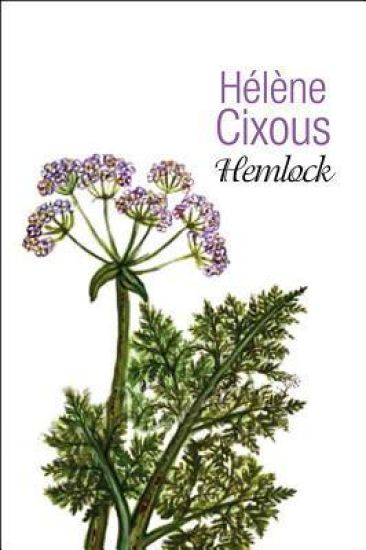
A compelling work of autobiographical fiction, Hélène Cixous's Hemlock weaves tragedy and comedy in its exploration of various human attachments: between an elderly but still truculent mother and her writer-daughter, between the mother and her sister, and between the writer and her vanished but nonetheless intensely present friend, Jacques Derrida, whose death is movingly evoked. "Here," she says in her preface, "the criss-crossing paths of my mother and my aunt will come to an end at last. When one old flower is left, what becomes of the other face?" Socrates is conjured up, along with the poisonous plants of Hamlet, the human comedies of Balzac and Proust, and other literary and philosophical ghosts who find themselves drawn into the fabric of Cixous's text: "I'm not sleeping," writes the protagonist. "A worm is drilling my brain. It's a phrase I heard in the hellish juice of the jusquiame. I pour it into my own ear. ‘I'm afraid Mama will die'." In this new work Hélène Cixous continues to explore and expand the boundaries of narrative, slipping from thought to thought and from image to image, so as to render every action, fear and thought palpable to the reader.
Hemlock

Hemlock

Hélène Cixous

Polity Press
2011
nidottu
A compelling work of autobiographical fiction, Hélène Cixous's Hemlock weaves tragedy and comedy in its exploration of various human attachments: between an elderly but still truculent mother and her writer-daughter, between the mother and her sister, and between the writer and her vanished but nonetheless intensely present friend, Jacques Derrida, whose death is movingly evoked. "Here," she says in her preface, "the criss-crossing paths of my mother and my aunt will come to an end at last. When one old flower is left, what becomes of the other face?" Socrates is conjured up, along with the poisonous plants of Hamlet, the human comedies of Balzac and Proust, and other literary and philosophical ghosts who find themselves drawn into the fabric of Cixous's text: "I'm not sleeping," writes the protagonist. "A worm is drilling my brain. It's a phrase I heard in the hellish juice of the jusquiame. I pour it into my own ear. ‘I'm afraid Mama will die'." In this new work Hélène Cixous continues to explore and expand the boundaries of narrative, slipping from thought to thought and from image to image, so as to render every action, fear and thought palpable to the reader.
Eve Escapes

Eve Escapes

Hélène Cixous

Polity Press
2012
sidottu
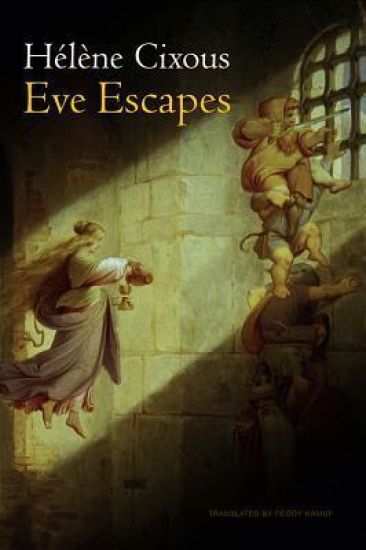
"I get up every day with one day more," says Eve, the writer's 97-year-old mother. She is escaping into the New Life and the writer must race to catch up. As things slip away and fall into oblivion, as her mother's world and thus her own relentlessly shrinks, the writer is stunned to see for the first time the vestiges of a prison scene in her beloved Tower of Montaigne, which she has been visiting for fifty years. It represents the story of Cimon and Pero, a daughter's act of charity that saved her father from certain death. How extraordinary that it should only now appear to this other daughter who dreams of nothing less for her parent and thus for herself. A different prison scene draws the writer to reflect on Freud's remark "that the dream of a prisoner can have nothing other than escape as content," a comment he illustrates with Moritz von Schwind's painting The Prisoner's Dream. But it is Freud's own dreams of escape from the prison of declining powers in his old age that the writer channels through her telepathic connection to the one she calls her "nuncle." She knows that the worst, worse even than the effects of the disease eating through his body, would have been the obliteration of his dreams upon waking, a sensation of theft that is "like a rug one pulls from beneath the head's feet, bam, bam! like a tapestry of life folded up in a flash." And yet life's tapestry has never seemed more richly colored, more elaborately woven, more abundantly endowed with the gifts of Eve, the mother, the midwife, the irrepressible story-teller, the great escape artist, and the indomitable heroine of this book.
Eve Escapes

Eve Escapes

Hélène Cixous

Polity Press
2012
nidottu
"I get up every day with one day more," says Eve, the writer's 97-year-old mother. She is escaping into the New Life and the writer must race to catch up. As things slip away and fall into oblivion, as her mother's world and thus her own relentlessly shrinks, the writer is stunned to see for the first time the vestiges of a prison scene in her beloved Tower of Montaigne, which she has been visiting for fifty years. It represents the story of Cimon and Pero, a daughter's act of charity that saved her father from certain death. How extraordinary that it should only now appear to this other daughter who dreams of nothing less for her parent and thus for herself. A different prison scene draws the writer to reflect on Freud's remark "that the dream of a prisoner can have nothing other than escape as content," a comment he illustrates with Moritz von Schwind's painting The Prisoner's Dream. But it is Freud's own dreams of escape from the prison of declining powers in his old age that the writer channels through her telepathic connection to the one she calls her "nuncle." She knows that the worst, worse even than the effects of the disease eating through his body, would have been the obliteration of his dreams upon waking, a sensation of theft that is "like a rug one pulls from beneath the head's feet, bam, bam! like a tapestry of life folded up in a flash." And yet life's tapestry has never seemed more richly colored, more elaborately woven, more abundantly endowed with the gifts of Eve, the mother, the midwife, the irrepressible story-teller, the great escape artist, and the indomitable heroine of this book.
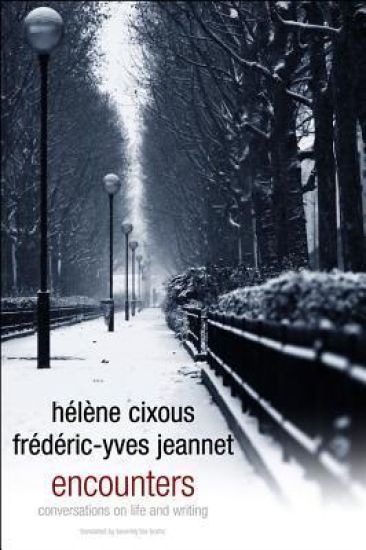
Encounters

Encounters

Hélène Cixous

Polity Press
2012
sidottu
"Isn't it … particularly difficult to 'speak' of your work?" Frédéric-Yves Jeannet asks Hélène Cixous in this fascinating book of interviews. "[I]t's only in writing, on paper, … that I reach the most unknown, the strangest, the most advanced part of me for me. I feel closer to my own mystery in the aura of writing it," Cixous responds. These conversations, which took place over three years and cover the creative process behind Cixous’s fictional writing, illuminate the genesis and particular genius of one of France’s most original writers. Cixous muses on her "coming to writing," from her first publications to her recent acclaim for a series of fictional texts that spring, as, she insists all true writing does, from her life: the loss of her father when she was a child, and her relationship with her mother, now in her tenth decade, as well as with such friends as Jacques Derrida and Jacques Lacan. The conversations delve into Cixous’s career as an academic in Paris and abroad, her summer retreats to the Bordeaux region to write uninterrupted for two months, her work with Ariane Mnouchkine’s Théàtre du Soleil, her political engagements and her dreams. Readers and writers who have followed Cixous’s path-blazing career as a fiction writer who crosses boundaries of genre and gender while posing essential questions about the nature of narrative and life will find this a book that cannot be put down.
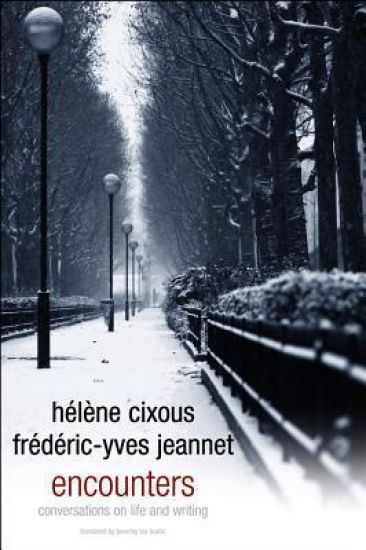
Encounters

Encounters

Hélène Cixous

Polity Press
2012
nidottu
"Isn't it … particularly difficult to 'speak' of your work?" Frédéric-Yves Jeannet asks Hélène Cixous in this fascinating book of interviews. "[I]t's only in writing, on paper, … that I reach the most unknown, the strangest, the most advanced part of me for me. I feel closer to my own mystery in the aura of writing it," Cixous responds. These conversations, which took place over three years and cover the creative process behind Cixous’s fictional writing, illuminate the genesis and particular genius of one of France’s most original writers. Cixous muses on her "coming to writing," from her first publications to her recent acclaim for a series of fictional texts that spring, as, she insists all true writing does, from her life: the loss of her father when she was a child, and her relationship with her mother, now in her tenth decade, as well as with such friends as Jacques Derrida and Jacques Lacan. The conversations delve into Cixous’s career as an academic in Paris and abroad, her summer retreats to the Bordeaux region to write uninterrupted for two months, her work with Ariane Mnouchkine’s Théàtre du Soleil, her political engagements and her dreams. Readers and writers who have followed Cixous’s path-blazing career as a fiction writer who crosses boundaries of genre and gender while posing essential questions about the nature of narrative and life will find this a book that cannot be put down.
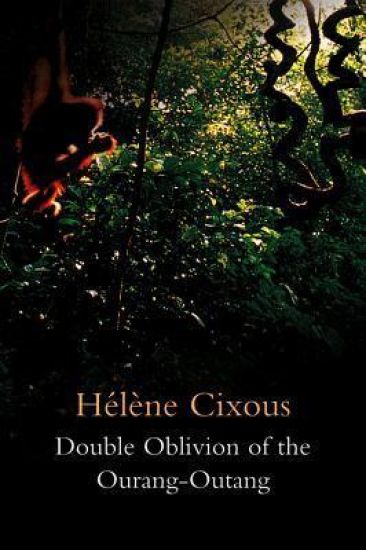
Double Oblivion of the Ourang-Outang

Double Oblivion of the Ourang-Outang

Hélène Cixous

Polity Press
2013
sidottu
In 2009, the writer-narrator finds a Box. Within it lie the pages of her very first manuscript, pages she thought she had long since thrown away. Le Prénom de Dieu was the text that marked the start of her prodigious career, and yet for the narrator it is also the Nameless Book, the-Book-that-could-never-be-read, the book written by someone other than her. Now, once again, it heralds a beginning, as its discovery is the start of a journey into the past. The title, with its reference to the murderous Ourang-Outang of Edgar Allan Poe’s The Murders in the Rue Morgue, sets the scene: this is a detective story haunted by literary ghosts. At the very heart of literature lies the fascination with the enigma, the search for something that has been lost. Cixous illustrates this as she leads her reader on a hunt for the ultimate hidden treasure, in the company of an array of venerable predecessors from Saint-Simon, Proust and Stendhal to Shackleton, Poe and Jacques Derrida. Double Oblivion of the Ourang-Outang is a text about literature. It speaks of the books you read and the books you write, those you remember and those you forget, those you fear and those you revere. It is also a powerful, evocative tale of beginnings and endings, of remembering and forgetting, of things and their doubles. In a densely woven narrative, Cixous’s latest text focuses on the extraordinary voyage that is literary creation, and in doing so also explores the themes of memory, loss and subjectivity.
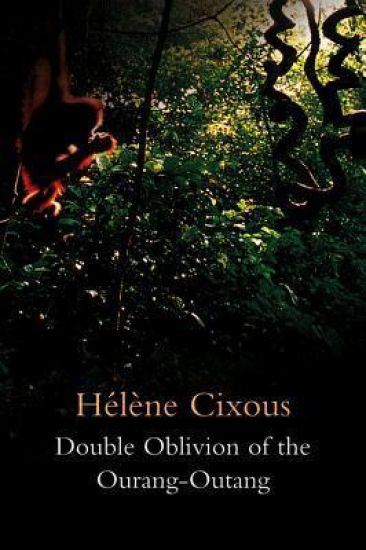
Double Oblivion of the Ourang-Outang

Double Oblivion of the Ourang-Outang

Hélène Cixous

Polity Press
2013
nidottu
In 2009, the writer-narrator finds a Box. Within it lie the pages of her very first manuscript, pages she thought she had long since thrown away. Le Prénom de Dieu was the text that marked the start of her prodigious career, and yet for the narrator it is also the Nameless Book, the-Book-that-could-never-be-read, the book written by someone other than her. Now, once again, it heralds a beginning, as its discovery is the start of a journey into the past. The title, with its reference to the murderous Ourang-Outang of Edgar Allan Poe’s The Murders in the Rue Morgue, sets the scene: this is a detective story haunted by literary ghosts. At the very heart of literature lies the fascination with the enigma, the search for something that has been lost. Cixous illustrates this as she leads her reader on a hunt for the ultimate hidden treasure, in the company of an array of venerable predecessors from Saint-Simon, Proust and Stendhal to Shackleton, Poe and Jacques Derrida. Double Oblivion of the Ourang-Outang is a text about literature. It speaks of the books you read and the books you write, those you remember and those you forget, those you fear and those you revere. It is also a powerful, evocative tale of beginnings and endings, of remembering and forgetting, of things and their doubles. In a densely woven narrative, Cixous’s latest text focuses on the extraordinary voyage that is literary creation, and in doing so also explores the themes of memory, loss and subjectivity.
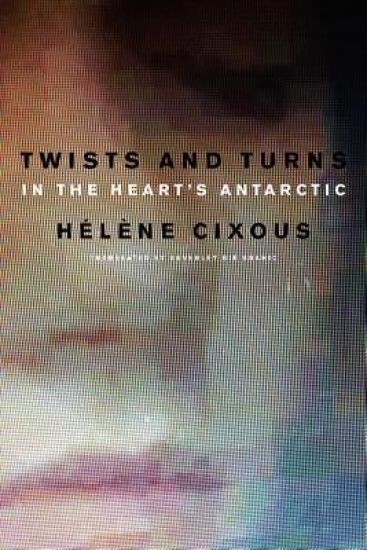
Twists and Turns in the Heart's Antarctic

Twists and Turns in the Heart's Antarctic

Hélène Cixous

Polity Press
2013
sidottu
Twists and Turns in the Heart's Antarctic is a compelling new volume in Hélène Cixous's search for lost time. Readers of earlier volumes - Hemlock and Hyperdream, among others - will reconnect with familiar characters: Eve, the elderly mother now in her hundredth year, Hélène, the daughter, who never expected to become a mother at 70, and the brother, childhood companion and rival. She has almost no time to write. "You hate me! You hate me!" someone shouts. "You want me dead!" Is that a revolver on the table? Bang! Shot or door slammed? The brother storms out. The Family is destroying itself. Twists and Turns, like all Cixous's books, is a many-faceted text, whose narrative spins its webs in corners familiar to Cixous readers: corners with books and writers - Montaigne, Proust, Kafka, Derrida; a theater and plays; friendship, and love. It is a tale on the scale of Greek myth, about the inescapable entanglements of family relationships, that can lead one, in hyperbolic mode, to envision murder and suicide, for, as Cixous writes, "with love's force one hates." And yet, "everything twists and turns": this is a tale with profoundly touching reversals.
Twists and Turns in the Heart's Antarctic

Twists and Turns in the Heart's Antarctic

Hélène Cixous

Polity Press
2013
nidottu
Twists and Turns in the Heart's Antarctic is a compelling new volume in Hélène Cixous's search for lost time. Readers of earlier volumes - Hemlock and Hyperdream, among others - will reconnect with familiar characters: Eve, the elderly mother now in her hundredth year, Hélène, the daughter, who never expected to become a mother at 70, and the brother, childhood companion and rival. She has almost no time to write. "You hate me! You hate me!" someone shouts. "You want me dead!" Is that a revolver on the table? Bang! Shot or door slammed? The brother storms out. The Family is destroying itself. Twists and Turns, like all Cixous's books, is a many-faceted text, whose narrative spins its webs in corners familiar to Cixous readers: corners with books and writers - Montaigne, Proust, Kafka, Derrida; a theater and plays; friendship, and love. It is a tale on the scale of Greek myth, about the inescapable entanglements of family relationships, that can lead one, in hyperbolic mode, to envision murder and suicide, for, as Cixous writes, "with love's force one hates." And yet, "everything twists and turns": this is a tale with profoundly touching reversals.
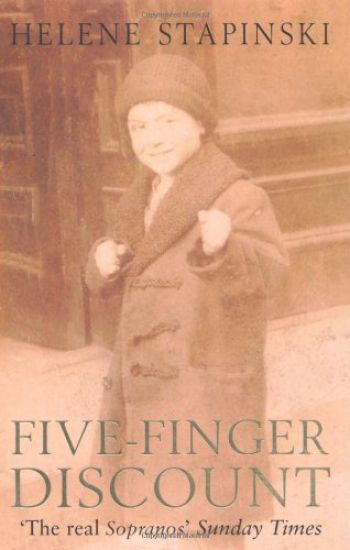
Five Finger Discount

Five Finger Discount

Helene Stapinski

Bloomsbury Publishing PLC
2002
nidottu
______________ ‘Hugely entertaining and poignant' - Sunday Times ‘A welcome antidote to knee-jerk nostalgia ... Stapinski's prose hits like bullets ... visceral and memorable' - Image ______________ ‘The night my grandfather tried to kill us, I was five years old, the age I stopped believing in Santa Claus ...' Helene Stapinski had been playing in the family's apartment above the Majestic Tavern in Jersey City when, in the bar downstairs, Grandpa - an ex-con and armed robber - pointed his loaded gun and bragged he had a bullet for each of them. But news travelled fast and within minutes Helene was watching a handcuffed Grandpa go to jail for the last time. The Stapinskis have a knack for breaking the law. Helene's daily bread was stolen by her father from the cold storage company where he worked and the books on her shelves were swiped from the local bookbinding company. In her own generation, her first cousin embezzled a quarter of a million dollars, tearing the clan apart. All these stories are part of Helene's unbelievable heritage and of Five Finger Discount, a raucous and heartbreaking tale.
Dream I Tell You

Dream I Tell You

Helene Cixous

Edinburgh University Press
2006
sidottu
This book is an account of, and commentary on, a collection of dreams by the novelist, playwright and theorist Helene Cixous. As such the book presents a rich poetic experience and is a key document in understanding Cixous' writing practice. Jacques Derrida's commentary on Dream I Tell You is published in 'The Frontiers of Theory' series as Geneses, Genealogies, Genres and Genius. Key Features * Importance of Helene Cixous to contemporary literary and French feminist theory. * The poetic, autobiographical quality of the writing. * Significance of the book to the Cixous oeuvre.
Insister of Jacques Derrida

Insister of Jacques Derrida

Helene Cixous

Edinburgh University Press
2007
sidottu
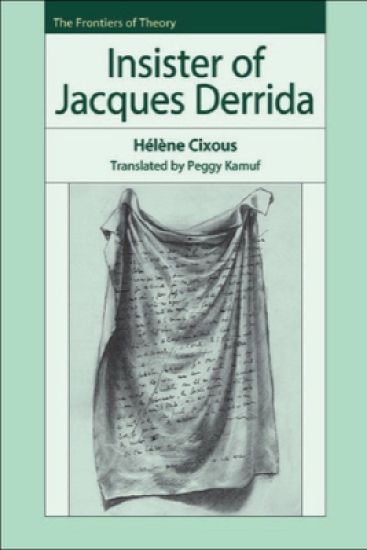
'I have often declared my admiration for Helene Cixous, for the person and for the work: immense, powerful, so multiple but unique in this century.' - Jacques Derrida 'Insister of Jacques Derrida, so expertly translated by Derrida's principal and most faithful translator, Peggy Kamuf, is an indispensable, daring, heartfelt and moving book...It presents a flawless, committed reading that is in the spirit of Derrida in its serious playfulness, its poetic sinuousness, its elegant reasoning and rhetoric while also being wholly in Cixous' own singular voice. This is not merely a study of Derrida, it is a haunting dialogue with his memory and with his phantom.' - Julian Wolfreys, Professor of Modern Literature and Culture, Loughborough University Helene Cixous is arguably the most insightful and unbridled reader of Jacques Derrida today. In Insister she brings a unique mixture of theoretical speculation, breath-taking textual explication and scholarly erudition to an extremely close reading of Derrida's work, always attentive to the details of his thinking. At the same time, Insister is an extraordinarily poetic meditation, a work of literature and of mourning for Jacques Derrida the person, who was a close friend and accomplice of Cixous's from the beginning of their careers. Insister of Jacques Derrida joins Dream I Tell You by Helene Cixous and Geneses, Genealogies, Genres and Genius by Jacques Derrida, also published in The Frontiers of Theory series.