
Kirjahaku
Etsi kirjoja tekijän nimen, kirjan nimen tai ISBN:n perusteella.
1000 tulosta hakusanalla Jane Sinclair
Poems Of Jane E. D. Conklin (1884)
Jane Elizabeth Dexter Conklin
KESSINGER PUBLISHING, LLC
2009
pokkari
The Literary Remains Of Lady Jane Grey
Jane Grey; Nicholas Harris Nicolas
KESSINGER PUBLISHING, LLC
2010
pokkari
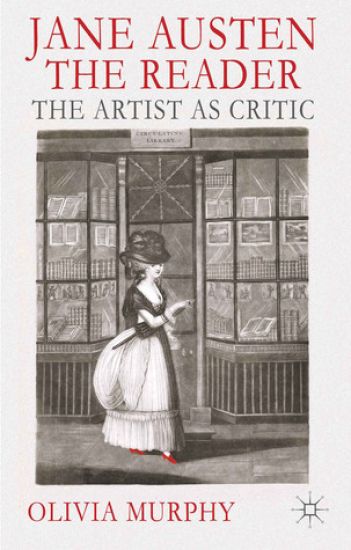
Jane Austen the Reader explains Austen's excellence and endurance by showing how her writing developed as a response to the writing of others: as parody, satire, criticism and even, on occasion, homage. Seeing Austen as a critic offers new insights into her creativity, and new interpretations of her novels.
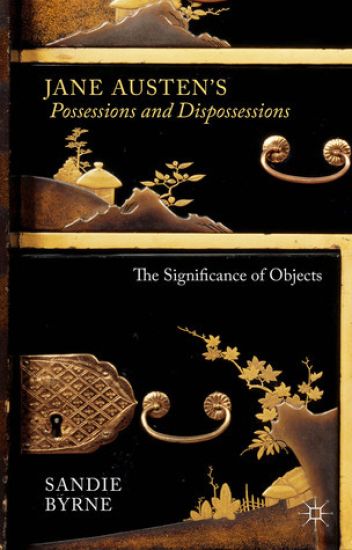
Who owns, who buys, who gives, and who notices objects is always significant in Austen's writing, placing characters socially and characterizing them symbolically. Jane Austen's Possessions and Dispossessions looks at the significance of objects in Austen's major novels, fragments, and juvenilia.
Northanger Abbey was one of Jane Austen's earliest manuscripts; Persuasion was her last. Published together in a single volume after her death, the two books differ widely. Northanger Abbey is a spirited, Gothic parody, while Persuasion has increasingly been seen as a new direction for the Austen canon. The two texts have been widely analysed and debated since publication, and continue to be so today. In this Readers' Guide, Enit Karafili Steiner: - Delineates a clear trajectory through the books' many interpretations over two centuries, mapping these out thematically and chronologically. - Contextualises and brings into dialogue influential approaches such as psychoanalytical criticism, structuralism, deconstruction, Marxism, New Historicism, and feminism. - Discusses film adaptations of the novels and their relation to literary criticism.
Northanger Abbey was one of Jane Austen's earliest manuscripts; Persuasion was her last. Published together in a single volume after her death, the two books differ widely. Northanger Abbey is a spirited, Gothic parody, while Persuasion has increasingly been seen as a new direction for the Austen canon. The two texts have been widely analysed and debated since publication, and continue to be so today.In this Readers' Guide, Enit Karafili Steiner:- Delineates a clear trajectory through the books' many interpretations over two centuries, mapping these out thematically and chronologically.- Contextualises and brings into dialogue influential approaches such as psychoanalytical criticism, structuralism, deconstruction, Marxism, New Historicism, and feminism.- Discusses film adaptations of the novels and their relation to literary criticism.

Jane Austen wrote when sociology was being established as the new discipline to understand social issues such as urbanization and industrialization. Drawing on landmark sociologists such as Durkheim and Bourdieu, this study argues that the novels of Austen were heavily influenced by these early developments in sociology.
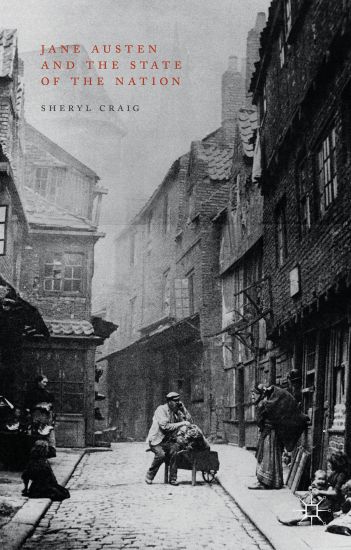
Jane Austen and the State of the Nation explores Jane Austen's references to politics and to political economics and concludes that Austen was a liberal Tory who remained consistent in her political agenda throughout her career as a novelist. Read with this historical background, Austen's books emerge as state-of-the-nation or political novels.
Jane Mansbridge
Routledge
2018
sidottu
Jane Mansbridge’s intellectual career is marked by field-shifting contributions to democratic theory, feminist scholarship, political science methodology, and the empirical study of social movements and direct democracy. Her work has fundamentally challenged existing paradigms in both normative political theory and empirical political science and launched new lines of scholarly inquiry on the most basic questions of the discipline: the sort of equality democracy needs, the goods of political participation, the nature of power, the purposes of deliberation, the forms of political representation, the obstacles to collective action, and the inescapable need for coercion.The editor has focused on work in three key areas:Participation and powerMansbridge’s early work on participatory democracy generated a key insight that has informed all of her subsequent work: the kind of equality we need to legitimate decisions under circumstances of common interests (equal respect) differs from the kind of equality we need when interests conflict (equal power).Deliberation and representationIn the chapters in this section, Mansbridge adds nuance to democratic theory by disaggregating different modes of political representation and explicating the ways in which each can contribute to the deliberative, aggregative and expressive functions of democratic institutions.Legitimate coercionMansbridge exemplifies a collaborative spirit through the practice of deliberative co-authorship, through which she and colleagues construct a taxonomy of procedures that can legitimize enforceable collective decisions.Essential reading for anyone interested in liberal conceptions of equality, participation, representation, deliberation, power and coercion.
Jane Austen is often associated with conservatism and her novels are often seen as light entertainment depicting a vanished world and its manners. Mary Evan's study, first published in 1987, seeks to contradict the conventional wisdom regarding Austen's social and political leanings and argues that far from endorsing established and conservative views Jane Austen advances a radical critique of the morality of bourgeois capitalism and demonstrates a concern for the articulation of women's rights and views whilst simultaneously drawing attention to the vulnerability of women in the economic marketplace.Mary Evans adopts a multidisciplinary approach and her book will appeal to anyone who is interested in Jane Austen's writing as well as those concerned with the moral basis of contemporary politics.
First published in 1924, this unique title provides an extremely valuable early Twentieth Century perspective on Jane Austen, offering analysis from both sides of the channel. The book includes both a translated study of Jane Austen by French academic Léonie Villard, and a study by influential biographer and critic, R. Brimley Johnson.Johnson's study, made with particular reference to the unpublished epistolary novel, Love and Friendship, seeks to redress the balance of contemporary criticism of Austen, challenging the established links between Austen and Nineteenth Century realism, and suggesting instead that her work owes a great deal to the conventions of romance. He also demonstrates how her art transformed from the parody of Nothanger Abbey to the portraiture of the later novels.Léonie Villard's ambitious work analyses a variety of topics relating to Austen's work, including women and marriage, psychology, satire, the gentry and the lasting value and scope of the novels. All in all, a very engaging, informative and insightful reissue.
First published in 1965, this reissued work by Wendy Craik provides a thorough and extensive study of Jane Austen's six complete novels: Northanger Abbey, Sense and Sensibility, Pride and Prejudice, Mansfield Park, Emma and Persuasion. This is a truly groundbreaking study of Austen which, in addition to a close analysis of the novels themselves, also goes on investigate the principles by which Jane Austen selected and arranged her material.
First published in 1984, John Hardy's important interpretation of Jane Austen's heroines breaks through the accepted tradition of viewing the author as merely a rational comedienne of manners. He argues instead that Jane Austen's greatness lies in her exploration of human relationships through the subtle and original portrayal of her heroines.Jane Austen's heroines come to enjoy a distinctive relationship with the men they eventually marry. Between her lovers the potential exists for the kind of intimacy that leads to a shared privacy. Austen's recognition of this represents her special insight into what is of central importance in human relationships. Her belief that love and friendship are our only hope of triumphing over solitude, and the character and integrity of her heroines, are the major elements which make Jane Austen's novels so satisfying.
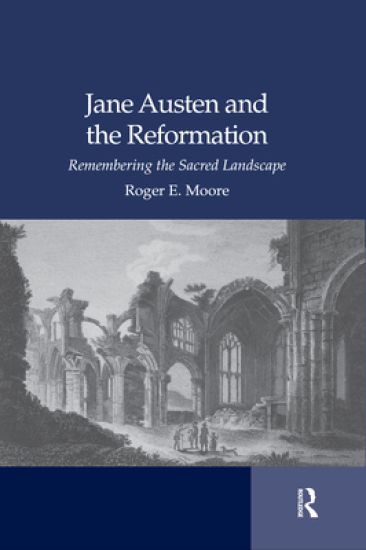
Jane Austen's England was littered with remnants of medieval religion. From her schooling in the gatehouse of Reading Abbey to her visits to cousins at Stoneleigh Abbey, Austen faced constant reminders of the wrenching religious upheaval that reordered the English landscape just 250 years before her birth. Drawing attention to the medieval churches and abbeys that appear frequently in her novels, Moore argues that Austen's interest in and representation of these spaces align her with a long tradition of nostalgia for the monasteries that had anchored English life for centuries until the Reformation. Converted monasteries serve as homes for the Tilneys in Northanger Abbey and Mr. Knightley in Emma, and the ruins of the 'Abbeyland' have a prominent place in Sense and Sensibility. However, these and other formerly sacred spaces are not merely picturesque backgrounds, but tangible reminders of the past whose alteration is a source of regret and disappointment. Moore uncovers a pattern of critique and commentary throughout Austen's works, but he focuses in particular on Northanger Abbey, Mansfield Park, and Sanditon. His juxtaposition of Austen's novels with sixteenth- and seventeenth-century texts rarely acknowledged as relevant to her fiction enlarges our understanding of Austen as a commentator on historical and religious events and places her firmly in the long national conversation about the meaning and consequences of the Reformation.
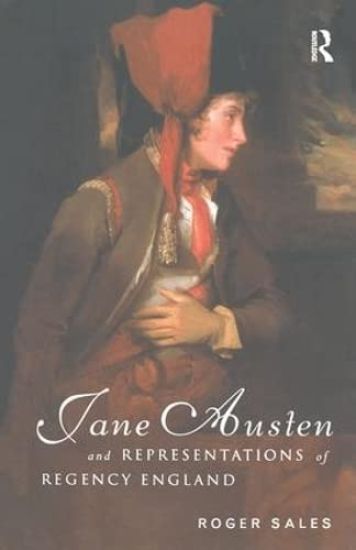
In Jane Austen and Representations of Regency England, Roger Sales looks at Jane Austen's entire oeuve, and views her historically as a Regency writer voicing concerns on the condition of England. Examining Austen's literary works; her letters - in the context of those of other Regency women; as well as contemporary texts such as television adaptations of her work, Jane Austen and Representations of Regency England reconstructs the breadth of Jane Austen's writing. It also examines: * her representations of dandyism and masculine identities * the events of the Regency crisis of 1810-12 * the way in which Austen engaged in topical debates such as healthcare in both Emma and Persuasion.
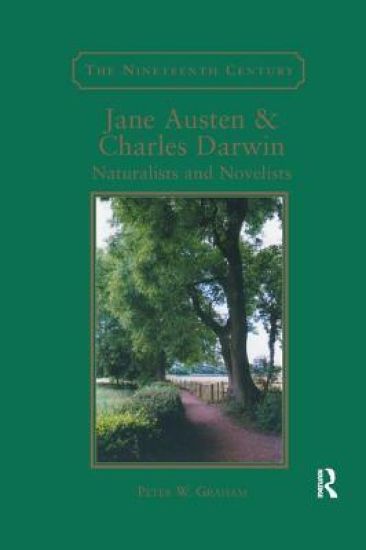
Are Jane Austen and Charles Darwin the two great English empiricists of the nineteenth century? Peter W. Graham poses this question as he brings these two icons of nineteenth-century British culture into intellectual conversation in his provocative new book. Graham shows that while the one is generally termed a naturalist (Darwin's preferred term for himself) and the other a novelist, these characterizations are at least partially interchangeable, as each author possessed skills that would serve well in either arena. Both Austen and Darwin are naturalists who look with a sharp, cold eye at the concrete particulars of the world around them. Both are in certain senses novelists who weave densely particularized and convincingly grounded narratives that convey their personal observations and perceptions to wide readerships. When taken seriously, the words and works of Austen and Darwin encourage their readers to look closely at the social and natural worlds around them and form opinions based on individual judgment rather than on transmitted opinion. Graham's four interlocked essays begin by situating Austen and Darwin in the English empirical tradition and focusing on the uncanny similarities in the two writers' respective circumstances and preoccupations. Both Austen and Darwin were fascinated by sibling relations. Both were acute observers and analysts of courtship rituals. Both understood constant change as the way of the world, whether the microcosm under consideration is geological, biological, social, or literary. Both grasped the importance of scale in making observations. Both discerned the connection between minute, particular causes and vast, general effects. Employing the trenchant analytical talents associated with his subjects and informed by a wealth of historical and biographical detail and the best of recent work by historians of science, Graham has given us a new entree into Austen's and Darwin's writings.
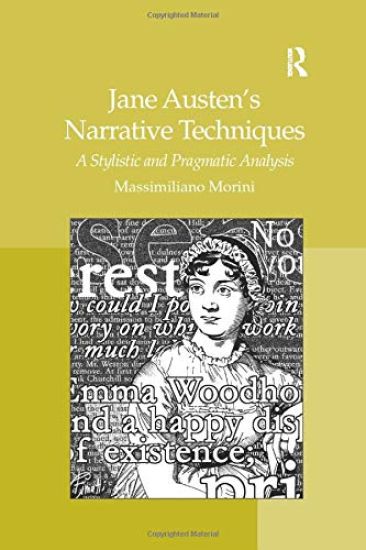
Combining linguistic theory with analytical concepts and literary interpretation and appreciation, Jane Austen's Narrative Techniques traces the creation and development of Austen's narrative techniques. Massimiliano Morini employs the tools developed by post-war linguistics and above all pragmatics, the study of the ways in which speakers communicate meaning, since Austen's 'wordings' can only be interpreted within the fictional context of character-character, narrator-character, narrator-reader interaction. Examining a wide range of Austen texts, from her unpublished works through masterpieces like Mansfield Park and Emma, Morini discusses familiar Austen themes, using linguistic means to shed fresh light on the question of point of view in Austen and on Austen's much-admired brilliance in creating lively and plausible dialogue. Accessibly written and informed by the latest work in linguistic and literary studies, Jane Austen's Narrative Techniques offers Austen specialists a new avenue for understanding her narrative techniques and serves as a case study for scholars and students of pragmatics and applied linguistics.
In this book, Wynne Walker Moskop addresses the practical and theoretical problem of how unequal political friendships evolve toward arrangements the parties consider reciprocal and just, a problem neglected by scholars of democracy who associate reciprocity and justice only with equal parties. Jane Addams insisted that Hull House was not a charity with philanthropic aspirations; rather it had to bring “two classes” to a shared purpose and more egalitarian relation. The problem was, and still is, how?Drawing on several bodies of scholarship—including Addams’s writings, secondary works about her collaborations, literature on Aristotelian political friendship, and feminist scholarship on the global migration of care workers—Moskop shows the importance of Addams’s practices to the continuing relevance of unequal economic relations for shaping political friendship.Contributing to a lively conversation about Addams’s work as a pragmatist thinker and social reformer that began three decades ago, Jane Addams on Inequality and Political Friendship is an invaluable resource to students of democratic theory, feminist political theory and philosophy, and American pragmatism. It illuminates the importance of overlooked conditions for friendship and justice in unequal relations, given people’s ongoing subordination because of race, class, gender, and citizenship status in the U.S. and transnationally.