Kirjojen hintavertailu. Mukana 12 016 292 kirjaa ja 12 kauppaa.

Kirjahaku

Etsi kirjoja tekijän nimen, kirjan nimen tai ISBN:n perusteella.

1000 tulosta hakusanalla Jessica Doherty

Powerful Patriots

Powerful Patriots

Jessica Chen Weiss

Oxford University Press Inc
2014
sidottu
Why has the Chinese government sometimes allowed and sometimes repressed nationalist, anti-foreign protests? What have been the international consequences of these choices? Anti-American demonstrations were permitted in 1999 but repressed in 2001 during two crises in US-China relations. Anti-Japanese protests were tolerated in 1985, 2005, and 2012 but banned in 1990 and 1996. Protests over Taiwan, the issue of greatest concern to Chinese nationalists, have never been allowed. To explain this variation in China's response to nationalist mobilization, Powerful Patriots argues that Chinese and other authoritarian leaders weigh both diplomatic and domestic incentives to allow and repress nationalist protests. Autocrats may not face electoral constraints, but anti-foreign protests provide an alternative mechanism by which authoritarian leaders can reveal their vulnerability to public pressure. Because nationalist protests are costly to repress and may turn against the government, allowing protests demonstrates resolve and increases the domestic cost of diplomatic concessions. Repressing protests, by contrast, sends a credible signal of reassurance, facilitating diplomatic flexibility and signaling a willingness to spend domestic political capital for the sake of international cooperation. To illustrate the logic, the book traces the effect of domestic and diplomatic factors in China's management of nationalist protest in the post-Mao era (1978-2012) and the consequences for China's foreign relations.

Powerful Patriots

Powerful Patriots

Jessica Chen Weiss

Oxford University Press Inc
2014
nidottu
Why has the Chinese government sometimes allowed and sometimes repressed nationalist, anti-foreign protests? What have been the international consequences of these choices? Anti-American demonstrations were permitted in 1999 but repressed in 2001 during two crises in US-China relations. Anti-Japanese protests were tolerated in 1985, 2005, and 2012 but banned in 1990 and 1996. Protests over Taiwan, the issue of greatest concern to Chinese nationalists, have never been allowed. To explain this variation in China's response to nationalist mobilization, Powerful Patriots argues that Chinese and other authoritarian leaders weigh both diplomatic and domestic incentives to allow and repress nationalist protests. Autocrats may not face electoral constraints, but anti-foreign protests provide an alternative mechanism by which authoritarian leaders can reveal their vulnerability to public pressure. Because nationalist protests are costly to repress and may turn against the government, allowing protests demonstrates resolve and increases the domestic cost of diplomatic concessions. Repressing protests, by contrast, sends a credible signal of reassurance, facilitating diplomatic flexibility and signaling a willingness to spend domestic political capital for the sake of international cooperation. To illustrate the logic, the book traces the effect of domestic and diplomatic factors in China's management of nationalist protest in the post-Mao era (1978-2012) and the consequences for China's foreign relations.
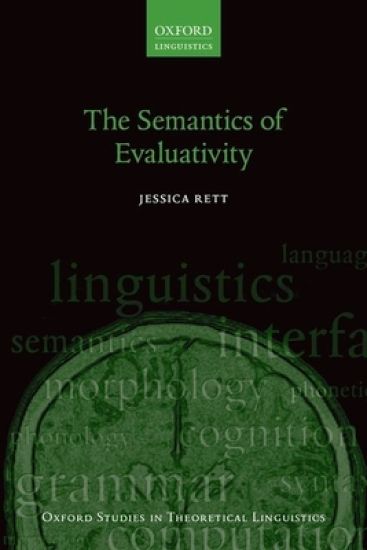
The Semantics of Evaluativity

The Semantics of Evaluativity

Jessica Rett

Oxford University Press
2014
sidottu
This book focuses on the semantic phenomenon of evaluativity and its consequences across constructions. Evaluativity has traditionally been associated exclusively with the positive construction, a term for sentences with a gradable adjective but with no overt degree morphology. John is tall is evaluative because it entails that John is tall relative to a contextually valued standard. John is taller than Sue and John is as tall as Sue are not evaluative because both could be used even if John and Sue were short. Previous accounts of evaluativity have assumed that it is not part of the inherent meaning of adjectives, but is contributed by a null morpheme. Jessica Rett argues against this analysis, proposing that no null morpheme is required. Instead, evaluativity is explained on the basis of assumptions that speakers and hearers make about the relationship between the simplicity of a situation and the simplicity of the language used to describe that situation; the analysis is couched in recent approaches to Gricean conversational implicature.
The Semantics of Evaluativity

The Semantics of Evaluativity

Jessica Rett

Oxford University Press
2014
nidottu
This book focuses on the semantic phenomenon of evaluativity and its consequences across constructions. Evaluativity has traditionally been associated exclusively with the positive construction, a term for sentences with a gradable adjective but with no overt degree morphology. John is tall is evaluative because it entails that John is tall relative to a contextually valued standard. John is taller than Sue and John is as tall as Sue are not evaluative because both could be used even if John and Sue were short. Previous accounts of evaluativity have assumed that it is not part of the inherent meaning of adjectives, but is contributed by a null morpheme. Jessica Rett argues against this analysis, proposing that no null morpheme is required. Instead, evaluativity is explained on the basis of assumptions that speakers and hearers make about the relationship between the simplicity of a situation and the simplicity of the language used to describe that situation; the analysis is couched in recent approaches to Gricean conversational implicature.
Herodotus and Hellenistic Culture

Herodotus and Hellenistic Culture

Jessica Priestley

Oxford University Press
2014
sidottu
In a series of literary studies, Priestley explores some of the earliest ancient responses to Herodotus' Histories through the extant written record of the early and middle Hellenistic period. Responses to the Histories were rich and varied, and the range of Hellenistic writers responding in different ways to Herodotus' work is in part a reflection of the Histories'own broad scope. The Histories remained relevant in this later age and continued to speak meaningfully to a broad range of readers long after Herodotus' death. Herodotus and Hellenistic Culture explores a variety of discourses where Herodotus occupies an important place in the intellectual background, and, in particular, it draws attention to writers not usually categorized as historians in order to broaden our perspectives on Herodotus' cultural importance. Through discussions of contemporary discourse relating to, for instance, the Persian Wars, geography, the wondrous, aesthetics, literary style, and biography, it nuances our understanding of how ancient readers reacted to and appropriated the Histories to serve their own distinct rhetorical goals. The volume also contributes to scholarship that reappraises the very term 'Hellenistic', drawing attention to both diachronic continuities and synchronic diversity in ancient Greek literature.
Aristotle on the Apparent Good

Aristotle on the Apparent Good

Jessica Moss

Oxford University Press
2012
sidottu
Aristotle holds that we desire things because they appear good to us--a view still dominant in philosophy now. But what is it for something to appear good? Why does pleasure in particular tend to appear good, as Aristotle holds? And how do appearances of goodness motivate desire and action? No sustained study of Aristotle has addressed these questions, or even recognized them as worth asking. Jessica Moss argues that the notion of the apparent good is crucial to understanding both Aristotle's psychological theory and his ethics, and the relation between them. Beginning from the parallels Aristotle draws between appearances of things as good and ordinary perceptual appearances such as those involved in optical illusion, Moss argues that on Aristotle's view things appear good to us, just as things appear round or small, in virtue of a psychological capacity responsible for quasi-perceptual phenomena like dreams and visualization: phantasia ('imagination'). Once we realize that the appearances of goodness which play so major a role in Aristotle's ethics are literal quasi-perceptual appearances, Moss suggests we can use his detailed accounts of phantasia and its relation to perception and thought to gain new insight into some of the most debated areas of Aristotle's philosophy: his accounts of emotions, akrasia, ethical habituation, character, deliberation, and desire. In Aristotle on the Apparent Good, Moss presents a new--and controversial--interpretation of Aristotle's moral psychology: one which greatly restricts the role of reason in ethical matters, and gives an absolutely central role to pleasure.
The Perils of Peace

The Perils of Peace

Jessica Reinisch

Oxford University Press
2013
sidottu
This is an open access title available under the terms of a CC BY-NC-ND 4.0 International licence. It is free to read at Oxford Scholarship Online and offered as a free PDF download from OUP and selected open access locations. At the end of the war in 1945 Germany was a country with no government, little functioning infrastructure, millions of refugees and homeless people, and huge foreign armies living largely off the land. Large parts of the country were covered in rubble with no clean drinking water, electricity, or gas. Hospitals overflowed with patients but were short of beds, medicines, and medical personnel. In these conditions the potential for epidemics and public health disasters was severe. In The Perils of Peace Jessica Reinisch considers how the four occupiers - Britain, France, the Soviet Union, and the United States - attempted to keep their own troops and the ex-enemy population alive. While the war was still being fought, German public health was a secondary consideration for them: an unaffordable and undeserved luxury. But once fighting ceased and the occupation began, it rapidly turned into an urgent priority. Public health was then recognized as an indispensable component of creating order, keeping the population governable, and facilitating the reconstruction of German society. But they faced a number of problems in the process. Which Germans could be trusted to work with the occupiers and how were they to be identified? Who could be tolerated because of a lack of alternatives? How, if at all, could former Nazis be reformed and reintegrated into German society? What was the purpose of the occupation in the first place? This is the first carefully researched comparison of the four occupation zones which looks at the occupation through the prism of public health, an essential service fundamentally shaped by political and economic criteria, and which in turn was to determine the success or failure of the occupation.
Aspects of Split Ergativity

Aspects of Split Ergativity

Jessica Coon

Oxford University Press Inc
2013
nidottu
In languages with aspect-based split ergativity, one portion of the grammar follows an ergative pattern, while another shows a "split." In this book, Jessica Coon argues that aspectual split ergativity does not mark a split in how case is assigned, but rather, a split in sentence structure. Specifically, the contexts in which we find the appearance of a nonergative pattern in an otherwise ergative language involve added structure -- a disassociation between the syntactic predicate and the stem carrying the lexical verb stem. This proposal builds on the proposal of Basque split ergativity in Laka 2006, and extends it to other languages. The book begins with an analysis of split person marking patterns in Chol, a Mayan language of southern Mexico. Here appearance of split ergativity follows naturally from the fact that the progressive and the imperfective morphemes are verbs, while the perfective morpheme is not. The fact that the nonperfective morphemes are verbs, combined with independent properties of Chol grammar, results in the appearance of a split. In aspectual splits, ergativity is always retained in the perfective aspect. This book further surveys aspectual splits in a variety of unrelated languages and offers an explanation for this universal directionality of split ergativity. Following Laka's (2006) proposal for Basque, Coon proposes that the cross-linguistic tendency for imperfective aspects to pattern with locative constructions is responsible for the biclausality which causes the appearance of a nonergative pattern. Building on Demirdache and Uribe-Etxebarria's (2000) prepositional account of spatiotemporal relations, Coon proposes that the perfective is never periphrastic - and thus never involves a split - because there is no preposition in natural language that correctly captures the relation of the assertion time to the event time denoted by the perfective aspect.
Aspects of Split Ergativity

Aspects of Split Ergativity

Jessica Coon

Oxford University Press Inc
2013
sidottu
In languages with aspect-based split ergativity, one portion of the grammar follows an ergative pattern, while another shows a "split." In this book, Jessica Coon argues that aspectual split ergativity does not mark a split in how case is assigned, but rather, a split in sentence structure. Specifically, the contexts in which we find the appearance of a nonergative pattern in an otherwise ergative language involve added structure -- a disassociation between the syntactic predicate and the stem carrying the lexical verb stem. This proposal builds on the proposal of Basque split ergativity in Laka 2006, and extends it to other languages. The book begins with an analysis of split person marking patterns in Chol, a Mayan language of southern Mexico. Here appearance of split ergativity follows naturally from the fact that the progressive and the imperfective morphemes are verbs, while the perfective morpheme is not. The fact that the nonperfective morphemes are verbs, combined with independent properties of Chol grammar, results in the appearance of a split. In aspectual splits, ergativity is always retained in the perfective aspect. This book further surveys aspectual splits in a variety of unrelated languages and offers an explanation for this universal directionality of split ergativity. Following Laka's (2006) proposal for Basque, Coon proposes that the cross-linguistic tendency for imperfective aspects to pattern with locative constructions is responsible for the biclausality which causes the appearance of a nonergative pattern. Building on Demirdache and Uribe-Etxebarria's (2000) prepositional account of spatiotemporal relations, Coon proposes that the perfective is never periphrastic - and thus never involves a split - because there is no preposition in natural language that correctly captures the relation of the assertion time to the event time denoted by the perfective aspect.
Digital Modernism

Digital Modernism

Jessica Pressman

Oxford University Press Inc
2014
sidottu
Digital Modernism examines how and why some of the most innovative works of online electronic literature adapt and allude to literary modernism. Digital literature has been celebrated as a postmodern form that grows out of contemporary technologies, subjectivities, and aesthetics, but this book provides an alternative genealogy. Exemplary cases show electronic literature looking back to modernism for inspiration and source material (in content, form, and ideology) through which to critique contemporary culture. In so doing, this literature renews and reframes, rather than rejects, a literary tradition that it also reconfigures to center around media. To support her argument, Pressman pairs modernist works by Pound, Joyce, and Bob Brown, with major digital works like William Poundstone's "Project for the Tachistoscope: [Bottomless Pit]" (2005), Young-hae Chang Heavy Industries's Dakota, and Judd Morrissey's The Jew's Daughter. With each pairing, she demonstrates how the modernist movement of the 1920s and 1930s laid the groundwork for the innovations of electronic literature. In sum, the study situates contemporary digital literature in a literary genealogy in ways that rewrite literary history and reflect back on literature's past, modernism in particular, to illuminate the crucial role that media played in shaping the ambitions and practices of that period.
Digital Modernism

Digital Modernism

Jessica Pressman

Oxford University Press Inc
2014
nidottu
Digital Modernism examines how and why some of the most innovative works of online electronic literature adapt and allude to literary modernism. Digital literature has been celebrated as a postmodern form that grows out of contemporary technologies, subjectivities, and aesthetics, but this book provides an alternative genealogy. Exemplary cases show electronic literature looking back to modernism for inspiration and source material (in content, form, and ideology) through which to critique contemporary culture. In so doing, this literature renews and reframes, rather than rejects, a literary tradition that it also reconfigures to center around media. To support her argument, Pressman pairs modernist works by Pound, Joyce, and Bob Brown, with major digital works like William Poundstone's "Project for the Tachistoscope: [Bottomless Pit]" (2005), Young-hae Chang Heavy Industries's Dakota, and Judd Morrissey's The Jew's Daughter. With each pairing, she demonstrates how the modernist movement of the 1920s and 1930s laid the groundwork for the innovations of electronic literature. In sum, the study situates contemporary digital literature in a literary genealogy in ways that rewrite literary history and reflect back on literature's past, modernism in particular, to illuminate the crucial role that media played in shaping the ambitions and practices of that period.
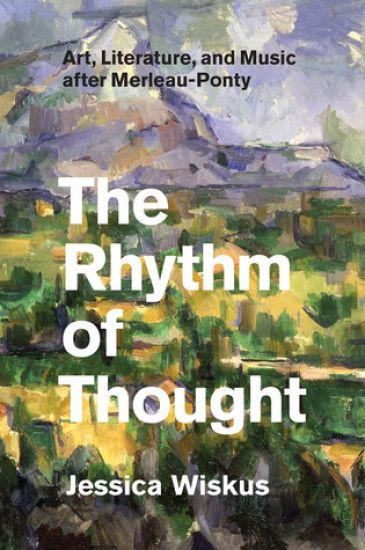
The Rhythm of Thought

The Rhythm of Thought

Jessica Wiskus

University of Chicago Press
2013
sidottu
Between present and past, visible and invisible, and sensation and idea, there is resonance - so philosopher Maurice Merleau-Ponty argued and so Jessica Wiskus explores in "The Rhythm of Thought". Holding the poetry of Stephane Mallarme, the paintings of Paul Cezanne, the prose of Marcel Proust, and the music of Claude Debussy under Merleau-Ponty's phenomenological light, she offers innovative interpretations of some of these artists' masterworks, in turn articulating a new perspective on Merleau-Ponty's philosophy. More than merely recovering Merleau-Ponty's thought, Wiskus thinks according to it. First examining these artists in relation to noncoincidence - as silence in poetry, depth in painting, memory in literature, and rhythm in music - she moves through an array of their artworks toward some of Merleau-Ponty's most exciting themes: our bodily relationship to the world and the dynamic process of expression. She closes with an examination of synesthesia as an intertwining of internal and external realms and a call, finally, for philosophical inquiry as a mode of artistic expression. Structured like a piece of music itself, "The Rhythm of Thought" offers new contexts in which to approach art, philosophy, and the resonance between them.
Reading in the Wilderness

Reading in the Wilderness

Jessica Brantley

University of Chicago Press
2007
sidottu
Just as twenty-first-century technologies such as blogs and wikis have transformed the once-private act of reading into a public enterprise, devotional reading experiences in the Middle Ages were dependent upon an oscillation between the solitary and the communal. In "Reading in the Wilderness", Jessica Brantley uses tools from both literary criticism and art history to illuminate Additional MS 37049, an illustrated Carthusian miscellany housed in the British Library. This revealing artifact, Brantley argues, closes the gap between group spectatorship and private study in late medieval England. Drawing on the work of W. J. T. Mitchell, Michael Camille, and others working at the image-text crossroads, "Reading in the Wilderness" addresses the manuscript's texts and illustrations to examine connections between reading and performance within the solitary monk's cell and outside. Brantley re-imagines the medieval codex as a site where the meanings of images and words are performed, both publicly and privately, in the act of reading.
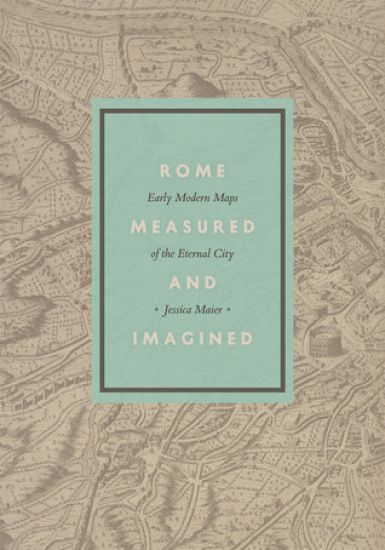
Rome Measured and Imagined

Rome Measured and Imagined

Jessica Maier

University of Chicago Press
2015
sidottu
At the turn of the fifteenth century, Rome was in the midst of a dramatic transformation from what the fourteenth-century poet Petrarch had termed a "crumbling city" populated by "broken ruins" into a prosperous Christian capital. Scholars, artists, architects, and engineers fascinated by Rome were spurred to develop new graphic modes for depicting the city-and the genre known as the city portrait exploded. In Rome Measured and Imagined, Jessica Maier explores the history of this genre - which merged the accuracy of scientific endeavor with the imaginative aspects of art - during the rise of Renaissance print culture. Through an exploration of works dating from the fifteenth to the eighteenth centuries, her book interweaves the story of the city portrait with that of Rome itself. Highly interdisciplinary and beautifully illustrated with nearly one hundred city portraits, Rome Measured and Imagined advances the scholarship on Renaissance Rome and print culture in fascinating ways.
The Last Walk

The Last Walk

Jessica Pierce

University of Chicago Press
2014
nidottu
From the moment we first open our homes - and our hearts - to a new pet, we know that one day we will have to watch this beloved animal age and die. The pain of that eventual separation is the cruel corollary to the love we share with them, and most of us deal with it by simply ignoring its inevitability. With The Last Walk, Jessica Pierce makes a forceful case that our pets, and the love we bear them, deserve better. Drawing on the moving story of the last year of the life of her own treasured dog, Ody, she presents an in-depth exploration of the practical, medical, and moral issues that trouble pet owners confronted with the decline and death of their companion animals. The Last Walk asks - and answers - the toughest questions pet owners face. The result is informative, moving, and consoling in equal parts; no pet lover should miss it.
Run, Spot, Run

Run, Spot, Run

Jessica Pierce

University of Chicago Press
2016
sidottu
A life shared with pets brings many emotions. We feel love for our companions, certainly, and happiness at the thought that we re providing them with a safe, healthy life. But there s another emotion, less often acknowledged, that can be nearly as powerful: guilt. When we see our cats gazing wistfully out the window, or watch a goldfish swim lazy circles in a bowl, we can t help but wonder: are we doing the right thing, keeping these independent beings locked up, subject to our control? Is keeping pets actually "good" for the pets themselves? That s the question that animates Jessica Pierce s powerful "Run, Spot, Run." A lover of pets herself (including, over the years, dogs, cats, fish, rats, hermit crabs, and more), Pierce understands the joys that pets bring us. But she also refuses to deny the ambiguous ethics at the heart of the relationship, and through a mix of personal stories, philosophical reflections, and scientifically informed analyses of animal behavior and natural history, she puts pet-keeping to the test. Is it ethical to keep pets at all? Are some species more suited to the relationship than others? Are there species one should never attempt to own? And are there ways that we can improve our pets lives, so that we can be confident that we are giving them as much as they give us? Deeply empathetic, yet rigorous and unflinching in her thinking, Pierce has written a book that is sure to help any pet owner, unsettling assumptions but also giving them the knowledge to build deeper, better relationships with the animals with whom they ve chosen to share their lives."
The Rhythm of Thought

The Rhythm of Thought

Jessica Wiskus

University of Chicago Press
2015
nidottu
Between present and past, visible and invisible, and sensation and idea, there is resonance - so philosopher Maurice Merleau-Ponty argued and so Jessica Wiskus explores in The Rhythm of Thought. Holding the poetry of Stephane Mallarme, the paintings of Paul Cezanne, the prose of Marcel Proust, and the music of Claude Debussy under Merleau-Ponty's phenomenological light, she offers innovative interpretations of some of these artists' master-works, in turn articulating a new perspective on Merleau-Ponty's philosophy. More than merely recovering Merleau-Ponty's thought, Wiskus thinks according to it. First examining these artists in relation to noncoincidence - as silence in poetry, depth in painting, memory in literature, and rhythm in music - she moves through an array of their artworks toward some of Merleau-Ponty's most exciting themes: our bodily relationship to the world and the dynamic process of expression. She closes with an examination of synesthesia as an intertwining of internal and external realms and a call, finally, for philosophical inquiry as a mode of artistic expression. Structured like a piece of music itself, The Rhythm of Thought offers exhilarating new contexts in which to approach art, philosophy, and the resonance between them.
Back to the Breast

Back to the Breast

Jessica Martucci

University of Chicago Press
2015
sidottu
After decades of decline during the twentieth century, breastfeeding rates began to rise again in the 1970s, a rebound that has continued to the present. While it would be easy to see this reemergence as simply part of the naturalism movement of the '70s, Jessica Martucci reveals here that the true story is more complicated. Despite the widespread acceptance and even advocacy of formula feeding by many in the medical establishment throughout the 1940s, '50s, and '60s, a small but vocal minority of mothers, drawing upon emerging scientific and cultural ideas about maternal instinct, infant development, and connections between the body and mind, pushed back against both hospital policies and cultural norms by breastfeeding their children. As Martucci shows, their choices helped ideologically root a "back to the breast" movement within segments of the middle-class, college-educated population as early as the 1950s. That movement-in which the personal and political were inextricably linked-effectively challenged midcentury norms of sexuality, gender, and consumption, and articulated early environmental concerns about chemical and nuclear contamination of foods, bodies, and breast milk. In its groundbreaking chronicle of the breastfeeding movement, Back to the Breast provides a welcome and vital account of what it has meant, and what it means today, to breastfeed in modern America.
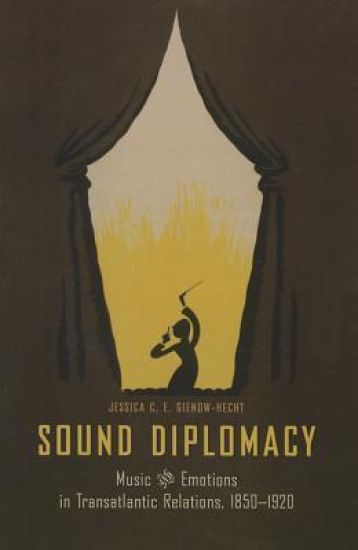
Sound Diplomacy

Sound Diplomacy

Jessica C. E. Gienow-Hecht

University of Chicago Press
2009
sidottu
Between 1850 and 1910, the United States was a rising star in the international arena, and several European nations sought to strengthen their ties to the republic through cultural means. France capitalized on its art, Britain on its social ties and literature, and Germany promoted classical music. "Sound Diplomacy" retraces these efforts to export culture as an instrument of nongovernmental diplomacy, paying particular attention to the role of conductors. Delving into a treasure trove of archives that document cross-cultural interactions between America and Germany, Jessica Gienow-Hecht uncovers the remarkable history of the musician as a cultural symbol of German cosmopolitanism. Seen as sexually attractive and emotionally expressive, German players and conductors acted as an army of informal ambassadors for their home country, and Gienow-Hecht argues that their popularity in the United States paved the way for an emotional elective affinity that survived broken treaties and several wars and continues to the present.
Sound Diplomacy

Sound Diplomacy

Jessica C. E. Gienow-Hecht

University of Chicago Press
2012
nidottu
The German-American relationship was special long before the Cold War; it was rooted not simply in political actions, but also long-term traditions of cultural exchange that date back to the nineteenth century. Between 1850 and 1910, the United States was a rising star in the international arena, and several European nations sought to strengthen their ties to the republic by championing their own cultures in America. While France capitalized on its art and Britain on its social ties and literature, Germany promoted its particular breed of classical music. Delving into a treasure trove of archives that document cross-cultural interactions between America and Germany, Jessica C. E. Gienow-Hecht retraces these efforts to export culture as an instrument of nongovernmental diplomacy, paying particular attention to the role of conductors and uncovers the remarkable history of the musician as a cultural symbol of German cosmopolitanism. Considered sexually attractive and emotionally expressive, German players and conductors acted as an army of informal ambassadors for their home country, and Gienow-Hecht argues that their popularity in the United States paved the way for an emotional elective affinity that survived broken treaties and several wars and continues to the present.