Kirjojen hintavertailu. Mukana 11 699 587 kirjaa ja 12 kauppaa.

Kirjahaku

Etsi kirjoja tekijän nimen, kirjan nimen tai ISBN:n perusteella.

1000 tulosta hakusanalla Jessica Else

Digital Modernism

Digital Modernism

Jessica Pressman

Oxford University Press Inc
2014
nidottu
Digital Modernism examines how and why some of the most innovative works of online electronic literature adapt and allude to literary modernism. Digital literature has been celebrated as a postmodern form that grows out of contemporary technologies, subjectivities, and aesthetics, but this book provides an alternative genealogy. Exemplary cases show electronic literature looking back to modernism for inspiration and source material (in content, form, and ideology) through which to critique contemporary culture. In so doing, this literature renews and reframes, rather than rejects, a literary tradition that it also reconfigures to center around media. To support her argument, Pressman pairs modernist works by Pound, Joyce, and Bob Brown, with major digital works like William Poundstone's "Project for the Tachistoscope: [Bottomless Pit]" (2005), Young-hae Chang Heavy Industries's Dakota, and Judd Morrissey's The Jew's Daughter. With each pairing, she demonstrates how the modernist movement of the 1920s and 1930s laid the groundwork for the innovations of electronic literature. In sum, the study situates contemporary digital literature in a literary genealogy in ways that rewrite literary history and reflect back on literature's past, modernism in particular, to illuminate the crucial role that media played in shaping the ambitions and practices of that period.
The Rhythm of Thought

The Rhythm of Thought

Jessica Wiskus

University of Chicago Press
2013
sidottu
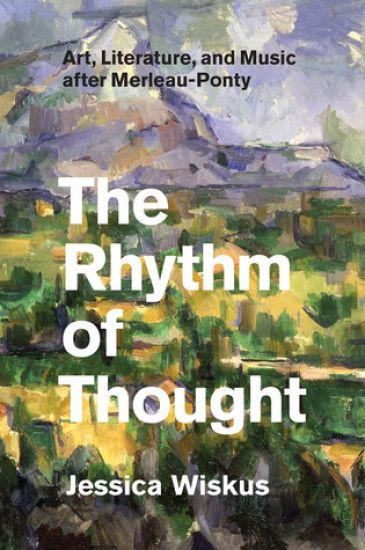
Between present and past, visible and invisible, and sensation and idea, there is resonance - so philosopher Maurice Merleau-Ponty argued and so Jessica Wiskus explores in "The Rhythm of Thought". Holding the poetry of Stephane Mallarme, the paintings of Paul Cezanne, the prose of Marcel Proust, and the music of Claude Debussy under Merleau-Ponty's phenomenological light, she offers innovative interpretations of some of these artists' masterworks, in turn articulating a new perspective on Merleau-Ponty's philosophy. More than merely recovering Merleau-Ponty's thought, Wiskus thinks according to it. First examining these artists in relation to noncoincidence - as silence in poetry, depth in painting, memory in literature, and rhythm in music - she moves through an array of their artworks toward some of Merleau-Ponty's most exciting themes: our bodily relationship to the world and the dynamic process of expression. She closes with an examination of synesthesia as an intertwining of internal and external realms and a call, finally, for philosophical inquiry as a mode of artistic expression. Structured like a piece of music itself, "The Rhythm of Thought" offers new contexts in which to approach art, philosophy, and the resonance between them.
Reading in the Wilderness

Reading in the Wilderness

Jessica Brantley

University of Chicago Press
2007
sidottu
Just as twenty-first-century technologies such as blogs and wikis have transformed the once-private act of reading into a public enterprise, devotional reading experiences in the Middle Ages were dependent upon an oscillation between the solitary and the communal. In "Reading in the Wilderness", Jessica Brantley uses tools from both literary criticism and art history to illuminate Additional MS 37049, an illustrated Carthusian miscellany housed in the British Library. This revealing artifact, Brantley argues, closes the gap between group spectatorship and private study in late medieval England. Drawing on the work of W. J. T. Mitchell, Michael Camille, and others working at the image-text crossroads, "Reading in the Wilderness" addresses the manuscript's texts and illustrations to examine connections between reading and performance within the solitary monk's cell and outside. Brantley re-imagines the medieval codex as a site where the meanings of images and words are performed, both publicly and privately, in the act of reading.
Rome Measured and Imagined

Rome Measured and Imagined

Jessica Maier

University of Chicago Press
2015
sidottu
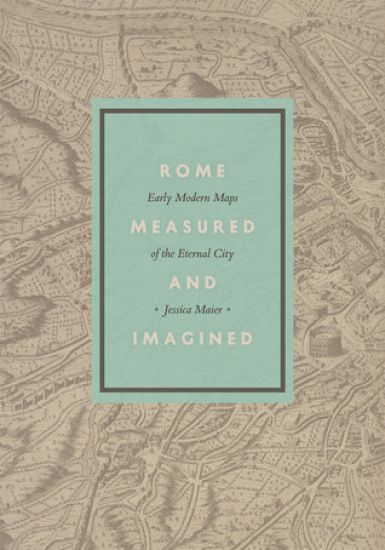
At the turn of the fifteenth century, Rome was in the midst of a dramatic transformation from what the fourteenth-century poet Petrarch had termed a "crumbling city" populated by "broken ruins" into a prosperous Christian capital. Scholars, artists, architects, and engineers fascinated by Rome were spurred to develop new graphic modes for depicting the city-and the genre known as the city portrait exploded. In Rome Measured and Imagined, Jessica Maier explores the history of this genre - which merged the accuracy of scientific endeavor with the imaginative aspects of art - during the rise of Renaissance print culture. Through an exploration of works dating from the fifteenth to the eighteenth centuries, her book interweaves the story of the city portrait with that of Rome itself. Highly interdisciplinary and beautifully illustrated with nearly one hundred city portraits, Rome Measured and Imagined advances the scholarship on Renaissance Rome and print culture in fascinating ways.
The Last Walk

The Last Walk

Jessica Pierce

University of Chicago Press
2014
nidottu
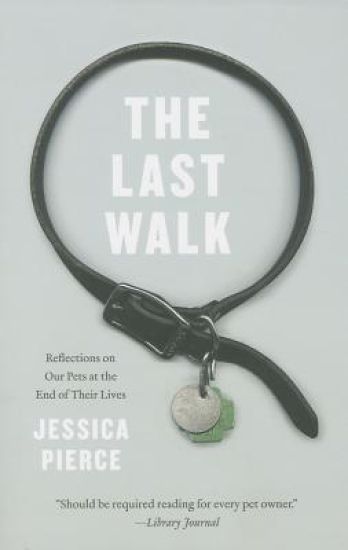
From the moment we first open our homes - and our hearts - to a new pet, we know that one day we will have to watch this beloved animal age and die. The pain of that eventual separation is the cruel corollary to the love we share with them, and most of us deal with it by simply ignoring its inevitability. With The Last Walk, Jessica Pierce makes a forceful case that our pets, and the love we bear them, deserve better. Drawing on the moving story of the last year of the life of her own treasured dog, Ody, she presents an in-depth exploration of the practical, medical, and moral issues that trouble pet owners confronted with the decline and death of their companion animals. The Last Walk asks - and answers - the toughest questions pet owners face. The result is informative, moving, and consoling in equal parts; no pet lover should miss it.
Run, Spot, Run

Run, Spot, Run

Jessica Pierce

University of Chicago Press
2016
sidottu
A life shared with pets brings many emotions. We feel love for our companions, certainly, and happiness at the thought that we re providing them with a safe, healthy life. But there s another emotion, less often acknowledged, that can be nearly as powerful: guilt. When we see our cats gazing wistfully out the window, or watch a goldfish swim lazy circles in a bowl, we can t help but wonder: are we doing the right thing, keeping these independent beings locked up, subject to our control? Is keeping pets actually "good" for the pets themselves? That s the question that animates Jessica Pierce s powerful "Run, Spot, Run." A lover of pets herself (including, over the years, dogs, cats, fish, rats, hermit crabs, and more), Pierce understands the joys that pets bring us. But she also refuses to deny the ambiguous ethics at the heart of the relationship, and through a mix of personal stories, philosophical reflections, and scientifically informed analyses of animal behavior and natural history, she puts pet-keeping to the test. Is it ethical to keep pets at all? Are some species more suited to the relationship than others? Are there species one should never attempt to own? And are there ways that we can improve our pets lives, so that we can be confident that we are giving them as much as they give us? Deeply empathetic, yet rigorous and unflinching in her thinking, Pierce has written a book that is sure to help any pet owner, unsettling assumptions but also giving them the knowledge to build deeper, better relationships with the animals with whom they ve chosen to share their lives."
The Rhythm of Thought

The Rhythm of Thought

Jessica Wiskus

University of Chicago Press
2015
nidottu
Between present and past, visible and invisible, and sensation and idea, there is resonance - so philosopher Maurice Merleau-Ponty argued and so Jessica Wiskus explores in The Rhythm of Thought. Holding the poetry of Stephane Mallarme, the paintings of Paul Cezanne, the prose of Marcel Proust, and the music of Claude Debussy under Merleau-Ponty's phenomenological light, she offers innovative interpretations of some of these artists' master-works, in turn articulating a new perspective on Merleau-Ponty's philosophy. More than merely recovering Merleau-Ponty's thought, Wiskus thinks according to it. First examining these artists in relation to noncoincidence - as silence in poetry, depth in painting, memory in literature, and rhythm in music - she moves through an array of their artworks toward some of Merleau-Ponty's most exciting themes: our bodily relationship to the world and the dynamic process of expression. She closes with an examination of synesthesia as an intertwining of internal and external realms and a call, finally, for philosophical inquiry as a mode of artistic expression. Structured like a piece of music itself, The Rhythm of Thought offers exhilarating new contexts in which to approach art, philosophy, and the resonance between them.
Back to the Breast

Back to the Breast

Jessica Martucci

University of Chicago Press
2015
sidottu
After decades of decline during the twentieth century, breastfeeding rates began to rise again in the 1970s, a rebound that has continued to the present. While it would be easy to see this reemergence as simply part of the naturalism movement of the '70s, Jessica Martucci reveals here that the true story is more complicated. Despite the widespread acceptance and even advocacy of formula feeding by many in the medical establishment throughout the 1940s, '50s, and '60s, a small but vocal minority of mothers, drawing upon emerging scientific and cultural ideas about maternal instinct, infant development, and connections between the body and mind, pushed back against both hospital policies and cultural norms by breastfeeding their children. As Martucci shows, their choices helped ideologically root a "back to the breast" movement within segments of the middle-class, college-educated population as early as the 1950s. That movement-in which the personal and political were inextricably linked-effectively challenged midcentury norms of sexuality, gender, and consumption, and articulated early environmental concerns about chemical and nuclear contamination of foods, bodies, and breast milk. In its groundbreaking chronicle of the breastfeeding movement, Back to the Breast provides a welcome and vital account of what it has meant, and what it means today, to breastfeed in modern America.
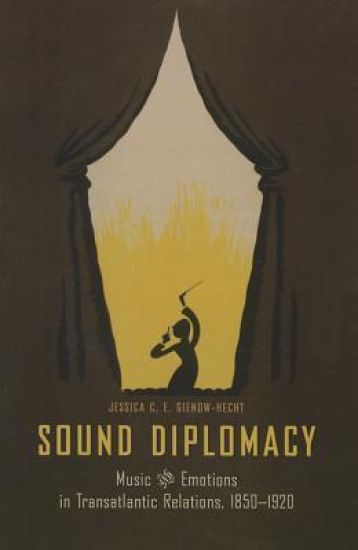
Sound Diplomacy

Sound Diplomacy

Jessica C. E. Gienow-Hecht

University of Chicago Press
2009
sidottu
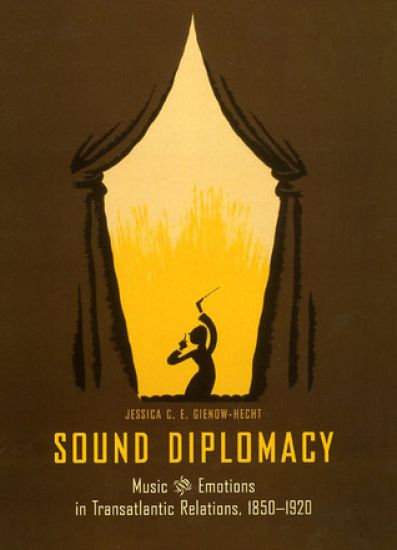
Between 1850 and 1910, the United States was a rising star in the international arena, and several European nations sought to strengthen their ties to the republic through cultural means. France capitalized on its art, Britain on its social ties and literature, and Germany promoted classical music. "Sound Diplomacy" retraces these efforts to export culture as an instrument of nongovernmental diplomacy, paying particular attention to the role of conductors. Delving into a treasure trove of archives that document cross-cultural interactions between America and Germany, Jessica Gienow-Hecht uncovers the remarkable history of the musician as a cultural symbol of German cosmopolitanism. Seen as sexually attractive and emotionally expressive, German players and conductors acted as an army of informal ambassadors for their home country, and Gienow-Hecht argues that their popularity in the United States paved the way for an emotional elective affinity that survived broken treaties and several wars and continues to the present.
Sound Diplomacy

Sound Diplomacy

Jessica C. E. Gienow-Hecht

University of Chicago Press
2012
nidottu
The German-American relationship was special long before the Cold War; it was rooted not simply in political actions, but also long-term traditions of cultural exchange that date back to the nineteenth century. Between 1850 and 1910, the United States was a rising star in the international arena, and several European nations sought to strengthen their ties to the republic by championing their own cultures in America. While France capitalized on its art and Britain on its social ties and literature, Germany promoted its particular breed of classical music. Delving into a treasure trove of archives that document cross-cultural interactions between America and Germany, Jessica C. E. Gienow-Hecht retraces these efforts to export culture as an instrument of nongovernmental diplomacy, paying particular attention to the role of conductors and uncovers the remarkable history of the musician as a cultural symbol of German cosmopolitanism. Considered sexually attractive and emotionally expressive, German players and conductors acted as an army of informal ambassadors for their home country, and Gienow-Hecht argues that their popularity in the United States paved the way for an emotional elective affinity that survived broken treaties and several wars and continues to the present.
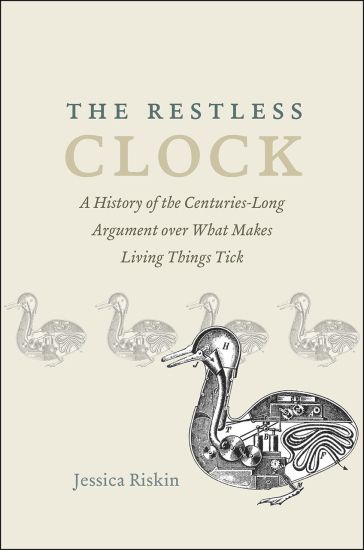
The Restless Clock

The Restless Clock

Jessica Riskin

University of Chicago Press
2018
nidottu
Today, a scientific explanation is not meant to ascribe agency to natural phenomena: we would not say a rock falls because it seeks the center of the earth. Even for living things, in the natural sciences and often in the social sciences, the same is true. A modern botanist would not say that plants pursue sunlight. This has not always been the case, nor, perhaps, was it inevitable. Since the seventeenth century, many thinkers have made agency, in various forms, central to science. The Restless Clock examines the history of this principle, banning agency, in the life sciences. It also tells the story of dissenters embracing the opposite idea: that agency is essential to nature. The story begins with the automata of early modern Europe, as models for the new science of living things, and traces questions of science and agency through Descartes, Leibniz, Lamarck, and Darwin, among many others. Mechanist science, Jessica Riskin shows, had an associated theology: the argument from design, which found evidence for a designer in the mechanisms of nature. Rejecting such appeals to a supernatural God, the dissenters sought to naturalize agency rather than outsourcing it to a "divine engineer." Their model cast living things not as passive but as active, self-making machines. The conflict between passive- and active-mechanist approaches maintains a subterranean life in current science, shaping debates in fields such as evolutionary biology, cognitive science, and artificial intelligence. This history promises not only to inform such debates, but also our sense of the possibilities for what it means to engage in science and even what it means to be alive.
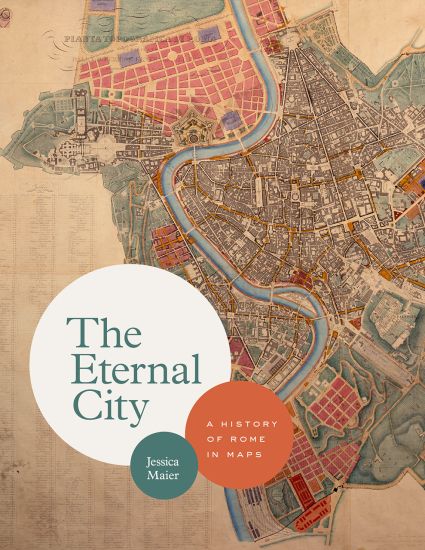
The Eternal City

The Eternal City

Jessica Maier

University of Chicago Press
2020
sidottu
One of the most visited places in the world, Rome attracts millions of tourists each year to walk its storied streets and see famous sites like the Colosseum, St. Peter's Basilica, and the Trevi Fountain. Yet this ancient city's allure is due as much to its rich, unbroken history as to its extraordinary array of landmarks. Countless incarnations and eras merge in the Roman cityscape. With a history spanning nearly three millennia, no other place can quite match the resilience and reinventions of the aptly nicknamed Eternal City. In this unique and visually engaging book, Jessica Maier considers Rome through the eyes of mapmakers and artists who have managed to capture something of its essence over the centuries. Viewing the city as not one but ten "Romes," she explores how the varying maps and art reflect each era's key themes. Ranging from modest to magnificent, the images comprise singular aesthetic monuments like paintings and grand prints as well as more popular and practical items like mass-produced tourist plans, archaeological surveys, and digitizations. The most iconic and important images of the city appear alongside relatively obscure, unassuming items that have just as much to teach us about Rome's past. Through 140 full-color images and thoughtful overviews of each era, Maier provides an accessible, comprehensive look at Rome's many overlapping layers of history in this landmark volume. The first book ever published in English to tell Rome's rich story through its maps, The Eternal City beautifully captures the past, present, and future of one of the most famous and enduring places on the planet.
The Last Walk

The Last Walk

Jessica Pierce

University of Chicago Press
2012
sidottu
From the moment when we first open our homes - and our hearts - to a new pet, we know that one day we will have to watch this beloved animal age and die. The pain of that eventual separation is the cruel corollary to the love we share with them, and most of us deal with it by simply ignoring its inevitability. With "The Last Walk", Jessica Pierce makes a forceful case that our pets, and the love we bear them, deserve better. Drawing on the moving story of the last year of the life of her own treasured dog, Ody, she presents an in-depth exploration of the practical, medical, and moral issues that trouble pet owners confronted with the decline and death of their companion animals. Pierce combines heart-wrenching personal stories, interviews, and scientific research to consider a wide range of questions about animal aging, end-of-life care, and death. She tackles such vexing questions as whether animals are aware of death, whether they're feeling pain, and if and when euthanasia is appropriate. Given what we know and can learn, how should we best honor the lives of our pets, both while they live and after they have left us? The product of a lifetime of loving pets, studying philosophy, and collaborating with scientists at the forefront of the study of animal behavior and cognition, "The Last Walk" asks - and answers - the toughest questions pet owners face. The result is informative, moving, and consoling in equal parts; no pet lover should miss it.
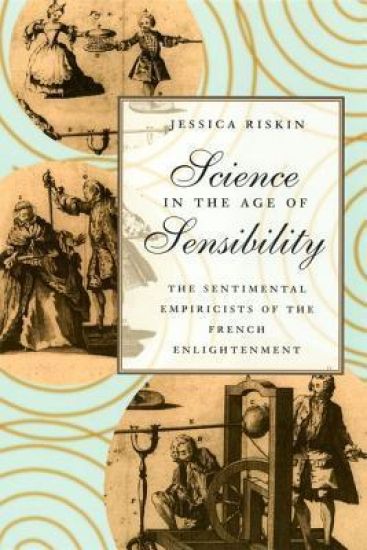
Science in the Age of Sensibility

Science in the Age of Sensibility

Jessica Riskin

University of Chicago Press
2002
sidottu
Empiricism today implies the dispassionate scrutiny of facts. But Jessica Riskin finds that in the French Enlightenment, empiricism was inimately bound up with sensibility. In what she calls a "sentimental empiricism", natural knowledge was taken to rest on a blend of experience and emotion. Riskin argues that sentimental empiricism brought together ideas and institutions, practice and politics. She shows, for instance, how the study of blindness, led by ideas about the mental and moral role of vision and by cataract surgeries, shaped the first school for the blind; how Benjamin Franklin's electrical physics, ascribing desires to nature, engaged French economic reformers; and how the question of the role of language in science and social life linked disputes over Antoine Lavoisier's new chemical names to the founding of France's modern system of civic education. Recasting the Age of Reason by stressing its conjunction with the Age of Sensibility, Riskin offers an entirely new perspective on the development of modern science and the history of the Enlightenment.
Science in the Age of Sensibility

Science in the Age of Sensibility

Jessica Riskin

University of Chicago Press
2002
nidottu
Empiricism today implies the dispassionate scrutiny of facts. But Jessica Riskin finds that in the French Enlightenment, empiricism was inimately bound up with sensibility. In what she calls a "sentimental empiricism", natural knowledge was taken to rest on a blend of experience and emotion. Riskin argues that sentimental empiricism brought together ideas and institutions, practice and politics. She shows, for instance, how the study of blindness, led by ideas about the mental and moral role of vision and by cataract surgeries, shaped the first school for the blind; how Benjamin Franklin's electrical physics, ascribing desires to nature, engaged French economic reformers; and how the question of the role of language in science and social life linked disputes over Antoine Lavoisier's new chemical names to the founding of France's modern system of civic education. Recasting the Age of Reason by stressing its conjunction with the Age of Sensibility, Riskin offers an entirely new perspective on the development of modern science and the history of the Enlightenment.
Who's a Good Dog?

Who's a Good Dog?

Jessica Pierce

THE UNIVERSITY OF CHICAGO PRESS
2023
sidottu
A New Scientist Best Book of 2023A guide to cultivating a shared life of joy and respect with our dogs. Who’s a Good Dog? is an invitation to nurture more thoughtful and balanced relationships with our canine companions. By deepening our curiosity about what our dogs are experiencing, and by working together with them in a spirit of collaboration, we can become more effective and compassionate caregivers. With sympathy for the challenges met by both dogs and their humans, bioethicist Jessica Pierce explores common practices of caring for dogs, including how we provide exercise, what we feed, how and why we socialize and train, and how we employ tools such as collars and leashes. She helps us both to identify potential sources of fear and anxiety in our dogs’ lives and to expand practices that provide physical and emotional nourishment. Who’s a Good Dog? also encourages us to think more critically about what we expect of our dogs and how these expectations can set everyone up for success or failure. Pierce offers resources to help us cultivate attentiveness and kindness, inspiring us to practice the art of noticing, of astonishment, of looking with fresh eyes at these beings we think we know so well. And more than this, she makes her findings relatable by examining facets of her relationship with Bella, the dog in her life. As Bella shows throughout, all dogs are good dogs, and we, as humans and dog guardians, could be doing a little bit better to get along with them and give them what they need.
Political Monopolies in American Cities

Political Monopolies in American Cities

Jessica Trounstine

University of Chicago Press
2008
sidottu
Around the same time that Richard J. Daley governed Chicago, greasing the wheels of his notorious political machine during a tenure that lasted from 1955 to his death in 1976, Anthony 'Dutch' Hamann's 'reform' government centralized authority to similar effect in San Jose. In light of their equally exclusive governing arrangements - a similarity that seems to defy their reputations - Jessica Trounstine asks whether so-called bosses and reformers are more alike than we might have realized.Situating her in-depth studies of Chicago and San Jose in the broad context of data drawn from more than 240 cities over the course of a century, she finds that the answer - a resounding yes - illuminates the nature of political power. Both political machines and reform governments, she reveals, bias the system in favor of incumbents, effectively establishing monopolies that free governing coalitions from dependence on the support of their broader communities. Ironically, Trounstine goes on to show, the resulting loss of democratic responsiveness eventually mobilizes residents to vote monopolistic regimes out of office. Envisioning an alternative future for American cities, Trounstine concludes by suggesting solutions designed to free urban politics from this damaging cycle.
Political Monopolies in American Cities

Political Monopolies in American Cities

Jessica Trounstine

University of Chicago Press
2008
nidottu
Around the same time that Richard J. Daley governed Chicago, greasing the wheels of his notorious political machine during a tenure that lasted from 1955 to his death in 1976, Anthony 'Dutch' Hamann's 'reform' government centralized authority to similar effect in San Jose. In light of their equally exclusive governing arrangements - a similarity that seems to defy their reputations - Jessica Trounstine asks whether so-called bosses and reformers are more alike than we might have realized.Situating her in-depth studies of Chicago and San Jose in the broad context of data drawn from more than 240 cities over the course of a century, she finds that the answer - a resounding yes - illuminates the nature of political power. Both political machines and reform governments, she reveals, bias the system in favor of incumbents, effectively establishing monopolies that free governing coalitions from dependence on the support of their broader communities. Ironically, Trounstine goes on to show, the resulting loss of democratic responsiveness eventually mobilizes residents to vote monopolistic regimes out of office. Envisioning an alternative future for American cities, Trounstine concludes by suggesting solutions designed to free urban politics from this damaging cycle.
Island Time

Island Time

Jessica Swanston Baker

THE UNIVERSITY OF CHICAGO PRESS
2024
sidottu
A close look at how wylers, a popular musical style from the island of St. Kitts and Nevis, expresses a unique mode of relation in the postcolonial Caribbean. In Island Time, ethnomusicologist Jessica Swanston Baker examines wylers, a musical form from St. Kitts and Nevis that is characterized by speed. Baker argues that this speed becomes a useful and highly subjective metric for measuring the relationship between Caribbean aspirations and the promises of economic modernity; women’s bodily autonomy and the nationalist fantasies that would seek to curb that autonomy; and the material realities of Kittitian-Nevisian youth living in the disillusionment following postcolonial independence. She traces the wider Caribbean musical, cultural, and media-based resonances of wylers, posing an alternative model to scholarship on Caribbean music that has tended to privilege the big islands—Trinidad, Jamaica, and Haiti—thus neglecting not only the unique cultural worlds of smaller nations but also the unbounded nature of musical exchange in the region. The archipelago emerges as a useful model for apprehending the relationality across scales that governs the temporal and spatial logics that undergird Caribbean performance. The archipelago and its speeds ultimately emerge as a meaningful medium for postcolonial, postmodern world-making.
Island Time

Island Time

Jessica Swanston Baker

THE UNIVERSITY OF CHICAGO PRESS
2024
nidottu
A close look at how wylers, a popular musical style from the island of St. Kitts and Nevis, expresses a unique mode of relation in the postcolonial Caribbean. In Island Time, ethnomusicologist Jessica Swanston Baker examines wylers, a musical form from St. Kitts and Nevis that is characterized by speed. Baker argues that this speed becomes a useful and highly subjective metric for measuring the relationship between Caribbean aspirations and the promises of economic modernity; women’s bodily autonomy and the nationalist fantasies that would seek to curb that autonomy; and the material realities of Kittitian-Nevisian youth living in the disillusionment following postcolonial independence. She traces the wider Caribbean musical, cultural, and media-based resonances of wylers, posing an alternative model to scholarship on Caribbean music that has tended to privilege the big islands—Trinidad, Jamaica, and Haiti—thus neglecting not only the unique cultural worlds of smaller nations but also the unbounded nature of musical exchange in the region. The archipelago emerges as a useful model for apprehending the relationality across scales that governs the temporal and spatial logics that undergird Caribbean performance. The archipelago and its speeds ultimately emerge as a meaningful medium for postcolonial, postmodern world-making.