Kirjojen hintavertailu. Mukana 11 627 220 kirjaa ja 12 kauppaa.

Kirjahaku

Etsi kirjoja tekijän nimen, kirjan nimen tai ISBN:n perusteella.

1000 tulosta hakusanalla Jessica Innes

Who's a Good Dog?

Who's a Good Dog?

Jessica Pierce

THE UNIVERSITY OF CHICAGO PRESS
2023
sidottu
A New Scientist Best Book of 2023A guide to cultivating a shared life of joy and respect with our dogs. Who’s a Good Dog? is an invitation to nurture more thoughtful and balanced relationships with our canine companions. By deepening our curiosity about what our dogs are experiencing, and by working together with them in a spirit of collaboration, we can become more effective and compassionate caregivers. With sympathy for the challenges met by both dogs and their humans, bioethicist Jessica Pierce explores common practices of caring for dogs, including how we provide exercise, what we feed, how and why we socialize and train, and how we employ tools such as collars and leashes. She helps us both to identify potential sources of fear and anxiety in our dogs’ lives and to expand practices that provide physical and emotional nourishment. Who’s a Good Dog? also encourages us to think more critically about what we expect of our dogs and how these expectations can set everyone up for success or failure. Pierce offers resources to help us cultivate attentiveness and kindness, inspiring us to practice the art of noticing, of astonishment, of looking with fresh eyes at these beings we think we know so well. And more than this, she makes her findings relatable by examining facets of her relationship with Bella, the dog in her life. As Bella shows throughout, all dogs are good dogs, and we, as humans and dog guardians, could be doing a little bit better to get along with them and give them what they need.
Political Monopolies in American Cities

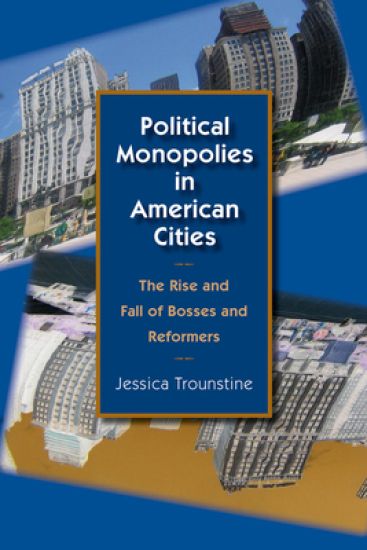
Political Monopolies in American Cities

Jessica Trounstine

University of Chicago Press
2008
sidottu
Around the same time that Richard J. Daley governed Chicago, greasing the wheels of his notorious political machine during a tenure that lasted from 1955 to his death in 1976, Anthony 'Dutch' Hamann's 'reform' government centralized authority to similar effect in San Jose. In light of their equally exclusive governing arrangements - a similarity that seems to defy their reputations - Jessica Trounstine asks whether so-called bosses and reformers are more alike than we might have realized.Situating her in-depth studies of Chicago and San Jose in the broad context of data drawn from more than 240 cities over the course of a century, she finds that the answer - a resounding yes - illuminates the nature of political power. Both political machines and reform governments, she reveals, bias the system in favor of incumbents, effectively establishing monopolies that free governing coalitions from dependence on the support of their broader communities. Ironically, Trounstine goes on to show, the resulting loss of democratic responsiveness eventually mobilizes residents to vote monopolistic regimes out of office. Envisioning an alternative future for American cities, Trounstine concludes by suggesting solutions designed to free urban politics from this damaging cycle.
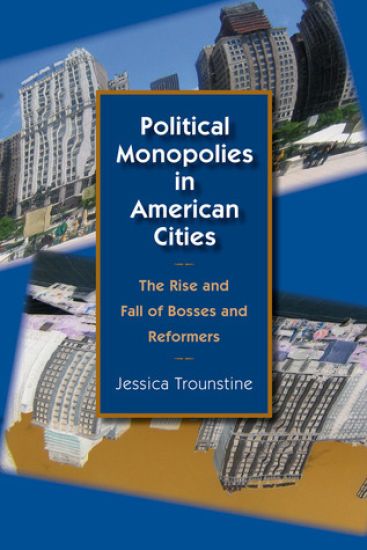
Political Monopolies in American Cities

Political Monopolies in American Cities

Jessica Trounstine

University of Chicago Press
2008
nidottu
Around the same time that Richard J. Daley governed Chicago, greasing the wheels of his notorious political machine during a tenure that lasted from 1955 to his death in 1976, Anthony 'Dutch' Hamann's 'reform' government centralized authority to similar effect in San Jose. In light of their equally exclusive governing arrangements - a similarity that seems to defy their reputations - Jessica Trounstine asks whether so-called bosses and reformers are more alike than we might have realized.Situating her in-depth studies of Chicago and San Jose in the broad context of data drawn from more than 240 cities over the course of a century, she finds that the answer - a resounding yes - illuminates the nature of political power. Both political machines and reform governments, she reveals, bias the system in favor of incumbents, effectively establishing monopolies that free governing coalitions from dependence on the support of their broader communities. Ironically, Trounstine goes on to show, the resulting loss of democratic responsiveness eventually mobilizes residents to vote monopolistic regimes out of office. Envisioning an alternative future for American cities, Trounstine concludes by suggesting solutions designed to free urban politics from this damaging cycle.
Island Time

Island Time

Jessica Swanston Baker

THE UNIVERSITY OF CHICAGO PRESS
2024
sidottu
A close look at how wylers, a popular musical style from the island of St. Kitts and Nevis, expresses a unique mode of relation in the postcolonial Caribbean. In Island Time, ethnomusicologist Jessica Swanston Baker examines wylers, a musical form from St. Kitts and Nevis that is characterized by speed. Baker argues that this speed becomes a useful and highly subjective metric for measuring the relationship between Caribbean aspirations and the promises of economic modernity; women’s bodily autonomy and the nationalist fantasies that would seek to curb that autonomy; and the material realities of Kittitian-Nevisian youth living in the disillusionment following postcolonial independence. She traces the wider Caribbean musical, cultural, and media-based resonances of wylers, posing an alternative model to scholarship on Caribbean music that has tended to privilege the big islands—Trinidad, Jamaica, and Haiti—thus neglecting not only the unique cultural worlds of smaller nations but also the unbounded nature of musical exchange in the region. The archipelago emerges as a useful model for apprehending the relationality across scales that governs the temporal and spatial logics that undergird Caribbean performance. The archipelago and its speeds ultimately emerge as a meaningful medium for postcolonial, postmodern world-making.
Island Time

Island Time

Jessica Swanston Baker

THE UNIVERSITY OF CHICAGO PRESS
2024
nidottu
A close look at how wylers, a popular musical style from the island of St. Kitts and Nevis, expresses a unique mode of relation in the postcolonial Caribbean. In Island Time, ethnomusicologist Jessica Swanston Baker examines wylers, a musical form from St. Kitts and Nevis that is characterized by speed. Baker argues that this speed becomes a useful and highly subjective metric for measuring the relationship between Caribbean aspirations and the promises of economic modernity; women’s bodily autonomy and the nationalist fantasies that would seek to curb that autonomy; and the material realities of Kittitian-Nevisian youth living in the disillusionment following postcolonial independence. She traces the wider Caribbean musical, cultural, and media-based resonances of wylers, posing an alternative model to scholarship on Caribbean music that has tended to privilege the big islands—Trinidad, Jamaica, and Haiti—thus neglecting not only the unique cultural worlds of smaller nations but also the unbounded nature of musical exchange in the region. The archipelago emerges as a useful model for apprehending the relationality across scales that governs the temporal and spatial logics that undergird Caribbean performance. The archipelago and its speeds ultimately emerge as a meaningful medium for postcolonial, postmodern world-making.
Who's a Good Dog?

Who's a Good Dog?

Jessica Pierce

THE UNIVERSITY OF CHICAGO PRESS
2026
nidottu
A New Scientist Best Book of 2023 A guide to cultivating a shared life of joy and respect with our dogs. Who’s a Good Dog? is an invitation to nurture more thoughtful and balanced relationships with our canine companions. By deepening our curiosity about what our dogs are experiencing, and by working together with them in a spirit of collaboration, we can become more effective and compassionate caregivers. With sympathy for the challenges met by both dogs and their humans, bioethicist Jessica Pierce explores common practices of caring for dogs, including how we provide exercise, what we feed, how and why we socialize and train, and how we employ tools such as collars and leashes. She helps us both to identify potential sources of fear and anxiety in our dogs’ lives and to expand practices that provide physical and emotional nourishment. Who’s a Good Dog? also encourages us to think more critically about what we expect of our dogs and how these expectations can set everyone up for success or failure. Pierce offers resources to help us cultivate attentiveness and kindness, inspiring us to practice the art of noticing, of astonishment, of looking with fresh eyes at these beings we think we know so well. And more than this, she makes her findings relatable by examining facets of her relationship with Bella, the dog in her life. As Bella shows throughout, all dogs are good dogs, and we, as humans and dog guardians, could be doing a little bit better to get along with them and give them what they need.
To Have and to Hold

To Have and to Hold

Jessica Weiss

University of Chicago Press
2000
nidottu
Middle-class family life in the 1950s brings to mind images of either smugly satisfied or miserably repressed nuclear families with breadwinning husbands, children and housewives, much like the families depicted in "Ozzie and Harriet" and "Father Knows Best". Jessica Weiss delves beneath these mythic images and paints a far more complex picture that reveals strong continuities between the baby boomer and their parents. Drawing on interviews with American couples from the 1950s to the 1980s, Weiss creates a dynamic portrait of family and social change in the postwar era. She pairs these firsthand accounts with a deft analysis of movies, television shows, magazines and advice books from each decade, providing an unprecedented and intimate look at ordinary marriages in a time of sweeping cultural change. Weiss shows how young couples in the 1950s attempted to combine egalitarian hopes with traditional gender roles. Middle-class women encouraged their husbands to become involved fathers. Midlife wives and mothers reshaped the labour force and the home by returning to work in the 1960s. And couples strove for fulfilling marriages as they dealt with the pressures of childrearing in the midst of the sexual and divorce revolutions of the 1960s and 1970s. By the 1980s, they were far more welcoming to the ideas of the women's movement than has often been assumed. More than simply changing with the times, the parents of the baby boom contributed to changing times themselves. Weiss's use of family interviews that span three decades, her imaginative examination of popular culture, and her incisive conclusions make her book a valuable contribution not only to our understanding of the past but also to our understanding of men's and women's roles in today's family.
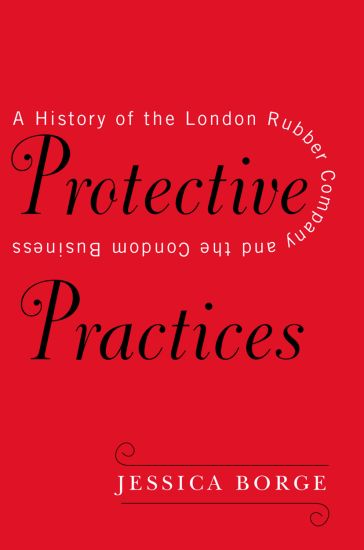
Protective Practices

Protective Practices

Jessica Borge; Lesley Hall

McGill-Queen's University Press
2020
sidottu
From humble beginnings wholesaling at a small tobacconist-hairdresser shop in 1915, the London Rubber Company rapidly became the UK's biggest postwar producer and exporter of disposable rubber condoms. A first-mover and innovator, the company's continuous product development and strong brands (including Durex) allowed it to dominate supply to the retail trade and family planning clinics, leading it to intercede in the burgeoning women's market. When oral contraceptives came along, however, the company was caught in a bind between defending condoms against the pill and claiming a segment of the new birth control market for itself. In this first major study on the company, Jessica Borge shows how, despite the "unmentionable" status of condoms that inhibited advertising in the early twentieth century, aggressive business practices were successfully deployed to protect the monopoly and squash competition. Through close, evidence-based examination of LRC's first fifty years, encompassing its most challenging decades, the 1950s and 1960s, as well as an overview of later years including the AIDS crisis, Borge argues that the story of the modern disposable condom in Britain is really the story of the London Rubber Company, the circumstances that befell it, the struggles that beset it, the causes that opposed it, and the opportunities it created for itself. LRC's historic intervention in and contribution to female contraceptive practices sits uneasily with existing narratives centred on women's control of reproduction, but the time has come, Borge argues, for the condom to find its way back to the centre of these debates. Protective Practices thereby re-examines a key transitional moment in social and cultural history through the lens of this unusual case study.
Hope Circuits

Hope Circuits

Jessica Riddell

MCGILL-QUEEN'S UNIVERSITY PRESS
2024
sidottu
How do we model abundance and generosity – in teaching, in learning, in leading organizations, particularly non-profits – when dealing with fiscal austerity and other forms of scarcity thinking? Hope Circuits explores this question, presenting sophisticated ideas that support democratizing higher education for everybody.Written in a conversational style that draws upon Jessica Riddell’s experience in governance, senior administration, and scholarship, the book is a how-to guide and thought leadership manifesto for developing the conceptual tools to seek solutions to higher education’s most pressing issues. Hope Circuits aims to rewire mindsets, perspectives, and behaviours to in turn rewire and renew the systems within which university stakeholders learn, live, and work. It tackles this challenging feat by suggesting ten tools to build hope circuits, a concept borrowed from neuroscience.Riddell acknowledges that changing systems and deep cultures is not for the faint of heart; indeed, the more than 250 interviews conducted with thought partners for Hope Circuits expose how individuals who navigate complex systems regularly experience discomfort and even despair. In response, she shows us how to anchor a practice of hope in higher education with focus and intention, inviting others to adopt and adapt her approach.
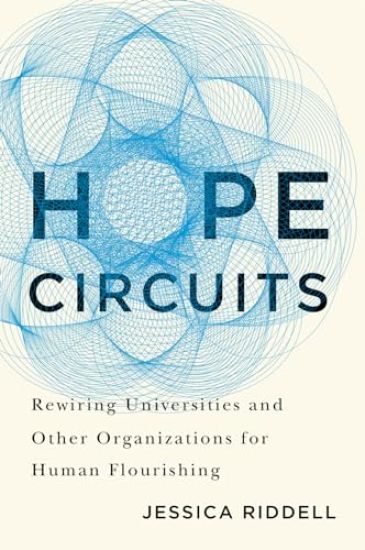
Hope Circuits

Hope Circuits

Jessica Riddell

MCGILL-QUEEN'S UNIVERSITY PRESS
2024
nidottu
How do we model abundance and generosity – in teaching, in learning, in leading organizations, particularly non-profits – when dealing with fiscal austerity and other forms of scarcity thinking? Hope Circuits explores this question, presenting sophisticated ideas that support democratizing higher education for everybody.Written in a conversational style that draws upon Jessica Riddell’s experience in governance, senior administration, and scholarship, the book is a how-to guide and thought leadership manifesto for developing the conceptual tools to seek solutions to higher education’s most pressing issues. Hope Circuits aims to rewire mindsets, perspectives, and behaviours to in turn rewire and renew the systems within which university stakeholders learn, live, and work. It tackles this challenging feat by suggesting ten tools to build hope circuits, a concept borrowed from neuroscience.Riddell acknowledges that changing systems and deep cultures is not for the faint of heart; indeed, the more than 250 interviews conducted with thought partners for Hope Circuits expose how individuals who navigate complex systems regularly experience discomfort and even despair. In response, she shows us how to anchor a practice of hope in higher education with focus and intention, inviting others to adopt and adapt her approach.
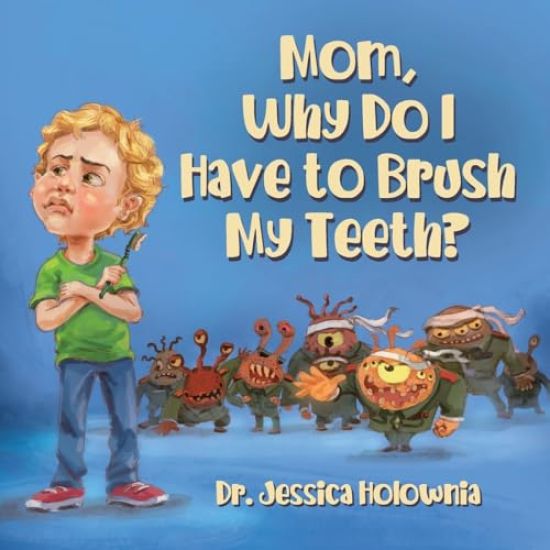
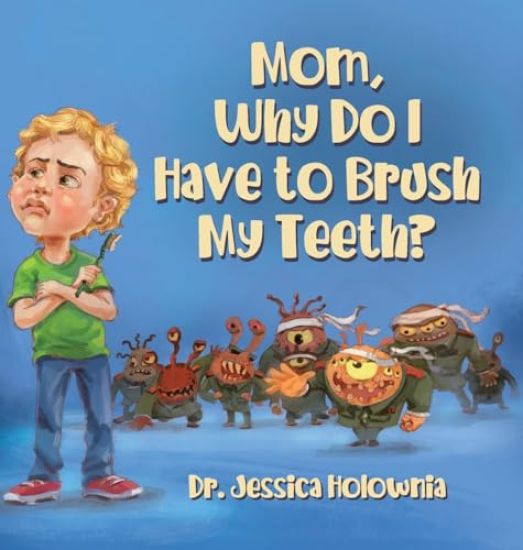
Mom, Why Do I Have to Brush My Teeth?

Mom, Why Do I Have to Brush My Teeth?

Jessica Holownia

TellWell Press
2025
pokkari
Winston hates brushing his teeth, and doesn't understand why he has to do it every day. Join him for a wild adventure through the mouth. You will be captivated by a world of bacteria, dangerous acid bombs, and super-weapon missile attacks It is a wild ride that highlights the battle going on in our mouths, while teaching the importance of brushing and flossing your teeth. "Mom, Why Do I Have to Brush My Teeth?" is a book that will encourage the significance of oral hygiene, while being both entertaining and fun
Mom, Why Do I Have to Brush My Teeth?

Mom, Why Do I Have to Brush My Teeth?

Jessica Holownia

TellWell Press
2025
sidottu
Winston hates brushing his teeth, and doesn't understand why he has to do it every day. Join him for a wild adventure through the mouth. You will be captivated by a world of bacteria, dangerous acid bombs, and super-weapon missile attacks It is a wild ride that highlights the battle going on in our mouths, while teaching the importance of brushing and flossing your teeth. "Mom, Why Do I Have to Brush My Teeth?" is a book that will encourage the significance of oral hygiene, while being both entertaining and fun
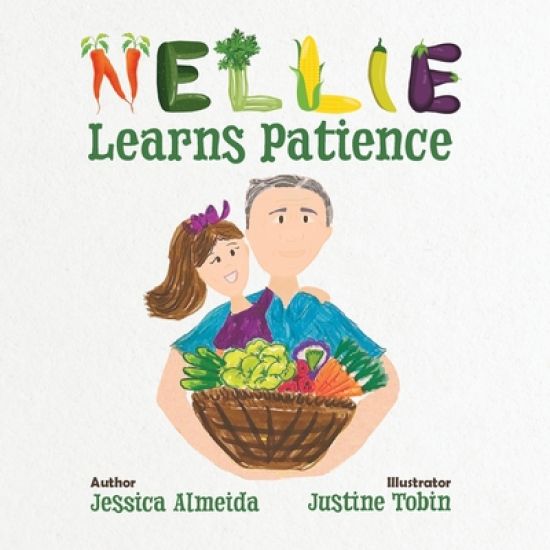
Nellie Learns Patience

Nellie Learns Patience

Jessica Almeida

Tellwell Talent
2020
pokkari
Patience is a part of growing up, but not always an easy characteristic to have as a child (or an adult). Sometimes, doing something that you are not supposed to do teaches you lifelong lessons, just ask Nellie Remember, good things take time, which is why we must learn to be patient.
Nellie Learns Patience

Nellie Learns Patience

Jessica Almeida

Tellwell Talent
2020
sidottu
Patience is a part of growing up, but not always an easy characteristic to have as a child (or an adult). Sometimes, doing something that you are not supposed to do teaches you lifelong lessons, just ask Nellie Remember, good things take time, which is why we must learn to be patient.
Bop-It and No More Covid

Bop-It and No More Covid

Jessica J Wohlgemuth

Tellwell Talent
2020
pokkari
Are you tired of living the COVID life? Find hope and cheer in this little book about a fuzzy little grey bunny named Bop-It. Read about how he and his friends learn to cope through the pandemic, finding fun in the new normal.
Bop-It and No More Covid

Bop-It and No More Covid

Jessica J Wohlgemuth

Tellwell Talent
2020
sidottu
Are you tired of living the COVID life? Find hope and cheer in this little book about a fuzzy little grey bunny named Bop-It. Read about how he and his friends learn to cope through the pandemic, finding fun in the new normal.
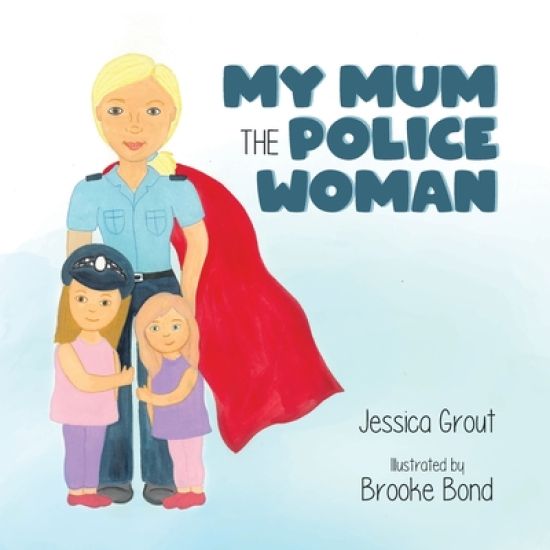
My Mum the Police Woman

My Mum the Police Woman

Jessica Grout

Tellwell Talent
2020
pokkari
What do you want to be when you grow up?Join this young girl as she talks to her mum about what it's like being a real-life Police Woman, and learns about all the fun jobs police can do. By the end of the story she is so inspired by her mum that she dreams of becoming a Police Woman herself one day.This story is aimed at educating young children that no matter whether they are male or female, or what cultural background they come from, there are no limits to the dreams of what they want to become when they grow up.