Kirjojen hintavertailu. Mukana 12 016 292 kirjaa ja 12 kauppaa.

Kirjahaku

Etsi kirjoja tekijän nimen, kirjan nimen tai ISBN:n perusteella.

1000 tulosta hakusanalla Jonathan F.S. Post

My Brother's Keeper

My Brother's Keeper

Jonathan Burnside; Joanna Adler; Nancy Loucks; Gerry Rose

CRC Press
2015
nidottu
Ten years ago there were no faith-based units in prisons outside South America. Today, they are spreading all over the world, including the United States, Europe and the Commonwealth. My Brother's Keeper is the first major study of a global phenomenon. Exploring the roots of faith-based units in South America, it explains why the Prison Service of England and Wales set up the first Christian-based unit in the western world in 1997 - and its rapid expansion. It also explains how, at exactly the same time, the United States introduced Christian-based units - and why they were complimented by interfaith and multifaith initiatives. At the heart of My Brother's Keeper is an interior account of life inside four Christian-based prison units in England. It draws on the findings of a detailed evaluation conducted by the authors for the Home Office, Prison Service and Kainos Community between 2000 and 2001, including an updated reconviction study. It is an authoritative account of an innovative programme. Its analysis of what works and what doesn't in faith-based units around the world makes My Brother's Keeper a valuable roadmap for all who care about improving prison conditions. It presents a vision of justice that is not just concerned with building more prisons but with rebuilding more prisoners. It argues that by making prisons more human and punishment more humane, faith-based units can be of value - and keep faith in prisons.
Dean Swift's Literary Correspondence, for Twenty-Four Years; From 1714 to 1738. Consisting of Original Letters to and from Mr. Pope, Dr. Swift, Mr. Gay, Lord Bolingbroke, Dr. Arbuthnot, Etc. [Edited by Edmund Curll.]
Title: Dean Swift's Literary Correspondence, for twenty-four years; from 1714 to 1738. Consisting of original letters to and from Mr. Pope, Dr. Swift, Mr. Gay, Lord Bolingbroke, Dr. Arbuthnot, etc. Edited by Edmund Curll.]Publisher: British Library, Historical Print EditionsThe British Library is the national library of the United Kingdom. It is one of the world's largest research libraries holding over 150 million items in all known languages and formats: books, journals, newspapers, sound recordings, patents, maps, stamps, prints and much more. Its collections include around 14 million books, along with substantial additional collections of manuscripts and historical items dating back as far as 300 BC.The GENERAL HISTORICAL collection includes books from the British Library digitised by Microsoft. This varied collection includes material that gives readers a 19th century view of the world. Topics include health, education, economics, agriculture, environment, technology, culture, politics, labour and industry, mining, penal policy, and social order. ++++The below data was compiled from various identification fields in the bibliographic record of this title. This data is provided as an additional tool in helping to insure edition identification: ++++ British Library Swift, Jonathan; Curll, Edmund; 1741. 310 p.; 8 . 12274.i.1.(1.)
The Serpent's Egg And Other Tales of Darkness
A World War Two fighter pilot discovers that there are worse things that man's inhumanity to man when he is sent to a secluded stately home to recuperate from his injuries after being shot down in the African desert... Desperate men unwittingly unleash a devastating plague upon the world, one that hungers for human flesh... A young mother struggles to cope with looking after two small children, a situation that only worsens with the arrival of a sinister childhood toy... A writer's research into the legend of the Lambton Worm takes a horrifying twist when he uncovers the true origin of the story... Thirteen tales of darkness, featuring everything from zombies and demons, to mummies and the unspeakable horrors that dwell beyond the physical universe, written by JONATHAN GREEN, creator of the Steampunk world of Pax Britannia. "Can do dark very well." - Jonathan Oliver, editor "A writer at the top of his game." - Dean M Drinkel, editor "Green gets mileage out of his monsters..." - SFX Magazine
The Mourner's Friend, or, Consolation, and Advice Offered to Christian Parents in the Death of Their Little Children, as Contained in a Sermon, Preached at Newton, December 7, 1792
The 18th century was a wealth of knowledge, exploration and rapidly growing technology and expanding record-keeping made possible by advances in the printing press. In its determination to preserve the century of revolution, Gale initiated a revolution of its own: digitization of epic proportions to preserve these invaluable works in the largest archive of its kind. Now for the first time these high-quality digital copies of original 18th century manuscripts are available in print, making them highly accessible to libraries, undergraduate students, and independent scholars.Rich in titles on English life and social history, this collection spans the world as it was known to eighteenth-century historians and explorers. Titles include a wealth of travel accounts and diaries, histories of nations from throughout the world, and maps and charts of a world that was still being discovered. Students of the War of American Independence will find fascinating accounts from the British side of conflict. ++++The below data was compiled from various identification fields in the bibliographic record of this title. This data is provided as an additional tool in helping to insure edition identification: ++++British LibraryW028637Half-title: Mr. Homer's sermon on the death of children. December 7, 1792. In the New York Public Library copy, the date on the title page and half-title has been corrected in ms. to Dec. 9. In 1792 Dec. 7 fell on Friday. Boston]: Printed by S. Hall, in Cornhill, Boston, MDCCXCIII. 1793] 24p.; 8
The Lady's Dressing Room. To Which is Added, I. A Poem on Cutting Down the old Thorn at Market Hill. ... III. An Epigram ... By the Rev. Dr. S-t. The Second Edition
The 18th century was a wealth of knowledge, exploration and rapidly growing technology and expanding record-keeping made possible by advances in the printing press. In its determination to preserve the century of revolution, Gale initiated a revolution of its own: digitization of epic proportions to preserve these invaluable works in the largest archive of its kind. Now for the first time these high-quality digital copies of original 18th century manuscripts are available in print, making them highly accessible to libraries, undergraduate students, and independent scholars.Western literary study flows out of eighteenth-century works by Alexander Pope, Daniel Defoe, Henry Fielding, Frances Burney, Denis Diderot, Johann Gottfried Herder, Johann Wolfgang von Goethe, and others. Experience the birth of the modern novel, or compare the development of language using dictionaries and grammar discourses. ++++The below data was compiled from various identification fields in the bibliographic record of this title. This data is provided as an additional tool in helping to insure edition identification: ++++British LibraryT140659Dr. S-t = Jonathan Swift. Printed by William Bowyer.London: printed for J. Roberts, 1732. 19, 1]p.; 4
The Lady's Dressing Room. To Which is Added, A Poem on Cutting Down the old Thorn at Market Hill. By the Rev. Dr. S-T
The 18th century was a wealth of knowledge, exploration and rapidly growing technology and expanding record-keeping made possible by advances in the printing press. In its determination to preserve the century of revolution, Gale initiated a revolution of its own: digitization of epic proportions to preserve these invaluable works in the largest archive of its kind. Now for the first time these high-quality digital copies of original 18th century manuscripts are available in print, making them highly accessible to libraries, undergraduate students, and independent scholars.Western literary study flows out of eighteenth-century works by Alexander Pope, Daniel Defoe, Henry Fielding, Frances Burney, Denis Diderot, Johann Gottfried Herder, Johann Wolfgang von Goethe, and others. Experience the birth of the modern novel, or compare the development of language using dictionaries and grammar discourses. ++++The below data was compiled from various identification fields in the bibliographic record of this title. This data is provided as an additional tool in helping to insure edition identification: ++++British LibraryT037480Verse. Dr. S-t = Jonathan Swift.London: printed for J. Roberts, 1732. 19, 1]p.; 4
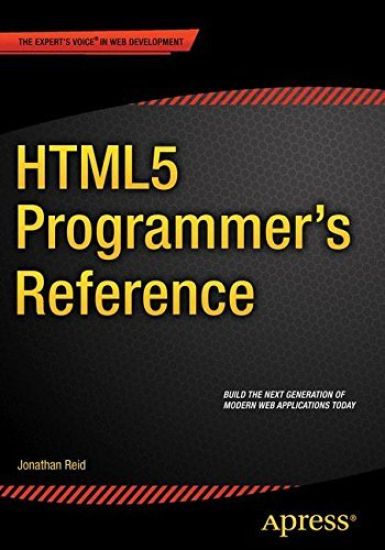
HTML5 Programmer's Reference

HTML5 Programmer's Reference

Jonathan Reid

APress
2015
nidottu
The HTML5 Programmer’s Reference aims to provide everything a programmer needs for understanding and using the new HTML5 family of standards. Previous HTML standards were focused on defining tags for marking up documents. The HTML5 family of standards not only includes new semantic tags but also defines exciting new JavaScript APIs that can be used to build rich, interactive web applications for both mobile and desktop platforms.The HTML5 Programmer’s Reference focuses on providing real-world non-trivial examples to demonstrate concepts. Chapters include both in-depth discussions and full references for all HTML5 features, as well as extras like how to find the standards, the history of their evolution, and other examples and helpful resources. With this book the reader will learn everything they need to know to build the next generation of web applications.
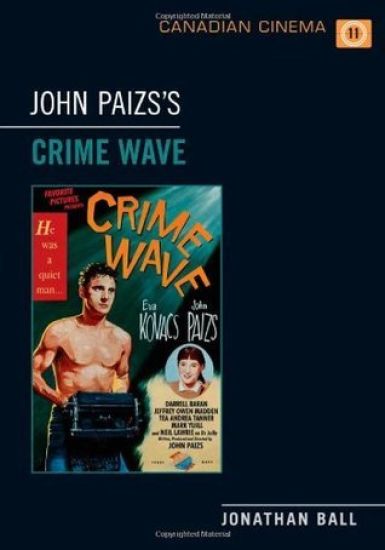
John Paizs's Crime Wave

John Paizs's Crime Wave

Jonathan Ball

University of Toronto Press
2014
pokkari
John Paizs’s ‘Crime Wave’ examines the Winnipeg filmmaker’s 1985 cult film as an important example of early postmodern cinema and as a significant precursor to subsequent postmodern blockbusters, including the much later Hollywood film Adaptation. Crime Wave’s comic plot is simple: aspiring screenwriter Steven Penny, played by Paizs, finds himself able to write only the beginnings and endings of his scripts, but never (as he puts it) “the stuff in-between.” Penny is the classic writer suffering from writer’s block, but the viewer sees him as the (anti)hero in a film told through stylistic parody of 1940s and 50s B-movies, TV sitcoms, and educational films. In John Paizs’s ‘Crime Wave,’ writer and filmmaker Jonathan Ball offers the first book-length study of this curious Canadian film, which self-consciously establishes itself simultaneously as following, but standing apart from, American cinematic and television conventions. Paizs’s own story mirrors that of Steven Penny: both find themselves at once drawn to American culture and wanting to subvert its dominance. Exploring Paizs’s postmodern aesthetic and his use of pastiche as a cinematic technique, Ball establishes Crime Wave as an overlooked but important cult classic.
John Paizs's Crime Wave

John Paizs's Crime Wave

Jonathan Ball

University of Toronto Press
2014
sidottu
John Paizs’s ‘Crime Wave’ examines the Winnipeg filmmaker’s 1985 cult film as an important example of early postmodern cinema and as a significant precursor to subsequent postmodern blockbusters, including the much later Hollywood film Adaptation. Crime Wave’s comic plot is simple: aspiring screenwriter Steven Penny, played by Paizs, finds himself able to write only the beginnings and endings of his scripts, but never (as he puts it) “the stuff in-between.” Penny is the classic writer suffering from writer’s block, but the viewer sees him as the (anti)hero in a film told through stylistic parody of 1940s and 50s B-movies, TV sitcoms, and educational films. In John Paizs’s ‘Crime Wave,’ writer and filmmaker Jonathan Ball offers the first book-length study of this curious Canadian film, which self-consciously establishes itself simultaneously as following, but standing apart from, American cinematic and television conventions. Paizs’s own story mirrors that of Steven Penny: both find themselves at once drawn to American culture and wanting to subvert its dominance. Exploring Paizs’s postmodern aesthetic and his use of pastiche as a cinematic technique, Ball establishes Crime Wave as an overlooked but important cult classic.
The Mother's Checklist of Drug Prevention: Lessons in Drug Prevention: Handbook Two All The Little Things We Say and Do

The Mother's Checklist of Drug Prevention: Lessons in Drug Prevention: Handbook Two All The Little Things We Say and Do

Jonathan Scott; Kelly Townsend M. S.

Createspace Independent Publishing Platform
2011
nidottu
Most parents are terrified by the idea of talking to their young children about drugs and alcohol. That fear causes many to wait far too long to start the discussion. Now, there is a solution to the problem: The Mother's Checklist of Drug Prevention.You can stop worrying right now-you don't have to talk to your six-year-old about heroin. In fact, most of this book has nothing at all to do with talking about drugs. Instead, it highlights all the little things we say and do when our children are young that can reduce stress and make them less likely as they get older to reach for drugs and alcohol to feel better.The Mother's Checklist is an exciting follow-up to Jonathan and Kelly's first handbook, Not All Kids Do Drugs, in which they gave parents the tools to help keep their kids safe and healthy in a world full of drugs. In The Mother's Checklist, they provide a detailed guide parents can use to forge patterns of language and behavior that will help them raise happy, self-confident children who can grow into functional, accomplished, drug-free young adults.The concept for this book was created by a mother, but it is not just for mothers. Dads, grandparents, nannies, babysitters, counselors, teachers-anyone who cares for or about children-will benefit from the wisdom found in this handbook and checklist.