Kirjojen hintavertailu. Mukana 12 016 292 kirjaa ja 12 kauppaa.

Kirjahaku

Etsi kirjoja tekijän nimen, kirjan nimen tai ISBN:n perusteella.

1000 tulosta hakusanalla Jorge Laborda
4914

4914

Jorge E. Taracido

Jorge E. Taracido
2014
nidottu
Memories of a life forever gone, but ever-present in the mind. Returning to the place of birth seeking the dying memories, friends, and relatives of long ago. An immigrant remembers childhood on his return to his land of birth 38 years later.
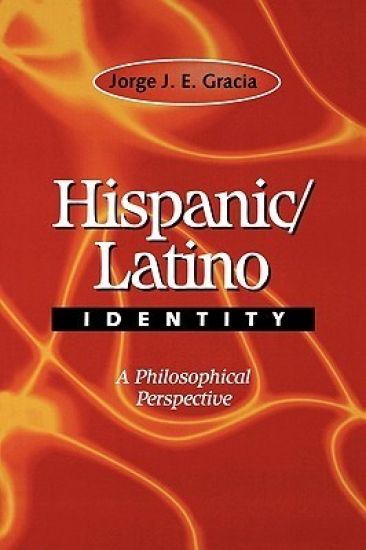
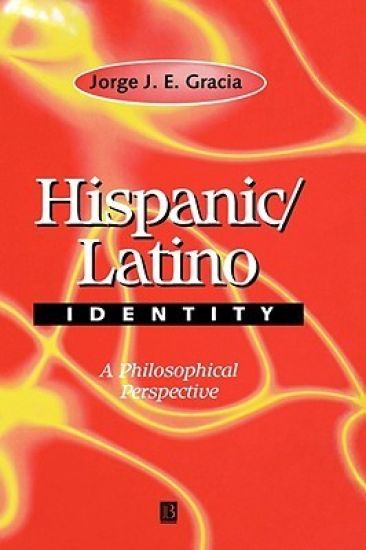
Hispanic / Latino Identity

Hispanic / Latino Identity

Jorge J. E. Gracia

Blackwell Publishers
1999
sidottu
This volume provides a superb introduction to the philosophical, social, and political elements of Hispanic/Latino identity. It is an indispensable tool for anyone interested in issues that concern Hispanics/Latinos, social policy, and the history of thought and culture.
Hispanic / Latino Identity

Hispanic / Latino Identity

Jorge J. E. Gracia

Blackwell Publishers
1999
nidottu
This volume provides a superb introduction to the philosophical, social, and political elements of Hispanic/Latino identity. It is an indispensable tool for anyone interested in issues that concern Hispanics/Latinos, social policy, and the history of thought and culture.
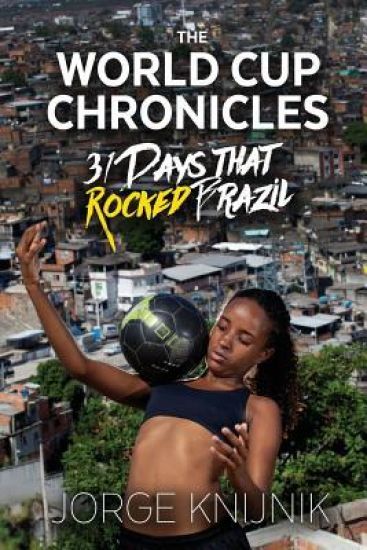
The World Cup Chronicles

The World Cup Chronicles

Jorge Knijnik

Fair Play Publishing
2018
nidottu
Jorge Knijnik's wonderful new book, The World Cup Chronicles - 31 Days that Rocked Brazil, is a unique and different look at the 2014 World Cup and its social, cultural, political and sporting impact on the people of Brazil. The World Cup wasn't 'just' a football tournament for Brazilian people - even though it came to be defined by the infamous 7-1 semi-final result against eventual winners, Germany - but it was part of the national psyche and important social change, overlaid by what we now know as corrupt practices within world football which included those in power in football in Brazil over decades. Knijnik's book looks at before, during and after the World Cup and discusses the much-vaunted 'legacy' issues to which FIFA has always pointed as being what they give back to a nation.
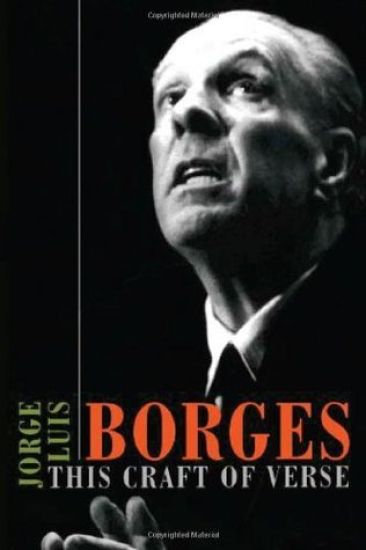
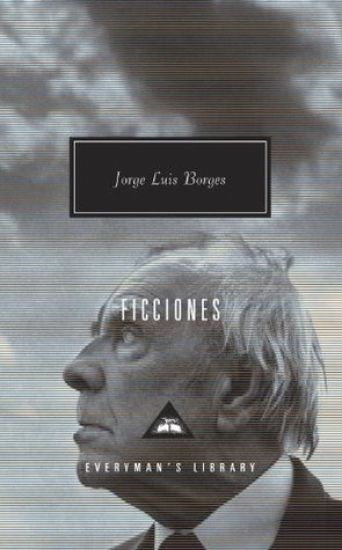
This Craft of Verse

This Craft of Verse

Jorge Luis Borges

Harvard University Press
2002
nidottu
Through a twist of fate that the author of Labyrinths himself would have relished, these lost lectures given in English at Harvard in 1967–1968 by Jorge Luis Borges return to us now, a recovered tale of a life-long love affair with literature and the English language. Transcribed from tapes only recently discovered, This Craft of Verse captures the cadences, candor, wit, and remarkable erudition of one of the most extraordinary and enduring literary voices of the twentieth century. In its wide-ranging commentary and exquisite insights, the book stands as a deeply personal yet far-reaching introduction to the pleasures of the word, and as a first-hand testimony to the life of literature.Though his avowed topic is poetry, Borges explores subjects ranging from prose forms (especially the novel), literary history, and translation theory to philosophical aspects of literature in particular and communication in general. Probably the best-read citizen of the globe in his day, he draws on a wealth of examples from literature in modern and medieval English, Spanish, French, Italian, German, Greek, Latin, Arabic, Hebrew, and Chinese, speaking with characteristic eloquence on Plato, the Norse kenningar, Byron, Poe, Chesterton, Joyce, and Frost, as well as on translations of Homer, the Bible, and the Rubáiyát of Omar Khayyám.Whether discussing metaphor, epic poetry, the origins of verse, poetic meaning, or his own “poetic creed,” Borges gives a performance as entertaining as it is intellectually engaging. A lesson in the love of literature and in the making of a unique literary sensibility, this is a sustained encounter with one of the writers by whom the twentieth century will be long remembered.
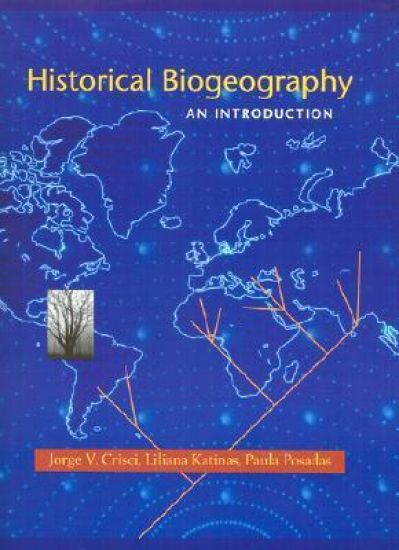
Historical Biogeography

Historical Biogeography

Jorge V. Crisci; Liliana Katinas; Paula Posadas
Harvard University Press
2003
sidottu
Though biogeography may be simply defined--the study of the geographic distributions of organisms--the subject itself is extraordinarily complex, involving a range of scientific disciplines and a bewildering diversity of approaches. For convenience, biogeographers have recognized two research traditions: ecological biogeography and historical biogeography.This book makes sense of the profound revolution that historical biogeography has undergone in the last two decades, and of the resulting confusion over its foundations, basic concepts, methods, and relationships to other disciplines of comparative biology. Using case studies, the authors explain and illustrate the fundamentals and the most frequently used methods of this discipline. They show the reader how to tell when a historical biogeographic approach is called for, how to decide what kind of data to collect, how to choose the best method for the problem at hand, how to perform the necessary calculations, how to choose and apply a computer program, and how to interpret results.
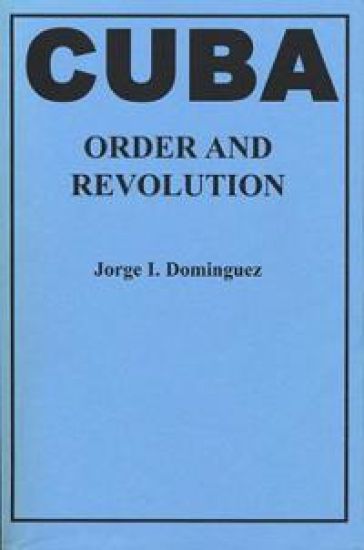
Cuba

Cuba

Jorge I. Domínguez

The Belknap Press
1978
nidottu
Upon publication in the late 1970s this book was the first major historical analysis of twentieth-century Cuba. Focusing on the way Cuba has been governed, and in particular on the way a changing elite has made claims to legitimate rule, it carefully examines each of Cuba’s three main political eras: the first, from Independence in 1902 to the Presidency of Gerardo Machado in 1933; the second, under Batista, from 1934 until 1958; and finally, Castro’s revolution, from 1959 to the present.Jorge Domínguez discusses the political roles played by interest groups, mass organizations, and the military. He also investigates the impact of international affairs on Cuba and provides the first printed data on many aspects of political, economic, and social change since 1959. He deals in depth with agrarian politics and peasant protest since 1937, and his concluding chapter on Cuba’s present culture is a fascinating insight into a society which—though vitally important—remains mysterious to most readers in the United States.Cuba’s role in international affairs is vastly greater than its size. The revolution led by Fidel Castro, the Bay of Pigs invasion, the missile crisis in 1962, the underwriting of revolution in Latin America and recently in Africa—all these events have thrust Cuba onto the modern world stage. Anyone hoping to understand this country and its people, and above all its changing systems of government, will find this book essential.
This Craft of Verse

This Craft of Verse

Jorge Luis Borges; Viet Thanh Nguyen

HARVARD UNIVERSITY PRESS
2025
sidottu
“A wondrously limpid testament to the pleasures of reading.” —Steven Poole, The GuardianSix incandescent lectures on literature from the patron saint of mirrors, metafiction, and infinite libraries.For more than thirty years, Jorge Luis Borges’s Norton Lectures went unpublished. Recorded at Harvard in 1967 and 1968, the tapes gathered dust in a library vault until their discovery after his death. It was a twist that the author of Labyrinths would have relished. This volume assembles the recovered materials, offering a priceless window into the Argentinian master’s lifelong love affair with the English language.This Craft of Verse captures the cadences, candor, wit, and erudition of one of the twentieth century’s enduring literary voices. Though his avowed topic is poetry, Borges explores subjects ranging from prose forms—especially the novel—to literary history, translation theory, and philosophical aspects of communication writ large. Borges here draws on a wide range of literary examples—modern and medieval English, Spanish, French, Italian, German, Greek, Latin, Arabic, Hebrew, and Chinese. He brings characteristic eloquence and inexhaustible enthusiasm to readings of Plato, the Old Norse kenningar, Byron, Poe, Chesterton, Joyce, and Frost, as well as translations of Homer, the Bible, and the Rubáiyát of Omar Khayyám.Whether discussing metaphor, the origins of verse, or his own “poetic creed,” Borges gives a performance as entertaining as it is intellectually engaging. A lesson in the love of literature and the making of a unique artistic sensibility, This Craft of Verse is a sustained encounter with one of the writers whose place in the twentieth century will be forever remembered.
To Make a World Safe for Revolution

To Make a World Safe for Revolution

Jorge I. Domínguez

Harvard University Press
1989
nidottu
The twentieth-century history of Cuba borders on fantasy. This diminutive country boldly and repeatedly exercises the foreign policy of a major power. Although closely tied to the United States through most of its modern history, Cuba successfully defied the U.S. government after 1959, consolidated its own power, and defeated an invasion of U.S.-backed exiles at the Bay of Pigs in 1961. Fidel Castro then brought the world alarmingly close to nuclear war in 1962.Jorge Domínguez presents a comprehensive survey of Cuban international relations since Castro came to power. Domínguez unravels Cuba’s response to the 1962 missile crisis and the U.S.–Soviet understandings that emerged from that. He explores the ties that link Cuba to the U.S.S.R. and other Communist countries; analyzes Cuban support for revolutionary movements throughout the world, especially in Latin America and Africa; and assesses the significance of Cuban political and economic relations with Western Europe, Canada, and Japan.Some have charged that Cuba does not have a foreign policy, that Fidel Castro merely takes orders from his Soviet bosses. Domínguez argues that there is indeed a specifically Cuban foreign policy, poised not only between hegemony and autonomy, between compliance and self-assertion, but also between militancy and pragmatism. He believes that within the context of Soviet hegemony Cuba’s foreign policy is very much its own, and he marshals impressive evidence to support this belief. His book is based on extensive documentation from Cuba, the United States, and other countries, as well as from many in-depth interviews carried out during trips to Cuba.
The Cuban Economy in a New Era

The Cuban Economy in a New Era

Jorge I. Dominguez

Harvard University, The David Rockefeller Center for Latin American Studies
2018
pokkari
Cuba’s economy has grown hardly at all during Raúl Castro’s presidency (beginning in 2006), hit by the economic collapse of its Venezuelan partner and burdened by a legacy of decayed infrastructure, a bankrupt sugar industry, and stagnant agriculture.The Cuban Economy in ?a New Era diagnoses the ills that afflict Cuba’s economy and examines possible economic policy changes in seven areas: macroeconomic policy, central planning, small and medium private enterprises, nonagricultural cooperatives, financing options for the new private sector, state enterprise management, and relations with international financial institutions. Cuban economists have contributed these seven chapters, and the combined import is further considered in introductory and concluding chapters. The book is the culmination of over a decade of scholarly collaboration with Harvard scholars, anchored in a series of workshops held over several years in Cambridge, Massachusetts, and Havana.
The Radical Spanish Empire

The Radical Spanish Empire

Jorge Cañizares-Esguerra; Adrian Masters
HARVARD UNIVERSITY PRESS
2026
sidottu
As Spanish conquistadors swept through the New World, the Crown envisioned that a rigidly hierarchical aristocratic order would flourish in their wake. At first, this vision seemed to be within reach: the great conquistadors ruled as noblemen over millions. Yet contrary to all expectations, the Spanish empire in the New World quickly became a hotbed of radical efforts to overturn the emerging order. With the conquistadors in retreat, new enclaves controlled by powerful friars and native lords arose. But they too collapsed, again to the surprise of many.As Jorge Cañizares-Esguerra and Adrian Masters show, these social orders broke down thanks to the challenges mounted by countless individuals across the Spanish Americas—including non-elite Spanish and Indigenous people, women, and the enslaved. To achieve their goals, they turned not only to outright violence but also to massive amounts of paperwork: petitions, complaints, lawsuits, and secret testimonies. Through this grassroots “lawfare,” vassals undercut the emerging seigneurial dynasties of the conquistadors, stripped the friars of theocratic authority, and curtailed the might of native lords. Collectively, they spearheaded movements against tyranny and slavery, proposed and challenged laws, produced new types of knowledge, created archives and historical accounts, and questioned the nature of truth itself. In the process, however, these actors also gradually co-created a lasting new society of orders—one that would solidify in the 1570s with viceroys, bishops, and inquisitors at its apex.Dramatically recasting a pivotal era in colonial history, The Radical Spanish Empire illuminates how the power of paperwork forever transformed the New World.
Utopia Unarmed: The Latin American Left After the Cold War

Utopia Unarmed: The Latin American Left After the Cold War

Jorge G. Castañeda; Jorge G. Castaaneda
VINTAGE
1994
nidottu
Castro's Cuba is isolated; the guerrillas who once spread havoc through Uruguay and Argentina are dead, dispersed, or running for office as moderates. And in 1990, Nicaragua's Sandinistas were rejected at the polls by their own constituents. Are these symptoms of the fall of the Latin American left? Or are they merely temporary lulls in an ongoing revolution that may yet transform our hemisphere? This perceptive and richly eventful study by one of Mexico's most distinguished political scientists tells the story behind the failed movements of the past thirty years while suggesting that the left has a continuing relevance in a continent that suffers from destitution and social inequality. Combining insider's accounts of intrigue and armed struggle with a clear-sighted analysis of the mechanisms of day-to-day power, Utopia Unarmed is an indispensable work of scholarship, reportage, and political prognosis.
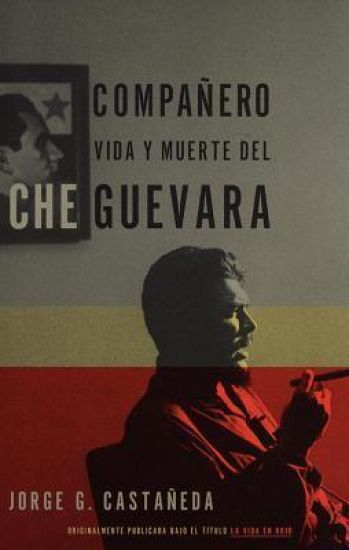
Compañero / Compañero: The Life and Death of Che Guevara: Vida y muerte del Che Guevara--Spanish-language edition
Cuando lleg el momento en que fue muerto en las selvas de Bolivia, donde su cuerpo fue exhibido como un Cristo destronado, Ernesto "Che Guevara se hab a convertido en sin nimo de revoluci n en todas partes desde Cuba hasta los terrenos universitarios de los Estados Unidos. Esta biograf a extraordinaria por uno de los m s prominentes analistas pol ticos de Latinoam rica revela la leyenda del Che Guevara para mostrar el carism tico e inquieto hombre detr s de ella. Tomando de los archivos de tres continentes y de entrevistas con la familia y asociados de Guevara, Jorge Casta eda sigue al Che desde su ni ez en la clase media argentina hasta los a os de peregrinaje que lo hicieron un revolucionario dedicado. Casta eda examina las complejas relaciones entre Guevara y Fidel Castro, quien lo hizo su mano derecha a n cuando el Che se convirti en la conciencia pol tica de Fidel. Y Casta eda analiza las fallas de car cter que forzaron al Che a irse de Cuba y dar sus energias y, finalmente, su vida a aventuras quijotescas en el Congo y Bolivia. Una obra maestra de erudici n y simpat a literaria, Compa ero es el retrato definitivo de una figura que continua fascinando e inspirando a gentes del mundo entero.
Introduccion Al Asesoramiento Pastoral De La Familia
La perdida de valores morales que llevan a considerar todo desde una perspectiva groseramente relativista; la situacion social y economica tan critica que lleva a tratar de protegernos de cualquier manera posible; el materialismo contemporaneo que nos hace creer que teniendo mas cosas seremos mas felices; y otros muchos aspectos similares, han provocado una crisis que se refleja y tiene sus efectos en la pareja y familia contemporanea. La sociedad ha contagiado su enfermedad a la familia. Asi pues, esta unidad basica sufre los devastadores efectos del tiempo y sociedad en que nos ha tocado vivir. Hay algo que se pueda hacer? Hay remedio que alivie esa enfermedad? El Dr. Maldonado nos muestra que para que la familia pueda procesar cualquier situacion critica que esten viviendo y salir avante por el camino de la recuperacion y el crecimiento, la mayor parte del tiempo requiere de orientacion, consejo, o asesoria. Asi pues, y desde la perspectiva cristiana, en este libro el Dr. Maldonado presenta los elementos basicos de la asesoria, los criterios que serviran para identificar a una familia sana e ir hacia ella, y las metas que se deben perseguir al asesorar y que serviran al asesor o consejero para promover el sano crecimiento tanto de la pareja como de la familia. Porque, a final de cuentas, la familia no es solamente el lugar donde encontramos refugio y alimento. La familia, por sobre todo, es el lugar donde nos formamos como y donde somos verdaderamente humanos y cristianos. "
Tres Meses En La Escuela De Los Salmos

Tres Meses En La Escuela De Los Salmos

Jorge Gonzalez

Abingdon Press
1998
pokkari
Each of these volumes consists of thirteen detailed Bible studies. These Bible studies can be used for evening Bible study, for home study meetings, for faith communities, for retreats, and for personal Bible study. This book can even be used as a daily Bible study. Written in Spanish, the language is simple with a profound message for readers.
Tres Meses en la Escuela de Daniel

Tres Meses en la Escuela de Daniel

Jorge A. Gonzalez

Abingdon Press
1998
pokkari
Each of these volumes consists of thirteen detailed Bible studies. These Bible studies can be used for evening Bible study, for home study meetings, for faith communities, for retreats, and for personal Bible study. This book can even be used as a daily Bible study. Written in Spanish, the language is simple with a profound message for readers
Ocean Biogeochemical Dynamics

Ocean Biogeochemical Dynamics

Jorge L. Sarmiento; Nicolas Gruber

PRINCETON UNIVERSITY PRESS
2006
sidottu
Ocean Biogeochemical Dynamics provides a broad theoretical framework upon which graduate students and upper-level undergraduates can formulate an understanding of the processes that control the mean concentration and distribution of biologically utilized elements and compounds in the ocean. Though it is written as a textbook, it will also be of interest to more advanced scientists as a wide-ranging synthesis of our present understanding of ocean biogeochemical processes. The first two chapters of the book provide an introductory overview of biogeochemical and physical oceanography. The next four chapters concentrate on processes at the air-sea interface, the production of organic matter in the upper ocean, the remineralization of organic matter in the water column, and the processing of organic matter in the sediments. The focus of these chapters is on analyzing the cycles of organic carbon, oxygen, and nutrients. The next three chapters round out the authors' coverage of ocean biogeochemical cycles with discussions of silica, dissolved inorganic carbon and alkalinity, and CaCO3. The final chapter discusses applications of ocean biogeochemistry to our understanding of the role of the ocean carbon cycle in interannual to decadal variability, paleoclimatology, and the anthropogenic carbon budget. The problem sets included at the end of each chapter encourage students to ask critical questions in this exciting new field. While much of the approach is mathematical, the math is at a level that should be accessible to students with a year or two of college level mathematics and/or physics.