Kirjojen hintavertailu. Mukana 12 016 292 kirjaa ja 12 kauppaa.

Kirjahaku

Etsi kirjoja tekijän nimen, kirjan nimen tai ISBN:n perusteella.

1000 tulosta hakusanalla Joseph Butler

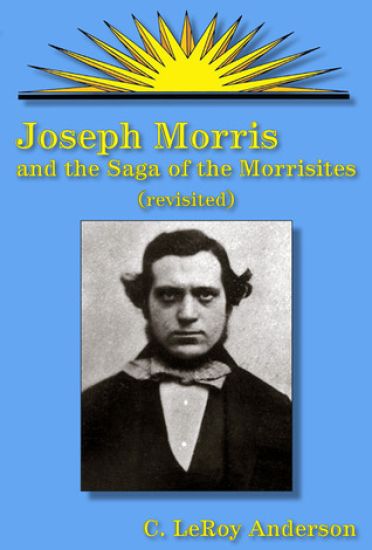
Joseph Morris

Joseph Morris

C. LeRoy Anderson

Utah State University Press
2010
pokkari
LeRoy Anderson in 1981 first published, under the title For Christ Will Come Tomorrow, his definitive study of a charismatic, millenarian prophet and the Church of Jesus Christ of the Most High. He told there of a Mormon posse's 1862 attack on the Morrisite compound, killing Joseph Morris, and of the continuing Morrisite movement, which survived into the mid-twentieth century. In this newly revised edition, Anderson revisits his subject by referring to more recently discovered documents, considering other scholars' continuing work on Morris's sect and related subjects, and examining a 1980s messianic sect that claimed a direct connection to the Morrisites. New documentary sources include a holograph "History of George Morris," written by Joseph Morris's brother, which Anderson quotes at length. What was once a little-studied subject has since received attention from a number of scholars. Anderson references such current work on Mormon schismatic movements and broader subjects, much of which drew on his work.Perhaps the book's most interesting and unintended influence was on that obscure 1980s messianic sect, in Montana, which learned of Morris through Joseph Morris and the Saga of the Morrisites.
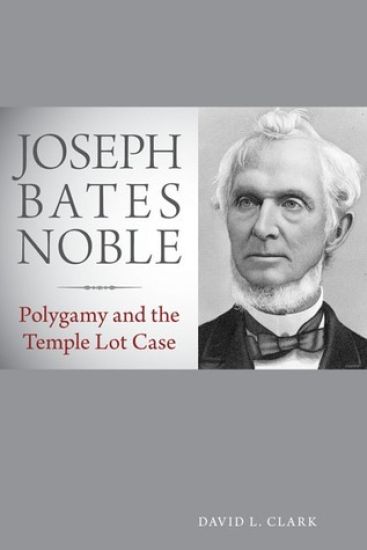
Joseph Bates Noble

Joseph Bates Noble

University of Utah Press,U.S.
2009
sidottu
In 1892, a deposition was taken in a Salt Lake City courtroom to gather evidence in a land ownership battle between two offshoot branches of the Church of Jesus Christ of Latter-day Saints (LDS) The dispute centered on ownership of land purchased to build a temple, known as the Temple Lot property, in Independence, Missouri. Although a key witness at the deposition, Joseph Bates Noble had little knowledge of land purchases dating back to 1832, yet his testimony was critical for validation of standing for the Reorganized Church of Jesus Christ of Latter-Day Saints (RLDS) or for the Church of Christ (Temple Lot). In fact, at the age of 82, Noble had been thrust into the limelight of LDS Church history because of his claim to have presided over the first polygamous marriage of Mormon prophet Joseph Smith.Noble officiated at the marriage in 1841 that united his sister-in-law with Smith, an event now cited as the beginning of the practice of polygamy in the church. His testimony would either validate Joseph Smith's polygamist background for the Temple Lot Church or expose his recollections as falsehoods for the RLDS Church.Noble's service to his church dated back to the very beginnings of Mormonism, marching with Smith and Zion's Camp, helping to build Kirtland, defending the church in Missouri, and working to build Nauvoo. While he never held an official church position of major importance, Noble's devotion to Joseph Smith and his close association with later church leaders entwined his life with the founding events of Mormonism. Author David Clark sets Noble's life story in the context of the court deposition, visiting the remarkable events in the life of this Mormon 'foot soldier.'
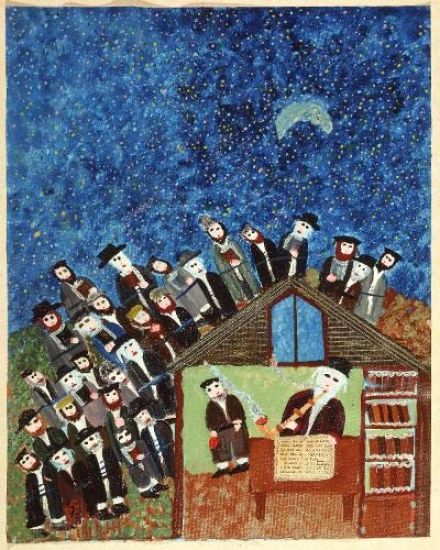
Sound an Alarm! Joseph Perl's Revealer of Secrets and Testing the Righteous
Two volumes: Vol 1 Critical Material; Vol 2 The Novels Joseph Perl’s Revealer of Secrets and Testing the Righteous were written before Hebrew became a language adequate to the needs of a modern fiction writer, so Perl created the language as he wrote. A well-educated moderate maskil, Perl drew on Biblical Hebrew, Rabbinic Hebrew and Aramaic, and Medieval Hebrew, in addition to his native German and Yiddish. When there was no Hebrew expression for a particular concept, Perl used a word or phrase from Yiddish, German, Aramaic, or a Slavic language, or else he devised a circumlocution. Perl’s epistolary anti-khsidic satire was the opening literary salvo in the battle of the Jewish Enlightenment against the pietistic revival movement known as Hasidism. Set in the early nineteenth century, Revealer of Secrets is the unsurpassed exemplar of Hebrew satire and is often considered to be the first Hebrew novel, as well as the beginning of Modern Hebrew fiction. Dov Taylor’s careful translation and commentary make this classic of Hebrew literature accessible to the contemporary English-speaking reader while preserving the integrity and bite of Perl’s original. With Hasidism presently enjoying a remarkable rebirth, the issues continue to be relevant to those seeking to balance reason and faith. This work will also be of great interest to students of modern Hebrew language and literature, and of modern Jewish history. Vol 1 Critical Material The critical material in this volume will help the reader to fully appreciate and enjoy Perl’s two masterworks by identifying the linguistic and literary sources in the two novels, as well as their historical, cultural and ideological contexts. It features extensive introductions and endnotes to the novels, a comprehensive listing of Perl’s biblical and rabbinic sources, a roster of the names of actual persons and places that Perl disguised, and a glossary of terms that may be unfamiliar to the English reader. Vol 2 The Novels Revealer of Secrets is a portrayal—both realistic and satirical—of Eastern European Jewish life in the tumultuous early years of the nineteenth century. It reflects the struggle that raged between the Haskalah and Hasidism as the Jewish people stood on the threshold of modernity. In the battle between reason and faith, the Haskalah admired science and rationalism and recommended broad education to its adherents, while Hasidism revered mystical intuition in its charismatic rebbe-saints and encouraged religious fervour in its followers. Published in Vienna in 1819, Joseph Perl's Revealer of Secrets was the most devastating and best-known parody produced by the Haskalah movement. Its milieu is that of Ukrainian, Polish, and Russian Jewry at the beginning of the nineteenth century. Drawing on forms from the eighteenth-century European epistolary novel, the khsidic holy book, khsidic and rabbinic letters, and the Austrian comic tradition, and drawing inspiration from the masterpiece of biblical parody—The Book of Esther—Perl unleashed a broadside that, in the words of one modern critic, "was to become a classic of Hebrew literature, a masterpiece of invective and the first Hebrew novel."
Joseph Conrad – Between Literary Techniques and Their Messages
Thirteen contributors from a variety of backgrounds tackle the use of irony, contrast, narrative, themes of belonging, Englishness, imperialism, portrayals of women, and conceptions of truth and evil as they were expressed in the work of Joseph Conrad. Wieslaw Krajka expands Conrad criticism to explore the modernist's mastery of literary technique and his contribution to visions of humanity. Krajka's collection opens with two essays that explore the identity of Conrad, his characters, and his narrators, and then engages with the ideology, philosophy, and ethics of Conrad's fiction, especially the balance he strikes between literary technique and the meanings those techniques convey.
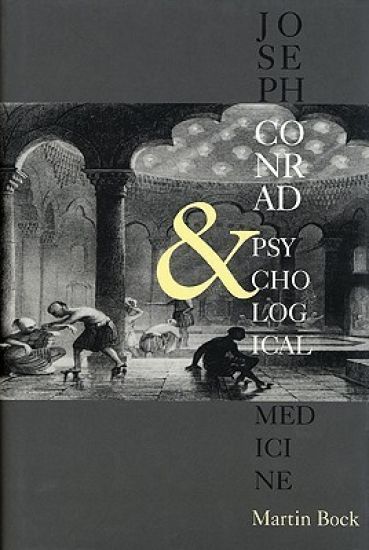
Joseph Conrad and Psychological Medicine

Joseph Conrad and Psychological Medicine

Martin Bock; Robert Hampson

Texas Tech Press,U.S.
2002
sidottu
Conrads life and fiction are often read through the lens of Freudian thought, though Conrad understood his own health from a pre-Freudian perspective. ""Joseph Conrad and Psychological Medicine"" recovers that perspective, revises our understanding of Conrads life, and rethinks the dominant themes of his work in light of pre-Freudian medical psychology. Beginning with a social history of late-nineteenth-century medical psychology and hysteria studies, Bocks study presents a clear and readable synopsis of fin-de-sicle theories of nervous disorder and moral insanity, shows how Conrads doctors were trained in medical theories that privilege the physiological over the psychological, and describes what Conrad endured during his water cures at Champel-les-Bains and in an English culture that constructed nervous disease - particularly his diagnosed neurasthenia - as a feminine disorder. ""Joseph Conrad and Psychological Medicine"" reads Conrads fiction medically, showing how Conrads work focuses on such narrative strategies as Conrads rhetoric of hysteria and enervation and his vivid, nervous descriptions, and it shows how major tropes such as restraint, seclusion, and water all treatments for insanity - were important issues in the medical discourse of Conrads day and are themes that run through Conrads fiction. Bocks study also suggests that Conrads major breakdown of 1910 was an epiphany, an event Conrad feared for decades but that afterwards allowed him to shift the interests of his fiction. The post-breakdown fiction offers less brooding and more allegorized narrations of Conrads medical history as he moves towards a greater acceptance, late in his life, of his gender and sexuality.
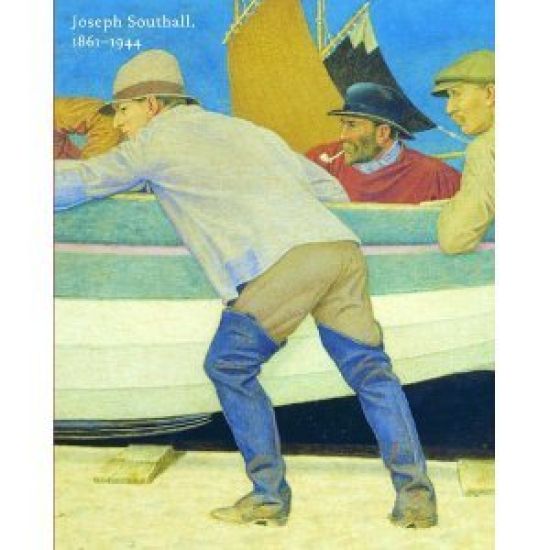
Joseph Southall 1861-1944

Joseph Southall 1861-1944

Breeze George; Skipwith Peyton; Sprague Abbie N.

Fine Art Society
2005
nidottu
Joseph Southall is perhaps the most important Arts and Crafts painter. Born in Nottingham in 1861, Southall spent most of his life in Birmingham, where he originally trained to be an architect, before falling under the spell of John Ruskin and switching his interests to painting. He played a key role in the revival of the mediaeval techniques of tempera and fresco painting. This book shows a wide variety of work produced by Southall during his lifetime. As well as superb watercolours of England, there are also scenes from the Italian lakes and Tuscany; several images of sailing barques in the harbour at Fowey in Cornwall and a number of works done at Southwold in Suffolk, where the Southalls spent every July. These range from tempera paintings of local fishermen and their boats to delightful pencil and chalk studies of elegant ladies and children playing on the beach.
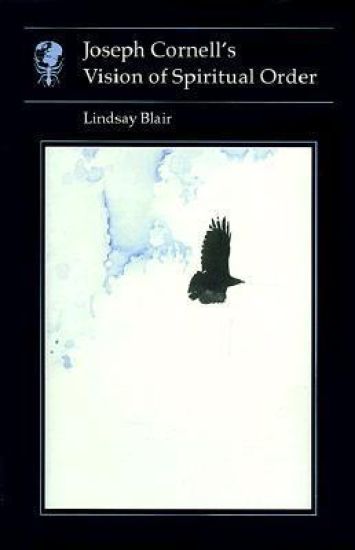
Joseph Cornell™s Vision of Spiritual Order Pb
The 'boxes' and collages constructed by Joseph Cornell (1903-72) are among the most intriguing and beguiling works of art made this century. Old toys, photos, magazine illustrations, bits of electrical wiring anything in fact more usually left to moulder in lumber rooms or junkshops were hoarded by him as the elemental materials he needed for his constructions. The finished works are visually entrancing, but the intensely personal webs of reverie and association that determined their content make these boxes at once both oddly familiar yet ineluctably strange. Drawing on the widest range possible of primary material virtually all Cornell's scrapbooks and source files, as well as correspondence and diaries supplemented by further details gathered during more than fifty interviews undertaken with the artist's family and acquaintances, including Robert Motherwell and Susan Sontag, Lindsay Blair gives us the most detailed picture yet of an artist who hid so much of his life from the world. Her conclusion, wholly convincing in the light of the evidence she provides, is that Cornell's ultimate subject was the mind itself.
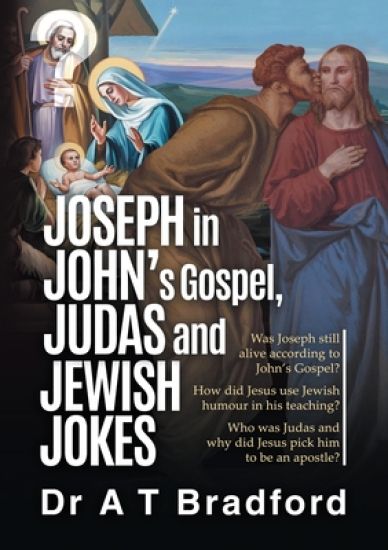
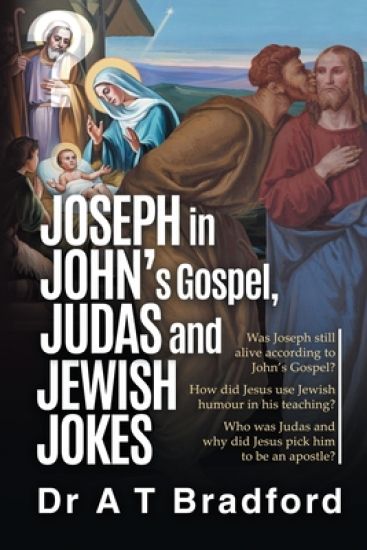
Joseph in John, Judas and Jewish Jokes
THE GOSPEL OF JOHN HAS BEEN SUBJECT TO NEARLY TWO THOUSAND YEARS OF SCRUTINY. THE PREVAILING VIEW HAS ALWAYS BEEN THAT JESUS' LEGAL FATHER JOSEPH WAS DEAD. IN HIS EXTRAORDINARY NEW BOOK, DR BRADFORD BRINGS OUT CLEAR EVIDENCE THAT JOSEPH WAS ALIVE AND PRESENT IN THE BACKGROUND OF JESUS' MINISTRY. THIS IS OF FIRST IMPORTANCE IN UNDERSTANDING JESUS' TEMPLE INTERACTIONS WITH THE PHARISEES, THE JEWISH RELIGIOUS LAWYERS. DR BRADFORD'S BOOK ALSO REVEALS EXACTLY WHO JUDAS ISCARIOT WAS AND WHY JESUS CHOSE HIM TO BE AN APOSTLE. AS A JEWISH-CHRISTIAN SCHOLAR, DR BRADFORD ALSO DEMONSTRATES JESUS AND JOHN'S ABUNDANT USE OF JEWISH HUMOUR FOUND (BUT OFTEN MISSED BY NON-JEWS) IN THIS GOSPEL. THE BOOK HAS BEEN DESCRIBED AS 'BRILLIANT' BY A PROFESSOR OF THEOLOGY.
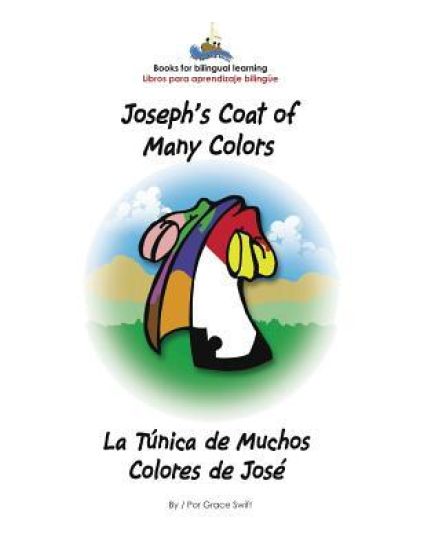
Joseph's Coat of Many Colors- La Tunica de Muchos Colores de Jose
The SonShip Series is seven bilingual books written in both English and Spanish simultaneously. They were written to enhance the desire to read, educate and entertain children. One in the series will teach children how to pray but they all have good inspiring lessons.La serie de filiaci n es siete libros biling es escritas en ingl s y espa ol simult neamente. Fueron escritos para mejorar el deseo de leer, educar y entretener a los ni os. Uno en la serie ense e a los ni os a orar, pero todos ellos tienen buenas lecciones inspiradoras.
Joseph Smith's United Order: A Non-Communalistic Interpretation
Socialism was never a part of Mormon doctrine, but internal and external proponents of socialism have nonetheless been able convince many members (and outsiders), through perpetuating myths and legends, that it has been or is a part of church doctrine. The Mormon Church (The Church of Jesus Christ of Latter-day Saints) was organized in 1830 and immediately began moving westward from New York to Kirtland, Ohio, and Independence, Missouri, and, later, from about 1838 to 1845, to Nauvoo, Illinois. The next move was to Utah beginning in 1847. Numerous cooperative efforts were necessary at each stage to help the poorer and weaker members of the Church move along with the others. Some of its first converts had been members of communal societies before their contacts with the Mormons. Also, the enemies of the Church found an untrue but effective epithet against "those sheep-stealing Mormons" by calling their new organization "common stock" communalism or socialism, a damning charge in the political atmosphere of the time.Joseph Smith went to great efforts to speak and write against this falsehood, declaring that it had nothing to do with the church. His successor Brigham Young continued the practice of denouncing this false claim, declaring that such a doctrine could destroy the church, especially in its precarious Utah setting. Nonetheless, it appears that the external enemies of the church and some of its politically leftwing members have, by sheer weight of repetition, made it part of the unofficial lore of the church.The term "united order" came from the "united firm," one name for the early church business partnerships. The term "united order" also comes from the Brigham Young era of the church's history, and needs to be further explained in that unique context, as is done in the subsequent book, Brigham Youngs United Order. With no powers of self-government granted the Mormons for the first 22 years of their time in Utah, some unusual and creative temporary substitutes were invented.The official history of the church makes it clear that various practical methods were used to solve problems as they arose, many involving cooperation, as one might expect of any tight-knit religious body, but none required any doctrinaire overriding of the principle of private ownership of property, as the centralizing socialists would like to see. For one thing, that would be severely inconsistent with the constitution of the United States.In the first 8 years of the church's existence, it was not legally possible to organize it as a corporation as it is today. As an unsatisfactory but necessary stop-gap measure, a common-law business partnership was organized to carry on church business of all kinds. (The partners also constituted a temporary Quorum of the Twelve for ecclesiastical purposes.) In the normal accounting practices of partnerships, all partners are assumed to be agents of all the others, and also to share equally in the both the liabilities and profits of the business, including being personally liable for all the partnership's debts. There is thus no escape from full liability, but the use of silent (unknown) partners can give those unknown partners a small amount of financial protection. It is strange to see that misunderstandings of the British common law (and misunderstandings of many other events and circumstances as well) have been used in political and polemical efforts to justify pressing socialism into the canon of church doctrine, but socialism (centralized ownership and control of nearly everything) can never be part of a value system that emphasizes individual responsibility. It is no accident that Utah is mostly a conservative, Republican state. This apparent inconsistency deep within the doctrines of the church will likely lead to a whole set of difficulties as the church grows in size and influence. At some point this issue must be cleared up, and this book should help.
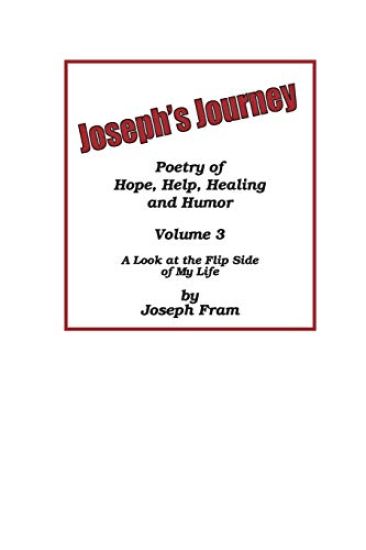
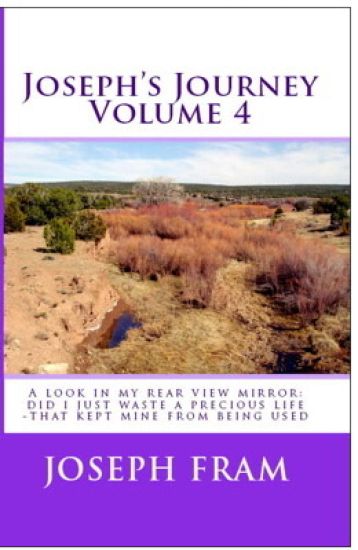
Poetry of Hope, Help, Healing and Humor: Joseph's Journey, Volume 1
Joseph Fram is a noted psychologist and administrator, now retired, who was the Superintendent of Yakima Valley School for 22 years. He is the father of two children and the grandfather of four. He now resides in Spokane, Washington.When Joe suffered through his diagnosis and painful treatment of cancer and then his subsequent divorce, his faith in God and his determination to live the life God had promised him brought him through a journey of hope, healing and help, which he now shares, with a little humor. Anyone who has suffered loss and relied on God for strength can identify with Joe's heart-felt poetry, and will be helped by the encouragement he offers.
Joseph's Journey: Psychological Concepts Expressed in Poetry
Psychological Concepts Expressed in Poetry: Joseph Fram offers psychological concepts and insights through his poetry, along with words of encouragement to comfort, and elements of refreshing humor, as his readers continue with him on this second segment of his journey.About the AuthorJoseph Fram was born and raised in Las Vegas, New Mexico. He served in the United States Army, then he finished college and got his Master's Degree in psychology in two years before moving to Seattle in 1957. He has lived in Washington State for the past 50 years and now resides in Spokane