Kirjojen hintavertailu. Mukana 12 390 323 kirjaa ja 12 kauppaa.

Kirjahaku

Etsi kirjoja tekijän nimen, kirjan nimen tai ISBN:n perusteella.

1000 tulosta hakusanalla KATHLEEN NORRIS

Women in Texas Music

Women in Texas Music

Kathleen Hudson

University of Texas Press
2007
pokkari
Across the state and across a wide variety of musical genres, women are making their mark on Texas music. Some have become international superstars, while others are just starting to make their voices heard. But every woman who goes out and plays her music proves that "baring one's heart and soul takes courage, and Texas women artists have a lot of courage," as Lloyd Maines observes in the opening interview of this book. To pay tribute to these dedicated musicians and to capture their unique perspectives on what it means to be a woman in the music business, Kathleen Hudson has spent many years interviewing Texas women musicians for the Texas Heritage Music Foundation. In Women in Texas Music, Hudson lets us listen in on conversations with thirty-nine musical artists, including Emily Robison, Terri Hendrix, Lee Ann Womack, Rosie Flores, Betty Buckley, Marcia Ball, Lavelle White, and Bobbie Nelson. Hudson encourages and allows the women to tell their own stories as she delves into their life journeys, creative processes, and the importance of writing and performing music, be it blues, rock, country, folk, jazz, or pop. The interviews are warm and open, like good friends sharing the lessons that a life of playing music has taught them. What emerges from this collection is a solid sense of the strength and integrity that women bring to and gain from Texas music. Everyone who cares about music and culture in Texas will want to join the conversation.

Violence and Activism at the Border

Violence and Activism at the Border

Kathleen Staudt

University of Texas Press
2008
pokkari
Between 1993 and 2003, more than 370 girls and women were murdered and their often-mutilated bodies dumped outside Ciudad Juárez in Chihuahua, Mexico. The murders have continued at a rate of approximately thirty per year, yet law enforcement officials have made no breakthroughs in finding the perpetrator(s). Drawing on in-depth surveys, workshops, and interviews of Juárez women and border activists, Violence and Activism at the Border provides crucial links between these disturbing crimes and a broader history of violence against women in Mexico. In addition, the ways in which local feminist activists used the Juárez murders to create international publicity and expose police impunity provides a unique case study of social movements in the borderlands, especially as statistics reveal that the rates of femicide in Juárez are actually similar to other regions of Mexico. Also examining how non-governmental organizations have responded in the face of Mexican law enforcement's "normalization" of domestic violence, Staudt's study is a landmark development in the realm of global human rights.
Fernández De Oviedo's Chronicle of America

Fernández De Oviedo's Chronicle of America

Kathleen Ann Myers

University of Texas Press
2007
pokkari
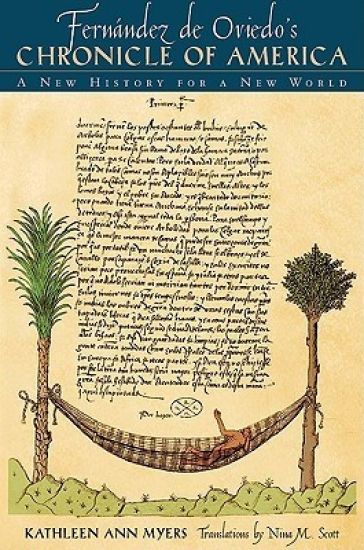
Gonzalo FernÁndez de Oviedo (1478-1557) wrote the first comprehensive history of Spanish America, the Historia general y natural de las Indias, a sprawling, constantly revised work in which Oviedo attempted nothing less than a complete account of the Spanish discovery, conquest, and colonization of the Americas from 1492 to 1547, along with descriptions of the land's flora, fauna, and indigenous peoples. His Historia, which grew to an astounding fifty volumes, includes numerous interviews with the Spanish and indigenous leaders who were literally making history, the first extensive field drawings of America rendered by a European, reports of exotic creatures, ethnographic descriptions of indigenous groups, and detailed reports about the conquest and colonization process. FernÁndez de Oviedo's Chronicle of America explores how, in writing his Historia, Oviedo created a new historiographical model that reflected the vastness of the Americas and Spain's enterprise there. Kathleen Myers uses a series of case studies-focusing on Oviedo's self-portraits, drawings of American phenomena, approaches to myth, process of revision, and depictions of Native Americans-to analyze Oviedo's narrative and rhetorical strategies and show how they relate to the politics, history, and discursive practices of his time. Accompanying the case studies are all of Oviedo's extant field drawings and a wide selection of his text in English translation. The first study to examine the entire Historia and its evolving rhetorical and historical context, this book confirms Oviedo's assertion that "the New World required a different kind of history" as it helps modern readers understand how the discovery of the Americas became a catalyst for European historiographical change.
Telling Stories, Writing Songs

Telling Stories, Writing Songs

Kathleen Hudson

University of Texas Press
2001
pokkari
Willie Nelson, Joe Ely, Marcia Ball, Tish Hinojosa, Stevie Ray Vaughan, Lyle Lovett...the list of popular songwriters from Texas just goes on and on. In this collection of thirty-four interviews with these and other songwriters, Kathleen Hudson pursues the stories behind the songs, letting the singers' own words describe where their songs come from and how the diverse, eclectic cultures, landscapes, and musical traditions of Texas inspire the creative process. Conducted in dance halls, dressing rooms, parking lots, clubs-wherever the musicians could take time to tell their stories-the interviews are refreshingly spontaneous and vivid. Hudson draws out the songwriters on such topics as the sources of their songs, the influence of other musicians on their work, the progress of their careers, and the nature of Texas music. Many common threads emerge from these stories, while the uniqueness of each songwriter becomes equally apparent. To round out the collection, Hudson interviews Larry McMurtry and Darrell Royal for their perspectives as longtime friends and fans of Texas musicians. She also includes a brief biography and discography of each songwriter.
Unruly Girls, Unrepentant Mothers

Unruly Girls, Unrepentant Mothers

Kathleen Rowe Karlyn

University of Texas Press
2011
pokkari
Since the 1990s, when Reviving Ophelia became a best seller and "Girl Power" a familiar anthem, girls have assumed new visibility in the culture. Yet in asserting their new power, young women have redefined femininity in ways that have often mystified their mothers. They have also largely disavowed feminism, even though their new influence is a likely legacy of feminism's Second Wave. At the same time, popular culture has persisted in idealizing, demonizing, or simply erasing mothers, rarely depicting them in strong and loving relationships with their daughters. Unruly Girls, Unrepentant Mothers, a companion to Kathleen Rowe Karlyn's groundbreaking work, The Unruly Woman, studies the ways popular culture and current debates within and about feminism inform each other. Surveying a range of films and television shows that have defined girls in the postfeminist era-from Titanic and My So-Called Life to Scream and The Devil Wears Prada, and from Love and Basketball to Ugly Betty-Karlyn explores the ways class, race, and generational conflicts have shaped both Girl Culture and feminism's Third Wave. Tying feminism's internal conflicts to negative attitudes toward mothers in the social world, she asks whether today's seemingly materialistic and apolitical girls, inspired by such real and fictional figures as the Spice Girls and Buffy the Vampire Slayer, have turned their backs on the feminism of their mothers or are redefining unruliness for a new age.
Courage, Resistance, and Women in Ciudad Juárez

Courage, Resistance, and Women in Ciudad Juárez

Kathleen Staudt; Zulma Y. Méndez

University of Texas Press
2015
pokkari
Ciudad Juárez has recently become infamous for its murder rate, which topped 3,000 in 2010 as competing drug cartels grew increasingly violent and the military responded with violence as well. Despite the atmosphere of intimidation by troops, police, and organized criminals, women have led the way in civil society activism, spurring the Juárez Resistance and forging powerful alliances with anti-militarization activists.An in-depth examination of la Resistencia Juarense, Courage, Resistance, and Women in Ciudad Juárez draws on ethnographic research to analyze the resistance’s focus on violence against women, as well as its clash with the war against drugs championed by Mexican President Felipe Calderón with the support of the United States. Through grounded insights, the authors trace the transformation of hidden discourses into public discourses that openly challenge the militarized border regimes. The authors also explore the advocacy carried on by social media, faith-based organizations, and peace-and-justice activist Javier Sicilia while Calderón faced U.S. political schisms over the role of border trade in this global manufacturing site.Bringing to light on-the-ground strategies as well as current theories from the fields of sociology, political anthropology, and human rights, this illuminating study is particularly significant because of its emphasis on the role of women in local and transnational attempts to extinguish a hot zone. As they overcome intimidation to become game-changing activists, the figures featured in Courage, Resistance, and Women in Ciudad Juárez offer the possibility of peace and justice in the wake of seemingly irreconcilable conflict.
The Unruly Woman

The Unruly Woman

Kathleen Rowe Karlyn

University of Texas Press
1995
pokkari
Unruly women have been making a spectacle of themselves in film and on television from Mae West to Roseanne Arnold. In this groundbreaking work, Kathleen Rowe explores how the unruly woman-often a voluptuous, noisy, joke-making rebel or "woman on top"-uses humor and excess to undermine patriarchal norms and authority.At the heart of the book are detailed analyses of two highly successful unruly women-the comedian Roseanne Arnold and the Muppet Miss Piggy. Putting these two figures in a deeper cultural perspective, Rowe also examines the evolution of romantic film comedy from the classical Hollywood period to the present, showing how the comedic roles of actresses such as Katharine Hepburn, Barbara Stanwyck, and Marilyn Monroe offered an alternative, empowered image of women that differed sharply from the "suffering heroine" portrayed in classical melodramas.
Post Romantic

Post Romantic

Kathleen Flenniken

University of Washington Press
2020
sidottu
Expansive poems connect personal, national, and global historiesIn her wide-ranging third book, poet Kathleen Flenniken undertakes the difficult task of re-seeing what is before us. Post Romantic fuses personal memory with national and ecological upheaval, interweaving narratives of family, nuclear history, love of country, and a dangerous age moving too fast. Flenniken takes these challenging moments—bits and pieces of childhood, marriage, cultural touchstones—and holds them up to the light, seeking comfort in a complicated world that is at once heartbreaking, confounding, and dear.
Plume

Plume

Kathleen Flenniken

University of Washington Press
2013
pokkari
The poems in Plume are nuclear-age songs of innocence and experience set in the "empty" desert West. Award-winning poet Kathleen Flenniken grew up in Richland, Washington, at the height of the Cold War, next door to the Hanford Nuclear Reservation, where "every father I knew disappeared to fuel the bomb," and worked at Hanford herself as a civil engineer and hydrologist. By the late 1980s, declassified documents revealed decades of environmental contamination and deception at the plutonium production facility, contradicting a lifetime of official assurances to workers and their families that their community was and always had been safe. At the same time, her childhood friend Carolyn's own father was dying of radiation-induced illness: "blood cells began to err one moment efficient the next / a few gone wrong stunned by exposure to radiation / as [he] milled uranium into slugs or swabbed down / train cars or reported to B Reactor for a quick run-in / run-out." Plume, written twenty years later, traces this American betrayal and explores the human capacity to hold truth at bay when it threatens one's fundamental identity. Flenniken observes her own resistance to facts: "one box contains my childhood / the other contains his death / if one is true / how can the other be true?"The book's personal story and its historical one converge with enriching interplay and wide technical variety, introducing characters that range from Carolyn and her father to Italian physicist Enrico Fermi and Manhattan Project health physicist Herbert Parker. As a child of "Atomic City," Kathleen Flenniken brings to this tragedy the knowing perspective of an insider coupled with the art of a precise, unflinching, gifted poet.Watch the book trailer: https://www.youtube.com/watch?v=3iSaR9mfeeM
Plume

Plume

Kathleen Flenniken

University of Washington Press
2015
sidottu
The poems in Plume are nuclear-age songs of innocence and experience set in the "empty" desert West. Award-winning poet Kathleen Flenniken grew up in Richland, Washington, at the height of the Cold War, next door to the Hanford Nuclear Reservation, where "every father I knew disappeared to fuel the bomb," and worked at Hanford herself as a civil engineer and hydrologist. By the late 1980s, declassified documents revealed decades of environmental contamination and deception at the plutonium production facility, contradicting a lifetime of official assurances to workers and their families that their community was and always had been safe. At the same time, her childhood friend Carolyn's own father was dying of radiation-induced illness: "blood cells began to err one moment efficient the next / a few gone wrong stunned by exposure to radiation / as [he] milled uranium into slugs or swabbed down / train cars or reported to B Reactor for a quick run-in / run-out." Plume, written twenty years later, traces this American betrayal and explores the human capacity to hold truth at bay when it threatens one's fundamental identity. Flenniken observes her own resistance to facts: "one box contains my childhood / the other contains his death / if one is true / how can the other be true?"The book's personal story and its historical one converge with enriching interplay and wide technical variety, introducing characters that range from Carolyn and her father to Italian physicist Enrico Fermi and Manhattan Project health physicist Herbert Parker. As a child of "Atomic City," Kathleen Flenniken brings to this tragedy the knowing perspective of an insider coupled with the art of a precise, unflinching, gifted poet.Watch the book trailer: https://www.youtube.com/watch?v=3iSaR9mfeeM
The Deepest Roots

The Deepest Roots

Kathleen Alcalá

University of Washington Press
2016
sidottu
As friends began "going back to the land" at the same time that a health issue emerged, Kathleen Alcalá set out to reexamine her relationship with food at the most local level. Remembering her parents, Mexican immigrants who grew up during the Depression, and the memory of planting, growing, and harvesting fresh food with them as a child, she decided to explore the history of the Pacific Northwest island she calls home. In The Deepest Roots, Alcalá walks, wades, picks, pokes, digs, cooks, and cans, getting to know her neighbors on a much deeper level. Wanting to better understand how we once fed ourselves, and acknowledging that there may be a future in which we could need to do so again, she meets those who experienced the Japanese American internment during World War II, and learns the unique histories of the blended Filipino and Native American community, the fishing practices of the descendants of Croatian immigrants, and the Suquamish elder who shares with her the food legacy of the island itself.Combining memoir, historical records, and a blueprint for sustainability, The Deepest Roots shows us how an island population can mature into responsible food stewards and reminds us that innovation, adaptation, diversity, and common sense will help us make wise decisions about our future. And along the way, we learn how food is intertwined with our present but offers a path to a better understanding of the future.Watch the book trailer: https://www.youtube.com/watch?v=OFG8MpTo_ZU&feature=youtu.be
The Deepest Roots

The Deepest Roots

Kathleen Alcalá

University of Washington Press
2019
pokkari
As friends began "going back to the land" at the same time that a health issue emerged, Kathleen Alcalá set out to reexamine her relationship with food at the most local level. Remembering her parents, Mexican immigrants who grew up during the Depression, and the memory of planting, growing, and harvesting fresh food with them as a child, she decided to explore the history of the Pacific Northwest island she calls home. In The Deepest Roots, Alcalá walks, wades, picks, pokes, digs, cooks, and cans, getting to know her neighbors on a much deeper level. Wanting to better understand how we once fed ourselves, and acknowledging that there may be a future in which we could need to do so again, she meets those who experienced the Japanese American internment during World War II, and learns the unique histories of the blended Filipino and Native American community, the fishing practices of the descendants of Croatian immigrants, and the Suquamish elder who shares with her the food legacy of the island itself.Combining memoir, historical records, and a blueprint for sustainability, The Deepest Roots shows us how an island population can mature into responsible food stewards and reminds us that innovation, adaptation, diversity, and common sense will help us make wise decisions about our future. And along the way, we learn how food is intertwined with our present but offers a path to a better understanding of the future.Watch the book trailer: https://www.youtube.com/watch?v=OFG8MpTo_ZU&feature=youtu.be
Norsk, Nordmenn Og Norge

Norsk, Nordmenn Og Norge

Kathleen Stokker; Odd Haddal

University of Wisconsin Press
1981
sidottu
This introduction to Norwegian helps students acquire the basic units of vocabulary and structure and use that knowledge to learn about Norway and Norwegian culture.Once students acquire the basic units of vocabulary and structure, they will use their knowledge of the language to learn about Norway. Students will learn about the cities of Oslo and Bergen, how to converse when eating in a Norwegian home or restaurant, and about Norwegian schools. Emphasis is also given to travel and communications, as well as the seasons of the year and Norwegian holidays.The present edition of the text features a short grammar summary, a reference for review to assist in drawing together aspects of the grammar that are presented throughout the text. To aid in developing good pronunciation and intonation habits, as well as to internalize certain items of vocabulary and structure, most chapters contain a practice dialogue for students to practice repeatedly while studying the chapter.
Goodbye, Great Britain

Goodbye, Great Britain

Kathleen Burk; Alec Cairncross

Yale University Press
1992
sidottu
In this authoritative and gripping book—the first full account of the 1976 International Monetary Fund crisis—Kathleen Burk and Alec Cairncross peel back the surface of the most searing economic crisis of postwar Britain to reveal its historical roots and contemporary context. During the spring of 1976, the plummeting value of the British pound against the U.S. dollar triggered a traumatic economic and political crisis. International confidence in the pound collapsed; an article in the Wall Street Journal, headlined "Good-bye, Great Britain," urged investors to get out of sterling. Refused aid by the London and New York markets, the Labour Government under Prime Minister James Callaghan was forced to turn for help to the IMF—a highly unusual move for a developed Western economy. Fearing that the economic crisis would drive Britain into a left-wing siege economy which would endanger NATO and the EEC, the United States and Germany used the IMF loan as a means to force Britain to make major domestic policy changes; when the IMF mission arrived in London in November 1976, it was announced that the price for the loan included deep cuts in domestic spending. Burk and Cairncross uncover the maneuvers of the Labour Government to evade IMF conditions. They also examine underlying economic factors, the political agenda, the rise of monetarist ideas, and the Keynesian response. Juxtaposing narrative with analysis, they provide surprising answers to critical questions and reveal how the breakdown of the post-war consensus on the macroeconomic management paved the way for the triumph of Thatcherism.
Gender, Crime, and Punishment

Gender, Crime, and Punishment

Kathleen Daly

Yale University Press
1996
pokkari
Are men and women who are prosecuted for similar crimes punished differently? If it is true, as is commonly assumed, that women are sentenced more leniently than men, does this tendency vary by class and race?In this book Kathleen Daly explores these issues by analyzing women's and men's cases that are routinely processed in felony courts—cases of homicide, aggravated assault, robbery, larceny, and drug offenses. Daly first presents a statistical analysis of sentencing disparity for a wide sample of cases. Then, from within this sample, she compares forty matched pairs of women and men accused and convicted of statutorily similar offenses, examining in each case the presentence investigation reports and transcripts of the remarks made in court on the day of sentencing. From these documents, Daly constructs a portrait of each defendant and a narrative for each crime, and she identifies the theory of punishment the judge used to justify the sentence imposed. She analyzes whether men and women are pulled into crime in different ways, whether their offenses are comparably serious, and whether court officials use different conceptions of justice in sentencing men and women. By providing both numerical and narrative descriptions of crime and punishment, Daly shows the inadequacies of quantitative analysis: although her statistics, like those of other studies, suggest that women are favored, her close comparison of the matched pairs indicates that gender differences are negligible when the details of the cases are taken into consideration.
Heart Attack!

Heart Attack!

Kathleen Berra; Gerald W. Friedland; Christopher Gardner; Francis H. Koch; Donna Louie; Nancy Houston Miller; Robin Wedell; Barton Thurber

Yale University Press
2002
pokkari
Millions of people—many of them younger than we care to believe—are living in the aftermath of a heart attack, and it is vital for them to learn how to reduce the risk factors for subsequent heart problems. This unique and important book offers advice to survivors of a heart attack and also to those trying to prevent the onset of a heart attack. Contributors include not only distinguished medical professionals but also eleven individuals who either participated in a cardiac rehabilitation program or designed a program of their own. The patients—men and women of varied ages and ethnic backgrounds—relate their own histories, providing insight into the many faces of heart disease and inspiration and hope for other heart attack survivors.The book includes:• risk factors• diets, diagnosis, and treatment• ways to prevent angina from becoming a heart attack• strategies for reversing coronary artery disease • guidelines for choosing a cardiac rehabilitation program• a description of cardiac rehabilitation in action
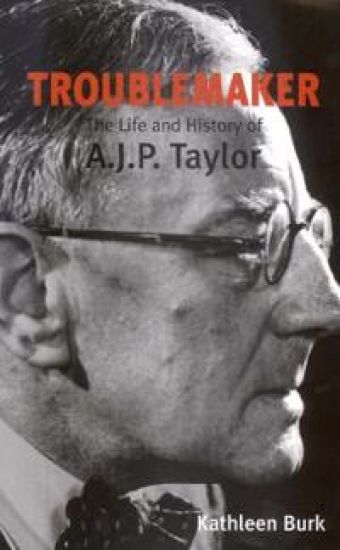
Troublemaker

Troublemaker

Kathleen Burk

Yale University Press
2002
pokkari
Popular, prolific, and impassioned, British historian A. J. P. Taylor (1906-1990) was also outspoken, controversial, and quarrelsome. Taylor’s many books, including The Struggle for Mastery in Europe, The Origins of the Second World War, and English History 1914-1945, changed the way history was written and read. His legendary television lectures, delivered live and unscripted, brought history to a huge popular audience. In this masterful biography, Kathleen Burk provides a perceptive account of the life and achievements of Britain’s most famous twentieth-century historian. Burk draws on her personal acquaintance with Taylor in his later years and on an array of previously untapped archival materials to analyze the successes, failures, and controversies of Taylor’s life as historian, Oxford don, broadcast journalist, husband, and friend. The author sets Taylor’s professional work in the context of the development of history in England during the century, and she traces the relations between his writings and his reactions to domestic and foreign politics. Her account of Taylor’s years at Oxford explores the customs and rituals of the academic community, his colleagues, and the successive crises that beset him personally and professionally. The book also assesses Taylor’s political activities and his self-described role as an “impotent socialist,” his development as a journalist and broadcaster, previously unknown financial aspects of his freelance activities, and his private upheavals, in particular his failed marriages.
Russia’s Dangerous Texts

Russia’s Dangerous Texts

Kathleen F. Parthé

Yale University Press
2005
sidottu
Russia’s Dangerous Texts examines the ways that writers and their works unnerved and irritated Russia’s authoritarian rulers both before and after the Revolution. Kathleen F. Parthé identifies ten historically powerful beliefs about literature and politics in Russia, which include a view of the artistic text as national territory, and the belief that writers must avoid all contact with the state.Parthé offers a compelling analysis of the power of Russian literature to shape national identity despite sustained efforts to silence authors deemed subversive. No amount of repression could prevent the production, distribution, and discussion of texts outside official channels. Along with tragic stories of lost manuscripts and persecuted writers, there is ample evidence of an unbroken thread of political discourse through art. The book concludes with a consideration of the impact of two centuries of dangerous texts on post-Soviet Russia.
Foul Bodies

Foul Bodies

Kathleen M. Brown

Yale University Press
2011
pokkari
In colonial times few Americans bathed regularly; by the mid-1800s, a cleanliness “revolution” had begun. Why this change, and what did it signify? "It is the author's ability to appreciate and represent the almost tactile circumstantiality of life that makes Foul Bodies so special—and so readable."—Charles E. Rosenberg, author of Our Present Complaint: American Medicine, Then and Now "Brown has framed an intriguing new area of research and gathered a surprisingly rich source of textual evidence. Marvelous."—Laurel Thatcher Ulrich, author of A Midwife's Tale: The Life of Martha Ballard, Based on Her Diary, 1785-1812 A nation’s standards of private cleanliness reveal much about its ideals of civilization, fears of disease, and expectations for public life, says Kathleen Brown in this award-winning cultural history. Starting with the shake-up of European practices that coincided with Atlantic expansion, she traces attitudes toward “dirt” through the mid-nineteenth century, demonstrating that cleanliness—and the lack of it—had moral, religious, and often sexual implications. Brown contends that care of the body is not simply a private matter but an expression of cultural ideals that reflect the fundamental values of a society. The book explores early America’s evolving perceptions of cleanliness, along the way analyzing the connections between changing public expectations for appearance and manners, and the backstage work of grooming, laundering, and housecleaning performed by women. Brown provides an intimate view of cleanliness practices and how such forces as urbanization, immigration, market conditions, and concerns about social mobility influenced them. Broad in historical scope and imaginative in its insights, this book expands the topic of cleanliness to encompass much larger issues, including religion, health, gender, class, and race relations.
Making Way for Genius

Making Way for Genius

Kathleen Kete

Yale University Press
2012
sidottu
Examining the lives and works of three iconic personalities —Germaine de Staël, Stendhal, and Georges Cuvier—Kathleen Kete creates a groundbreaking cultural history of ambition in post-Revolutionary France. While in the old regime the traditionalist view of ambition prevailed—that is, ambition as morally wrong unless subsumed into a corporate whole—the new regime was marked by a rising tide of competitive individualism. Greater opportunities for personal advancement, however, were shadowed by lingering doubts about the moral value of ambition.Kete identifies three strategies used to overcome the ethical “burden” of ambition: romantic genius (Staël), secular vocation (Stendhal), and post-mythic destiny (Cuvier). In each case, success would seem to be driven by forces outside one’s control. She concludes by examining the still relevant (and still unresolved) conundrum of the relationship of individual desires to community needs, which she identifies as a defining characteristic of the modern world.