Kirjojen hintavertailu. Mukana 11 717 486 kirjaa ja 12 kauppaa.

Kirjahaku

Etsi kirjoja tekijän nimen, kirjan nimen tai ISBN:n perusteella.

1000 tulosta hakusanalla Kenneth Neill Cameron

Visionary Spenser and the Poetics of Early Modern Platonism
Platonic concerns and conceptions profoundly affected early modern English and continental poetics, yet the effects have had little attention. This book defines Platonism's roles in early modern theories of literature, then reappraise the Platonizing major poet Edmund Spenser. It makes important new contributions to the knowledge of early modern European poetics and advances our understanding of Spenser's role and significance in English literary history. Literary Platonism energized pursuits of the sublime, and knowledge of this approach to poetry yields cogent new understandings of Spenser's poetics, his principal texts, his poetic vocation, and his cultural influence. By combining Christian resources with doctrines of Platonic poetics such as the poet's and lover's inspirational furies, the revelatory significance of beauty, and the importance of imitating exalted ideals rather than the world, he sought to attain a visionary sublimity that would ensure his enduring national significance, and he thereby became a seminal figure in the English literary "line of vision" including Milton and Blake among others. Although readings of Spenser's Shepheardes Calender typically bypass Plato's Phaedrus, this text deeply informs the Calender's treatments of beauty, inspiration, poetry's psychagogic power, and its national responsibilities. In The Faerie Queene, both heroism and visionary poetics arise from the stimuli of love and beauty conceived Platonically, and idealized mimesis produces its faeryland. Faery's queen, projected from Elizabeth I as in Platonic idealization of the beloved, not only pertains to temporal governance but also points toward the transcendental Ideas and divinity. Whereas Plato's Republic valorizes philosophy for bringing enlightenment to counter society's illusions, Spenser champions the learned and enraptured poetic imagination, and proceeds as such a philosopher-poet.
Marketing

Marketing

Kenneth Le Meunier-FitzHugh

Oxford University Press
2021
nidottu
Very Short Introductions: Brilliant, Sharp, Inspiring Marketing is pivotal in today's world. Used for determining and satisfying the needs of the customer, it stands at the interface between an organisation and its environment. Marketing provides customer and competitor information to the organisation, as well as creating awareness of the company's offering. As globalization creates increasing challenges to established marketing practices, marketing efforts need to reposition and adapt continuously to maintain an organisation's ability to reach potential customers. This Very Short Introduction provides a general overview of the function and importance of marketing to modern organisations. Kenneth Le Meunier-FitzHugh discusses how marketing remains central to creating competitive advantage, and why it needs to be forward looking and constantly reinventing itself in line with new developments in the marketplace, such as the growth of social media, and the importance of ethics and responsible marketing. He shows how this has led to the role of marketing expanding beyond advertising and promotion, encompassing a broader sense of customer relationship management. He also considers how marketers need to remain able to manage the marketing mix in response to their understanding of customer's purchasing habits. ABOUT THE SERIES: The Very Short Introductions series from Oxford University Press contains hundreds of titles in almost every subject area. These pocket-sized books are the perfect way to get ahead in a new subject quickly. Our expert authors combine facts, analysis, perspective, new ideas, and enthusiasm to make interesting and challenging topics highly readable.
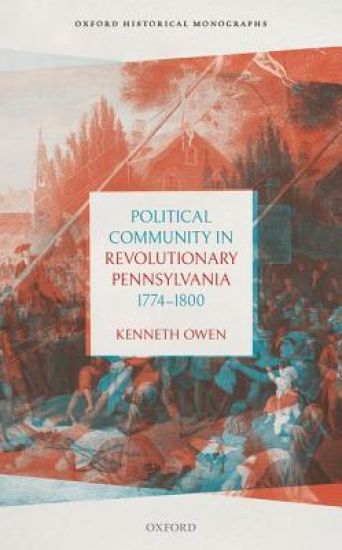
Political Community in Revolutionary Pennsylvania, 1774-1800
Political Community in Revolutionary Pennsylvania challenges the ways we understand popular sovereignty in the American Revolution. Whereas previous histories place undue focus on elite political thought or analysis based on class, this study argues that it was ordinary citizens that cared most about the establishment of a proper, representative, publicly legitimate political process. Popular activism constrained the options available to leaders and created a system through which the actions of government were made more representative of the will of the community. Political Community in Revolutionary Pennsylvania analyzes political developments in Pennsylvania from 1774, when Americans united in opposition to Britain's Intolerable Acts, through to 1800 and the election of Thomas Jefferson. It looks at the animating philosophy of the Pennsylvania state constitution of 1776, a 'radical manifesto' which espoused a vision of popular sovereignty in which government was devolved from the people only where necessary. Even when governmental institutions were necessary, their legitimacy rested on being able to clearly demonstrate that they operated on popular consent, expressed in a variety of forms of popular mobilization.
Becoming the World's Biggest Brewer

Becoming the World's Biggest Brewer

Kenneth Bertrams; Julien Del Marmol; Sander Geerts; Eline Poelmans

Oxford University Press
2019
sidottu
AB InBev is today's uncontested world leader of the beer market. It represents over 20% of global beer sales, with more than 450 million hectolitre a year flowing all around the world. Its Belgian predecessor, Interbrew, was a success story stemming from the 1971 secret merger of the country's two leading brewers: Artois and Piedboeuf. Based on material originating from company and private archives as well as interviews with managers and key family actors, this is the first study to explore the history of the company through the nineteenth and twentieth centuries. The story starts in the mid-nineteenth century with the scientific breakthroughs that revolutionised the beer industry and allowed both Artois and Piedboeuf to prosper in a local environment. Instrumental in this respect were the respective families and their successive heirs in stabilizing and developing their firms. Despite the intense difficulties of two world wars in the decades to follow, they emerged stronger than ever and through the 1960s became undisputed leaders in the national market. Then, in an unprecedented move, Artois and Piedboeuf secretly merged their shareholding in 1971, though keeping their operations separate until 1987 when they openly and operationally merged to become Interbrew. Throughout their histories Artois, Piedboeuf, and their successor companies have kept a controlling family ownership. This book provides a unique insight into the complex history of these three family breweries and their path to becoming a prominent global company, and the growth and consolidation of the beer market through the nineteenth and twentieth centuries.
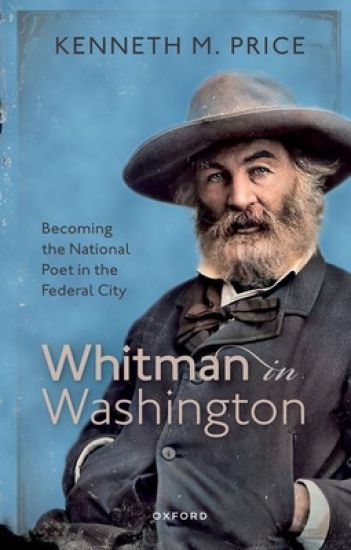
Whitman in Washington

Whitman in Washington

Kenneth M. Price

Oxford University Press
2020
sidottu
During Walt Whitman's decade in Washington, DC, 1863-1873, he labored intensely, at times seeming to have three lives at once. He wrote the most distinguished journalism of his career; came into his own as a writer of letters; crafted memorable Civil War poetry, Drum-Taps and Sequel to Drum-Taps and later folded it into heavily revised and expanded versions of Leaves of Grass; and produced his searching but also flawed critique of American culture, Democratic Vistas. Whitman's work through the first three editions of Leaves often receives the highest praise, yet his writing in the Washington years is exceptional, too, by any reckoning--and is all the more remarkable given that he also cared for thousands of wounded and sick soldiers in Washington hospitals, serving as an attentive visitor. In addition, he served as a government clerk in various positions, most notably in the attorney general's office when much was accomplished on the road toward a multi-racial democracy including efforts to suppress the Ku Klux Klan, and much was also missed (both by the attorney general's office and by Whitman) in the efforts to advance a more just and vibrant union. This book analyses Whitman's integrated life, writings, and government work in his urban context to re-evaluate the writer and the nation's capital in a time of transformation. Drawing on an expanded Whitman corpus, including nearly 3,000 Whitman documents the author recently identified in the National Archives, Whitman in Washington demonstrates that the power of Whitman's Civil War and Reconstruction writing emerges, more fully than we could ever before have imagined, from his intimate knowledge of the capital city, its bureaucracies, and its tumultuous post-war history.
The People's Peace

The People's Peace

Kenneth O. Morgan

Oxford University Press
2021
nidottu
The People's Peace: Britain since 1945 is the first comprehensive study by a professional historian of British history from 1945 to the present day. It examines the transformation of post-war Britain from the planning enthusiasm of 1945 to the rise of New Labour. Its themes include the troubles of the British economy; public criticism of the legitimacy of the state and its instruments of authority; the co-existence of growing personal prosperity with widespread social inequality; and the debates aroused by decolonization, and Britain's relationship to the Commonwealth, the US and Europe. Changes in cultural life, from the puritanical 'austerity' of the 1940's, through the 'permissiveness' of the 1960s, to the tensions and achievements of recent years are also charted. Using a wide variety of sources, including the records of political parties and the most recently released documents from the Public Records Office, Kenneth Morgan brings the story right up to date and draws comparisons with the post-war history of other nations. This penetrating analysis by a leading twentieth-century historian will prove invaluable to anyone interested in the development of the Britain of today.
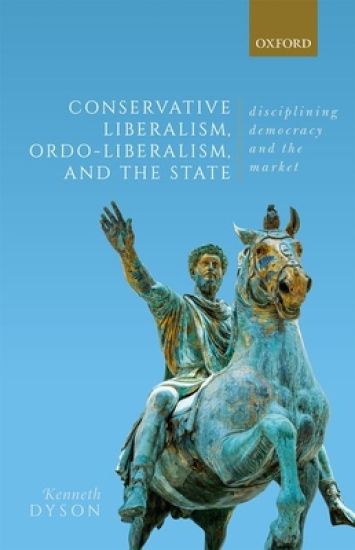
Conservative Liberalism, Ordo-liberalism, and the State

Conservative Liberalism, Ordo-liberalism, and the State

Kenneth Dyson

Oxford University Press
2021
sidottu
This book uses extensive original archival and elite interview research to examine the attempt to rejuvenate liberalism as a means of disciplining democracy and the market through a new rule-based economic and political order. This rebirth took the form of conservative liberalism and, in its most developed form, Ordo-liberalism. It occurred against the historical background of the great transformational crisis of liberalism in the first part of the twentieth century. Conservative liberalism evolved as a cross-national phenomenon. It included such eminent and cultured liberal economists as James Buchanan, Frank Knight, Henry Simons, Ralph Hawtrey, Jacques Rueff, Luigi Einaudi, Walter Eucken, Friedrich Hayek, Alfred Müller-Armack, Wilhelm Röpke, Alexander Rüstow, and Paul van Zeeland, as well as leading lawyers like Louis Brandeis, Franz Böhm, and Maurice Hauriou. Conservative liberals also played a formative role in establishing new international networks, notably the Mont Pèlerin Society. The book investigates the rich intellectual inheritance of this variant of new liberalism from aristocratic liberalism, ethical philosophy, and religious thought. It also locates the social basis of conservative liberalism and Ordo-liberalism in the cultivated bourgeois intelligentsia. The book goes on to examine the attempts to embed this new disciplinary form of liberalism in Britain, France, Germany, Italy, and the United States, and to consider the determinants of its varying significance across space and over time. It concludes by assessing the historical significance and contemporary relevance of conservative liberalism and Ordo-liberalism as liberalism confronts a new transformational crisis at the beginning of the new millennium. Is their promise of disciplining democracy and the market a hollow one?
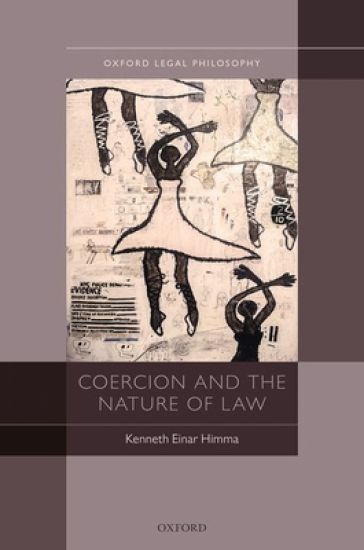
Coercion and the Nature of Law

Coercion and the Nature of Law

Kenneth Einar Himma

Oxford University Press
2020
sidottu
The Coercion Thesis has been a subject of longstanding debate, but legal positivist scholarship over the last several decades has concluded that coercion is not necessary for law. Coercion and the Nature of Law is concerned with reviving the Coercion Thesis, presenting a strong case for the inherently coercive nature of legal regulation, and arguing that anything properly characterized as a legal system must back legal norms prohibiting breaches of the peace with the threat of a coercive sanction. Himma presents the argument that people are self-interested beings who must compete in a world of scarcity for everything they need to survive and thrive. The need to compete for resources naturally leads to conflict that can breach the peace, and threatens the ability to live together in a community and reap the social benefits of cooperation. Law only functions as a system if it can maintain the peace enough for community to continue, and thus systems of law cannot succeed in doing anything that we want systems of law to do unless they back laws prohibiting violent assaults on persons or property with the threat of punishment; without sanctions, we would descend into something resembling a condition of war-of-all-against-all. We adopt coercive systems of regulation precisely to avoid having to live under such conditions. The book is divided into three parts: (1) a prima facie logical-empirical case for the Coercion Thesis, (2) a study of the "society of angels" and international law counterexamples, and why they do not refute the thesis, and (3) an analysis of how law guides behaviour and the implications of the Coercion Thesis on reasons for action. Going against the current conventional wisdom in legal philosophy, Himma makes a systematic defence of the Coercion Thesis arguing that coercion or enforcement mechanisms are not only a necessary feature of legal systems, but a conceptually necessary feature of legal systems.
Whitman in Washington

Whitman in Washington

Kenneth M. Price

Oxford University Press
2023
nidottu
During Walt Whitman's decade in Washington, DC, 1863-1873, he labored intensely, at times seeming to have three lives at once. He wrote the most distinguished journalism of his career; came into his own as a writer of letters; crafted memorable Civil War poetry, Drum-Taps and Sequel to Drum-Taps and later folded it into heavily revised and expanded versions of Leaves of Grass; and produced his searching but also flawed critique of American culture, Democratic Vistas. Whitman's work through the first three editions of Leaves often receives the highest praise, yet his writing in the Washington years is exceptional, too, by any reckoning—and is all the more remarkable given that he also cared for thousands of wounded and sick soldiers in Washington hospitals, serving as an attentive visitor. In addition, he served as a government clerk in various positions, most notably in the attorney general's office when much was accomplished on the road toward a multi-racial democracy including efforts to suppress the Ku Klux Klan, and much was also missed (both by the attorney general's office and by Whitman) in the efforts to advance a more just and vibrant union. Kenneth M. Price analyses Whitman's integrated life, writings, and government work in his urban context to re-evaluate the writer and the nation's capital in a time of transformation. Drawing on an expanded Whitman corpus, including nearly 3,000 Whitman documents Price recently identified in the National Archives, Whitman in Washington demonstrates that the power of Whitman's Civil War and Reconstruction writing emerges, more fully than previously imagined, from his intimate knowledge of the capital city, its bureaucracies, and its tumultuous post-war history.
Luther and the Peasants

Luther and the Peasants

Kenneth G. Appold

Oxford University Press
2025
sidottu
The German Peasants' Revolts of 1525 were a defining moment both for the Protestant Reformation and the history of European culture. But while the conflicts are well-studied, they are typically analyzed today from political and socioeconomic perspectives, whereas the protagonists themselves framed them in religious and theological terms. Luther and the Peasants takes these perspectives seriously to offer a novel and timely reinterpretation of the uprisings. A detailed examination of peasants' religious lives reveals commitments to peace, social harmony, and the environment that came into conflict with spiritual priorities of the Protestant Reformation, notably with those of Martin Luther. Drawing on the peasants' own documents, such as the famous manifesto The Twelve Articles, the book provides a thorough re-examination their actions, including their negotiations with lords and their organization into bands and Christian brotherhoods, and a fresh analysis of their behavior in battle. This ritual reconstruction makes peasants' statements and behaviors historiographically legible for the first time, effectively giving voice to an illiterate rural people, and offers new ways of reading Luther's 1525 writings on peasants, which are among his most challenging works. In this context, the 1525 conflict between Luther and the peasants comes to light as the collision of two different religious worlds, each incomprehensible to the other. This, in turn, reveals the important role played by religion in a defining moment of early modern European history.
English Literature and Ancient Languages

English Literature and Ancient Languages

Kenneth Haynes

Oxford University Press
2007
nidottu
Literature in English is hardly ever entirely in English. Contact with other languages takes place, for example, whenever foreign languages are introduced, or if a native style is self-consciously developed, or when aspects of English are remade in the image of another language. Since the Renaissance, Latin and Greek have been an important presence in British poetry and prose. This is partly because of the importance of the ideals and ideologies founded and elaborated on Roman and Greek models. Latin quotations and latinate English have always been ways to represent, scrutinize, or satirize the influential values associated with Rome. The importance of Latin and Greek is also due to the fact that they have helped to form and define a variety of British social groups. Lawyers, Catholics, and British gentlement invested in Latin as one source of their distinction from non-professionals, from Protestants, and from the unleisured. British attitudes toward Greek and Latin have been highly charged because the animus that existed between groups has also been directed toward these languages themselves. English Literature and Ancient Languages is a study of literary uses of language contact, of English literature in conjunction with Latin and Greek. While the book's emphasis is literary, that is formal and verbal, its goal is to discover how social interests and cultural ideas are, and are not, mediated through language.
Slavery and the British Empire

Slavery and the British Empire

Kenneth Morgan

Oxford University Press
2007
sidottu
Slavery and the British Empire provides a clear overview of the entire history of British involvement with slavery and the slave trade, from the Cape Colony to the Caribbean. The book combines economic, social, political, cultural, and demographic history, with a particular focus on the Atlantic world and the plantations of North America and the West Indies from the mid-seventeenth century onwards. Kenneth Morgan analyses the distribution of slaves within the empire and how this changed over time; the world of merchants and planters; the organization and impact of the triangular slave trade; the work and culture of the enslaved; slave demography; health and family life; resistance and rebellions; the impact of the anti-slavery movement; and the abolition of the British slave trade in 1807 and of slavery itself in most of the British empire in 1834. As well as providing the ideal introduction to the history of British involvement in the slave trade, this book also shows just how deeply embedded slavery was in British domestic and imperial history - and just how long it took for British involvement in slavery to die, even after emancipation.
The Politics of the Euro-Zone

The Politics of the Euro-Zone

Kenneth Dyson

Oxford University Press
2000
sidottu
The Euro-Zone represents the single most important step in European Integration since 1957 and one of the boldest economic, monetary, and political projects in modern history. In this first major study, the author examines the major political questions raised by the birth of the Euro-Zone on January 1 1999 and argues for a more politically informed analysis and assessment of its nature, operation, and prospects. How does the Euro-Zone operate? What does it mean for European States and for the political strategies of governments? How is its operation to be explained? What are its prospects for stability? What kinds of policies are needed to strengthen its capacity to withstand crisis? The book stresses the ECB-centric nature of the Euro-Zone and its implications both for policy and polices in Europe and for theories of integration. The ECB emerges as a powerful 'policy pusher' and 'ideational leader', with an authority and power exceeding that of the European Commission in the integration process. Dyson examines the elated problems of social justice, democratic consent, and identity. He also argues that the Euro-Zone represents a process of transition to the EU as a 'stabilization Staten An innovative aspect of the book is its application of a strength-strain model for the purpose of analyzing and assessing the stability of the Euro-Zone. It concludes that the stability of the Euro-Zone will be strongly conditioned by three factors: how Kantian rather than Hobbesian or Lockeian its political culture proves to be, with a key reproducibility failing here on the quality of political leadership; its possession of policy interments to tackle liquidity as well as debt traps; and the speed and efficiency of mechanisms of 'bench marking, policy transfer, and 'lesson-drawing'.
The Insula of the Menander at Pompeii: Volume IV: The Silver Treasure
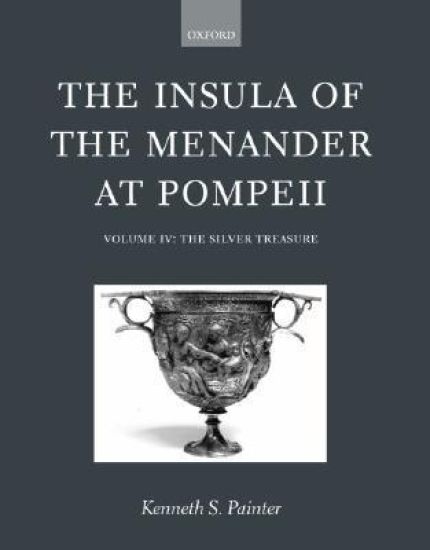
The Casa del Menando hoard was found by Professor Amedeo Maiuri in 1930, in the course of the excavation of the Insula of the Menander. There has been no study of it as a whole since Maiuri's publication of 1933. The silver, one of the three largest groups of Roman plate of the first century AD, is the only one which has been found and recorded under modern conditions, and demonstrates what plate was in use in Pompeii in the period of the disasters of AD 62 and 72. The treasure includes two hoards, hidden in the same chest, one consisting of 118 pieces of silver plate, the other of coins and jewellery. Maiuri thought that the hoards, and therefore the house, belonged to the top level of Roman society; but this study suggests that they belonged to a rich citizen of Pompeii, who may have been a local magistrate.
The Branch Davidians of Waco

The Branch Davidians of Waco

Kenneth G. C. Newport

Oxford University Press
2006
sidottu
What were the beliefs of the Branch Davidians? This is the first full scholarly account of their history. Kenneth G. C. Newport argues that, far from being an act of unfathomable religious insanity, the calamitous fire at Waco in 1993 was the culmination of a long theological and historical tradition that goes back many decades. The Branch Davidians under David Koresh were an eschatologically confident community that had long expected that the American government, whom they identified as the Lamb-like Beast of the book of Revelation, would one day arrive to seek to destroy God's remnant people. The end result, the fire, must be seen in this context.
The Gold Standard Illusion

The Gold Standard Illusion

Kenneth Mouré

Oxford University Press
2002
sidottu
Economic historians have established a new orthodoxy attributing the onset and severity of the Great Depression to the flawed workings of the international gold standard. This interpretation returns French gold policy to centre stage in understanding the origins of the Depression, its rapid spread, its severity and its duration. The Gold Standard Illusion exploits new archival resources to test how well this gold standard interpretation of the Great Depression is sustained by historical records in France, the country most often criticized for hoarding gold and failure to play by the rules of the gold standard game. The study follows four lines of inquiry, providing a history of French gold policy in its national and international contexts from 1914 to 1939, an analysis of the evolution of the Bank of France during this period and the degree to which gold standard belief retarded the adoption of modern central banking practice, a re-examination of interwar central bank cooperation in the period and its role in the breakdown of the gold standard, and a study of how gold standard rhetoric fostered misperceptions of financial and monetary problems. The French case was exceptional, marked by absolute and tenacious faith in the gold standard, by the import and accumulation of a vast hoard of gold desperately needed as reserves to prevent monetary contraction abroad, and by adamant claims for the need to return to gold after most countries had left the gold standard, which had become, in the words of John Maynard Keynes, 'a curse laid upon the economic life of the world'. The Gold Standard Illusion explains French gold standard belief and policy, the impact of French policy at home and abroad, and reassesses the gold standard interpretation of the Great Depression in the light of French experience.
English Literature and Ancient Languages

English Literature and Ancient Languages

Kenneth Haynes

Oxford University Press
2003
sidottu
Literature in English is hardly ever entirely in English. Contact with other languages takes place, for example, whenever foreign languages are introduced, or if a native style is self-consciously developed, or when aspects of English are remade in the image of another language. Since the Renaissance, Latin and Greek have been an important presence in British poetry and prose. This is partly because of the importance of the ideals and ideologies founded and elaborated on Roman and Greek models. Latin quotations and latinate English have always been ways to represent, scrutinize, or satirize the influential values associated with Rome. The importance of Latin and Greek is also due to the fact that they have helped to form and define a variety of British social groups. Lawyers, Catholics, and British gentlemen invested in Latin as one source of their distinction from non-professionals, from Protestants, and from the unleisured. British attitudes toward Greek and Latin have been highly charged because the animus that existed between groups has also been directed toward these languages themselves. English Literature and Ancient Languages is a study of literary uses of language contact, of English literature in conjunction with Latin and Greek. While the book's emphasis is literary, that is formal and verbal, its goal is to discover how social interests and cultural ideas are, and are not, mediated through language.
Governing Social Inclusion

Governing Social Inclusion

Kenneth A. Armstrong

Oxford University Press
2010
sidottu
The pursuit of social solidarity and social justice has typically occurred within the boundaries of nation states. Yet in 2000, EU Member States committed themselves to make a decisive impact on the eradication of poverty and agreed to coordinate their activities within the framework of a novel governance process: the Open Method of Coordination (OMC). This book analyzes the emerging governance of social inclusion in the EU and the use of the OMC as a mechanism of Europeanization of domestic social policy. Armstrong's exploration of EU interventions to combat poverty and social exclusion addresses the changing constitutional, policy and governance context in which these interventions have occurred. It traces the impact of debates surrounding the Lisbon Treaty and the Lisbon Strategy in framing the possibilities and limits of EU action. Drawing on primary documentary material, on interviews with key actors and on a wide range of academic literature, this study offers a socio-legal account of the successes and failures of a decade of EU policy coordination. Utilizing the conceptual and theoretical tools associated with institutionalist analysis and experimental governance to develop the discussion of Europeanization, the book will be of value not only to scholars working on EU policymaking but also to those interested in changing patterns of public authority in the social sphere more generally.
The Complexity Paradox

The Complexity Paradox

Kenneth Mossman

Oxford University Press Inc
2014
sidottu
Living systems exhibit a fundamental contradiction: they are highly stable and reliable, yet they have the capacity to adapt to changing environmental conditions. This paradoxical behavior arises from the complexity of life--a high degree of order and cooperation that emerges from relatively simple interactions among cellular components. The Complexity Paradox proposes inventive, interdisciplinary approaches to maintaining health and managing and preventing disease by considering the totality of human biology, from the cellular level on up to entire populations of individuals. From the perspective of complexity, which acknowledges that there are limits to what we can know, Kenneth L. Mossman opens the door to understanding essential life processes in new and extraordinary ways. By tying together evolution, functional dynamics, and investigations into how the body processes energy and uses genetic information, Mossman's analysis expresses a unified theory of biology that fills a critical niche for future research in biology, medicine, and public health.
The Sandzak: A History

The Sandzak: A History

Kenneth Morrison; Elizabeth Roberts

Oxford University Press
2013
sidottu
One of the few unexamined pieces of the Balkan jigsaw, the Sandzak region, straddling the border area between the now independent states of Serbia and Montenegro, is heir to a complex and contested history, characterised by foreign occupation and domestic conflict. The heartland of the first Serbian medieval kingdom, the area fell under the control of the Ottoman Turks in the late fourteenth century. But as the Ottoman Empire was rolled back during the tumultuous nineteenth century, the Sandzak, positioned at the interface between the Hapsburg and Ottoman Empires, became the focus of Great Power politics. Divided by Serbia and Montenegro during the Balkan Wars, occupied by the Austrians during the First World War, the Sandzak was then incorporated into the Kingdom of Serbs, Croats and Slovenes in 1918. The area was again occupied by Italian and German forces during the Second World War, during which internecine conflicts between competing domestic political forces intensified. Granted autonomous status by the communist-led Partisans in 1943, the Sandzak was again divided between Serbia and Montenegro in 1945. Yet this short period of autonomy remained a powerful symbol, and as Yugoslavia began to unravel in the 1990s, the 'Sandzak Question' re-emerged.The Sandzak: A History attempts to demystify the enigma of this little-know part of the Balkans. Offering a detailed yet succinct analysis of its religious and ethnic dynamics, the authors chart a course through conflicting historical narratives to provide a comprehensive overview of the complex history of this contested land.