Kirjojen hintavertailu. Mukana 11 244 527 kirjaa ja 12 kauppaa.

Kirjahaku

Etsi kirjoja tekijän nimen, kirjan nimen tai ISBN:n perusteella.

1000 tulosta hakusanalla Kenneth Stuart

English Literature and Ancient Languages

English Literature and Ancient Languages

Kenneth Haynes

Oxford University Press
2007
nidottu
Literature in English is hardly ever entirely in English. Contact with other languages takes place, for example, whenever foreign languages are introduced, or if a native style is self-consciously developed, or when aspects of English are remade in the image of another language. Since the Renaissance, Latin and Greek have been an important presence in British poetry and prose. This is partly because of the importance of the ideals and ideologies founded and elaborated on Roman and Greek models. Latin quotations and latinate English have always been ways to represent, scrutinize, or satirize the influential values associated with Rome. The importance of Latin and Greek is also due to the fact that they have helped to form and define a variety of British social groups. Lawyers, Catholics, and British gentlement invested in Latin as one source of their distinction from non-professionals, from Protestants, and from the unleisured. British attitudes toward Greek and Latin have been highly charged because the animus that existed between groups has also been directed toward these languages themselves. English Literature and Ancient Languages is a study of literary uses of language contact, of English literature in conjunction with Latin and Greek. While the book's emphasis is literary, that is formal and verbal, its goal is to discover how social interests and cultural ideas are, and are not, mediated through language.
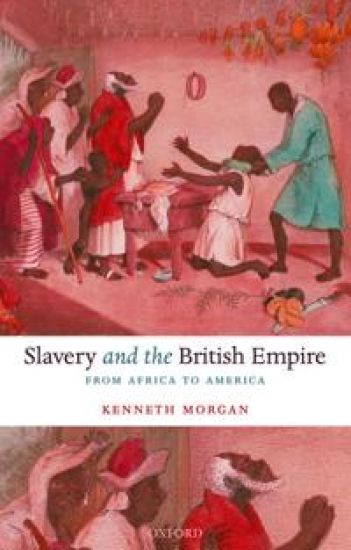
Slavery and the British Empire

Slavery and the British Empire

Kenneth Morgan

Oxford University Press
2007
sidottu
Slavery and the British Empire provides a clear overview of the entire history of British involvement with slavery and the slave trade, from the Cape Colony to the Caribbean. The book combines economic, social, political, cultural, and demographic history, with a particular focus on the Atlantic world and the plantations of North America and the West Indies from the mid-seventeenth century onwards. Kenneth Morgan analyses the distribution of slaves within the empire and how this changed over time; the world of merchants and planters; the organization and impact of the triangular slave trade; the work and culture of the enslaved; slave demography; health and family life; resistance and rebellions; the impact of the anti-slavery movement; and the abolition of the British slave trade in 1807 and of slavery itself in most of the British empire in 1834. As well as providing the ideal introduction to the history of British involvement in the slave trade, this book also shows just how deeply embedded slavery was in British domestic and imperial history - and just how long it took for British involvement in slavery to die, even after emancipation.
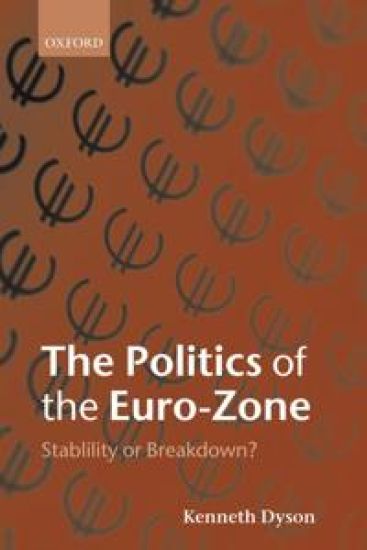
The Politics of the Euro-Zone

The Politics of the Euro-Zone

Kenneth Dyson

Oxford University Press
2000
sidottu
The Euro-Zone represents the single most important step in European Integration since 1957 and one of the boldest economic, monetary, and political projects in modern history. In this first major study, the author examines the major political questions raised by the birth of the Euro-Zone on January 1 1999 and argues for a more politically informed analysis and assessment of its nature, operation, and prospects. How does the Euro-Zone operate? What does it mean for European States and for the political strategies of governments? How is its operation to be explained? What are its prospects for stability? What kinds of policies are needed to strengthen its capacity to withstand crisis? The book stresses the ECB-centric nature of the Euro-Zone and its implications both for policy and polices in Europe and for theories of integration. The ECB emerges as a powerful 'policy pusher' and 'ideational leader', with an authority and power exceeding that of the European Commission in the integration process. Dyson examines the elated problems of social justice, democratic consent, and identity. He also argues that the Euro-Zone represents a process of transition to the EU as a 'stabilization Staten An innovative aspect of the book is its application of a strength-strain model for the purpose of analyzing and assessing the stability of the Euro-Zone. It concludes that the stability of the Euro-Zone will be strongly conditioned by three factors: how Kantian rather than Hobbesian or Lockeian its political culture proves to be, with a key reproducibility failing here on the quality of political leadership; its possession of policy interments to tackle liquidity as well as debt traps; and the speed and efficiency of mechanisms of 'bench marking, policy transfer, and 'lesson-drawing'.
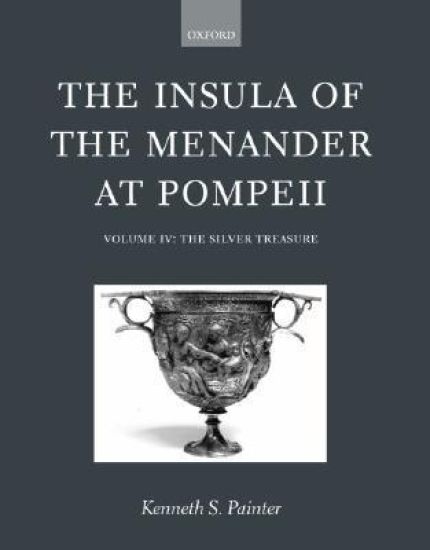
The Insula of the Menander at Pompeii: Volume IV: The Silver Treasure
The Casa del Menando hoard was found by Professor Amedeo Maiuri in 1930, in the course of the excavation of the Insula of the Menander. There has been no study of it as a whole since Maiuri's publication of 1933. The silver, one of the three largest groups of Roman plate of the first century AD, is the only one which has been found and recorded under modern conditions, and demonstrates what plate was in use in Pompeii in the period of the disasters of AD 62 and 72. The treasure includes two hoards, hidden in the same chest, one consisting of 118 pieces of silver plate, the other of coins and jewellery. Maiuri thought that the hoards, and therefore the house, belonged to the top level of Roman society; but this study suggests that they belonged to a rich citizen of Pompeii, who may have been a local magistrate.
The Branch Davidians of Waco

The Branch Davidians of Waco

Kenneth G. C. Newport

Oxford University Press
2006
sidottu
What were the beliefs of the Branch Davidians? This is the first full scholarly account of their history. Kenneth G. C. Newport argues that, far from being an act of unfathomable religious insanity, the calamitous fire at Waco in 1993 was the culmination of a long theological and historical tradition that goes back many decades. The Branch Davidians under David Koresh were an eschatologically confident community that had long expected that the American government, whom they identified as the Lamb-like Beast of the book of Revelation, would one day arrive to seek to destroy God's remnant people. The end result, the fire, must be seen in this context.
The Gold Standard Illusion

The Gold Standard Illusion

Kenneth Mouré

Oxford University Press
2002
sidottu
Economic historians have established a new orthodoxy attributing the onset and severity of the Great Depression to the flawed workings of the international gold standard. This interpretation returns French gold policy to centre stage in understanding the origins of the Depression, its rapid spread, its severity and its duration. The Gold Standard Illusion exploits new archival resources to test how well this gold standard interpretation of the Great Depression is sustained by historical records in France, the country most often criticized for hoarding gold and failure to play by the rules of the gold standard game. The study follows four lines of inquiry, providing a history of French gold policy in its national and international contexts from 1914 to 1939, an analysis of the evolution of the Bank of France during this period and the degree to which gold standard belief retarded the adoption of modern central banking practice, a re-examination of interwar central bank cooperation in the period and its role in the breakdown of the gold standard, and a study of how gold standard rhetoric fostered misperceptions of financial and monetary problems. The French case was exceptional, marked by absolute and tenacious faith in the gold standard, by the import and accumulation of a vast hoard of gold desperately needed as reserves to prevent monetary contraction abroad, and by adamant claims for the need to return to gold after most countries had left the gold standard, which had become, in the words of John Maynard Keynes, 'a curse laid upon the economic life of the world'. The Gold Standard Illusion explains French gold standard belief and policy, the impact of French policy at home and abroad, and reassesses the gold standard interpretation of the Great Depression in the light of French experience.
English Literature and Ancient Languages

English Literature and Ancient Languages

Kenneth Haynes

Oxford University Press
2003
sidottu
Literature in English is hardly ever entirely in English. Contact with other languages takes place, for example, whenever foreign languages are introduced, or if a native style is self-consciously developed, or when aspects of English are remade in the image of another language. Since the Renaissance, Latin and Greek have been an important presence in British poetry and prose. This is partly because of the importance of the ideals and ideologies founded and elaborated on Roman and Greek models. Latin quotations and latinate English have always been ways to represent, scrutinize, or satirize the influential values associated with Rome. The importance of Latin and Greek is also due to the fact that they have helped to form and define a variety of British social groups. Lawyers, Catholics, and British gentlemen invested in Latin as one source of their distinction from non-professionals, from Protestants, and from the unleisured. British attitudes toward Greek and Latin have been highly charged because the animus that existed between groups has also been directed toward these languages themselves. English Literature and Ancient Languages is a study of literary uses of language contact, of English literature in conjunction with Latin and Greek. While the book's emphasis is literary, that is formal and verbal, its goal is to discover how social interests and cultural ideas are, and are not, mediated through language.
Governing Social Inclusion

Governing Social Inclusion

Kenneth A. Armstrong

Oxford University Press
2010
sidottu
The pursuit of social solidarity and social justice has typically occurred within the boundaries of nation states. Yet in 2000, EU Member States committed themselves to make a decisive impact on the eradication of poverty and agreed to coordinate their activities within the framework of a novel governance process: the Open Method of Coordination (OMC). This book analyzes the emerging governance of social inclusion in the EU and the use of the OMC as a mechanism of Europeanization of domestic social policy. Armstrong's exploration of EU interventions to combat poverty and social exclusion addresses the changing constitutional, policy and governance context in which these interventions have occurred. It traces the impact of debates surrounding the Lisbon Treaty and the Lisbon Strategy in framing the possibilities and limits of EU action. Drawing on primary documentary material, on interviews with key actors and on a wide range of academic literature, this study offers a socio-legal account of the successes and failures of a decade of EU policy coordination. Utilizing the conceptual and theoretical tools associated with institutionalist analysis and experimental governance to develop the discussion of Europeanization, the book will be of value not only to scholars working on EU policymaking but also to those interested in changing patterns of public authority in the social sphere more generally.
The Complexity Paradox

The Complexity Paradox

Kenneth Mossman

Oxford University Press Inc
2014
sidottu
Living systems exhibit a fundamental contradiction: they are highly stable and reliable, yet they have the capacity to adapt to changing environmental conditions. This paradoxical behavior arises from the complexity of life--a high degree of order and cooperation that emerges from relatively simple interactions among cellular components. The Complexity Paradox proposes inventive, interdisciplinary approaches to maintaining health and managing and preventing disease by considering the totality of human biology, from the cellular level on up to entire populations of individuals. From the perspective of complexity, which acknowledges that there are limits to what we can know, Kenneth L. Mossman opens the door to understanding essential life processes in new and extraordinary ways. By tying together evolution, functional dynamics, and investigations into how the body processes energy and uses genetic information, Mossman's analysis expresses a unified theory of biology that fills a critical niche for future research in biology, medicine, and public health.
The Sandzak: A History

The Sandzak: A History

Kenneth Morrison; Elizabeth Roberts

Oxford University Press
2013
sidottu
One of the few unexamined pieces of the Balkan jigsaw, the Sandzak region, straddling the border area between the now independent states of Serbia and Montenegro, is heir to a complex and contested history, characterised by foreign occupation and domestic conflict. The heartland of the first Serbian medieval kingdom, the area fell under the control of the Ottoman Turks in the late fourteenth century. But as the Ottoman Empire was rolled back during the tumultuous nineteenth century, the Sandzak, positioned at the interface between the Hapsburg and Ottoman Empires, became the focus of Great Power politics. Divided by Serbia and Montenegro during the Balkan Wars, occupied by the Austrians during the First World War, the Sandzak was then incorporated into the Kingdom of Serbs, Croats and Slovenes in 1918. The area was again occupied by Italian and German forces during the Second World War, during which internecine conflicts between competing domestic political forces intensified. Granted autonomous status by the communist-led Partisans in 1943, the Sandzak was again divided between Serbia and Montenegro in 1945. Yet this short period of autonomy remained a powerful symbol, and as Yugoslavia began to unravel in the 1990s, the 'Sandzak Question' re-emerged.The Sandzak: A History attempts to demystify the enigma of this little-know part of the Balkans. Offering a detailed yet succinct analysis of its religious and ethnic dynamics, the authors chart a course through conflicting historical narratives to provide a comprehensive overview of the complex history of this contested land.
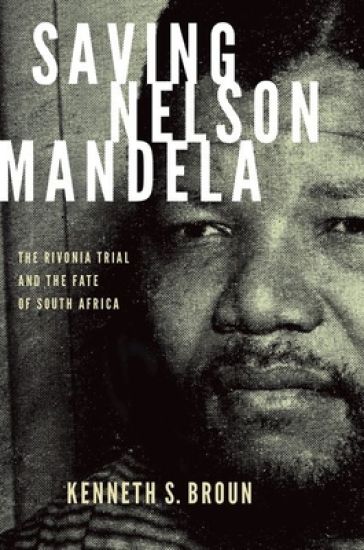
Saving Nelson Mandela

Saving Nelson Mandela

Kenneth S. Broun

Oxford University Press Inc
2015
nidottu
The question was: would he hang? In 1963, when South Africa's apartheid government charged Nelson Mandela with planning its overthrow, most observers feared that he would be sentenced to death. But the support he and his fellow activists in the African National Congress received during his trial not only saved his life, but also enabled him to save his country. In Saving Nelson Mandela, South African law expert Kenneth S. Broun recreates the trial--called the "Rivonia" Trial after the Johannesburg suburb where police seized Mandela. Based upon interviews with many of the case's primary figures and portions of the trial transcript, Broun situates readers inside the courtroom at the imposing Palace of Justice in Pretoria. Here, the trial unfolds through a dramatic narrative that captures the courage of the accused and their defense team, as well as the personal prejudices that colored the entire trial. The Rivonia trial had no jury and only a superficial aura of due process, combined with heavy security that symbolized the apartheid government's system of repression. Broun shows how outstanding advocacy, combined with widespread public support, in fact backfired on apartheid leaders, who sealed their own fate. Despite his 27-year incarceration, Mandela's ultimate release helped move his country from the racial tyranny of apartheid toward democracy. As documented in this inspirational book, the Rivonia trial was a critical milestone that helped chart the end of Apartheid and the future of a new South Africa.
The Definition of Anti-Semitism

The Definition of Anti-Semitism

Kenneth L. Marcus

Oxford University Press Inc
2015
sidottu
What is anti-Semitism? The Definition of Anti-Semitism is the first book-length study to explore this central question in the context of the new anti-Semitism. Previous efforts to define 'anti-Semitism' have been complicated by the disreputable origins of the term, the discredited sources of its etymology, the diverse manifestations of the concept, and the contested politics of its applications. Nevertheless the task is an important one, not only because definitional clarity is required for the term to be understood, but also because the current conceptual confusion prevents resolution of many incidents in which anti-Semitism is manifested. The Definition of Anti-Semitism explores the various ways in which anti-Semitism has historically been defined, demonstrates the weaknesses in prior efforts, and develops a new definition of anti-Semitism, especially in the context of the 'new anti-Semitism' in American higher education.
The Wind in the Willows

The Wind in the Willows

Kenneth Grahame

Oxford University Press
2010
nidottu
'Believe me, my young friend, there is nothing - absolutely nothing - half so much worth doing as simply messing about in boats.' So says Rat to Mole, as he introduces him to the delights of the river and his friends Toad, the spirit of rebellion, and Badger, the spirit of England. But it is a world where the motor-car is about to wreck the gipsy caravan, the revolutionaries in the Wild Wood are threatening the social fabric, the god Pan is abroad, and the warm seductive whispers of the south are drifting into the English lanes. An international children's classic, The Wind in the Willows grew from the author's letters to his young son, yet it is concerned almost exclusively with adult themes: fear of radical changes in political, social, and economic power. Mole's acceptance into the conservative world of the River Bank, and Toad's wild attempts to escape from it, are narrated in virtuoso language ranging from lively parody to elaborate fin-de-siècle mysticism. A profoundly English fiction with a world following, it is a book for adults adopted by children, a timeless masterpiece, and a vital portrait of an age. ABOUT THE SERIES: For over 100 years Oxford World's Classics has made available the widest range of literature from around the globe. Each affordable volume reflects Oxford's commitment to scholarship, providing the most accurate text plus a wealth of other valuable features, including expert introductions by leading authorities, helpful notes to clarify the text, up-to-date bibliographies for further study, and much more.
Australia

Australia

Kenneth Morgan

Oxford University Press
2012
nidottu
In this Very Short Introduction Kenneth Morgan provides a wide-ranging and thematic introduction to modern Australia. He examines the main features of its history, geography, and culture since the beginning of the white settlement in New South Wales in 1788. Drawing attention to the distinctive features of Australian life he places contemporary developments in a historical perspective, highlighting the importance of Australia's indigenous culture and making connections between Australia and the wider word. Balancing the successful growth of Australian institutions and democratic traditions, he considers the struggles that occurred in the making of modern Australia. ABOUT THE SERIES: The Very Short Introductions series from Oxford University Press contains hundreds of titles in almost every subject area. These pocket-sized books are the perfect way to get ahead in a new subject quickly. Our expert authors combine facts, analysis, perspective, new ideas, and enthusiasm to make interesting and challenging topics highly readable.
Coalitions and Compliance

Coalitions and Compliance

Kenneth C. Shadlen

Oxford University Press
2017
sidottu
Coalitions and Compliance examines how international changes can reconfigure domestic politics. Since the late 1980s, developing countries have been subject to intense pressures regarding intellectual property rights. These pressures have been exceptionally controversial in the area of pharmaceuticals. Historically, fearing the economic and social costs of providing private property rights over knowledge, developing countries did not allow drugs to be patented. Now they must do so, an obligation with significant implications for industrial development and public health. This book analyses different forms of compliance with this new imperative in Latin America, comparing the politics of pharmaceutical patenting in Argentina, Brazil, and Mexico. Coalitions and Compliance focuses on two periods of patent politics: initial conflicts over how to introduce drug patents, and then subsequent conflicts over how these new patent systems function. In contrast to explanations of national policy choice based on external pressures, domestic institutions, or Presidents' ideological orientations, this book attributes cross-national and longitudinal variation to the ways that changing social structures constrain or enable political leaders' strategies to construct and sustain supportive coalitions. The analysis begins with assessment of the relative resources and capabilities of the transnational and national pharmaceutical sectors, and these rival actors' efforts to attract allies. Emphasis is placed on two ways that social structures are transformed so as to affect coalition-building possibilities: how exporters fearing the loss of preferential market access may be converted into allies of transnational drug firms, and differential patterns of adjustment among state and societal actors that are inspired by the introduction of new policies. It is within the changing structural conditions produced by these two processes that political leaders build coalitions in support of different forms of compliance.
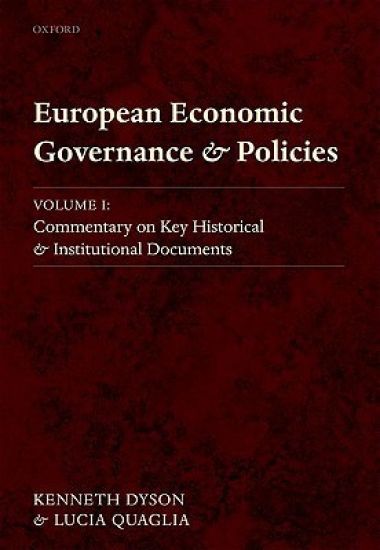
European Economic Governance and Policies

European Economic Governance and Policies

Kenneth Dyson; Lucia Quaglia

Oxford University Press
2010
sidottu
The creation of the single European currency and of the European Central Bank in the context of a wider economic and political union has been one of the most important projects of institution-building and policy development in post-1945 Europe. This book seeks both to place this project in its longer-term historical context and to complement the many secondary texts on this highly topical subject. It brings together for the first time, and offers analytical commentary on, the classic documents relevant to the process of constructing and developing European economic governance based on Economic and Monetary Union (EMU). The book includes the 'classic' documents concerned with EMU and economic governance from before 1914 to the launch of European monetary union on 1 January 1999. The book makes available a large collection of often neglected historical documents about the governance of the European economy, based around the creation of EMU. They are presented in a convenient and accessible form both for scholars and students and for market and policy practitioners concerned with the historical development of Europe's political economy. Those who are new to the subject should benefit from easy access to basic texts and related commentaries and references. Those who are more familiar with EMU will have a single key source of comprehensive and up-to-date references in terms of which past and current debates and policies have been framed. The primary sources that are made available here would otherwise be costly to access and use. In many cases documents have been rescued from obscurity. Their availability should help to inform and enrich public debate about the historical development of EMU and how the European economy is governed. In addition, the book offers extensive commentaries at the beginning of each section as well as on individual documents that seek to clarify changes in meanings and understandings over time and the background to these changes.
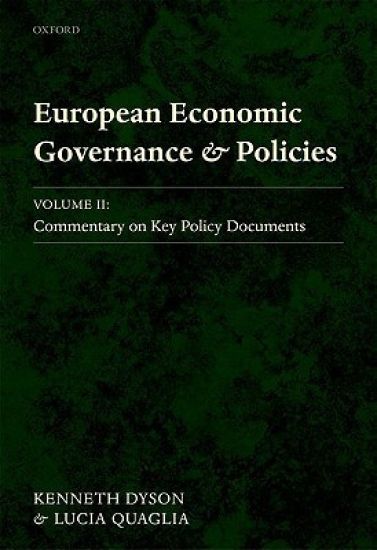
European Economic Governance and Policies

European Economic Governance and Policies

Kenneth Dyson; Lucia Quaglia

Oxford University Press
2010
sidottu
The creation of the single European currency and of the European Central Bank in the context of a wider economic and political union has been one of the most important projects of institution-building and policy development in post-1945 Europe. This book seeks both to place this project in its longer-term historical context and to complement the many secondary texts on this highly topical subject. It brings together for the first time, and offers analytical commentary on, the classic documents relevant to the process of constructing and developing European economic governance based on Economic and Monetary Union (EMU). The book includes the key documents concerned with developing and implementing policies from the period of inception and launch of European monetary union on 1 January 1999 to the end of its first decade and the onset of the global financial and economic crisis. The book makes available a large collection of documents about the policies and governance of the European economy, based around the creation of EMU. They are presented in a convenient and accessible form both for scholars and students and for market and policy practitioners concerned with the development of Europe's political economy. Those who are new to the subject should benefit from easy access to basic texts and related commentaries and references. Those who are more familiar with EMU will have a single key source of comprehensive and up-to-date references in terms of which past and current debates and policies have been framed. The primary sources that are made available here would otherwise be costly to access and use. In many cases documents have been rescued from obscurity. Their availability should help to inform and enrich public debate about the historical development of EMU and how the European economy is governed. In addition, the book offers extensive commentaries at the beginning of each section as well as on individual documents that seek to clarify changes in meanings and understandings over time and the background to these changes.
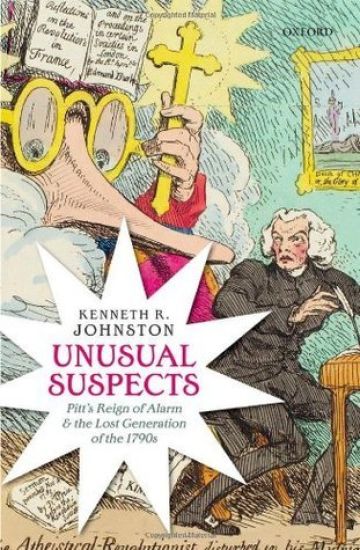
Unusual Suspects

Unusual Suspects

Kenneth R. Johnston

Oxford University Press
2013
sidottu
Robespierre's Reign of Terror spawned an evil little twin in William Pitt the Younger's Reign of Alarm, 1792-1798. Terror begat Alarm. Many lives and careers were ruined in Britain as a result of the alarmist regime Pitt set up to suppress domestic dissent while waging his disastrous wars against republican France. Liberal young writers and intellectuals whose enthusiasm for the American and French revolutions raised hopes for Parliamentary reform at home saw their prospects blasted. Over a hundred trials for treason or sedition (more than ever before or since in British history) were staged against 'the usual suspects' - that is, political activists. But other, informal, vigilante means were used against the 'unusual suspects' of this book: jobs lost, contracts abrogated, engagements broken off, fellowships terminated, inheritances denied, and so on and on. As in the McCarthy era in 1950s America, blacklisting and rumor-mongering did as much damage as legal repression. Dozens of 'almost famous' writers saw their promising careers nipped in the bud: people like Helen Maria Williams, James Montgomery, William Frend, Gilbert Wakefield, John Thelwall, Joseph Priestley, Dr. Thomas Beddoes, Francis Wrangham and many others. Unusual Suspects tells the stories of some representative figures from this largely 'lost' generation, restoring their voices to nationalistic historical accounts that have drowned them in triumphal celebrations of the rise of English Romanticism and England's ultimate victory over Napoleon. Their stories are compared with similar experiences of the first Romantic generation: Coleridge, Wordsworth, Southey, Lamb, Burns, and Blake. Wordsworth famously said of this decade, 'bliss was it in that dawn to be alive, but to be young was very heaven!' These young people did not find it so-and neither, when we look more closely, did Wordsworth.
Karl Barth on Theology and Philosophy

Karl Barth on Theology and Philosophy

Kenneth Oakes

Oxford University Press
2012
sidottu
Karl Barth is often assumed to have been hostile to philosophy, wilfully ignorant of it, or too indebted to its conclusions for his own theological good. These truisms of twentieth-century theology are challenged in this original and comprehensive account of Barth's understanding of the relationship between theology and philosophy. Drawing upon a range of material from Barth's earliest writings (1909) up until interviews and roundtable discussions that took place shortly before his death (1968), Kenneth Oakes offers a developmental account of Barth's thoughts on philosophy and theology. Beginning with the nineteenth-century intellectual background to Barth's earliest theology, Oakes presents the young and 'liberal' Barth's understanding of the relationship between theology and philosophy and then tracks this understanding throughout the rest of Barth's career. While Barth never finally settled on a single, fixed account of theology and philosophy, there was still a great deal of continuity regarding this topic in Barth's oeuvre. Looking through the lens of theology and philosophy Barth's continual indebtedness to nineteenth-century modern theology is clearly seen, as well as his attempts and struggles to move beyond it. In addition to locating Barth's account of theology and philosophy historically, this study also gives attention to the specific doctrines and theological presuppositions that inform Barth's different portrayals of the relationship between theology and philosophy. Oakes asks how and why Barth used material from the doctrines under consideration-such as revelation, theological ethics, Christology- to talk about theology and philosophy. Barth is shown to have been concerned not only with the integrity and independence of theological discourse but also with the idea that theology should not lose its necessary and salutary interactions with philosophy. Finally, Oakes also considers the reception of Barth's thought in some of the luminary figures of twentieth-century philosophy, and identifies the three main impressions philosophers have had of Barth's life and work.
Fractals

Fractals

Kenneth Falconer

Oxford University Press
2013
nidottu
Many are familiar with the beauty and ubiquity of fractal forms within nature. Unlike the study of smooth forms such as spheres, fractal geometry describes more familiar shapes and patterns, such as the complex contours of coastlines, the outlines of clouds, and the branching of trees. In this Very Short Introduction, Kenneth Falconer looks at the roots of the 'fractal revolution' that occurred in mathematics in the 20th century, presents the 'new geometry' of fractals, explains the basic concepts, and explores the wide range of applications in science, and in aspects of economics. This is essential introductory reading for students of mathematics and science, and those interested in popular science and mathematics. ABOUT THE SERIES: The Very Short Introductions series from Oxford University Press contains hundreds of titles in almost every subject area. These pocket-sized books are the perfect way to get ahead in a new subject quickly. Our expert authors combine facts, analysis, perspective, new ideas, and enthusiasm to make interesting and challenging topics highly readable.