Kirjojen hintavertailu. Mukana 12 016 292 kirjaa ja 12 kauppaa.

Kirjahaku

Etsi kirjoja tekijän nimen, kirjan nimen tai ISBN:n perusteella.

1000 tulosta hakusanalla Laran Mithras

Changing Lara

Changing Lara

Anna Jacobs

Allison Busby
2019
sidottu
Lara Perryman has spent her whole life travelling for her busy corporate job, so it’s a relief when she takes early retirement and settles in a leisure village in Wiltshire. She quickly makes friends with the other residents and finds herself entangled in the ups and downs, triumphs and tragedies of her new community. A brand new contemporary series from Anna Jacobs, following the success of her Honeyfield and Greyladies novels, this is the perfect follow up for fans who loved Moving On.
Changing Lara

Changing Lara

Anna Jacobs

Allison Busby
2019
nidottu
Lara Perryman has spent her life carefully planning and saving for her future. She is looking forward to the prospect of spending the rest of her days in comfort in a leisure village in Wiltshire and the adventure that her new life will bring. But when long-standing arrangements crumble, her situation quickly becomes worrying. With her dreams in disarray, Lara makes friends with the other residents and finds herself entangled in the ups and downs, triumphs and tragedies of her new community, hoping against hope that her independence will one day be restored.
Brian Lara

Brian Lara

Brian Scovell

The History Press Ltd
2007
sidottu
In the 1990s Brian Lara established himself as the best batsman in the world, with a 375 against England, a 501 for Warwickshire and a 400 not out in Antigua among his world records. At 37, he is still the dominant force in the West Indies side going into 2007, but it seems likely that the forthcoming World Cup and tours of India and England will form his international swansong. But this is not simply a story of runs and of world records. Three times the captain of West Indies, rows, strike action and threats to walk out have ensured a turbulent career and a continuing struggle with officialdom. His wayward love life has also added colour to the story of a man who is essentially a gentle, respectful character with a Corinthian approach to cricket. This is the complete account of one of the true greats of world cricket.
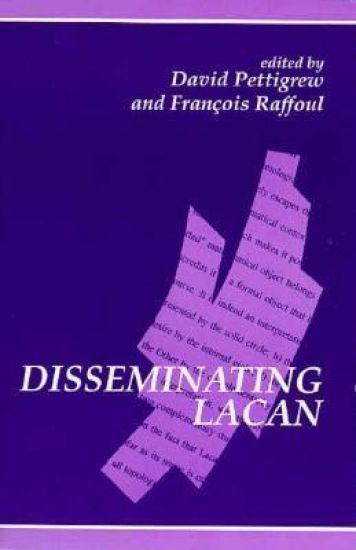
Disseminating Lacan

Disseminating Lacan

State University of New York Press
1996
pokkari
Brings together parts of the Lacanian discourse that have remained isolated in their respective research areas and outlines the shape of Lacanian discourse, showing the relation of Lacan's thought to philosophy, science, literature and aesthetics, gender and sexuality, and psychoanalytic theory.The distinguishing feature of Disseminating Lacan is its decidedly interdisciplinary approach. This book brings together diverse research efforts which have remained, until now, isolated in their respective subject-matter areas.The essays selected here exhibit a threefold discursive movement of dissemination which is implicit in Lacan's texts. First, they bring to light the way in which Lacan's text has been formed through diverse "borrowings" from various theoretical discourses such as sociology, linguistics, and philosophy. Second, they trace how Lacan's text, in turn, has engaged, affected, and transformed those theoretical disciplines. Third, they suggest some possible critical readings of Lacan from various perspectives and concerns. These critiques, far from refuting Lacan's undeniable contribution to psychoanalysis and to the intellectual world, enrich and advance Lacanian discourse.The book features four prominent French Lacanians: Juan-David Nasio, Joël Dor, Moustapha Safouan, and Mikkel Borch-Jacobsen. Essays by two of them, Nasio and Dor, appear here in English for the first time. Additionally, the volume features authors who have established and continue to guide Lacanian studies in the United States, and it introduces emerging voices in Lacanian studies.
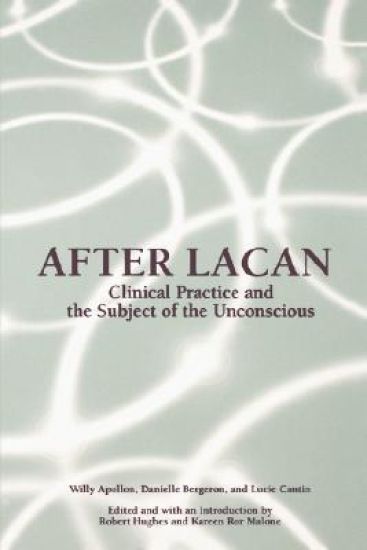
After Lacan

After Lacan

Willy Apollon; Danielle Bergeron; Lucie Cantin

State University of New York Press
2002
pokkari
The authors use examples from their own clinical practice to explain the development of Lacanian theory.After Lacan combines abundant case material with graceful yet sophisticated theoretical exposition in order to explore the clinical practice of Lacanian psychoanalysis. Focusing on the groundbreaking clinical treatment of psychosis that Gifric (Groupe Interdisciplinaire Freudien de Recherches et d'Interventions Cliniques et Culturelles) has pioneered in Quebec, the authors discuss how Lacanians theorize psychosis and how Gifric has come to treat it analytically. Chapters are devoted to the general concepts and key terms that constitute the touchstones of the early phase of analytic treatment, elaborating their interrelations and their clinical relevance. The second phase of analytic treatment is also discussed, introducing a new set of terms to understand transference and the ethical act of analysis in the subject's assumption of the Other's lack. The concluding chapters broaden discussion to include the key psychic structures that describe the organization of subjectivity and thereby dictate the terms of analysis: not just psychosis, but also perversion and obsessional and hysterical neurosis.
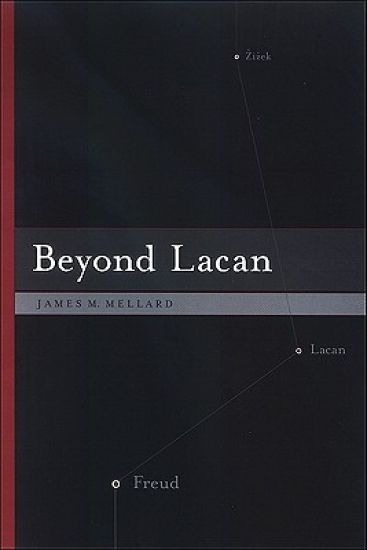
Beyond Lacan

Beyond Lacan

James M. Mellard

State University of New York Press
2007
pokkari
Traces the development of Lacanian theory, and its possible future.In Beyond Lacan, James M. Mellard traces psychoanalytic literary theory and practice from Freud to Lacan to Zðizûek. While Freud effectively presupposes an unconscious that is textual, it is Lacan whose theory all but articulates a textual unconscious as he offers the epoch a cutting-edge psychoanalytic ideology. Mellard considers this and then asks, "Which Lacan? Is there one or many? Early or late?" As Zðizûek counters the notion of a single, unitary Lacan, Lacanians are asked to choose. Through Lacanian readings of various texts, from novels like Ellison's Invisible Man and O'Connor's Wise Blood to short stories by Glaspell and Fitzgerald, Mellard shows that in critical practice Lacanians produce a middle Lacan, between early and late.Mellard concludes by examining why Zðizûek has perhaps transcended Lacan. More than any other, it is Zðizûek who has constructed early and late Lacan, making possible that middle Lacan of praxis, but in the process he has also claimed an independent authority. Ultimately, Mellard explains how Zðizûek offers a post-Lacanian critique-one built on a pervasive philosophy of paradox-that opens new avenues of analysis of contested cultural and literary issues such as subjectivity, political economy, multiculturalism, and religious belief.
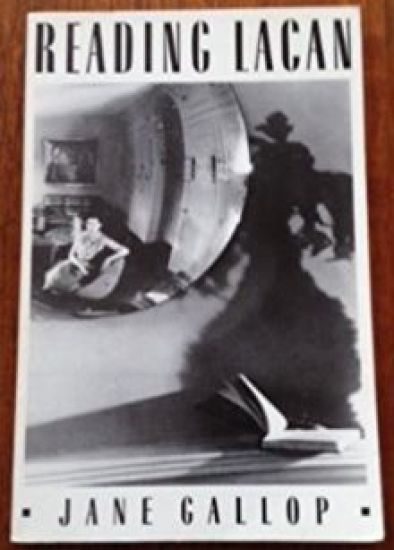
Reading Lacan

Reading Lacan

Gallop Jane

CORNELL UNIVERSITY PRESS
1985
sidottu
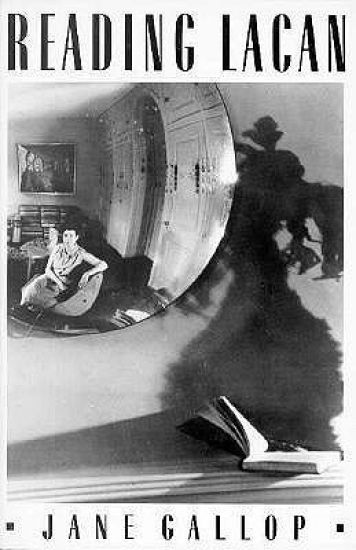
The influence of the French psychoanalyst Jacques Lacan has extended into nearly every field of the humanities and social sciences—from literature and film studies to anthropology and social work. yet Lacan's major text, Ecrits, continues to perplex and even baffle its readers. In Reading Lacan, Jane Gallop offers a novel approach to Lacan's work based on his own theories of language.Lacan locates truth in the letter rather than in the spirit-in the ways statements are expressed rather than in their intended meaning. Gallop here grapples with six of Lacan's essays from Ecrits: "The Seminar on 'The Purloined Letter,' " "The Mirror Stage," "The Freudian Thing,'' "The Agency of the Letter in the Unconscious,'' "The Signification of the Phallus," and "The Subversion of the Subject." While other commentators have chosen not to confront Lacan's notoriously problematic style in their discussions of his ideas, Gallop addresses herself directly to the problem and the practice of reading Lacan. She takes her direction from Lacan's view of subjectivity and offers a deeply personal, feminist reading of Ecrits. Concentrating on the relation of desire and interpretation, she opens up the rich implications of Lacan's thought, for psychoanalytic theory, for the act of reading, and for knowledge itself.Forceful and revealing, yet utterly candid about its own areas of uncertainty, Gallop's book will be indispensable to readers of Lacan and to scholars and students who have felt his impact.
Reading Lacan

Reading Lacan

Jane Gallop

Cornell University Press
1987
pokkari
The influence of the French psychoanalyst Jacques Lacan has extended into nearly every field of the humanities and social sciences—from literature and film studies to anthropology and social work. yet Lacan's major text, Ecrits, continues to perplex and even baffle its readers. In Reading Lacan, Jane Gallop offers a novel approach to Lacan's work based on his own theories of language. Lacan locates truth in the letter rather than in the spirit-in the ways statements are expressed rather than in their intended meaning. Gallop here grapples with six of Lacan's essays from Ecrits: "The Seminar on 'The Purloined Letter,' " "The Mirror Stage," "The Freudian Thing,'' "The Agency of the Letter in the Unconscious,'' "The Signification of the Phallus," and "The Subversion of the Subject." While other commentators have chosen not to confront Lacan's notoriously problematic style in their discussions of his ideas, Gallop addresses herself directly to the problem and the practice of reading Lacan. She takes her direction from Lacan's view of subjectivity and offers a deeply personal, feminist reading of Ecrits. Concentrating on the relation of desire and interpretation, she opens up the rich implications of Lacan's thought, for psychoanalytic theory, for the act of reading, and for knowledge itself. Forceful and revealing, yet utterly candid about its own areas of uncertainty, Gallop's book will be indispensable to readers of Lacan and to scholars and students who have felt his impact.
Rudolf Laban

Rudolf Laban

Evelyn Doerr

Scarecrow Press
2007
nidottu
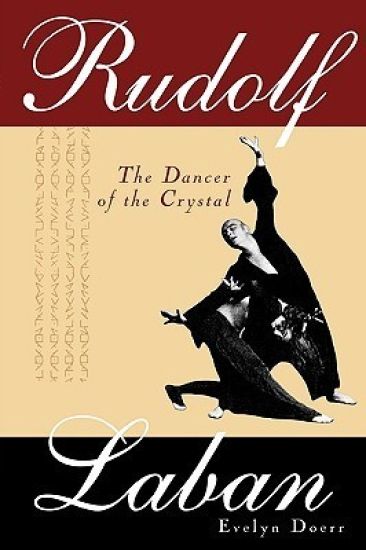
Rudolf Laban, the famed dancer-choreographer and 'founding father' of modern dance, also had experience as a painter, sculptor, and architect, and allowed those skills to influence his innovative choreographic techniques. His important works and his creation of one of the most significant forms of dance notation make him an essential component of dance history. Rudolf Laban: The Dancer of the Crystal examines Laban's training, his teaching experiences, and the discovery and development of his principles of form and movement, paying special attention to his choreographic and philosophical work. Author Evelyn Doerr presents intriguing tidbits of the artist's experience, such as Laban's ambivalent position as the 'dance organizer' of the Nazi party in Germany, embedded in a historical and philosophical context, offering insights to his choreographic processes and the events that shaped his life. The book presents the different stages and elements of Laban's choreography discussing, for example, Laban's "dance-sound-word" instructional approach, his concept of the "movement choir" and examples of its realization, the concepts of eukinetics and choreutics, and a description of how these subjects were taught in Laban's school. Doerr also analyzes important elements in Laban's theories of spatial harmony and of effort, and she investigates his various early systems of dance notation, leading to a detailed explanation of kinetography, Laban's final notational system. A complete bibliography and an appendix of works choreographed between 1897 and 1936 help make this book an important contribution to Laban scholarship and to the dance, theater, and cultural history of Europe in the first half of the 20th century.
Jacques Lacan's Return to Freud

Jacques Lacan's Return to Freud

Philippe Julien

New York University Press
1994
sidottu
Among the numerous introductions to Lacan published to date in English, Philippe Julien's work is certainly outstanding. Beyond its conceptual clarity the book constitutes an excellent guide to Lacanian psychoanalytic practice. --Andr Patsalides, Psychoanalyst and President, Lacanian School of Psychoanalysis From 1953 to 1980, Jacques Lacan sought to accomplish a return to Freud beyond post- Freudianism. He defined this return as a new convenant with the meaning to the Freudian discovery. Each year through his teaching, he brought about this return. What was at stake in this renewal? Philippe Julien, who joined Lacan's Ecole Freudienne de Paris in 1968, attempts to answer this question. Situtated in the period after-Lacan, Julien shows that Lacan's return to Freud was neither a closing of the Freudian text by responding to questions left unanswered nor a reopening of the text by giving endless new interpretations. Neither dogmatic nor hermeneutic, Lacan's return to Frued was the return of an inevitable discordance between our experience of the unconscious and any attempt to give an account of it. For the unconscious, by its very nature, disappears at the same moment as it is discovered. It is in this sense that the author can claim that Lacan's return to Freud will have been Freudian. Constantly challenging the reader to submit to the rigors of Lacan's sinuous thinking, this penetrating work goes far beyond being a mere introduction. Rendered into elegant English by the American translator, who added numerous footnotes and scholarly references to the French original, this study brings Lacanian scholarship among English readers to a new level of sophistication. Neither dogmatic nor hermeneutic, Lacan's return to Freud was the return of an inevitable discordance between our experience of the unconscious and any attempt to give an account of it. For the unconscious, by its very nature, disappears at the same moment as it is discovered. It is in this sense that the author can claim that Lacan's return to Freud was Freudian.
Jacques Lacan's Return to Freud

Jacques Lacan's Return to Freud

Philippe Julien

New York University Press
1995
pokkari
Among the numerous introductions to Lacan published to date in English, Philippe Julien's work is certainly outstanding. Beyond its conceptual clarity the book constitutes an excellent guide to Lacanian psychoanalytic practice. --Andr Patsalides, Psychoanalyst and President, Lacanian School of Psychoanalysis From 1953 to 1980, Jacques Lacan sought to accomplish a return to Freud beyond post- Freudianism. He defined this return as a new convenant with the meaning to the Freudian discovery. Each year through his teaching, he brought about this return. What was at stake in this renewal? Philippe Julien, who joined Lacan's Ecole Freudienne de Paris in 1968, attempts to answer this question. Situtated in the period after-Lacan, Julien shows that Lacan's return to Freud was neither a closing of the Freudian text by responding to questions left unanswered nor a reopening of the text by giving endless new interpretations. Neither dogmatic nor hermeneutic, Lacan's return to Frued was the return of an inevitable discordance between our experience of the unconscious and any attempt to give an account of it. For the unconscious, by its very nature, disappears at the same moment as it is discovered. It is in this sense that the author can claim that Lacan's return to Freud will have been Freudian. Constantly challenging the reader to submit to the rigors of Lacan's sinuous thinking, this penetrating work goes far beyond being a mere introduction. Rendered into elegant English by the American translator, who added numerous footnotes and scholarly references to the French original, this study brings Lacanian scholarship among English readers to a new level of sophistication. Neither dogmatic nor hermeneutic, Lacan's return to Freud was the return of an inevitable discordance between our experience of the unconscious and any attempt to give an account of it. For the unconscious, by its very nature, disappears at the same moment as it is discovered. It is in this sense that the author can claim that Lacan's return to Freud was Freudian.
Rudolf Laban

Rudolf Laban

Karen Bradley

CRC Press Inc
2018
sidottu
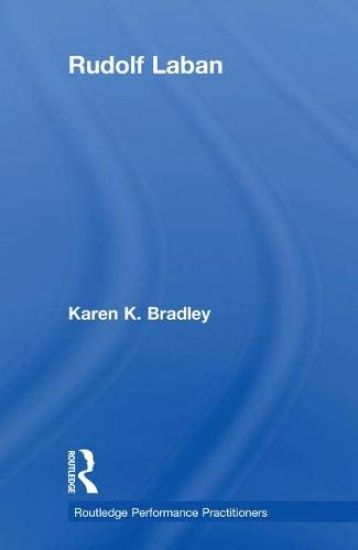
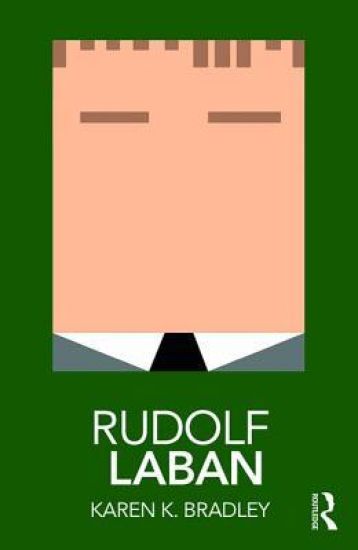
Rudolf Laban was one of the leading dance theorists of the twentieth century. His work on dance analysis and notation raised the status of dance as both an art form and a scholarly discipline. This is the first book to combine: an overview of Laban’s life, work and in?uences an exploration of his key ideas, including the revolutionary "Laban Movement Analysis" system analysis of his works Die Grünen Clowns and The Mastery of Movement and their relevance to dance theater from the 1920s onwards a detailed exercise-based breakdown of Laban’s key teachings.As a first step towards critical understanding, and as an initial exploration before going on to further, primary research, Routledge Performance Practitioners are unbeatable value for today’s student.
Rudolf Laban

Rudolf Laban

Karen Bradley

CRC Press Inc
2018
nidottu
Rudolf Laban was one of the leading dance theorists of the twentieth century. His work on dance analysis and notation raised the status of dance as both an art form and a scholarly discipline. This is the first book to combine: an overview of Laban’s life, work and in?uences an exploration of his key ideas, including the revolutionary "Laban Movement Analysis" system analysis of his works Die Grünen Clowns and The Mastery of Movement and their relevance to dance theater from the 1920s onwards a detailed exercise-based breakdown of Laban’s key teachings.As a first step towards critical understanding, and as an initial exploration before going on to further, primary research, Routledge Performance Practitioners are unbeatable value for today’s student.
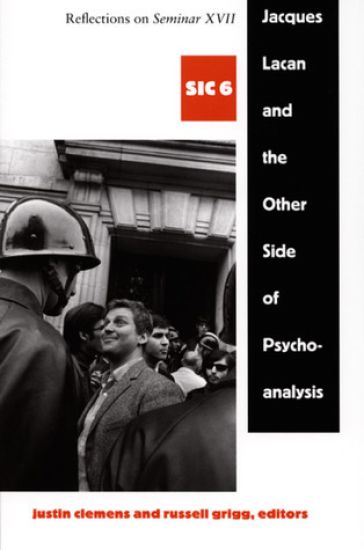
Jacques Lacan and the Other Side of Psychoanalysis
This collection is the first extended interrogation in any language of Jacques Lacan's Seminar XVII. Originally delivered just after the Paris uprisings of May 1968, Seminar XVII marked a turning point in Lacan’s thought; it was both a step forward in the psychoanalytic debates and an important contribution to social and political issues. Collecting important analyses by many of the major Lacanian theorists and practitioners, this anthology is at once an introduction, critique, and extension of Lacan’s influential ideas.The contributors examine Lacan’s theory of the four discourses, his critique of the Oedipus complex and the superego, the role of primal affects in political life, and his prophetic grasp of twenty-first-century developments. They take up these issues in detail, illuminating the Lacanian concepts with in-depth discussions of shame and guilt, literature and intimacy, femininity, perversion, authority and revolt, and the discourse of marketing and political rhetoric. Topics of more specific psychoanalytic interest include the role of objet a, philosophy and psychoanalysis, the status of knowledge, and the relation between psychoanalytic practices and the modern university.Contributors. Geoff Boucher, Marie-Hélène Brousse, Justin Clemens, Mladen Dolar, Oliver Feltham, Russell Grigg, Pierre-Gilles Guéguen, Dominique Hecq, Dominiek Hoens, Éric Laurent, Juliet Flower MacCannell, Jacques-Alain Miller, Ellie Ragland, Matthew Sharpe, Paul Verhaeghe, Slavoj Žižek, Alenka Zupancic
Jacques Lacan and the Other Side of Psychoanalysis
This collection is the first extended interrogation in any language of Jacques Lacan's Seminar XVII. Originally delivered just after the Paris uprisings of May 1968, Seminar XVII marked a turning point in Lacan’s thought; it was both a step forward in the psychoanalytic debates and an important contribution to social and political issues. Collecting important analyses by many of the major Lacanian theorists and practitioners, this anthology is at once an introduction, critique, and extension of Lacan’s influential ideas.The contributors examine Lacan’s theory of the four discourses, his critique of the Oedipus complex and the superego, the role of primal affects in political life, and his prophetic grasp of twenty-first-century developments. They take up these issues in detail, illuminating the Lacanian concepts with in-depth discussions of shame and guilt, literature and intimacy, femininity, perversion, authority and revolt, and the discourse of marketing and political rhetoric. Topics of more specific psychoanalytic interest include the role of objet a, philosophy and psychoanalysis, the status of knowledge, and the relation between psychoanalytic practices and the modern university.Contributors. Geoff Boucher, Marie-Hélène Brousse, Justin Clemens, Mladen Dolar, Oliver Feltham, Russell Grigg, Pierre-Gilles Guéguen, Dominique Hecq, Dominiek Hoens, Éric Laurent, Juliet Flower MacCannell, Jacques-Alain Miller, Ellie Ragland, Matthew Sharpe, Paul Verhaeghe, Slavoj Žižek, Alenka Zupancic