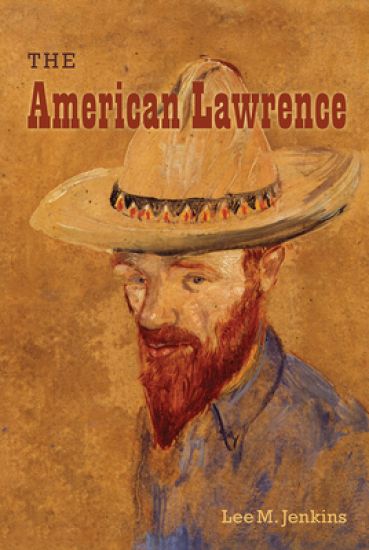
Known as a distinctly English author, D.H. Lawrence is reevaluated as a creator and critic of American literature in this imaginative study. From 1922 to 1925, during his "savage pilgrimage" in Mexico and New Mexico, D.H. Lawrence completed the core of what Lee Jenkins terms his "American oeuvre" - including his major volume of criticism, Studies in Classic American Literature.By examining Lawrence's experiences in the Americas, including his fascination with indigenous cultures, Jenkins illustrates how the modernist writer helped shape both American literary criticism and the American literary canon. Reassessing Lawrence's relationship to American modernism and his literary contemporaries in the New World, Jenkins portrays Lawrence as a transatlantic writer whose significant body of work embraces and adapts both English and American traditions and innovations.
Love and Death in Lawrence and Foucault is the first full-length study of Foucault and the Foucaultians not to look at them from a quasi-hagiographical perspective. The Lawrentian point of view employed here to deal with Foucault and his oeuvre is utterly unique, imaginative, and efficacious in explicating/demystifying Foucaultian theory, while at the same time promoting Barry J. Scherr’s courageous, indefatigable project of «restoring» D. H. Lawrence to his rightfully and supremely high place in the pantheon of great British literature. Rebellious and unconventional yet scholarly and mature, Love and Death in Lawrence and Foucault is the bravest and most unorthodox study of Foucault to date. It is a worthy addition to Scherr’s previous literary-cultural studies, D. H. Lawrence Today and D. H. Lawrence’s Response to Plato. A supremely lively, incisive, lucid, and profound critique, Love and Death in Lawrence and Foucault is indispensable to students and scholars of Lawrence and Foucault alike.
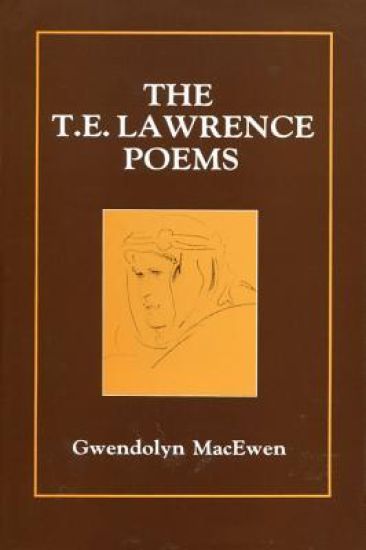
The T.E. Lawrence Poems is Gwendolyn MacEwen's most integrated, complete and respected work. It is now recognized as her signature poetic achievement."In 1962, I was staying in a hotel in Tiberias, Israel; the tall, white-haired proprietor invited me downstairs one evening and served me syrupy tea and a plate of fruit. He showed me a series of old sepiatone photographs which lined the walls - photographs of blurred riders on camels riding to the left into some uncharted desert just beyond the door. Some of them were signed.'It's Lawrence isn't it' I asked, walking up to one.'Yes, ' said my host, offering me a huge section of an orange. 'I rode with him once a long time ago. I see you always carry a pen and paper to write things down. I thought you'd be interested; I thought you'd like to know.'These poems were written some twenty years later."
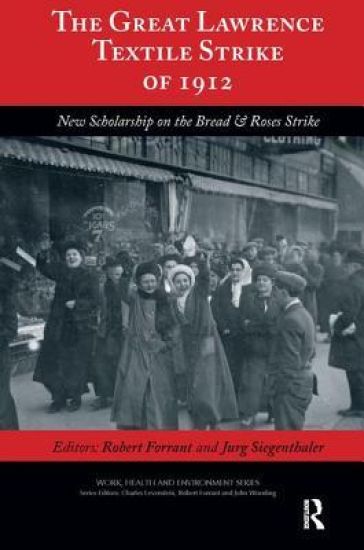
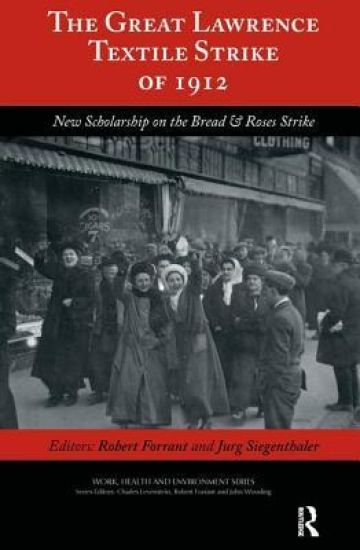
"In Lawrence, Massachusetts, fully one-half of the population 14 years of age or over is employed in the woolen and worsted mills and cotton mills". Thus begins the federal government's Report on Strike of Textile Workers in Lawrence, Massachusetts in 1912 . This book follows up, one hundred years later. The story's retelling offers readers an exciting reexamination of just how powerful a united working class can be. The Great Lawrence Textile Strike of 1912 - the Bread and Roses Strike - was a public protest by 20,000 to 25,000 immigrant workers from several countries, prompted by a wage cut. Backed by skillful neighborhood organizing, supported by hundreds of acts of solidarity, and unified by a commitment to respect every striker's nationality and language, the walkout spread across the city's densely packed tenements. Defying the assumptions of mill owners and conservative trade unionists alike that largely female and ethnically diverse workers could not be organized, the women activists, as one mill boss described them, were full of "lots of cunning and also lots of bad temper. They're everywhere, and it's getting worse all the time." Events in Lawrence between January 11 and March 25, 1912, changed labor history. In this volume the authors tackle the strike story through new lenses and dispel assumptions that the citywide walkout was a spontaneous one led by outside agitators. They also discuss the importance of grasping the significance of events like the 1912 strike and engaging in the process of community remembrance. This book appeals to a wide constituency. Most directly, it is of great relevance to historians of labor, industrialization, immigration, and the development of cities, as well as researchers studying social movements. The story of the Bread and Roses Strike resonates strongly with social justice supporters, the women's movement, advocates for children's well-being, and anti-poverty organizations. Social studies and college-level teachers will find it a rich resource. Graduate-level students will find inspiration for further research. The Bread and Roses strike has excellent name recognition and has always had a considerable international audience.
"In Lawrence, Massachusetts, fully one-half of the population 14 years of age or over is employed in the woolen and worsted mills and cotton mills". Thus begins the federal government's Report on Strike of Textile Workers in Lawrence, Massachusetts in 1912 . This book follows up, one hundred years later. The story's retelling offers readers an exciting reexamination of just how powerful a united working class can be. The Great Lawrence Textile Strike of 1912 - the Bread and Roses Strike - was a public protest by 20,000 to 25,000 immigrant workers from several countries, prompted by a wage cut. Backed by skillful neighborhood organizing, supported by hundreds of acts of solidarity, and unified by a commitment to respect every striker's nationality and language, the walkout spread across the city's densely packed tenements. Defying the assumptions of mill owners and conservative trade unionists alike that largely female and ethnically diverse workers could not be organized, the women activists, as one mill boss described them, were full of "lots of cunning and also lots of bad temper. They're everywhere, and it's getting worse all the time." Events in Lawrence between January 11 and March 25, 1912, changed labor history. In this volume the authors tackle the strike story through new lenses and dispel assumptions that the citywide walkout was a spontaneous one led by outside agitators. They also discuss the importance of grasping the significance of events like the 1912 strike and engaging in the process of community remembrance. This book appeals to a wide constituency. Most directly, it is of great relevance to historians of labor, industrialization, immigration, and the development of cities, as well as researchers studying social movements. The story of the Bread and Roses Strike resonates strongly with social justice supporters, the women's movement, advocates for children's well-being, and anti-poverty organizations. Social studies and college-level teachers will find it a rich resource. Graduate-level students will find inspiration for further research. The Bread and Roses strike has excellent name recognition and has always had a considerable international audience.
Interviews with people in Lawrence and Lowell, Massachusetts (the Merrimack River Valley) who experienced the sickness and pandemic living restrictions of Covid-19 in 2020 and 2021, plus diary excerpts from residents who reported on their daily fears, hopes, and challenges. Produced by the Lawrence History Center, Phillips Academy Andover, and University of Massachusetts, Lowell (UML). This is the first published documentary about the impact of the pandemic. Interviews were conducted by Sociology students at UML, students at Phillips Academy, and community activists in Lawrence. The two working-class, highly diverse cities in eastern Massachusetts had sustained high level rates of infection with the related disruption of employment, education, and normal community life. The interviews offer a useful case study of the effects of Covid in one region.
This text presents a critical survey and catalogue of the permanent collection of the Richard F. Brush Art Gallery with selected photographs from special collections and university archives.
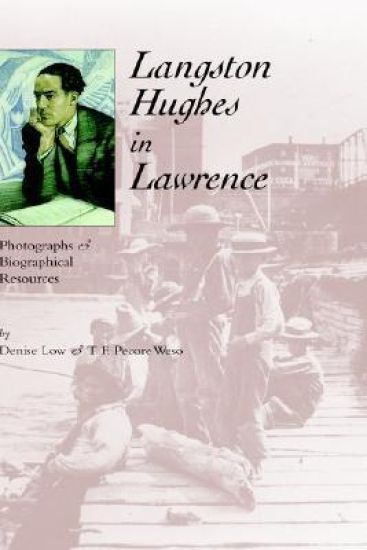
The great American poet who inspired the Harlem Renaissance spent most of his childhood (1902-1915) in Lawrence, Kansas. This biography includes 60 black and white photos of Lawrence locations connected to Hughes, along with maps and a family tree of known African, American Indian, and white ancestry.
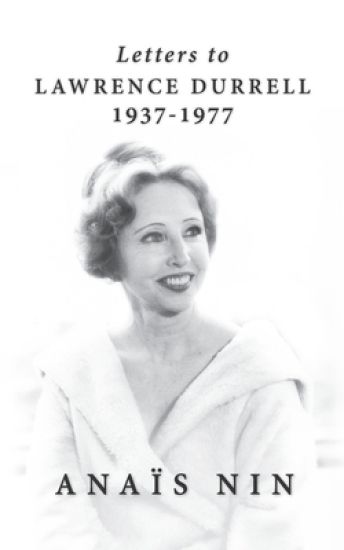
Anais Nin and Lawrence Durrell, along with their mutual friend Henry Miller, formed a triumvirate they called the "three musketeers" in Paris during the 1930s. Not only did they support each other's work before becoming individually famous, (Nin for her Diary, Durrell for his "Alexandria Quartet," Miller for his Tropic novels), they formed life-long friendships that endure in their correspondence. For the first time, Nin's letters to Durrell and several of his responses are in print, revealing the origins, depth, longevity and pitfalls of their complex relationship. As Durrell writes to Nin in 1967, "Sometimes one quite inadvertently hurts friends and loses them without meaning to, without wanting to, and spends the rest of their life in puzzled me-fulness, chewing the cud and wondering. Not me. Toujours, here I am, your old friend."Spanning forty years, these letters follow the lives of two important writers from the time they were seeking their authentic voices until each had achieved what they had long sought: literary and personal fame.
This work has been selected by scholars as being culturally important and is part of the knowledge base of civilization as we know it.This work is in the public domain in the United States of America, and possibly other nations. Within the United States, you may freely copy and distribute this work, as no entity (individual or corporate) has a copyright on the body of the work.Scholars believe, and we concur, that this work is important enough to be preserved, reproduced, and made generally available to the public. To ensure a quality reading experience, this work has been proofread and republished using a format that seamlessly blends the original graphical elements with text in an easy-to-read typeface.We appreciate your support of the preservation process, and thank you for being an important part of keeping this knowledge alive and relevant.
This work has been selected by scholars as being culturally important and is part of the knowledge base of civilization as we know it.This work is in the public domain in the United States of America, and possibly other nations. Within the United States, you may freely copy and distribute this work, as no entity (individual or corporate) has a copyright on the body of the work.Scholars believe, and we concur, that this work is important enough to be preserved, reproduced, and made generally available to the public. To ensure a quality reading experience, this work has been proofread and republished using a format that seamlessly blends the original graphical elements with text in an easy-to-read typeface.We appreciate your support of the preservation process, and thank you for being an important part of keeping this knowledge alive and relevant.
This work has been selected by scholars as being culturally important and is part of the knowledge base of civilization as we know it.This work is in the public domain in the United States of America, and possibly other nations. Within the United States, you may freely copy and distribute this work, as no entity (individual or corporate) has a copyright on the body of the work.Scholars believe, and we concur, that this work is important enough to be preserved, reproduced, and made generally available to the public. To ensure a quality reading experience, this work has been proofread and republished using a format that seamlessly blends the original graphical elements with text in an easy-to-read typeface.We appreciate your support of the preservation process, and thank you for being an important part of keeping this knowledge alive and relevant.
This work has been selected by scholars as being culturally important and is part of the knowledge base of civilization as we know it.This work is in the public domain in the United States of America, and possibly other nations. Within the United States, you may freely copy and distribute this work, as no entity (individual or corporate) has a copyright on the body of the work.Scholars believe, and we concur, that this work is important enough to be preserved, reproduced, and made generally available to the public. To ensure a quality reading experience, this work has been proofread and republished using a format that seamlessly blends the original graphical elements with text in an easy-to-read typeface.We appreciate your support of the preservation process, and thank you for being an important part of keeping this knowledge alive and relevant.