Kirjojen hintavertailu. Mukana 12 552 639 kirjaa ja 12 kauppaa.

Kirjahaku

Etsi kirjoja tekijän nimen, kirjan nimen tai ISBN:n perusteella.

1000 tulosta hakusanalla Lewis Hutton

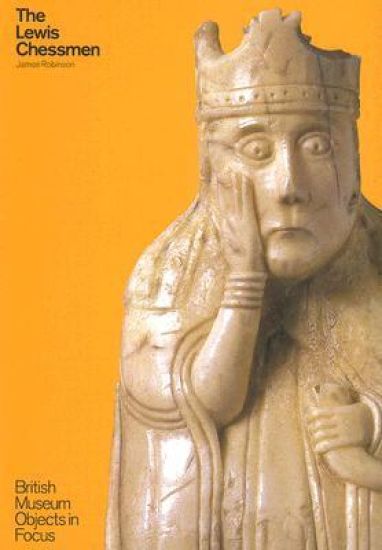
The Lewis Chessmen

The Lewis Chessmen

James Robinson

British Museum Press
2004
nidottu
This lively book considers the various fascinating stories which have evolved to explain the ownership, concealment and discovery of the pieces whilst also placing them in the wider context of the ancient game of chess and secular art of the middle Ages. The Lewis Chessmen consist of elaborately worked walrus ivory and whales’ teeth in the forms of seated kings and queens, mitred bishops, knights on their mounts, standing warders and pawns in the shape of obelisks. They were found in the vicinity of Uig on the Isle of Lewis, but were probably made in Norway, in around 1150-1200 AD. At this time, the Western Isles where the Chessmen were buried were part of the kingdom of Norway, and not Scotland as they are today. Although very few details of the origins of the Chessmen are known, it is possible that they belonged to a merchant travelling from Norway and that they were buried for safekeeping on route to be traded in Ireland. This seems likely as there are enough pieces, though with some elements missing, to make four sets. No exact account of the discovery remains, but they apparently came to light after the collapse of a sand-bank on the coast of the island revealed their hiding place to a passing islander. All that is certain is that they were found some time before 11th April 1831 when they were exhibited at the Society of the Antiquaries in Scotland. Of the original 93 pieces discovered on the Isle of Lewis, 82 pieces are now housed in the British Museum. An exciting read for anyone interested in the history of the famous chess pieces.
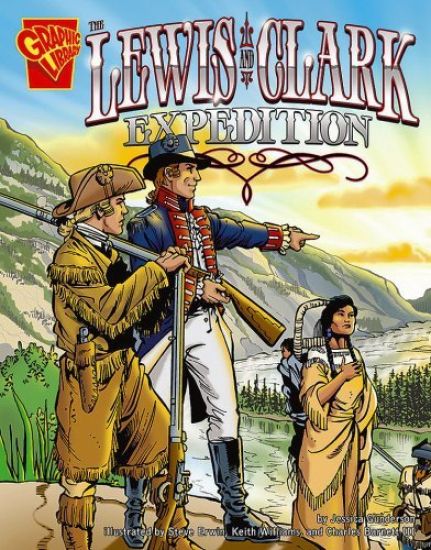
The Lewis and Clark Expedition

The Lewis and Clark Expedition

Jessica Gunderson

Capstone Press
2006
nidottu
In this epic graphic novel, follow the dramatic story of the Lewis and Clark expedition. In 1804, these two explorers, along with their "Corps of Discovery," traversed the unmapped American West, leading to scientific discoveries, interactions with Native nations, and route to the Pacific Ocean. Dramatic illustrations and fast-paced text provide a "you-are-there" experience. With extensive back matter, including a bibliography, extended reading list, glossary, and further Internet sources, young readers will gobble up this action-packed comic book about one of history's most compelling moments.
Wyndham Lewis

Wyndham Lewis

Edinburgh University Press
2015
sidottu
The first guide to the work of Wyndham Lewis as writer, novelist, and criticWyndham Lewis (1882-1957) was one of the most innovative writers and painters of his time. An indefatigable critic of ideology, politics, and culture, Lewis was also one of modernism's key creative artists and a unique twentieth-century thinker. This book offers a scholarly companion to his written work. It features dedicated chapters on such novels as Tarr (1918), The Apes of God (1930), The Revenge for Love (1937), The Human Age sequence (1928-55), and Self Condemned (1954). Also included are chapters on Lewis's pre-war writing, cultural criticism, politics, satire, and reputation and legacy. Other chapters consider such varied topics as Vorticism and avant-gardism, war, race and gender, technology and mass media, and modernism. Wyndham Lewis: A Critical Guide is essential reading for scholars working on Lewis, modernism, and twentieth-century socio-cultural history.Key Features* Provides a clear overview of Lewis's literary, critical and non-fictional achievements* Explores Lewis's most important novels in individual chapters* Expert contributors include: Faith Binckes (Bath Spa University), David Bradshaw (University of Oxford), Paul Edwards (University of East Anglia), Ann-Marie Einhaus (Northumbria University), Miranda Hickman (McGill University), Scott W. Klein (Wake Forest University), Ian Patterson (University of Cambridge), and Alan Munton (University of Exeter)Andrzej Gsiorek is a Professor of English Literature at the University of Birmingham.Nathan Waddell is an Assistant Professor of Literary Modernism at the University of Nottingham
Wyndham Lewis

Wyndham Lewis

Edinburgh University Press
2015
nidottu
The first guide to the work of Wyndham Lewis as writer, novelist, and critic. This critical guide introduces the reader to the work of Wyndham Lewis (1882-1957), a major modernist and thought provoking satirist who was at the centre of the avant garde in early 20th century London and a key figure in the development of Vorticism. These 15 newly commissioned essays explain the complex role Lewis's work played in the formation, development, and criticism of modernism. There are chapters on Lewis and Vorticism and Avant Gardism, War, Cultural Criticism, Satire, Race and Gender, Politics, Technology and Mass Media, and Modernism as well as individual chapters on key texts, including Tarr, The Apes of God, The Revenge for Love, The Human Age, and Self Condemned. With an Introduction, an opening chapter on Lewis's pre war writing and a closing chapter on his reputation and legacy, this is the most thorough survey of Lewis's work to date. Provides a clear and reader friendly overview of Lewis's literary, critical, and non fictional achievements for readers with no prior knowledge of his work; includes a biographical overview of Lewis's life and writing career, a detailed bibliography and a chronology of key publication dates of academic criticism on Lewis; explores Lewis's most important novels in individual chapters and expert contributors include David Bradshaw (University of Oxford), Ian Patterson (University of Cambridge), Scott W. Klein (Wake Forest University), Miranda Hickman (McGill University), Paul Edwards (Bath Spa University), and Alan Muntun (University of Exeter).
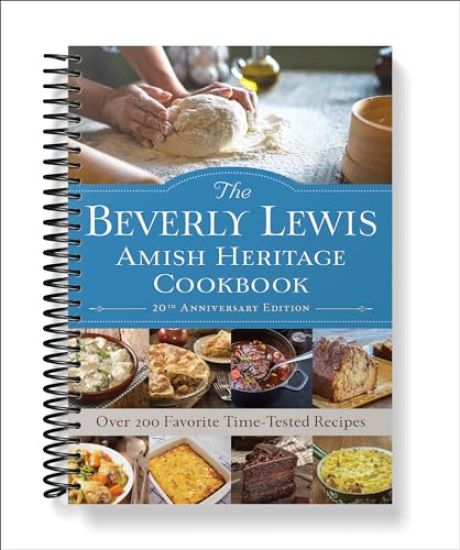
The Beverly Lewis Amish Heritage Cookbook

The Beverly Lewis Amish Heritage Cookbook

Beverly Lewis

BAKER PUBLISHING GROUP
2024
kierre
For twenty years, this bestselling cookbook from award-winning Amish fiction author Beverly Lewis has brought the homespun taste of Amish country to kitchens around the world. Now updated and expanded, this 20th anniversary edition includes· more than two hundred authentic, time-tested recipes--including ones never before published!· time-saving tips for your kitchen and gatherings · beautiful new interior and lay-flat binding· beloved book excerpts surrounding Plain culture · Amish sayings and scriptural wisdom· personal glimpses into the Plain life Passed down in recipe boxes for generations, these favorite dishes and desserts bring the tasty heritage of the Amish to your table, "for sure and for certain" becoming a lasting part of your family's mealtimes--and creating unforgettable moments for years to come.
Wyndham Lewis and the Avant-Garde

Wyndham Lewis and the Avant-Garde

Toby Avard Foshay

McGill-Queen's University Press
1992
sidottu
Toby Foshay's penetrating study of Lewis presents a two-pronged argument that will help to lift Lewis from this obscurity. First, he reveals that Lewis is less interested in stylistic and formal innovation than he is committed to artistic, philosophical, and political transformations. As such, Lewis is not a modernist but, in the sense of the term as employed by theoretician Peter Burger, an avant-gardiste. Second, Foshay demonstrates that Lewis's development as an artist is inextricably linked to his avant-garde commitments -- commitments that find their roots in Lewis's reading of Nietzsche. Lewis's fiction and criticism must thus be read, Foshay maintains, as developing interdependently throughout his career and in relation to his evolving interpretation of Nietzsche. Foshay's insightful critique of Lewis's relation to the Modernist movement on the one hand, and of his development as an artist and critic on the other, offers a revised reading not only of Modernism itself but of what Lewis can teach us about the relation of thought to the practice of art in modernity.
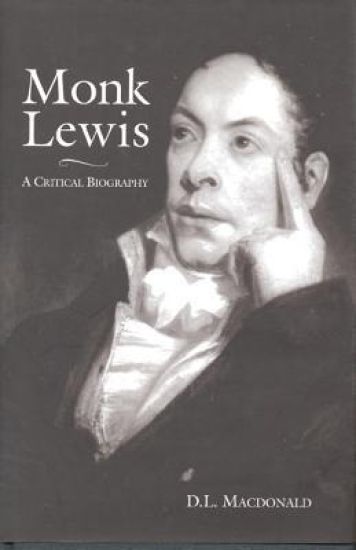
Monk Lewis

Monk Lewis

D.L. Macdonald

University of Toronto Press
2000
sidottu
Matthew Gregory Lewis (1775-1818), the English novelist, playwright, poet, and composer, is best known for his Gothic novel "The Monk" (1796). His literary endeavours included translations and adaptions of works by Goethe, Kleist, and Schiller. Lewis is said to have inspired and influenced such diverse writers as Artaud, Coleridge, Dickens, Flaubert, and Scott. D.L. Macdonald presents a modern critical biography of Lewis, who until now has been neglected as a cultural figure. This is the first study to consider all of Lewis's works and their connections to his personal life. In particular, Macdonald considers the significance of Lewis's position as a liberal slave-owner in the age of abolition and as a (probable) homosexual in an age of virulent homophobia. He begins by focusing on Lewis's personal life and his constant preoccupations stemming from the failure of his parents' marriage, from his relationships with his mother and his father, and from his sexuality. Macdonald then proceeds to a discussion of Lewis's public life as part of the literary and political history of the period. The biography is based on extensive archival research in England, Scotland, Jamaica, and North America, drawing on recently discovered manuscript and printed material as well as contemporary views.
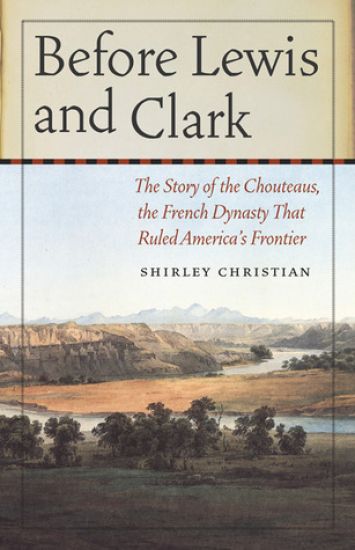
Before Lewis and Clark

Before Lewis and Clark

Shirley Christian

Bison Books
2009
pokkari
Before Lewis and Clark relates the extraordinary saga of the Chouteaus, the dynastic family that guarded the gates to the West for three generations. From their St. Louis base, the Chouteaus, patrician and French in their origins, made their fortunes along the two-thousand-mile length of the Missouri River. Led by the brothers Auguste and Pierre, the family not only engaged in land speculation, finance, and the fur trade but also acted as suppliers and advisers to expeditions and enterprises between the Mississippi River and the Rocky Mountains—including the famous expedition of Meriwether Lewis and William Clark from 1804 to 1806.This is the story of the Old World meeting the New, of the eastern United States discovering the West, and of a wealthy, powerful, charming, and manipulative family that dominated business and politics in the Louisiana Purchase territory before and after the Lewis and Clark expedition.
The Journals of the Lewis and Clark Expedition, Volume 1

The Journals of the Lewis and Clark Expedition, Volume 1

Meriwether Lewis; William Clark

University of Nebraska Press
1983
sidottu
When the Corps of Discovery left the vicinity of St. Louis in 1804 to explore the American West, they had only sketchy knowledge of the terrain that they were to cross—existing maps often contained large blank spaces and wild inaccuracies. William Clark painstakingly mapped every mile of the journey, drawing from both direct observation and from the reports of Indians and a few fur traders. On their return Lewis and Clark directed the execution of new maps detailing with remarkable accuracy the features of the country that they had traversed.
The Journals of the Lewis and Clark Expedition, Vo lume 2
When the "Atlas of the Lewis and Clark Expedition" appeared in 1983, critics hailed it as a publishing landmark. This eagerly awaited second volume of the new "Journals of the Lewis and Clark Expedition" begins the actual journals of those explorers whose epic expedition still enthralls Americans. Instructed by President Jefferson to keep meticulous records bearing on the geography, ethnology, and natural history of the trans-Mississippi West, Meriwether Lewis and William Clark and four of their men filled hundreds of notebook pages with observations during their expedition of 1804-6. The result was in is a national treasure: a complete look at the Great Plains, the Rockies, and the Pacific Northwest, reported by men who were intelligent and well-prepared, at a time when almost nothing was known about those regions so newly acquired in the Louisiana Purchase. Volume 2 includes Lewis' and Clark's journals for the period from August 1803, when Lewis left Pittsburgh to join Clark farther down the Ohio River, to August 1804, when the Corps of Discovery camped near the Vermillion River in present South Dakota. The general introduction by Gary E. Moulton discusses the history of the expedition, the journal-keeping methods of Lewis and Clark, and the editing and publishing history of the journals from the time of Lewis and Clark's return. Superseding the last edition published early in this century, the current edition brings together new materials discovered since then. It greatly expands and updates the annotation to take account of the most recent scholarship on the many subjects touched on by the journals. Gary E. Moulton, associate professor of history at the University of Nebraska-Lincoln, is the author of "John Ross: Cherokee Chief" (1978) and editor of "The Papers of Chief John Ross" (1985). Praise from the experts for the University of Nebraska Press' new edition of "The Journals of the Lewis and Clark Expedition": "The project is certainly one of the monumentally important undertakings, not only in Western history, but in American cultural history in general. The scholarship involved is meticulous and extremely impressive. This is a work that will be admired by scholars, and it should be of interest to a broad range of informed general readers." (William H. Goetzmann, Stiles Professor of American Studies, University of Texas at Austin). "The edition of the journals being edited by Gary Moulton adds many new insights and an immense amount of new material for a better understanding and appreciation of the great expedition. Anyone interested in Lewis and Clark will find it invaluable." (Alvin M. Josephy, Jr., Editor). "This new edition of the journals of the Lewis and Clark expedition is a necessity." (John Logan Allen, Professor of Geography, University of Connecticut). "The journals of the Lewis and Clark expedition are the single most important account of early western American exploration. Their interest to specialist and lay reader alike is perennial." (W. Raymond Wood, Professor of Anthropology, University of Missouri-Columbia).
The Journals of the Lewis and Clark Expedition, Vo lume 11
The University of Nebraska Press editions of "The Journals of the Lewis and Clark Expedition" are widely heralded as a lasting achievement. In all, thirteen volumes are projected, which together will provide a complete record of the expedition. Volume 11 contains the journals of expedition member Joseph Whitehouse. His journals are the only surviving account written by an army private on the expedition, and he is one of the least known of the expedition party. Following the expedition, Whitehouse had a checkered army career, and he disappeared after 1817. His capabilities have been unfairly slighted by previous commentators, despite his narrative skill and evidence that he was a man of a lively and curious mind. His extensive journal entries contribute to our understanding of the epochal journey and of the unusual group of men who undertook one of the defining events in our history. The last part of his journals was not found until 1966; this is the first publication of the complete record of his account. Gary E. Moulton is a professor of history at the University of Nebraska-Lincoln and recipient of the J. Franklin Jameson Award of the American Historical Association for the editing of these journals.
The Journals of the Lewis and Clark Expedition, 13-volume set

The Journals of the Lewis and Clark Expedition, 13-volume set

Meriwether Lewis; William Clark

University of Nebraska Press
2002
sidottu
Since the time of Columbus, explorers dreamed of a water passage across the North American continent. President Thomas Jefferson shared this dream. He conceived the Corps of Discovery to travel up the Missouri River to the Rocky Mountains and westward along possible river routes to the Pacific Ocean. Meriwether Lewis and William Clark led this expedition of 1804–6. Along the way they filled hundreds of notebook pages with observations of the geography, Indian tribes, and natural history of the trans-Mississippi West.This complete set of the celebrated Nebraska edition incorporates the journals along with a wide range of new scholarship dealing with all aspects of the expedition, including geography, Indian languages, plants, and animals, in order to recreate the expedition within its historical context.
The Lewis and Clark Journals

The Lewis and Clark Journals

Meriwether Lewis; William Clark

University of Nebraska Press
2003
sidottu
Two centuries ago, an American epic unfolded as Lewis and Clark's Corps of Discovery mapped the lands, described the natural wonders, and encountered the peoples of western North America. Following orders from President Thomas Jefferson, Captains Meriwether Lewis and William Clark set out from Saint Louis in 1804 to search for a river passage to the Pacific Ocean. In their own words, recorded in the famous journals of Lewis and Clark, the members of the Corps of Discovery tell their story with an immediacy and power missing from second-hand accounts. All their triumphs and terrors are here - the thrill of seeing the vast herds of bison on the plains, the tensions and admiration in the first meetings with Indian peoples, Lewis's rapture at the stunning beauty of the Great Falls, the fear the captains felt when a devastating illness befell Shoshone interpreter Sacagawea, the ordeal of crossing the Continental Divide, Clark's joy at seeing the Pacific, miserable days of cold and hunger, and the kidnapping and rescue of Lewis's dog, Seaman. The natural wonders of an unspoiled America are captured in these pages.The lives and customs of its Native peoples also come vividly to life: Lewis and Clark's friendship with the Mandans and the Nez Perces, a deadly fight with the Blackfeet, and a series of intricate interactions and negotiations with numerous northwestern tribes. The cultural differences between the corps and the Indians make for living drama that is sometimes comic but more often poignant and, at least once, tragic. In this riveting account, editor Gary E. Moulton blends the narrative highlights of his definitive Nebraska edition of the "Lewis and Clark" journals. For the first time, the voices of the enlisted men and of the Native Americans are heard alongside the words of the captains. New maps and illustrations enrich this American epic of discovery. Gary E. Moulton is Thomas C. Sorensen Professor of American History at the University of Nebraska. He is the recipient of the J. Franklin Jameson Award of the American Historical Association for the editing of the "Lewis and Clark" journals, and he won the Outstanding Research and Creative Activity Award from the University of Nebraska.
Jon Lewis

Jon Lewis

Richard Steven Street

University of Nebraska Press
2013
sidottu
Before the film, César Chavez, Chavez's life was depicted in photographs by his confidant, Jon Lewis. In the winter of 1966, twenty-eight-year-old ex-marine Jon Lewis visited Delano, California, the center of the California grape strike. He thought he might stay awhile, then resume studying photography at San Francisco State University. He stayed for two years, becoming the United Farm Workers Union's semiofficial photographer and a close confidant of farmworker leader César Chávez.Surviving on a picket's wage of five dollars a week, Lewis photographed twenty-four hours a day and created an insider's view of the historic and sometimes violent confrontations, mass marches, fasts, picket lines, and boycotts that forced the table-grape industry to sign the first contracts with a farm workers union. Though some of his images were published contemporaneously, most remained unseen. Historian and photographer Richard Steven Street rescues Lewis from obscurity, allowing us for the first time to see a pivotal moment in civil rights history through the lens of a passionate photographer.A masterpiece of social documentary, this work is at once the biography of a photographer, an exposé of poverty and injustice, and a celebration of the human spirit.