Kirjojen hintavertailu. Mukana 12 016 292 kirjaa ja 12 kauppaa.

Kirjahaku

Etsi kirjoja tekijän nimen, kirjan nimen tai ISBN:n perusteella.

1000 tulosta hakusanalla Lynn Elizabeth Cook

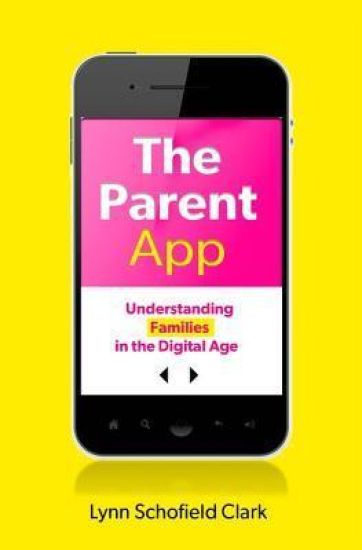
The Parent App

The Parent App

Lynn Schofield Clark

Oxford University Press Inc
2014
nidottu
Ninety-five percent of American kids have Internet access by age 11; the average number of texts a teenager sends each month is well over 3,000. More families report that technology makes life with children more challenging, not less, as parents today struggle with questions previous generations never faced: Is my thirteen-year-old responsible enough for a Facebook page? What will happen if I give my nine year-old a cell phone? In The Parent App, Lynn Schofield Clark provides what families have been sorely lacking: smart, sensitive, and effective strategies for coping with the dilemmas of digital and mobile media in modern life. Clark set about interviewing scores of mothers and fathers, identifying not only their various approaches, but how they differ according to family income. Parents in upper-income families encourage their children to use media to enhance their education and self-development and to avoid use that might distract them from goals of high achievement. Lower income families, in contrast, encourage the use of digital and mobile media in ways that are respectful, compliant toward parents, and family-focused. Each approach has its own benefits and drawbacks, and whatever the parenting style or economic bracket, parents experience anxiety about how to manage new technology. With the understanding of a parent of teens and the rigor of a social scientist, Clark tackles a host of issues, such as family communication, online predators, cyber bullying, sexting, gamer drop-outs, helicopter parenting, technological monitoring, the effectiveness of strict controls, and much more. The Parent App is more than an advice manual. As Clark admits, technology changes too rapidly for that. Rather, she puts parenting in context, exploring the meaning of media challenges and the consequences of our responses-for our lives as family members and as members of society.
Becoming Un-Orthodox

Becoming Un-Orthodox

Lynn Davidman

Oxford University Press Inc
2015
sidottu
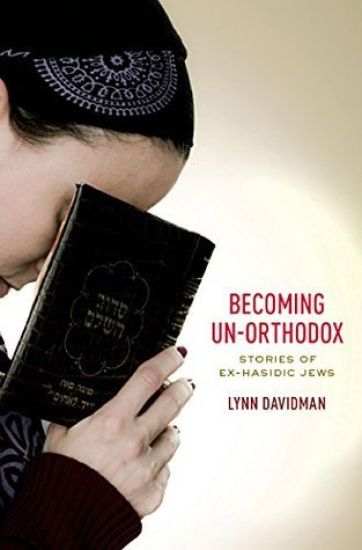
Leaving a religion is not merely a matter of losing or rejecting faith. For many, it involves dramatic changes of everyday routines and personal habits. Davidman bases her analysis on in-depth conversations with forty ex-Hasidic individuals. From these conversations emerge accounts of the great fear, angst, and sense of danger that come of leaving a highly bounded enclave community. Many of those interviewed spoke of feeling marginal in their own communities; of strain in their homes due to death, divorce, or their parents' profound religious differences; experienced sexual, physical, or verbal abuse; or expressed an acute awareness of gender inequality, the dissimilar lives of their secular relatives, and forbidden television shows, movies, websites, and books. Becoming Un-Orthodox draws much-needed attention to the vital role of the body and bodily behavior in religious practices. It is through physical rituals and routines that the members of a religion, particularly a highly conservative one, constantly create, perform, and reinforce the culture of the religion. Because of the many observances and daily rituals required by their faith, Hasidic defectors are an exemplary case study for exploring the centrality of the body in shaping, maintaining, and shedding religions. This book provides both a moving narrative of the struggles of Hasidic defectors and a compelling call for greater collective understanding of the complex significance of the body in society.
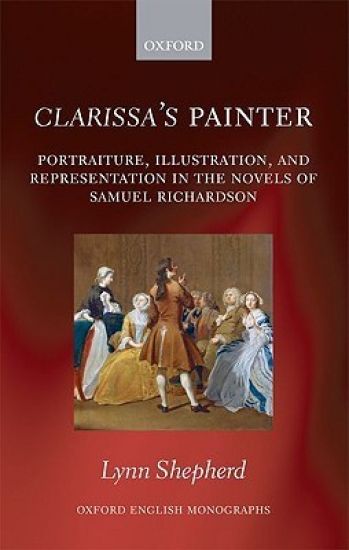
Clarissa's Painter

Clarissa's Painter

Lynn Shepherd

Oxford University Press
2009
sidottu
Samuel Richardson's novels have always been a particularly fertile seam for literary study, and in recent years they have been the subject of a whole range of different approaches, from the political and feminist, to those concerned with formal questions such as genre and epistolary technique. Richardson has also attracted considerable interest from an interdisciplinary perspective, with studies focusing on the pictorial and spatial elements of his works, and the illustrations he commissioned for Pamela. This extensively-illustrated monograph takes this approach one step further, and looks at issues of visual and verbal representation in Richardson from the perspective of eighteenth-century portraiture. Richardson first became conversant with the conventions of contemporary portraiture in the wake of the phenomenal success of Pamela. It was then that he commissioned his first portrait, and became involved in the process of producing illustrations for the lavish sixth edition of the novel. This study makes the case that these two events combined to give Richardson a new vocabulary for the depiction of individual character, and the articulation of power, affection, and control within the family, and between men and women. We can see the first signs of this in Pamela II, which is so often dismissed and so little read, but it reaches its full maturity in the rich three-dimensionality of Clarissa. Moreover it is Richardson's use of the conventions of contemporary portraiture in Sir Charles Grandison that explains many of the tensions and inconsistencies within that text, and makes the reader's response to Richardson's 'good man' so ambivalent.
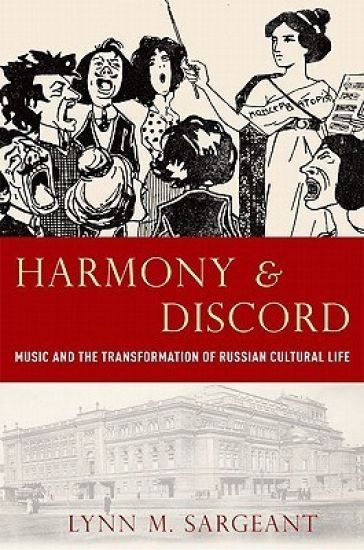
Harmony and Discord

Harmony and Discord

Lynn M. Sargeant

Oxford University Press Inc
2011
sidottu
Harmony and Discord: Music and the Transformation of Russian Cultural Life explores the complex development of Russian musical life during the nineteenth and early twentieth centuries. At the heart of this cultural history lies the Russian Musical Society, as both a unique driving force behind the institutionalization of music and a representative of the growing importance of voluntary associations in public life. Sustained simultaneously by privateinitiative and cooperative relationships with the state, the Russian Musical Society played a key role in the creation of Russia's infrastructure for music and music education. Author Lynn M. Sargeant explores the fluid nature of Russian social identity through the broad scope of musical life, including not only the "leading lights" of the era but also rank-and-file musicians, teachers, and students. Although Russian musicians longed for a secure place within the new hierarchy of professions, their social status remained ambiguous throughout the nineteenth century. Traditional reliance on serf musicians and foreigners left lasting scars that motivated musicians'efforts to obtain legal rights and social respectability. And women's increasing visibility in the musical world provoked acrimonious debates that were, at heart, efforts by male musicians to strengthen their claims to professional status by denying the legitimacy of female participation. Sargeantdemonstrates that the successful development of a Russian musical infrastructure salved persistent anxieties about Russia's place vis-a-vis its European cultural competitors. Remarkably, the institutions developed by the Russian Musical Society survived the upheavals of war and revolution to become the foundation for the Soviet musical system.A wealth of historical documentation makes Harmony and Discord required reading for musicologists, sociologists and historians interested in this period, and the abundance of amusing anecdotes and the author's lucid and lively literary style make it an enjoyable history for all readers.
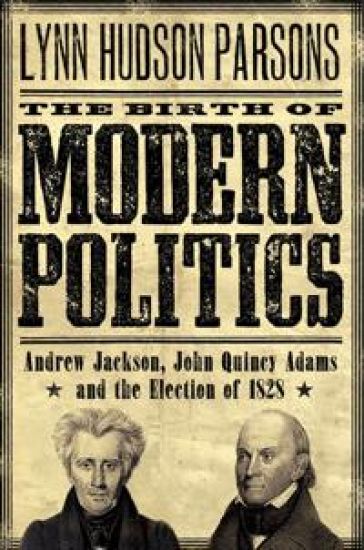
The Birth of Modern Politics

The Birth of Modern Politics

Lynn Hudson Parsons

Oxford University Press Inc
2011
nidottu
The 1828 presidential election, which pitted Major General Andrew Jackson against incumbent John Quincy Adams, has long been hailed as a watershed moment in American political history. It was the contest in which an unlettered, hot-tempered southwestern frontiersman, trumpeted by his supporters as a genuine man of the people, soundly defeated a New England "aristocrat" whose education and political résumé were as impressive as any ever seen in American public life. It was, many historians have argued, the country's first truly democratic presidential election. It was also the election that opened a Pandora's box of campaign tactics, including coordinated media, get-out-the-vote efforts, fund-raising, organized rallies, opinion polling, campaign paraphernalia, ethnic voting blocs, "opposition research," and smear tactics. In The Birth of Modern Politics, Parsons shows that the Adams-Jackson contest also began a national debate that is eerily contemporary, pitting those whose cultural, social, and economic values were rooted in community action for the common good against those who believed the common good was best served by giving individuals as much freedom as possible to promote their own interests. The book offers fresh and illuminating portraits of both Adams and Jackson and reveals how, despite their vastly different backgrounds, they had started out with many of the same values, admired one another, and had often been allies in common causes. But by 1828, caught up in a shifting political landscape, they were plunged into a competition that separated them decisively from the Founding Fathers' era and ushered in a style of politics that is still with us today.
The Parent App

The Parent App

Lynn Schofield Clark

Oxford University Press Inc
2012
sidottu
Ninety-five percent of American kids have Internet access by age 11; the average number of texts a teenager sends each month is well over 3,000. More families report that technology makes life with children more challenging, not less, as parents today struggle with questions previous generations never faced: Is my thirteen-year-old responsible enough for a Facebook page? What will happen if I give my nine year-old a cell phone? In The Parent App, Clark provides what families have been sorely lacking: smart, sensitive, and effective strategies for coping with the dilemmas of digital and mobile media in modern life. Clark set about interviewing scores of mothers and fathers, identifying not only their various approaches, but how they differ according to family income. Parents in upper-income families encourage their children to use media to enhance their education and self-development and to avoid use that might distract them from goals of high achievement. Lower income families, in contrast, encourage the use of digital and mobile media in ways that are respectful, compliant toward parents, and family-focused. Each approach has its own benefits and drawbacks, and whatever the parenting style or economic bracket, parents experience anxiety about how to manage new technology. With the understanding of a parent of teens and the rigor of a social scientist, she tackles a host of issues, such as family communication, online predators, cyber bullying, sexting, gamer drop-outs, helicopter parenting, technological monitoring, the effectiveness of strict controls, and much more. The Parent App is more than an advice manual. As Clark admits, technology changes too rapidly for that. Rather, she puts parenting in context, exploring the meaning of media challenges and the consequences of our responses--for our lives as family members and as members of society.
Structured Reading

Structured Reading

Lynn Quitman Troyka

Pearson
2012
nidottu
Structured Reading is grounded in the theory that students learn best from guided, hands-on experience with complete, not partial, reading selections. This text approaches students with detailed instruction in the separate skills areas that assure movement to college-level reading abilities, followed by extensive, repeated practice found in a variety of essays from books, magazines, and texts.
Forms of Expansion

Forms of Expansion

Lynn Keller

University of Chicago Press
1997
sidottu
Contemporary American women are writing long poems in a variety of styles which repossess history, reconceive female subjectivity, and seek to revitalize poetry itself. This book explores this evolving body of work, offering revealing discussions of its diverse traditions and feminist concerns. The poets discussed include Rita Dove, Brenda Marie Osbey, Sharon Doubiago, Judy Grahn, Marilyn Hacker, Beverly Dahlen, Rachel Blau Du Plessis and Susan Howe. Arguing that women poets no longer feel intimidated by the traditional associations of long poems with the heroic, public realm or with great artistic ambition, Keller shows how the long poem's openness to sociological, anthropological and historical material makes it an ideal mode for exploring women's roles in history and culture. In addition, the varied forms of long poems - from sprawling free-verse epics and regular sonnet sequences to highly disjunctive experimental collages - make this hybrid genre easily adaptable to diverse visions of feminism and of contemporary poetry.
Forms of Expansion

Forms of Expansion

Lynn Keller

University of Chicago Press
1997
nidottu
Contemporary American women are writing long poems in a variety of styles which repossess history, reconceive female subjectivity, and seek to revitalize poetry itself. This book explores this evolving body of work, offering revealing discussions of its diverse traditions and feminist concerns. The poets discussed include Rita Dove, Brenda Marie Osbey, Sharon Doubiago, Judy Grahn, Marilyn Hacker, Beverly Dahlen, Rachel Blau Du Plessis and Susan Howe. Arguing that women poets no longer feel intimidated by the traditional associations of long poems with the heroic, public realm or with great artistic ambition, Keller shows how the long poem's openness to sociological, anthropological and historical material makes it an ideal mode for exploring women's roles in history and culture. In addition, the varied forms of long poems - from sprawling free-verse epics and regular sonnet sequences to highly disjunctive experimental collages - make this hybrid genre easily adaptable to diverse visions of feminism and of contemporary poetry.
Breeding Bio Insecurity

Breeding Bio Insecurity

Lynn C. Klotz; Edward J. Sylvester

University of Chicago Press
2009
sidottu
In the years since the 9/11 attacks - and the subsequent lethal anthrax letters - the United States has spent billions of dollars on measures to defend the population against the threat of biological weapons. But as Lynn C. Klotz and Edward J. Sylvester argue forcefully in "Breeding Bio Insecurity", all that money and effort hasn't made us any safer - in fact, it has made us more vulnerable. "Breeding Bio Insecurity" reveals the mistakes made to this point and lays out the necessary steps to set us on the path toward true biosecurity. The fundamental problem with the current approach, according to the authors, is the danger caused by the sheer size and secrecy of our biodefense effort. Thousands of scientists spread throughout hundreds of locations are now working with lethal bioweapons agents - but their inability to make their work public causes suspicion among our enemies and allies alike, even as the enormous number of laboratories greatly multiplies the inherent risk of deadly accidents or theft. Meanwhile, vital public health needs go unmet because of this new biodefense focus. True biosecurity, the authors argue, will require a multipronged effort based on an understanding of the complexity of the issue, guided by scientific ethics, and watched over by a vigilant citizenry attentive to the difference between fearmongering and true analysis of risk. An impassioned warning that never loses sight of political and scientific reality, "Breeding Bio Insecurity" is a crucial first step toward meeting the evolving threats of the twenty-first century.
Biology Takes Form

Biology Takes Form

Lynn K. Nyhart

University of Chicago Press
1995
sidottu
This study argues that morphology was integral to the life sciences of the 19th century. It traces the development of morphological research in German universities and illuminates significant institutional and intellectual changes in 19th-century German biology. Although there were neither professors of morphology nor a morphologists' society, morphologists achieved influence by "colonizing" niches in a variety of disciplines. Scientists in anatomy, zoology, natural history, and physiology considered their work morphological, and the term encompassed research that today might be classified as embryology, systematics, functional morphology, comparative physiology, ecology, behaviour, evolutionary theory, or histology. Nyhart draws on research notes, correspondence and other archival material to examine how these scientists responded to new ideas and to the work of colleagues. She examines the intertwined histories of morphology and the broader biological enterprise, demonstrating that the study of form was central to investigations of such issues as the relationships between an animal's structure and function, between an organism and its environment, and between living species and their ancestors.
Biology Takes Form

Biology Takes Form

Lynn K. Nyhart

University of Chicago Press
1995
nidottu
This study argues that morphology was integral to the life sciences of the 19th century. It traces the development of morphological research in German universities and illuminates significant institutional and intellectual changes in 19th-century German biology. Although there were neither professors of morphology nor a morphologists' society, morphologists achieved influence by "colonizing" niches in a variety of disciplines. Scientists in anatomy, zoology, natural history, and physiology considered their work morphological, and the term encompassed research that today might be classified as embryology, systematics, functional morphology, comparative physiology, ecology, behaviour, evolutionary theory, or histology. Nyhart draws on research notes, correspondence and other archival material to examine how these scientists responded to new ideas and to the work of colleagues. She examines the intertwined histories of morphology and the broader biological enterprise, demonstrating that the study of form was central to investigations of such issues as the relationships between an animal's structure and function, between an organism and its environment, and between living species and their ancestors.
Modern Nature

Modern Nature

Lynn K. Nyhart

University of Chicago Press
2009
sidottu
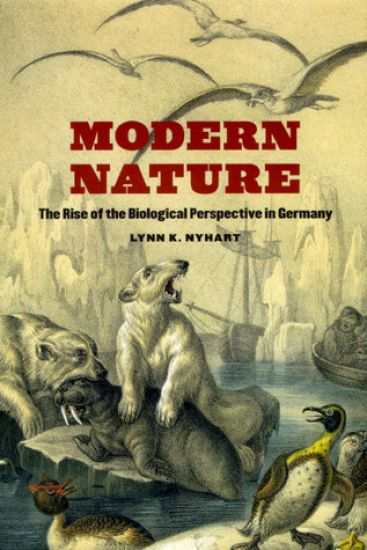
In "Modern Nature", Lynn K. Nyhart traces the emergence of a 'biological perspective' in late nineteenth-century Germany that emphasized the dynamic relationships among organisms, and between organisms and their environment. Examining this approach to nature in light of Germany's fraught urbanization and industrialization, as well as the opportunities presented by new and reforming institutions, she argues that rapid social change drew attention to the role of social relationships and physical environments in rendering a society - and nature - whole, functional, and healthy. This quintessentially modern view of nature, Nyhart shows, stood in stark contrast to the standard naturalist's orientation toward classification. While this new biological perspective would eventually grow into the academic discipline of ecology, "Modern Nature" locates its roots outside the universities, in a vibrant realm of populist natural history inhabited by taxidermists and zookeepers, schoolteachers and museum reformers, amateur enthusiasts and nature protectionists. Probing the populist beginnings of animal ecology in Germany, Nyhart unites the history of popular natural history with that of elite science in a new way. In doing so, she brings to light a major orientation in late nineteenth-century biology that has long been eclipsed by Darwinism.
Make Room for TV

Make Room for TV

Lynn Spigel

University of Chicago Press
1992
sidottu
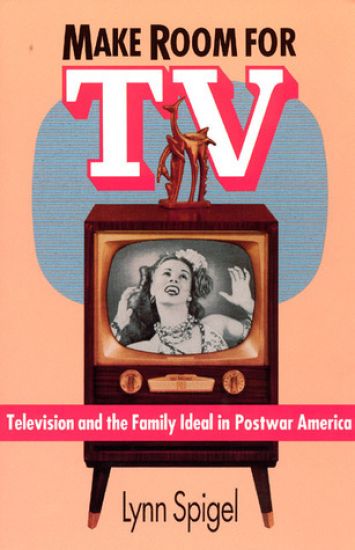
Between 1948 and 1955, nearly two-thirds of all American families bought a television set--and a revolution in social life and popular culture was launched. In this fascinating book, Lynn Spigel chronicles the enormous impact of television in the formative years of the new medium: how, over the course of a single decade, television became an intimate part of everyday life. What did Americans expect from it? What effects did the new daily ritual of watching television have on children? Was television welcomed as an unprecedented "window on the world," or as a "one-eyed monster" that would disrupt households and corrupt children? Drawing on an ambitious array of unconventional sources, from sitcom scripts to articles and advertisements in women's magazines, Spigel offers the fullest available account of the popular response to television in the postwar years. She chronicles the role of television as a focus for evolving debates on issues ranging from the ideal of the perfect family and changes in women's role within the household to new uses of domestic space. The arrival of television did more than turn the living room into a private theater: it offered a national stage on which to play out and resolve conflicts about the way Americans should live. Spigel chronicles this lively and contentious debate as it took place in the popular media. Of particular interest is her treatment of the way in which the phenomenon of television itself was constantly deliberated--from how programs should be watched to where the set was placed to whether Mom, Dad, or kids should control the dial. Make Room for TV combines a powerful analysis of the growth of electronic culture with a nuanced social history of family life in postwar America, offering a provocative glimpse of the way television became the mirror of so many of America's hopes and fears and dreams.
Make Room for TV

Make Room for TV

Lynn Spigel

University of Chicago Press
1992
nidottu
Between 1948 and 1955, nearly two-thirds of all American families bought a television set—and a revolution in social life and popular culture was launched. In this fascinating book, Lynn Spigel chronicles the enormous impact of television in the formative years of the new medium: how, over the course of a single decade, television became an intimate part of everyday life. What did Americans expect from it? What effects did the new daily ritual of watching television have on children? Was television welcomed as an unprecedented "window on the world," or as a "one-eyed monster" that would disrupt households and corrupt children? Drawing on an ambitious array of unconventional sources, from sitcom scripts to articles and advertisements in women's magazines, Spigel offers the fullest available account of the popular response to television in the postwar years. She chronicles the role of television as a focus for evolving debates on issues ranging from the ideal of the perfect family and changes in women's role within the household to new uses of domestic space. The arrival of television did more than turn the living room into a private theater: it offered a national stage on which to play out and resolve conflicts about the way Americans should live. Spigel chronicles this lively and contentious debate as it took place in the popular media. Of particular interest is her treatment of the way in which the phenomenon of television itself was constantly deliberated—from how programs should be watched to where the set was placed to whether Mom, Dad, or kids should control the dial. Make Room for TV combines a powerful analysis of the growth of electronic culture with a nuanced social history of family life in postwar America, offering a provocative glimpse of the way television became the mirror of so many of America's hopes and fears and dreams.
TV by Design

TV by Design

Lynn Spigel

University of Chicago Press
2009
sidottu
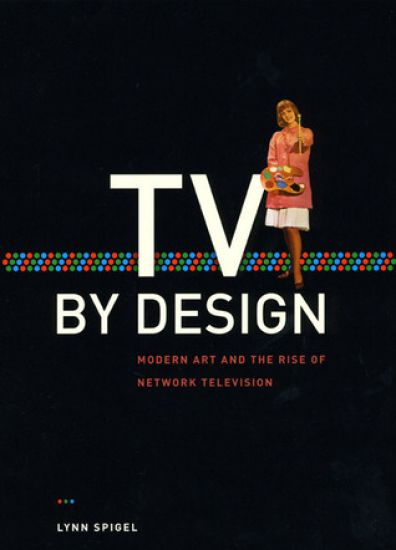
While critics have long disparaged commercial television as a vast wasteland, TV has surprising links to the urbane world of modern art that stretch back to the 1950s and '60s. During that era, the rapid rise of commercial television coincided with dynamic new movements in the visual arts - a potent combination that precipitated a major shift in the way Americans experienced the world visually. "TV by Design" uncovers this captivating story of how modernism and network television converged and intertwined in their mutual ascent during the decades of the cold war.Whereas most histories of television focus on the way older forms of entertainment were recycled for the new medium, Lynn Spigel shows how TV was instrumental in introducing the public to the latest trends in art and design. Abstract expressionism, pop art, art cinema, modern architecture, and cutting-edge graphics were all mined for staging techniques, scenic designs, and an ever-growing number of commercials. As a result, TV helped fuel the public craze for trendily modern products, such as tailfin cars and boomerang coffee tables, that was vital to the burgeoning postwar economy. And along with influencing the look of television, many artists - including Eero Saarinen, Ben Shahn, Saul Bass, William Golden, and Richard Avedon - also participated in its creation as the networks put them to work designing everything from their corporate headquarters to their company cufflinks.Dizzy Gillespie, Ernie Kovacs, Duke Ellington, and Andy Warhol all stop by in this imaginative and winning account of the ways in which art, television, and commerce merged in the first decades of the TV age.
Women Guarding Men

Women Guarding Men

Lynn Zimmer

University of Chicago Press
1986
sidottu
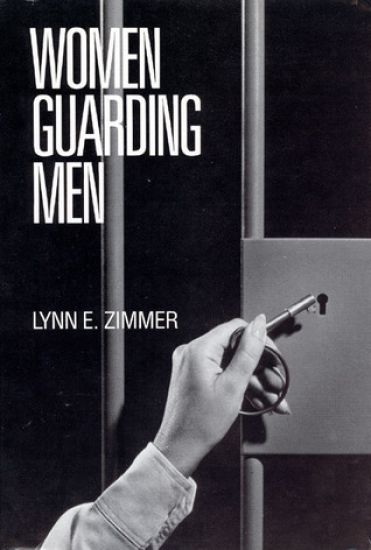
The hiring of women as guards in men's prisons represents a major breakthrough in women's efforts to achieve full sexual equality in the workplace. This dramatic social change has required great flexibility on the part of the women guards as well as substantial adjustments by their male counterparts, prison administrators, and the inmates themselves. In the first comprehensive study of this phenomenon, Lynn Zimmer examines the experiences of the women and men involved in the painful process of transition from a segregated to an integrated prison environment. Women Guarding Men is significant not only for its vivid depiction of their trials, but for its contribution to a general theory of women's occupational and organizational behavior.
Florence Nightingale and the Medical Men

Florence Nightingale and the Medical Men

Lynn McDonald

MCGILL-QUEEN'S UNIVERSITY PRESS
2022
sidottu
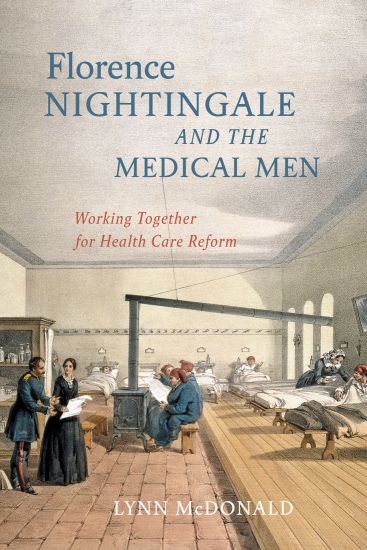
Florence Nightingale is known as a hospital reformer, a social reformer, and the founder of professional nursing; few realize that she worked closely with doctors on these issues. As Nightingale’s first supporters and colleagues, doctors contributed to reducing the high death rates in Crimean War hospitals and learned from the consequential reforms.Beginning with an overview of Nightingale’s life and continuing with an exploration of her Crimean War work with army doctors, her post-Crimea work with civilian doctors, and her collaborations with the peacetime army and with army doctors in later wars, Lynn McDonald details the involvement of doctors in Nightingale’s legacy. At a time when hospitals’ death rates were universally high (including at top teaching hospitals), Nightingale formed connections with leading public health doctors and produced heavily cited work on safer hospital design. Her later writings cover her relations with early women doctors and the controversy over state regulation of nurses, bacteriology, and germ theory; here, McDonald argues against flawed secondary literature and the myth of Nightingale’s lifelong opposition to germ theory. The final chapter discusses the legendary nurse’s enduring legacy.Florence Nightingale and the Medical Men provides timely insight into Nightingale’s principles of disease prevention, data visualization, and the impacts of high disease and death rates – issues that persist in the global health crises of the twenty-first century.