Professor Luis Leal is one of the most outstanding scholars of Mexican, Latin American, and Chicano literatures and the dean of Mexican American intellectuals in the United States. He was one of the first senior scholars to recognize the viability and importance of Chicano literature, and, through his perceptive literary criticism, helped to legitimize it as a worthy field of study. His contributions to humanistic learning have brought him many honors, including Mexico's Aquila Azteca and the United States' National Humanities Medal. In this testimonio or oral history, Luis Leal reflects upon his early life in Mexico, his intellectual formation at Northwestern University and the University of Chicago, and his work and publications as a scholar at the Universities of Illinois and California, Santa Barbara. Through insightful questions, Mario García draws out the connections between literature and history that have been a primary focus of Leal's work. He also elicits Leal's assessment of many of the prominent writers he has known and studied, including Mariano Azuela, William Faulkner, Octavio Paz, Carlos Fuentes, Juan Rulfo, Gabriel García Márquez, Jorge Luis Borges, Tomás Rivera, Rolando Hinojosa, Rudolfo Anaya, Elena Poniatowska, Sandra Cisneros, Richard Rodríguez, and Ana Castillo.
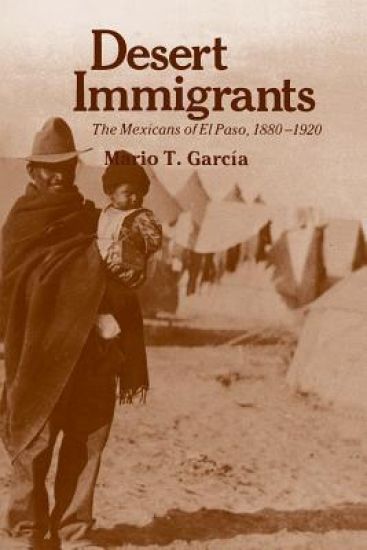
García explores the relationship of class, race, and labor in El Paso, documenting the evolution of work, housing, education, politics, and culture in the Mexican community. Desert Immigrants makes a significant contribution not only to Chicano and Mexican history, but to the history of immigration and labor and urban studies as well.
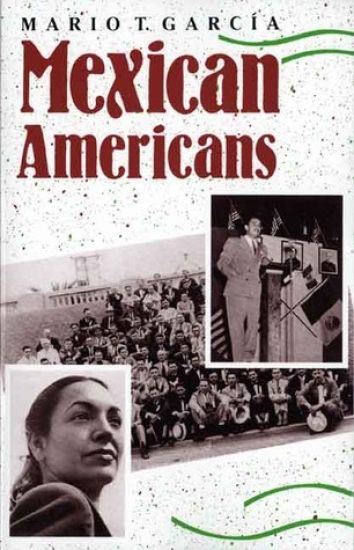
A pioneering political and intellectual history of the Chicano leaders who emerged from the barrios of the Southwest between 1930 and 1960—Ignacio L. López, George I. Sanchez, Josefina Fierro de Bright, and others—and of their effort to capture first-class citizenship for Mexican Americans. Drawing extensively on archival material and oral history, Mario T. García discusses the key figures, organizations, and issues of the movement; in so doing he casts new light not only on Chicano history but also on the histories of American ethnicity and civil rights movements.
Written by an eminent and original thinker in the philosophy of science, this book takes a fresh, unorthodox look at the key philosophical concepts and assumptions of the social sciences. Mario Bunge contends that social scientists (anthropologists, sociologists, political scientists, economists, and historians) ought not to leave philosophy to philosophers who have little expertise in or knowledge of the social sciences. Bunge urges social scientists to engage in serious philosophizing and philosophers to participate in social research. The two fields are interrelated, he says, and important advances in each can supply tools for solving problems in the other.Bunge analyzes such concepts as fact, cause, and value that the fields of philosophy and social science share. He discusses assumptions and misassumptions involved in such current approaches as idealism, materialism, and subjectivism, and finds that none of the best-known philosophies helps to advance or even understand social science. In a highly critical appraisal of rational choice theories, Bunge insists that these models provide no solid substantive theory of society, nor do they help guide rational action. He offers ten criteria by which to evaluate philosophies of social science and proposes novel solutions to social science's methodological and philosophical problems. He argues forcefully that a particular union of rationalism, realism, and systemism is the logical and viable philosophical stance for social science practitioners.
This is the first comprehensive modern Portuguese grammar written for the English-speaking reader. The book covers in detail all the patterns of modern Portuguese as spoken and written in Brazil, focusing on those points which are especially challenging for the English-speaking student, such as the use of the subjunctive, use of the definite article, preterit vs. imperfect verb forms, prepositions, and many others. With a wealth of examples to clarify every topic and an extensive index, this indispensable grammar offers students and teachers easy access to all the information they need for in-depth study of Portuguese. Key features of the book:focuses on the needs of the English-speaking readerincorporates the results of recent linguistic research in jargon-free languageemphasizes modern spoken Brazilian usagedescribes current Brazilian pronunciation in detaildevotes a separate chapter to spelling problemsdiscusses trends of the modern spoken language
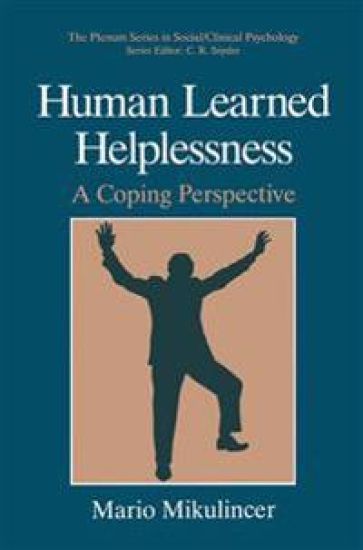
Summarizing 25 years of research, the author integrates virtually the entire published literature on the phenomenon of learned helplessness, as well as some unpublished data, into a single coherent theoretical framework. Dr. Mikulincer accounts for the complex nature of the phenomenon by focusing on cognitive, motivational, and emotional processes, and then details a new coping perspective to deal with uncontrollable events. His groundbreaking work will become an essential reference for all future work in the field.
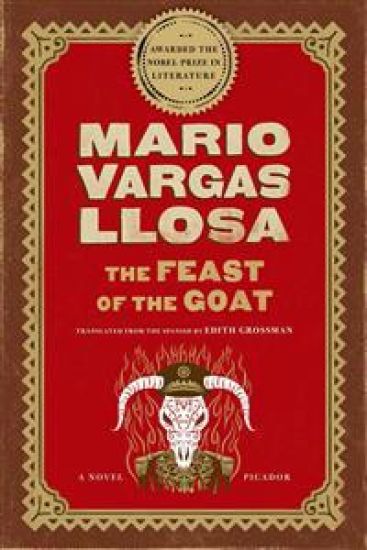
Haunted all her life by feelings of terror and emptiness, forty-nine-year-old Urania Cabral returns to her native Dominican Republic - and finds herself reliving the events of l961, when the capital was still called Trujillo City and one old man terrorized a nation of three million. Rafael Trujillo, the depraved ailing dictator whom Dominicans call the Goat, controls his inner circle with a combination of violence and blackmail. In Trujillo's gaudy palace, treachery and cowardice have become a way of life. But Trujillo's grasp is slipping. There is a conspiracy against him, and a Machiavellian revolution already underway that will have bloody consequences of its own. In this 'masterpiece of Latin American and world literature, and one of the finest political novels ever written' (Bookforum), Mario Vargas Llosa recounts the end of a regime and the birth of a terrible democracy, giving voice to the historical Trujillo and the victims, both innocent and complicit, drawn into his deadly orbit.
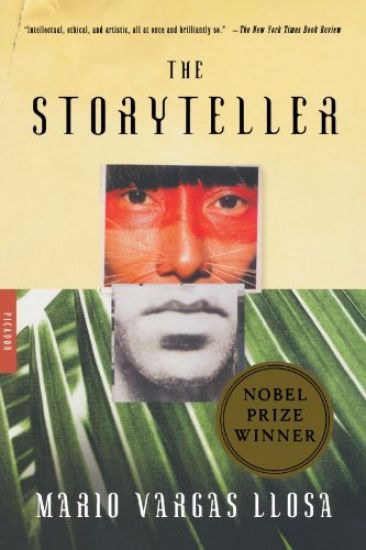
WINNER OF THE NOBEL PRIZE IN LITERATURE At a small gallery in Florence, a Peruvian writer happens upon a photograph of a tribal storyteller deep in the jungles of the Amazon. He is overcome with the eerie sense that he knows this man...that the storyteller is not an Indian at all but an old school friend, Saul Zuratas. As recollections of Zuratas flow through his mind, the writer begins to imagine Zuratas's transformation from a modern to a central member of the unacculturated Machiguenga tribe. Weaving the mysteries of identity, storytelling, and truth, Vargas Llosa has created a spellbinding tale of one man's journey from the modern world to our origins, abandoning one in order to find meaning in both.
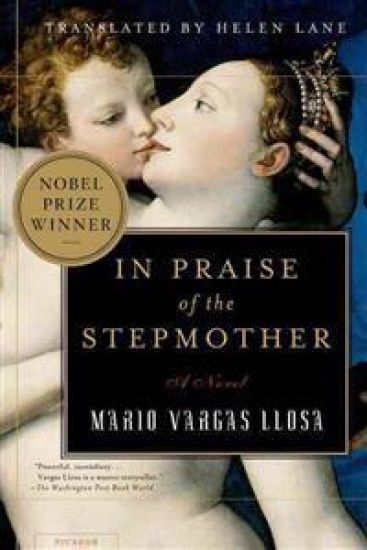
WINNER OF THE NOBEL PRIZE IN LITERATURE With meticulous observation and the seductive skill of a great storyteller, Vargas Llosa lures the reader into the shadow of perversion that, little by little, darkens the extraordinary happiness and harmony of his characters. The mysterious nature of happiness and above all, the corrupting power of innocence are the themes that underlie these pages, and the author has perfectly met the demands of the erotic novel, never dimming for an instant the fine poetic polish of his writing.
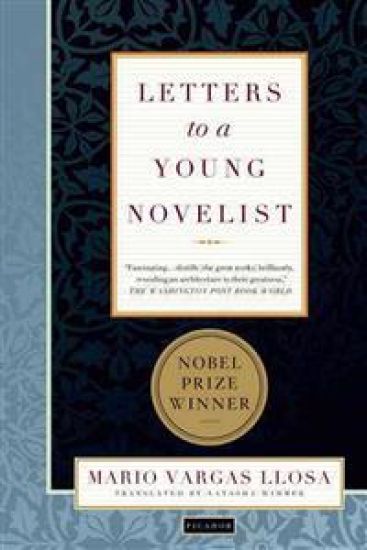
WINNER OF THE NOBEL PRIZE IN LITERATURE Mario Vargas Llosa condenses a lifetime of writing, reading, and thought into an essential manual for aspiring writers. Drawing on the stories and novels of writers from around the globe-Borges, Bierce, C line, Cort zar, Faulkner, Kafka, Robbe-Grillet-he lays bare the inner workings of fiction, all the while urging young novelists not to lose touch with the elemental urge to create. Conversational, eloquent, and effortlessly erudite, this little book is destined to be read and re-read by young writers, old writers, would-be writers, and all those with a stake in the world of letters.
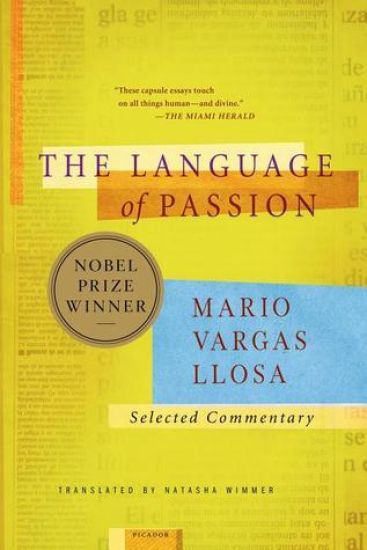
WINNER OF THE NOBEL PRIZE IN LITERATURE Internationally acclaimed novelist Mario Vargas Llosa has contributed a biweekly column to Spain's major newspaper, El Pa s, since 1977. In this collection of columns from the 1990s, Vargas Llosa weighs in on the burning questions of the last decade, including the travails of Latin American democracy, the role of religion in civic life, and the future of globalization. But Vargas Llosa's influence is hardly limited to politics. In some of the liveliest critical writing of his career, he makes a pilgrimage to Bob Marley's shrine in Jamaica, celebrates the sexual abandon of Carnaval in Rio, and examines the legacies of Vermeer, Bertolt Brecht, Frida Kahlo, and Octavio Paz, among others.
WINNER OF THE NOBEL PRIZE IN LITERATURE A New York Times Notable Book Flora Trist n, the illegitimate child of a wealthy Peruvian father and French mother, grows up in poverty and journeys to Peru to demand her inheritance. On her return in 1844, she makes her name as a champion of the downtrodden, touring the French countryside to recruit members for her Workers' Union. In 1891, Flora's grandson, struggling painter and stubborn visionary Paul Gauguin, abandons his wife and five children for life in the South Seas, where his dreams of paradise are poisoned by syphilis, the stifling forces of French colonialism, and a chronic lack of funds, though he has his pick of teenage Tahitian lovers and paints some of his greatest works. Flora died before her grandson was born, but their travels and obsessions unfold side by side in this double portrait, a rare study in passion and ambition, as well as the obstinate pursuit of greatness in the face of illness and death.
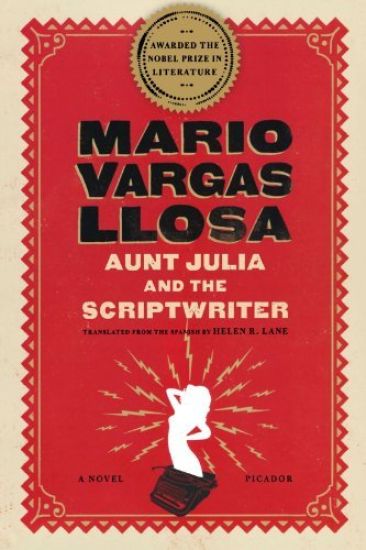
WINNER OF THE NOBEL PRIZE IN LITERATURE Mario Vargas Llosa's brilliant, multilayered novel is set in the Lima, Peru, of the author's youth, where a young student named Marito is toiling away in the news department of a local radio station. His young life is disrupted by two arrivals. The first is his aunt Julia, recently divorced and thirteen years older, with whom he begins a secret affair. The second is a manic radio scriptwriter named Pedro Camacho, whose racy, vituperative soap operas are holding the city's listeners in thrall. Pedro chooses young Marito to be his confidant as he slowly goes insane. Interweaving the story of Marito's life with the ever-more-fevered tales of Pedro Camacho, Vargas Llosa's novel is hilarious, mischievous, and masterful, a classic named one of the best books of the year by the New York Times Book Review.
Set in an isolated, rundown community in the Peruvian Andes, Vargas Llosa's novel tells the story of a series of mysterious disappearances involving the Shining Path guerrillas and a local couple performing cannibalistic sacrifices with strange similiarities to the Dionysian rituals of ancient Greece. Part detective novel and part political allegory, it offers a panoramic view of Peruvian society; not only of the current political violence and social upheaval, but also of the country's past and its connection to Indian culture and pre-Hispanic mysticism.
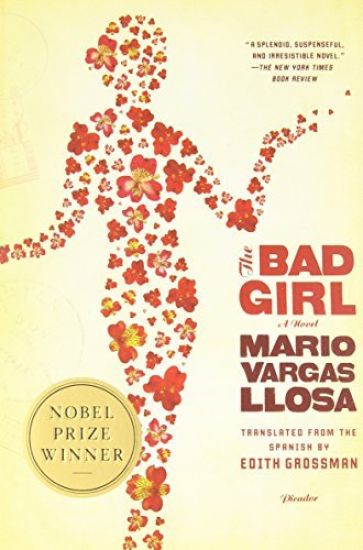
A New York Times Notable Book of 2007From Nobel Prize-winning author Mario Vargas Llosa comes The Bad Girl, a "...splendid, suspenseful, and irresistible novel]. . . A contemporary love story that explores the mores of the urban 1960s--and 70s and 80s."--The New York Times Book Review Ricardo Somocurcio is in love with a bad girl. He loves her as a teenager known as "Lily" in Lima in 1950, when she flits into his life one summer and disappears again without explanation. He loves her still when she reappears as a revolutionary in 1960s Paris, then later as Mrs. Richardson, the wife of a wealthy Englishman, and again as the mistress of a sinister Japanese businessman in Tokyo. However poorly she treats him, he is doomed to worship her. Charting Ricardo's expatriate life through his romances with this shape-shifting woman, Vargas Llosa has created a beguiling, epic romance about the life-altering power of obsession.
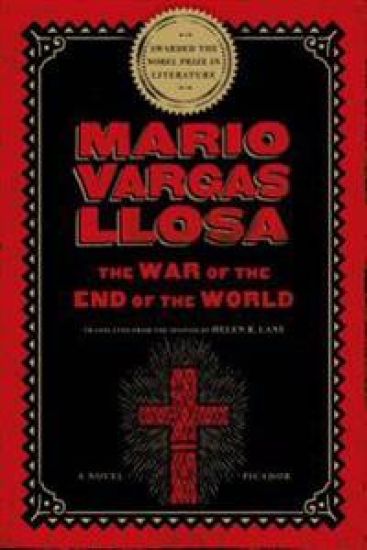
Deep within the remote backlands of nineteenth-century Brazil lies Canudos, home to all the damned of the earth: prostitutes, bandits, beggars, and every kind of outcast. It is a place where history and civilization have been wiped away. There is no money, no taxation, no marriage, no census. Canudos is a cauldron for the revolutionary spirit in its purest form, a state with all the potential for a true, libertarian paradise--and one the Brazilian government is determined to crush at any cost. In perhaps his most ambitious and tragic novel, Mario Vargas Llosa tells his own version of the real story of Canudos, inhabiting characters on both sides of the massive, cataclysmic battle between the society and government troops. The resulting novel is a fable of Latin American revolutionary history, an unforgettable story of passion, violence, and the devastation that follows from fanaticism.
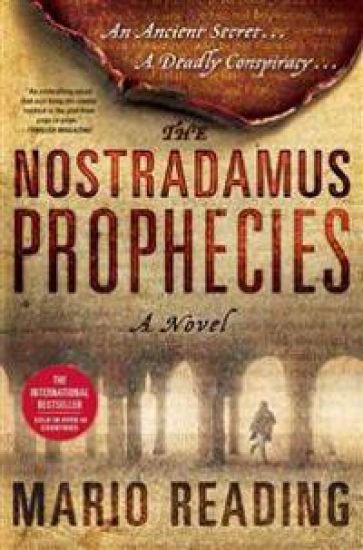
An ancient secret...A deadly conspiracy. For reader's of Raymond Khoury's The Last Templar, or the works of Dan Brown, this high-octane commercial thriller tells of a hunt for the lost prophecies of Nostradamus and the two men who will do anything to discover their secrets. Nostradamus wrote a thousand prophecies. Only 942 have survived. What happened to the missing quatrains? What secrets did they contain to make it necessary for them to remain hidden? And why did Nostradamus leave his daughter a sealed container in his will? These questions drive two men with very different desires. Adam Sabir is a writer desperate to revive his flagging career; Achor Bale is a member of an ancient secret society that has dedicated itself to the protection and support of the "Three Antichrists" foretold in Nostradamus's verses--Napoleon, Adolf Hitler, and the "one still to come"...The pair embark on a terrifying chase through the ancient Romany encampments of France in a quest to locate the missing verses.
A brief, detailed biography of the composer/architect, student and protege of Honegger, Milhaud, Messiaen, Le Corbusier. Xenakis himself is a major proponent of advancing the boundaries of musical possibilities.
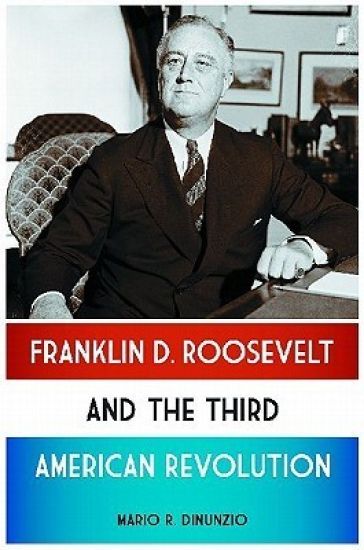
This book argues that Franklin D. Roosevelt's work—of which the New Deal was a prime example—was rooted in a definitive political ideology tied to the ideals of the Progressive movement and the social gospel of the late 19th century.Roosevelt's New Deal resulted in such dramatic changes within the United States that it merits the label "revolutionary" and ranks with the work of Washington and Lincoln in its influence on the American nation. The New Deal was not simply the response to a severe economic crisis; it was also an expression of FDR's well-developed political ideology stemming from his religious ideas and his experience in the Progressive movement of Theodore Roosevelt and Woodrow Wilson. Franklin D. Roosevelt and the Third American Revolution describes the unfolding of his New Deal response to the crisis of the Depression and chronicles the bitter conservative opposition that resisted every step in the Roosevelt revolution. The author's analysis of Roosevelt's political thought is supported by FDR's own words contained in the key documents and various speeches of his political career. This book also documents FDR's recognition of the dangers to democracy from unresponsive government and identifies his specific motivations to provide for the general welfare.
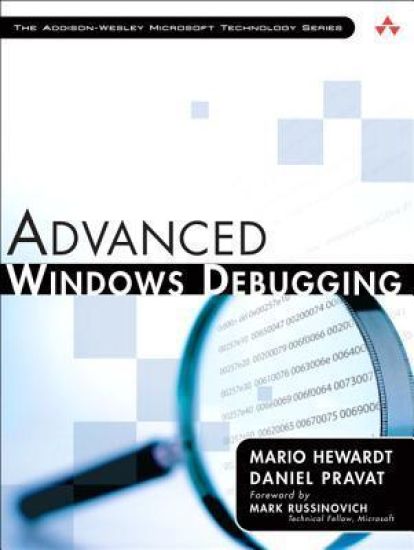
&> -- Bob Wilton, Escalation Engineer, Critical Problem Resolution Team, Microsoft “An excellent reference for both intermediate and advanced debuggers: highly practical, and filled with tricks and strategies. This book stands out from all other Win32 debugging literature, thanks to its in-depth examples–including resolving intricate problems like stack and heap corruptions.” -- Kinshuman, Development Lead, Windows Core OS Division, Microsoft The First In-Depth, Real-World, Insider’s Guide to Powerful Windows Debugging For Windows developers, few tasks are more challenging than debugging–-or more crucial. Reliable and realistic information about Windows debugging has always been scarce. Now, with over 15 years of experience two of Microsoft’s system-level developers present a thorough and practical guide to Windows debugging ever written. Mario Hewardt and Daniel Pravat cover debugging throughout the entire application lifecycle and show how to make the most of the tools currently available–-including Microsoft’s powerful native debuggers and third-party solutions. To help you find real solutions fast, this book is organized around real-world debugging scenarios. Hewardt and Pravat use detailed code examples to illuminate the complex debugging challenges professional developers actually face. From core Windows operating system concepts to security, Windows® Vista™ and 64-bit debugging, they address emerging topics head-on–and nothing is ever oversimplified or glossed over! This book enables you to Master today’s most powerful Windows debugging tools, including NTSD, CDB, WinDbg, KD, and ADPlus Debug code that wasn’t designed or written for easy debugging Understand debuggers “under the hood,” and manage symbols and sources efficiently Debug complex memory corruptions related to stacks and heaps Resolve complex security problems Debug across processes: identity tracking, RPC debugger extensions, and tracking IPCs with Ethereal Find and fix resource leaks, such as memory and handle leaks. Debug common thread synchronization problems Learn when and how to write custom debugger extensions Perform “postmortem debugging” using crash dumps and Windows Error Reporting Automate debugging with DebugDiag and the Analyze Debugger command Whether you’re a system-level or application developer, Advanced Windows Debugging delivers the deep understanding of debugging that could save you weeks on your very next project. Part I Overview Chapter 1 Introduction to the Tools Chapter 2 Introduction to the Debuggers Chapter 3 Debugger Uncovered Chapter 4 Managing Symbol and Source Files Part II Applied Debugging Chapter 5 Memory Corruptions Part I – Stacks Chapter 6 Memory Corruptions Part I – Heaps Chapter 7 Security Chapter 8 Inter-process Communication Chapter 9 Resource Leaks Chapter 10 Synchronization Part III Advanced Topics Chapter 11 Writing Custom Debugger Extensions Chapter 12 64-bit Debugging Chapter 13 Postmortem Debugging Chapter 14 Power Tools Chapter 15 Windows Vista Fundamentals Appendix A Application Verifier Test Settings If you like Advanced Windows Debugging, keep an eye out for ADVANCED .NET DEBUGGING COMING IN NOV. 2009.