Kirjojen hintavertailu. Mukana 11 627 823 kirjaa ja 12 kauppaa.

Kirjahaku

Etsi kirjoja tekijän nimen, kirjan nimen tai ISBN:n perusteella.

1000 tulosta hakusanalla Maral Atmaca

Moral Development in the Professions
Every year in this country, some 10,000 college and university courses are taught in applied ethics. And many professional organizations now have their own codes of ethics. Yet social science has had little impact upon applied ethics. This book promises to change that trend by illustrating how social science can make a contribution to applied ethics. The text reports psychological studies relevant to applied ethics for many professionals, including accountants, college students and teachers, counselors, dentists, doctors, journalists, nurses, school teachers, athletes, and veterinarians. Each chapter begins with the research base of the cognitive-developmental approach--especially linked to Kohlberg and Rest's Defining Issues Test. Finally, the book summarizes recent research on the following issues: * moral judgment scores within and between professions, * pre- and post-test evaluations of ethics education programs, * moral judgment and moral behavior, * models of professional ethics education, and * models for developing new assessment tools. Researchers in different professional fields investigate different questions, develop different research strategies, and report different findings. Typically researchers of one professional field are not aware of research in other fields. An important aim of the present book is to bring this diverse research together so that cross-fertilization can occur and ideas from one field can transfer to another.
Moral Development in the Professions
Every year in this country, some 10,000 college and university courses are taught in applied ethics. And many professional organizations now have their own codes of ethics. Yet social science has had little impact upon applied ethics. This book promises to change that trend by illustrating how social science can make a contribution to applied ethics. The text reports psychological studies relevant to applied ethics for many professionals, including accountants, college students and teachers, counselors, dentists, doctors, journalists, nurses, school teachers, athletes, and veterinarians. Each chapter begins with the research base of the cognitive-developmental approach--especially linked to Kohlberg and Rest's Defining Issues Test. Finally, the book summarizes recent research on the following issues: * moral judgment scores within and between professions, * pre- and post-test evaluations of ethics education programs, * moral judgment and moral behavior, * models of professional ethics education, and * models for developing new assessment tools. Researchers in different professional fields investigate different questions, develop different research strategies, and report different findings. Typically researchers of one professional field are not aware of research in other fields. An important aim of the present book is to bring this diverse research together so that cross-fertilization can occur and ideas from one field can transfer to another.
Moral Development, Self, and Identity
This volume examines the psychological, social-relational, and cultural foundations of the most basic moral commitments. It begins by looking at the seminal writings of Augusto Blasi, whose writings on moral cognition, the development of self-identity, and moral personality have transformed the research agenda in moral psychology. This work is now the starting point of all discussion about the relationship between self and morality; the developmental grounding of the moral personality; and the moral integration of cognition, emotion, and behavior. Indeed, it is now widely believed that organizing self-understanding around basic moral commitments is crucial to the formation of a moral identity which, in turn, underwrites moral conduct. Using Blasi's work as a point of departure, a distinguished interdisciplinary and international group of scholars have contributed essays summarizing their own theoretical and empirical research on these topics. This book features new theories of moral functioning that range across several psychological literatures, including social cognition, cognitive science, and personality development. Examining the social-relational, communitarian, and cultural aspects of moral self-identity, it provides a comprehensive account of moral personality. Uniformly integrative, field-expanding, and on the cutting edge of research on moral development and personality, the book appeals to scholars, developmental theorists and graduate students interested in issues of moral development, education, and behavior, as well as cognitive development theory.
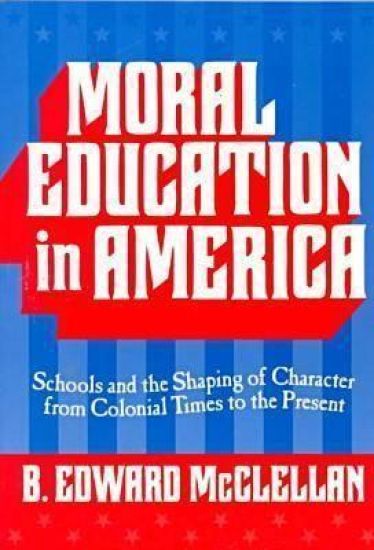
Moral Education in America

Moral Education in America

B.Edward McClellan; William J. Reese

Teachers' College Press
1999
nidottu
This one-of-a-kind, comprehensive history of moral education in American schools provides an invaluable historical context for contemporary debates. McClellan traces American traditions of moral education from the colonial era to the present, illuminating both debates about the subject and actual practices in public and private schools, colleges, and universities. He pays particular attention to changing fashions in pedagogy, to church-state conflicts, to the long decline of character training in the schools, and to recent efforts to restore moral education to its once-honored place. The book concludes with a thorough examination of recent theorists, including Lawrence Kohlberg, William J. Bennett, Carol Gilligan, and Nel Noddings, and an appraisal of current practice in American schools.
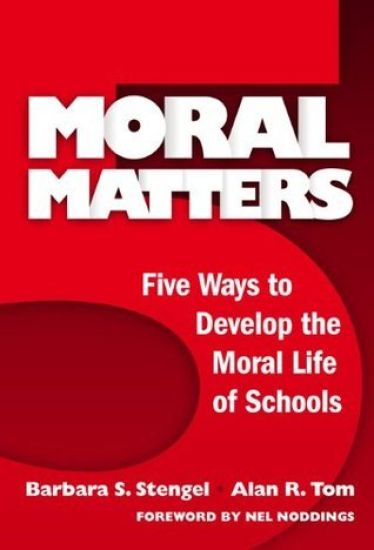
Moral Matters

Moral Matters

Barbara S. Stengel; Alan R. Tom

Teachers' College Press
2006
nidottu
Most of us agree that moral issues matter, but how do they fit into the context of our schools? Since A Nation at Risk, most educators and policymakers have focused on the academic dimensions of schooling governed by standards and testing. This timely book explores the ways that committed K–12 educators have attempted to make the moral visible in American schooling over the past 25 years. The authors look at their efforts, using an analytic framework that distinguishes five possible ways that the moral and the academic can be related in schooling.Book Features:A useful survey of moral education that enables the reader to arrive at personal judgments about the value and weaknesses of various approaches.Case studies that illustrate the moral education of students, the moral component of teachers’ work, and the moral dimensions of school structure.A mixture of philosophical analysis and attention to school practice suitable for courses and accessible to teachers, administrators, policymakers, and parents.
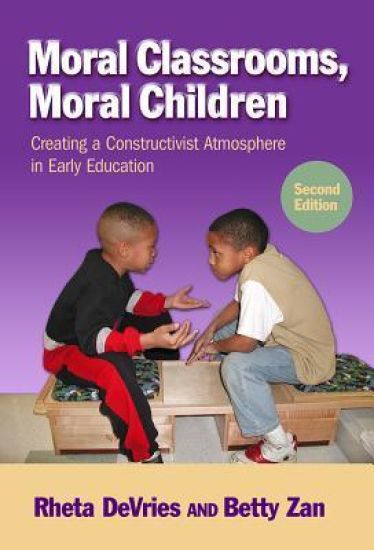
Moral Classrooms, Moral Children

Moral Classrooms, Moral Children

Rheta DeVries; Betty Zan

Teachers' College Press
2012
nidottu
This classic bestseller, now updated for today's diverse teaching force and student populations, explores the benefits of sociomoral practices in the classroom. The authors draw on recent research to show how these approaches work with children ages 2-8. They focus on how to establish and maintain a classroom environment that fosters children's intellectual, social, moral, emotional, and personality development. Extending the work of Jean Piaget, the authors advocate for a cooperative approach that contrasts with the coercion and unnecessary control that can be seen in many classrooms serving young children. Practical chapters demonstrate how the constructivist approach can be embedded in a school program by focusing on specific classroom situations and activities, such as resolving conflict, group time, rule making, decision making and voting, social and moral discussions, cooperative alternatives to discipline, and activity time.
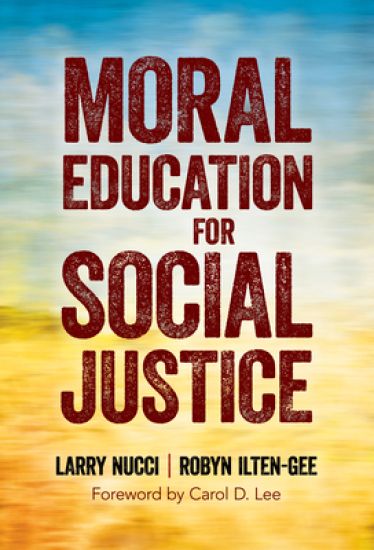
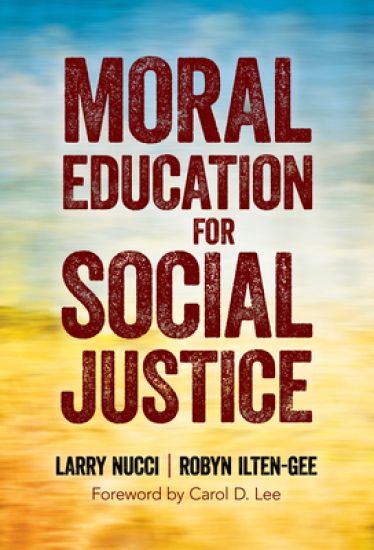
Moral Education for Social Justice

Moral Education for Social Justice

Larry Nucci; Robyn Ilten-Gee; Carol D. Lee

Teachers' College Press
2021
nidottu
The authors draw from their work with teachers and students to address issues of social justice through the regular curriculum and everyday school life. This book illustrates an approach that integrates social justice education with contemporary research on students' development of moral understandings and concerns for human welfare in order to critically address societal conventions, norms, and institutions. The authors provide a clear roadmap for differentiating moral education from religious beliefs and offer age-appropriate guidance for creating healthy school and classroom environments. Demonstrating how to engage students in critical thinking and community activism, the book includes proven-effective lessons that promote academic learning and moral growth for the early grades through adolescence. The text also incorporates recent work with social-emotional learning and restorative justice to nurture students' ethical awareness and disrupt the school-to-prison pipeline.Book Features:Guidance to help teachers move from classroom moral discourse to engage students in community action. Age-specific lesson plans developed with classroom teachers for integration with regular academic curricula.Detailed overview of moral growth with examples of student reasoning.Connections between moral development and critical pedagogy.Connections between moral development and digital literacy.Connections among classroom management, school rules, restorative justice, and students' social development.Insights drawn from research conducted within the Oakland Public School system.
Moral Education for Social Justice

Moral Education for Social Justice

Larry Nucci; Robyn Ilten-Gee; Carol D. Lee

Teachers' College Press
2021
sidottu
The authors draw from their work with teachers and students to address issues of social justice through the regular curriculum and everyday school life. This book illustrates an approach that integrates social justice education with contemporary research on students' development of moral understandings and concerns for human welfare in order to critically address societal conventions, norms, and institutions. The authors provide a clear roadmap for differentiating moral education from religious beliefs and offer age-appropriate guidance for creating healthy school and classroom environments. Demonstrating how to engage students in critical thinking and community activism, the book includes proven-effective lessons that promote academic learning and moral growth for the early grades through adolescence. The text also incorporates recent work with social-emotional learning and restorative justice to nurture students' ethical awareness and disrupt the school-to-prison pipeline.Book Features:Guidance to help teachers move from classroom moral discourse to engage students in community action. Age-specific lesson plans developed with classroom teachers for integration with regular academic curricula.Detailed overview of moral growth with examples of student reasoning.Connections between moral development and critical pedagogy.Connections between moral development and digital literacy.Connections among classroom management, school rules, restorative justice, and students' social development.Insights drawn from research conducted within the Oakland Public School system.
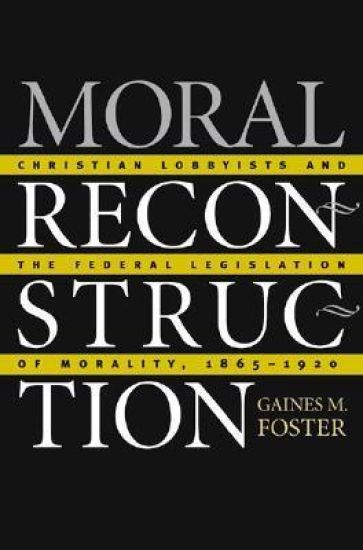
Moral Reconstruction

Moral Reconstruction

Foster Gaines M.

The University of North Carolina Press
2002
nidottu
Between 1865 and 1920, Congress passed laws to regulate obscenity, sexuality, divorce, gambling, and prizefighting. It forced Mormons to abandon polygamy, attacked interstate prostitution, made narcotics contraband, and stopped the manufacture and sale of alcohol. Gaines Foster explores the force behind this unprecedented federal regulation of personal morality - a combined Christian lobby. Foster analyzes the fears of appetite and avarice that led organizations such as the Women's Christian Temperance Union and the National Reform Association to call for moral legislation and examines the efforts and interconnections of the men and women who lobbied for it. His account underscores the crucial role white southerners played in the rise of moral reform after 1890. With emancipation, white southerners no longer needed to protect slavery from federal intervention, and they seized on moral legislation as a tool for controlling African Americans. Enriching our understanding of the aftermath of the Civil War and the expansion of national power, Moral Reconstruction also offers valuable insight into the link between historical and contemporary efforts to legislate morality.
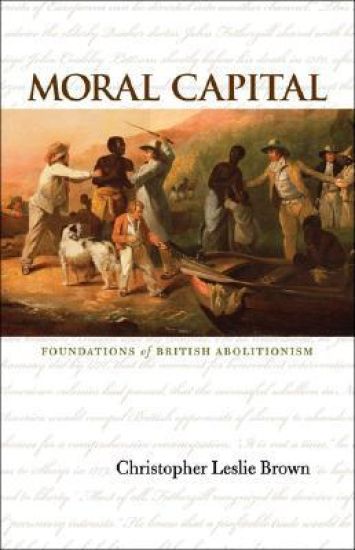
Moral Capital

Moral Capital

Brown Christopher Leslie

The University of North Carolina Press
2006
nidottu
Revisiting the origins of the British antislavery movement of the late eighteenth century, Christopher Leslie Brown challenges prevailing scholarly arguments that locate the roots of abolitionism in economic determinism or bourgeois humanitarianism. Brown instead connects the shift from sentiment to action to changing views of empire and nation in Britain at the time, particularly the anxieties and dislocations spurred by the American Revolution. The debate over the political rights of the North American colonies pushed slavery to the fore, Brown argues, giving antislavery organizing the moral legitimacy in Britain it had never had before. The first emancipation schemes were dependent on efforts to strengthen the role of the imperial state in an era of weakening overseas authority. Brown connects disparate strands of the British Atlantic world and brings into focus shifting developments in British identity, attitudes toward Africa, definitions of imperial mission, the rise of Anglican evangelicalism, and Quaker activism. He shows that the abolitionist movement derived its power from a profound yearning for moral worth in the aftermath of defeat and American independence. Thus abolitionism proved to be a cause for the abolitionists themselves as much as for enslaved Africans.
Moral Emotions

Moral Emotions

Anthony J. Steinbock

Northwestern University Press
2014
nidottu
Moral Emotions builds upon the philosophical theory of persons begun in Phenomenology and Mysticism and marks a new stage of phenomenology. Author Anthony J. Steinbock finds personhood analysing key emotions, called moral emotions. Moral Emotions offers a systematic account of the moral emotions, described here as pride, shame, and guilt as emotions of self-given’s; repentance, hope, and despair as emotions of possibility; and trusting, loving, and humility as emotions of otherness. The author argues these reveal basic structures of interpersonal experience. By exhibiting their own kind of cognition and evidence, the moral emotions not only help to clarify the meaning of person, they reveal novel concepts of freedom, critique, and normativity. As such, they are able to engage our contemporary social imaginaries at the impasse of modernity and postmodernity.
Moral Tales

Moral Tales

Jules Laforgue

NEW DIRECTIONS PUBLISHING CORPORATION
1985
nidottu
When Jules Laforgue's Moralit s l gendaires was published in 1887 a few months after his death at the age of twenty-seven, it was hailed as a masterpiece. In the words of Remy de Gourmont, it gave "the sensation (specially rare) that we have never read anything like it: the grape with all its velvet hues in the morning light, but with curious reflections and an air as if the seeds within had become frozen by a breath of ironic wind come from some place farther than the pole." Subsequent readers have agreed. The book, which parodies great figures of literature and legend, Hamlet, Lohengrin, and Salome, was an important influence on James Joyce and T. S. Eliot as well as on any number of French poets from Guillaume Apollinaire to Jacquest Pr vert. In his introduction to this lively translation, William Jay Smith points out that Laforgue had hit upon a wholly modern approach: "The heroes of the past must be recreated by each human consciousness in its own way: they are perpetually waiting to be reborn." Their rebirth, in the wit and elegance of these finely wrought tales that Smith has carried over into English is a joy to contemplate.
Moral Minority

Moral Minority

David R. Swartz

University of Pennsylvania Press
2014
pokkari
In 1973, nearly a decade before the height of the Moral Majority, a group of progressive activists assembled in a Chicago YMCA to strategize about how to move the nation in a more evangelical direction through political action. When they emerged, the Washington Post predicted that the new evangelical left could "shake both political and religious life in America." The following decades proved the Post both right and wrong—evangelical participation in the political sphere was intensifying, but in the end it was the religious right, not the left, that built a viable movement and mobilized electorally. How did the evangelical right gain a moral monopoly and why were evangelical progressives, who had shown such promise, left behind? In Moral Minority, the first comprehensive history of the evangelical left, David R. Swartz sets out to answer these questions, charting the rise, decline, and political legacy of this forgotten movement. Though vibrant in the late nineteenth century, progressive evangelicals were in eclipse following religious controversies of the early twentieth century, only to reemerge in the 1960s and 1970s. They stood for antiwar, civil rights, and anticonsumer principles, even as they stressed doctrinal and sexual fidelity. Politically progressive and theologically conservative, the evangelical left was also remarkably diverse, encompassing groups such as Sojourners, InterVarsity Christian Fellowship, Evangelicals for Social Action, and the Association for Public Justice. Swartz chronicles the efforts of evangelical progressives who expanded the concept of morality from the personal to the social and showed the way—organizationally and through political activism—to what would become the much larger and more influential evangelical right. By the 1980s, although they had witnessed the election of Jimmy Carter, the nation's first born-again president, progressive evangelicals found themselves in the political wilderness, riven by identity politics and alienated by a skeptical Democratic Party and a hostile religious right. In the twenty-first century, evangelicals of nearly all political and denominational persuasions view social engagement as a fundamental responsibility of the faithful. This most dramatic of transformations is an important legacy of the evangelical left.
Moral Victories in the Battle for Congress

Moral Victories in the Battle for Congress

Marty Cohen

University of Pennsylvania Press
2019
sidottu
While Christian conservatives had been active in national politics for decades and had achieved a seat at the table by working with the Republican Party, the 1980s and 1990s saw them make significant strides by injecting issues of moral traditionalism into U.S. House races across the country. Christian conservative activists worked diligently to nominate friendly candidates and get them elected. These moral victories transformed the Republican House delegation into one that was much more culturally conservative and created a new Republican majority. In Moral Victories, Marty Cohen seeks to chronicle this significant political phenomenon and place it in both historical and theoretical contexts. This is a story not only of the growing importance of moral issues but also of the way party coalitions change, and how this particular change began with religiously motivated activists determined to ban abortion, thwart gay rights, and restore traditional morality to the country. Beginning in the early 1980s, and steadily building from that point, religious activists backed like-minded candidates. Traditional Republican candidates, more concerned about taxes and small government, resisted the newcomers and were often defeated. As a result, increasing numbers of House Republican nominees were against abortion and gay rights. Voters responded by placing moral issues above their interests in economic policies, which led to the election of ever more socially conservative representatives. As a result, the House Republican caucus evolved from a body that advocated largely for low taxes and small government to one equally invested in moral and social issues, especially abortion and gay rights. The new moralistic Republican candidates were able to win in districts where traditional business Republicans could not, thereby creating the foundation for a durable Republican majority in the House and reshaping the American political landscape.
Moral Evil and Redemptive Suffering

Moral Evil and Redemptive Suffering

University Press of Florida
2002
sidottu
This book, a collection of nineteenth- and twentieth-century documents by African-Americans, traces the progression of black Christian theology's dominant response to the dilemma of evil in a God-protected world: the notion of suffering as redemptive. As the first extensive historical treatment of the problem of evil in African-American religious thinking, this anthology consists in great part of primary documents authored by a range of black theologians, speaking for themselves on theodicy. Supplemented by the editor's analyses of redemptive-suffering arguments and their consequences for black Christian thought and practice, the selections trace the historical development of a primary strand of African-American theology. The authors challenge traditional understandings of radical black religious thought and point out contradictions inherent in the words of black religious leaders. Documents show that black religions historically regarded as progressive have at their theological core an understanding of human suffering as redemptive. The most significant writings by African-American thinkers in this area have been compiled along cross-denominational and doctrinal lines. They include documents from Methodists and Baptists, Muslims and Catholics - not only from church leaders but also from lay people and political leaders. The volume brings clarity to the historical and epistemological underpinnings of one of the most pressing issues faced by African-American Christians.
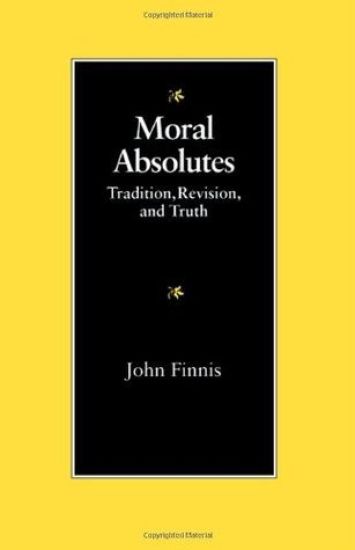
Moral Absolutes

Moral Absolutes

J.M. Finnis

The Catholic University of America Press
1991
nidottu
Moral Absolutes sets forth a vigorous but careful critique of much recent work in moral theology. It is illustrated with examples from the most controversial aspects of Christian moral doctrine, and a frank account is given of the roots of the upheaval in Roman Catholic moral theology in and after the 1960s. Essential reading for students of theology, ethics, and philosophy. McGivney Lectures.
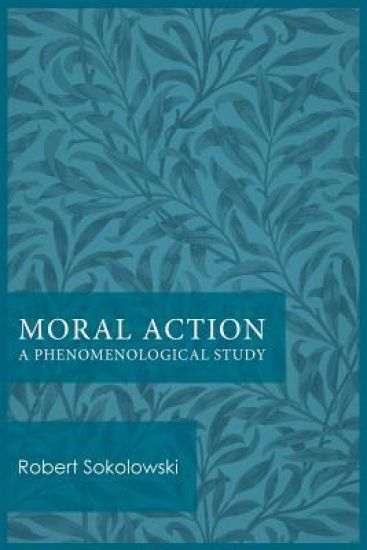
Moral Action

Moral Action

Robert Sokolowski

The Catholic University of America Press
2017
nidottu
The language he employs is almost wholly accessible to thinkers of the most disparate disciplines, and when technical terms are introduced, they are coupled with intelligible definitions. Indeed, it is precisely because of these two facets of his work that Sokolowski's insightful descriptions and subsequent analyses can be the subject of debate and a foundation for future investigations into moral philosophy.
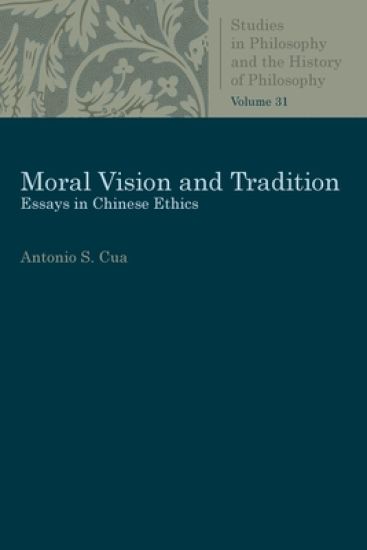
Moral Vision and Tradition

Moral Vision and Tradition

Antonio S. Cua

The Catholic University of America Press
2018
nidottu
This volume offers a comprehensive philosophical study of Confucian ethics-its basic insights and its relevance to contemporary Western moral philosophy. Distinguished writer and philosopher A. S. Cua presents fourteen essays which deal with various problems arising in the philosophical explication of the nature of Chinese ethical thought. Offering a unique analytical approach, Cua focuses on the conceptual and dialectical aspects of Confucian ethics. Among the topics discussed are: the nature and significance of the Chinese Confucian moral vision of tao; the complementary insights of Classical Taoism, namely of Lao Tzu and Chuang Tzu; and the logical and rhetorical aspects of Confucian ethics. Perhaps more relevant to contemporary East-West ethical discourse, several essays present an introduction to a systematic Confucian moral philosophy. Cua explains the idea of a living, Confucian, ethical tradition and highlights the problem of interpreting the cardinal concepts of Confucian ethics as an ethics of virtue. Much of the effort is spent in shaping concepts such as jen (humanity), I (rightness), and li (ritual propriety) in the light of the Confucian ideal or vision of tao. Cua concludes with a discussion of the possibility of reasoned discourse, aiming at a resolution of intercultural, ethical conflict. This book will appeal to a broad spectrum of scholars interested in ethics, Chinese philosophy, comparative Chinese and Western ethical thought, and Confucianism.
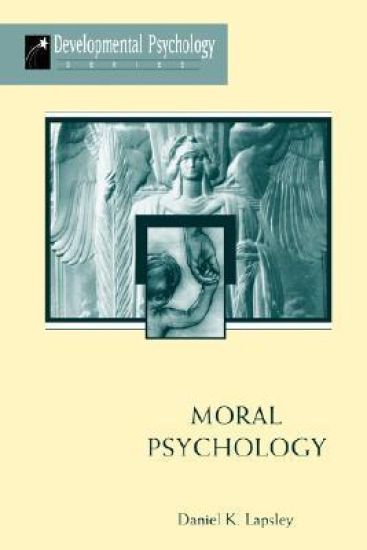
Moral Psychology

Moral Psychology

Daniel K Lapsley

Westview Press Inc
1996
nidottu
This book, a review of the psychological literatures with allied traditions in ethics, emphasizes parenting and educational strategies for influencing moral behavior, reasoning, and character development and charts a line of research for the "post-Kohlbergian era" in moral psychology.