Kirjojen hintavertailu. Mukana 12 083 983 kirjaa ja 12 kauppaa.

Kirjahaku

Etsi kirjoja tekijän nimen, kirjan nimen tai ISBN:n perusteella.

1000 tulosta hakusanalla Marianne Stringer

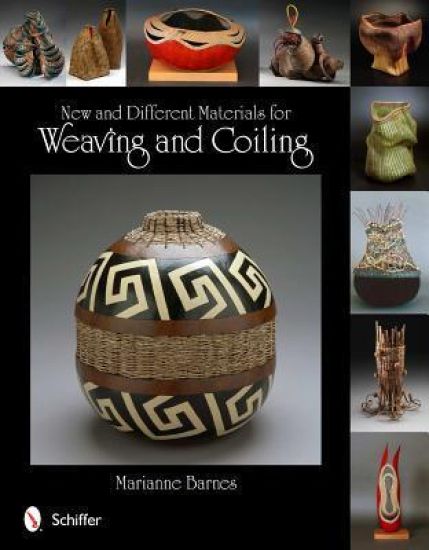
New and Different Materials for Weaving and Coiling

New and Different Materials for Weaving and Coiling

Marianne Barnes

Schiffer Publishing Ltd
2012
nidottu
An ever-widening range of materials is being used by today's crafters to weave and coil baskets and to decorate gourds. Over 350 color images display the raw materials, techniques for their use, and final works of art created with them. Along with traditional materials such as reeds, white oak, ash, vines, plants, grasses, and bark, kudzu, grapevines, iris, sweetgrass, paper and wire provide new possibilities. Information is included on where to find natural materials, and how to collect and prepare them for weaving. Exciting uses for alternative materials are also explored, including wire, mesh, and recycled materials. Tutorials and projects from well-known weavers and gourd artists, along with an extensive list of resources, make this book a must have for weavers, crafters, and anyone with a passion for handcrafted fiber art.
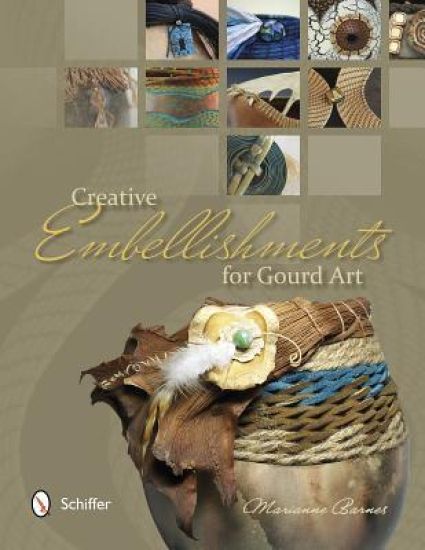
Creative Embellishments for Gourd Art

Creative Embellishments for Gourd Art

Marianne Barnes

Schiffer Publishing Ltd
2014
nidottu
Gourds are wonderful palettes for all types of art, with a vast array of materials available for everything from decorating crafty, cute gourds to making serious gourd art. Through 300 color images and tutorials from several contributing artists, see how embellishments can add variety to your gourd designs. Beads, metal, wire, clay, antlers, and other art materials are used to give character to a gourd mask, dress up a gourd doll, or add the final touch to gourd jewelry and holiday-themed gourd decorations. There is projects for all skill levels, whether you are new to gourds or a seasoned gourd artist. With patterns and a gallery of completed works, this is a fun book that will stimulate your creativity and inspire ideas for embellishing your own gourds.
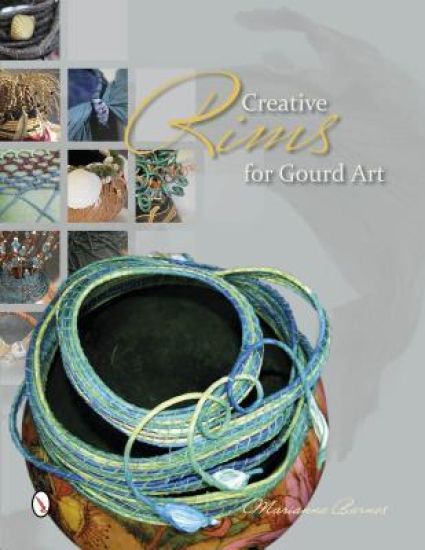
Creative Rims for Gourd Art

Creative Rims for Gourd Art

Marianne Barnes

Schiffer Publishing Ltd
2014
nidottu
In gourd art, there is a vast array of material that can be used when carving and decorating a gourd. When it comes to doing the rim, the options are just as varied. The best rims are those that complement the gourd's overall design. The rim "completes" the gourd--it makes the gourd look finished. Through more than 200 color images and tutorials from contributing artists, learn how to finish the rims of gourd bowls using chip stone, tubular beading, paper, coiling, leather, wire, clay, pine needle, and flowers. The rims illustrated range from the very simple to the extremely elaborate. A gallery of completed works will inspire your own creative ideas. This book is perfect for gourd artists of all skill levels.
Fun for 2 Violins, Vol 1

Fun for 2 Violins, Vol 1

Marianne Rygner

Alfred Publishing Co., Inc.
1994
Tuntematon sidosasu
The three volumes of Fun for 2 Violins are collections of well-known Classical and Baroque repertoire arranged for two violins by Marianne Rygner. Volume 1 contains 18 pieces from the Classical repertoire from composers such as Paganini, Schumann, Brahms, Dvor k, Boccherini, von Weber, Mozart, and Seitz. Volumes 2 and 3 contain eight pieces each from the Baroque repertoire from composers such as Bach, Vivaldi, Corelli, Lully, Rameau, Veracini, and Fiocco. Rygner has made an effort to keep the first violin parts as close to the original score as possible. The second violin parts are freely adapted from the original composition. A list of the pieces and composers is included for further study.
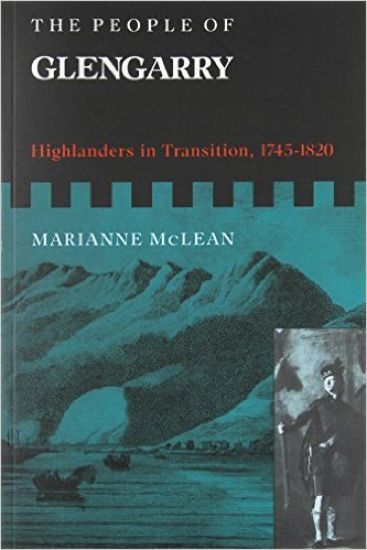
The People of Glengarry

The People of Glengarry

Marianne McLean

McGill-Queen's University Press
1993
nidottu
Using a wide array of published and unpublished sources, McLean examines in detail nine group emigrations that left western Inverness between 1785 and 1802 for Glengarry County in Upper Canada (now Ontario). She describes how, once in North America, they built a new Highland community in an attempt to ensure each family's access to the land. By revealing the pattern of Highland emigration to Glengarry County - families and friends leaving and/or settling together - McLean confirms Bernard Bailyn's notion of a "provincial emigrant stream," and offers a convincing explanation for the development of one of Canada's "limited identities."
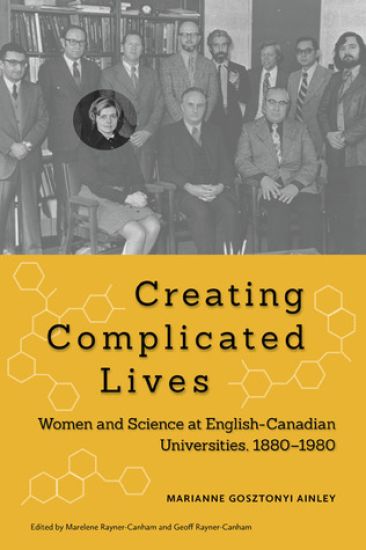
Creating Complicated Lives

Creating Complicated Lives

Marianne Gosztonyi Ainley; Marelene Rayner-Canham; Geoff Rayner-Canham

McGill-Queen's University Press
2012
sidottu
Why have Canadian women scientists been written out of the historical record? Who were they? What did they accomplish? What were their life paths? These are some of the questions answered in this authoritative work. Over decades of research, Marianne Ainley identified, tracked down, and interviewed surviving scientists. Creating Complicated Lives weaves the lives and work of these pioneers with the author's own experiences as an immigrant scientific technician and later a feminist historian. Ainley argues that we must look at the lives of women scientists through a new historical lens that takes into account both the advances of science and concurrent debates about the advancement of women. Rather than having linear career trajectories, many women shifted fields, coped with discrimination, and endeavoured to find niches in which they could make significant contributions. Never before has there been a survey of the lives and work of early Canadian women scientists. This nuanced study brings their stories to light, comparing, contrasting, and interpreting their very complicated lives.
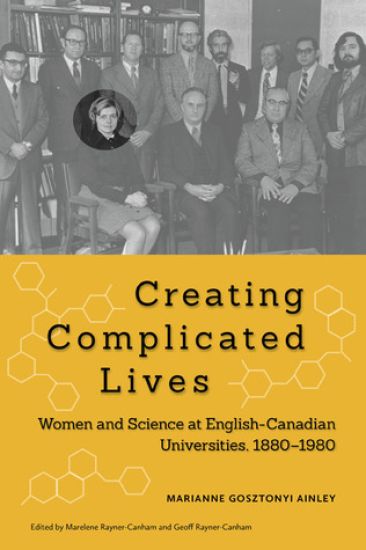
Creating Complicated Lives

Creating Complicated Lives

Marianne Gosztonyi Ainley; Marelene Rayner-Canham; Geoff Rayner-Canham

McGill-Queen's University Press
2012
nidottu
Why have Canadian women scientists been written out of the historical record? Who were they? What did they accomplish? What were their life paths? These are some of the questions answered in this authoritative work. Over decades of research, Marianne Ainley identified, tracked down, and interviewed surviving scientists. Creating Complicated Lives weaves the lives and work of these pioneers with the author's own experiences as an immigrant scientific technician and later a feminist historian. Ainley argues that we must look at the lives of women scientists through a new historical lens that takes into account both the advances of science and concurrent debates about the advancement of women. Rather than having linear career trajectories, many women shifted fields, coped with discrimination, and endeavoured to find niches in which they could make significant contributions. Never before has there been a survey of the lives and work of early Canadian women scientists. This nuanced study brings their stories to light, comparing, contrasting, and interpreting their very complicated lives.
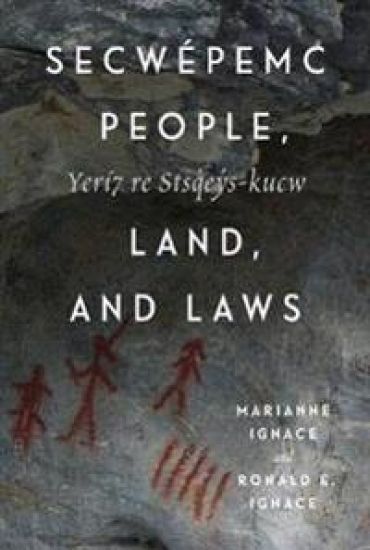
Secwépemc People, Land, and Laws

Secwépemc People, Land, and Laws

Marianne Ignace; Ronald E. Ignace

McGill-Queen's University Press
2017
sidottu
Secwepemc People, Land, and Laws is a journey through the 10,000-year history of the Interior Plateau nation in British Columbia. Told through the lens of past and present Indigenous storytellers, this volume detail how a homeland has shaped Secwepemc existence while the Secwepemc have in turn shaped their homeland. Marianne Ignace and Ronald Ignace, with contributions from ethnobotanist Nancy Turner, archaeologist Mike Rousseau, and geographer Ken Favrholdt, compellingly weave together Secwepemc narratives about ancestors' deeds. They demonstrate how these stories are the manifestation of Indigenous laws (stsq'ey') for social and moral conduct among humans and all sentient beings on the land, and for social and political relations within the nation and with outsiders. Breathing new life into stories about past transformations, the authors place these narratives in dialogue with written historical sources and knowledge from archaeology, ethnography, linguistics, earth science, and ethnobiology. In addition to a wealth of detail about Secwepemc land stewardship, the social and political order, and spiritual concepts and relations embedded in the Indigenous language, the book shows how between the mid-1800s and 1920s the Secwepemc people resisted devastating oppression and the theft of their land, and fought to retain political autonomy while tenaciously maintaining a connection with their homeland, ancestors, and laws. An exemplary work in collaboration, Secwepemc People, Land, and Laws points to the ways in which Indigenous laws and traditions can guide present and future social and political process among the Secwepemc and with settler society.
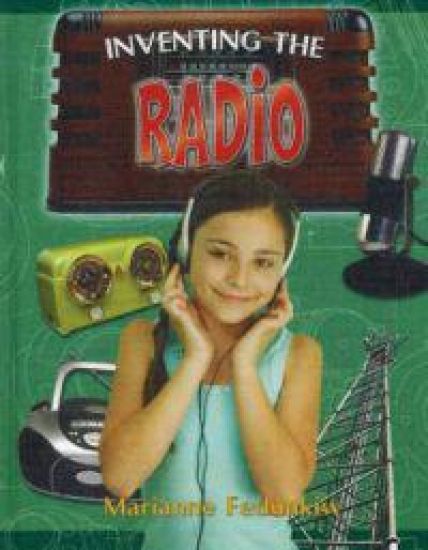
Inventing the Radio

Inventing the Radio

Marianne Fedunkiw

Crabtree Publishing Co,Canada
2009
nidottu
Ages 8 to 14 years. The first successful radio transmission forever changed the way humans communicate, share news, and enjoy entertainment. This comprehensive book combines both the history and technology behind radio through the ages, documenting the earliest experiments with radio waves to the arrival of podcasting. Other topics include: how people communicated information before radio; Reginald Fessenden's first voice transmission; early radio stations and the advent of commercials; ham radio operators; the Golden Age of radio broadcasting; radios in daily life, including shortwave, Citizens Band, satellite, and digital radio.
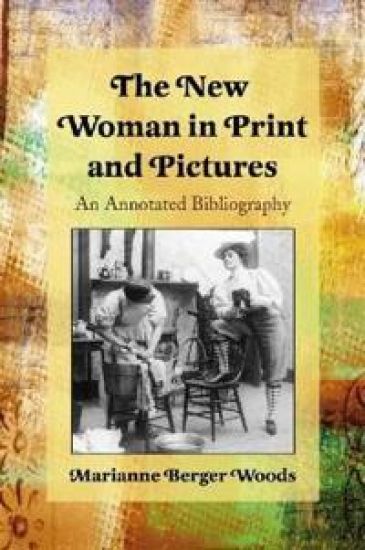
The New Woman in Print and Pictures

The New Woman in Print and Pictures

Marianne Berger Woods

McFarland Co Inc
2009
pokkari
Although feminist women have existed throughout history, the term "New Woman" wasn't officially coined until 1894, when British novelists began to address the concept of the New Woman through discussions of female suffrage, dress reform, women's advances toward more legal rights, birth control, sexual freedom, and women working outside the home. This annotated bibliography includes original novels and articles printed from 1894 to 1944, the era most closely associated with the New Woman. It includes all period novels with a New Woman protagonist and all period articles with the New Woman as primary subject, along with several poems, cartoons, advertisements, and artworks. The bibliography also includes critical literature published worldwide from the 1960s to 2008 that examines the primary material included in the first section. Because the New Woman was the target of many derisive articles, poems, and visual works, these critical response pieces are included.
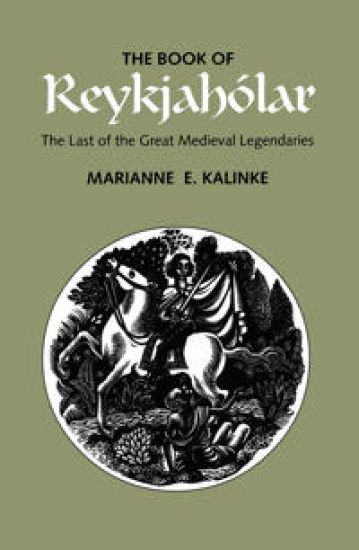
The Book of Reykjaholar

The Book of Reykjaholar

Marianne E. Kalinke

University of Toronto Press
1996
pokkari
The Book of Reykjahólar, produced on the very eve of the Reformation, investigates what may be considered the last medieval legendary. The legendary's significance resides in its preserving in Icelandic translation a group of otherwise unattested medieval Low German saints' lives. Marianne E. Kalinke presents a literary analysis of the Reykjahólar legendary, demonstrating what kind of sources the translator used in his compilation and how he collected, combined, and adapted these texts to suit his Icelandic audience. The book also offers stylistic, thematic, and comparative analyses of the legends. A number of these Christian myths are apocryphal, some transmit folk tales and romances, such as the legend of the hairy anchorite (St John Chrysostom), the search for the highest king (St Christopher), the tale of the grateful lion (St Jerome), the tale of the dragon-slayer (St George), and the story of the holy sinner (Gregorius peccator). The legends belong to the vast corpus of German hagiography, yet the currency of these particular versions is documented today only in translation by virtue of their inclusion in this Icelandic legendary. The book opens with a survey of the development of German hagiography, goes on to a discussion of the religious and intellectual climate in early sixteenth-century Iceland, and then follows with a consideration of the legendary's Low German sources and its production by one of the wealthiest Icelanders of the time, Björn Thorleifsson of Reykjahólar.
Colossians and Philemon

Colossians and Philemon

Marianne Thompson

William B Eerdmans Publishing Co
2005
nidottu
Colossians and Philemon have traditionally been overshadowed by Ephesians and Philippians, which are thought to more clearly express undisputedly Pauline theology. But, in this new commentary - the second "Two Horizons" volume to be published - Marianne Meye Thompson values the unique Colossian formulation of the gospel in terms of creation and reconciliation rather than justification by faith. While Thompson accepts Paul as the author of "Colossians and Philemon", she does not gloss over their distinctiveness from his other epistles.
God of the Gospel of John

God of the Gospel of John

Marianne Meye Thompson

William B Eerdmans Publishing Co
2001
nidottu
While there are numerous studies of God in the Old Testament, the concept of God has largely been ignored as a subject of inquiry in contemporary New Testament theology. As this superb work by Marianne Meye Thompson shows, however, an understanding of the identity of God is central to the New Testament, particularly to the Gospel of John. Thompson here offers the first comprehensive study of the concept of God in John's Gospel. She shows that one must first grasp the importance of God to John before one can properly appreciate the Gospel's Christology and overarching message. By arguing that John is rightly understood to be a -theocentric- work, Thompson challenges the prevailing theory that John is primarily concerned with Christology. While Thompson uses traditional historical and exegetical approaches to the New Testament and ancient sources, her study is mainly theological in scope. She asks how John portrays God and how, after reading the Gospel, we ought to speak of the identity of God. Unlike many recent studies of John, this one does not try to reconstruct the history behind the text but, rather, tries to fully illumine the theological content of John's message. A seminal study with lasting implications for New Testament theology, The God of the Gospel of John will become a standard text for students of the New Testament.
De Vulgari Eloquentia

De Vulgari Eloquentia

Marianne Shapiro

University of Nebraska Press
1990
sidottu
Written in 1303-05, when Dante was in political exile from his native Florence, De vulgari eloquentia addresses the problem of how to raise the Italian language to the status of Latin in the esteem of the literate public. It is the fullest and most important document concerning vernacular writing in the Middle Ages—indeed, the earliest work of literary criticism dealing with a vernacular language. Marianne Shapiro offers the most detailed discussion in English of De vulgari eloquentia, whose form and spirit reflect Dante's political unrest and alienation. Hers is the first work in any language to analyze and explain the meaning of the grammatical and rhetorical terminology that Dante used in his treatise. And because her translation—included here—is based on a thorough exegesis of that terminology, it will be recognized as definitive. Shapiro's translation will be of special interest to medievalists and to serious readers of The Divine Comedy. In a later section, she considers the less precursors of Dante as a writer of the "Romance idiom" and their influence on him. Then she concentrates on the least studied aspects of the treatise in order to reveal its profound affiliations with late medieval grammatical investigations—it is possible to see in Dante "a grammarian beneath the poet." Her conclusion summarizes the apparent textual contradictions and the significance. Thus, this book provides a thorough historical, philosophical, and rhetorical context for De vulgari eloquentia and a new English translation that is enriched by that scholarship.
Our Word Is Our Bond

Our Word Is Our Bond

Marianne Constable

Stanford University Press
2014
sidottu
Words can be misspoken, misheard, misunderstood, or misappropriated; they can be inappropriate, inaccurate, dangerous, or wrong. When speech goes wrong, law often steps in as itself a speech act or series of speech acts. Our Word Is Our Bond offers a nuanced approach to language and its interaction and relations with modern law. Marianne Constable argues that, as language, modern law makes claims and hears claims of justice and injustice, which can admittedly go wrong. Constable proposes an alternative to understanding law as a system of rules, or as fundamentally a policy-making and problem-solving tool. Constable introduces and develops insights from Austin, Cavell, Reinach, Nietzsche, Derrida and Heidegger to show how claims of law are performative and passionate utterances or social acts that appeal implicitly to justice. Our Word Is Our Bond explains that neither law nor justice are what lawyers and judges say, nor what officials and scholars claim they are. However inadequate our law and language may be to the world, Constable argues that we know our world and name our ways of living and being in it through law and language. Justice today, however impossible to define and difficult to determine, depends on relations we have with one another through language and on the ways in which legal speech—the claims and responses that we make to one another in the name of the law—acts.
Our Word Is Our Bond

Our Word Is Our Bond

Marianne Constable

Stanford University Press
2014
pokkari
Words can be misspoken, misheard, misunderstood, or misappropriated; they can be inappropriate, inaccurate, dangerous, or wrong. When speech goes wrong, law often steps in as itself a speech act or series of speech acts. Our Word Is Our Bond offers a nuanced approach to language and its interaction and relations with modern law. Marianne Constable argues that, as language, modern law makes claims and hears claims of justice and injustice, which can admittedly go wrong. Constable proposes an alternative to understanding law as a system of rules, or as fundamentally a policy-making and problem-solving tool. Constable introduces and develops insights from Austin, Cavell, Reinach, Nietzsche, Derrida and Heidegger to show how claims of law are performative and passionate utterances or social acts that appeal implicitly to justice. Our Word Is Our Bond explains that neither law nor justice are what lawyers and judges say, nor what officials and scholars claim they are. However inadequate our law and language may be to the world, Constable argues that we know our world and name our ways of living and being in it through law and language. Justice today, however impossible to define and difficult to determine, depends on relations we have with one another through language and on the ways in which legal speech—the claims and responses that we make to one another in the name of the law—acts.
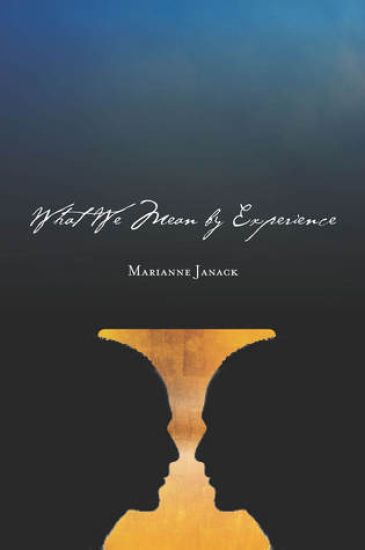
What We Mean by Experience

What We Mean by Experience

Marianne Janack

Stanford University Press
2012
sidottu
Social scientists and scholars in the humanities all rely on first-person descriptions of experience to understand how subjects construct their worlds. The problem they always face is how to integrate first-person accounts with an impersonal stance. Over the course of the twentieth century, this problem was compounded as the concept of experience itself came under scrutiny. First hailed as a wellspring of knowledge and the weapon that would vanquish metaphysics and Cartesianism by pragmatists like Dewey and James, by the century's end experience had become a mere vestige of both, a holdover from seventeenth-century empiricist metaphysics. This devaluation of experience has left us bereft, unable to account for first-person perspectives and for any kind of agency or intentionality. This book takes on the critique of empiricism and the skepticism with regard to experience that has issued from two seemingly disparate intellectual strains of thought: anti-foundationalist and holistic philosophy of science and epistemology (Kuhn and Rorty, in particular) and feminist critiques of identity politics. Both strains end up marginalizing experience as a viable corrective for theory, and both share notions of human beings and cognition that cause the problem of the relation between experience and our theories to present itself in a particular way. Indeed, they render experience an intractable problem by opening up a gap between a naturalistic understanding of human beings and an understanding of humans as cultural entities, as non-natural makers of meaning. Marianne Janack aims to close this gap, to allow us to be naturalistic and hermeneutic at once. Drawing on cognitive neuroscience, the pragmatist tradition, and ecological psychology, her book rescues experience as natural contact with the world.
What We Mean by Experience

What We Mean by Experience

Marianne Janack

Stanford University Press
2012
pokkari
Social scientists and scholars in the humanities all rely on first-person descriptions of experience to understand how subjects construct their worlds. The problem they always face is how to integrate first-person accounts with an impersonal stance. Over the course of the twentieth century, this problem was compounded as the concept of experience itself came under scrutiny. First hailed as a wellspring of knowledge and the weapon that would vanquish metaphysics and Cartesianism by pragmatists like Dewey and James, by the century's end experience had become a mere vestige of both, a holdover from seventeenth-century empiricist metaphysics. This devaluation of experience has left us bereft, unable to account for first-person perspectives and for any kind of agency or intentionality. This book takes on the critique of empiricism and the skepticism with regard to experience that has issued from two seemingly disparate intellectual strains of thought: anti-foundationalist and holistic philosophy of science and epistemology (Kuhn and Rorty, in particular) and feminist critiques of identity politics. Both strains end up marginalizing experience as a viable corrective for theory, and both share notions of human beings and cognition that cause the problem of the relation between experience and our theories to present itself in a particular way. Indeed, they render experience an intractable problem by opening up a gap between a naturalistic understanding of human beings and an understanding of humans as cultural entities, as non-natural makers of meaning. Marianne Janack aims to close this gap, to allow us to be naturalistic and hermeneutic at once. Drawing on cognitive neuroscience, the pragmatist tradition, and ecological psychology, her book rescues experience as natural contact with the world.