In aiming to understand and model peoples’ out-of-home movements, the academic field of transport planning is confronted with two major challenges. Firstly, leisure travel is increasing in importance and is more complex and variable than work-related travel, being less rigid in temporal and spatial patterns and more influenced by external factors such as social contacts or weather conditions. Secondly, traditional aggregated transport models do not include any information on peoples’ social interactions or their personal social networks. In contrast, the recent development and availability of disaggregated models allows more detailed modelling of elements such as individual characteristics, motivations, constraints and travel costs, as well as a consideration of influences from an actor’s social environment. People travel not only within an infrastructure but also within a social structure. These two main factors have driven transport planners to focus on peoples’ interaction and their social network. In recent years there have been a remarkable number of data collection efforts in the field, surveying information on the link between travel behaviour and social motivation. Providing an overview of selected exemplary studies, this volume addresses the overlap between transport planning and methods of social network analysis; applied methods of social network analysis and related empirical results; and current challenges and new research questions in this field.
The enthralling story of the German 73rd Fusilier Regiment, the regiment of Ernst Jünger, author of the renowned Storm of Steel, as it fought through the major campaigns of World War I’s Western Front. Combining traditional military history with a trench-level soldier’s view of the Great War, Dr Matthias Strohn tracks the experiences of an elite German regiment throughout the conflict, following the men who fought and died in the service of what would ultimately prove to be a futile cause. The German 73rd Fusilier Regiment spent the whole of World War I on the Western Front and was one of the Imperial German Army’s most elite units. Starting with the occupation of Liège, it took part in nearly every major campaign in the West, including the Champagne offensives, the Somme, Vimy Ridge, Passchendaele and the Operation Michael offensives. Using the personal accounts of the soldiers themselves, including Ernst Jünger, author of Storm of Steel, this engrossing story of a regiment at war presents the horror of trench warfare on a human scale, through the eyes of ordinary men-at-arms, as they fought for honour and survival in military history’s most brutal theatre of combat.
In Social Life, the authors highlight, explain, and scrutinize socio-theoretical analyses of contemporary social relations and conditions - put forward by eight modern social theorists - and analyse how these have informed sociological inquiries into people’s lives in today’s social world. The book discusses the works of the following social theorists: Anthony Giddens Pierre Bourdieu Bruno Latour Donna Haraway Zygmunt Bauman Jean-Francois Lyotard Michel Foucault Jean Baudrillard In each chapter, the authors identify the key components of each theorist’s conception of society and apply the theories outlined to specific, modern phenomena. This connection with modern-day phenomena allows for a critical interrogation of issues in contemporary society, including: Inequality and Capital, Power, Fear and Terrorism, Immune System Discourse, Suffering, and Climate Change. Essential reading for all sociology students studying social theory and the works of modern social theorists.
In Social Life, the authors highlight, explain, and scrutinize socio-theoretical analyses of contemporary social relations and conditions - put forward by eight modern social theorists - and analyse how these have informed sociological inquiries into people’s lives in today’s social world. The book discusses the works of the following social theorists: Anthony Giddens Pierre Bourdieu Bruno Latour Donna Haraway Zygmunt Bauman Jean-Francois Lyotard Michel Foucault Jean Baudrillard In each chapter, the authors identify the key components of each theorist’s conception of society and apply the theories outlined to specific, modern phenomena. This connection with modern-day phenomena allows for a critical interrogation of issues in contemporary society, including: Inequality and Capital, Power, Fear and Terrorism, Immune System Discourse, Suffering, and Climate Change. Essential reading for all sociology students studying social theory and the works of modern social theorists.
First secretary to the Aragonese kings of Naples, Giovanni Pontano (1429-1503) was a key figure of the Italian Renaissance. A poet and a philosopher of high repute, Pontano’s works offer a reflection on the achievements of fifteenth-century humanism and address major themes of early modern moral and political thought.Taking his defining inspiration from Aristotle, Pontano wrote on topics such as prudence, fortune, magnificence, and the art of pleasant conversation, rewriting Aristotle’s Ethics in the guise of a new Latin philosophy, inscribed with the patterns of Renaissance culture. This book shows how Pontano’s rewriting of Aristotelian ethics affected not only his philosophical views, but also his political life and his place in the humanist movement. Drawing on Pontano’s treatises, dialogues, letters, poems and political writings, Matthias Roick presents us with the first comprehensive study of Pontano’s moral and political thought, offering novel insights into the workings of Aristotelian virtue ethics in the early modern period.
Nach dem zweiten Weltkrieg wurden auch in der Sowjetischen Besatzungszone unabh ngige Zeitungen lizenziert, darunter die "Abendpost" in Weimar. Die spannende Geschichte der Zeitung bis zu ihrer Einstellung 1951 gibt einen Einblick in die Anf nge der sozialistischen ra in Th ringen.
Matthias Lange explores in this doctoral thesis the benefits of Enterprise Architecture Management (EAM) by developing a model for the realization of EAM benefits that is validated in an international cross-sectional survey. Matthias researched Enterprise Architectures, Business Transformations, and IT enablement during his doctoral studies at the Institute of Information Systems at the Humboldt-Universit t Berlin and as a visiting scholar at the Carnegie Mellon University in Pittsburgh, PA. Prior to his doctoral studies, he worked for a large top-management consultancy and received a Bachelor and a Master of Science in management information systems from the University of Muenster.
Nell'originale di lingua tedesca si colgono gli aspetti tipici della personalit di un adolescente sveglio, forse un poco pi maturo dei suoi coetanei e che Matthias Czarnetzki ha saputo esprimere con maestria. Felix viene subito catapultato in un mondo strano e in un'avventura che richiede purezza di cuore, non facile da trovare in un adulto. L'autore, ispirandosi a quei filoni della narrativa moderna intrisa di avventure, favole e mitologia (Indiana Jones, i Centauri, le foreste animate ecc.) e tanto cara ai giovani lettori contemporanei, c'immerge nel mondo magico di una quarta dimensione, che poco si allontana dal reale. Un mondo dove autostima e subcosciente hanno un ruolo predominante e dove Felix suo malgrado deve muoversi avendo accettato una sfida. Tra il serio ed il faceto, tra l'ironico e l'austero, il dramma e la farsa, la vicenda segue da vicino il nostro eroe che apprender a vincere quando, cosciente e consapevole delle proprie capacit , non teme di prendere l'iniziativa. Solo cos egli si pu riscattare, evitare la distruzione di Zam ra e assicurare la pace tra nemici millenari. La traduzione italiana, arricchita di qualche scena aggiuntiva, esalta la forza della creativit alla quale possiamo attingere quando crediamo fermamente in uno scopo che in tal modo raggiungeremo con certezza.
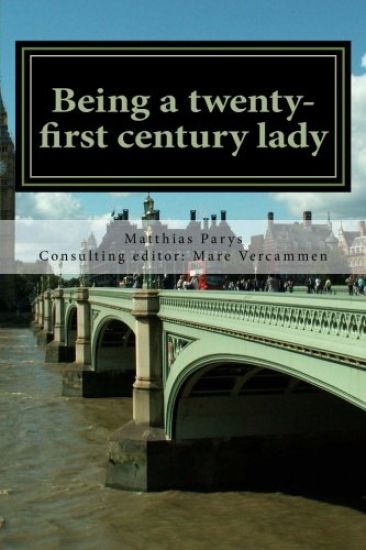
**This book has been replaced by a newer title: "How to be a modern lady", by the same authors. ** Whenever browsing in your local bookstore or online, there's a plethora of books telling you how to be a modern day gentleman. Books telling you how to be a modern lady however, are practically non-existent. In this book, you'll learn everything you need to know about being a tweny-first century lady. We tried to approach the subject as playfully and informally as possible, as an answer to all the boring etiquette books that exsist. Furthermore, we did our best to keep the book pretty brief; that way, you can always carry it around and have a handy reference available at all times. In this book you'll learn how to: * look like a lady * determine if you're in an accepted state of drunkenness * seduce a gentleman, like a lady * learn how to tango and much more
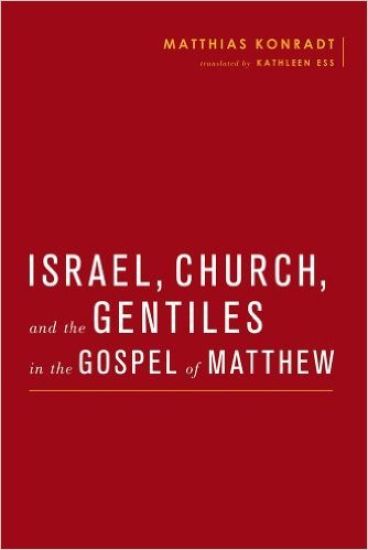
Israel, Church, and the Gentiles in the Gospel of Matthew addresses one of the central theological problems of Matthew's Gospel: what are the relationships between Israel and the Church and between the mission to Israel and the mission to the Gentiles? To answer these questions, Matthias Konradt traces the surprising transition from the Israel-centered words and deeds of Jesus (and his disciples) before Easter to the universal mission of Jesus' earliest followers after his resurrection. Through careful historical and narrative analysis, Konradt rejects the interpretation of the Gospel of Matthew that the Church replaced Israel in God's purposes--that is, the interpretation that because Israel rejected Jesus as Israel's Messiah, the Church replaced Israel in the role of God's chosen people. Konradt instead discovers in Matthew that the Israel- and universally-centered dimensions of God's saving purposes are far more positively connected. Matthew develops a narrative that features Jesus' identity as both the messianic Son of David and the universal Son of God.What developed into a mainly Gentile Church should never think of itself as the "new" or "true" Israel; rather, according to Matthew's Gospel, the Church represents an extension of the promises first made to Israel and now inclusive of the Gentiles.
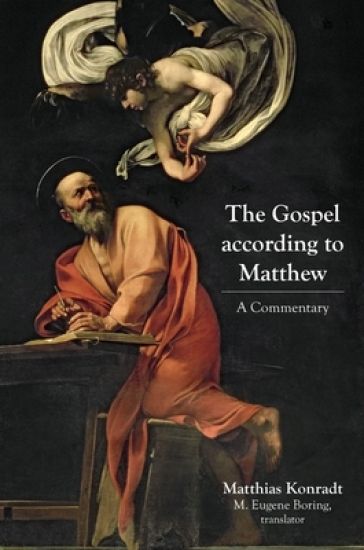
Perhaps the most important discovery in the long history of research on the Gospel of Matthew is that the book represents a self-contained literary whole as it participates in a vibrant intertextual network. Scripture illuminates the gospel story at every step, from the appearance of Jesus to the resistance of the authorities who oppose him. The famed intertextuality of Matthew, when considered alongside the social contexts in which the Matthean community lived, helps us recognize the strategy of this Gospel: the constant references to the scriptural text should assure those addressed that Christ-faithful communities are the true guardians of the theological traditions of Israel. The Gospel according to Matthew provides a comprehensive interpretation of the Gospel of Matthew that draws on the best of modern research. Along with an analysis of the narrative structure, Matthias Konradt discusses the dense network of references to the Scriptures of Israel as well as the historical situation in which the Gospel was composed, namely the conflict between believers in Christ and the predominantly Pharisaic synagogue. Konradt focuses on theological topics such as the narrative unfolding of Jesus' messianic identity as Immanuel, Son of God, and Son of David; Matthew's understanding of discipleship and the church; the role of Israel and the Gentiles; and ethical orientation with its relationship to the Torah.From the richness of Matthew's theological reflection emerges the challenging question of the Gospel's meaning and relevance for today. Modern scholarship has correctly emphasized that Matthew is an inclusive history - it tells the story of the past in a way that reflects and speaks to the experiences of the community. Taking into account a broad sweep of scholarly approaches to this text, Konradt provides a clear outline of the Gospel by tracing the shape of Matthew's masterful narrative dynamics and the evangelist's careful unfolding of theological doctrine.
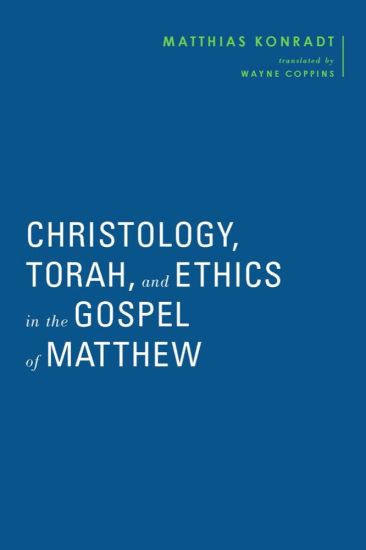
Christology, Torah, and Ethics in the Gospel of Matthew, the tenth and final volume in the Baylor–Mohr Siebeck Studies in Early Christianity series, brings together seven of Matthias Konradt's most important essays on the Gospel of Matthew. Together they highlight key themes of this major early Christian text and demonstrate its formative role in shaping both the identity and theology of the growing Christian movement.The first chapter on the context of Matthew is foundational. It presents the main points of controversy in recent scholarship on the relationship of the Matthean community to Judaism, identifies the interpretive problems that underlie the disagreements, and sketches out perspectives for subsequent scholarship. The next two chapters deal with central aspects of Matthean Christology: chapter 2 with the Davidic-messianic aspects of Matthean Christology and chapter 3 with the character of the Son of God concept in Matthew alongside the controversial question of the meaning of righteousness in Matthew. With chapters 4 and 5, Konradt works out his sophisticated understanding of Matthew's Torah hermeneutic, giving special attention to the interpretation of the antitheses in the Sermon on the Mount and to Matthew's reception and interpretation of the decalogue.Finally, with the analysis of mercy in chapter 6 and the detailed interpretation of the invitation of Jesus in Matthew 11:28–30 in chapter 7, the last two chapters show that Matthean ethics are not exhausted in the interpretation of the Torah. Rather, in the way the Gospel of Matthew brings together Old Testament and early Jewish heritage with an orientation toward the ethical potential of the Christ event, it proves to be one of the main testimonies of New Testament ethics.
Apply design principles to your classes, preparing them for reuse. You will use package design principles to create packages that are just right in terms of cohesion and coupling, and are user- and maintainer-friendly at the same time.The first part of this book walks you through the five SOLID principles that will help you improve the design of your classes. The second part introduces you to the best practices of package design, and covers both package cohesion principles and package coupling principles. Cohesion principles show you which classes should be put together in a package, when to split packages, and if a combination of classes may be considered a "package" in the first place. Package coupling principles help you choose the right dependencies and prevent wrong directions in the dependency graph of your packages.What You'll LearnApply the SOLID principles of class designDetermine if classes belong in the same packageKnow whether it is safe for packages to depend on each otherWho This Book Is ForSoftware developers with a broad range of experience in the field, who are looking for ways to reuse,share, and distribute their code
Was ist dort geschehen, fragst du? Wenn ich dir die Wahrheit sage, wird es deine Vorstellungskraft bersteigen ... - Raimund von Aguilers, Die Eroberung Jerusalems, Jahr des Herrn 1099 Dies ist die wahre Geschichte des Chronisten Raimund von Aguilers, der im Auftrag des Grafen Raimund IV. von Toulouse die Ereignisse des ersten Kreuzzugs niederschrieb, mit all ihren Schrecken und Entbehrungen, Gr ueln und Triumphen. Es ist eine Geschichte von Liebe und Hass, Verzweiflung und Freude. Und von den einfachen Menschen, die zu Figuren wurden in einem Spiel aus Intrigen und Politik, das vor ber 900 Jahren stattfand und bis heute nachhallt. Geplagt von seiner Vergangenheit und seiner Sehnsucht nach einer Welt au erhalb seiner Klostermauern, folgt der junge Benediktiner Raimund dem Aufruf Papst Urbans des Zweiten zum ersten Kreuzzug. Diese au ergew hnliche Pilgerfahrt f hrt ihn nicht nur ber die Grenzen der damals bekannten Welt, sondern er ffnet ihm auch eine Erfahrung menschlicher Gef hle, von denen er in seinem beh teten Leben nie etwas geahnt hatte. Aus der hoffnungsvollen Reise zum Ruhm Gottes wird ein Alptraum ohne Ausweg und Raimund muss sich fragen, ob die Vergebung seiner S nden es wert ist, sein Leben und seine Seele daf r zu opfern. Wie viel Blut darf der Weg ins Paradies kosten?
Adaptive Multimodal Interactive Systems introduces a general framework for adapting multimodal interactive systems and comprises a detailed discussion of each of the steps required for adaptation. This book also investigates how interactive systems may be improved in terms of usability and user friendliness while describing the exhaustive user tests employed to evaluate the presented approaches. After introducing general theory, a generic approach for user modeling in interactive systems is presented, ranging from an observation of basic events to a description of higher-level user behavior. Adaptations are presented as a set of patterns similar to those known from software or usability engineering.These patterns describe recurring problems and present proven solutions. The authors include a discussion on when and how to employ patterns and provide guidance to the system designer who wants to add adaptivity to interactive systems. In addition to these patterns, the book introduces an adaptation framework, which exhibits an abstraction layer using Semantic Web technology.Adaptations are implemented on top of this abstraction layer by creating a semantic representation of the adaptation patterns. The patterns cover both graphical interfaces as well as speech-based and multimodal interactive systems.
Nat rlich gibt es in der Griechenlandkrise nicht nur Verlierer. W hrend der deutsche Steuerzahler viele Milliarden Euro aufbringen muss und die griechische Bev lkerung unter Arbeitslosigkeit und Unsicherheit leidet, gibt es auch echte Gewinner der Krise. Lassen Sie sich die Griechenlandkrise von jemand erkl ren, der von ihr jahrelang profitiert hat. Hier kommt ein waschechter Steuerbetr ger zu Wort. Er wird Ihnen erkl ren, wie einfach Steuerbetrug in Griechenland war und ist. Hier spricht mal kein Politiker oder Wirtschaftsfachmann. Hier spricht einer, der wei wie es in Griechenland funktioniert. Hier wird Ihnen das griechische System anhand von eigenen Erfahrungen und vielen Erlebnissen erz hlt. Aber auch die harten Fakten kommen nicht zu kurz. Alle Daten und Zahlen zu den Kosten der Griechenlandrettung und der griechischen Wirtschaft sind knallhart recherchiert. Wenn die Euro-W hrungsh ter oder die Mitglieder der Troika dieses Buch gelesen h tten, dann w ren uns viel rger und mehrere Milliarden Euro erspart geblieben. St rzen Sie sich also hinein in eine Welt aus Korruption, Betrug, T uschung und F lschung. Sehe Sie das alles einmal mit den Augen eines Steuerbetr gers, der dieses System f r sich arbeiten lie . Und bedenken Sie bitte: Der Albtraum ist noch nicht zu Ende. Noch stecken wir mittendrin In diesem Buch erfahren Sie kuriose Dinge. Dinge, die man kaum f r m glich h lt. Wussten Sie, dass der griechische Ministerpr sident, der Griechenland in den Euro gemogelt hat Pensionsanspr che aus Deutschland hat? Wussten Sie, dass das griechische Verteidigungsministerium die Lizenzen f r die Er ffnung von Kiosken verteilt? Wussten Sie, dass Sie es als Eigent mer eines LKW in Griechenland ganz legal zu echtem Reichtum bringen k nnen? Kennen Sie eigentlich den Unterschied zwischen einem Schmiergeld und einem kleinen Umschlag? Wissen Sie, wie viele Milliarden Euro, Deutschland bisher f r Griechenland locker gemacht hat? Wissen Sie, wohin diese Milliarden geflossen sind? Wo sind die Menschen eigentlich reicher? In Deutschland oder vielleicht doch in Griechenland? Dieses Buch erkl rt bis ins Detail, wie Steuerhinterziehung und das Waschen von Schwarzgeld in Griechenland funktioniert haben. Es wird erkl rt, warum der griechische Staat beides sogar noch f rdert und wir das alles letztlich finanzieren. Matthias Braunmar: F r mich ist die Zukunft der Europ ischen Union so bedeutsam, dass ich nicht bereit bin, diese Zukunft an das Schicksal einer kr nkelnden W hrung zu koppeln. Ich habe von 2002 bis 2012 in Griechenland meinen ersten Wohnsitz gehabt. Ich habe erlebt, was es bedeutet, wenn man so unterschiedliche Volkswirtschaften, wie die Griechenlands und die Deutschlands in eine gemeinsame W hrung zwingt. Man h tte sich die bersetzung der Maastricht-Kriterien in das Griechische bereits ersparen k nnen. Diese Kriterien hatten hier zu keinem Zeitpunkt irgendeine Bedeutung und werden auch niemals in Griechenland eine Bedeutung haben.
Optimize your ALM practices with SAP Cloud ALM! Get started by deploying SAP Cloud ALM, defining your project scope, and exploring the tools you'll use. Walk through process management, requirements management, and fit-to-standard workshops. Create and execute tests and then deploy your project, focusing on release and change management features. Follow a continuous example throughout this guide to ensure your SAP Cloud ALM projects run smoothly!Highlights include:1) Deployment2) SAP Activate3) Agile methodology4) Project scope5) Process management6) Requirements management7) Test management8) Change enablement9) Operations10) Extensions11) Integration
Emotion Regulation is currently one of the most popular topics in clinical psychology. Numerous studies demonstrate that deficits in emotion regulation skills are likely to help maintain various forms of psychological disorders. Thus, enhancing emotion regulation has become a major target in psychotherapeutic treatments. For this purpose, a number of therapeutic strategies have been developed and shown to be effective. However, for practitioners it is often difficult to decide which of these strategies they should use or how they can effectively combine empirically-validated strategies. Thus, the authors developed the Affect Regulation Training as a transdiagnostic intervention which systematically integrates strategies from cognitive behavior therapy, mindfulness-based interventions, emotion-focused therapy, and dialectical behavioral therapy. The effectiveness of ART has been demonstrated in several high-quality studies.