This book explores Cormac McCarthy's literature (novels, plays, screenplays, philosophical essays and unpublished archive material) to uncover a distinct literary philosophy. More specifically, this study elucidates how McCarthy articulates a philosophical perspective which pivots on philosophical themes of mortality, the political, education, nihilism, materialism and language. Tracing these themes from the publication of his earliest novels to his most recent philosophical essays, this book argues that McCarthy offers a unique synthesis of spiritual, ethical and materialist concerns, the understanding of which is essential for coming to terms with his literature.
Explains Cormac McCarthy's consistent philosophical preoccupations across the span of his literary output Provides a vital interpretive framework for understanding Cormac McCarthy's literary and philosophical perspectives Offers a systematic study of distinctly philosophical themes present in Cormac McCarthy's work Analyses how Cormac McCarthy offers a unique synthesis of metaphysical and materialist themes Explains the intersection of philosophical and literary themes in McCarthy's work in an accessible way This book explores Cormac McCarthy's literature (novels, plays, screenplays, philosophical essays and unpublished archive material) to uncover a distinct literary philosophy. More specifically, this study elucidates how McCarthy articulates a philosophical perspective which pivots on philosophical themes of mortality, the political, education, nihilism, materialism and language. Tracing these themes from the publication of his earliest novels to his most recent philosophical essays, this book argues that McCarthy offers a unique synthesis of spiritual, ethical and materialist concerns, the understanding of which is essential for coming to terms with his literature.
Cormac McCarthy is renowned as the author of popular and acclaimed novels such as Blood Meridian, All the Pretty Horses, and The Road. Throughout his career, however, McCarthy has also invested deeply in writing for film and theater, an engagement with other forms of storytelling that is often overlooked. He is the author of five screenplays and two plays, and he has been significantly involved with three of the seven film adaptations of his work. In this book, Stacey Peebles offers the first extensive overview of this relatively unknown aspect of McCarthy’s writing life, including the ways in which other artists have interpreted his work for the stage and screen.Drawing on many primary sources in McCarthy’s recently opened archive, as well as interviews, Peebles covers the 1977 televised film The Gardener’s Son; McCarthy’s unpublished screenplays from the 1980s that became the foundation for his Border Trilogy novels and No Country for Old Men; various successful and unsuccessful productions of his two plays; and all seven film adaptations of his work, including John Hillcoat’s The Road (2009) and the Coen brothers’ Oscar-winning No Country for Old Men (2007). Emerging from this narrative is the central importance of tragedy-the rich and varied portrayals of violence and suffering and the human responses to them-in all of McCarthy’s work, but especially his writing for theater and film.
Cormac McCarthy is renowned as the author of popular and acclaimed novels such as Blood Meridian, All the Pretty Horses, and The Road. Throughout his career, however, McCarthy has also invested deeply in writing for film and theater, an engagement with other forms of storytelling that is often overlooked. He is the author of five screenplays and two plays, and he has been significantly involved with three of the seven film adaptations of his work. In this book, Stacey Peebles offers the first extensive overview of this relatively unknown aspect of McCarthy’s writing life, including the ways in which other artists have interpreted his work for the stage and screen.Drawing on many primary sources in McCarthy’s recently opened archive, as well as interviews, Peebles covers the 1977 televised film The Gardener’s Son; McCarthy’s unpublished screenplays from the 1980s that became the foundation for his Border Trilogy novels and No Country for Old Men; various successful and unsuccessful productions of his two plays; and all seven film adaptations of his work, including John Hillcoat’s The Road (2009) and the Coen brothers’ Oscar-winning No Country for Old Men (2007). Emerging from this narrative is the central importance of tragedy-the rich and varied portrayals of violence and suffering and the human responses to them-in all of McCarthy’s work, but especially his writing for theater and film.
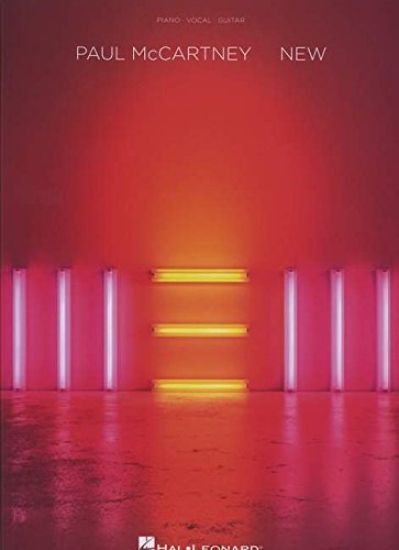
New contains all 15 songs from Paul McCartney's 2013 album of the same name, arranged for Piano, Voice and Guitar.This book includes the album's title track, as well as the songs Appreciate, Early Days, Save Us and more.
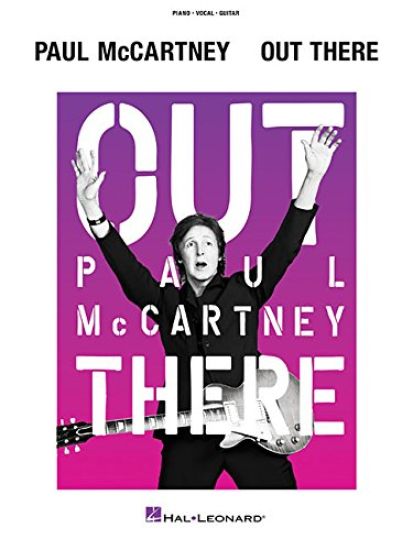
This songbook contains over 30 songs from the set list of Sir Paul McCartney's 2013-2014 concert tour Out There, arranged for Piano, Voice and Guitar.The tour has taken nearly 60 stops, spanning North America as well as South America, Asia, Europe and Central America. Paul McCartney: Out There Tour (PVG) features the hits And I Love Her, Band on the Run, Hey Jude, Live and Let Die, Paperback Writer and many more.
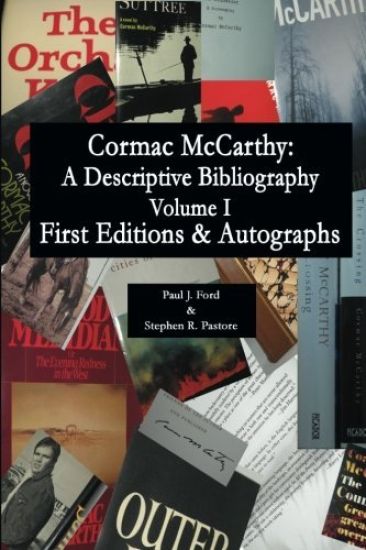
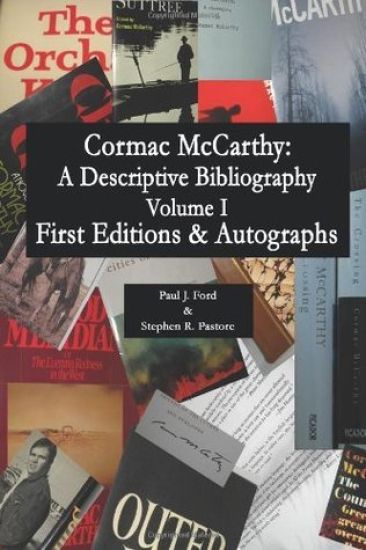
The first authoritative descriptive bibliography of the major author with over 130 full color photographs of all first and collectible editions. A descriptive bibliography of first editions, letters, and autograph material by Cormac McCarthy.
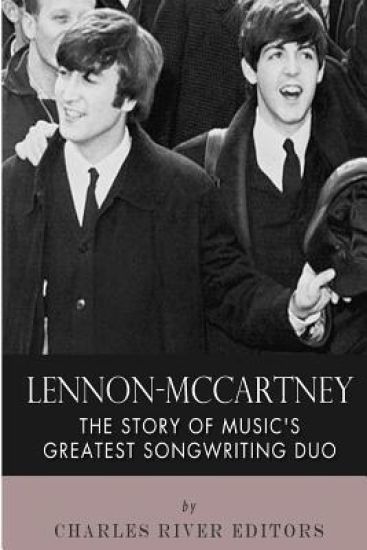
*Includes Suggested Playlists for both Lennon and McCartney. *Includes detailed descriptions of the origins and recording of some of The Beatles' timeless classics, including Tomorrow Never Knows, Strawberry Fields Forever, and A Day in the Life. *Includes descriptions of the Beatles' famous encounters with Bob Dylan and Elvis Presley. *Includes pictures of Lennon, McCartney and important people, places, and events in their lives. *Includes a Bibliography for both Lennon and McCartney for further reading. In 1964, girls all across the United States filled venues, almost literally screamed their heads off, and fainted en masse. Almost from the second they played the first note, The Beatles would be hit with the resounding screams, which made it impossible for them to even hear themselves sing. When they made their American debut on The Ed Sullivan Show in early 1964, they were greeted by young fans who whipped themselves up into such a frenzy that some of them fainted. Beatlemania had struck North America, creating a musical and pop culture phenomenon unlike anything the world had ever seen. At the center of it all was John Lennon and Paul McCartney, the principal songwriting duo who were instrumental in creating the soundtrack of the 1960s, while producing some of the world's most timeless classics. Together with George Harrison and Ringo Starr, Lennon and McCartney propelled The Beatles to unprecedented heights, sparking Beatlemania on two sides of the Atlantic and experimenting with their sound in ways that revolutionized rock and inspired bands across various musical genres. Through it all, Lennon became one of the world's most interesting and outspoken men, a complex figure who survived a turbulent upbringing, addictions to drugs, and unstable relationships, only to be tragically killed just as he was settling into a serene, comfortable life. His loss is as widely felt today as it was in December 1980, as people remain in awe of his music and continue to grapple with the contradictory nature of his life and work, which at any given moment could oscillate from his notoriously acerbic wit to the endless optimism of Imagine. McCartney lacked the controversy of Lennon, the spirituality of Harrison, and the silliness of Starr, but he was unquestionably one of the driving forces behind the Beatles' most productive recording periods, especially on the Beatles' seminal Revolver album. It was also McCartney who tried hardest to keep the Beatles together from 1968-1970, even while his perfectionist attention to detail frequently drove his bandmates crazy. Ultimately, it was McCartney who was the first to publicly announce his departure from the Beatles. Sir Paul may have never topped the highs established by the Beatles, but he has gone on to have the longest and most productive solo career of the four. While that was helped in part by the tragic murder of Lennon in 1980, McCartney has nonetheless remained at the forefront of pop culture since 1970, and the Guinness Book of World Records has recognized him as the most successful recording artist of all time. Indeed, McCartney wrote or co-wrote over 30 #1 hits and has sold over 100 million albums and 100 million singles in his music career. Lennon-McCartney chronicles the lives and legacies of the two rock icons and analyzes their lasting musical legacies, humanizing both the rebellious hellion and the "cute" one. Along with suggested playlists of the two's greatest songs, descriptions of the recording and inspiration behind some of their classics, and pictures, you will learn about history's greatest songwriting duo like you never have before.
A black and white version of Cormac McCarthy: A Descriptive Bibliography, which chronicles all of the authors' books complete with photos, and includes essays, publishing history and collector notes.
(Piano/Vocal/Guitar Artist Songbook). This fourth compilation album from Sir Paul features nearly 40 songs from throughout the icon's unrivaled career, and our matching songbook features all of them in arrangements for piano, voice and guitar. Songs include: Another Day * Band on the Run * Dance Tonight * Ebony and Ivory * Goodnight Tonight * Jet * Let 'Em In * Let Me Roll It * Listen to What the Man Said * Live and Let Die * Maybe I'm Amazed * Mull of Kintyre * My Love * No More Lonely Nights * Say Say Say * Silly Love Songs * Uncle Albert/Admiral Halsey * With a Little Luck * and many more.
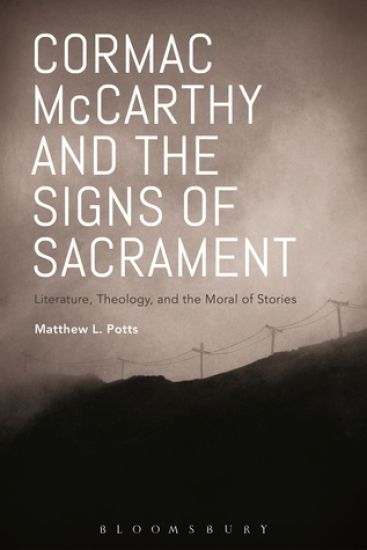
Although scholars have widely acknowledged the prevalence of religious reference in the work of Cormac McCarthy, this is the first book on the most pervasive religious trope in all his works: the image of sacrament, and in particular, of eucharist. Informed by postmodern theories of narrative and Christian theologies of sacrament, Matthew Potts reads the major novels of Cormac McCarthy in a new and insightful way, arguing that their dark moral significance coheres with the Christian theological tradition in difficult, demanding ways. Potts develops this account through an argument that integrates McCarthy’s fiction with both postmodern theory and contemporary fundamental and sacramental theology. In McCarthy’s novels, the human self is always dispossessed of itself, given over to harm, fate, and narrative. But this fundamental dispossession, this vulnerability to violence and signs, is also one uniquely expressed in and articulated by the Christian sacramental tradition. By reading McCarthy and this theology alongside postmodern accounts of action, identity, subjectivity, and narration, Potts demonstrates how McCarthy exploits Christian theology in order to locate the value of human acts and relations in a way that mimics the dispossessing movement of sacramental signs. This is not to claim McCarthy for theology, necessarily, but it is to assert that McCarthy generates his account of what human goodness might look like in the wake of metaphysical collapse through the explicit use of Christian theology.
Cormac McCarthy’s work is attracting an increasing number of scholars and critics from a range of disciplines within the humanities and beyond, from political philosophy to linguistics and from musicology to various branches of the sciences. Cormac McCarthy’s Borders and Landscapes contributes to this developing field of research, investigating the way McCarthy’s writings speak to other works within the broader fields of American literature, international literature, border literature, and other forms of comparative literature. It also explores McCarthy’s literary antecedents and the movements out of which his work has emerged, such as modernism, romanticism, naturalism, eco-criticism, genre-based literature (western, southern gothic), folkloric traditions and mythology.
Although scholars have widely acknowledged the prevalence of religious reference in the work of Cormac McCarthy, this is the first book on the most pervasive religious trope in all his works: the image of sacrament, and in particular, of eucharist. Informed by postmodern theories of narrative and Christian theologies of sacrament, Matthew Potts reads the major novels of Cormac McCarthy in a new and insightful way, arguing that their dark moral significance coheres with the Christian theological tradition in difficult, demanding ways. Potts develops this account through an argument that integrates McCarthy’s fiction with both postmodern theory and contemporary fundamental and sacramental theology. In McCarthy’s novels, the human self is always dispossessed of itself, given over to harm, fate, and narrative. But this fundamental dispossession, this vulnerability to violence and signs, is also one uniquely expressed in and articulated by the Christian sacramental tradition. By reading McCarthy and this theology alongside postmodern accounts of action, identity, subjectivity, and narration, Potts demonstrates how McCarthy exploits Christian theology in order to locate the value of human acts and relations in a way that mimics the dispossessing movement of sacramental signs. This is not to claim McCarthy for theology, necessarily, but it is to assert that McCarthy generates his account of what human goodness might look like in the wake of metaphysical collapse through the explicit use of Christian theology.
Cormac McCarthy’s work is attracting an increasing number of scholars and critics from a range of disciplines within the humanities and beyond, from political philosophy to linguistics and from musicology to various branches of the sciences. Cormac McCarthy’s Borders and Landscapes contributes to this developing field of research, investigating the way McCarthy’s writings speak to other works within the broader fields of American literature, international literature, border literature, and other forms of comparative literature. It also explores McCarthy’s literary antecedents and the movements out of which his work has emerged, such as modernism, romanticism, naturalism, eco-criticism, genre-based literature (western, southern gothic), folkloric traditions and mythology.
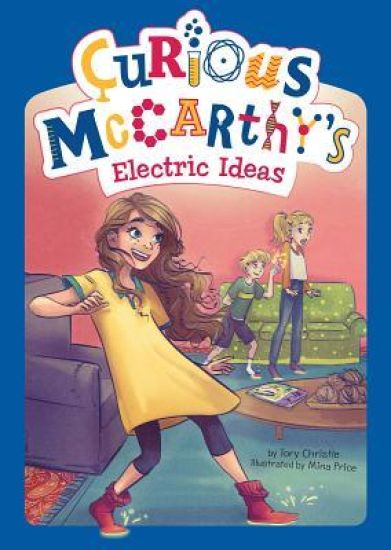
When the power goes out at home, young scientist Curious McCarthy hypothesizes that when there is no electricity at the house, one of the seven McCarthy kids will get in trouble. The power comes back of before the hypothesis is proven true, but Curious's interest in electricity has been sparked. Using funny footnotes, Curious shares her observations of school and home in a crazy story featuring electrons, arm wrestling, cooties, and batteries made out of fruit A glossary, discussion questions, and writing prompts provide reading support, while a related science experiment adds to the fun.
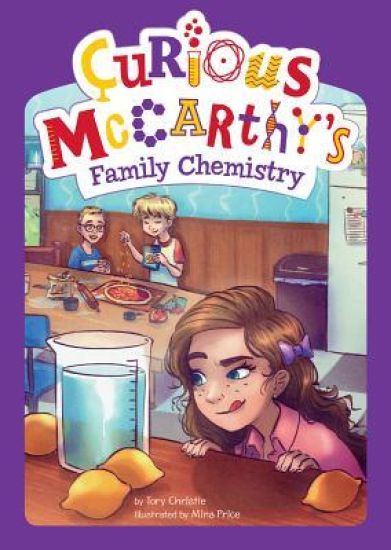
Now that budding scientist Curious McCarthy's dad is going back to work, the five oldest McCarthy kids will be helping more with chores and taking turns cooking dinner. When her parents present the daily chore chart, Curious is delighted that they forgot to assign her a task. She spends the next week trying to go unnoticed and chore-less as she learns about chemistry and observes it at work right in her own chaotic home. Her funny footnotes capture all the details of her observations for readers, who can then try their hand at science with an included experiment. The addition of a glossary and questions for the reader make this a great choice for libraries.