Kirjojen hintavertailu. Mukana 12 016 292 kirjaa ja 12 kauppaa.

Kirjahaku

Etsi kirjoja tekijän nimen, kirjan nimen tai ISBN:n perusteella.

1000 tulosta hakusanalla Patrick A. Doherty

A Social History of Books and Libraries from Cuneiform to Bytes
While the importance of writing has often been recognized, the role of books and especially that of libraries has just as often been slighted. Knowledge, once generated, has to be communicated, preserved, and accessible. Books in their varying formats—from clay tablets to scrolls and manuscripts to pixels—have been instrumental in spreading knowledge, although relatively little attention has been given to the story of books themselves. A Social History of Books and Libraries from Cuneiform to Bytes traces the roles of books and libraries throughout recorded history and explores their social and cultural importance within differing societies and changing times. It presents the history of books from clay tablets to e-books and the history of libraries, whether built of bricks or bytes. Following an introduction that sets the theoretical basis for the historical importance of books and libraries, chapters alternate between the history of the book and the history of libraries. Included within the chapters are short excursions on some particular development, such as book emblems or cataloging. Case studies are given as thematic illustrations of libraries everywhere. Patrick M. Valentine argues that social and cultural forces have been more influential in determining the nature and status of information, books, and libraries than has technology. But A Social History of Books and Libraries is far from a jeremiad against technology; rather it presents history within the subtle yet shifting context of time and place. Although written primarily for librarians and library students, it will also be of interest to a wider audience of scholars and those interested in books, libraries, and cultural history.
The Reformation: A History

The Reformation: A History

Patrick Collinson

Random House Group
2006
nidottu
"No revolution however drastic has ever involved a total repudiation of what came before it."The religious reformations of the sixteenth century were the crucible of modern Western civilization, profoundly reshaping the identity of Europe's emerging nation-states. In The Reformation, one of the preeminent historians of the period, Patrick Collinson, offers a concise yet thorough overview of the drastic ecumenical revolution of the late medieval and Renaissance eras. In looking at the sum effect of such disparate elements as the humanist philosophy of Desiderius Erasmus and the impact on civilization of movable-type printing and "vulgate" scriptures, or in defining the differences between the evangelical (Lutheran) and reformed (Calvinist) churches, Collinson makes clear how the battles for mens' lives were often hatched in the battles for mens' souls. Collinson also examines the interplay of spiritual and temporal matters in the spread of religious reform to all corners of Europe, and at how the Catholic Counter-Reformation used both coercion and institutional reform to retain its ecclesiastical control of Christendom. Powerful and remarkably well written, The Reformation is possibly the finest available introduction to this hugely important chapter in religious and political history.
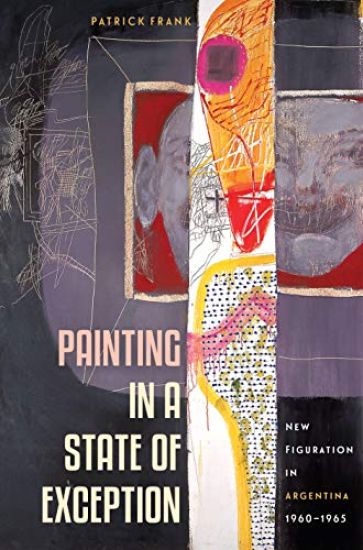
Painting in a State of Exception

Painting in a State of Exception

Patrick Frank

University Press of Florida
2018
nidottu
Although it is one of Latin America’s most significant postwar art movements, Nueva Figuración has long been overlooked in studies of modern art. In this first comprehensive examination of the movement, Patrick Frank explores the work of four artists at its heart--Jorge de la Vega, Luis Felipe Noé, Rómulo Macció, and Ernesto Deira--to demonstrate the importance of their work in the transnational development of modern art.The artists were responding directly to a difficult and chaotic period characterized by civil strife, frequent changes of government, and economic shocks. They broke new ground in Latin American art, not only in their technique, but also in the way they engaged the social, political, and cultural climate in an Argentina still recovering from the Perón years. Building on postwar expressionism by working with unprecedented urgency and abandon, they combined spontaneous techniques of abstraction with collage elements and figural subjects. Their works exercised a creative freedom that broke taboos about the role of the artist in society. Frank combines analyses of each artist’s paintings with discussions of their social, political, and artistic contexts. He reveals the works’ connections to literature, popular culture, and film, broadening our understanding of modern art in the early 1960s.
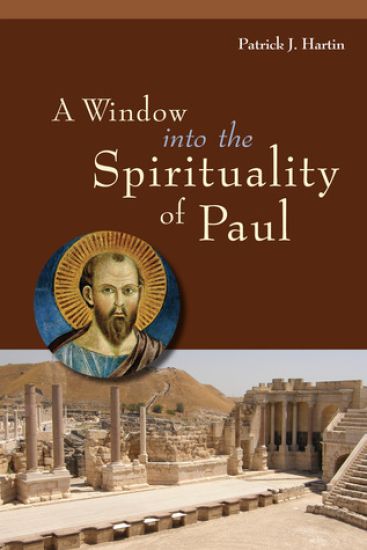
A Window into the Spirituality of Paul

A Window into the Spirituality of Paul

Patrick J. Hartin

Liturgical Press
2015
pokkari
Paul’s spiritual journey is driven by a transforming encounter with the risen Lord. In A Window into the Spirituality of Paul, Patrick J. Hartin focuses on the spiritual vision that emerges in Paul’s own personal response to Christ, found within his letters in the New Testament. Not only were early followers shaped by Paul’s example, but throughout history many saints and sinners have given flesh to this rich spiritual tradition. Their witness is an integral part of how Hartin helps us explore key aspects of Paul’s spirituality.
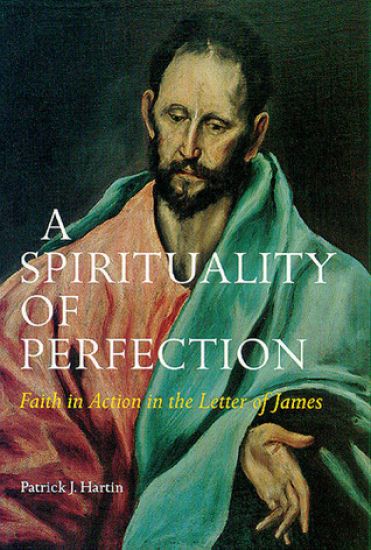
A Spirituality of Perfection

A Spirituality of Perfection

Patrick J. Hartin

Liturgical Press
1999
pokkari
2000 Catholic Press Association Award Winner!Throughout this century the Epistle of James has been viewed consistently as a disjointed set of instructions. In A Spirituality of Perfection Patrick Hartin differs from this approach by showing that the call for perfection" provides a unifying meaning for the epistle. Examining the concept of perfection against the background of the Graeco-Roman world, the Old Testament, and the Septuagint, Father Hartin shows that perfection provides a key to defining the spirituality of the Epistle of James.Father Hartin shows how the notion of perfection plays a key role in the definition of God, as well as the way one is called *to be in the world. - He adopts a fresh approach toward understanding the categories of wisdom, eschatology, and apocalyptic as they illuminate the epistle's advice. He allows James to be read in its own right, instead of through the eyes of other traditions, such asPaul, and shows that what James intends by perfection is different from our modern understanding - that the concept of perfection unlocks an important self-understanding in Christianity.Just as every generation of believers aims at putting its faith into action, A Spirituality of Perfection culminates with the question: *What direction does the Epistle of James give Christians of the twenty-first century for putting their faith into action? - Chapters are *A Cal to Perfection, - *An Overview of the Concept of Perfection in the Ancient World as a Background to the Letter of James, - *The Nature and Purpose of the Letter of James, - *Faith Perfected Through Works: A Context for the Moral Instructions in the Letter of James, - *A Spirituality of Authentic Perfection, - *Perfection in the Letter of James and the Sermon on the Mount, - and *On Reading James Today. - Patrick J. Hartin, DTh, teaches New Testament in the religious studies department at Gonzaga University in Spokane."
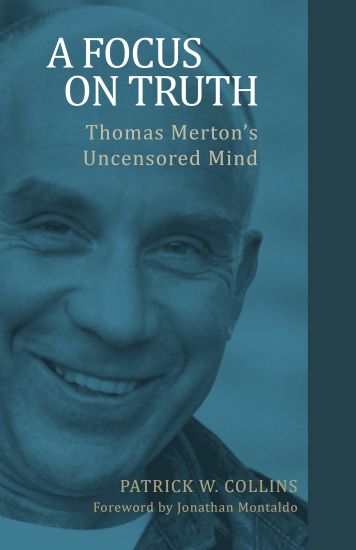
A Focus on Truth

A Focus on Truth

Patrick W. Collins; Jonathan Montaldo

Liturgical Press
2021
pokkari
The published writings of the Trappist monk Thomas Merton were always censored from two sources during his lifetime. First, by Merton himself, as he certainly didn’t write everything down or share all of what he included in his drafts. He selected carefully what he considered appropriate for publication. Second, Thomas Merton was extensively censored by his religious superiors. They regularly judged that things Merton chose to write should not be made available in print. This was not infrequently a source of great frustration to Merton.In this book, Fr. Patrick W. Collins presents an uncensored view of the life and thoughts of Thomas Merton by plumbing his correspondence with family, friends, and colleagues over the years. Merton’s personal and professional correspondence was previously published by Farrar, Straus, and Giroux. In this volume, Collins extracts and organizes from these sources many of the significant subjects about which Merton wrote and presents each topic chronologically. In this way, readers can easily follow the development of Merton's thoughts, feelings, intuitions, and impressions over the years on a variety of topics of concern to him.
A Quiet Victory for Latino Rights

A Quiet Victory for Latino Rights

Patrick D. Lukens

University of Arizona Press
2017
nidottu
Description: In 1935 a federal court judge handed down a ruling that could have been disastrous for Mexicans, Mexican Americans, and all Latinos in the United States. However, in an unprecedented move, the Roosevelt administration wielded the power of ""administrative law"" to neutralise the decision and thereby dealt a severe blow to the nativist movement. A Quiet Victory for Latino Rights recounts this important but little-known story. To the dismay of some nativist groups, the Immigration Act of 1924, which limited the number of immigrants who could be admitted annually, did not apply to immigrants from Latin America. In response to nativist legal manoeuvrings, the 1935 decision said that the act could be applied to Mexican immigrants. That decision, which ruled that the Mexican petitioners were not ""free white person[s],"" might have paved the road to segregation for all Latinos. The League of United Latin American Citizens (LULAC), founded in 1929, had worked to sensitise the Roosevelt administration to the tenuous position of Latinos in the United States. Advised by LULAC, the Mexican government, and the US State Department, the administration used its authority under administrative law to have all Mexican immigrants—and Mexican Americans—classified as ""white."" It implemented the policy when the federal judiciary ""acquiesced"" to the New Deal, which in effect prevented further rulings. In recounting this story, complete with colourful characters and unlikely bedfellows, Patrick D. Lukens adds a significant chapter to the racial history of the United States.
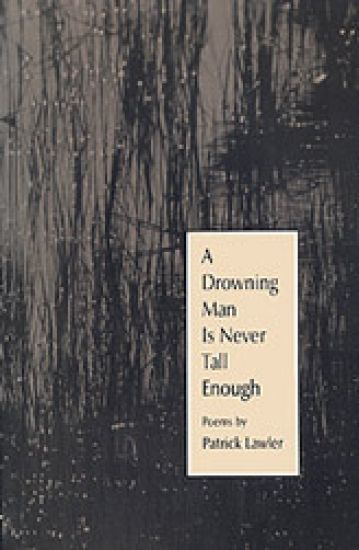
A Drowning Man Is Never Tall Enough

A Drowning Man Is Never Tall Enough

Patrick Lawler

University of Georgia Press
1990
pokkari
This is a poetry of excursions: into maps of lost territories, into the thoughts of a man with no legs, into the life of a town marked by disasters.Patrick Lawler moves into the slender lines of shattered glass, the spaces between lyric and narrative, between metamorphosis and mutation. From the artful surface of a Russian novel, rich with symbolism and white bears, to a survivor's unwillingness to immerse himself in life or leave it, the poems in A Drowning Man Is Never Tall Enough hunger for a language beyond the solid, for the fragmentation that makes a scene complete.
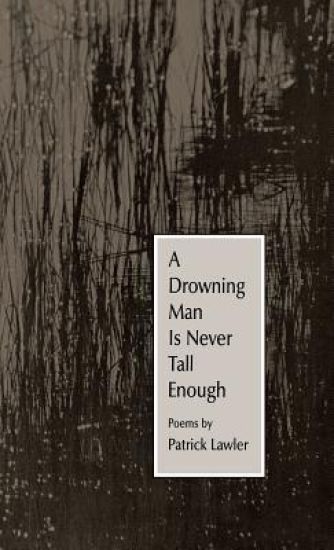
A Drowning Man Is Never Tall Enough

A Drowning Man Is Never Tall Enough

Patrick Lawler

University of Georgia Press
2017
sidottu
This is a poetry of excursions: into maps of lost territories, into the thoughts of a man with no legs, into the life of a town marked by disasters.Patrick Lawler moves into the slender lines of shattered glass, the spaces between lyric and narrative, between metamorphosis and mutation. From the artful surface of a Russian novel, rich with symbolism and white bears, to a survivor's unwillingness to immerse himself in life or leave it, the poems in A Drowning Man Is Never Tall Enough hunger for a language beyond the solid, for the fragmentation that makes a scene complete.
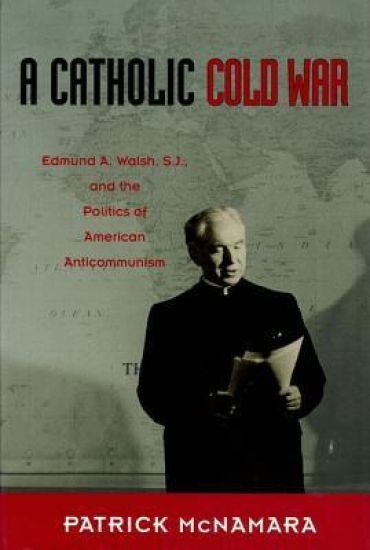
A Catholic Cold War

A Catholic Cold War

Patrick J. McNamara

Fordham University Press
2005
sidottu
This book is the first biography in 42 years of the priest and educator whom historians have called "the most important anticommunist in the country." Edmund A. Walsh, as dean of Georgetown College and founder in 1919 of its School of Foreign Service, is one of the most influential Catholic figures of the 20th century. Soon after the birth of the Bolshevik state, he directed the Papal Relief Mission in the Soviet Union, starting a lifelong immersion in Soviet and Communist affairs. He also established a Jesuit college in Baghdad, and served as a consultant to the Nuremberg War Crimes Tribunal. A pioneer in the new science of geopolitics, Walsh became one of Truman's most trusted advisers on Soviet strategy. He wrote four books, dozens of articles, and gave thousands of speeches on the moral and political threat of Soviet Communism in America. Although he died in 1956, Walsh left an indelible imprint on the ideology and practical politics of Cold War Washington, moving easily outside the traditional boundaries of American Catholic life and becoming, in the words of one historian, "practically an institution by himself." Few priests, indeed few Catholics, played so large a role in shaping American foreign policy in the 20th century.
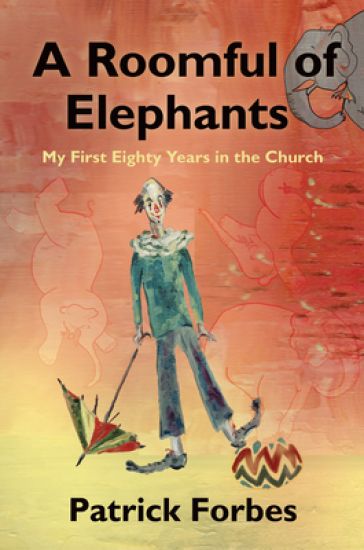
A Roomful of Elephants

A Roomful of Elephants

Patrick Forbes

Bauhan (William L.),U.S.
2021
nidottu
In this entertaining autobiography, the Rev. Patrick Forbes looks back at an exceptionally varied ministry in the Church of England - from being the idiot curate to parish priest, to religious programs producer, to a BBC Radio 2's "Pause For Thought" contributor, to co-founder of the Holy Fools UK, all while asking challenging questions about the future direction of the church. Sometimes known as "Partick Frobes, the well-known clerical error", Forbes often finds and points out the humor and not-so-funny "elephants in the room", after his more than eighty years in the church. He may be the only ordained minister in the Church of England to have been blessed by an Archbishop of Canterbury as the front end of a pantomime horse. "Imagine just for a moment that most of our discussions in the Church about how we survive into the next generation are starting in the wrong place. Patrick Forbes's irresistibly lively memoir suggests that it wouldn't hurt to stop and open our eyes - not only to a herd of persistently ignored and self-inflicted problems but also to the abundance of gift and newness that he has discovered in his unique pilgrimage." - The Rt. Rev’d. Dr. Rowan Williams, Archbishop of Canterbury (2002-2012)
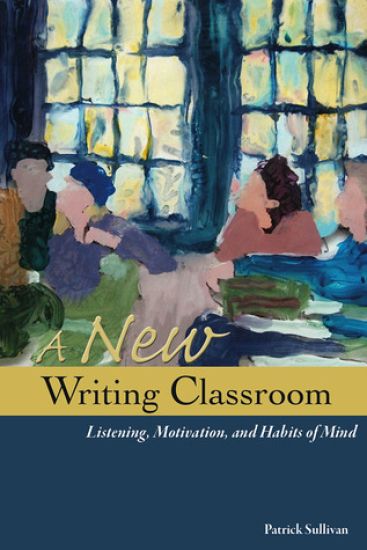
A New Writing Classroom

A New Writing Classroom

Patrick Sullivan

Utah State University Press
2014
nidottu
In "A New Writing Classroom," Patrick Sullivan provides a new generation of teachers a means and a rationale to reconceive their approach to teaching writing, calling into question the discipline's dependence on argument.Including secondary writing teachers within his purview, Sullivan advocates a more diverse, exploratory, and flexible approach to writing activities in grades six through thirteen. "A New Writing Classroom" encourages teachers to pay more attention to research in learning theory, transfer of learning, international models for nurturing excellence in the classroom, and recent work in listening to teach students the sort of dialogic stance that leads to higher-order thinking and more sophisticated communication.The conventional argumentative essay is often a simplistic form of argument, widely believed to be the most appropriate type of writing in English classes, but other kinds of writing may be more valuable to students and offer more important kinds of cognitive challenges. Focusing on listening and dispositions or "habits of mind as central elements of this new composition pedagogy, "A New Writing Classroom" draws not just on composition studies but also on cognitive psychology, philosophy, learning theory, literature, and history, making an exciting and significant contribution to the field."
A Little Book of Islam

A Little Book of Islam

Patrick C. Notchtree

Limebury Books
2018
nidottu
Patrick C Notchtree didn't set out to be an author but in his sixties he wrote his own biography, then another book about the apostrophe and now this book about Islam. He lives in the north of England with his wife and has his son and two of his four grandchildren nearby.