Kirjojen hintavertailu. Mukana 12 083 983 kirjaa ja 12 kauppaa.

Kirjahaku

Etsi kirjoja tekijän nimen, kirjan nimen tai ISBN:n perusteella.

1000 tulosta hakusanalla Paul Clements

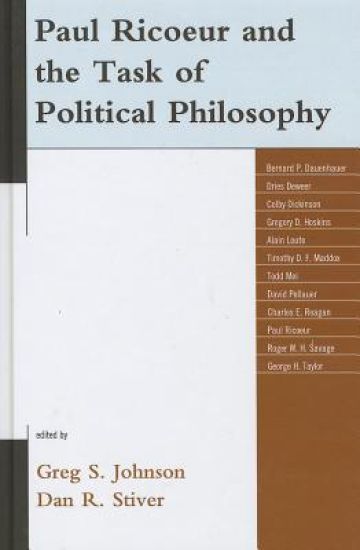
Paul Ricoeur

Paul Ricoeur

Lexington Books
2011
sidottu
This collection of essays is dedicated to the prolific career of Paul Ricoeur. In his lifetime, Ricoeur made significant contributions to many fields, such as theology, aesthetics, narratology, linguistics, and of course, philosophy. Within philosophy alone, he engaged many currents of thoughts, always providing careful and faithful analyses of philosophers while adding his own unique perspectives. Many essays in this anthology revisit Ricoeur’s own works, carefully placing him in his philosophical context, while providing new interpretations of questions that mattered to Ricoeur, such as imagination, forgiveness, justice, and memory. Other essays, honoring Ricoeur’s own approach, bring him to dialogue with new questions, such as globalization, technology, and national memorials.
Paul Ricoeur and the Task of Political Philosophy
This book discusses the political philosophy of Paul Ricoeur. More precisely, it offers a sustained engagement with Ricoeur’s political thought in a way that demonstrates both the significance of the political in his own thinking throughout his career, and how Ricoeur’s understanding of the political offers something valuable to current discussions in political philosophy. A second goal is to begin to fill a gap in Ricoeur studies and situate his work on political ethics more fully in contemporary discussions about political thought. In this way, Ricoeur can be seen as a figure pertinent to recent trends in political philosophy that make political thinking more realistic to the conditions for political life. The various essays in the book move along intersecting but different trajectories. First, as some of these essays attest, the concept of the political is a pervasive theme that runs throughout Ricoeur’s corpus. In this way a theme throughout the book examines this notion of the political, as well as how it relates to his more well-known work in other areas. Second, and related, the historical understanding of perennial issues in political philosophy are most often updated by those standing in the lineage of those who have come before. As such, Ricoeur’s hermeneutical orientation has moved him to engage contemporaries who attempt to “think forward” in various ways this tradition for current situations. Unlike most who engage in political thought, Ricoeur goes where others dare not, namely, to those who appear to be opponents but, as he shows, offer perspectives worth more consideration in the name of the best of political thinking. In this light, Ricoeur’s hermeneutical orientation is again a unique framework for understanding the nature of political engagement, an orientation in what follows that highlights the ways that Ricoeur and a Ricoeurian perspective cross philosophical orientations to develop a unique understanding of political thought that is different.
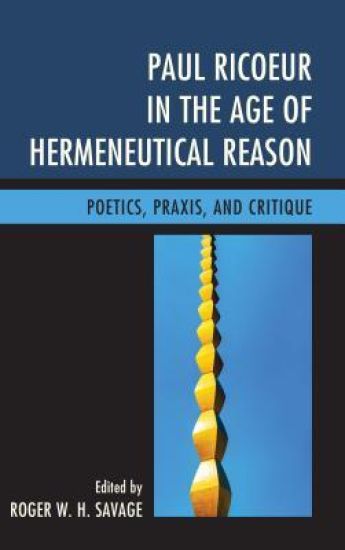
Paul Ricoeur in the Age of Hermeneutical Reason
Poetics, Praxis and Critique: Paul Ricoeur in the Age of Hermeneutical Reason addresses contemporary problems of justice, the recognition of disabled persons, the role of imagination in political judgment, the need for religious hospitality and carnal hermeneutics. The essays in this volume are a testament to the power of hermeneutical reason. Following Paul Ricoeur’s style of philosophizing, they explore innovative solutions to pressing issues of our time. Individually, these essays advance new perspectives on the anthropological presuppositions behind the requirement of justice, the role played by convictions and beliefs in pluralistic contexts, and the place of a post-critical religious faith. Together, they demonstrate the value of a hermeneutical mode of reasoning in an age in which conflicts, tensions and violence abound. Their thoughtful engagement with current challenges attests to this volume’s conviction that we, with others, have the ability to intervene in the course of the world to the benefit of all.
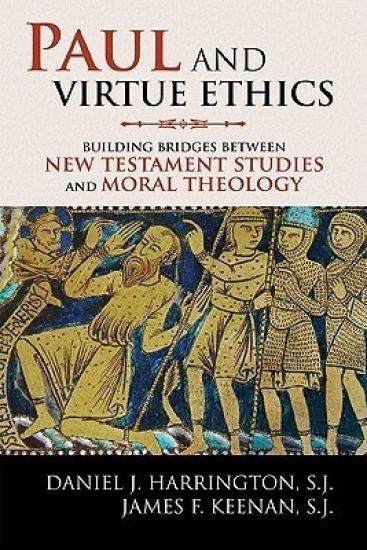
Paul and Virtue Ethics

Paul and Virtue Ethics

SJ Harrington; SJ Keenan

Rowman Littlefield Publishers
2010
sidottu
In Paul and Virtue Ethics, Daniel Harrington and James Keenan build upon their successful collaboration Jesus and Virtue Ethics to discuss the apostle Paul's teachings as a guide to interpret theology and ethics today. Examining Paul's writings, the authors investigate what they teach about the basic questions of virtue ethics: Who am I? Who do I want to become? And how do I get there? Their intent is not to provide stringent rules, but to awaken discovery and encourage dialogue. The book first considers the concept of virtue ethics, an approach to ethics that emphasizes moral character, and Paul's ethics in particular. Next, the authors focus on the virtues of faith, love/charity, and hope as treated by Paul and Thomas Aquinas. Closing the book with reflections on the roles of other virtues (and vices) in individual and communal Christian life, the authors discuss various issues in social ethics and sexual morality as they are dealt with in Paul and in Christian virtue ethics today.
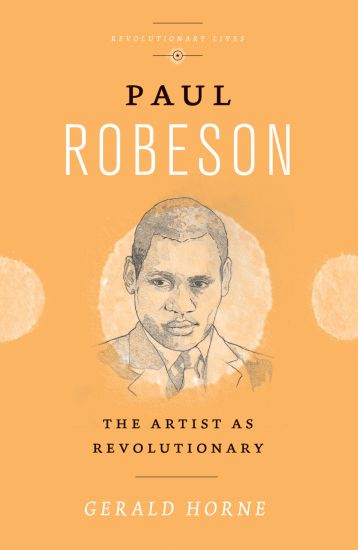
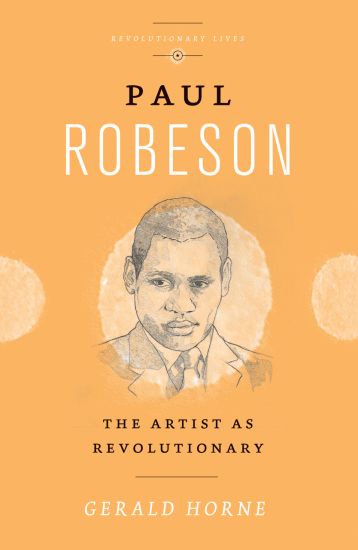
Paul Robeson

Paul Robeson

Gerald Horne

Pluto Press
2016
sidottu
A world-famous singer and actor, a trained lawyer, an early star of American professional football and a polyglot who spoke over a dozen languages. These could be the crowning achievements of a life well-lived, yet for Paul Robeson the higher calling of social justice led him to abandon both the NFL and Hollywood and become one of the most important political activists of his generation - battling both Jim Crow and Joseph McCarthy. Gerald Horne's biography uses Robeson's remarkable and revolutionary life to tell the story of the 20th century's great political struggles: against racism, against colonialism, and for international socialism. This critical and searching account provides an opportunity for readers to comprehend the triumphs and tragedies of the revolutionary progressive movement of which Robeson was not just a part, but, perhaps, its most resonant symbol.
Paul Robeson

Paul Robeson

Gerald Horne

Pluto Press
2016
pokkari
A world-famous singer and actor, a trained lawyer, an early star of American professional football and a polyglot who spoke over a dozen languages. These could be the crowning achievements of a life well-lived, yet for Paul Robeson the higher calling of social justice led him to abandon both the NFL and Hollywood and become one of the most important political activists of his generation - battling both Jim Crow and Joseph McCarthy. Gerald Horne's biography uses Robeson's remarkable and revolutionary life to tell the story of the 20th century's great political struggles: against racism, against colonialism, and for international socialism. This critical and searching account provides an opportunity for readers to comprehend the triumphs and tragedies of the revolutionary progressive movement of which Robeson was not just a part, but, perhaps, its most resonant symbol.
Paul: A Novel

Paul: A Novel

Walter Wangerin

Lion Books
2005
nidottu
In this spellbinding novel, Paul, an apostle to the early Christian church, is portrayed as a compelling character who could be at once charming, obstinate, rash, proud and charismatic. His story is told through those who loved him most, and those who were most challenged by him. This rich medley of voices vibrantly recreates both the complex character whose passionate commitment to spreading the gospel of Christ inspired devotion and exasperation in equal measure, and the first-century world upon which he made such a powerful impact. Walter Wangerin, bestselling author of The Book of God, writes not only with a profound and personal understanding of the message Paul was proclaiming, but also with a deep knowledge of the Roman world in all its richness and complexity.
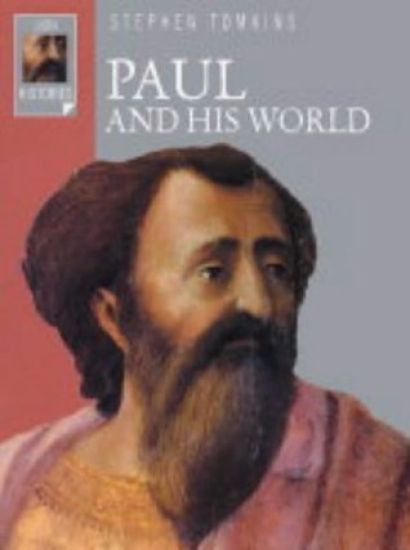
Paul and His World

Paul and His World

Stephen Tomkins

Lion Books
2004
nidottu
St Paul has had a huge impact on Christian history. In this book, Stephen Tomkins gives us a lively and accessible introduction to Paul's life. He paints a vivid picture of the world into which Paul was born - the Graeco-Roman culture and the Jewish religion and customs. He shows what the early church was like before Paul's conversion, and then tells the dramatic story of Paul's experience on the Damascus Road followed by his missionary journeys and disputes with fellow leaders. He also traces the changes in Paul's thinking and poses the question - did Paul rewrite Christianity? This fascinating book takes account of the latest biblical and historical scholarship, presenting a vivid portrait of Paul and the world in which he lived.
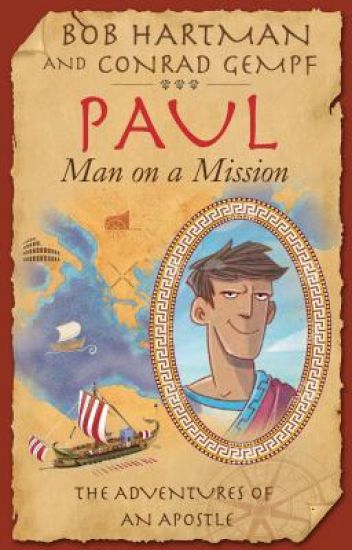
Paul, Man on a Mission

Paul, Man on a Mission

Bob Hartman; Conrad Gempf

Lion Children's Books
2017
pokkari
Paul wasn't one of Jesus' friends - in fact he really didn't like the whole "Jesus crew" at all. They were wrong! Even worse, they were telling lies that confused people about how to live properly in God's way. But Paul's life-journey is about to be dramatically turned upside down when he actually meets Jesus himself. In a blinding-flash encounter he is given an assignment from God in a mission that will change the lives of Jewish and Gentile people across the world from the first century right through to today. Here storyteller and scribe, Maximus details Paul's dangerous, thrilling, and adventurous journeys.
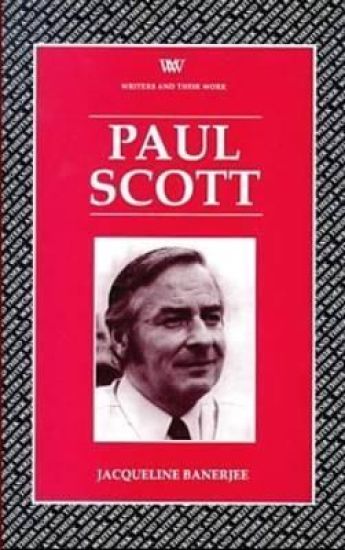
Paul Scott

Paul Scott

Jacqueline Banerjee

Liverpool University Press
1998
pokkari
Contrary to popular belief, Paul Scott was not a historical novelist in the realist tradition but a post-modernist who engaged with his readers in narrative of increasing self-consciousness and complexity. Having exposed the identity crisis of the twentieth-century male under army and post-war conditions, he moved on after the 1950’s to explore the need for commitment memorably and often brilliantly against various backdrops. This phase culminated in his most frankly experimental novel, The Corrida at San Feliu (1964). However, India, where Scott had served during the war, still exerted a strong pull on his imagination. And in his tour de forceThe Raj Quartet (1966-1975), and its coda, Staying On (1977; Booker Prize, 1978), Scott found in one of the great upheavals of recent times what he had long been seeking – evidence of human being’s capacity for moral integrity and love, even in the face of extraordinary challenges.
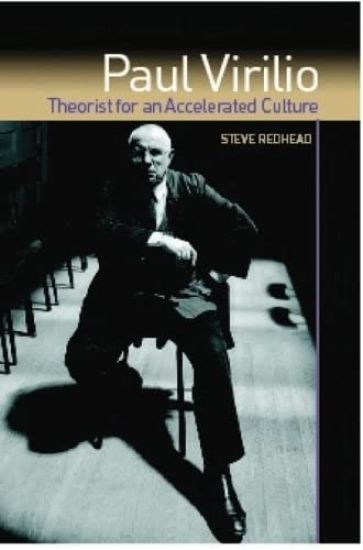
Paul Virilio

Paul Virilio

Steve Redhead

Edinburgh University Press
2004
sidottu
The first authoritative study of the life and work of French urban and cultural theorist Paul Virilio, this book sets out to explain and analyse what Virilio has actually said over the years and exactly when he said it, correcting many mistaken interpretations along the way. Paul Virilio recently retired from his Chair at the Ecole Speciale d'Architecture in Paris but remains an active political and cultural thinker and commentator with a major back catalogue of work stretching back to the 1950s. The book reviews the whole of his intellectual career, from his days hanging out in an architect's office in the 1960s to the creator of a major art foundation exhibition on 'the accident' in the wake of September 11. Virilio has become known as the high priest of speed and certainly his discourses on speed, military technology and modernity are central to an assessment of his writing, but he has contributed his 'logic bombs' to many other fields, too - media theory, international relations, art history, cultural politics, architecture and peace studies to name but a few.This book is a rigorous but accessible introduction to Virilio and places him in the pantheon of critical thinkers in today's accelerated culture. Features: *The first comprehensive study of the work of Paul Virilio *Accessibly written for a wide-ranging audience *Includes a bibliographical guide to reading Virilio.
Paul Virilio

Paul Virilio

Steve Redhead

Edinburgh University Press
2004
nidottu
The first authoritative study of the life and work of French urban and cultural theorist Paul Virilio, this book sets out to explain and analyse what Virilio has actually said over the years and exactly when he said it, correcting many mistaken interpretations along the way. Paul Virilio recently retired from his Chair at the Ecole Speciale d'Architecture in Paris but remains an active political and cultural thinker and commentator with a major back catalogue of work stretching back to the 1950s. The book reviews the whole of his intellectual career, from his days hanging out in an architect's office in the 1960s to the creator of a major art foundation exhibition on 'the accident' in the wake of September 11. Virilio has become known as the high priest of speed and certainly his discourses on speed, military technology and modernity are central to an assessment of his writing, but he has contributed his 'logic bombs' to many other fields, too - media theory, international relations, art history, cultural politics, architecture and peace studies to name but a few. This book is a rigorous but accessible introduction to Virilio and places him in the pantheon of critical thinkers in today's accelerated culture. Features: *The first comprehensive study of the work of Paul Virilio *Accessibly written for a wide-ranging audience *Includes a bibliographical guide to reading Virilio.
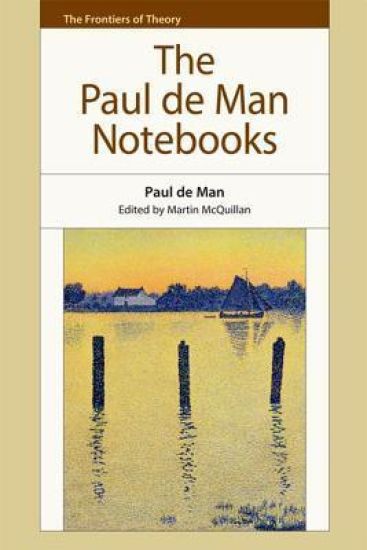
The Paul de Man Notebooks

The Paul de Man Notebooks

Paul de Man

Edinburgh University Press
2014
sidottu
This title offers a fascinating insight into the work of one of the 20th century's most important literary theorists. This anthology collects texts and papers from the Paul de Man archive, including essays on art, translations, critical fragments, research plans, interviews, and reports on the state of comparative literature. The volume engages with Paul de Man's institutional life, gathering together pedagogical and critical material to investigate his profound influence on the American academy and theory today. It also contains a number of substantial, previously unpublished and untranslated texts by de Man from the span of his writing career. As a new collection of primary sources this volume further stimulates the growing reappraisal of de Man's work.
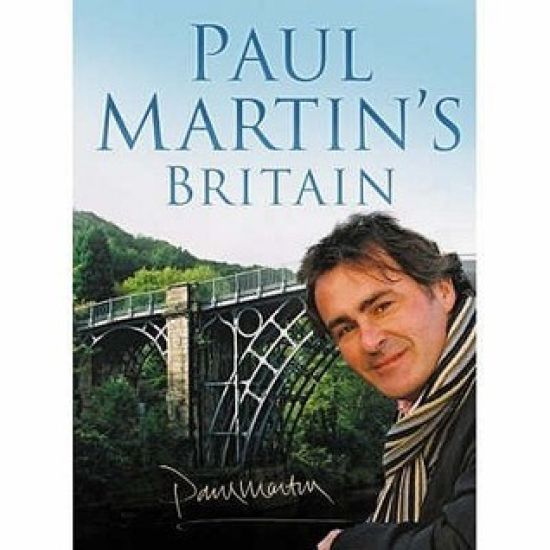
Paul Martin's Britain

Paul Martin's Britain

Paul Martin

The History Press Ltd
2007
sidottu
Paul Martin's Grand Tour is the story of the life of the popular Flog It! presenter, from his life as a musician and antiques dealer on the Portobello Road to being the star of the BBC's daytime schedules.It is also a Grand Tour, as Paul takes the reader on a journey through many of Britain's regions, uncovering and celebrating the most intriguing and often previously unknown places, stories and people across the country. Fully illustrated in colour, Paul Martin highlights, in his own distinctive and enthusiast's voice, the very best of the sites, subjects and stories featured in his six years of travels filming one of the most beloved daytime shows in Britain.
Paul Martin's Britain

Paul Martin's Britain

Paul Martin

Sutton Publishing Ltd
2008
nidottu
Paul Martin, presenter of the popular BBC2 'Flog It' series, has had the priviledge of being allowed access to various towns and cities, where he has unlocked doors to reveal unusual people, magnificent collections and quirky places. This title highlights the best of the sites, subjects and stories featured in the series.
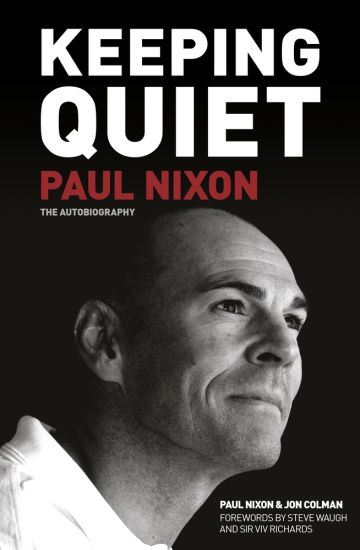
Keeping Quiet: Paul Nixon

Keeping Quiet: Paul Nixon

Paul Nixon; Jon Colman; Steve Waugh; Viv Richards

The History Press Ltd
2017
nidottu
From Gower to Flintoff, Waugh to Vaughan, Cronje to Pietersen, Paul Nixon has shared a dressing room with some of the most evocative names in international and domestic cricket – and often enraged them on the field of play. The wicketkeeper, known as his sport’s most prolific ‘sledger’, has amassed more than 20 years of stories from his career at the heart of the game and now reveals them in typically outspoken style. From ‘Fredalo’ to match-fixing, Nixon has experienced some of the most notorious episodes in cricket history, possesses strident opinions on the game and has a track record of success in the English first-class game and the Twenty20 revolution. With an accent on off-the-field anecdotes, Nixon also lays bare the personality that led the Australian legend Steve Waugh to compare him to: ‘a mosquito buzzing around in the night, that needs to be swatted but always escapes.’