Kirjojen hintavertailu. Mukana 12 016 292 kirjaa ja 12 kauppaa.

Kirjahaku

Etsi kirjoja tekijän nimen, kirjan nimen tai ISBN:n perusteella.

1000 tulosta hakusanalla Paul Durand-Ruel

Paul, in Other Words

Paul, in Other Words

Jerome H. Neyrey

Westminster/John Knox Press,U.S.
1990
nidottu
The focus of this book is an anthropological perspective that will open the writings of Paul to a challenging new range of questions and issues. Jerome Neyrey introduces the reader to critical access thorough a wholly convincing method of cultural-historical analysis. Paul comes alive in time and place. Biblical theologians and students will find ample stimulus in Neyrey's analysis of Paul.
Paul and the Rhetoric of Reconciliation

Paul and the Rhetoric of Reconciliation

Margaret M. Mitchell

Westminster/John Knox Press,U.S.
1993
nidottu
This work casts new light on the genre, function, and composition of Paul's first letter to the Corinthians. Margaret Mitchell thoroughly documents her argument that First Corinthians was a single letter, not a combination of fragments, whose aim was to persuade the Corinthian Christian community to become unified.
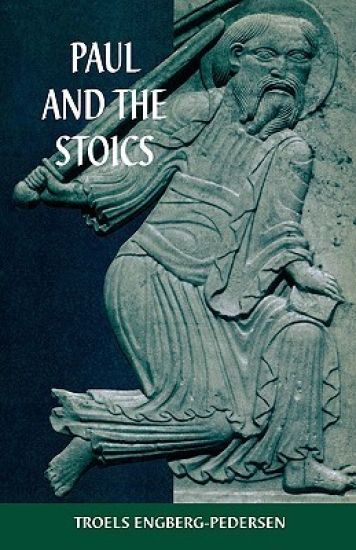
Paul and the Stoics

Paul and the Stoics

Troels Engberg-Pedersen

Westminster/John Knox Press,U.S.
2000
nidottu
This book seeks to do for the study of Paul and Stoicism what E. P. Sanders did for Paul and Judaism. Instead of making a brick-by-brick analysis, Troels Engberg Pedersen provides the first comprehensive building-to-building comparison of how the two religious/philosophical systems functioned. The book moves through the major letters of Paul (e.g., Philippians, Galatians, and Romans), carefully documenting Paul's indebtedness to Stoic thought.
Paul and the Religious Experience of Reconciliation

Paul and the Religious Experience of Reconciliation

Gilbert I. Bond

Westminster/John Knox Press,U.S.
2005
nidottu
In the ancient world as in contemporary times, religion provides a vital context in which people become who they are and establish themselves with a unique identity. This process of constructing the self is not only a psychological process and a phenomenological reality; it can also be a deeply religious experience.
Paul Beyond the Judaism-Hellenism Divide

Paul Beyond the Judaism-Hellenism Divide

Westminster/John Knox Press,U.S.
2001
nidottu
This volume does away with the traditional strategy of playing "Judaism" and "Hellenism" against each other as a context to understand Paul. This aim is reached in two ways: (1) in essays that display the ideological underpinnings of a "Jewish" and "Hellenistic" Paul in historical and modern scholarly interpretations of him, and (2) in essays that use case studies from the Corinthian correspondence that draw freely on "Jewish" and "Greco-Roman" contextual material to illuminate this Pauline phenomena.
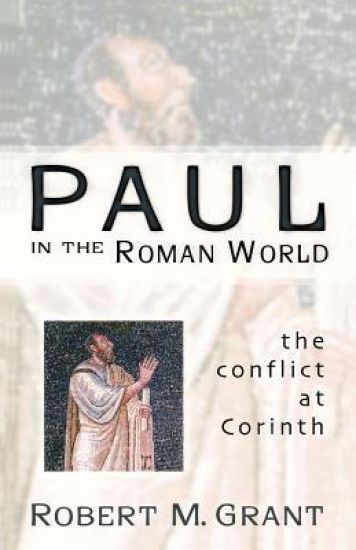
Paul in the Roman World

Paul in the Roman World

Robert M. Grant

Westminster/John Knox Press,U.S.
2001
nidottu
Though the apostle Paul wrote letters to many of the churches he founded, none of his extant letters reveal more about him, his missionary activity, and the community of faith he sought to pastor than 1 Corinthians. In 1 Corinthians, Paul tried to influence--even control--the church in the context of a city that had lasting memories of Greek democracy but the present realities of a Roman proconsul. This volume highlights Paul as apostle, missionary, and pastor against the backdrop of the Greco-Roman culture, economics, and politics.
Paul--A Jew on the Margins

Paul--A Jew on the Margins

Calvin J. Roetzel

Westminster/John Knox Press,U.S.
2003
nidottu
Paul's messianism put him at the margins of Pharisaism, his preaching placed him in tension with the Synagogue, and his Gospel set him on the outer border of Hellenistic religion. This book explores the tensions and creativity that Paul's marginality let loose. In six short chapters, Roetzel explains Paul's complex relationship to first century Judaism and elements of the early church. In so doing, he tackles a great many of the most disputed areas of Pauline theology: How can we speak of Paul as a convert? How far did Paul accept the apocalyptic myth? What are we to make of Paul's theology of weakness? How far did Paul embrace pluralism? And how could Paul preach that Gentiles shared in God's election without excluding Jews?
Paul and the Anatomy of Apostolic Authority

Paul and the Anatomy of Apostolic Authority

John Howard Schutz

Westminster/John Knox Press,U.S.
2007
nidottu
John Howard Schutz's milestone analysis of Paul's authority shaped a generation of thought about Paul. This insightful work continues to be relevant to Pauline scholarship.The New Testament Library offers authoritative commentary on every book and major aspect of the New Testament, as well as classic volumes of scholarship. The commentaries in this series provide fresh translations based on the best available ancient manuscripts, offer critical portrayals of the historical world in which the books were created, pay careful attention to their literary design, and present a theologically perceptive exposition of the text.
Paul and Perserverance

Paul and Perserverance

Judith M. Gundry Volf

Westminster/John Knox Press,U.S.
1991
nidottu
Does Paul assume that Christians will remain in salvation? If so, on what basis? What, if anything, can disrupt this continuity, and to what extent can it do so? Using detailed exegetical analysis of the relevant texts, Judith Volf addresses what Paul believed about continuity in salvation and the importance of this theme for subsequent Christians.
Paul's Letter to the Romans

Paul's Letter to the Romans

Peter Stuhlmacher

Westminster/John Knox Press,U.S.
1994
nidottu
In this book, Peter Stuhlmacher stresses the Old Testament and postbiblical Jewish traditions as the primary backdrop to Paul's thought, as these traditions were known by Paul himself or mediated to him through Jesus and the early church. The themes of the righteousness of God and the corresponding justification of both Jews and Gentiles are viewed as the center of Romans. Finally, Stuhlmacher seeks to place the apostle's theology within its historical context. He overcomes the false dichotomy that has often characterized the study of Romans, mediating between the view that it is a general theological treatise that functions as Paul's last testament to his Christian faith, on the one hand, and the view that it is one particular and occasion-bound expression of Paul's thinking.
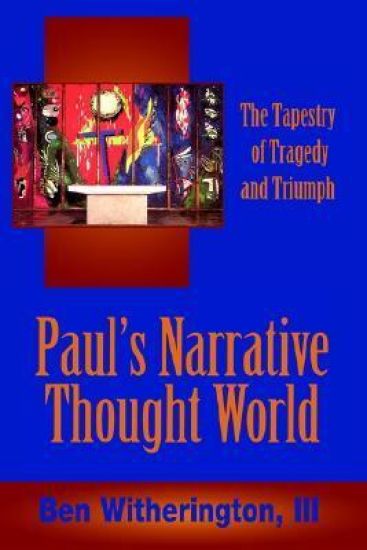
Paul's Narrative Thought World

Paul's Narrative Thought World

Witherington Ben

WESTMINSTER/JOHN KNOX PRESS,U.S.
1994
pokkari
It is a common belief that Paul's letters are not stories but rather theological ideas and practical advice. Ben Witherington III thinks otherwise. He is convinced that all of Paul's ideas, arguments, practical advice, and social arrangements are ultimately grounded in stories, some found in the Hebrew Scriptures and some found in the oral tradition.
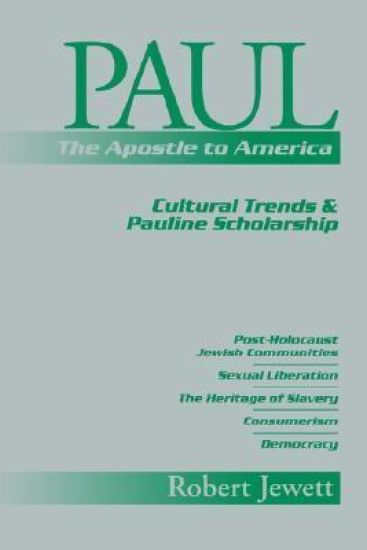
Paul the Apostle to America

Paul the Apostle to America

Jewett Robert

WESTMINSTER/JOHN KNOX PRESS,U.S.
1994
nidottu
Using a nontechnical presentation of recent research and a sometimes-whimsical treatment of contemporary artifacts, Robert Jewett shows how Paul engages and challenges American society in unexpected ways. He offers preliminary explorations of the relevance of Paul's letters to the American scene and exploits the resources of scientific biblical research that allow Paul's message to be clarified. Important trends in American culture, including popular entertainment and books, are brought into interaction with freshly discovered aspects of Pauline thought.
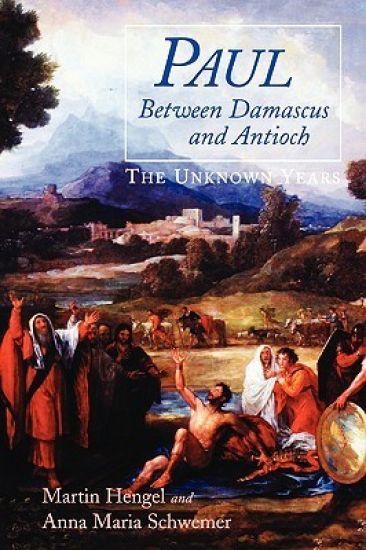
Paul between Damascus and Antioch

Paul between Damascus and Antioch

Martin Hengel; Anna Maria Schwemer

Westminster/John Knox Press,U.S.
1997
nidottu
A fresh exploration of Paul's activities during the hidden years of his life, from his conversion in Damascus to his familiar ministry in the book of Acts. With an unparalled wealth of historical material and a reconsideration of Paul's own writings, a new picture of Paul's life emerges.
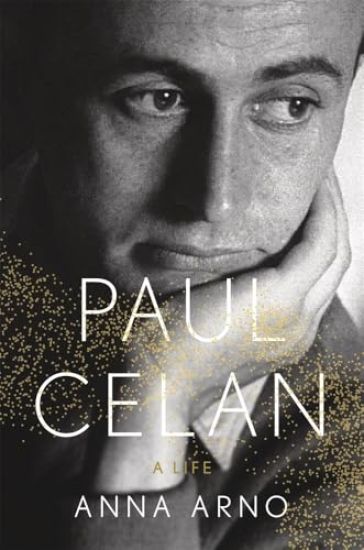
Paul Celan

Paul Celan

Anna Arno

HARVARD UNIVERSITY PRESS
2026
sidottu
A luminous, groundbreaking biography of one of the most important literary figures of the twentieth century, best known for the poem "Death Fugue." Paul Celan (1920-1970) was recognized as the greatest poet of the German language shortly before his tragic death just shy of his fiftieth birthday, when he drowned himself in the Seine. He described his "Todesfuge" ("Death Fugue") as a "tombstone" for his mother, who perished in the Holocaust. Celan's work is often viewed as a rejoinder to Theodor Adorno's dictum that it was barbaric to write poetry after Auschwitz. While the commentary on Celan's contributions to poetics and Holocaust literature is voluminous, little has been written about his life itself. Anna Arno provides the definitive biography. Paul Celan: A Life follows the poet from his birthplace, Czernowitz (today Chernivtsi, Ukraine), to Bucharest, where he was part of an important circle of Surrealists, then onto Vienna, where he met and fell in love with Ingeborg Bachmann, and finally to Paris. Although in his final years he was haunted by bouts of mental illness, his life cannot be defined by its implosion. Paul Celan was an ardent, inveterate romantic whose many meaningful relationships left their mark on his poetry. He also cultivated intense, often fraught dialogues with such thinkers as Ren Char, Yves Bonnefoy, and Martin Heidegger. Drawing upon a linguistically wide range of archival sources and the most up-to-date research, Arno presents a complete picture of Celan's life. Here is the essential story of a towering figure in modern poetry.
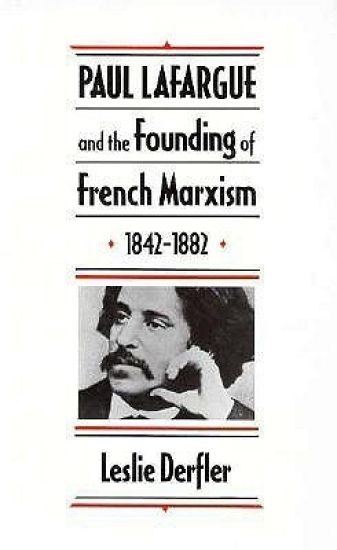
Paul Lafargue and the Founding of French Marxism, 1842–1882
Paul Lafargue, disciple and son-in-law of Karl Marx, was among the most important persons giving organized political expression to Marxism in France. He helped found both the first French collectivist party and the first French Marxist party. He was the first Marxist to sit in the French legislature and for three decades served as the chief theoretician and propagandist for Marxism in France. With his wife, Laura, he translated the Communist Manifesto and other works, introducing and applying Marxist thought in France.Demonstrating an almost seamless web between intellectual and family history, Leslie Derfler relates ideas and family identity in this account of the first forty years of Paul Lafargue’s life. Lafargue, like his famous father-in-law, called for ideological purity and demanded total hostility to anarchists and reformists. He insisted on economic determinism, the primacy of the concept of the class struggle, and the theory of surplus value. But he made his own contributions as well, particularly in his insistence on rejecting the domination of bourgeois values. Lafargue’s most famous pamphlet, The Right To Be Lazy, showed the advantages that labor could derive by rejecting the bourgeois work ethic. An intellectual of power, he pioneered in the application of Marxist methods of analysis to questions of anthropology, aesthetics, and literary criticism.Born in Cuba of mixed racial descent, Lafargue joined in demonstrations as a medical student in Paris in the 1860s and was forced into exile. Resuming his studies in London, he became a fixture in the Marx household until he married Laura Marx and moved to Paris. There he worked to expand the influence of the International Workingmen’s Association, but fled to Spain following the general repression after the fall of the Paris Commune. He continued his efforts on behalf of Marxism in Spain and then for ten years in London before returning to France, where he helped to found the new Marxist Parti Ouvrier Français, in 1882.
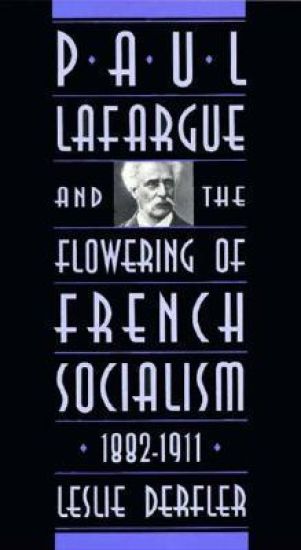
Paul Lafargue and the Flowering of French Socialism, 1882–1911
Paul Lafargue, the disciple and son-in-law of Karl Marx, helped to found the first French Marxist party in 1882. Over the next three decades, he served as the chief theoretician and propagandist for Marxism in France. During these years, which ended with the dramatic suicides of Lafargue and his wife, French socialism, and the Marxist party within it, became a significant political force.In an earlier volume, Paul Lafargue and the Founding of French Marxism, 1842-1882, Leslie Derfler emphasized family identity and the origin of French Marxism. Here, he explores Lafargue's political strategies, specifically his break with party co-founder Jules Guesde in the Boulanger and Dreyfus episodes and over the question of socialist-syndicalist relations. Derfler shows Lafargue's importance as both political activist and theorist. He describes Lafargue's role in the formulation of such strategies as the promotion of a Second Workingmen's International, the pursuit of reform within the framework of the existent state but opposition to any socialist participation in nonsocialist governments, and the subordination of trade unionism to political action. He emphasizes Lafargue's pioneering efforts to apply Marxist methods of analysis to questions of anthropology, aesthetics, and literary criticism.Despite the crucial part they played in the social and political changes of the past century and the heritage they left, the first French Marxists are not widely known, especially in the English-speaking world. This important critical biography of Lafargue, the most audacious of their much maligned theorists, enables us to trace the options open to Marxist socialism as well as its development during a critical period of transition.