Kirjojen hintavertailu. Mukana 12 390 323 kirjaa ja 12 kauppaa.

Kirjahaku

Etsi kirjoja tekijän nimen, kirjan nimen tai ISBN:n perusteella.

1000 tulosta hakusanalla Philo

Philosophical Applications Of Cognitive Science
One of the most fruitful interdisciplinary boundaries in contemporary scholarship is that between philosophy and cognitive science. Now that solid empirical results about the activities of the human mind are available, it is no longer necessary for philosophers to practice armchair psychology.In this short, accessible, and entertaining book, Alvin
Philosophy Of Law

Philosophy Of Law

Jeffrie G. Murphy; Jules Coleman

Routledge
2019
sidottu
In this revised edition, two distinguished philosophers have extended and strengthened the most authoritative text available on the philosophy of law and jurisprudence. While retaining their comprehensive coverage of classical and modern theory, Murphy and Coleman have added new discussions of the Critical Legal Studies movement and feminist jurisprudence, and they have strengthened their treatment of natural law theory, criminalization, and the law of torts. The chapter on law and economics remains the best short introduction to that difficult, controversial, and influential topic.Students will appreciate the careful organization and clear presentation of complicated issues as well as the emphasis on the relevance of both law and legal theory to contemporary society.
Philosophical Problems of Behavioural Economics
The goal of behavioural economics is to improve the explanatory and predictive power of economics. This can be achieved by using theoretical and methodological resources of psychology. Its fundamental idea is that the relationship between psychology and economics cannot be subsumed under standard philosophical accounts of intertheoretical relations. Philosophical Problems of Behavioural Economics argues that behavioural economics is best understood as an attempt to deidealize economic theory guided by psychological research. Behavioural economics deconstructs the model of decision-making by adding different elements. Based on this understanding behavioural economics has a number of tasks: first, it has to identify which economic theory needs to be challenged; second it aims to identify factors which need to be modelled within economic theories of choice and modify the theory accordingly; and finally, it has to create models that explain economic phenomena based on the new theory. This book analyses the different stages of this deconstruction process and shows how the scientific disciplines of economics and psychology are connected by it.This volume develops a new account of intertheoretical relations based on the idea of deidealization and thus contributes to debates within the philosophy of social science. It is suitable for those who are interested in or study economic theory and philosophy, economic psychology and philosophy of social science.
Philosophy by Women
What is philosophy, why does it matter, and how would it be different if women wrote more of it? At a time when the importance of philosophy, and the humanities in general, is being questioned and at a time when the question of gender equality is a huge public question, 22 women in philosophy lay out in this book how they think of philosophy, what they actually do, and how that is applied to actual problems. By bringing together accounts of the personal experiences of women in philosophy, this book provides a new understanding of the ways in which the place of women in philosophy has changed in recent decades while also introducing the reader to the nature and the value of philosophy.
Philosophers’ Walks

Philosophers’ Walks

Bruce Baugh

TAYLOR FRANCIS LTD
2021
nidottu
Nietzsche, Kierkegaard, Virginia Woolf, Samuel Taylor Coleridge, André Breton, Rousseau, Simone de Beauvoir: who could imagine a better group of walking companions? In this engaging and invigorating book, Bruce Baugh takes us on a philosophical tour, following in the footsteps and thoughts of some great philosophers and thinkers.How does walking reveal space and place and provide a heightened sense of embodied consciousness? Can walking in André Breton’s footsteps enable us to "remember" Breton’s experiences? A chapter on Sartre and Beauvoir investigates walking in relation to anxiety and our different ways of responding to our bodies. Walking in the Quantocks, Baugh seeks out the connection between Coleridge’s walking and his poetic imagination. With Rousseau and Nietzsche, he examines the link between solitary mountain walks and great thoughts; with Kierkegaard, he looks at the urban flâneur and the disjunction between outward appearances and spiritual inwardness. Finally, in Sussex and London, Baugh explores how Virginia Woolf transposed a Romantic nature pantheism to London in Mrs. Dalloway.Philosophers’ Walks provides a fresh and imaginative reading of great philosophers, offering a new way of understanding some of their major works and ideas.
Philosophers’ Walks

Philosophers’ Walks

Bruce Baugh

TAYLOR FRANCIS LTD
2021
sidottu
Nietzsche, Kierkegaard, Virginia Woolf, Samuel Taylor Coleridge, André Breton, Rousseau, Simone de Beauvoir: who could imagine a better group of walking companions? In this engaging and invigorating book, Bruce Baugh takes us on a philosophical tour, following in the footsteps and thoughts of some great philosophers and thinkers.How does walking reveal space and place and provide a heightened sense of embodied consciousness? Can walking in André Breton’s footsteps enable us to "remember" Breton’s experiences? A chapter on Sartre and Beauvoir investigates walking in relation to anxiety and our different ways of responding to our bodies. Walking in the Quantocks, Baugh seeks out the connection between Coleridge’s walking and his poetic imagination. With Rousseau and Nietzsche, he examines the link between solitary mountain walks and great thoughts; with Kierkegaard, he looks at the urban flâneur and the disjunction between outward appearances and spiritual inwardness. Finally, in Sussex and London, Baugh explores how Virginia Woolf transposed a Romantic nature pantheism to London in Mrs. Dalloway.Philosophers’ Walks provides a fresh and imaginative reading of great philosophers, offering a new way of understanding some of their major works and ideas.
Philosophical Essays on Divine Causation
This book discusses various aspects of God’s causal activity. Traditional theology has long held that God acts in the world and interrupts the normal course of events by performing special acts. Although the tradition is unified in affirming that God does create, conserve, and act, there is much disagreement about the details of divine activity. The chapters in this book fruitfully explore these disagreements about divine causation.The chapters are divided into two sections. The first explores historical views of divine causal activity from the Pre-Socratics to Hume. The second section addresses a variety of contemporary issues related to God’s causal activity. These chapters include defenses of the possibility of special acts of God, proposals of models of divine causation, and analyses of divine conservation.Philosophical Essays on Divine Causation will be of interest to researchers and graduate students working in philosophy of religion, philosophical theology, and metaphysics.
Philosophy of Computational Cultural Neuroscience
This book aims to illuminate theoretical and methodological advances in computational cultural neuroscience and the implications of these advances for philosophy. Philosophical studies in computational cultural neuroscience introduce core considerations such as culture and computation, and the role of scientific and technological progression for the advancement of cultural processes.The study of how cultural and biological factors shape human behaviour has been an important inquiry for centuries, and recent advances in the field of computational cultural neuroscience allow for novel insights into the computational foundations of cultural processes in the structural and functional organization of the nervous system. The author examines the computational foundations of the mind and brain across cultures and investigates the influence of culture on the computational mind and brain. The book explores recent advances in the field, providing novel insights on topics such as artificialism, reconstructionism, and intelligence. Philosophy of Computational Cultural Neuroscience is fascinating reading for students and academics in the field of neuroscience who wish to take a cultural or philosophical approach to their studies and research.This book is the winner of the International Cultural Neuroscience Society’s International Book Prize.
Philosophy of Computational Cultural Neuroscience
This book aims to illuminate theoretical and methodological advances in computational cultural neuroscience and the implications of these advances for philosophy. Philosophical studies in computational cultural neuroscience introduce core considerations such as culture and computation, and the role of scientific and technological progression for the advancement of cultural processes.The study of how cultural and biological factors shape human behaviour has been an important inquiry for centuries, and recent advances in the field of computational cultural neuroscience allow for novel insights into the computational foundations of cultural processes in the structural and functional organization of the nervous system. The author examines the computational foundations of the mind and brain across cultures and investigates the influence of culture on the computational mind and brain. The book explores recent advances in the field, providing novel insights on topics such as artificialism, reconstructionism, and intelligence. Philosophy of Computational Cultural Neuroscience is fascinating reading for students and academics in the field of neuroscience who wish to take a cultural or philosophical approach to their studies and research.This book is the winner of the International Cultural Neuroscience Society’s International Book Prize.
Philosophy and the Art of Writing

Philosophy and the Art of Writing

Richard Shusterman

TAYLOR FRANCIS LTD
2022
sidottu
Philosophy and literature enjoy a close, complex relationship. Elucidating the connections between these two fields, this book examines the ways philosophy deploys literary means to advance its practice, particularly as a way of life that extends beyond literary forms and words into physical deeds, nonlinguistic expression, and subjective moods and feelings.Exploring thinkers from Socrates and Confucius to Foucault and Simone de Beauvoir, Richard Shusterman probes the question of what roles literature could play in a vision of philosophy as something essentially lived rather than merely written. To develop this vision of philosophy that incorporates literature but seeks to go beyond the verbal to realize the embodied fullness of life and capture its inexpressible dimensions, Shusterman gives particular attention to authors who straddle the literature/philosophical divide: from Augustine and Montaigne through Wordsworth and Kierkegaard to T.S. Eliot, Georges Bataille, Maurice Blanchot, and Bertrand Russell. The book concludes with a chapter on the Chinese art of writing with its mixture of poetry, calligraphy, and painting.Philosophy and the Art of Writing should interest students and researchers in literary theory and philosophy. It also opens the practice of philosophy to people who are not professionals in the writing of philosophy or literary theory.
Philosophy of Population Health

Philosophy of Population Health

Sean Valles

Routledge
2019
nidottu
Population health has recently grown from a series of loosely connected critiques of twentieth-century public health and medicine into a theoretical framework with a corresponding ?eld of research—population health science. Its approach is to promote the public’s health through improving everyday human life: afford-able nutritious food, clean air, safe places where children can play, living wages, etc. It recognizes that addressing contemporary health challenges such as the prevalence of type 2 diabetes will take much more than good hospitals and public health departments.Blending philosophy of science/medicine, public health ethics and history, this book offers a framework that explains, analyses and largely endorses the features that de?ne this relatively new ?eld. Presenting a philosophical perspective, Valles helps to clarify what these features are and why they matter, including: searching for health’s "upstream" causes in social life, embracing a professional commitment to studying and ameliorating the staggering health inequities in and between populations; and reforming scienti?c practices to foster humility and respect among the many scientists and non- scientists who must work collaboratively to promote health.Featuring illustrative case studies from around the globe at the end of all main chapters, this radical monograph is written to be accessible to all scholars and advanced students who have an interest in health—from public health students to professional philosophers.
Philosophical Issues in Indian Cinema

Philosophical Issues in Indian Cinema

MK Raghavendra

Routledge India
2020
sidottu
This book interrogates the vocabulary used in theorizing about Indian cinema to reach into the deeper cultural meanings of philosophies and traditions from which it derives its influences. It re-examines terms and concepts used in film criticism and contextualizes them within the aesthetics, poetics and politics of Indian cinema. The book looks at terms and concepts borrowed from the scholarship on American and world cinema and explores their use and relevance in describing the characteristics and evolution of cinema in India. It highlights how realism, romance and melodrama in the context of India appear in a culturally singular way and how the aggregation of constituent elements – like songs, action, comedy – in Indian film can be traced to classical theatre and other diverse religious and philosophical influences. These influences have characterized popular film and drama in India which present all aspects of life for a diverse nation. The author explores concepts like ‘fantasy’, ‘family’ and ‘patriotism’ by using various examples from films in India and outside, as well as practices in the other arts. He identifies the fundamental logic behind the choices made by film-makers in India and discusses concepts which allow for a fresh theorizing on Indian cinema’s characteristics.This book will be of great interest to students and researchers of film studies, media studies, cultural studies, literature, cultural history and South Asian studies. It will also be useful for general readers who are interested in learning more about Indian cinema, its forms, origins and influences.
Philosophy, Dialogue, and Education

Philosophy, Dialogue, and Education

Alexandre Guilherme; W. John Morgan

Routledge
2019
nidottu
Philosophy, Dialogue, and Education is an advanced introduction to nine key European social philosophers: Martin Buber, Mikhail Bakhtin, Lev Vygotsky, Hannah Arendt, Emmanuel Levinas, Maurice Merleau-Ponty, Simone Weil, Michael Oakeshott, and Jürgen Habermas. This detailed yet highly readable work positions the socio-political views of each philosopher within a European tradition of dialogical philosophy; and reflects on the continuing theoretical relevance of the work of each to education generally and to critical pedagogy. The discussion in each chapter is informed by materials drawn from various scholarly sources in English and is enriched by materials from other languages, particularly French, German, and Russian. This enhances the comparative European cultural perspective of the book; and connects the work of each philosopher to wider intellectual, political, and social debates. The book will appeal to academics, postgraduates, and researchers working in philosophy, philosophy of education, and in educational, cultural, and social studies more generally. Advanced undergraduate students would also benefit from the book’s discussion of primary sources and the authors’ suggestions for further reading.
Philosophical and Scientific Perspectives on Downward Causation
Downward causation plays a fundamental role in many theories of metaphysics and philosophy of mind. It is strictly connected with many topics in philosophy, including but not limited to: emergence, mental causation, the nature of causation, the nature of causal powers and dispositions, laws of nature, and the possibility of ontological and epistemic reductions. Philosophical and Scientific Perspectives on Downward Causation brings together experts from different fields—including William Bechtel, Stewart Clark and Tom Lancaster, Carl Gillett, John Heil, Robin F. Hendry, Max Kistler, Stephen Mumford and Rani Lill Anjum —who delve into classic and unexplored lines of philosophical inquiry related to downward causation. It critically assesses the possibility of downward causation given different ontological assumptions and explores the connection between downward causation and the metaphysics of causation and dispositions. Finally, it presents different cases of downward causation in empirical fields such as physics, chemistry, biology and the neurosciences. This volume is both a useful introduction and a collection of original contributions on this fascinating and hotly debated philosophical topic.
Philosophy of Logical Systems

Philosophy of Logical Systems

Jaroslav Peregrin

Routledge
2019
sidottu
This book addresses the hasty development of modern logic, especially its introducing and embracing various kinds of artificial languages and moving from the study of natural languages to that of artificial ones. This shift seemed extremely helpful and managed to elevate logic to a new level of rigor and clarity. However, the change that logic underwent in this way was in no way insignificant, and it is also far from an insignificant matter to determine to what extent the "new logic" only engaged new and more powerful instruments to answer the questions posed by the "old" one, and to what extent it replaced these questions with new ones.Hence, this movement has generated brand new kinds of philosophical problems that have still not been dealt with systematically. Philosophy of Logical Systems addresses these new kinds of philosophical problems that are intertwined with the development of modern logic. Jaroslav Peregrin analyzes the rationale behind the introduction of the artificial languages of logic; classifies the various tools which were adopted to build such languages; gives an overview of the various kinds of languages introduced in the course of modern logic and the motifs of their employment; discusses what can actually be achieved by relocating the problems of logic from natural language into them; and reaches certain conclusions with respect to the possibilities and limitations of this "formal turn" of logic.This book is both an important scholarly contribution to the philosophy of logic and a systematic survey of the standard (and not so standard) logical systems that were established during the short history of modern logic.
Philosophical Theories of Political Cinema

Philosophical Theories of Political Cinema

Angelo Emanuele Cioffi

Routledge
2021
sidottu
This book utilizes philosophical tools to build up a framework for the classification, analysis and assessment of political cinema. The author first maps the category of political cinema, clarifying what it means for a film to be ‘political’, and then analyzes the relation between the value of a film as a political film and its value as art.Through philosophical enquiry, Angelo Emanuele Cioffi builds up a framework that could be of use in art-critical practice and that can help with the classification and assessment of political films. Grounded in analytic philosophy of art and cognitivist film theory, with insights from political science, political philosophy, epistemology and cognitive science, the book presents a unique analysis of the relation between films and the ‘political’. This theory is tested with detailed case studies, and the author uses specific films as examples of the applicability and explanatory power of this theoretical framework.As such, this book will be of interest not just to film studies, film theory and political philosophy scholars, but to anyone with an interest in political film, aesthetic practice and philosophy of art.
Philosophy and the Human Paradox

Philosophy and the Human Paradox

Alan Montefiore

Routledge
2019
sidottu
This book collects essays by Alan Montefiore on the role philosophy plays in the formation of the self, and how philosophical questions regarding the nature of reason, truth, and identity inform ethics and politics. It offers a comprehensive overview of Montefiore’s influential, non-dogmatic philosophical voice.Throughout his 70-year career, Montefiore sought to bridge the analytic/continental divide and develop a new way of thinking about philosophy. He defines philosophy as the search for a higher-order understanding of whatever the situation or activity in which one may be involved or engaged, an understanding which may be achieved and expressed by and in a variety of different forms of philosophical persuasion, and which may serve to shed new light on particular problems. The book’s essays, half of which are previously unpublished, are divided into two thematic sections. The first focuses on the nature of philosophy, while the second addresses the relationship between philosophy and moral and political responsibilities.Philosophy and the Human Paradox will be of interest to philosophers and students who work on ethics, Kantian and post-Kantian continental philosophy, and political philosophy.
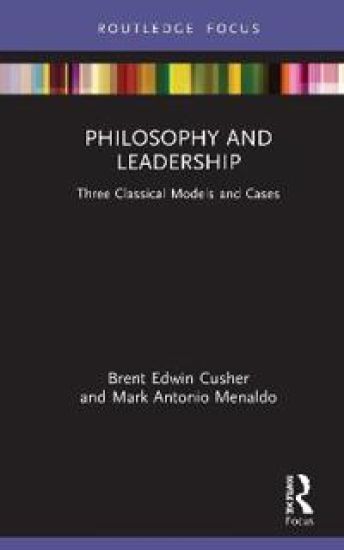
Philosophy and Leadership

Philosophy and Leadership

Brent Cusher; Mark Menaldo

Routledge
2021
sidottu
Today, managers, politicians, educators, and healthcare providers are highly skilled technicians who navigate modern systems. However, followers seek more than know-how; they desire moral leadership. Even leaders equipped with skills must make difficult ethical choices.This book connects philosophy to leadership by examining three representative texts from the history of philosophy: Plato’s Republic, Aristotle’s Nicomachean Ethics, and Niccolò Machiavelli’s The Prince. The leadership ideas contained in each one of these philosopher’s works were not only pioneering for their age but continue to be relevant today because they provide insight into the enduring questions of leadership. The book demonstrates the timeliness of the classical works by applying these philosophical approaches to historical and contemporary cases.This book is ideal for readers who are acquainted with philosophy and those who are uninitiated. The connections made between philosophy, leadership literature, and real-life leaders enable readers to appreciate how deeper reflection into the themes of leadership might merit scholarly attention and bear witness to the close union between the philosophy of leadership and the real world.
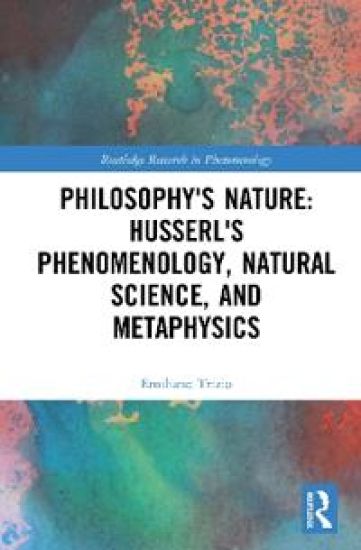
Philosophy's Nature: Husserl's Phenomenology, Natural Science, and Metaphysics
This book offers a systematic interpretation of the relation between natural science and metaphysics in Husserl’s phenomenology. It shows that Husserl’s account of scientific knowledge is a radical alternative to established methods and frameworks in contemporary philosophy of science.The author’s interpretation of Husserl’s philosophy offers a critical reconstruction of the historical context from which his phenomenological approach developed, as well as new interpretations of key Husserlian concepts such as metaphysics, idealization, life-world, objectivism, crisis of the sciences, and historicity. The development of Husserl’s philosophical project is marked by the tension between natural science and transcendental phenomenology. While natural science provides a paradigmatic case of the way in which transcendental phenomenology, ontology, empirical science, and metaphysics can be articulated, it has also been the object of philosophical misunderstandings that have determined the current cultural and philosophical crisis. This book demonstrates the ways in which Husserl shows that our conceptions of philosophy and of nature are inseparable.Philosophy’s Nature will appeal to scholars and advanced students who are interested in Husserl and the relations between phenomenology, natural science, and metaphysics.
Philosophy of Love in the Past, Present, and Future
This volume features original essays on the philosophy of love. The essays are organized thematically around the past, present, and future of philosophical thinking about love.In Part I, the contributors explore what we can learn from the history of philosophical thinking about love. The chapters cover Ancient Greek thinkers, namely Plato and Aristotle, as well as Kierkegaard’s critique of preferential love and Erich Fromm’s mystic interpretation of sexual relations. Part II covers current conceptions and practices of love. These chapters explore how love changes over time, the process of falling in love, the erotic dimension of romantic love, and a new interpretation of grand-parental love. Finally, Part III looks at the future of love. These chapters address technological developments related to love, such as algorithm-driven dating apps and robotic companions, as well as the potential of polyamory as a future romantic ideal.This book will be of interest to researchers and advanced students in moral philosophy and social and political philosophy who are working on issues related to the philosophy of love.