Kirjojen hintavertailu. Mukana 12 390 323 kirjaa ja 12 kauppaa.

Kirjahaku

Etsi kirjoja tekijän nimen, kirjan nimen tai ISBN:n perusteella.

1000 tulosta hakusanalla Roberto Podda

Chronic Fatigue Syndrome, Christianity, and Culture

Chronic Fatigue Syndrome, Christianity, and Culture

Roberto Patarca Montero; Jim Rotholz

Haworth Press Inc
2002
nidottu
Share the Biblical view of the value of human life!This fascinating first-person account offers an insider's view of what it means to suddenly move from being a healthy, productive member of society to being severely limited. Chronic Fatigue Syndrome, Christianity, and Culture: Between God and an Illness tells the story of the author and his wife, who were both struck down with CFIDS in the midst of their busy lives of service. Because Dr. Rotholz is also a trained anthropologist, he can bring a scholarly perspective to understanding the social, emotional, and cultural impact of this devastating illness. His devout Christianity gives a Biblical context to this discussion.Chronic Fatigue Syndrome, Christianity, and Culture: Between God and an Illness analyzes the secular cultural values that make disability seem like shame. Because our culture exalts worldly status and financial success, many CFIDS sufferers find themselves facing a deep sense of humiliation, worthlessness, and failure when their disease puts their lives on hold. Dr. Rotholz offers a Biblical perspective of human beings as the image-bearers of God. This alternative vision of values is exemplified in the culture of the Bushmen of the Kalahari in Africa, the Bruderhof Christian community in the USA, and the life of a Black woman from the American south.Chronic Fatigue Syndrome, Christianity, and Culture: Between God and an Illness presents a powerfully reasoned, deeply felt analysis of the tug of war between our culture and Biblical standards, including: achievement, status, power, and wealth as the elements of our culture of success the anxiety that lies behind the stress of economic productivity the economic factors that influence our cultural bias against the disabled the Biblical meaning of suffering faithfulness as the Biblical measure of success in lifeThe power of this extraordinary book goes well beyond the CFIDS community and even the community of the disabled. Chronic Fatigue Syndrome, Christianity, and Culture: Between God and an Illness offers a new and meaningful vision of what makes life worth living for anyone, well or ill, young or old. Scholars and practitioners in anthropology, medical sociology, social work, the health professions, pastoral care, and theology will find it a powerful aid to understanding the world of the disabled and treating others with respect. The disabled and those who care for them will call it a blessing.

The Concise Encyclopedia of Fibromyalgia and Myofascial Pain

The Concise Encyclopedia of Fibromyalgia and Myofascial Pain

Roberto Patarca Montero

Haworth Press Inc
2002
nidottu
An A-to-Z look at these crippling disorders! Compiled by one of the foremost researchers in the field of immunology, The Concise Encyclopedia of Fibromyalgia and Myofascial Pain is an A-to-Z summary of current knowledge that updates patients and health care professionals on these disabling clinical disorders. This vital information has been organized in an easy-to-use format that lets you become familiar with highlights of the most relevant topics.The Concise Encyclopedia of Fibromyalgia and Myofascial Pain gives you immediate access to the latest advances in rheumatology, cardiovascular medicine, endocrinology, epidemiology, immunology, infectious diseases, neurology, psychiatry, and psychology that form the basis for new lines of research and therapeutic intervention. This comprehensive reference summarizes information published mainly in the last decade, providing a thoughtful and balanced resource that will educate and increase awareness of these often-misdiagnosed disorders. The Concise Encyclopedia of Fibromyalgia and Myofascial Pain allows easy access to: relevant case study findings, summarized to provide the answers you need evidence-based alternative medicine approaches pertinent findings on related disorders an extensive bibliographyComprehensive and thorough, The Concise Encyclopedia of Fibromyalgia and Myofascial Pain gives you the information you’ve been looking for on these painful disorders that affect more than six million Americans. This important book gives health care professionals a greater understanding and awareness of fibromyalgia and myofascial pain and gives patients help at their fingertips.
Chronic Fatigue Syndrome and the Body's Immune Defense System

Chronic Fatigue Syndrome and the Body's Immune Defense System

Roberto Patarca-Montero

Informa Healthcare
2002
sidottu
New evidence on the origins and treatment of chronic fatigue syndrome!Written by one of the leading experts in the field, Chronic Fatigue Syndrome and the Body?s Immune Defense System presents vital new information on a crippling disorder that has the biomedical community searching for answers. Current research suggests CFS is associated with immune abnormalities that can potentially account for its origin and development. With at least one-third of tested CFS patients showing evidence of activation of the body?s “immune army,” this book is crucial reading for all patients with CFS and for the healthcare professionals they trust.Chronic Fatigue Syndrome and the Body?s Immune Defense System presents a thorough examination of the connection between immunology and this debilitating disorder. The book is essential as a primer on the human immune system (explaining fundamental terms and concepts), an overview of immunopathology, and a review of therapeutic interventions that are immune-based. It also explores the links between immune, endocrine, and nervous system abnormalities and the need for a combined research approach to understanding the different manifestations of CFS.Chronic Fatigue Syndrome and the Body?s Immune Defense System explains: how infectious viruses, bacteria, and fungi could be direct causes of CFS how therapeutic tools like herbal medicine, vaccines, and cell therapy are being used in CFS research how CFS research applies to related conditions, such as fibromyalgia, Gulf War syndrome, sick building syndrome, and multiple chemical sensitivityWith a consensus diagnostic tool for CFS still lacking, continued, aggressive research is vital to solving the riddle of its origin. Chronic Fatigue Syndrome and the Body?s Immune Defense System represents a significant step forward in the search, giving new hope to patients and new insight to healthcare professionals.
Foreign Investment in Chile:The Legal Framework for Business, the Foreign Investment Regime in Chile, Environmental System in Chile, Documents
Foreign Direct Investment in Chile addresses all aspects of foreign direct investment in Chile and is very timely since the economy of Chile is growing at a rapid pace. It is considered to be a model in Latin America. In the past few years, foreign investment in Chile has been transformed into a highly significant macroeconomic variable. Indeed, the phenomenon of foreign investment has enticed companies from over sixty countries, representing all the continents. Without a doubt, the impact foreign investment has had on the country's economic development is significant. In December 1994, Chile was formally invited by the United States, Canada and Mexico to join the NAFTA. Negotiations leading to Chile's participation in the NAFTA are expected to begin in the near future. This development will clearly yield many benefits for Chile. First and foremost, this development, acting in concert with the political and economic stability of Chile, will serve as an impetus for more companies, particularly those of American origin, to invest in Chile. This book analyzes the national legal norms of Chile, offering a very useful perspective on the legal regulations of each sector of the economy in general, and on foreign investment in particular.
The Limits of Rawlsian Justice

The Limits of Rawlsian Justice

Roberto Alejandro

Johns Hopkins University Press
2002
pokkari
The idea of fairness lies at the heart of the concept of justice proposed by political philosopher John Rawls, a concept that liberals have often invoked to defend the welfare state. In The Limits of Rawlsian Justice political theorist Roberto Alejandro challenges the assumptions that Rawls set out to defend his position. While other opponents of Rawls have attempted to offer an alternative to his concept of justice as fairness, Alejandro instead examines Rawls from within his own writings, testing Rawls's assumptions on the basis of those assumptions themselves. As a result, Alejandro shows that Rawls's idea of justice as fairness is fraught with inner tensions, exposed to utilitarian dangers, and far from being the coherent model Rawls promised. Alejandro concludes that Rawls's notion of justice-as-fairness preserves the status quo, overlooks the realities of inequalities in today's society, and is inherently conservative. As a theoretical paradigm, it is exhausted. He urges that we acknowledge the limits of Rawlsian justice both as a defense of the welfare state and as the basis of a just society.
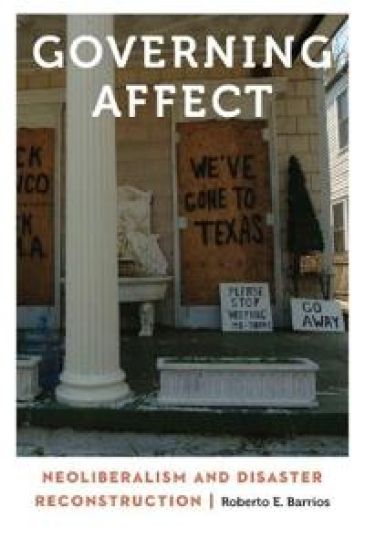
Governing Affect

Governing Affect

Roberto E. Barrios

University of Nebraska Press
2017
sidottu
Roberto E. Barrios presents an ethnographic study of the aftermaths of four natural disasters: southern Honduras after Hurricane Mitch; New Orleans following Hurricane Katrina; Chiapas, Mexico, after the Grijalva River landslide; and southern Illinois following the Mississippi River flood. Focusing on the role of affect, Barrios examines the ways in which people who live through disasters use emotions as a means of assessing the relevance of governmentally sanctioned recovery plans, judging the effectiveness of such programs, and reflecting on the risk of living in areas that have been deemed prone to disaster. Emotions such as terror, disgust, or sentimental attachment to place all shape the meanings we assign to disasters as well as our political responses to them. The ethnographic cases in Governing Affect highlight how reconstruction programs, government agencies, and recovery experts often view postdisaster contexts as opportune moments to transform disaster-affected communities through principles and practices of modernist and neoliberal development. Governing Affect brings policy and politics into dialogue with human emotion to provide researchers and practitioners with an analytical toolkit for apprehending and addressing issues of difference, voice, and inequity in the aftermath of catastrophes.
Communitas

Communitas

Roberto Esposito

Stanford University Press
2009
sidottu
No theme has been more central to international philosophical debates than that of community: from American communitarianism to Habermas's ethic of communication to the French deconstruction of community in the work of Derrida and Nancy. Nevertheless, in none of these cases has the concept been examined from the perspective of community's original etymological meaning: cum munus. In Communitas: The Origin and Destiny of Community, Roberto Esposito does just that through an original counter-history of political philosophy that takes up not only readings of community by Hobbes, Rousseau, Kant, Heidegger and Bataille, but also by Hölderlin, Nietzsche, Canetti, Arendt, and Sartre. The result of his extraordinary conceptual and lexical analysis is a radical overturning of contemporary interpretations of community. Community isn't a property, nor is it a territory to be separated and defended against those who do not belong to it. Rather, it is a void, a debt, a gift to the other that also reminds us of our constitutive alterity with respect to ourselves.
Communitas

Communitas

Roberto Esposito

Stanford University Press
2009
pokkari
No theme has been more central to international philosophical debates than that of community: from American communitarianism to Habermas's ethic of communication to the French deconstruction of community in the work of Derrida and Nancy. Nevertheless, in none of these cases has the concept been examined from the perspective of community's original etymological meaning: cum munus. In Communitas: The Origin and Destiny of Community, Roberto Esposito does just that through an original counter-history of political philosophy that takes up not only readings of community by Hobbes, Rousseau, Kant, Heidegger and Bataille, but also by Hölderlin, Nietzsche, Canetti, Arendt, and Sartre. The result of his extraordinary conceptual and lexical analysis is a radical overturning of contemporary interpretations of community. Community isn't a property, nor is it a territory to be separated and defended against those who do not belong to it. Rather, it is a void, a debt, a gift to the other that also reminds us of our constitutive alterity with respect to ourselves.
Living Thought

Living Thought

Roberto Esposito

Stanford University Press
2012
sidottu
The work of contemporary Italian thinkers, what Roberto Esposito refers to as Italian Theory, is attracting increasing attention around the world. This book explores the reasons for its growing popularity, its distinguishing traits, and why people are turning to these authors for answers to real-world issues and problems. The approach he takes, in line with the keen historical consciousness of Italian thinkers themselves, is a historical one. He offers insights into the great "unphilosophical" philosophers of life—poets, painters, politicians and revolutionaries, film-makers and literary critics—who have made Italian thought, from its beginnings, an "impure" thought. People like Machiavelli, Croce, Gentile, and Gramsci were all compelled to fulfill important political roles in the societies of their times. No wonder they felt that the abstract vocabulary and concepts of pure philosophy were inadequate to express themselves. Similarly, artists such as Dante, Leonardo Da Vinci, Leopardi, or Pasolini all had to turn to other disciplines outside philosophy in order to discuss and grapple with the messy, constantly changing realities of their lives. For this very reason, says Esposito, because Italian thinkers have always been deeply engaged with the concrete reality of life (rather than closed up in the introspective pursuits of traditional continental philosophy) and because they have looked for the answers of today in the origins of their own historical roots, Italian theory is a "living thought." Hence the relevance or actuality that it holds for us today. Continuing in this tradition, the work of Roberto Esposito is distinguished by its interdisciplinary breadth. In this book, he passes effortlessly from literary criticism to art history, through political history and philosophy, in an expository style that welcomes non-philosophers to engage in the most pressing problems of our times. As in all his works, Esposito is inclusive rather than exclusive; in being so, he celebrates the affirmative potency of life.
Living Thought

Living Thought

Roberto Esposito

Stanford University Press
2012
pokkari
The work of contemporary Italian thinkers, what Roberto Esposito refers to as Italian Theory, is attracting increasing attention around the world. This book explores the reasons for its growing popularity, its distinguishing traits, and why people are turning to these authors for answers to real-world issues and problems. The approach he takes, in line with the keen historical consciousness of Italian thinkers themselves, is a historical one. He offers insights into the great "unphilosophical" philosophers of life—poets, painters, politicians and revolutionaries, film-makers and literary critics—who have made Italian thought, from its beginnings, an "impure" thought. People like Machiavelli, Croce, Gentile, and Gramsci were all compelled to fulfill important political roles in the societies of their times. No wonder they felt that the abstract vocabulary and concepts of pure philosophy were inadequate to express themselves. Similarly, artists such as Dante, Leonardo Da Vinci, Leopardi, or Pasolini all had to turn to other disciplines outside philosophy in order to discuss and grapple with the messy, constantly changing realities of their lives. For this very reason, says Esposito, because Italian thinkers have always been deeply engaged with the concrete reality of life (rather than closed up in the introspective pursuits of traditional continental philosophy) and because they have looked for the answers of today in the origins of their own historical roots, Italian theory is a "living thought." Hence the relevance or actuality that it holds for us today. Continuing in this tradition, the work of Roberto Esposito is distinguished by its interdisciplinary breadth. In this book, he passes effortlessly from literary criticism to art history, through political history and philosophy, in an expository style that welcomes non-philosophers to engage in the most pressing problems of our times. As in all his works, Esposito is inclusive rather than exclusive; in being so, he celebrates the affirmative potency of life.
Ronsard's Contentious Sisters

Ronsard's Contentious Sisters

Roberto Campo

The University of North Carolina Press
1998
nidottu
Examining Ronsard's participation in the ""paragone"" debate between poets and painters, this text is broadly concerned with his notions about the differences between poems and pictures - whether therefore it is the poet or painter who holds the highest station in the hierarchy of human creativity.
Traveling Freely

Traveling Freely

Roberto Carlos Garcia

NORTHWESTERN UNIVERSITY PRESS
2024
nidottu
A poet’s debut essay collection exploring American faults through the eyes of a Dominican American In Traveling Freely: Essays, Roberto Carlos Garcia explores intersecting topics such as race, identity, American socioeconomic inequality, police violence, our inability to partake in our culture as innocents, and our complicity as Americans in all that’s wrong with the United States from the author’s specific vantage point as a Black Dominican American man. The voice in these essays is both clear and nuanced, and as readers move through the collection, the various themes cohere into a multilayered investigation of institutional racism and the inherent exploitations of capitalism. In essays that are uniquely straightforward and accessible, Garcia insists that in order to resist state-sanctioned violence against marginalized bodies and populations, we must understand our shared history of oppression—so that we can rise against it effectively and find new paths forward.
Distant Star

Distant Star

Roberto Bolano; Chris Andrews

New Directions Publishing Corporation
2004
pokkari
The star of Roberto Bolano's hair-raising novel Distant Star is Alberto Ruiz-Tagle, an air force pilot who exploits the 1973 coup to launch his own version of the New Chilean Poetry, a multimedia enterprise involving sky-writing, poetry, torture, and photo exhibitions.For our unnamed narrator, who first encounters this "star" in a college poetry workshop, Ruiz-Tagle becomes the silent hand behind every evil act in the darkness of Pinochet's regime. The narrator, unable to stop himself, tries to track Ruiz-Tagle down, and sees signs of his activity over and over again. A corrosive, mocking humor sparkles within Bolano's darkest visions of Chile under Pinochet. In Bolano's world there's a big graveyard and there's a big graveyard laugh. (He once described his novel By Night in Chile as "a tale of terror, a situation comedy, and a combination pastoral-gothic novel.")Many Chilean authors have written about the "bloody events of the early Pinochet years, the abductions and murders," Richard Eder commented in the The New York Times "None has done it in so dark and glittering a fashion as Roberto Bolano."
Last Evenings on Earth

Last Evenings on Earth

Roberto Bolano

New Directions Publishing Corporation
2007
pokkari
Fourteen dark tales about the tragic qualities of exile feature protagonists who are struggling with marginal lives and private, often ill-fated, quests, in a collection set in the Chilean exile diaspora of Latin America and Europe. Reprint.
Nazi Literature in the Americas

Nazi Literature in the Americas

Roberto Bolaño

NEW DIRECTIONS PUBLISHING CORPORATION
2008
sidottu
Written as a biographical dictionary of twentieth- and twenty-first-century contributors who espoused extreme right-wing ideologies, a series of fictional character portraits is thematically organized under such headings as "Forerunners and Figures of the Anti-Enlightenment" and "North American Poets."
Amulet

Amulet

Roberto Bolano; Chris (TRN) Andrews

New Directions Publishing Corporation
2008
pokkari
Amulet is a monologue, like Bolano's acclaimeddebut in English, By Night in Chile. The speaker is AuxilioLacouture, a Uruguayan woman who moved to Mexico in the 1960s, becomingthe "Mother of Mexican Poetry," hanging out with the youngpoets in the cafes and bars of the University. She's tall, thin, and blonde, and her favorite young poet in the 1970s is none other thanArturo Belano (Bolano's fictional stand-in throughout his books). As well as her young poets, Auxilio recalls three remarkable women: the melancholic young philosopher Elena, the exiled Catalan painterRemedios Varo, and Lilian Serpas, a poet who once slept with Che Guevara.And in the course of her imaginary visit to the house of Remedios Varo, Auxilio sees an uncanny landscape, a kind of chasm. This chasm reappearsin a vision at the end of the book: an army of children is marchingtoward it, singing as they go. The children are the idealistic youngLatin Americans who came to maturity in the '70s, and the last wordsof the novel are: "Andthat song is our amulet."