Kirjojen hintavertailu. Mukana 12 016 292 kirjaa ja 12 kauppaa.

Kirjahaku

Etsi kirjoja tekijän nimen, kirjan nimen tai ISBN:n perusteella.

1000 tulosta hakusanalla Ron Larson

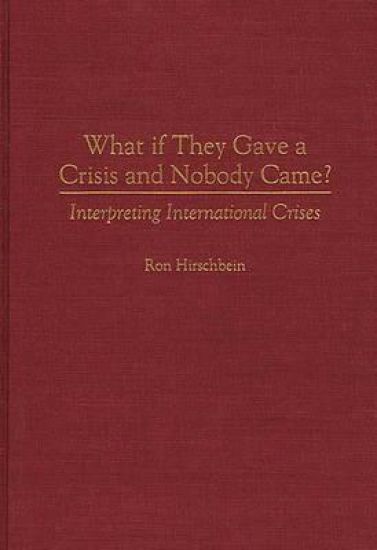
What if They Gave a Crisis and Nobody Came?

What if They Gave a Crisis and Nobody Came?

Ron Hirschbein

Praeger Publishers Inc
1997
sidottu
If wars are too important to be left to the generals, crises are too dangerous to be left exclusively to the social scientists. Humanistic inquiry has not realized its potential for illuminating these wars of words. Crises occur in a realm foreign to prevailing approaches, but familiar to interpretive approaches to politics. Decision-makers are no longer observers of unmistakable threats: they are interpreters of cryptic texts and symbolic performances. Accordingly, analysts (quite unwittingly) have become interpreters of interpretations—crises inquiry occurs in the archives, not the laboratory. Relying upon a hermeneutic approach used to illuminate crises at other times and places, Hirschbein explores the puzzling aspects of defining Kennedy, Nixon, and Kissinger episodes: Why is Kennedy's joust on the brink enshrined as the unforgettable Cuban missile crises, while Nixon and Kissingers' prudent resolution of a comparable threat is all but forgotten? This novel account of crises construction, management, and remembrance explores how and why these events were handled so differently, and concludes that it is not world that is the source of our crises, but our interpretation of the world. Questions of crisis construction, management, and remembrance are at the heart of this study. Professor Hirschbein examines why American political figures define an event as a crisis—or not. He then analyzes why some crises are managed prudently, while others are not, despite access to comparable information and resources. Lastly, he tries to determine why some crises are enshrined as templates for future confrontation while others quickly fade into oblivion. Hirschbein argues that it is not the world that is the source of our crises, but our ^Iinterpretation^R of the world. Accordingly, he explicates those official interpretations of the world known as international crises. This fascinating comparative study will be of great interest to students, scholars, and other researchers of American diplomacy and Peace Studies.
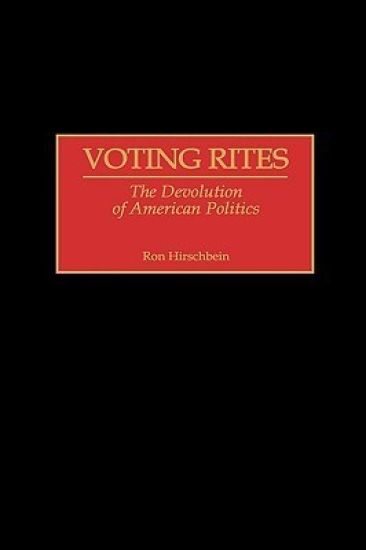
Voting Rites

Voting Rites

Ron Hirschbein

Praeger Publishers Inc
1999
sidottu
Does it really matter if a voter decides to vote-or, as a significant number of Americans do each election, not vote? Ron Hirschbein explores this issue and shows why enfranchisement cannot be understood unless it is placed in context and history. Clearly, the meaning of a vote depends upon the situation: a vote cast among the 400 of Athens or in the College of Cardinals has one significance; this is considerably different from pulling a lever every four years in a mass society of spectacles and commodities. Hirschbein also examines how voting was transformed from an expression of the political will of the Athenian polity into a sacred natural right-only to be turned to a ritual of mass society. First, Hirschbein looks at the right to vote as the centerpiece of American civic religion. He contrasts civic myths about enfranchisement with anthropological realities. Specifically he argues that, given the intractable mathematics of mass society, the chances that a single vote will determine the outcome of an election approach the infinitesimal. However, he suggests that voting plays a neglected ritual function by constructing, legitimizing, and celebrating political reality for players and spectators alike. Hirschbein then explicates the origins and evanescent meanings of enfranchisement by examining the theory and practice of voting among the citizenry of ancient Athens, medieval ecclesiastical bureaucrats, Enlightenment natural law thinkers, and the founders of the Virtuous Republic. He concludes with speculation about possible futures. A controversial and important analysis, this will be of interest to the general public as well as scholars, researchers, and policy makers involved with election issues and theories of democracy.
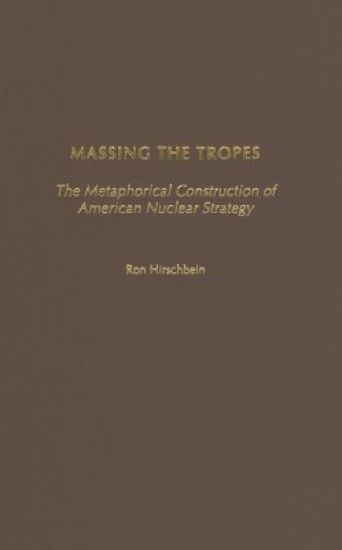
Massing the Tropes

Massing the Tropes

Ron Hirschbein

Praeger Publishers Inc
2005
sidottu
At the dawn of the nuclear age, strategist Bernard Brodie recognized our predicament when he said, Nuclear weapons exist and they are incredibly destructive. Despite the end of the Cold War, thousands of nuclear weapons remain on hair-trigger alert on both sides of the Atlantic. Plans to develop, deploy, and detonate nuclear weapons (for purposes of war prevention or war fighting) are informed by the ambiguous notion that nuclear war can be avoided by maintaining a balance of power. Policy-makers and decision-makers believe that once the balance of power is destroyed, a crisis will ensue, and if this crisis cannot be resolved with words, it is somehow necessary to use weapons. This idea is held as an historic inevitability, but the nuclear subculture is unaware of the highly problematic nature of their fundamental assumptions. Hirschbein entertains the possibility that the theory and practice of these policy-makers and decision-makers are informed by concepts at once ancient and metaphorical. He analyzes the primary and secondary metaphors invoked to conceptualize and manage nuclear weaponry.Hirschbein draws a striking parallel between dramatic changes in the ancient Greek account of conflict and the American conceptualization of nuclear weapons. Facing harrowing times, Thucydides avoided supernatural, Homeric imagery in favor of naturalistic metaphors to account for conflict—an account regarded as eternal wisdom by today's realist. Likewise, facing the Soviet challenge, American strategists abandoned supernatural Judeo-Christian accounts of nuclear weapons in favor of Thucydides' naturalistic tropes.
My Unforgotten Seattle

My Unforgotten Seattle

Ron Chew

International Examiner
2025
nidottu
An insider's look at the making of a city's Asian American communityThird-generation Seattleite, historian, journalist, and museum visionary Ron Chew spent more than five decades fighting for Asian American and social justice causes in Seattle. In this deeply personal memoir, he documents the tight-knit community he remembers, describing small family shops, chop suey restaurants, and sewing factories now vanished. He untangles the mystery of his extended family's journey to America during the era of the Chinese Exclusion Act. Intimate profiles of his parents--a waiter and a garment worker--and leaders like Bob Santos, Ruth Woo, Al Sugiyama, Roberto Maestas, and Kip Tokuda are set against the familiar backdrop of local landmarks such as Sick's Stadium, Kokusai Theatre, Shorey's Bookstore, Higo Variety Store, Hong Kong Restaurant, and Chubby &Tubby. He highlights Seattle's unsung champions in the fight for racial inclusion, political empowerment, American ethnic studies, Asian American arts, Japanese American redress, and revitalization of the Chinatown-International District. Chew himself led a successful campaign to transform a historic hotel into the Wing Luke Museum's permanent home.
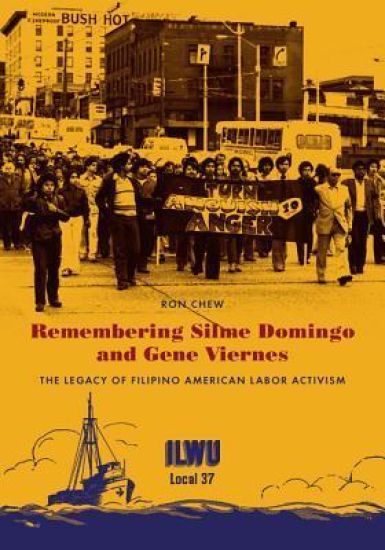
Remembering Silme Domingo and Gene Viernes

Remembering Silme Domingo and Gene Viernes

Ron Chew

University of Washington Press
2012
pokkari
Remembering Silme Domingo and Gene Viernes examines the lives of two slain cannery union reformers during the tumultuous Civil Rights Era of the 1970s. Author Ron Chew was a close friend of Gene and Silme, and his poignant prologue sets the stage for the story of their political awakening, the events that led to their tragic deaths, and the movement they nurtured. Through memories of family and friends, we learn about the men as second-generation Filipino Americans, as leaders, and as part of a generation striving to make America live up to its democratic ideals.The book includes a history of Asian labor in the Alaska salmon-canneries written by Gene Viernes. He intended to publish this work to illuminate the contributions of cannery workers and the noble fight to create a union.Remembering Silme Domingo and Gene Viernes provides rich insight into the roots of Asian American labor organizing and offers inspiration and wisdom for a new wave of activists.
Guide To Better Acol Bridge

Guide To Better Acol Bridge

Ron Klinger

Weidenfeld Nicolson
2014
pokkari
For those needing to grasp the fundamentals of sound bidding and play, Ron Klinger's BASIC BRIDGE is the answer. GUIDE TO BETTER ACOL BRIDGE is intended for the large majority who are ready to advance beyond the basics.While GUIDE TO BETTER ACOL BRIDGE emphasises better bidding, each chapter contains examples of play, which highlight areas of winning declarer technique and defence. At the end of each section, a revision test enables the reader to measure the rate of progress.The book can be used by teachers conducting courses, or as a self-teacher.
Right Through The Pack Again

Right Through The Pack Again

Ron Klinger

Weidenfeld Nicolson
2008
pokkari
For everyone who plays - or is interested in the international phenomenon that is the world of bridgeIn RIGHT THROUGH THE PACK AGAIN, joint winner of the INTERNATIONAL BRIDGE PRESS ASSOCIATIONS'S 2009 BOOK OF THE YEAR AWARD, each card tells the story of its importance in a particular deal and in so doing the book pays homage to the original concept in the bridge classic RIGHT THROUGH THE PACK. The Old Master is in a coma and the cards attempt to bring him back to consciousness, to revive him with their tales of derring-do. Not only are the deals themselves entertaining, but they are instructive too. You can test yourself on the problems and then go to the solution later in the book and thus improve your own game.
The Power Of Shape

The Power Of Shape

Ron Klinger

Weidenfeld Nicolson
2008
pokkari
Average players tend to focus on point count for their bidding decisions, but the expert recognises that the shape of the hand also plays a vital role. Knowing the implications of shape will help you find the best contract more often. The book not only reveals how to use hand patterns to winning effect, but also how to incorporate the ideas of shape in your bidding system.The power of shape is not limited to the bidding. Successful play or defence is often linked to a knowledge of the pattern of the opponents' hands. The second part of this book will show you how to discover and make use of this invaluable information.Follow the recommendations in this exciting and original book and your partnership will be in great shape!
To Win At Bridge

To Win At Bridge

Ron Klinger

Weidenfeld Nicolson
2007
pokkari
The world of bridge has winners and also-rans. What would you rather be? Winning might not be everything, but it is much better than finishing second or third, and way ahead of being out of place.This book examines the attributes and skills you need to be on the winner's dais more often, not only the personal qualities and psychological requirements, but also the methods you are using and the standard of card play required. TO WIN AT BRIDGE is a challenge full of tips and telling advice, which if followed will produce a positive lift to your game.
Improve Your Opening Leads

Improve Your Opening Leads

Ron Klinger

Weidenfeld Nicolson
2009
pokkari
The opening lead is one of the toughest areas of the game. By following the guide-lines in this book not only will you find the winning lead more often, but also you will be able to avoid the futile or dangerous leads which make declarer's task easier. By giving less away with the opening lead, your scores are bound to improve.This book is about the logic and methods for finding the best lead time and time again. The first section deals with the approach you should adopt before you even consider plucking a card from your hand. It provides a series of steps to enable you to come up with the best start. This is followed by a section of practical problems that arose in major competitions where the very best players did not always find the right answer. Most importantly, the solutions to each problem include the logic behind the right choice and the clues that should point you in the right direction. After completing this book, perhaps you will not find the killing lead every time, but you will find it more often.
Improve Your Declarer Play at No-Trumps

Improve Your Declarer Play at No-Trumps

Ron Klinger

Weidenfeld Nicolson
2009
pokkari
Many players feel trepidation when faced with playing a no-trumps contract. In this book Ron Klinger shows you how to approach such contracts without fear. The correct lines and logical thinking are explained clearly and you will not only make your contracts, but also score overtricks as well.This book is about the strategy of succeeding as declarer when you play no-trumps. The first section deals with the approach you should adopt before you even play a card from dummy. Then follow heaps of practical examples, problems for you to solve, deals that arose in major competitions where the very best players did not always find the right answer. Most importantly, the solutions include the logic behind the right play, the clues to locate the missing cards and ideas on how to induce opposition error when you have no legitimate chance for success.In this book, Australian expert Ron Klinger shows you how to come out on top more often. Where you might have felt reluctance when playing no-trumps, you will emerge with a new sense of confidence. No-trumps will no longer hold any fears for you.
Improve Your Play at Trump Contracts

Improve Your Play at Trump Contracts

Ron Klinger

Weidenfeld Nicolson
2012
pokkari
Following the successful IMPROVE YOUR PLAY AT NO-TRUMPS, Ron Klinger shows you how to make the most of your assets in trump contracts. When is it right to draw trumps, when to delay, when to cross-ruff and many more topics are covered to make you a better declarer and make that extra trick or two give you a top score.
Improve Your Slam Bidding

Improve Your Slam Bidding

Ron Klinger

Weidenfeld Nicolson
2012
pokkari
Bidding in the slam area has developed rapidly over the past 20 years and players are bidding slams more often and more accurately. In this book Ron Klinger shows how to judge whether slam is likely or not and reveals the methods to find the critical cards in partner's hand, whether it is to stay out of a poor slam, bid a good small slam or find an excellent grand slam.
When to Bid, When to Pass

When to Bid, When to Pass

Ron Klinger

Weidenfeld Nicolson
2012
pokkari
From the opening bid to much later rounds of bidding, from uncontested sequences to highly competitive auctions, this book will provide the groundwork so that you will know when silence can be golden. Each chapter covers the principles that indicate when bidding is the right course, and then which call to choose, and when passing is the winning action.
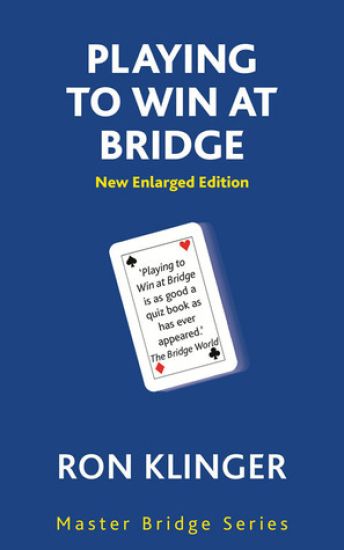
Playing To Win At Bridge

Playing To Win At Bridge

Ron Klinger

Weidenfeld Nicolson
2013
pokkari
BRIDGE WORLD said of the first edition: 'is as good a quiz book as has ever appeared...Instead of examples of well-known ideas, the author presents truly practical situations...the questions emphasise those aspects of bridge play that are truly important at the table. Our quibbles with the analysis are minor, and we recommend the book as outstanding of its kind.'
Teach Your Child Bridge

Teach Your Child Bridge

Ron Klinger

Weidenfeld Nicolson
2014
pokkari
There is every reason to start children on bridge at an early age. In addition to the obvious benefits to arithmetic and logical reasoning, bridge develops memory, judgement, concentration, planning ability and cooperation. It is a social asset for life, and boosts mental alertness later in life. Not only is it fun to play, but bridge also allows one to make new friends easily and overcomes all kinds of social barriers and physical handicaps. Bridge can be played anywhere and anytime. You will be doing your child a lifelong favour by opening the door to the world of bridge.
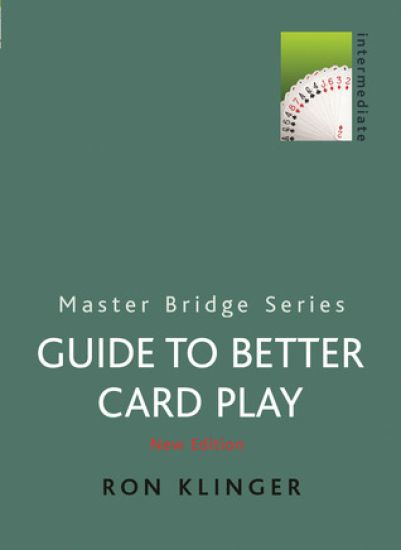
Guide to Better Card Play

Guide to Better Card Play

Ron Klinger

Cassell Reference
2001
pokkari
The world's oldest, and leading, bridge magazine, The Bridge World, said of this book:'Guide to Better Card Play is an elementary-through-intermediate textbook on declarer play and defence. Appropriately, the two phases of the book receive equal attention. The book can be used either as a self-teacher or as the basis of a series of lessons. In addition to the tutorial material, which is comprehensive, careful and instructive, the work is choc-a-bloc with summaries, reviews, quizzes and example deals. There is even an appendix that allows your foursome to set up the practice deals yourself. We like almost everything about this book, we especially liked the attention to partnership methods, the topic selection, and the carefully constructed lesson deals. There are other good texts at this level, but Klinger's book has twice as much material as similar works. This is a very good buy.'
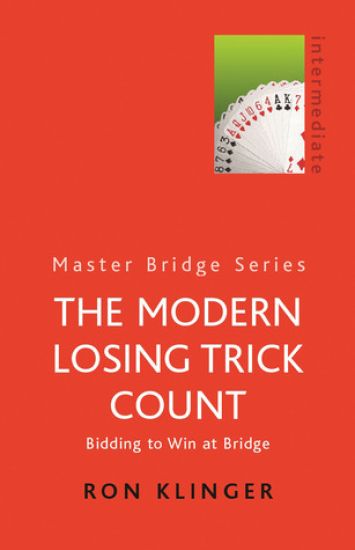
The Modern Losing Trick Count

The Modern Losing Trick Count

Ron Klinger

Cassell Reference
2001
pokkari
Played around the world - according to one famous player, if you play bridge, you will make friends wherever you go.If you want to bid accurately and achieve greatly improved results at the bridge table, you have to master the Losing Trick Count. It is a tried and tested method of hand evaluation which has stood the test of time. Ron Klinger, famous international player, author and teacher who has more books to his credit than many players have had good hands, has brought the LTC up to date by relating it to modern systems and conventions.Now in its fifteenth impression since original publication, this remarkable book is set to hold its place as the standard text on the Losing Trick Count.
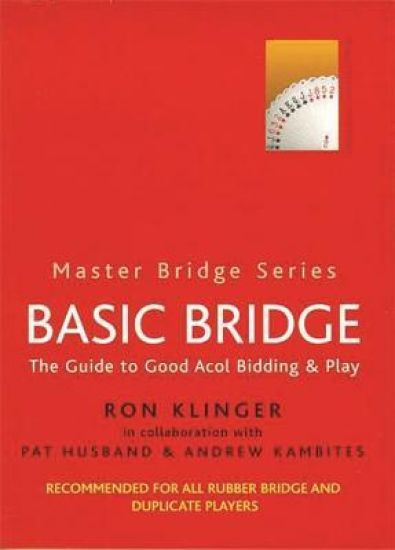
Basic Bridge

Basic Bridge

Ron Klinger; Andrew Kambites; Pat Husband

Weidenfeld Nicolson
2001
pokkari
'One of the best introductory books I have come across is Basic Bridge. I recommend it to beginners and teachers alike' The European'By far the best' Bridge PlusThis is a definitive Acol textbook, equally valuable to rubber or duplicate bridge players. Set out as a course which can be used in conjunction with bridge classes or as a self-teacher, the book covers all the basic principles of bidding and play and is packed with exercises and quizzes on everything that has been taught. Recommended as the ideal textbook for learning the game, Basic Bridge will continue to be the standard beginner's guide to rubber and duplicate bridge for the foreseeable future. If you only ever buy one bridge book it has to be Basic Bridge.