Kirjojen hintavertailu. Mukana 11 650 382 kirjaa ja 12 kauppaa.

Kirjahaku

Etsi kirjoja tekijän nimen, kirjan nimen tai ISBN:n perusteella.

1000 tulosta hakusanalla Sean Howe

The Chinese Atlantic

The Chinese Atlantic

Sean Metzger

Indiana University Press
2020
pokkari
In The Chinese Atlantic, Sean Metzger charts processes of global circulation across and beyond the Atlantic, exploring how seascapes generate new understandings of Chinese migration, financial networks and artistic production. Moving across film, painting, performance, and installation art, Metzger traces flows of money, culture, and aesthetics to reveal the ways in which routes of commerce stretching back to the Dutch Golden Age have molded and continue to influence the social reproduction of Chineseness. With a particular focus on the Caribbean, Metzger investigates the expressive culture of Chinese migrants and the communities that received these waves of people. He interrogates central issues in the study of similar case studies from South Africa and England to demonstrate how Chinese Atlantic seascapes frame globalization as we experience it today. Frequently focusing on art that interacts directly with the sites in which it is located, Metzger explores how Chinese migrant laborers and entrepreneurs did the same to shape—both physically and culturally—the new spaces in which they found themselves. In this manner, Metzger encourages us to see how artistic imagination and practice interact with migration to produce a new way of framing the global.

Holographic Quantum Matter

Holographic Quantum Matter

Sean A. Hartnoll; Andrew Lucas; Subir Sachdev

MIT Press
2018
sidottu
A comprehensive overview of holographic methods in quantum matter, written by pioneers in the field. This book, written by pioneers in the field, offers a comprehensive overview of holographic methods in quantum matter. It covers influential developments in theoretical physics, making the key concepts accessible to researchers and students in both high energy and condensed matter physics. The book provides a unique combination of theoretical and historical context, technical results, extensive references to the literature, and exercises. It will give readers the ability to understand the important problems in the field, both those that have been solved and those that remain unsolved, and will enable them to engage directly with the current literature.The book describes a particular interface between condensed matter physics, gravitational physics, and string and quantum field theory made possible by holographic duality. The chapters cover such topics as the essential workings of the holographic correspondence; strongly interacting quantum matter at a fixed commensurate density; compressible quantum matter with a variable density; transport in quantum matter; the holographic description of symmetry broken phases; and the relevance of the topics covered to experimental challenges in specific quantum materials. Holographic Quantum Matter promises to be the definitive presentation of this material.
How Smart Machines Think

How Smart Machines Think

Sean Gerrish

MIT Press
2019
pokkari
Everything you've always wanted to know about self-driving cars, Netflix recommendations, IBM's Watson, and video game-playing computer programs.The future is here: Self-driving cars are on the streets, an algorithm gives you movie and TV recommendations, IBM's Watson triumphed on Jeopardy over puny human brains, computer programs can be trained to play Atari games. But how do all these things work? In this book, Sean Gerrish offers an engaging and accessible overview of the breakthroughs in artificial intelligence and machine learning that have made today's machines so smart.Gerrish outlines some of the key ideas that enable intelligent machines to perceive and interact with the world. He describes the software architecture that allows self-driving cars to stay on the road and to navigate crowded urban environments; the million-dollar Netflix competition for a better recommendation engine (which had an unexpected ending); and how programmers trained computers to perform certain behaviors by offering them treats, as if they were training a dog. He explains how artificial neural networks enable computers to perceive the world-and to play Atari video games better than humans. He explains Watson's famous victory on Jeopardy, and he looks at how computers play games, describing AlphaGo and Deep Blue, which beat reigning world champions at the strategy games of Go and chess. Computers have not yet mastered everything, however; Gerrish outlines the difficulties in creating intelligent agents that can successfully play video games like StarCraft that have evaded solution-at least for now. Gerrish weaves the stories behind these breakthroughs into the narrative, introducing readers to many of the researchers involved, and keeping technical details to a minimum. Science and technology buffs will find this book an essential guide to a future in which machines can outsmart people.
Isabelle of France

Isabelle of France

Sean L. Field

University of Notre Dame Press
2006
nidottu
As the only daughter of Blanche of Castile, one of France's most powerful queens, and as the sister of the Capetian saint Louis IX, Isabelle of France (1225-1270) was situated at the nexus of sanctity and power during a significant era of French culture and medieval history. In this ground-breaking examination of Isabelle's career, Sean Field uses a wealth of previously unstudied material to address significant issues in medieval religious history, including the possibilities for women's religious authority, the creation and impact of royal sanctity, and the relationship between men and women within the mendicant orders. Field reinterprets Isabelle's career as a Capetian princess. Isabelle was remarkable for choosing a life of holy virginity and for founding and co-authoring a rule for the Franciscan abbey of Longchamp. Isabelle did not become a nun there, but remained a powerful lay patron, living in a modest residence on the abbey grounds. Field maintains that Isabelle was a key actor in creating the aura of sanctity that surrounded the French royal family in the thirteenth century, underscoring the link between the growth of Capetian prestige and power and the idea of a divinely ordained, virtuous, and holy royal family. Her contemporary reputation for sanctity emerges from a careful analysis of the Life of Isabelle of France written by the third abbess of Longchamp, Agnes of Harcourt, and from papal bulls, letters, and other contemporary sources that have only recently come to light. Field also argues that Isabelle had a profound effect on the institutional history of Franciscan women. By remaining outside the official Franciscan and church hierarchies, Isabelle maintained an ambiguous position that allowed her to embrace Franciscan humility while retaining royal influence. Her new order of Sorores minores was eagerly adopted by a number of communities, and her rule for the order eventually spread from France to England, Italy, and Spain. An important study of a medieval woman's agency and power, Isabelle of France explores the life of a remarkable figure in French and Franciscan history.
The Beguine, the Angel, and the Inquisitor

The Beguine, the Angel, and the Inquisitor

Sean L. Field

University of Notre Dame Press
2012
nidottu
On 31 May 1310, at the Place de Grève in Paris, the Dominican inquisitor William of Paris read out a sentence that declared Marguerite "called Porete," a beguine from Hainault, to be a relapsed heretic, released her to secular authority for punishment, and ordered that all copies of a book she had written be confiscated. William next consigned Guiard of Cressonessart, an apocalyptic activist in the tradition of Joachim of Fiore and a would-be defender of Marguerite, to perpetual imprisonment. Over several months, William of Paris conducted inquisitorial processes against them, complete with multiple consultations of experts in theology and canon law. Though Guiard recanted at the last moment and thus saved his life, Marguerite went to her execution the day after her sentencing. The Beguine, the Angel, and the Inquisitor is an analysis of the inquisitorial trials, their political as well as ecclesiastical context, and their historical significance. Marguerite Porete was the first female Christian mystic burned at the stake after authoring a book, and the survival of her work makes her case absolutely unique. The Mirror of Simple Souls, rediscovered in the twentieth century and reconnected to Marguerite's name only a half-century ago, is now recognized as one of the most daring, vibrant, and original examples of the vernacular theology and beguine mysticism that emerged in late thirteenth-century Christian Europe. Field provides a new and detailed reconstruction of hitherto neglected aspects of Marguerite's life, particularly of her trial, as well as the first extended consideration of her inquisitor's maneuvers and motivations. Additionally, he gives the first complete English translation of all of the trial documents and relevant contemporary chronicles, as well as the first English translation of Arnau of Vilanova's intriguing "Letter to Those Wearing the Leather Belt," directed to Guiard's supporters and urging them to submit to ecclesiastical authority.
Isabelle of France

Isabelle of France

Sean L. Field

UNIVERSITY OF NOTRE DAME PRESS
2022
sidottu
As the only daughter of Blanche of Castile, one of France's most powerful queens, and as the sister of the Capetian saint Louis IX, Isabelle of France (1225-1270) was situated at the nexus of sanctity and power during a significant era of French culture and medieval history. In this ground-breaking examination of Isabelle's career, Sean Field uses a wealth of previously unstudied material to address significant issues in medieval religious history, including the possibilities for women's religious authority, the creation and impact of royal sanctity, and the relationship between men and women within the mendicant orders. Field reinterprets Isabelle's career as a Capetian princess. Isabelle was remarkable for choosing a life of holy virginity and for founding and co-authoring a rule for the Franciscan abbey of Longchamp. Isabelle did not become a nun there, but remained a powerful lay patron, living in a modest residence on the abbey grounds. Field maintains that Isabelle was a key actor in creating the aura of sanctity that surrounded the French royal family in the thirteenth century, underscoring the link between the growth of Capetian prestige and power and the idea of a divinely ordained, virtuous, and holy royal family. Her contemporary reputation for sanctity emerges from a careful analysis of the Life of Isabelle of France written by the third abbess of Longchamp, Agnes of Harcourt, and from papal bulls, letters, and other contemporary sources that have only recently come to light. Field also argues that Isabelle had a profound effect on the institutional history of Franciscan women. By remaining outside the official Franciscan and church hierarchies, Isabelle maintained an ambiguous position that allowed her to embrace Franciscan humility while retaining royal influence. Her new order of Sorores minores was eagerly adopted by a number of communities, and her rule for the order eventually spread from France to England, Italy, and Spain. An important study of a medieval woman's agency and power, Isabelle of France explores the life of a remarkable figure in French and Franciscan history.
The Beguine, the Angel, and the Inquisitor

The Beguine, the Angel, and the Inquisitor

Sean L. Field

UNIVERSITY OF NOTRE DAME PRESS
2022
sidottu
On 31 May 1310, at the Place de Grève in Paris, the Dominican inquisitor William of Paris read out a sentence that declared Marguerite "called Porete," a beguine from Hainault, to be a relapsed heretic, released her to secular authority for punishment, and ordered that all copies of a book she had written be confiscated. William next consigned Guiard of Cressonessart, an apocalyptic activist in the tradition of Joachim of Fiore and a would-be defender of Marguerite, to perpetual imprisonment. Over several months, William of Paris conducted inquisitorial processes against them, complete with multiple consultations of experts in theology and canon law. Though Guiard recanted at the last moment and thus saved his life, Marguerite went to her execution the day after her sentencing. The Beguine, the Angel, and the Inquisitor is an analysis of the inquisitorial trials, their political as well as ecclesiastical context, and their historical significance. Marguerite Porete was the first female Christian mystic burned at the stake after authoring a book, and the survival of her work makes her case absolutely unique. The Mirror of Simple Souls, rediscovered in the twentieth century and reconnected to Marguerite's name only a half-century ago, is now recognized as one of the most daring, vibrant, and original examples of the vernacular theology and beguine mysticism that emerged in late thirteenth-century Christian Europe. Field provides a new and detailed reconstruction of hitherto neglected aspects of Marguerite's life, particularly of her trial, as well as the first extended consideration of her inquisitor's maneuvers and motivations. Additionally, he gives the first complete English translation of all of the trial documents and relevant contemporary chronicles, as well as the first English translation of Arnau of Vilanova's intriguing "Letter to Those Wearing the Leather Belt," directed to Guiard's supporters and urging them to submit to ecclesiastical authority.
Forgiving the Gift

Forgiving the Gift

Sean Lawrence

Pennsylvania State University Press
2022
pokkari
Forgiving the Gift challenges the tendency to reflexively understand gifts as exchanges, negotiations, and circulations. Lawrence reads plays by Christopher Marlowe and William Shakespeare as informed by an early modern belief in the possibility and even necessity of radical generosity, of gifts that break the cycle of economy and self-interest.The prologue reads Marlowe’s Dr. Faustus to show how the play aligns gift and grace, depicting Faustus’s famous bond as the instrument simultaneously of reciprocal exchange and of damnation. In the introduction, the author frames his argument theoretically by placing Marcel Mauss’s classic essay, “The Gift,” into dialogue with Jacques Derrida, Emmanuel Levinas, and Paul Ricoeur to sketch two very different understandings of gift-giving. In the first, described by Mauss, the gift becomes a covert form of exchange. Though Mauss contrasts the gift economy with the market economy, his description of the gift economy nevertheless undermines his own project of discovering in it a basis for social solidarity. In the second understanding of gift exchange, derived from the philosophy of Levinas, the gift expresses the radical asymmetry of ethical concern.Literature and philosophy scholars alike will benefit from the original readings of The Merchant of Venice, Edward II, King Lear, Titus Andronicus, and The Tempest, which constitute the body of the text. These readings find in the plays a generosity that exceeds the social practice of gift-giving, because extraordinarily generous acts of friendship or filial affection survive the collapse of social norms. Antonio in Merchant and the title character in Edward II practice a friendship whose extravagance marks its excess. Lear, on the other hand, brings about his tragedy by attempting to reduce filial love to debt. Titus also discovers a love excessive to social convention when rape and mutilation annihilate his daughter’s cultural value. Finally, Prospero in The Tempest sacrifices power and even his own life for the love of his daughter, giving a gift rendered asymmetrical by both its excess and its secrecy.While proposing new readings of works of Renaissance drama, Forgiving the Gift also questions the model of human life from which many contemporary readings, especially those characterized as new historicist or cultural materialist, grow. In so doing, it addresses questions of how we are to understand literary texts—and how we are to live with others in the world.
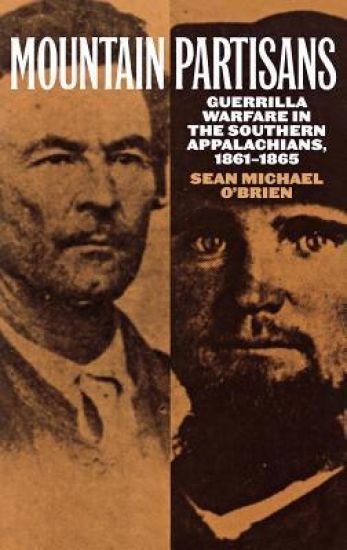
Mountain Partisans

Mountain Partisans

Sean O'Brien

Praeger Publishers Inc
1999
sidottu
This is the story of a civil war within the Civil War. Many mountain whites in Southern Appalachia opposed the Confederacy, especially when the South's conscription and impressment policies began to cause severe hardships. Deserters from the Rebel army hid in the mountains and formed guerrilla bands that terrorized unprotected Confederate homesteads. Violence escalated as Rebel guerrillas fought back. The conflict soon took on some of the ugliest aspects of class warfare between poorer mountain whites, who were usually Unionists, and the more well-to-do mountain property owners, who supported the Rebels. Mountain Partisans penetrates the shadowy world of Union and Confederate guerrillas, describes their leaders and bloody activities, and explains their effect on the Civil War and the culture of Appalachia. Although it did not alter the outcome of the war, guerrilla conflict affected the way the war was fought. The Union army's experience with guerrilla warfare in the mountains influenced the North's adoption of hard war as a strategy used against the South in the last two years of the war and helped shape the army's attitude toward Southern civilians. Partisan warfare in Southern Appalachia left a legacy of self-imposed isolation and distrust of outsiders. Wartime hatreds contributed to a climate of feuds and extralegal vigilantism. The mountain economy never recovered from the war's devastating effects, laying the groundwork for the region's exploitation and impoverishment by outside corporations in the early 20th century.
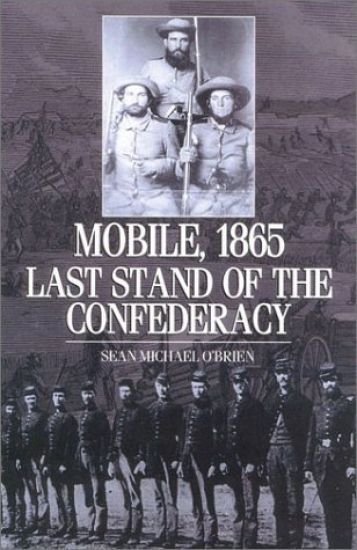
Mobile, 1865

Mobile, 1865

Sean O'Brien

Praeger Publishers Inc
2001
sidottu
The last major battle of the Civil War at Fort Blakely, Alabama, on April 9, 1865, was quickly overshadowed by the concurrent surrender of Robert E. Lee's army at Appomattox, and is largely forgotten today. And yet the Federal campaign against Mobile, the last important Southern city that remained in Rebel hands, was a significant military operation involving 45,000 Union soldiers and 9,000 Confederates. Faced with overwhelming odds, diehard Rebels refused to surrender, and--even with the end of the war clearly at hand--Federal soldiers remained willing to fight and die to capture the last enemy stronghold. O'Brien explores the battle and the driving forces behind it in the first comprehensive treatment of the campaign in over 130 years. The Mobile campaign sheds light on the workings of unit cohesion in the closing days of the war--a bond of loyalty forged by four years of hardships, with soldiers no longer fighting just for country or cause but for their own band of comrades. Black solders (ten percent of the Federal army in the Mobile campaign) were further motivated by another factor: to end slavery and to prove African Americans worthy of equality. Soldiers in this campaign faced the full fury of America's war-making science, with innovations like trench warfare, rifled artillery, land and naval mines, army-navy amphibious operations, submarines, and minesweeping operations--all new technologies to be perfected by a later generation in World War I.
In Bitterness and in Tears

In Bitterness and in Tears

Sean O'Brien

Praeger Publishers Inc
2003
sidottu
The seldom-recalled Creek War of 1813-1814 and its extension, the First Seminole War of 1818, had significant consequences for the growth of the United States. Beginning as a civil war between Muscogee factions, the struggle escalated into a war between the Moscogees and the United States after insurgent Red Sticks massacred over 250 whites and mixed-bloods at Fort Mims on the Alabama River on August 30, 1813—the worst frontier massacre in U.S. history. After seven months of bloody fighting, U.S. forces inflicted a devastating defeat on the Red Sticks at Horseshoe Bend on the Tallapoosa River on March 27, 1814—the most disastrous defeat ever suffered by Native Americans.The defeat of the Muscogees (Creeks), the only serious impediments to U.S. westward expansion, opened millions of acres of land to the white settlers and firmly established the Cotton Kingdom and slavery in the Deep South. For southeastern Native Americans, the war resulted in the destruction of their civilization and forced removal west of the Mississippi: The Trail of Tears. O'Brien presents both the American and Native American perspectives of this important chapter of U.S. history. He also examines the roles of the neighboring tribes and African Americans who lived in the Muscogee nation.
God's Biker

God's Biker

Sean Stillman

SPCK Publishing
2018
sidottu
Zac's Place is a church in Swansea. It is a small chaotic community of Jesus followers where the most fragile of life's walking wounded try to work out their faith, because they quite simply wouldn't fit anywhere else. It's also the spiritual home for the local chapter of the motorcycle club God's Squad. Zac's Place was founded in 1998 and for nearly twenty years has been led by Sean Stillman - a "painfully shy, nervous preacher's kid" - whose front-line ministry, at Zac's Place and on the road, has cost him dearly, including physical beating. In Zac's Place, chaos and disorder sit alongside community and grace in an environment that sometimes resembles an AA meeting mixed with a casualty department. This is Sean's personal story of a transformed faith alongside the broken, the story of the church he started and the European-wide growth of an unlikely bunch of biker missionaries. The thread that will run through it is the `greater righteousness' that Christ was looking for - what can happen when our concern for the perfect performance is stripped bare and replaced with poverty of spirit.
God's Biker

God's Biker

Sean Stillman

SPCK Publishing
2020
nidottu
Zac’s Place is a church in Swansea. It is a small chaotic community of Jesus followers where the most fragile of life’s walking wounded try to work out their faith, because they quite simply wouldn’t fit anywhere else. It’s also the spiritual home for the local chapter of the motorcycle club God’s Squad. Zac’s Place was founded in 1998 and for nearly twenty years has been led by Sean Stillman – a “painfully shy, nervous preacher’s kid” – whose front-line ministry, at Zac’s Place and on the road, has cost him dearly, including physical beating. In Zac’s Place, chaos and disorder sit alongside community and grace in an environment that sometimes resembles an AA meeting mixed with a casualty department. This is Sean’s personal story of a transformed faith alongside the broken, the story of the church he started and the European-wide growth of an unlikely bunch of biker missionaries. The thread that will run through it is the `greater righteousness’ that Christ was looking for - what can happen when our concern for the perfect performance is stripped bare and replaced with poverty of spirit.
Violence in Rural South Africa, 1880–1963

Violence in Rural South Africa, 1880–1963

Sean Redding

UNIVERSITY OF WISCONSIN PRESS
2023
sidottu
Violence was endemic to rural South African society from the late nineteenth century to the mid-twentieth century. But acts of violence were not inherent in African culture; rather, violence resulted from the ways in which Africans navigated the hazardous social and political landscape imposed by white rule. Focusing on the Eastern Cape province, Sean Redding investigates the rise of large-scale lethal fights among men, increasingly coercive abduction marriages, violent acts resulting from domestic troubles and witchcraft accusations within families and communities, and political violence against state policies and officials. Many violent acts attempted to reestablish and reinforce a moral, social, and political order among Africans. However, what constituted a moral order changed as white governance became more intrusive, land became scarcer, and people reconstructed their notions of “traditional” culture. State policies became obstacles around which Africans had to navigate by invoking the idea of tradition, using the state’s court system, alleging the use of witchcraft, or engaging in violent threats and acts. Redding’s use of multiple court cases and documents to discuss several types of violence provides a richer context for the scholarly conversation about the legitimation of violence in traditions, family life, and political protest.
Discography

Discography

Sean Singer

Yale University Press
2003
pokkari
The 96th winner of the Yale Series of Younger Poets prize This year’s winner of the Yale Series of Younger Poets competition is Sean Singer’s Discography. Playful, experimental, jazz-influenced, the poems in this book delight in sound and approach the more abstract pleasures of music. Singer takes as his subjects music, jazz figures, and historical events. Series judge W. S. Merwin praises Singer for his “roving demands on his language” and the “quick-changes of his invention in search of some provisional rightness.”
Vulgar Eloquence

Vulgar Eloquence

Sean Keilen

Yale University Press
2006
sidottu
This original book challenges prevailing accounts of English literary history, arguing that English literature emerged as a distinct category during the late sixteenth century, as England’s relationship with classical Rome was suffering an unprecedented strain. Exploring the myths through which poets such as Geffrey Whitney, William Shakespeare, and John Milton understood the nature of their art, Sean Keilen shows how they invented archaic origins for a new kind of writing.When history obliged English poets to regard themselves as victims of the Roman Conquest rather than rightful heirs of classical Latin culture, it also required a redefinition of their relations with Roman literature. Keilen shows how the poets’ search for a new beginning drew them to rework familiar fables about Orpheus, Philomela, and Circe, and invent a new point of departure for their own poetic history.
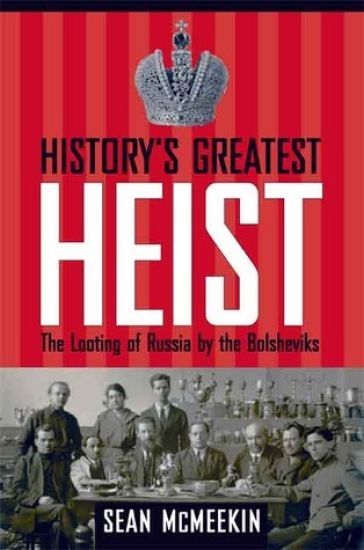
History's Greatest Heist

History's Greatest Heist

Sean McMeekin

Yale University Press
2009
sidottu
How Lenin’s regime turned Russia’s priceless cultural patrimony into armored cars, trains, planes, and machine guns Historians have never resolved a central mystery of the Russian Revolution: How did the Bolsheviks, despite facing a world of enemies and leaving nothing but economic ruin in their path, manage to stay in power through five long years of civil war? In this penetrating book, Sean McMeekin draws on previously undiscovered materials from the Soviet Ministry of Finance and other European and American archives to expose some of the darkest secrets of Russia’s early days of communism. Building on one archival revelation after another, the author reveals how the Bolsheviks financed their aggression through astonishingly extensive thievery. Their looting included everything from the cash savings of private citizens to gold, silver, diamonds, jewelry, icons, antiques, and artwork.By tracking illicit Soviet financial transactions across Europe, McMeekin shows how Lenin’s regime accomplished history’s greatest heist between 1917 and 1922 and turned centuries of accumulated wealth into the sinews of class war. McMeekin also names names, introducing for the first time the compliant bankers, lawyers, and middlemen who, for a price, helped the Bolsheviks launder their loot, impoverish Russia, and impose their brutal will on millions.
Selected Poems

Selected Poems

Seán Ó Ríordáin

Yale University Press
2019
pokkari
The first bilingual volume of poems by leading Irish twentieth-century poet Seán Ó RíordáinIn the mid-twentieth century, a new generation of poets writing in Irish emerged, led by the young Seán Ó Ríordáin, among others. Ó Ríordáin’s work has stood the test of time well, and he continues to engage today’s Irish readers and writers. This well-rounded selection of poems brings most of Ó Ríordáin’s works to English-language readers for the first time. The poems appear in their original Irish alongside English translations by some of Ireland's leading poets. Also included for the first time in English is Ó Ríordáin’s essay What Is Poetry?, considered an extraordinary touchstone of critical insight for poets and literary commentators.The volume reflects Ó Ríordáin’s seven main concerns: poetry and its place in the artist’s life; the plural self; the relationship between the individual and society; gender relations; the nature of animals; Ireland, its language and culture; and mortality.
Plastic Capitalism

Plastic Capitalism

Sean H. Vanatta

YALE UNIVERSITY PRESS
2024
sidottu
How bankers created the modern consumer credit economy and destroyed financial stability in the process “As much as it enriches our scholarship, Vanatta’s history should also inspire our policymaking.”—Carey Mott, Los Angeles Review of Books American households are awash in expensive credit card debt. But where did all this debt come from? In this history of the rise of postwar American finance, Sean H. Vanatta shows how bankers created our credit card economy and, with it, the indebted nation we know today. America’s consumer debt machine was not inevitable. In the years after World War II, state and federal regulations ensured that many Americans enjoyed safe banks and inexpensive credit. Bankers, though, grew restless amid restrictive rules that made profits scarce. They experimented with new services and new technologies. They settled on credit cards, and in the 1960s mailed out reams of high-interest plastic to build a debt industry from scratch. In the 1960s and ’70s consumers fought back, using federal and state policy to make credit cards safer and more affordable. But bankers found ways to work around local rules. Beginning in 1980, Citibank and its peers relocated their card plans to South Dakota and Delaware, states with the weakest consumer regulations, creating “on-shore” financial havens and drawing consumers into an exploitative credit economy over which they had little control. We live in the world these bankers made.
American Slavers

American Slavers

Sean M. Kelley

YALE UNIVERSITY PRESS
2023
sidottu
The first telling of the unknown story of America’s two-hundred-year history as a slave-trading nation “A work of impressive breadth, deep research, and evenhanded analysis.”—James Oakes, New York Review of Books A total of 305,000 enslaved Africans arrived in the New World aboard American vessels over a span of two hundred years as American merchants and mariners sailed to Africa and to the Caribbean to acquire and sell captives. Using exhaustive archival research, including many collections that have never been used before, historian Sean M. Kelley argues that slave trading needs to be seen as integral to the larger story of American slavery. Engaging with both African and American history and addressing the trade over time, Kelley examines the experience of captivity, drawing on more than a hundred African narratives to offer a portrait of enslavement in the regions of Africa frequented by American ships. Kelley also provides a social history of the two American ports where slave trading was most intensive, Newport and Bristol, Rhode Island. In telling this tragic, brutal, and largely unknown story, Kelley corrects many misconceptions while leaving no doubt that Americans were a nation of slave traders.