Kirjojen hintavertailu. Mukana 12 016 292 kirjaa ja 12 kauppaa.

Kirjahaku

Etsi kirjoja tekijän nimen, kirjan nimen tai ISBN:n perusteella.

1000 tulosta hakusanalla Simone Failla

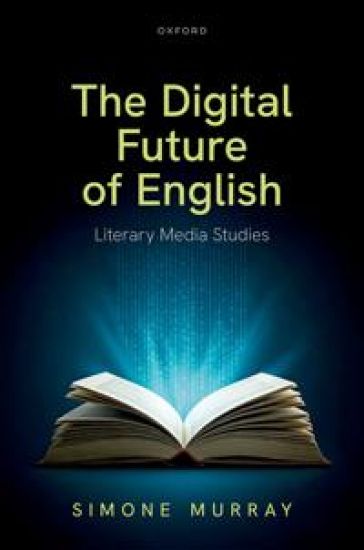
The Digital Future of English

The Digital Future of English

Simone Murray

Oxford University Press
2025
sidottu
More than any other academic discipline, literary studies is the creation of print culture. How then can it thrive in the digital era? Early 1990s predictions of the book's imminent demise presented a simplistic either/or choice between the legacy of moribund print and triumphalist digital technology. Yet we have grown to experience the two media as complexly interdependent and even complementary. Clearly, digital does not kill print. But literary studies in the digital era cannot simply resume business as usual. It is urgently necessary to reconsider the discipline's founding assumptions in light of digital technology. The digital era prompts a rethinking of literary studies' object of study, as well as its methods, theories, audiences and pedagogical practices. What counts as literature necessarily shifts in an age of proliferating born-digital texts and do-it-yourself (DIY) online publication. Where should literary studies sit institutionally, and how might it graft contextually-oriented social sciences methods onto its traditionally humanistic mode of textual analysis? Why should literary study continue to marginalize emotional responses to texts when online communities bond via readerly affect? Who is the audience for literary criticism in an age where expertise is routinely challenged yet communication with global book-loving publics has never been technologically easier? Finally, how can we utilize digital tools to rejuvenate literary studies pedagogy and help English staff better connect with millennial-age students? Literary studies has been convulsed for decades by debates over electronic literature and, more recently, digitally-aided 'distant reading'. But these discussions still mostly confine themselves to demarcating our proper object of study. We need to think more expansively about digital technology's impact on the underpinning tenets of the discipline. Literary Media Studies is pitched at fellow literary scholars, book historians, media theorists, cultural sociologists, digital humanists and those working at the interface of these converging disciplines. It models constructive engagement with contemporary digital culture. Most importantly, it brings a burst of sorely needed optimism to the question of literary studies' digital future.

Women and the Counter-Reformation in Early Modern Münster

Women and the Counter-Reformation in Early Modern Münster

Simone Laqua-O'Donnell

Oxford University Press
2014
sidottu
Women and the Counter-Reformation in Early Modern Münster examines how women from different social backgrounds encountered the Counter-Reformation. The focus is on Münster, a city in the north of Germany, which was exposed to powerful Protestant influences which culminated in the notorious Anabaptist kingdom of 1534. After the defeat of the radical Protestants, the city was returned to Catholicism and a stringent programme of reform was enforced. By examining concubinage, piety, marriage, deviance, and convent reform, core issues of the Counter-Reformation's quest for renewal, this fascinating study shows how women participated in the social and religious changes of the time, and how their lives were shaped by the Counter-Reformation. Employing research into the political, religious, and social institutions, and using an impressive variety of sources, Simone Laqua-O'Donnell engages with the way women experienced the new religiosity, morality, and discipline that was introduced to the city of Münster during this turbulent time.
Fluffy

Fluffy

Simone Lia

Jonathan Cape Ltd
2009
nidottu
Fluffy is story of unanswerable questions, love, despair, adventure and happiness. Fluffy is a baby rabbit who is being looked after by an anxious, single man called Michael Pulcino. Michael tries to make it clear to Fluffy that he is not his daddy, but Fluffy appears to be in denial. Michael is being pursued by Fluffy's nursery school teacher, and partly to escape her, he and Fluffy set off to visit his family in Sicily. Will Michael escape her? Will Fluffy come to terms with the reality that he is not a human being? All is at least partly resolved in Simone Lia's utterly irresistible graphic novel.
Please God, Find Me A Husband!

Please God, Find Me A Husband!

Simone Lia

Jonathan Cape Ltd
2012
sidottu
Simone Lia's Fluffy is one of the best-loved books on the Cape graphic novel list. As her new book opens we find her in Leicester Square. She's just been dumped by her boyfriend and she's talking to God, telling Him that she's nearly thirty-four and if He wants her to get married He'd better get a move on. Amazingly, God sends a reply, prompting Simone to plan an 'Adventure with God' that starts with a fortnight in a nunnery, then takes her to Australia in search of a hermit. The one she finds proves a disappointment, unlike Brett, the handsome horseman who takes her riding. She thinks he looks just like Crocodile Dundee; he thinks she looks just like Penelope Cruz. Is this the man she's been searching for, or is God making fun of her? Funny, touching and even occasionally profound, Please God Find Me a Husband! will be essential reading for spinsters, seekers after enlightenment and lovers of the very best graphic novels.
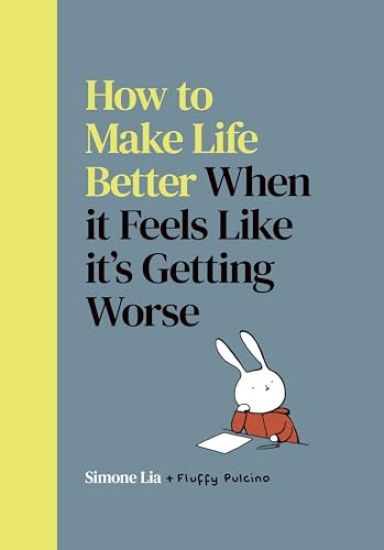
How to Make Life Better When it Feels Like it’s Getting Worse
'A lovely book' Philippa PerryFluffy Pulcino is nearly all grown up. Nearly. But life in your early twenties can be complicated enough without the added quirk of being a bunny trying to function in a human world. No longer in denial about who he is, Fluffy sets out on the difficult task of finding his place in the world. His attempts at writing a self-help book lead him to reflect on a life plagued by failure - and by having to dodge people who just want to pick him up and stroke his ears. Fluffy’s coming of age is drawn with a heartbreaking veracity that hits its mark when the overtly sweet and fantastical meets with an unswerving ability to voice our darker, more painful truths.How to Make Life Better When It Feels Like it's Getting Worse is a buoyant return to a beloved character. Through the unlikely avatar of a small, fluffy bunny and gloriously irreverent storytelling, Simone Lia shows what it means to grow into adulthood, find purpose and live in this world.
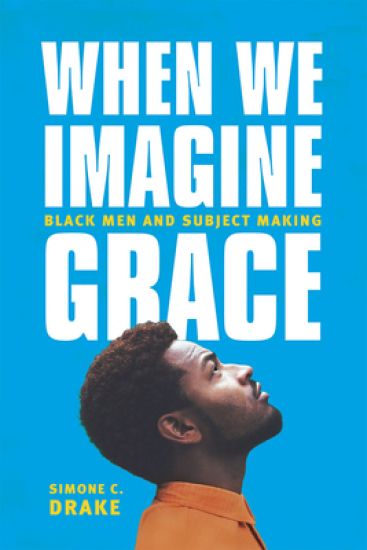
When We Imagine Grace

When We Imagine Grace

Simone C. Drake

University of Chicago Press
2016
sidottu
Simone C. Drake spent the first several decades of her life learning how to love and protect herself, a black woman, from the systems designed to facilitate her harm and marginalization. But when she gave birth to the first of her three sons, she quickly learned that black boys would need protection from these very same systems systems dead set on the static, homogenous representations of black masculinity perpetuated in the media and our cultural discourse. In When We Imagine Grace, Drake borrows from Toni Morrison's Beloved to bring imagination to the center of black masculinity studies allowing individual black men to exempt themselves and their fates from a hateful, ignorant society and open themselves up as active agents at the center of their own stories. Against a backdrop of crisis, Drake brings forth the narratives of black men who have imagined grace for themselves. We meet African American cowboy, Nat Love, and Drake's own grandfather, who served in the first black military unit to fight in World War II. Synthesizing black feminist and black masculinity studies, Drake analyzes black fathers and daughters, the valorization of black criminals, the denigration and celebration of gay men, Cornelius Eady, Antoine Dodson, and Kehinde Wiley. With a powerful command of its subjects and a passionate dedication to hope, When We Imagine Grace gives us a new way of seeing and knowing black masculinity sophisticated in concept and bracingly vivid in telling.
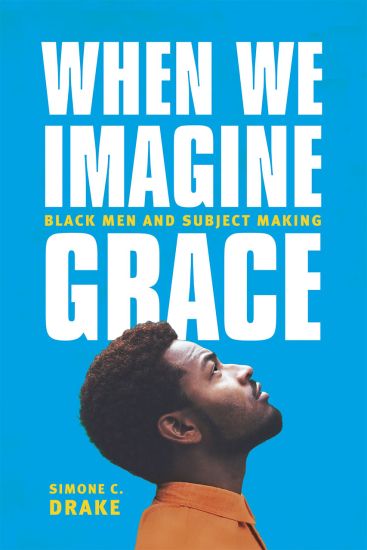
When We Imagine Grace

When We Imagine Grace

Simone C. Drake

University of Chicago Press
2016
nidottu
Simone C. Drake spent the first several decades of her life learning how to love and protect herself, a black woman, from the systems designed to facilitate her harm and marginalization. But when she gave birth to the first of her three sons, she quickly learned that black boys would need protection from these very same systems systems dead set on the static, homogenous representations of black masculinity perpetuated in the media and our cultural discourse. In When We Imagine Grace, Drake borrows from Toni Morrison's Beloved to bring imagination to the center of black masculinity studies allowing individual black men to exempt themselves and their fates from a hateful, ignorant society and open themselves up as active agents at the center of their own stories. Against a backdrop of crisis, Drake brings forth the narratives of black men who have imagined grace for themselves. We meet African American cowboy, Nat Love, and Drake's own grandfather, who served in the first black military unit to fight in World War II. Synthesizing black feminist and black masculinity studies, Drake analyzes black fathers and daughters, the valorization of black criminals, the denigration and celebration of gay men, Cornelius Eady, Antoine Dodson, and Kehinde Wiley. With a powerful command of its subjects and a passionate dedication to hope, When We Imagine Grace gives us a new way of seeing and knowing black masculinity sophisticated in concept and bracingly vivid in telling.
Greening the Alliance

Greening the Alliance

Simone Turchetti

University of Chicago Press
2018
nidottu
Following the launch of Sputnik, the North Atlantic Treaty Organization became a prominent sponsor of scientific research in its member countries, a role it retained until the end of the Cold War. As NATO marks sixty years since the establishment of its Science Committee, the main organizational force promoting its science programs, Greening the Alliance is the first book to chart NATO’s scientific patronage—and the motivations behind it—from the organization’s early days to the dawn of the twenty-first century.Drawing on previously unseen documents from NATO’s own archives, Simone Turchetti reveals how its investments were rooted in the alliance’s defense and surveillance needs, needs that led it to establish a program prioritizing environmental studies. A long-overlooked and effective diplomacy exercise, NATO’s “greening” at one point constituted the organization’s chief conduit for negotiating problematic relations between allies. But while Greening the Alliance explores this surprising coevolution of environmental monitoring and surveillance, tales of science advisers issuing instructions to bomb oil spills with napalm or Dr. Strangelove–like experts eager to divert the path of hurricanes with atomic weapons make it clear: the coexistence of these forces has not always been harmonious. Reflecting on this rich, complicated legacy in light of contemporary global challenges like climate change, Turchetti offers both an eye-opening history of international politics and environmental studies and a thoughtful assessment of NATO’s future.
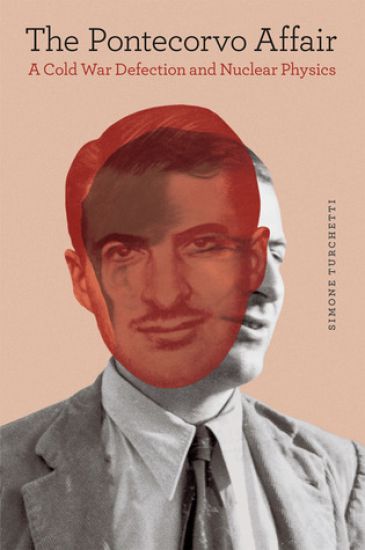
The Pontecorvo Affair

The Pontecorvo Affair

Simone Turchetti

University of Chicago Press
2012
sidottu
In the fall of 1950, newspapers around the world reported that the Italian-born nuclear physicist Bruno Pontecorvo and his family had mysteriously disappeared while returning to Britain from a holiday trip. Because Pontecorvo was known to be an expert working for the UK Atomic Energy Research Establishment, this raised immediate concern for the safety of atomic secrets, especially when it became known in the following months that he had defected to the Soviet Union. Was Pontecorvo a spy? Did he know and pass sensitive information about the bomb to Soviet experts? At the time, nuclear scientists, security personnel, Western government officials, and journalists assessed the case, but their efforts were inconclusive and speculations quickly turned to silence. In the years since, some have downplayed Pontecorvo's knowledge of atomic weaponry, while others have claimed him as part of a spy ring that infiltrated the Manhattan Project. "The Pontecorvo Affair" draws from newly disclosed sources to challenge previous attempts to solve the case, offering a balanced and well-documented account of Pontecorvo, his activities, and his possible motivations for defecting. Along the way, Simone Turchetti reconsiders the place of nuclear physics and nuclear physicists in the twentieth century and reveals that as the discipline's promise of military and industrial uses came to the fore, so did the enforcement of new secrecy provisions on the few experts in the world specializing in its application.
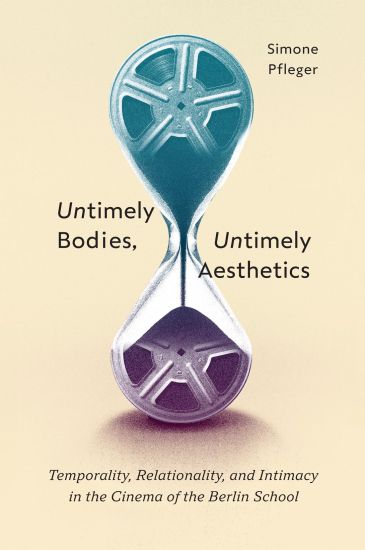
Untimely Bodies, Untimely Aesthetics

Untimely Bodies, Untimely Aesthetics

Simone Pfleger

MCGILL-QUEEN'S UNIVERSITY PRESS
2023
sidottu
While heteronormativity continues to permeate nearly all threads of the socio-cultural fabric, several early twenty-first-century German films offer insight into how we might challenge that dominance and disrupt its linear construction of time.Examining the fluidity of time in eight contemporary films of the Berlin School, Untimely Bodies, Untimely Aesthetics foregrounds how queer conceptualizations of temporality can engage notions of subjectivity, relationality, and intimacy in visual representations. Each film depicts figures that grapple with an unattainable desire for connection, placed in landscapes shaped by hegemonic heteronormative intimacies, and a linear temporal organization of life that conforms to mainstream, traditional rhythms, and milestones. Simone Pfleger proposes a new model for viewing non-normative relationality and intimacies, using the concept of untimeliness as an analytical framework for examining content and aesthetics. In these films, untimeliness provides an alternative to the romanticization of progress by charting how the filmic figures understand themselves and relate to one another in various spheres: work, love, sex, home, family, and self. Ultimately, Pfleger shows how the texts uncover a temporary promise of breaking free from restrictive social structures, even as they make clear that this schism cannot and should not be permanent.By proposing time as a critical lens through which to investigate our relationships and intimacies, Untimely Bodies, Untimely Aesthetics offers a new way to think about film and encourages moviegoers to turn the analysis back toward themselves and their own desires, expectations, assumptions, and adherence to or deviation from normative narratives in their own lives.
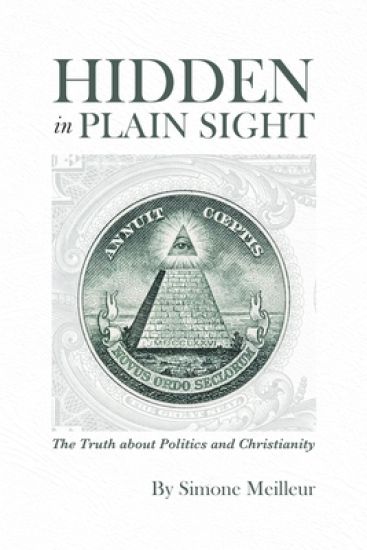
Hidden in Plain Sight

Hidden in Plain Sight

Simone Meilleur

Tellwell Talent
2020
pokkari
The author invites you to journey with her as she discovers real Biblical truth, and how church and government are just as interdependent today as it was during the days of the Roman Empire in Jesus' time on earth. It may surprise you to find out that true Scriptural Doctrine and church doctrine do not always coincide with real Biblical truth.Explore with her as she discovers: - What 'other' Jesus does the Bible talk about? - Who removed God's Holy Sabbath and why? - Does the Bible actually say that Jesus rose on Sunday morning? You will be surprised at the answer - How the Biblical Pharisees and Sanhedrin still exist today. - What are the Seven Noahide Laws and will they replace God's Ten Commandments? - What are the Mosaic Laws and have they actually been abolished? Hidden in Plain Sight might be controversial to some, as the author courageously writes about things that most churches will not talk about. This book will also be a real eye-opener to others, as the author has taken the time to prove what she is sharing with the reader regarding the truth about politics and Christianity.
Unturning Stones

Unturning Stones

Simone Simpson

Tellwell Talent
2023
pokkari
A calling from something far greater than myself, something that I call God, stopped me in my tracks and changed my life forever. A calling that completely made me question everything. This calling was for a special purpose in my life, to help heal and unite the world through a book, to reach out and give hope, a gift to us all.
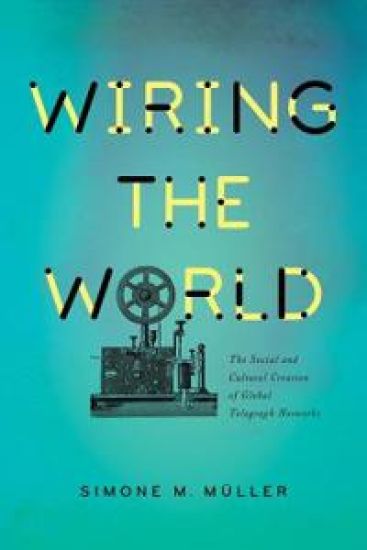
Wiring the World

Wiring the World

Simone Müller

Columbia University Press
2016
sidottu
The successful laying of a transatlantic cable in 1866 remade world communications. A message could travel across the ocean in minutes, shrinking the space between continents, cultures, and nations. An eclectic group of engineers, entrepreneurs, politicians, and media visionaries then developed this technology into a telecommunications system that spread a particular vision of civilization-but not everyone wanted to wire the world the same way. Wiring the World is a cultural and social history that explores how the large Anglo-American cable companies won out over alternative visions. Bitter rivalries emerged over telegram prices, visions for world peace, scientific innovation, and the role of the nation-state. Such struggles determined the growth of cable technology, which in turn influenced world history. Filled with fascinating characters and new insights into pivotal events, Wiring the World traces globalization's diverse paths and close ties to business and politics.
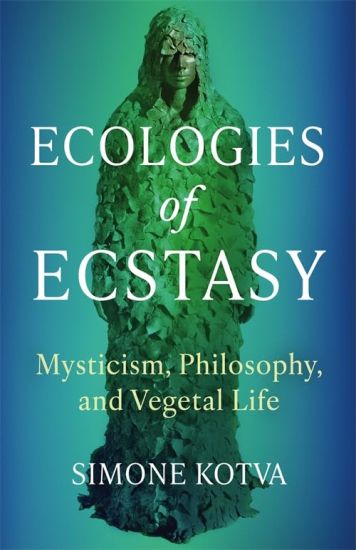
Ecologies of Ecstasy

Ecologies of Ecstasy

Simone Kotva

Columbia University Press
2026
sidottu
What might religious practice learn from plants? Recent years have seen the emergence of critical plant studies, and philosophers have found a radical mode of thought in vegetal life. Ecologies of Ecstasy recasts religious contemplation as a form of vegetal being, arguing that spiritual practice is rooted in the generation of life on earth. Simone Kotva explores the role of vegetal life in the history of Christian mysticism and the practice of contemplation, demonstrating its significance to the concept of mystical union, which rests on the loss of distinction between self and world. She shows that plants, animals, and other creatures were once understood to exist by virtue of contemplation and examines how religious orthodoxies suppressed this idea. Ecologies of Ecstasy provides fresh readings of texts by figures such as Plotinus, Evagrius of Pontus, Hildegard of Bingen, Marguerite of Porete, the Helfta mystics, and Jeanne Guyon in light of contemporary philosophies of vegetal life and critical plant studies. It brings together feminist, queer, and ecocritical readings of Christian mysticism with continental philosophy and the works of Michael Marder, Emanuele Coccia, and Luce Irigaray. Entwining Christian contemplation with philosophies of vegetal life, this book offers new ways to understand mysticism and spiritual practice.
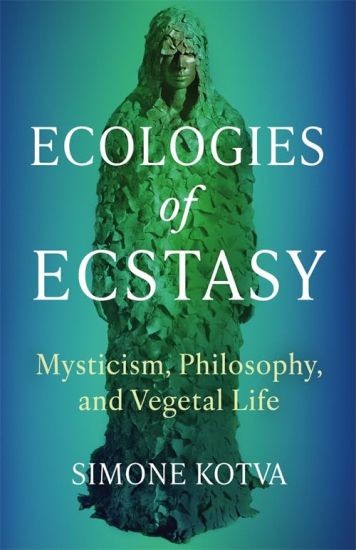
Ecologies of Ecstasy

Ecologies of Ecstasy

Simone Kotva

Columbia University Press
2026
pokkari
What might religious practice learn from plants? Recent years have seen the emergence of critical plant studies, and philosophers have found a radical mode of thought in vegetal life. Ecologies of Ecstasy recasts religious contemplation as a form of vegetal being, arguing that spiritual practice is rooted in the generation of life on earth. Simone Kotva explores the role of vegetal life in the history of Christian mysticism and the practice of contemplation, demonstrating its significance to the concept of mystical union, which rests on the loss of distinction between self and world. She shows that plants, animals, and other creatures were once understood to exist by virtue of contemplation and examines how religious orthodoxies suppressed this idea. Ecologies of Ecstasy provides fresh readings of texts by figures such as Plotinus, Evagrius of Pontus, Hildegard of Bingen, Marguerite of Porete, the Helfta mystics, and Jeanne Guyon in light of contemporary philosophies of vegetal life and critical plant studies. It brings together feminist, queer, and ecocritical readings of Christian mysticism with continental philosophy and the works of Michael Marder, Emanuele Coccia, and Luce Irigaray. Entwining Christian contemplation with philosophies of vegetal life, this book offers new ways to understand mysticism and spiritual practice.
The Need for Roots

The Need for Roots

Simone Weil

Penguin Classics
2023
pokkari
A new translation of Simone Weil's best-known work: a political, philosophical and spiritual treatise on what human life could beWhat do humans require to be truly nourished? Simone Weil, one of the foremost philosophers of the last century, envisaged us all as being bound by unconditional, eternal obligations towards every other human being. In The Need for Roots, her most famous work, she argued that our greatest need was to be rooted: in a community, a place, a shared past and collective future hopes. Written for the Free French movement while she was exiled in London during the Second World War, Weil's visionary combination of philosophy, politics and mysticism is her answer to the question of what life without occupation - and oppression - might be.'The patron saint of all outsiders' Andre Gide'The only great spirit of our time' Albert Camus Translated by Ros Schwartz, with an introduction by Kate Kirkpatrick.
The Power of Words

The Power of Words

Simone Weil

Penguin Classics
2020
nidottu
'There are certain words which possess, in themselves, when properly used, a virtue which illumines and lifts up towards the good'The philosopher and activist Simone Weil was one of the most courageous thinkers of the twentieth century. Here she writes, with honesty and moral clarity, about the manipulation of language by the powerful, the obligations of individuals to one another and the needs - for order, equality, liberty and truth - that make us human.One of twenty new books in the bestselling Penguin Great Ideas series. This new selection showcases a diverse list of thinkers who have helped shape our world today, from anarchists to stoics, feminists to prophets, satirists to Zen Buddhists.
What Is Existentialism?

What Is Existentialism?

Simone de Beauvoir

Penguin Classics
2020
nidottu
'It is possible for man to snatch the world from the darkness of absurdity'How should we think and act in the world? These writings on the human condition by one of the twentieth century's great philosophers explore the absurdity of our notions of good and evil, and show instead how we make our own destiny simply by being.One of twenty new books in the bestselling Penguin Great Ideas series. This new selection showcases a diverse list of thinkers who have helped shape our world today, from anarchists to stoics, feminists to prophets, satirists to Zen Buddhists.
Murder Road

Murder Road

Simone St James

PENGUIN BOOKS LTD
2024
sidottu
GET READY FOR THE SCARIEST READ OF 2024 - a gripping new novel from the New York Times bestselling author of The Book of Cold Cases‘Genuinely creepy. Sent shivers down my spine’ Mark Edwards, bestselling author of Here to Stay ‘A nerve-shredding start with a thrilling end’ Riely Sager, New York Times bestselling author of The Only One Left ----- April and Eddie have taken a wrong turn. They're on a long dark road, late at night, and they see a woman up ahead, clearly in trouble. They stop and pick her up. It's only once she's in the car that they see the blood. And then they see the headlights, and at last, the woman speaks, her voice faint. "I'm sorry, he's coming."While April and Eddie are able to escape - this time - their terrifying adventure is only just beginning. The hitchhiker's injuries prove fatal, and the couple are trapped in the small town of Coldlake Falls, prime suspects in the eyes of local police. It turns out that this isn't the first victim to die on this stretch of road, and it isn't the first time that survivors have seen something that can't be explained. But to get out of town, April and Eddie are going to have to drive down that haunted stretch of road one more time... Ingeniously plotted and heartstoppingly terrifying, are you ready to uncover the secret of Murder Road? -----'Fast, chilling, entertaining, unexpectedly touching, and with two broken, memorable characters at its core, this might be St. James’s best novel yet' New York Times Book Review PRAISE FOR SIMONE ST. JAMES 'Clever and wonderfully chilling. It held me hostage' - Fiona Barton 'Downright scary' Lisa Gardner 'Dark and atmospheric' Harriet Tyce 'A brilliant page-turner' Jenny Quintana