Kirjojen hintavertailu. Mukana 12 295 121 kirjaa ja 12 kauppaa.

Kirjahaku

Etsi kirjoja tekijän nimen, kirjan nimen tai ISBN:n perusteella.

1000 tulosta hakusanalla Stacy T. Sims

Haggai and Malachi

Haggai and Malachi

Stacy Davis

Liturgical Press
2015
sidottu
Reading Haggai and Malachi in conversation with feminist theory, rhetorical criticism, and masculinity studies reveals two communities in different degrees of crisis. The prophet Haggai successfully persuades a financially strapped people to rebuild the temple, but the speaker in Malachi faces sustained resistance to his arguments in favor of maintaining the priestly hierarchy. Both books describe conflicts among men based upon social class, and those who claim to speak for God find their claims and, with them, God’s presumably unquestionable authority as the ultimate male contested.From the Wisdom Commentary series Feminist biblical interpretation has reached a level of maturity that now makes possible a commentary series on every book of the Bible. It is our hope that Wisdom Commentary, by making the best of current feminist biblical scholarship available in an accessible format to ministers, preachers, teachers, scholars, and students, will aid all readers in their advancement toward God’s vision of dignity, equality, and justice for all.The aim of this commentary is to provide feminist interpretation of Scripture in serious, scholarly engagement with the whole text, not only those texts that explicitly mention women. A central concern is the world in front of the text, that is, how the text is heard and appropriated by women. At the same time, this commentary aims to be faithful to the ancient text, to explicate the world behind the text, where appropriate, and not impose contemporary questions onto the ancient texts. The commentary addresses not only issues of gender (which are primary in this project) but also those of power, authority, ethnicity, racism, and classism, which all intersect.Each volume incorporates diverse voices and differing interpretations from different parts of the world, showing the importance of social location in the process of interpretation and that there is no single definitive feminist interpretation of a text.

Exposed

Exposed

Stacy Alaimo

University of Minnesota Press
2016
nidottu
Opening with the statement The anthropocene is no time to set things straight,Stacy Alaimo puts forth potent arguments for a material feminist posthumanism in the chapters that follow. From trans-species art and queer animals to naked protesting and scientific accounts of fishy humans, Exposed argues for feminist posthumanism immersed in strange agencies and scale-shifting ethics. Including such divergent topics as landscape art, ocean ecologies, and plastic activism, Alaimo explores our environmental predicaments to better understand feminist occupations of transcorporeal subjectivity. She puts scientists, activists, artists, writers, and theorists in conversation, revealing that the state of the planet in the twenty-first century has radically transformed ethics, politics, and what it means to be human. Ultimately, Exposed calls for an environmental stance in which, rather than operating from an externalized perspective, we think, feel, and act as the very stuff of the world.
The Abyss Stares Back

The Abyss Stares Back

Stacy Alaimo

UNIVERSITY OF MINNESOTA PRESS
2025
sidottu
In an era of accelerating extinctions, what does it mean to discover thousands of new species in the deep sea? As we see the catastrophic effects of the Anthropocene proliferate, advanced technologies also grant us greater access to the furthest reaches of the world’s oceans, facilitating the discovery of countless new species. Sorting through the implications of this strange paradox, Stacy Alaimo explores the influence this newfound intimacy with the deep sea might have on our broader relationship to the nonhuman world. While many images of these abyssal creatures circulate as shallow clickbait, aesthetic representations can be enticing lures for speculating about their lives, profoundly expanding our environmental concern. The Abyss Stares Back analyzes a diverse range of scientific, literary, and artistic accounts of deep-sea exploration, including work from the naturalist William Beebe and the artist Else Bostelmann as well as results of the Census of Marine Life that began at the turn of the twenty-first century. As she focuses on oft-overlooked creatures of the deep, such as tubeworms, hatchetfish, siphonophores, and cephalopods, which are typically cast as “alien,” Alaimo shows how depictions of the deep seas have been enmeshed in long colonial histories and racist constructions of a threatening abyss. Drawing on feminist environmentalism, posthumanism, science and technology studies, and Indigenous and non-Western perspectives, Alaimo details how our understanding of science is fundamentally altered by aesthetic encounters with these otherworldly life forms. She argues that, although the deep sea is often thought of as a lifeless void with little connection to human existence, our increasing devastation of this realm underscores our ethical obligation to protect the biodiverse life in the depths. When the abyss stares back, it demands recognition. Retail e-book files for this title are screen-reader friendly with images accompanied by short alt text and/or extended descriptions.
The Capacity Contract

The Capacity Contract

Stacy Clifford Simplican

University of Minnesota Press
2015
nidottu
In the first sustained examination of disability through the lens of political theory, The Capacity Contract shows how the exclusion of disabled people has shaped democratic politics. Stacy Clifford Simplican demonstrates how disability buttresses systems of domination based on race, sex, and gender. She exposes how democratic theory and politics have long blocked from political citizenship anyone whose cognitive capacity falls below a threshold level?marginalization with real-world repercussions on the implementation of disability rights today. Simplican’s compelling ethnographic analysis of the self-advocacy movement describes the obstacles it faces. From the outside, the movement must confront stiff budget cuts and dwindling memberships; internally, self-advocates must find ways to demand political standing without reinforcing entrenched stigma against people with profound cognitive disabilities. And yet Simplican’s investigation also offers democratic theorists and disability activists a more emancipatory vision of democracy as it relates to disability?one that focuses on enabling people to engage in public and spontaneous action to disrupt exclusion and stigma. Taking seriously democratic promises of equality and inclusion, The Capacity Contract rejects conceptions of political citizenship that privilege cognitive capacity and, instead, centers such citizenship on action that is accessible to all people.
The Story Quilts of Yvonne Wells

The Story Quilts of Yvonne Wells

Stacy I. Morgan; Yvonne Thomas Wells; Gail C. Andrews

THE UNIVERSITY OF ALABAMA PRESS
2024
nidottu
A comprehensive and richly illustrated survey of one of the most significant and intriguing quilters of the 21st century, featuring 109 color plates of Wells's narrative quilts with intimate commentaries by Wells herself.
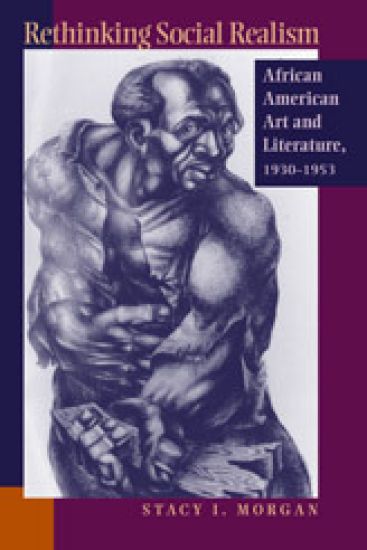
Rethinking Social Realism

Rethinking Social Realism

Stacy I. Morgan

University of Georgia Press
2004
pokkari
The social realist movement, with its focus on proletarian themes and its strong ties to New Deal programs and leftist politics, has long been considered a depression-era phenomenon that ended with the start of World War II. This study explores how and why African American writers and visual artists sustained an engagement with the themes and aesthetics of social realism into the early cold war-era—far longer than a majority of their white counterparts.Stacy I. Morgan recalls the social realist atmosphere in which certain African American artists and writers were immersed and shows how black social realism served alternately to question the existing order, instill race pride, and build interracial, working-class coalitions. Morgan discusses, among others, such figures as Charles White, John Wilson, Frank Marshall Davis, Willard Motley, Langston Hughes, Sterling Brown, Elizabeth Catlett, and Hale Woodruff.
Knot

Knot

Stacy Doris

University of Georgia Press
2006
pokkari
What follows occurs in a moment; a flash. It would detail a single tangibility if that did not entail all sensation. Stacy Doris charts the invisible, investigates the unborn, and describes everything not yet imagined. The tightly constructed verses of Knot weave imagery of decay and birth, science and culture: the warp and weft of cloth, digestion, wave particles, and a talking cat. Linguistic play abounds, and Doris presents us with a human double bind: to cling to the stability of the tangle or to participate in the circuits of entanglement.From "Under Fire, i.VII": "Each moment, fifteen pounds of air pin us by gravity. Then / anyone / Needs sixteen pounds of lightness to ever budge. Such compliance / Demands levitation, must generate excitement, which passion enact; / Thus dreams have all they can handle. From a stone, anchored, / is how / We rise, where faith is placed only in potential, miracle without / Dimension's measure so opening, unhinged at least, where each "they" / Is porous, in penetrability dunked and enriched.
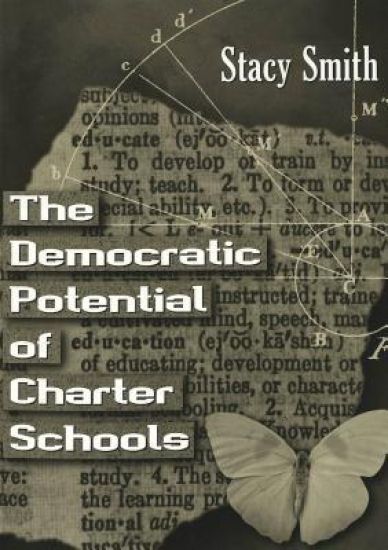
The Democratic Potential of Charter Schools

The Democratic Potential of Charter Schools

Stacy Smith

Peter Lang Publishing Inc
2001
nidottu
Since Minnesota enacted the first legislation in 1991, charter school reform has swept the country. Although their stances are vastly different, both proponents and opponents of the charter movement emphasize its "privatizing" aspects. In this book Stacy Smith argues that the tendency to emphasize the privatizing, market-oriented aspects of charter reform is overly simplistic. Consequently, virtually all debate on the topic neglects, or at least downplays, the "democratizing" potentials of charter schools. She urges others interested in preserving the -public- nature of public education to consider such potentials as equalized and expanded choice, inclusive decision making, and localized accountability before summarily writing off charter school reform as antidemocratic."
The Jury in Lincoln's America

The Jury in Lincoln's America

Stacy Pratt McDermott

Ohio University Press
2012
sidottu
In the antebellum Midwest, Americans looked to the law, and specifically to the jury, to navigate the uncertain terrain of a rapidly changing society. During this formative era of American law, the jury served as the most visible connector between law and society. Through an analysis of the composition of grand and trial juries and an examination of their courtroom experiences, Stacy Pratt McDermott demonstrates how central the law was for people who lived in Abraham Lincoln's America. McDermott focuses on the status of the jury as a democratic institution as well as on the status of those who served as jurors. According to the 1860 census, the juries in Springfield and Sangamon County, Illinois, comprised an ethnically and racially diverse population of settlers from northern and southern states, representing both urban and rural mid-nineteenth-century America. It was in these counties that Lincoln developed his law practice, handling more than 5,200 cases in a legal career that spanned nearly twenty-five years. Drawing from a rich collection of legal records, docket books, county histories, and surviving newspapers, McDermott reveals the enormous power jurors wielded over the litigants and the character of their communities.
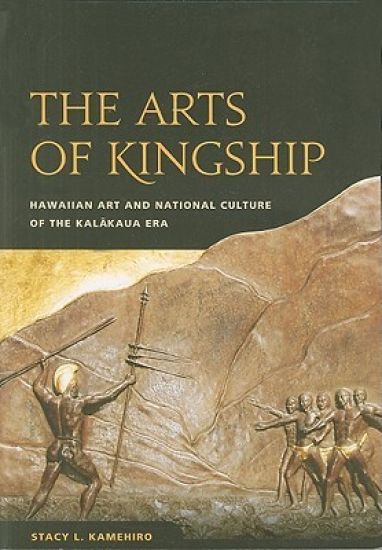
The Arts of Kingship

The Arts of Kingship

Stacy L. Kamehiro

University of Hawai'i Press
2009
sidottu
The Arts of Kingship offers a sustained and detailed account of Hawaiian public art and architecture during the reign of David Kalakaua, the nativist and cosmopolitan ruler of the Hawaiian Kingdom from 1874 to 1891. Stacy Kamehiro provides visual and historical analysis of four key monuments - Kalakaua's coronation and regalia, the King Kamehameha Statue, 'Iolani Palace, and the Hawaiian National Museum - drawing them together in a common historical, political, and cultural frame. Each articulated Hawaiian national identities and navigated the turbulence of colonialism in distinctive ways and has endured as a key cultural symbol.These cultural projects were part of the monarchy's concerted effort to promote a national culture in the face of colonial pressures, internal political divisions, and declining social conditions for Native Hawaiians, which, in combination, posed serious threats to the survival of the nation. Kamehiro interprets the images, spaces, and institutions as articulations of the complex cultural entanglements and creative engagement with international communities that occur with prolonged colonial contact. Nineteenth-century Hawaiian sovereigns celebrated Native tradition, history, and modernity by intertwining indigenous conceptions of superior chiefly leadership with the apparati and symbols of Asian, American, and European rule.
The Arts of Kingship

The Arts of Kingship

Stacy L. Kamehiro

University of Hawai'i Press
2009
nidottu
The Arts of Kingship offers a sustained and detailed account of Hawaiian public art and architecture during the reign of David Kalakaua, the nativist and cosmopolitan ruler of the Hawaiian Kingdom from 1874 to 1891. Stacy Kamehiro provides visual and historical analysis of four key monuments - Kalakaua's coronation and regalia, the King Kamehameha Statue, 'Iolani Palace, and the Hawaiian National Museum - drawing them together in a common historical, political, and cultural frame. Each articulated Hawaiian national identities and navigated the turbulence of colonialism in distinctive ways and has endured as a key cultural symbol.These cultural projects were part of the monarchy's concerted effort to promote a national culture in the face of colonial pressures, internal political divisions, and declining social conditions for Native Hawaiians, which, in combination, posed serious threats to the survival of the nation. Kamehiro interprets the images, spaces, and institutions as articulations of the complex cultural entanglements and creative engagement with international communities that occur with prolonged colonial contact. Nineteenth-century Hawaiian sovereigns celebrated Native tradition, history, and modernity by intertwining indigenous conceptions of superior chiefly leadership with the apparati and symbols of Asian, American, and European rule.
Huichol Women, Weavers, and Shamans

Huichol Women, Weavers, and Shamans

Stacy B. Schaefer

University of New Mexico Press
2015
nidottu
For centuries the Huichol (Wixárika) Indian women of Jalisco, Mexico, have been weaving textiles on backstrap looms. This West Mexican tradition has been passed down from mothers to daughters since pre-Columbian times. Weaving is a part of each woman’s identity—allowing them to express their ancient religious beliefs as well as to reflect the personal transformations they have undergone throughout their lives.In this book anthropologist Stacy B. Schaefer explores the technology of weaving and the spiritual and emotional meaning it holds for the women with whom she works and within their communities, which she experienced during her apprenticeship with master weavers in Wixárika families. She takes us on a dynamic journey into a realm of ancient beliefs and traditions under threat from the outside world in this fascinating ethnographic study.
When the War Came Home

When the War Came Home

Stacy Bannerman

Continuum International Publishing Group Ltd.
2006
sidottu
Stacy Bannerman's husband, Lorin was a 43-year-old Sergeant First Class in the reserve army who had never thought he'd be called upon to wage war, but in October 2003 he was called to active duty as an Infantry Mortar Platoon Sergeant. He had completed his duty and commitment to the U.S. Army as of 22 June, 2004, but due to President Bush's Stop Loss order, he was on the war's front-lines until at least April 2005. Stacy Bannerman has a unique vantage point for writing "When The War Came Home". On the one hand, she is like the many thousands of women left behind while their reservist husbands and partners are sent to fight in Iraq - for as ill-equipped as their husbands are to wage war, the families left behind are often even less equipped to cope. On the other hand, Stacy Bannerman has the singular viewpoint of being a high-profile career peace activist, who ultimately finds herself at odds with her husband fighting on the front lines of Iraq in one of the most dangerous assignments in the Army. Bannerman describes the countdown to her husband's deployment, and documents her ongoing struggle to reconcile her anti-war sentiments with the need to support and honor her husband for the choice he made and for the risks he's taking for his country.
God Loves You

God Loves You

Stacy Johnson Myers

Pilgrim Press
2022
sidottu
God Loves You It's the most essential and important message we can teach children: "God loves you." Without exception. Without condition. Through all life experiences. God loves you, because God is love. From the author of Picture the Bible, Stacy Johnson Myers, and from the private art collection of First Congregational United Church of Christ of River Falls, WI, comes a beautiful boardbook with this life-changing good news: God loved you when you were born. God loves you when you care for animals. God loves you when you are angry. God loves you when you serve others. And more Gift the beautiful message and artwork of God Loves You to the children in your life
Picture the Bible

Picture the Bible

Stacy Johnson Myers

Pilgrim Press
2021
sidottu
In search of a children's Bible featuring diverse images of people and an understanding of justice grounded in God's love, the Rev. Stacy Johnson Myers and First Congregational United Church of Christ of River Falls, Wisconsin, developed their own unique collection of Bible stories. Picture the Bible is the beautiful result of their efforts, featuring dynamic scenery and diverse peoples through stunning collage art. Picture the Bible brings familiar Bible stories to life in a fresh way and raises engaging questions for young readers. The fifty-three stories of Picture the Bible demonstrate the arc of God's promises and the invitation to living in God's way. They tell a range of hopeful stories, scary stories, funny stories, and comforting stories from the Bible -- ancient stories that are our stories too.
Not Just a Pretty Face

Not Just a Pretty Face

Stacy Malkan

New Society Publishers
2007
pokkari
Lead in lipstick? 1,4 dioxane in baby soap? Coal tar in shampoo? How is this possible? Simple. The $35 billion cosmetics industry is so powerful they've kept themselves unregulated for decades. Not Just a Pretty Face chronicles the quest that led a group of health and environmental activists to the world's largest cosmetics companies to ask some tough questions: * Why do companies market themselves as pink ribbon leaders in the fight against breast cancer, yet use hormone-disrupting and carcinogenic chemicals that may contribute to that very disease?* Why do products used by men and women of childbearing age contain chemicals linked to birth defects and infertility? As doors slammed in their faces and the beauty myth peeled away, the industry's toxic secrets began to emerge. This scathing investigation peels away less-than-lovely layers to expose an industry in dire need of an extreme makeover. The good news is that while the major multinational companies fight for their right to use hazardous chemicals, entrepreneurs are developing safer non-toxic technologies and building businesses on the values of health, justice and personal empowerment.
The Journey: A Genetic Genealogy Handbook with Case Studies
Genetic genealogy is the use of DNA test results to determine relationships between individuals, find genetic matches and, discover one's ancestry. The field of genetic genealogy has grown exponentially as testing has become more accessible, popular, and affordable. Many of our family members, distant and close have come together over the last decade to piece together lost genealogy through DNA testing. For the avid genealogist versed in the traditional historical and genealogical research the combination of genetic analysis to study family genealogy brings on new and uncharted challenges. This guided handbook provides detailed and systematic genealogical charting, to aide in the application of genetic test results based on your family's DNA matches. However, in the rapidly evolving field, of genetic genealogy little can be found to help us learn the basic knowledge and confidence to use DNA testing for family research. The Journey will guide genealogists in utilizing the various tests, their results, and potential research to grow your family tree. And, to discover how to encourage potential cousins to test and identify certain female and male lineages among cousins for further testing using YDNA and MtDNA. The Journey will help In this handbook, we have presented our experiences and helpful charts we have developed specifically for the members of MEHRAssociations various DNA study groups. But that anyone will find helpful researching their journey in genetic testing & genealogy. We provide short instructions and basic understandings of the various DNA tests, their results and how best to apply those to your genealogy records through Gedmatch and Gedmatch Genesis (Autosomal test results) as well as Y and Mt-DNA. Though a paper trail is always great to have, many of our Mixed-ethnic families have no paper trail to help us along the way. DNA is the ultimate proof, documenting, recording, quick reference and charting, charting, charting is the heart and core of growing your family tree. We have also presented several sample case studies to help you through the process of using Gedmatch autosomal as well as Y and Mt-DNA matches. As always, multi-ethnic research is difficult, and many new surprises await us through the advent of genetic genealogy. We have new case studies in this edition along with improved charting and extended pedigree comparison charts.
Extremely Entertaining Short Stories

Extremely Entertaining Short Stories

Stacy Aumonier

PHAETON PUBLISHING LIMITED
2008
nidottu
Stacy Aumonier's comic stories are among the funniest ever written. His serious works observe the human condition with wit and elegance. All of them are page-turners. Alfred Hitchcock was a great fan, and adapted some of his stories for television. During his short writing career, from 1913 until his early death in 1928, Stacy Aumonier enjoyed an unrivalled reputation as a short-story writer. Through the best of his stories, Nobel prize winner John Galsworthy predicted he would 'outlive all the writers of his day.' James Hilton (author of 'Goodbye Mr Chips' and 'Lost Horizon') said of Aumonier: 'I think his very best works ought to be included in any anthology of the best short stories ever written.' He took his characters from every rung of society (sometimes in the one story, as in 'The Octave of Jealousy') and from every walk and every age of life: sons who have wasted their inheritance; criminals; farm labourers; a clergyman's sister; gold-diggers; an effective little tyrant (aged 4 or 5?) in 'The Song of Praise'; a divinely depicted music-hall comedian in the exquisite 'The Funny Man's Day'; the hapless fish-and-chips trader in the hilarious 'A Good Action.' His talent for putting flesh on those characters in a few words was remarkable, such as in his portrait of the daunting club habitue in 'Juxtapositions': 'In spite of his missing limb, St Clair Chasseloup was the kind of man who always looked as though he had just had a cold bath, done Swedish drill, and then passed through the hairdresser's on his way to your presence'; or of the house-party guests being assessed as the possible perpetrators of a crime in 'Freddie Finds Himself': 'They all looked well off, well fed, and slightly vacant, entirely innocent of anything except the knowledge of what is done or what is not done.' 'He gets values right,' said Galsworthy of him, 'and that is nearly everything,' adding: 'And how he puts his finger on weak spots!' Here is a selection of the most entertaining Aumonier stories, and it comes with a Guarantee: For a long journey, a sojourn laid up in bed, or just hard times, this book is a sure thing.