Kirjojen hintavertailu. Mukana 12 390 323 kirjaa ja 12 kauppaa.

Kirjahaku

Etsi kirjoja tekijän nimen, kirjan nimen tai ISBN:n perusteella.

1000 tulosta hakusanalla Steven J. Howell

Panther vs Sherman

Panther vs Sherman

Steven J. Zaloga

Osprey Publishing
2008
nidottu
Steven J Zaloga offers a fascinating comparison between the two most important tanks involved in the crucial fighting of 1944, the American Sherman and the German Panther.Placing the reader in the heart of this battle between quality and quantity Zaloga uses a compelling account of the ferocious fighting during the Battle of the Bulge to explain the successes and failures of each tank, highlighting the fact that a tank can only be as good as its crew, weighing up the impact of low morale, high cost and mediocre crew training on the Panther's superiority.With full-colour battlescenes, technical drawings, photographs, digital gunsight views, extracts from crew training manuals and real combat reports, this book brings the titanic battles between the Panther and Sherman to life.
Operation Dragoon 1944

Operation Dragoon 1944

Steven J. Zaloga

Osprey Publishing
2009
nidottu
The story of the second major amphibious landing in France in 1944, which built upon the lessons learned from D-Day.Operation Dragoon, the Allied landings in southern France on August 15, 1944, was one of the most controversial operations of 1944, leading to a deep divide between United States and British planners. The US objective was to threaten the rear of the German armies occupying France by a landing on the eastern French coast and to push rapidly northward towards Lorraine to meet up with Allied forces bursting out of NormandyPopular Osprey author Steve Zaloga tells the story of this ultimately successful operation, from the derisive debates between the Allied commanders to the men who hit the beaches and charged ashore to help liberate occupied France.
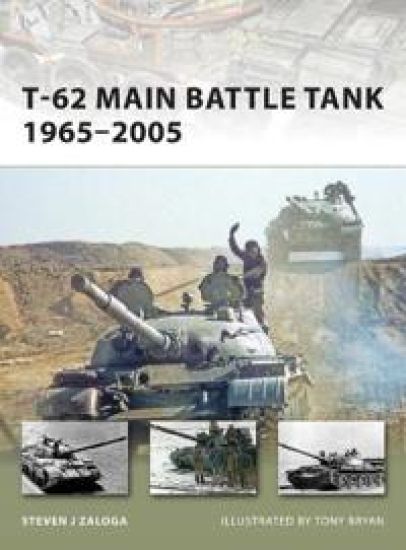
T-62 Main Battle Tank 1965–2005

T-62 Main Battle Tank 1965–2005

Steven J. Zaloga

Osprey Publishing
2009
nidottu
The Soviet Army hastily developed the T-62 in a struggle to compete against the rapid proliferation of NATO tanks in the 1960s. It was essentially a modification of the widely-manufactured T-55 tank with the addition of a new 115mm gun. Within the USSR itself, the T-62 was quickly superseded, but it was widely exported, becoming a critical component of the Egyptian and Syrian armies in the 1973 Yom Kippur conflict and heavily influenced later designs of the M1 Abrams and Challenger tanks. In the first English-language history of this tank, Steven Zaloga examines the development of the T-62 using detailed combat descriptions to bring to life the operational history of this tank from the deserts of the Sinai to the harsh terrain of Afghanistan.
M551 Sheridan

M551 Sheridan

Steven J. Zaloga

Osprey Publishing
2009
nidottu
Since the advent of airmobile warfare, there have been numerous attempts to support paratroopers with attached armored vehicles. This book tells the story of the US experience with air-mobile tanks, starting with their efforts in World War II. However, full success was not achieved until the production of the M551 Sheridan. The history of this tank provides the focal point of this book, highlighting the difficulties of combining heavy firepower in a chassis light enough for airborne delivery. This book examines its controversial debut in Vietnam, and its subsequent combat history in Panama and Operation Desert Storm. It rounds out the story by examining the failed attempts to replace the Sheridan with other armored vehicles.
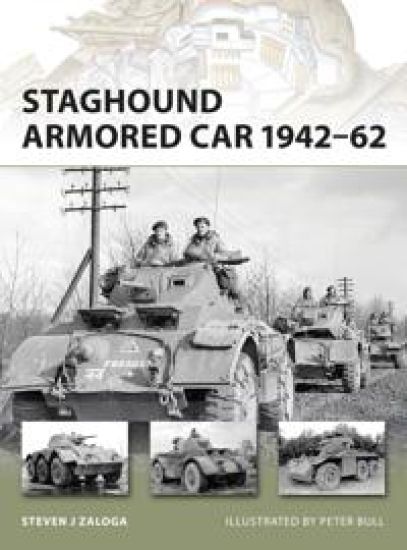
Staghound Armored Car 1942–62

Staghound Armored Car 1942–62

Steven J. Zaloga

Osprey Publishing
2009
nidottu
The Staghound was a unique World War II armored vehicle - designed and manufactured in the US, but intended solely for the British army. Since its combat debut in Italy in 1943 until the end of the war it had performed particularly valuable service in a reconnaissance role where its speed and armor ensured that it was able to extricate itself from trouble as required without additional support. This book examines the development of this category of armored cars and offers a detailed analysis of the extensive combat use of the Staghound in British service as well as in the service of other Allied countries including Canada, New Zealand and Poland.
The Atlantic Wall (2)

The Atlantic Wall (2)

Steven J. Zaloga

Osprey Publishing
2009
nidottu
Germany's Atlantic Wall was the most ambitious military fortification program of World War II. Following its conquest of Western Europe, Germany had to defend some 5,000km of Atlantic coastline from the Spanish border to the Arctic Circle. The United States' entry into the war and the inevitability of an Anglo-American landing in Western Europe resulted in the fortification of this coastline along its entire length. Focusing on the northern Atlantic Wall in the Low Countries and Scandinavia, this title addresses the special defensive features and unique aspects of fortification in these countries, such as the early focus on fortifying Norway, due to early British commando raids; the greater use of turreted naval guns; and, the establishment of first-line Flak defences in the Low Countries to counter the Allied strategic bombing campaign.
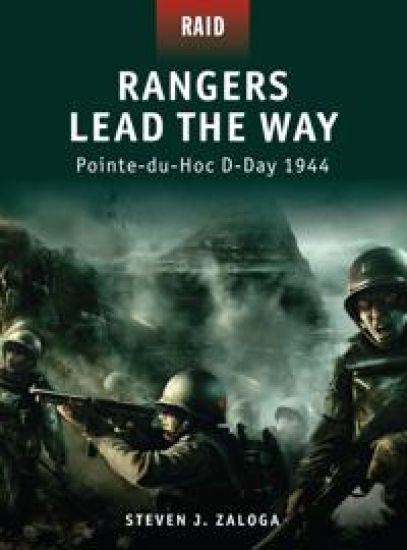
Rangers Lead the Way

Rangers Lead the Way

Steven J. Zaloga

Osprey Publishing
2009
nidottu
In the early hours of D-Day, 1944, a group from the US Army 2nd Rangers Battalion were sent on one of the legendary raids of World War II. The mission was to scale the cliffs overlooking Omaha beach and assault the German coastal artillery at Pointe-du-Hoc. It was thought that only a raid could ensure that the guns would remain silent during the D-Day landings. But allied intelligence was wrong. After climbing the cliffs under aggressive German fire and securing the battery site, the Rangers discovered that the guns themselves were no longer there. It was only due to the heroic actions of the Rangers involved that the guns were located in firing positions facing Utah beach and destroyed before they could be used. In the first of a brand new series for Osprey, this act of audacious daring is brought to life, complete with illustrated artwork, maps and rare German accounts. Taking a more critical look at the story, Steven Zaloga analyses every detail, from the intelligence failings to the boldness of the Rangers' in the face of such odds.
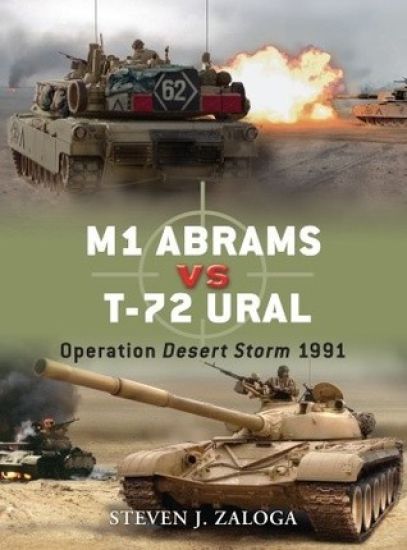
M1 Abrams vs T-72 Ural

M1 Abrams vs T-72 Ural

Steven J. Zaloga

Osprey Publishing
2009
nidottu
The Gulf War bore witness to a number of deadly encounters between these two great adversaries. Heavily armoured, highly mobile and capable of killing at over 2500m the M1 Abrams is, to this day, a veritable fighting machine. Superior to both Iraq's Soviet era T-55 and T-62 tanks, nearly all sources claim that no Abrams tank has ever been destroyed by enemy fire. Despite entering service in 1980, the M1 Abrams remained untested in combat until the Gulf War in 1991, where it was to be confronted by its archenemy the Iraqi-assembled Soviet-designed T-72. Entering production in 1971, the T-72 arguably outstripped its contemporaries in a balance of mobility, protection and firepower. By the time of Operation Desert Storm, however, the tables had turned and the tank suffered due to low quality ammunition and poorly trained crews. In this fascinating study, Steven Zaloga pits these two great fighting machines against one another, plotting the development of the Cold War until both tanks met in combat in the deserts of Iraq and Kuwait.
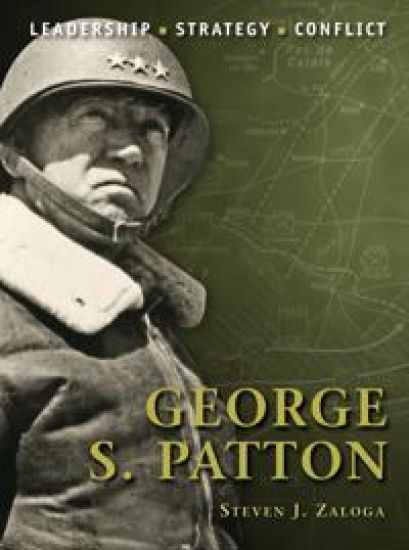
George S. Patton

George S. Patton

Steven J. Zaloga

Osprey Publishing
2010
nidottu
George S. Patton Jr. was the iconic American field commander of World War II, and widely regarded as the US Army's finest practitioner of mechanized warfare. This title examines Patton's colorful life and leadership in three wars, with a concentration on his command in World War II. Despite his ability, Patton was thoroughly reviled by most GIs, partly due to his insistence on traditional military discipline in the ranks, but also because of his unwillingness to pander to the growing power of the press. This combination of ability and controversy have combined to make him one of the most interesting figures in American military history.
Spanish Civil War Tanks

Spanish Civil War Tanks

Steven J. Zaloga

Osprey Publishing
2010
nidottu
The tanks used during the Spanish Civil War are not often examined in any great detail, and are often labeled as little more than test vehicles in a convenient proving ground before World War II. But, with groundbreaking research, armor expert Steven J Zaloga has taken a fresh look at the tanks deployed in Spain, examining how future tanks and armored tactics were shaped and honed by the crews' experiences, and how Germany was able to benefit from these lessons while their Soviet opponents were not. Based on recently uncovered records of Soviet tankers in Spain and rare archival accounts, this book describes the various tanks deployed in Spain, including the PzKpfw I and the T-26.
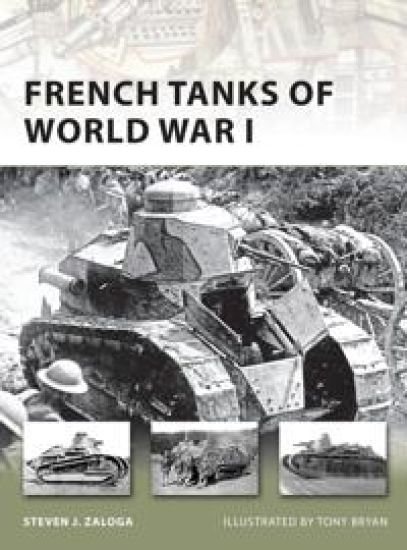
French Tanks of World War I

French Tanks of World War I

Steven J. Zaloga

Osprey Publishing
2010
nidottu
This title examines the emergence of the first modern tank, the Renault FT. It is a little known fact that France fielded more tanks in World War I than any other army. However, France's early tanks suffered from poor mobility and armor compared to their contemporaries. Indeed, their initial use on the Chemin des Dames in 1917 was a bloody fiasco. In spite of initial set-backs, the French army redeemed its reputation with the Renault FT. The Renault FT pioneered the modern tank design, with armament in a revolutionary central turret and the engine in the rear. More importantly, the Renault was designed to be cheap and easy to manufacture. Discover the history of the early French armor developments and their triumphant new design, the Renault FT, that helped to turn the tide of war in the favor of the Allies.
Operation Nordwind 1945

Operation Nordwind 1945

Steven J. Zaloga

Osprey Publishing
2010
nidottu
The last great assault by the German Army in the West.Operation Nordwind is one of the lesser known campaigns of World War II yet one of the more intriguing. Largely overshadowed by the Battle of the Bulge further north, Nordwind was the last great operation by the Waffen-SS Panzer divisions in the west, and the last time the Wehrmacht was on the offensive in the West. The campaign also highlights the difficulties of inter-Allied cooperation between the Americans and the French.Though extensively treated in German and French accounts, the campaign has not been well covered in English until now. Alongside detailed illustrations and maps, Steven J. Zaloga unpacks the story of one of Hitler's final battles.
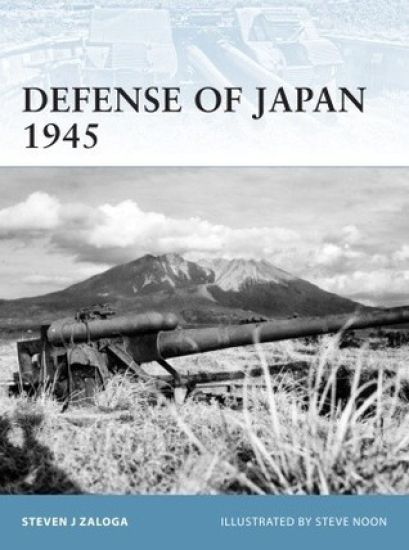
Defense of Japan 1945

Defense of Japan 1945

Steven J. Zaloga

Osprey Publishing
2010
nidottu
In 1945, with her fleet destroyed and her armies beaten, the only thing that stood between Japan and an Allied invasion was the numerous coastal defence positions that surrounded the islands. This is the first book to take a detailed look at the Japanese home island fortifications that were constructed during 1941-45. Utilizing diagrams, specially commissioned artwork, and sources previously unavailable in English, Steven Zaloga examines these defences in the context of a possible Allied invasion, constructing various arguments for one of the greatest 'what if' scenarios of World War II, and helping to explain why the Americans decided to go ahead with a nuclear option.
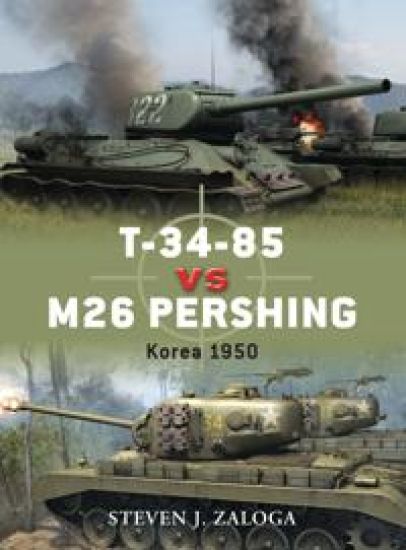
T-34-85 vs M26 Pershing

T-34-85 vs M26 Pershing

Steven J. Zaloga

Osprey Publishing
2010
nidottu
A hotly-debated topic amongst tank buffs is of the relative merits of the Soviet and American tanks of World War II. Using recently revealed documents, Steven Zaloga sheds light on the crucial tank battles of the Korean War as the rival superpowers' finest tanks battled for supremacy. The Soviet-equipped North Korean Peoples Army initially dominated the battlefield with the seemingly unstoppable T34-85. As US tank battalions hastily arrived throughout the late summer and early autumn of 1950, the M26 Pershing took the fight to North Korea with increasing success.
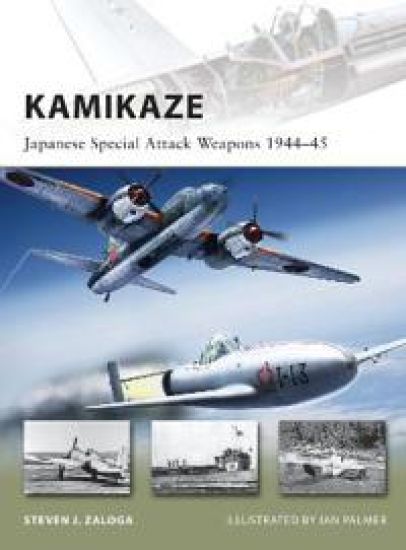
Kamikaze

Kamikaze

Steven J. Zaloga

Osprey Publishing
2011
nidottu
Following the destruction of much of the Japanese fleet and air arms in the later half of 1944, in desperation, the Imperial Japanese Navy proposed using “special attack” formations, or suicide attacks.These initially consisted of crude improvisations of conventional aircraft fitted with high-explosive bombs that could be crashed into US warships. Called “Divine Wind” (Kamikaze), the special attack formations first saw action in 1944, and became the scourge of the US fleet in the battles for Iwo Jima and Okinawa in 1945. In view of the success of these attacks, the Japanese armed forces began to develop an entire range of new special attack weapons.This book examines the initial kamikaze aircraft attacks, with a focus on the dedicated special attack weapons developed in 1944. It also covers specialized suicide attack weapons such as anti-tank lunge mines.
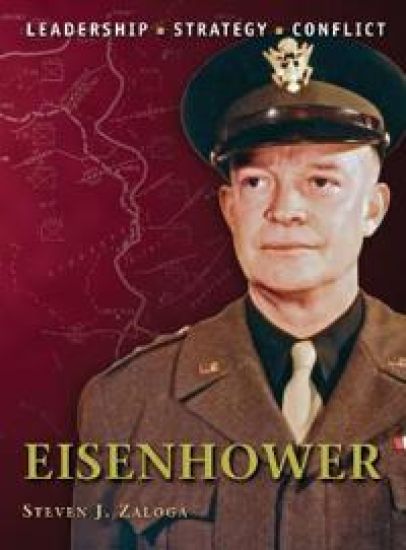
Eisenhower

Eisenhower

Steven J. Zaloga

Osprey Publishing
2011
nidottu
Dwight Eisenhower represented a fundamentally new type of modern military commander.Eisenhower was a manager commander, whose grasp of the politics and large-scale tactics of battle were uniquely suited to leading the huge coalition of forces that fought in Europe during the Second World War. Educated at West Point, Eisenhower rose to his position as Supreme Commander of the Allied Expeditionary Force through a series of powerful contacts and his natural aptitude for leadership and large scale tactical planning. This book analyses how Eisenhower's tactics and political astuteness helped him successfully lead the invasion of Europe, how he coaxed contradictory parties into supporting his policies and how he triumphed in his now infamous clash with Montgomery.Uniquely, the author goes on to describe how Eisenhower's military influence continued when he became President, as his leadership and vision were tested by the outbreak of the Cold War.
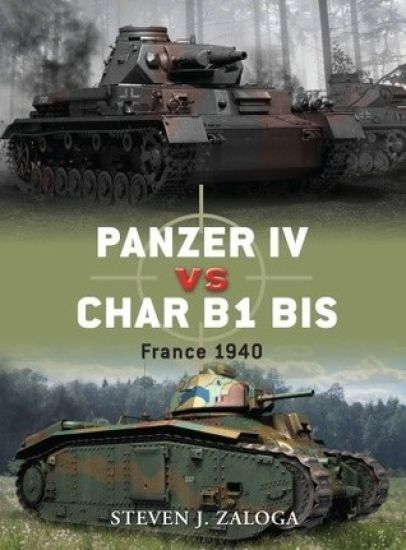
Panzer IV vs Char B1 bis

Panzer IV vs Char B1 bis

Steven J. Zaloga

Osprey Publishing
2011
nidottu
The Battle of France in 1940 involved the first large-scale tank-against-tank battles in history. The massive clashes at Stonne, Hannant, and Gembloux involved hundreds of tanks on both sides, yet have faded from memory due to the enormity of the French defeat. This book examines two of the premier opposing tanks of the Wehrmacht and the French Army, the German PzKpfw IV and the French Char B1 bis.With a complete history of the design, development, and deployment of these armoured fighting vehicles, the story of these great battles is once again brought to life.
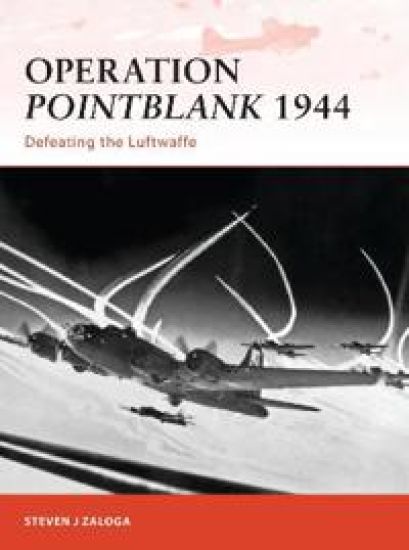
Operation Pointblank 1944

Operation Pointblank 1944

Steven J. Zaloga

Osprey Publishing
2011
nidottu
A thorough examination of one of the most controversial operations in World War 2Operation Pointblank was the code name for the United States Army Air Force's attempt to destroy German fighter capability through the use of daylight strategic bombing in advance of the D-Day landings. Launched in 1943, the operation immediately met with severe problems, most notably the horrible attrition experienced by the US bomber forces. However, with the arrival of the P-51 Mustang, the United States was able to equip the fighters to fly on long-range-bomber escort missions and take the fight to the Luftwaffe in the skies over Germany.Complete with maps, illustrations and photographs, this book examines the entire operation from both the Allied and the German perspectives, covering all the main decisions and technological innovations made by both sides in this epic struggle.
Defense of the Rhine 1944–45

Defense of the Rhine 1944–45

Steven J. Zaloga

Osprey Publishing
2011
nidottu
A detailed look at the various defensive structures and preparations that Germany constructed for the defense of the Rhine.The Rhine River represented the last natural defensive barrier for the Third Reich in the autumn of 1944. Although Hitler had been reluctant to allow the construction of tactical defence lines in France, the final defense of the Reich was another matter. As a result, construction of a Rhine defence line began in September 1944.Steven J. Zaloga examines the multiple phases of construction undertaken to strengthen the Westwall (Siegfried Line), to fortify many of the border villages, and finally to prepare for the demolition of the Rhine bridges. Using detailed maps, colour artwork, and expert analysis, this book is a thorough examinations of Germany's last line of defence.
US Marine Corps Tanks of World War II

US Marine Corps Tanks of World War II

Steven J. Zaloga

Osprey Publishing
2012
nidottu
During World War II, the US Marine Corps formed six tank battalions that battled through the harsh conditions of the Pacific Theatre. Using the same basic tanks as the US Army, notably the M3 and M5A1 light tanks and the M4 Sherman medium tank, the marines made both technical and tactical innovations to make them more effective in the fight against the Japanese. Deep wading equipment, flamethrower tanks, and even wooden armor all became part of the Marine arsenal. This book examines the tactics and technology that made the US Marine Corps tank service unique in the annals of warfare.