Kirjojen hintavertailu. Mukana 12 016 292 kirjaa ja 12 kauppaa.

Kirjahaku

Etsi kirjoja tekijän nimen, kirjan nimen tai ISBN:n perusteella.

1000 tulosta hakusanalla Walter Appleton Clark; Richard Harding Davis

Walter and the Moonbeam

Walter and the Moonbeam

Aileen Hopkins

Lulu.com
2014
nidottu
A fantasy story about a young boy who walks up a moonbeam and meets many entities in the universe. Loony moon, Keeper, Moonbeam Dream are just some of the characters that entertain Walter on his journeys through space. Walter visits many planets and has many strange conversations with the new friends that he makes. Loony Moon is sad because man has only visited him once and then ignored him. Keeper is worn out cleaning Loony Moon with his Flugelpumpen. Walter learns a great deal about the cosmos and has a great time exploring and trying to understand what makes the universe tick.
Thor by Walter Simonson Omnibus (New Printing 2)
Considered by many to be the greatest run on THOR ever, Walter Simonson's classic tales of the God of Thunder are collected here - completely remastered from the original artwork and stunningly recolored by Steve Oliff And there are too many timeless tales to count: the Casket of Ancient Winters The death of Odin The origins of Asgard The sacrifice of the Executioner Thor as a frog The Mutant Massacre The curse of Hela The debut of Thor's body armor Guest-starring Beta Ray Bill, Nick Fury and the Avengers Featuring the threats of Fafnir the dragon, Loki, Lorelei, Malekith the Dark Elf, Surtur, Hela, the Titanium Man, Kurse, Zaniac, the Marauders, the Absorbing Man, Fin Fang Foom, the Destroyer and the Midgard Serpent Plus: Balder the Brave battles alone Collecting THOR (1966) #337-355, #357-369 and #371-382; and BALDER THE BRAVE #1-4.
My Happy Patients - Letters to Walter Pierpaoli
My Happy Patients is a book of correspondence that the famous physician and New York Times Bestselling author of 'The Melatonin Miracle' Dr Walter Pierpaoli has received from patients with various problems over many years. From reading his interactions with these often desperate people we learn of his philosophy and approach to dealing with diseases and issues that mainstream medicine has often failed to address.
Walter and the Universe

Walter and the Universe

Aileen Hopkins

Lulu.com
2014
nidottu
This is the continuing story of Walter and his travels through the universe. Father Time transports him from Loony moon to many times and planets. Keeper and Moonbeam Dream join up with Walter as he meets old friends and sees the past and future.
Walter Hallstein: The Forgotten European?
Walter Hallstein was among the great European visionaries. This is the first book length study of one of the key shapers of the European Community in its early years. The range of contributors include those who worked with Hallstein and have personal recollections of him, and younger historians drawing upon documents only recently available. The book contains sections on his contribution as State Secretary to post-war German foreign policy, his seminal role as the first President of the Commission of the EEC and the legacy of his work and ideas and later years as President of the European Movement.
Walter Benjamin and the Aesthetics of Change
Following the spirit of Benjamin's Arcades Project, this book acts as a kaleidoscope of change in the 21st century, tracing its different reflections in the international contemporary while seeking to understand individual/collective reactions to change through a series of creative methodologies.
Walter Benjamin

Walter Benjamin

M. Kohlenbach

Palgrave Macmillan
2002
nidottu
Walter Benjamin's work represents one of the most radical and controversial responses to the problems of twentieth-century culture and society. This new interpretation analyzes some of the central enigmatic features of his writing, arguing that they result from the co-presence of religious scepticism and the desire for a religious foundation of social life. Margarete Kohlenbach focuses on the structure of self-reference as an expression of Benjamin's sceptical religiosity and examines its significance in his writing on language, literature and the cinema, as well as history, politics and modern technology.
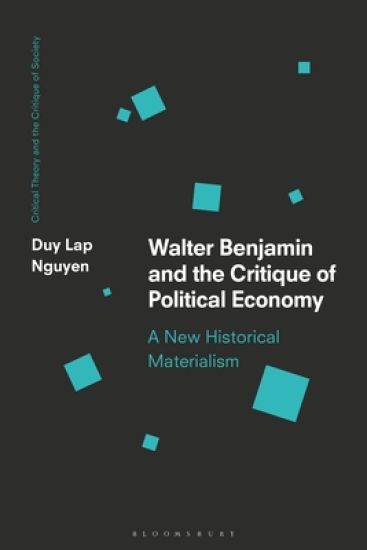
Walter Benjamin and the Critique of Political Economy

Walter Benjamin and the Critique of Political Economy

Duy Lap Nguyen

BLOOMSBURY PUBLISHING PLC
2022
sidottu
Exploring the connections between Walter Benjamin’s philosophy of history and a Marxian Critique of Political Economy, Duy Lap Nguyen analyses Benjamin’s early writings and their development into a distinct understanding of historical materialism. Benjamin’s historically materialist conception of history is shown to be characterised by a focus on the religion of capitalism, the mythology of the state, and messianic time. Revealing these factors, Nguyen joins up Benjamin’s philosophical critique of the Kantian conception of history, alongside the historical trajectory of capitalism he subscribed to. Influenced by the theory of fascism outlined by German Marxist theorist Karl Korsch, we see how Benjamin’s own theory of revolution and redemption in capitalist society developed into a sophisticated critique. Essential to Benjamin’s materialist critique was a recognition of the fallibility of the Enlightenment notion of progress, as well as the need to overturn the political and economic catastrophes which enable capitalism and fascism to thrive. In mapping the exact course of Benjamin’s critical historical materialism, Nguyen fully explicates the unique contribution he made to western Marxism.
Walter Benjamin and Political Theology
Tracing Walter Benjamin's convergences with, and divergences from, influential German legal theorist Carl Schmitt, this edited collection contextualizes Benjamin’s thinking in the intellectual currents of his time, while also placing him in dialogue with traditions and thinkers from antiquity to the present. At stake is whether Benjamin presents the possibility of a distinctive political theology—a question which the collection addresses without collapsing the tensions internal to Benjamin’s thought. Benjamin’s thought has been a touchstone, explicitly or implicitly, in numerous efforts to conceive of a ‘new’ political theology that is not anchored in legitimizing and preserving power, but in justice and liberation. Benjamin interrogates the political-theological complex from what may be construed as a vantage point opposed to Schmitt. Whereas Schmitt excavates the theological elements in modernity in order to shore up liberalism’s illiberal inheritance, Benjamin roots out these latent structures in order to dissolve them and liberate us from their oppressive legacy. This volume’s multifaceted contributions explore why Benjamin has been such a fertile source for thinking about political theology beyond – and often against – Schmitt. Benjamin indicates how existing political theologies can be challenged or expanded. This book accordingly makes a wide range of relevant work available for study whilst also opening new perspectives on Benjamin’s œuvre.
Walter Benjamin and Political Theology
Tracing Walter Benjamin's convergences with, and divergences from, influential German legal theorist Carl Schmitt, this edited collection contextualizes Benjamin’s thinking in the intellectual currents of his time, while also placing him in dialogue with traditions and thinkers from antiquity to the present. At stake is whether Benjamin presents the possibility of a distinctive political theology—a question which the collection addresses without collapsing the tensions internal to Benjamin’s thought. Benjamin’s thought has been a touchstone, explicitly or implicitly, in numerous efforts to conceive of a ‘new’ political theology that is not anchored in legitimizing and preserving power, but in justice and liberation. Benjamin interrogates the political-theological complex from what may be construed as a vantage point opposed to Schmitt. Whereas Schmitt excavates the theological elements in modernity in order to shore up liberalism’s illiberal inheritance, Benjamin roots out these latent structures in order to dissolve them and liberate us from their oppressive legacy. This volume’s multifaceted contributions explore why Benjamin has been such a fertile source for thinking about political theology beyond – and often against – Schmitt. Benjamin indicates how existing political theologies can be challenged or expanded. This book accordingly makes a wide range of relevant work available for study whilst also opening new perspectives on Benjamin’s œuvre.
Walter Benjamin and the Critique of Political Economy

Walter Benjamin and the Critique of Political Economy

Duy Lap Nguyen

BLOOMSBURY PUBLISHING PLC
2024
nidottu
Exploring the connections between Walter Benjamin’s philosophy of history and a Marxian Critique of Political Economy, Duy Lap Nguyen analyses Benjamin’s early writings and their development into a distinct understanding of historical materialism. Benjamin’s historically materialist conception of history is shown to be characterised by a focus on the religion of capitalism, the mythology of the state, and messianic time. Revealing these factors, Nguyen joins up Benjamin’s philosophical critique of the Kantian conception of history, alongside the historical trajectory of capitalism he subscribed to. Influenced by the theory of fascism outlined by German Marxist theorist Karl Korsch, we see how Benjamin’s own theory of revolution and redemption in capitalist society developed into a sophisticated critique. Essential to Benjamin’s materialist critique was a recognition of the fallibility of the Enlightenment notion of progress, as well as the need to overturn the political and economic catastrophes which enable capitalism and fascism to thrive. In mapping the exact course of Benjamin’s critical historical materialism, Nguyen fully explicates the unique contribution he made to western Marxism.
Walter Benjamin and Cultural Translation

Walter Benjamin and Cultural Translation

Birgit Haberpeuntner

BLOOMSBURY PUBLISHING PLC
2024
sidottu
Dissecting the radical impact of Walter Benjamin on contemporary cultural, postcolonial and translation theory, this book investigates the translation and reception of Benjamin’s most famous text about translation, “The Task of the Translator,” in English language debates around ‘cultural translation’. For years now, there has been a pronounced interest in translation throughout the Humanities, which has come with an increasing detachment of translation from linguistic-textual parameters. It has generated a broad spectrum of discussions subsumed under the heading of ‘cultural translation’, a concept that is constantly re-invented and manifests in often heavily diverging expressions. However, there seems to be a distinct constant: In their own (re-)formulations of this concept, a remarkable number of scholars—Bhabha, Chow, Niranjana, to name but a few—explicitly refer to Walter Benjamin’s “The Task of the Translator.” In its first part, this book considers Benjamin and the way in which he thought about, theorized and practiced translation throughout his writings. In a second part, Walter Benjamin meets 'cultural translation': tracing various paths of translation and reception, this part also tackles the issues and debates that result from the omnipresence of Walter Benjamin in contemporary theories and discussions of 'cultural translation'. The result is a clearer picture of the translation and reception processes that have generated the immense impact of Benjamin on contemporary cultural theory, as well as new perspectives for a way of reading that re-shapes the canonized texts themselves and holds the potential of disturbing, shifting and enriching their more ‘traditional’ readings.
Walter Benjamin and Cultural Translation

Walter Benjamin and Cultural Translation

Birgit Haberpeuntner

BLOOMSBURY PUBLISHING PLC
2025
nidottu
Dissecting the radical impact of Walter Benjamin on contemporary cultural, postcolonial and translation theory, this book investigates the translation and reception of Benjamin’s most famous text about translation, “The Task of the Translator,” in English language debates around ‘cultural translation’. For years now, there has been a pronounced interest in translation throughout the Humanities, which has come with an increasing detachment of translation from linguistic-textual parameters. It has generated a broad spectrum of discussions subsumed under the heading of ‘cultural translation’, a concept that is constantly re-invented and manifests in often heavily diverging expressions. However, there seems to be a distinct constant: In their own (re-)formulations of this concept, a remarkable number of scholars—Bhabha, Chow, Niranjana, to name but a few—explicitly refer to Walter Benjamin’s “The Task of the Translator.” In its first part, this book considers Benjamin and the way in which he thought about, theorized and practiced translation throughout his writings. In a second part, Walter Benjamin meets 'cultural translation': tracing various paths of translation and reception, this part also tackles the issues and debates that result from the omnipresence of Walter Benjamin in contemporary theories and discussions of 'cultural translation'. The result is a clearer picture of the translation and reception processes that have generated the immense impact of Benjamin on contemporary cultural theory, as well as new perspectives for a way of reading that re-shapes the canonized texts themselves and holds the potential of disturbing, shifting and enriching their more ‘traditional’ readings.