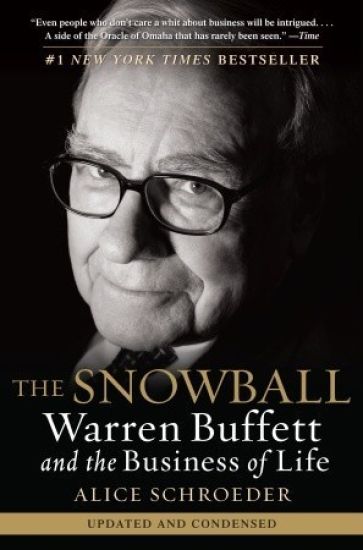
#1 NEW YORK TIMES BESTSELLER - "The most authoritative portrait of one of the most important American investors of our time."--Los Angeles Times "Even people who don't care a whit about business will be intrigued. . . . A side of the Oracle of Omaha that has rarely been seen."--Time (Five Best Nonfiction Books of the Year) A BEST BOOK OF THE YEAR: The Washington Post; People; Financial Times; Businessweek; Janet Maslin, The New York Times; Publishers Weekly Warren Buffett is one of the most respected men in the world. But the legendary Omaha investor has never written a memoir or offered a glimpse into his intensely private life. Here, at last, he gives unprecedented access to his work, opinions, struggles, triumphs, follies, and wisdom. This complete biography of the man known everywhere as "the Oracle of Omaha" was written by highly respected former financial analyst and business writer Alice Schroeder with the cooperation of Buffett himself, who gave her thousands of hours of his own time as well as complete access to his wife, children, friends, and business associates--and his files. The result is the fullest exploration of his philosophy of life we will ever have. Here are the principles and ideas that made Buffett astoundingly wealthy, enriched the lives (and bank accounts) of those who adopted them, and created the most fascinating American success story of our time.
Highlighted by extensive interviews with Buffett, as well as family, friends, and colleagues, a detailed portrait of the life and career of legendary investment guru Warren Buffett sheds new light on the man, as well as on the work, ideas, business principles, strategies, and no-nonsense insights that have guided his phenomenally successful business endeavors. 1,000,000 first printing.
Really it's a love story, like a fairy tale only real. But it's kind of a family drama, y'know, about life and also friendship. It's kind of a tragedy too, but it's funny. The only thing it's not is a thriller, and still it kind of is. And there's a lot of politics and philosophy, only really hardly any. Oh, and also it's about destiny.
An accessible guide to investing in today's down market shares Warren Buffett's investment strategies while offering advice on how to decipher and use financial information, make sound investment choices, and identify the best times to invest. 100,000 first printing.
In this volume, Eugene P. Trani and David L. Wilson evaluate the presidency of Warren G. Harding by surveying scholarship on the Harding years. Harding--generally considered one of the weakest American presidents--was elected chief executive in 1920, during a time of uncertainty and frustration for many of the American people. The authors assess the critics and defenders of Harding in light of the administration's accomplishments and failures. Both the strengths and weaknesses of the Harding administration came from the people President Harding selected for high office. Charles G. Dawes accomplished much by implementing sound budgetary practices in the federal government for the first time in history. Herbert Hoover became the dominant figure in the Harding administration, using his influence to advance both domestic and foreign policies. And Charles Evans Hughes proved to be an able, if conservative, secretary of state. Yet the accomplishments of these and other capable men tended to be short-term in nature. Trani and Wilson describe the widespread corruption and malfeasance in the Harding administration, pointing out the Harding's erratic judgment of character caused many of his problems as president. His personal habits--philandering, playing poker, and drinking liquor during national prohibition--tainted his reputation and appeared to connect him to the activities of his associates. Tragically, Harding sought to avoid controversy, even if it meant ignoring real problems or evading justice, and thus failed to provide moral leadership for the nation. Harding and his advisers demonstrated little understanding of the social and economic forces at work in the country and abroad. In the early 1920s, the United States continued the transition from a rural society to an urbanized and industrialized society. Rather than adjusting the government to meet the needs of all segments of an industrialized society, Harding instituted normalcy, an attempt to maintain the values of a rural society rapidly disintegrating under the impact of social and economic change. The few real accomplishments of the Harding administration were buried under scandal. and in the end, Harding must be rated as an ineffective leader at a time when the nation would have been better served by a different, more imaginative approach to government.
In this compulsively readable and constantly surprising book, Peter Biskind, the author of the film classics Easy Riders, Raging Bulls and Down and Dirty Pictures, writes the most intimate, revealing, and balanced biography ever of Hollywood legend Warren Beatty. Famously a playboy--he has been linked to costars Natalie Wood, Julie Christie, Diane Keaton, and Madonna, among others--Beatty has also been one of the most ambitious and successful stars in Hollywood. Several Beatty films have passed the test of time, from Bonnie and Clyde to Shampoo, Heaven Can Wait, Reds (for which he won the best director Oscar), Bugsy, and Bulworth. Few filmgoers realize that along with Orson Welles, Beatty is the only person ever nominated for four Academy Awards for a single film--and unlike Welles, Beatty did it twice, with Heaven Can Wait and Reds. Biskind shows how Beatty used star power, commercial success, savvy, and charm to bend Hollywood moguls to his will, establishing an unprecedented level of independence while still working within the studio system. Arguably one of the most successful and creative figures in Hollywood over the last few decades, Beatty exercised unique control over his films, often hiring screenwriters out of his own pocket (and frequently collaborating with them), producing, directing, and acting, becoming an auteur before anyone in Hollywood knew what the word meant. In this fascinating biography, the ultimate Hollywood Star comes to life--complete with excesses and achievements--as never before.
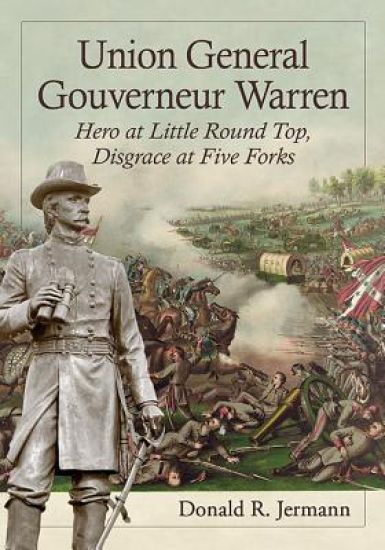
Union Major General Gouverneur Warren participated in almost every major battle in the Civil War's Eastern Theater, from Big Bethel to Five Forks. He was held in such high esteem that he was often looked upon as the Union general most responsible for the victory at Gettysburg, and was considered the logical replacement for George Gordon Meade as commanding general of the Army of the Potomac. However, within days of the war's end he was relieved in disgrace on the battlefield by General Phil Sheridan. Warren spent the next fifteen years seeking the activation of a Court of Inquiry that he believed would vindicate his conduct. This book is the story of that court.
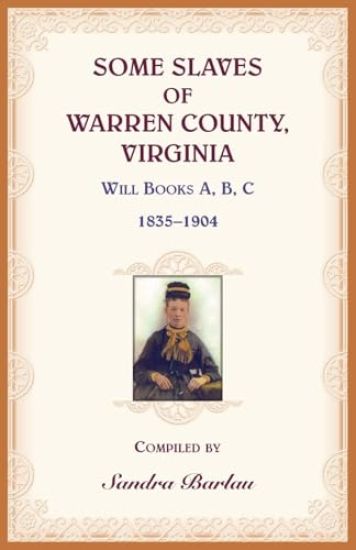
Will books are a good source in the search for slaves only if the owner named the slave(s). Many times, a will lists property without specifying if it includes slaves. For example: "I will and bequeath to my (wife, son, daughter, etc.) all my estate both real and personal of every sort;" or, "...the property I have already given to my (wife, son, daughter, etc.) ..." The documents often do not include the slave's name, sometimes only girl, runaway, boy, etc.The documents in this manuscript include wills, administrator's estate accounts, executor accounts, and inventories and appraisals. Each slave owner is listed first followed by the page number, date and type of document. The list of slaves follows below. The new owner is listed if known. Surnames of the owner's children are indexed only if noted in the document. A full-name index adds to the value of this work.
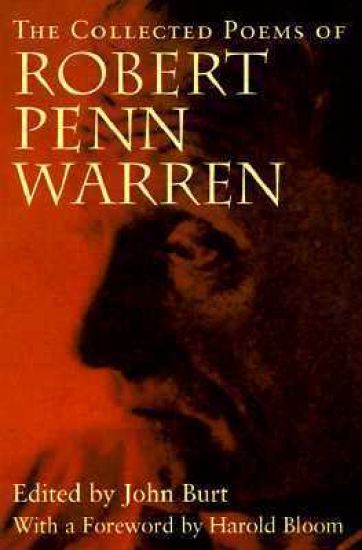
Winner of the C. Hugh Holman AwardA central figure in twentieth-century American literature, Robert Penn Warren (1905- 1989) was appointed by the Library of Congress as the first Poet Laureate of the United States in 1985. Although better known for his fiction, especially his novel All the King's Men, it is mainly his poetry- spanning sixty years, fifteen volumes of verse, and a wide range of styles- that reveals Warren to be one of America's foremost men of letters.In this indispensable volume, John Burt, Warren's literary executor, has assembled every poem Warren ever published (with the exception of Brother to Dragons), including the many poems he published in The Fugitive and other magazines, as well as those that appeared in his small press works and broadsides. Burt has also exhaustively collated all of the published versions of Warren's poems- which, in some cases, appeared as many as six different times with substantive revisions in every line- as well as his typescripts and proofs. And since Warren never seemed to reread any of his books without a pencil in his hand, Burt has referred to Warren's personal library copies. This comprehensive edition also contains textual notes, lists of emendations, and explanatory notes.Warren was born and raised in Guthrie, Kentucky, where southern agrarian values and a predilection for storytelling were ingrained in him as a young boy. By 1925, when he graduated from Vanderbilt University, he was already the most promising of that exceptional set of poets and intellectuals known as the Fugitives. Warren devoted most of the 1940s and 1950s to writing prose and literary criticism, but from the late 1950s he composed primarily poetry, with each successive volume of verse that he penned demonstrating his rigorous and growing commitment to that genre. The mature visionary power and technical virtuosity of his work in the 1970s and early 1980s emanated from his strongly held belief that ""only insofar as the work [of art] establishes and expresses a self can it engage us."" Many of Warren's later poems, which he deemed ""some of my best,"" rejoice in the possibilities of old age and the poet's ability for ""continually expanding in a vital process of definition, affirmation, revision, and growth, a process that is the image, we may say, of the life process.
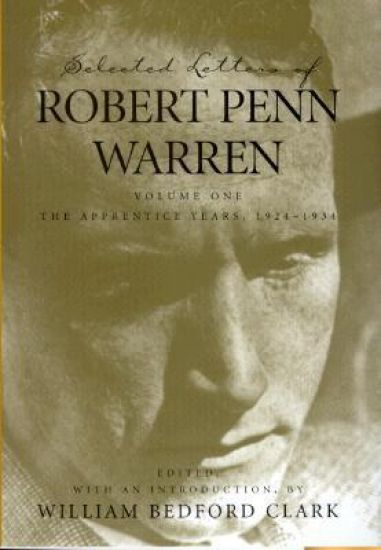
In America's twentieth century, there is no man of letters more versatile, distinguished, and influential than the poet, novelist, editor, critic, social commentator, and teacher Robert Penn Warren (1905-1989). The most intimate of Warren's ""letters,"" his personal correspondence, now join his published canon under William Bedford Clark's expert supervision. Volume One, The Apprentice Years, forms a kind of epistolary coming-of-age novel, taking Warren from the awkwardness of emerging genius during his Fugitive student years at Vanderbilt to the brink of producing great work in a newly appointed post at Louisiana State University.Warren's earliest correspondence limns a friendship in earnest with Allen Tate, a crushing heartbreak, and an attempted suicide. Eventually the author regroups, graduates with honors, and entertains a bad-boy phase at Berkeley and Yale. As he studies at Oxford, writes his first book, and decides not to complete his doctorate, Warren exhibits a deepening maturity and devotion to his literary craft, expressing ever more complex ideas about poetry and fiction. His nagging financial difficulties, growing commitment to the -Agrarian movement, controversial essay for I'll Take My Stand, marriage to Cinina Brescia, and professional uncertainty as one of the first to combine writing with college teaching lead him into the 1930s, when the bright prospect of tenure and an opportunity to remake the Southwest Review arises.Warren's letters, all but one previously unpublished, fascinate in their revelations, such as the author's surprisingly tangled relationship with his parents, his delicate health, and the gossip about major literary figures, including Tate, John Crowe Ransom, Donald Davidson, and Laura Riding. But beyond rich biographical detail, they offer a veritable self-portrait of the fledgling artist: ""When a person writes a letter it is nearly as much one to himself as to the person who takes it from the postbox."" The self-conscious, precocious, yet sensitive young Warren modulates to the sardonic, irreverent aesthete/wit ""Red"" and finally acquires a voice distinctively ""Warrenesque,"" confident and sophisticated. Thus the imaginative as well as literal aspects of these years in Warren's life are conveyed, his writing persona and historical person always an intriguing comparison.Highly accessible, unfailingly interesting, and scrupulously annotated, The Apprentice Years will satisfy scholar and lay reader alike, providing a unique window on what it means to ""profess"" the writer's calling in an era of rapid change. When complete, the Selected Letters of Robert Penn Warren will prove an indispensable addition to the author's literary oeuvre.
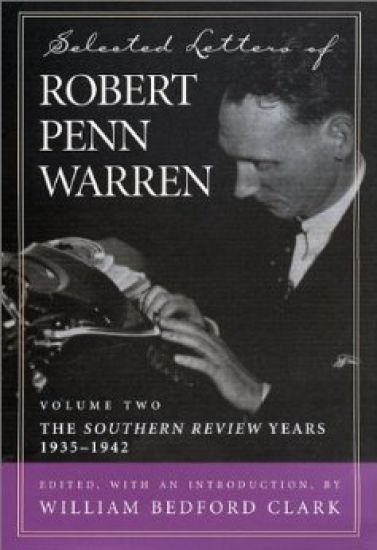
At the beginning of 1935, Robert Penn Warren was destined for arguably the most crucial period in his distinguished career. Having escaped the brink of unemployment the previous fall to join fellow Vanderbilt alumnus and Rhodes scholar Cleanth Brooks on the English faculty at Louisiana State University (which was enjoying a boom thanks to the favouritism shown by the Long regime), the young author was poised to establish himself, against the backdrop of the Great Depression and America's belated entry into World War II, as a compelling new voice, perhaps the most versatile writer of his generation.Continuing where Volume One of the Selected Letters left off, the missives from his Baton Rouge years show Warren exploring and testing the boundaries of his genius on a number of simultaneous fronts. Editing the Southern Review with Brooks was the center of his working life, and it offered him an almost immediate springboard to prominence on both sides of the Atlantic. Warren was determined to establish and maintain the stature of the quarterly even as he systematically nurtured the talent of a younger generation of writers that included Eudora Welty, Randall Jarrell, Peter Taylor, and John Berryman. He attended to his own writing as well and not only emerged as a celebrated poet but also published his first major fiction. During the same period, he and Brooks drew directly upon their classroom challenges to design and launch a series of textbooks that gradually transformed the teaching of poetry and fiction in American colleges and universities.What any number of commentators have called Warren's ""protean"" energy is in full evidence in these letters. The range and sheer diversity of his correspondence, whether with old friends, established literary figures, hopeful young writers, his beloved wife Cinina, recalcitrant academic administrators, or sometimes troublesome publishers, reveal an extraordinarily keen mind and heightened imagination operating in concert with optimum efficiency. Scrupulously edited and thoroughly annotated by William Bedford Clark with an eye toward the needs of the lay reader as well as the specialist, Warren's letters have the immediacy of skillful autobiography.
John Burt's Selected Poems of Robert Penn Warren is more broadly representative of Warren's poetry than any previous selected gathering. More than two hundred poems from every phase grace the volume, a vehicle ideal for sampling- or soaking in- the finest of Warren's rich output. With each poem, Burt has carefully located the version that constitutes Warren's final revision. His introduction gives an eloquent overview of the poet's career, touching on every published book of verse and highlighting significant lines. A ""selected"" collection in the truest sense, featuring several previously unpublished pieces, this treasure is at once new and familiar. At the heart of Warren's poetry is a celebration of man's intellect and imagination, his integral place within nature, and his relationship to time and the past; ultimately, joy coexists with the knowledge of life's many mysteries, including its tragedies. Selected Poems, a generous survey and a convenient compendium, is the shining portal to this greatly gifted poet.
Selected Letters of Robert Penn Warren, Volume three, provides an indispensable glimpse of Warren the writer and the man, covering a crucial decade in his life. Edited by Randy Hendricks and James A. Perkins, and introduced by William Bedford Clark, this collection of largely previously unpublished letters and newly discovered material documents Warren's time at the University of Minnesota, his writing and publication of the Pulitzer Prize-winning novel All the King's Men, his appointment as Consultant in Poetry at the Library of Congress, and his divorce from Emma ""Cinina"" Brescia and subsequent marriage to the writer Eleanor Clark.The period 1943-1952 also saw the publication of ""A Poem of Pure Imagination""; World Enough and Time; The Ballad of Billie Potts; At Heaven's Gate; and Selected Poems, 1923-1943. Warren's letters shed new light on those works and on his close relationship with his editors Lambert Davis and Albert Erskine. Included too is correspondence concerning Warren's collaboration with Robert Rossen on the movie production of All the King's Men, which received the Academy Award for best picture in 1949.The list of friends and colleagues with whom Warren communicated reads like a roll call of major twentieth-century literary figures and clearly shows his ever-widening influence on the world of letters. Spanning a remarkable range in both style and tone, the letters disclose Warren's attitudes toward his work as a teacher and his thoughts on the events of World War II, the Korean War, and the political conflicts in postwar Europe.Thoroughly annotated and scrupulously researched, Volume Three captures Warren in an extraordinary phase in his life and career, reaching his maturity and making many commitments at once yet pursuing them all with a seemingly boundless energy.