Kirjojen hintavertailu. Mukana 12 083 983 kirjaa ja 12 kauppaa.

Kirjahaku

Etsi kirjoja tekijän nimen, kirjan nimen tai ISBN:n perusteella.

1000 tulosta hakusanalla Wauter Mannaert

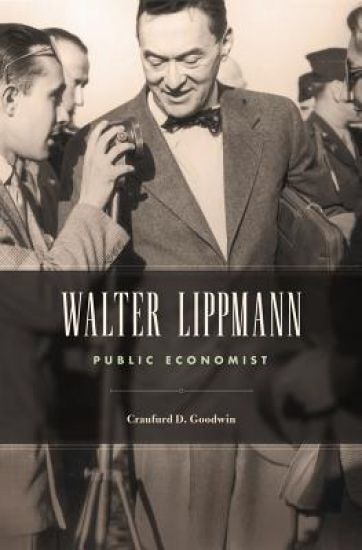
Walter Lippmann

Walter Lippmann

Craufurd D. Goodwin

Harvard University Press
2014
sidottu
Walter Lippmann was the most distinguished American journalist and public philosopher of the twentieth century. But he was also something more: a public economist who helped millions of ordinary citizens make sense of the most devastating economic depression in history. Craufurd Goodwin offers a new perspective from which to view this celebrated but only partly understood icon of American letters.From 1931 to 1946 Lippmann pursued a far-ranging correspondence with leading economic thinkers: John Maynard Keynes, Lionel Robbins, Friedrich Hayek, Henry Simons, Adolf Berle, Frank Taussig, and others. Sifting through their divergent views, Lippmann formed his own ideas about economic policy during the Great Depression and shared them with a vast readership in his syndicated column, Today and Tomorrow. Unemployment, monetary and fiscal policy, and the merits and drawbacks of free markets were just a few of the issues he helped explain to the public, at a time when professional economists who were also skilled at translating abstract concepts for a lay audience had yet to come on the scene.After World War II Lippmann focused on foreign affairs but revisited economic policy when he saw threats to liberal democracy. In addition to pointing out the significance of the Marshall Plan and the World Bank, he addressed the emerging challenge of inflation and what he called “the riddle of the Sphinx”: whether price stability and full employment could be achieved in an economy with strong unions.
Walter Benjamin

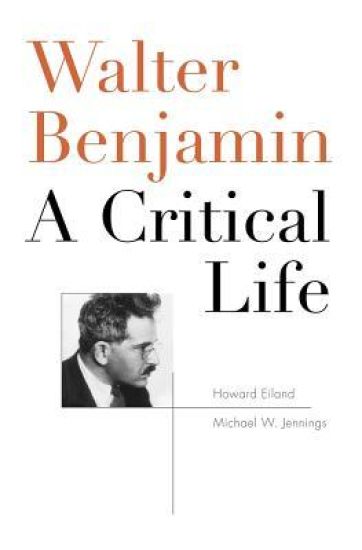
Walter Benjamin

Howard Eiland; Michael W. Jennings

The Belknap Press
2016
nidottu
Walter Benjamin is one of the twentieth century's most important intellectuals, and also one of its most elusive. His writings—mosaics incorporating philosophy, literary criticism, Marxist analysis, and a syncretistic theology—defy simple categorization. And his mobile, often improvised existence has proven irresistible to mythologizers. His writing career moved from the brilliant esotericism of his early writings through his emergence as a central voice in Weimar culture and on to the exile years, with its pioneering studies of modern media and the rise of urban commodity capitalism in Paris. That career was played out amid some of the most catastrophic decades of modern European history: the horror of the First World War, the turbulence of the Weimar Republic, and the lengthening shadow of fascism. Now, a major new biography from two of the world's foremost Benjamin scholars reaches beyond the mosaic and the mythical to present this intriguing figure in full.Howard Eiland and Michael Jennings make available for the first time a rich store of information which augments and corrects the record of an extraordinary life. They offer a comprehensive portrait of Benjamin and his times as well as extensive commentaries on his major works, including "The Work of Art in the Age of Its Technological Reproducibility," the essays on Baudelaire, and the great study of the German Trauerspiel. Sure to become the standard reference biography of this seminal thinker, Walter Benjamin: A Critical Life will prove a source of inexhaustible interest for Benjamin scholars and novices alike.
Water Witches

Water Witches

Christopher A Bohjalian

Prentice Hall IBD
1997
nidottu
Set in the Vermont countryside, "Water Witches" is a tale of the clash between progress and tradition, science and magic. In the midst of a nightmarish New England drought, cynical ski industry lobbyist Scottie Winston is trying to get a large ski resort the permits it needs to tap already beleaguered rivers for snow. His wife, his little girl, and his sister-in-law -- dowsers or "water witches" all -- hope to stop him, however, in this gentle, comic, life-affirming novel.
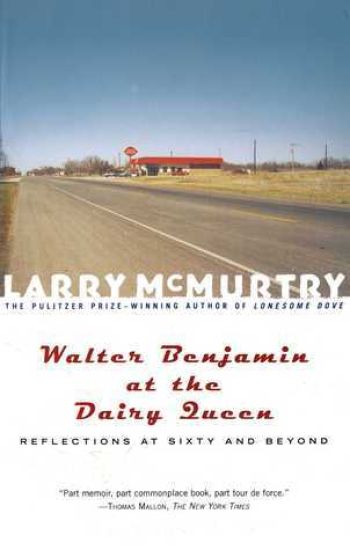
Walter Benjamin at the Dairy Queen

Walter Benjamin at the Dairy Queen

Larry McMurtry

Simon Schuster
2001
pokkari
In a lucid, brilliant work of nonfiction -- as close to an autobiography as his readers are likely to get -- Larry McMurtry has written a family portrait that also serves as a larger portrait of Texas itself, as it was and as it has become. Using as a springboard an essay by the German literary critic Walter Benjamin that he first read in Archer City's Dairy Queen, McMurtry examines the small-town way of life that big oil and big ranching have nearly destroyed. He praises the virtues of everything from a lime Dr. Pepper to the lost art of oral storytelling, and describes the brutal effect of the sheer vastness and emptiness of the Texas landscape on Texans, the decline of the cowboy, and the reality and the myth of the frontier. McMurtry writes frankly and with deep feeling about his own experiences as a writer, a parent, and a heart patient, and he deftly lays bare the raw material that helped shape his life's work: the creation of a vast, ambitious, fictional panorama of Texas in the past and the present. Throughout, McMurtry leaves his readers with constant reminders of his all-encompassing, boundless love of literature and books.
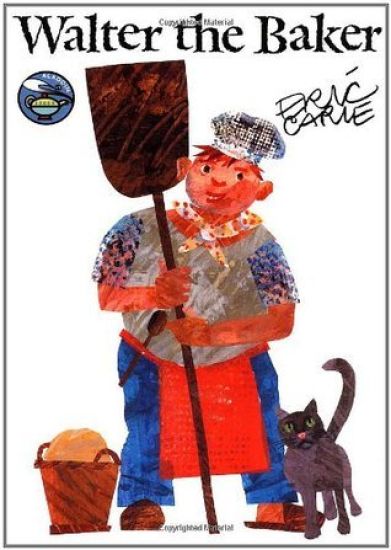
Walter the Baker

Walter the Baker

Eric Carle

Simon Schuster Books for Young Readers
1995
sidottu
Walter the Baker is famous for his breads, rolls, cookies, tarts, and pies. The Duke and Duchess especially love his warm sweet rolls, delivered fresh to their castle every morning. But one day the cat spills the milk, and Walter is forced to serve the Duke and Duchess rolls made with water. After one bite the Duke throws down his roll in disgust and summons Walter to the castle. He threatens to banish the baker unless he can take the same dough and make a good-tasting roll that the rising sun can shine through three times. Will Walter succeed in his task, or will he have to leave his town forever? With good humor and the vibrantly colored paper collages that are known and loved the world over, Eric Carle has concocted a delicious book that kids will savor as much as they love eating...shhh...pretzels
Walter the Baker

Walter the Baker

Eric Carle

Simon Schuster Children's
1998
pokkari
Walter the Baker is famous for his breads, rolls, cookies, tarts, and pies. The Duke and Duchess especially love his warm sweet rolls, delivered fresh to their castle every morning. But one day the cat spills the milk, and Walter is forced to serve the Duke and Duchess rolls made with water. After one bite the Duke throws down his roll in disgust and summons Walter to the castle. He threatens to banish the baker unless he can take the same dough and make a good-tasting roll that the rising sun can shine through three times. Will Walter succeed in his task, or will he have to leave his town forever? With good humor and the vibrantly colored paper collages that are known and loved the world over, Eric Carle has concocted a delicious book that kids will savor as much as they love eating..."shhh."..pretzels!
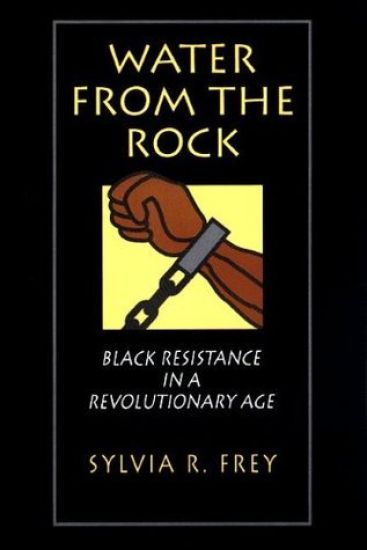
Water from the Rock

Water from the Rock

Sylvia R. Frey

Princeton University Press
1993
pokkari
The era of the American Revolution was one of violent and unpredictable social, economic, and political change, and the dislocations of the period were most severely felt in the South. Sylvia Frey contends that the military struggle there involved a triangle--two sets of white belligerents and approximately 400,000 slaves. She reveals the dialectical relationships between slave resistance and Britain's Southern Strategy and between slave resistance and the white independence movement among Southerners, and shows how how these relationships transformed religion, law, and the economy during the postwar years.
Walter Baade

Walter Baade

Osterbrock Donald E.

Princeton University Press
2001
sidottu
Although less well known outside the field than Edwin Hubble, Walter Baade was arguably the most influential observational astronomer of the twentieth century. Written by a fellow astronomer deeply familiar with Baade and his work, this is the first biography of this major figure in American astronomy. In it, Donald Osterbrock suggests that Baade's greatest contribution to astrophysics was not, as is often contended, his revision of Hubble's distance and age scales for the universe. Rather, it was his discovery of two distinct stellar populations: old and young stars. This discovery opened wide the previously marginal fields of stellar and galactic evolution--research areas that would be among the most fertile and exciting in all of astrophysics for decades to come. Baade was born, educated, and gained his early research experience in Germany. He came to the United States in 1931 as a staff member of Mount Wilson Observatory, which housed the world's largest telescope. There, he pioneered research on supernovae. With the 100-inch telescope, he studied globular clusters and the structure of the Milky Way, every step leading him closer to the population concept he discovered during the wartime years, when the skies of southern California were briefly darkened. Most Mount Wilson astronomers were working on weapons-development crash programs devoted to bringing Baade's native country to its knees, while he, formally an enemy alien in their midst, was confined to Los Angeles County but had almost unlimited use of the most powerful telescope in the world. After his great discovery, Baade continued his research with the new 200-inch telescope at Palomar. Always respected and well liked, he became even more famous among astronomers as they shifted their research to the fields he had opened. Publicity-shy and seemingly unconcerned with publication, however, Baade's celebrity remained largely within the field. This accomplished biography at last introduces Baade--and his important work--to a wider public, including the newest generation of skywatchers.
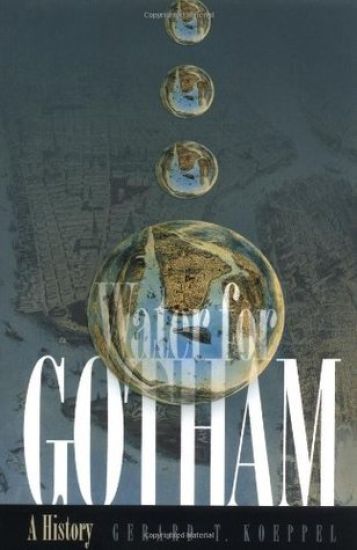
Water for Gotham

Water for Gotham

Gerard T. Koeppel

Princeton University Press
2001
pokkari
Water for Gotham tells the spirited story of New York's evolution as a great city by examining its struggle for that vital and basic element--clean water. Drawing on primary sources, personal narratives, and anecdotes, Gerard Koeppel demonstrates how quickly the shallow wells of Dutch New Amsterdam were overwhelmed, leaving the English and American city beleaguered by filth, epidemics, and fires. This situation changed only when an outside water source was finally secured in 1842--the Croton Aqueduct, a model for urban water supplies in the United States. As the fertile wilderness enjoyed by the first Europeans in Manhattan vanishes and the magnitude of New York's water problem grows, the reader is introduced to the plans of Christopher Colles, builder of the first American steam engine, and of Joseph Browne, the first to call for a mainland water source for this island-city. In this vividly written true-life fable of the "Fools of Gotham," the chief obstacle to the aqueduct is the Manhattan Company. Masterminded by Aaron Burr, with the complicity of Alexander Hamilton and other leading New Yorkers, the company was a ruse, serving as the charter for a bank--today's Chase Manhattan. The cholera epidemic of 1832 and the great fire three years later were instrumental in forcing the city's leaders to finally unite and regain New York's water rights. Koeppel's account of the developments leading up to the Croton Aqueduct reveals it as a triumph not only of inspired technology but of political will. With over forty archival photographs and drawings, Water for Gotham demonstrates the deep interconnections between natural resource management, urban planning, and civic leadership. As New York today retakes its waterfront and boasts famous tap water, this book is a valuable reminder of how much vision and fortitude are required to make a great city function and thrive.
Walter Kaufmann

Walter Kaufmann

Stanley Corngold

Princeton University Press
2018
sidottu
The first complete account of the ideas and writings of a major figure in twentieth-century intellectual lifeWalter Kaufmann (1921–1980) was a charismatic philosopher, critic, translator, and poet who fled Nazi Germany at the age of eighteen, emigrating alone to the United States. He was astonishingly prolific until his untimely death at age fifty-nine, writing some dozen major books, all marked by breathtaking erudition and a provocative essayistic style. He single-handedly rehabilitated Nietzsche’s reputation after World War II and was enormously influential in introducing postwar American readers to existentialism. Until now, no book has examined his intellectual legacy.Stanley Corngold provides the first in-depth study of Kaufmann’s thought, covering all his major works. He shows how Kaufmann speaks to many issues that concern us today, such as the good of philosophy, the effects of religion, the persistence of tragedy, and the crisis of the humanities in an age of technology. Few scholars in modern times can match Kaufmann’s range of interests, from philosophy and literature to intellectual history and comparative religion, from psychology and photography to art and architecture. Corngold provides a heartfelt portrait of a man who, to an extraordinary extent, transfigured his personal experience in the pages of his books.This original study, both appreciative and critical, is the definitive intellectual life of one of the twentieth century’s most engaging yet neglected thinkers. It will introduce Kaufmann to a new generation of readers and serves as a fitting tribute to a scholar’s incomparable libido sciendi, or lust for knowledge.
Walter Kaufmann

Walter Kaufmann

Stanley Corngold

Princeton University Press
2020
pokkari
The first complete account of the ideas and writings of a major figure in twentieth-century intellectual lifeWalter Kaufmann (1921–1980) was a charismatic philosopher, critic, translator, and poet who fled Nazi Germany at the age of eighteen, emigrating alone to the United States. He single-handedly rehabilitated Nietzsche's reputation after World War II and was enormously influential in introducing postwar American readers to existentialism. Stanley Corngold provides the first in-depth study of Kaufmann's thought, showing how he speaks to many issues that concern us today. Kaufmann was astonishingly prolific until his untimely death at age fifty-nine, writing some dozen major books, all marked by breathtaking erudition and a provocative essayistic style. Corngold introduces Kaufmann to a new generation of readers, vividly portraying the intellectual life of one of the twentieth century's most engaging and neglected thinkers.
Walter Lippmann

Walter Lippmann

Tom Arnold-Forster

PRINCETON UNIVERSITY PRESS
2025
sidottu
The life and ideas of one of the twentieth century’s leading political thinkersWalter Lippmann (1889–1974) was among the most influential and wide-ranging political writers in modern America. As both a journalist and political theorist, he shaped ideas about liberalism and democracy, the nature of public opinion, US power and empire, and the roles of journalists, experts, and citizens. Tom Arnold-Forster provides a bold historical reassessment of Lippmann’s intellectual life, offering fresh perspectives on a career at the intersection of daily news and democratic theory.This incisive book shows how Lippmann helped define the public debates of American liberalism from the Progressive Era to the Cold War. By exploring his ideas in their historical context, Arnold-Forster challenges the claim that Lippmann was primarily a theorist of expertise and technocracy. Instead, Lippmann emerges as a strikingly political thinker, public-facing and multifarious, who focused on what politics meant and how it worked in modern democracies. Covering subjects from press freedom to urban reform to economic and foreign policy, while tracing the evolution from his early liberal socialism to later conservative liberalism, this book explores Lippmann’s thought as reflecting the protean character of liberal politics and the crises and paradoxes of democracy.Walter Lippmann: An Intellectual Biography is a richly historical account of a complex political thinker. Lippmann’s ideas played a formative role in the twentieth century and resonate powerfully with our fraught present.
Water from the Rock

Water from the Rock

Sylvia R. Frey

PRINCETON UNIVERSITY PRESS
2025
pokkari
A multifaceted history of Black resistance during the War of IndependenceThe American Revolution brought about violent and unpredictable social changes throughout the new nation, particularly in the South. Sylvia Frey reveals how slave resistance gave rise to a Black liberation movement that was central to the revolutionary struggle in the southern colonies, and how Black resistance persisted after the war as a struggle for cultural power that manifested itself in the establishment of separate Black churches with distinctive ritual patterns and moral values. She examines how white Southerners responded to Black resistance amid their own fight for independence from the British, and how they reacted to new movements by African Americans in the postwar period. With an incisive foreword by Manisha Sinha, Water from the Rock shows how the upheavals of war created opportunities for a quiet revolution that laid the foundations for the modern civil rights movement in America.
Water Dreaming

Water Dreaming

Deirdre Callanan

Cultural Center of Cape Cod
2018
nidottu
Water Dreaming is a haunting portrayal of the historic destruction of the Swift River Valley in western Massachusetts during the 1930s. In order to provide water for Boston, the 1927 Swift River Act authorized a reservoir's construction. Towns were emptied of their people, both the living and those buried. Buildings were removed or razed. Vegetation was cleared, its remains burned. It took seven years for Quabbin Reservoir to fill to its capacity, transforming a region that once held families and memories into 412,000,000,000 gallons of water.Callanan's poetry takes readers to a time and world long forgotten, forever changed. Her invention of Cora Snow as girl, then spirit, is both unique and chilling, serving to humanize a moment in history that few will recall. One thing is certain: for those who read these poems, the Swift River Valley will never be forgotten again.