Kirjojen hintavertailu. Mukana 11 391 916 kirjaa ja 12 kauppaa.

Kirjahaku

Etsi kirjoja tekijän nimen, kirjan nimen tai ISBN:n perusteella.

870 tulosta hakusanalla "Vector"

An Introduction to Parallel and Vector Scientific Computation

An Introduction to Parallel and Vector Scientific Computation

Shonkwiler Ronald W.; Lefton Lew

Cambridge University Press
2006
pokkari
In this text, students of applied mathematics, science and engineering are introduced to fundamental ways of thinking about the broad context of parallelism. The authors begin by giving the reader a deeper understanding of the issues through a general examination of timing, data dependencies, and communication. These ideas are implemented with respect to shared memory, parallel and vector processing, and distributed memory cluster computing. Threads, OpenMP, and MPI are covered, along with code examples in Fortran, C, and Java. The principles of parallel computation are applied throughout as the authors cover traditional topics in a first course in scientific computing. Building on the fundamentals of floating point representation and numerical error, a thorough treatment of numerical linear algebra and eigenvector/eigenvalue problems is provided. By studying how these algorithms parallelize, the reader is able to explore parallelism inherent in other computations, such as Monte Carlo methods.
An Introduction to Parallel and Vector Scientific Computation

An Introduction to Parallel and Vector Scientific Computation

Shonkwiler Ronald W.; Lefton Lew

Cambridge University Press
2006
sidottu
In this text, students of applied mathematics, science and engineering are introduced to fundamental ways of thinking about the broad context of parallelism. The authors begin by giving the reader a deeper understanding of the issues through a general examination of timing, data dependencies, and communication. These ideas are implemented with respect to shared memory, parallel and vector processing, and distributed memory cluster computing. Threads, OpenMP, and MPI are covered, along with code examples in Fortran, C, and Java. The principles of parallel computation are applied throughout as the authors cover traditional topics in a first course in scientific computing. Building on the fundamentals of floating point representation and numerical error, a thorough treatment of numerical linear algebra and eigenvector/eigenvalue problems is provided. By studying how these algorithms parallelize, the reader is able to explore parallelism inherent in other computations, such as Monte Carlo methods.
Nonlinear RF Circuits and Nonlinear Vector Network Analyzers

Nonlinear RF Circuits and Nonlinear Vector Network Analyzers

Patrick Roblin

Cambridge University Press
2011
sidottu
With increasingly low-cost and power-efficient RF electronics demanded by today's wireless communication systems, it is essential to keep up to speed with new developments. This book presents key advances in the field that you need to know about and emerging patterns in large-signal measurement techniques, modeling and nonlinear circuit design theory supported by practical examples. Topics covered include: • Novel large-signal measurement techniques that have become available with the introduction of nonlinear vector network analyzers (NVNA), such as the LSNA, PNA-X and SWAP • Direct extraction of device models from large-signal RF dynamic loadlines • Characterization of memory effects (self-heating, traps) with pulsed RF measurements • Interactive design of power-efficient amplifiers (PA) and oscillators using ultra-fast multi-harmonic active load-pull • Volterra and poly-harmonic distortion (X-parameters) behavioral modeling • Oscillator phase noise theory • Balancing, modeling and poly-harmonic linearization of broadband RFIC modulators • Development of a frequency selective predistorter to linearize PAs
Tensor Products of Spaces of Measures and Vector Integraion in Tensor Product Spaces
Abstract: Tensor products of spaces of measures, and vector integration Dissertation Discovery Company and the University of Florida are dedicated to making scholarly works more discoverable and accessible throughout the world. This dissertation, "Tensor Products of Spaces of Measures and Vector Integraion in Tensor Product Spaces" by Donald P. Story, was obtained from the University of Florida and is being sold with permission from the author. A free digital copy of this work may also be found in the university's institutional repository, the IR@UF. The content of this dissertation has not been altered in any way. We have altered the formatting in order to facilitate the ease of printing and reading of the dissertation.
Tensor Products of Spaces of Measures and Vector Integraion in Tensor Product Spaces
Abstract: Tensor products of spaces of measures, and vector integration Dissertation Discovery Company and the University of Florida are dedicated to making scholarly works more discoverable and accessible throughout the world. This dissertation, "Tensor Products of Spaces of Measures and Vector Integraion in Tensor Product Spaces" by Donald P. Story, was obtained from the University of Florida and is being sold with permission from the author. A free digital copy of this work may also be found in the university's institutional repository, the IR@UF. The content of this dissertation has not been altered in any way. We have altered the formatting in order to facilitate the ease of printing and reading of the dissertation.
Bifurcations and Periodic Orbits of Vector Fields
The last thirty years were a period of continuous and intense growth in the subject of dynamical systems. New concepts and techniques and at the same time new areas of applications of the theory were found. The 31st session of the Seminaire de Mathematiques Superieures (SMS) held at the Universite de Montreal in July 1992 was on dynamical systems having as its center theme "Bifurcations and periodic orbits of vector fields". This session of the SMS was a NATO Advanced Study Institute (ASI). This ASI had the purpose of acquainting the participants with some of the most recent developments and of stimulating new research around the chosen center theme. These developments include the major tools of the new resummation techniques with applications, in particular to the proof of the non-accumulation of limit-cycles for real-analytic plane vector fields. One of the aims of the ASI was to bring together methods from real and complex dy­ namical systems. There is a growing awareness that an interplay between real and complex methods is both useful and necessary for the solution of some of the problems. Complex techniques become powerful tools which yield valuable information when applied to the study of the dynamics of real vector fields. The recent developments show that no rigid frontiers between disciplines exist and that interesting new developments occur when ideas and techniques from diverse disciplines are married. One of the aims of the ASI was to show these multiple interactions at work.
The Family Trichodoridae: Stubby Root and Virus Vector Nematodes
The family Trichodoridae was established by Thorne in 1935 but it remained of limited taxonomie interest until 1951 when Christie and Perry associated Trichodorus christie (now Paratrichodorus minor) with a "stubby root disease" that affected certain crops in Florida, USA and interest further increased from 1960 when P. pachydermus was implicated as a vector of the economically important tobacco raule virus. Such discoveries gave an impetus to studies on many aspects of the biology of trichodorid nematodes with a consequent proliferation of new species described from different parts of the world. The number of species increased from twelve in 1957 to a present day total exceeding eighty. This rapid expansion in the number of species was accompanied by several reappraisals of the taxonomy and systematies of the family, the most notable changes being the creation of the genus Paratrichodorus by Siddiqi in 1974 and the recognition of the monodelphic genera Monotrichodorus and Allotrichodorus respectively by Andrassy in 1976 and Rodriguez-M, Sher and Siddiqi in 1978. Reliable and unambiguous identification of taxa is dependent on the known reliability of a range of characters, whieh remains of paramount importance in taxonomy even when biochemical and molecular methodology is available. In this book each of the species, including synonyms and species inquirenda, that comprise the family Trichodoridae is re-described from meticulous mieroscopie examination of type specimens, material from official nematode collections and populations in the field.
Learning to Classify Text Using Support Vector Machines
Based on ideas from Support Vector Machines (SVMs), Learning To Classify Text Using Support Vector Machines presents a new approach to generating text classifiers from examples. The approach combines high performance and efficiency with theoretical understanding and improved robustness. In particular, it is highly effective without greedy heuristic components. The SVM approach is computationally efficient in training and classification, and it comes with a learning theory that can guide real-world applications. Learning To Classify Text Using Support Vector Machines gives a complete and detailed description of the SVM approach to learning text classifiers, including training algorithms, transductive text classification, efficient performance estimation, and a statistical learning model of text classification. In addition, it includes an overview of the field of text classification, making it self-contained even for newcomers to the field. This book gives a concise introduction to SVMs for pattern recognition, and it includes a detailed description of how to formulate text-classification tasks for machine learning.
Quadratic Forms in Infinite Dimensional Vector Spaces
For about a decade I have made an effort to study quadratic forms in infinite dimensional vector spaces over arbitrary division rings. Here we present in a systematic fashion half of the results found du­ ring this period, to wit, the results on denumerably infinite spaces (" NO-forms'''). Certain among the results included here had of course been published at the time when they were found, others appear for the first time (the case, for example, in Chapters IX, X , XII where I in­ clude results contained in the Ph.D.theses by my students W. Allenspach, L. Brand, U. Schneider, M. Studer). If one wants to give an introduction to the geometric algebra of infinite dimensional quadratic spaces, a discussion of N-dimensional O spaces ideally serves the purpose. First, these spaces show a large number of phenomena typical of infinite dimensional spaces. Second, most proofs can be done by recursion which resembles the familiar pro­ cedure by induction in the finite dimensional situation. Third, the student acquires a good feeling for the linear algebra in infinite di­ mensions because it is impossible to camouflage problems by topological expedients (in dimension NO it is easy to see, in a given case, wheth­ er topological language is appropriate or not).
An Introduction to Multivariable Analysis from Vector to Manifold

An Introduction to Multivariable Analysis from Vector to Manifold

Piotr Mikusinski; Michael D. Taylor

Birkhauser Boston Inc
2001
sidottu
Multivariable analysis is an important subject for mathematicians, both pure and applied. Apart from mathematicians, we expect that physicists, mechanical engi­ neers, electrical engineers, systems engineers, mathematical biologists, mathemati­ cal economists, and statisticians engaged in multivariate analysis will find this book extremely useful. The material presented in this work is fundamental for studies in differential geometry and for analysis in N dimensions and on manifolds. It is also of interest to anyone working in the areas of general relativity, dynamical systems, fluid mechanics, electromagnetic phenomena, plasma dynamics, control theory, and optimization, to name only several. An earlier work entitled An Introduction to Analysis: from Number to Integral by Jan and Piotr Mikusinski was devoted to analyzing functions of a single variable. As indicated by the title, this present book concentrates on multivariable analysis and is completely self-contained. Our motivation and approach to this useful subject are discussed below. A careful study of analysis is difficult enough for the average student; that of multi variable analysis is an even greater challenge. Somehow the intuitions that served so well in dimension I grow weak, even useless, as one moves into the alien territory of dimension N. Worse yet, the very useful machinery of differential forms on manifolds presents particular difficulties; as one reviewer noted, it seems as though the more precisely one presents this machinery, the harder it is to understand.
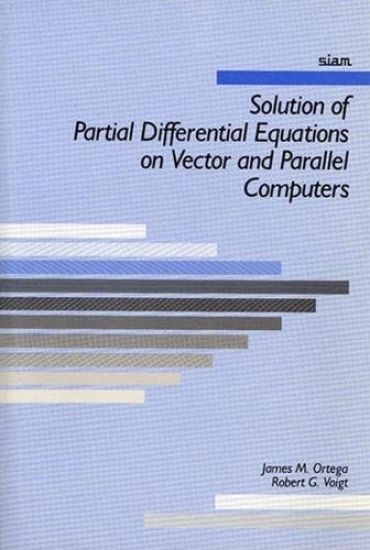
Solution of Partial Differential Equation on Vector and Parallel Computers

Solution of Partial Differential Equation on Vector and Parallel Computers

Ortega

Society for Industrial Applied Mathematics,U.S.
1977
pokkari
This volume reviews, in the context of partial differential equations, algorithm development that has been specifically aimed at computers that exhibit some form of parallelism. Emphasis is on the solution of PDEs because these are typically the problems that generate high computational demands. The authors discuss architectural features of these computers insomuch as they influence algorithm performance, and provide insight into algorithm characteristics that allow effective use of hardware. Both direct and indirect methods are given for elliptic equations as well as explicit and implicit methods for initial boundary-value problems. The intent is to point out attractive methods as well as areas where this class of computer architecture cannot be fully utilized because of either hardware restrictions or the lack of adequate algorithms.
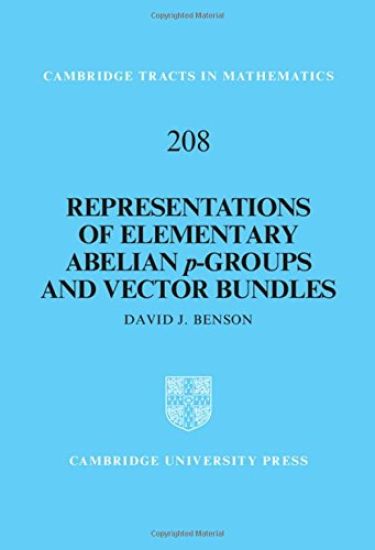
Representations of Elementary Abelian p-Groups and Vector Bundles
Questions about modular representation theory of finite groups can often be reduced to elementary abelian subgroups. This is the first book to offer a detailed study of the representation theory of elementary abelian groups, bringing together information from many papers and journals, as well as unpublished research. Special attention is given to recent work on modules of constant Jordan type, and the methods involve producing and examining vector bundles on projective space and their Chern classes. Extensive background material is provided, which will help the reader to understand vector bundles and their Chern classes from an algebraic point of view, and to apply this to modular representation theory of elementary abelian groups. The final section, addressing problems and directions for future research, will also help to stimulate further developments in the subject. With no similar books on the market, this will be an invaluable resource for graduate students and researchers working in representation theory.
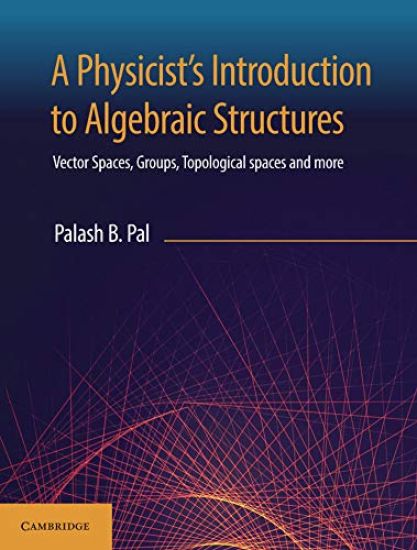
A Physicist's Introduction to Algebraic Structures: Vector Spaces, Groups, Topological Spaces and More
An algebraic structure consists of a set of elements, with some rule of combining them, or some special property of selected subsets of the entire set. Many algebraic structures, such as vector space and group, come to everyday use of a modern physicist. Catering to the needs of graduate students and researchers in the field of mathematical physics and theoretical physics, this comprehensive and valuable text discusses the essential concepts of algebraic structures such as metric space, group, modular numbers, algebraic integers, field, vector space, Boolean algebra, measure space and Lebesgue integral. Important topics including finite and infinite dimensional vector spaces, finite groups and their representations, unitary groups and their representations and representations of the Lorentz group, homotopy and homology of topological spaces are covered extensively. Rich pedagogy includes various problems interspersed throughout the book for better understanding of concepts.
Introduction to Electric Fields: A Vector Analysis Approach

Introduction to Electric Fields: A Vector Analysis Approach

Walter Edwin Rogers

Literary Licensing, LLC
2012
sidottu
""Introduction to Electric Fields: A Vector Analysis Approach"" by Walter Edwin Rogers is a comprehensive guide to understanding electric fields and their properties. The book begins with an introduction to vectors and vector calculus, providing readers with the necessary mathematical background to understand the concepts presented in the rest of the book.The author then explores the fundamental principles of electric fields, including Coulomb's law, electric potential, and electric flux. The book also covers topics such as Gauss's law, electric field lines, and the behavior of conductors and dielectrics in electric fields.Throughout the book, the author uses clear, concise language and numerous examples to help readers understand complex concepts. The book also includes a variety of exercises and problems to help readers test their understanding of the material.Overall, ""Introduction to Electric Fields: A Vector Analysis Approach"" is an excellent resource for students and professionals in the fields of physics, engineering, and mathematics who want to deepen their understanding of electric fields and their applications.McGraw Hill Electrical And Electronic Engineering Series.This scarce antiquarian book is a facsimile reprint of the old original and may contain some imperfections such as library marks and notations. Because we believe this work is culturally important, we have made it available as part of our commitment for protecting, preserving, and promoting the world's literature in affordable, high quality, modern editions, that are true to their original work.