
Kirjahaku
Etsi kirjoja tekijän nimen, kirjan nimen tai ISBN:n perusteella.
1000 tulosta hakusanalla Arjun Subedi
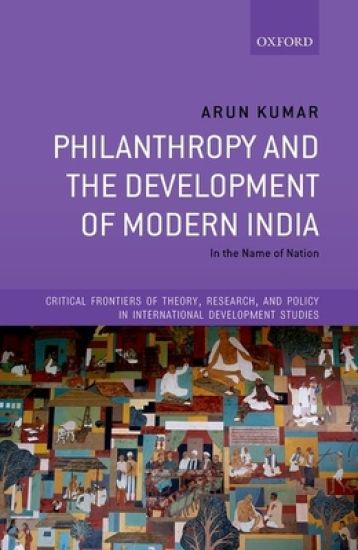
Drawing on the history of the philanthropy of India's economic elites, Arun Kumar discusses how their ideas and understanding of development have shifted and changed over time. Going beyond the more familiar criticisms of development's entanglements with colonialism, Kumar interrogates the changes in development imaginaries in terms of modernity's entanglements with the national question, including anti-colonial nationalism and post-colonial nation-building during the twentieth century. Development, he suggests, can be usefully read and critiqued as national-modern. Philanthropy and the Development of Modern India plots the careers of the national-modern in four main sites of development: civil society, community, science and technology, and selfhood. In an unusual move reading socio-economic nationalist reform from the first half of the twentieth century alongside post-colonial development from the second half, Kumar uncovers the lineages of contemporary development ideas such as self-care, self-reliance, merit, etc. In all this, elites were driven by a 'pedagogic reflex': to teach different sections of Indian society of how to be modern and developed. Contrary to development studies' characterization of elites as anti-development or captors of scarce resources, Kumar shows how elites longed for development for others. Development provided the moral justification, in their calculations, for protecting their commercial interests as they navigated the turbulent Indian twentieth century.

This book re-evaluates the importance of social policies in shaping well-being and combating exclusion, and enhances understanding of how these policies are formed in a globalizing world. It emphasises the context- and path-dependence of patterns and policies of inclusion and exclusion, and provides a framework for supporting social policy making.

Como una sublimaci n de belleza en armon a y una efervescencia de miles de colores, estos versos fluyen en la luminosidad y el c ntico po tico se vuelve un esplendor: simplemente es primavera.

Una nuova edizione in quattro lingue, italiano, greco, albanese, inglese, delle poesie di Arjan Kallco dedicate alla primavera.
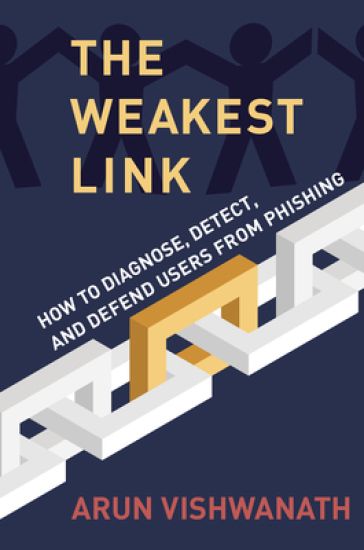
An expert in cybersecurity lays out an evidence-based approach for assessing user cyber risk and achieving organizational cyber resilience. Phishing is the single biggest threat to cybersecurity, persuading even experienced users to click on hyperlinks and attachments in emails that conceal malware. Phishing has been responsible for every major cyber breach, from the infamous Sony hack in 2014 to the 2017 hack of the Democratic National Committee and the more recent Colonial Pipleline breach. The cybersecurity community's response has been intensive user training (often followed by user blaming), which has proven completely ineffective: the hacks keep coming. In The Weakest Link, cybersecurity expert Arun Vishwanath offers a new, evidence-based approach for detecting and defending against phishing--an approach that doesn't rely on continual training and retraining but provides a way to diagnose user vulnerability. Vishwanath explains how organizations can build a culture of cyber safety. He presents a Cyber Risk Survey (CRS) to help managers understand which users are at risk and why. Underlying CRS is the Suspicion, Cognition, Automaticity Model (SCAM), which specifies the user thoughts and actions that lead to either deception by or detection of phishing come-ons. He describes in detail how to implement these frameworks, discussing relevant insights from cognitive and behavioral science, and then presents case studies of organizations that have successfully deployed the CRS to achieve cyber resilience. These range from a growing wealth management company with twenty regional offices to a small Pennsylvania nonprofit with forty-five employees. The Weakest Link will revolutionize the way managers approach cyber security, replacing the current one-size-fits-all methodology with a strategy that targets specific user vulnerabilities.
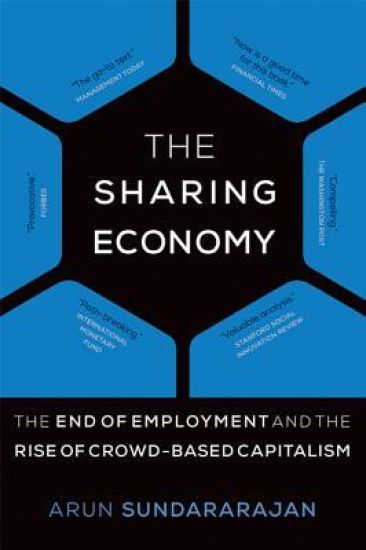
The wide-ranging implications of the shift to a sharing economy, a new model of organizing economic activity that may supplant traditional corporations.Sharing isn't new. Giving someone a ride, having a guest in your spare room, running errands for someone, participating in a supper club-these are not revolutionary concepts. What is new, in the "sharing economy," is that you are not helping a friend for free; you are providing these services to a stranger for money. In this book, Arun Sundararajan, an expert on the sharing economy, explains the transition to what he describes as "crowd-based capitalism"-a new way of organizing economic activity that may supplant the traditional corporate-centered model. As peer-to-peer commercial exchange blurs the lines between the personal and the professional, how will the economy, government regulation, what it means to have a job, and our social fabric be affected?Drawing on extensive research and numerous real-world examples-including Airbnb, Lyft, Uber, Etsy, TaskRabbit, France's BlaBlaCar, China's Didi Kuaidi, and India's Ola, Sundararajan explains the basics of crowd-based capitalism. He describes the intriguing mix of "gift" and "market" in its transactions, demystifies emerging blockchain technologies, and clarifies the dizzying array of emerging on-demand platforms. He considers how this new paradigm changes economic growth and the future of work. Will we live in a world of empowered entrepreneurs who enjoy professional flexibility and independence? Or will we become disenfranchised digital laborers scurrying between platforms in search of the next wedge of piecework? Sundararajan highlights the important policy choices and suggests possible new directions for self-regulatory organizations, labor law, and funding our social safety net.

'What a delight... a fascinating mix of characters whose stories bring to life the Way of Love to which Jesus calls us all.' BISHOP MICHAEL B. CURRY 'A wonderful series of short reflections... easy to read but packed with depth and insight.' PAULA GOODER Martin Luther King famously declared that 'I have decided to stick with love... Hate is too great a burden to bear'. In these luminous daily readings, Arun Arora helps us consider the biblical picture of the Church as the people of God, drawn from every tribe, every tongue and every nation. Themes of racial justice, hospitality and welcome are explored alongside the stories of saints from across the globe. Beginning with reflections from Isaiah and Revelation, the meditations lead us on to consider the missionaries, martyrs and mystics who light our Advent way. 'Beautifully embodies the new community that Jesus both offers and energises.' DAVID WILKINSON 'Like spending an afternoon with Bishop Arun at the pub... brimming with Advent hope.' JAYNE MANFREDI 'Leads us through Advent with [Bishop Arun's] characteristic wisdom and insight.' GILES FRASER 'Gathers the beautifully diverse family of faith around the table... as we prepare for the great feast that is to come.' KATE BOTTLEY
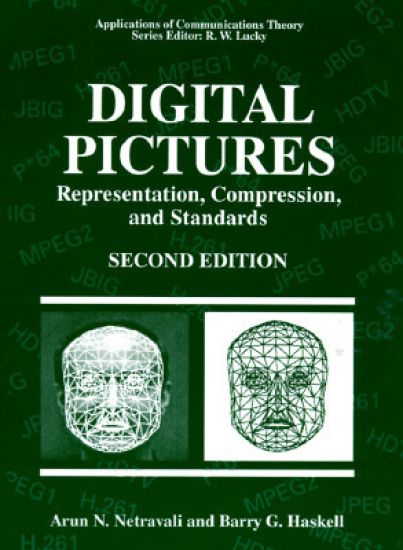
Digital Pictures: Representation, Compression and Standards
Arun N. Netravali; Barry G. Haskell
Kluwer Academic/Plenum Publishers
1995
sidottu
The Second Edition details the established international standards for digital imagery. Chapters discuss standards for the digitalization of bilevel images, color pictures, video conferencing, and television.

This unique and well-researched study takes a systematic look at the incredible rise in the life expectancy of the population of Albania, one of the world's poorest countries. Through a careful analysis of newly available archive documents and statistics, Gjon^D,ca examines the social, economic, and political factors behind the success of improving life expectancy at birth from 51 to 71 years in a relatively short period of time and despite extreme poverty and strict isolationist governmental policies. The research, based on data obtained primarily from the Albanian State Archives, which opened in 1994, attempts to explain why the Albanian pattern of mortality, with very high infant and child mortality and very low adult mortality, is so different from that of other East European countries with similar social and economic conditions. Using many tables, figures, and other data to illustrate the trends, the author concludes that lifestyle factors, and to a lesser extent government policies directed at health care, are the most likely determinants of Albania's successful mortality transition.In his attempt to shed new light on the phenomena of Albania's remarkable success in shifting patterns of mortality, the author compares the changes with those experienced by other similar countries in an effort to determine whether the Albanian success was part of an overall improvement among countries that have good health at low cost or if the Albanian way is a novel route to low mortality in developing countries. To support his conclusion that Albania's success largely depended on lifestyle, he carefully examines the changes in disease and infection, dietary patterns and lifestyle, education and urbanization, fertility levels, and regional differences. By providing a brief but detailed background of the country itself, and its policies and programs to promote lower mortality, Gjon^D,ca offers readers an interesting portrait of the transitions that have taken place in this poorest of countries.
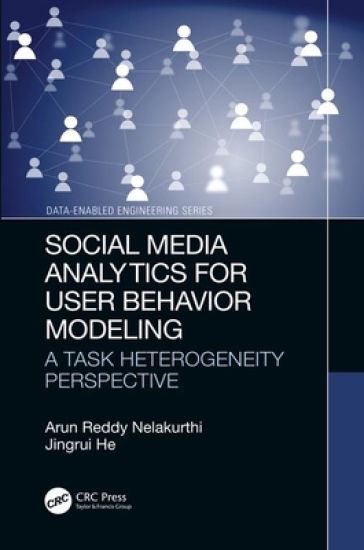
Social Media Analytics for User Behavior Modeling
Arun Reddy Nelakurthi; Jingrui He
CRC Press
2020
sidottu
Winner of the "Outstanding Academic Title" recognition by Choice for the 2020 OAT Awards.The Choice OAT Award represents the highest caliber of scholarly titles that have been reviewed by Choice and conveys the extraordinary recognition of the academic community.In recent years social media has gained significant popularity and has become an essential medium of communication. Such user-generated content provides an excellent scenario for applying the metaphor of mining any information. Transfer learning is a research problem in machine learning that focuses on leveraging the knowledge gained while solving one problem and applying it to a different, but related problem. Features: Offers novel frameworks to study user behavior and for addressing and explaining task heterogeneity Presents a detailed study of existing research Provides convergence and complexity analysis of the frameworks Includes algorithms to implement the proposed research work Covers extensive empirical analysisSocial Media Analytics for User Behavior Modeling: A Task Heterogeneity Perspective is a guide to user behavior modeling in heterogeneous settings and is of great use to the machine learning community.
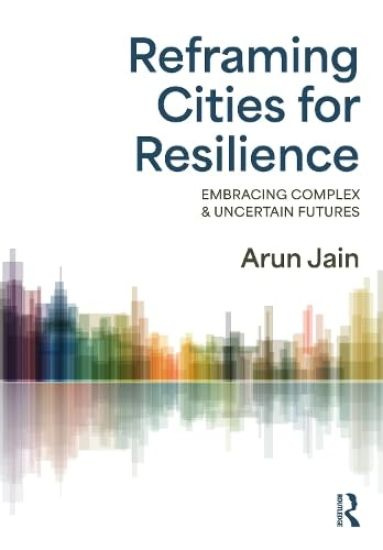
We live in times of profuse change, where hyper connectivity and fast shifting influences are radically changing how we live, consume, work, and play. By challenging the traditional realms in which urban design and planning operate, this book argues that not only must we do better, but that we can. Arun argues that the first step towards adaptive and resilient futures is making a fuller spectrum of the complexity of cities comprehensible to all. Drawing upon diverse disciplines like cultural anthropology, evolutionary biology, economic theory, behavioral sciences, systems thinking, and technology, he provides fresh foundations for addressing decades of physical and social underinvestment and neglect across a range of urban challenges. They include transportation, homelessness, housing affordability, healthcare, the elderly, education, and aspects of economic underinvestment. The need for adaptive governance is also discussed. Arun’s narrative underscores how we must better embrace uncertainty to make our cities vibrant, comfortable, healthy, and inclusive while also being resilient and adaptive. He posits we do not need to predict the future to do this. This book is essential for urban designers, planners, landscape architects, and postgraduate students in these fields. It is also a good primer for anyone wanting to understand the complex dynamics of cities.
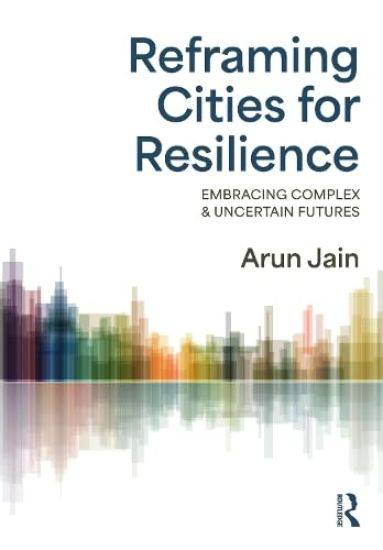
We live in times of profuse change, where hyper connectivity and fast shifting influences are radically changing how we live, consume, work, and play. By challenging the traditional realms in which urban design and planning operate, this book argues that not only must we do better, but that we can. Arun argues that the first step towards adaptive and resilient futures is making a fuller spectrum of the complexity of cities comprehensible to all. Drawing upon diverse disciplines like cultural anthropology, evolutionary biology, economic theory, behavioral sciences, systems thinking, and technology, he provides fresh foundations for addressing decades of physical and social underinvestment and neglect across a range of urban challenges. They include transportation, homelessness, housing affordability, healthcare, the elderly, education, and aspects of economic underinvestment. The need for adaptive governance is also discussed. Arun’s narrative underscores how we must better embrace uncertainty to make our cities vibrant, comfortable, healthy, and inclusive while also being resilient and adaptive. He posits we do not need to predict the future to do this. This book is essential for urban designers, planners, landscape architects, and postgraduate students in these fields. It is also a good primer for anyone wanting to understand the complex dynamics of cities.

Microalgae in Waste Water Remediation aims to point out trends and current topics concerning the use of microalgae in wastewater treatment and to identify potential paths for future research regarding microalgaebased bioremediation. To achieve this goal, the book also assessing and analyzes the topics that attract attention among the scientific community and their evolution through time. This book will be useful to the students, scientists and policy makers concerned with the microalgae mediated management of wastewater effluents and its applications in overall future sustainable development.

Theoretical treatments of fracture mechanics abound in the literature. Among the first books to address this vital topic from an applied standpoint was the first edition of Practical Fracture Mechanics in Design. Completely updated and expanded to reflect recent developments in the field, the second edition of this valuable reference concisely reviews all of the fracture modes and design methodologies needed for control and prevention of structural failures in mechanical components. Practical Fracture Mechanics in Design, Second Edition begins with the historical development of the field, which is critical in understanding the origins and purpose of the various methodologies and equations. The book goes on to provide the fundamentals, basic formulas, elementary worked examples, and references with an emphasis on linear elastic fracture mechanics (LEFM). The author also includes case studies and design problems to clarify the concepts and explain their application. New chapters cover experimental methods in fracture, fracture of composite materials, dynamic fracture, and post mortem analysis of fracture surfaces. Providing much more than a simple introduction to fracture mechanics, this critical, authoritative guide supplies easy-to-use and understand tools based on hands-on experience in design, emphasizing practical applications over heavily theoretical, rigorous mathematical derivations.

The India-Russia relationship has been through a number of phases since its formal establishment in April 1947. Prime Minister Nehru’s strategic vision led him to seek diplomatic relations with the Soviet Union (USSR) even before India attained Independence. The enthusiastic Soviet response launched a relationship which has had some unique features in the past seventy-two years. The detailed history of the India-Russia relationship presented in this volume highlights the continued relevance of many of the factors that led to a close India-Russia bonding, even while identifying the slip roads into which the partnership has occasionally drifted. Politics evolves continuously, but geography remains constant. The India-Russia relationship has a mutually-recognized geopolitical logic. They have common concerns in the shared neighbourhood of West and Central Asia. Like India, Russia has had a complex relationship with China. In the quest for a multi-polar world, in which every pole seeks to protect its core interests and promote its aspirations, Russia and India, as this comprehensive volume notes, will remain staunch partners in the foreseeable future. Please note: Taylor & Francis does not sell or distribute the Hardback in India, Pakistan, Nepal, Bhutan, Bangladesh and Sri Lanka

The purpose of this book is to provide a complete working knowledge of the Complementary Metal-Oxide Semiconductor (CMOS) analog and mixed-signal circuit design, which can be applied for System on Chip (SOC) or Application-Specific Standard Product (ASSP) development. It begins with an introduction to the CMOS analog and mixed-signal circuit design with further coverage of basic devices, such as the Metal-Oxide Semiconductor Field-Effect Transistor (MOSFET) with both long- and short-channel operations, photo devices, fitting ratio, etc. Seven chapters focus on the CMOS analog and mixed-signal circuit design of amplifiers, low power amplifiers, voltage regulator-reference, data converters, dynamic analog circuits, color and image sensors, and peripheral (oscillators and Input/Output [I/O]) circuits, and Integrated Circuit (IC) layout and packaging.Features:Provides practical knowledge of CMOS analog and mixed-signal circuit designIncludes recent research in CMOS color and image sensor technologyDiscusses sub-blocks of typical analog and mixed-signal IC productsIllustrates several design examples of analog circuits together with layoutDescribes integrating based CMOS color circuit
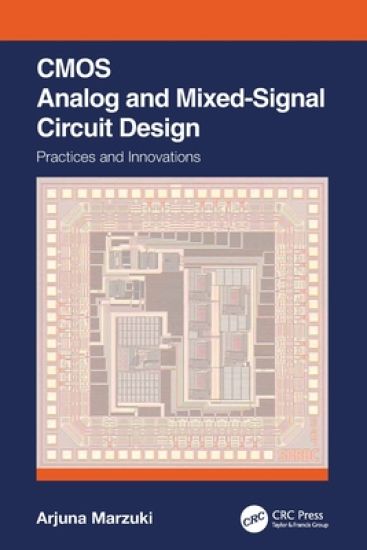
The purpose of this book is to provide a complete working knowledge of the Complementary Metal-Oxide Semiconductor (CMOS) analog and mixed-signal circuit design, which can be applied for System on Chip (SOC) or Application-Specific Standard Product (ASSP) development. It begins with an introduction to the CMOS analog and mixed-signal circuit design with further coverage of basic devices, such as the Metal-Oxide Semiconductor Field-Effect Transistor (MOSFET) with both long- and short-channel operations, photo devices, fitting ratio, etc. Seven chapters focus on the CMOS analog and mixed-signal circuit design of amplifiers, low power amplifiers, voltage regulator-reference, data converters, dynamic analog circuits, color and image sensors, and peripheral (oscillators and Input/Output [I/O]) circuits, and Integrated Circuit (IC) layout and packaging.Features:Provides practical knowledge of CMOS analog and mixed-signal circuit designIncludes recent research in CMOS color and image sensor technologyDiscusses sub-blocks of typical analog and mixed-signal IC productsIllustrates several design examples of analog circuits together with layoutDescribes integrating based CMOS color circuit