Kirjahaku
Etsi kirjoja tekijän nimen, kirjan nimen tai ISBN:n perusteella.
1000 tulosta hakusanalla C.j. Driver





"The professional schools will resume their professional responsibilities just to the degree that they can discover a science of design, a body of intellectually tough, partly formalizable, partly empirical teachable doctrine about the design process. " [H.A. Simon, 1968} Design is aimed at the transformation or translation of a specification or high level description into a description in terms of some real-world primitives. As such it involves the removal of the uncertainty about the way in which a required system can be realized. To optimally support the design of systems, we must look at the design process as a whole and at the strong relationship that exists between a designer, the applied design method, the required design tools and the ways in which designs can be expressed. This book focuses on that relationship. The application field we are concerned with is the design of systems in which the communication between system elements is a major design feature. Examples of such communicating systems are: communication protocols, telephone exchange control systems, process control systems, highly modular systems, embedded software, interactive systems, and VLSI systems. In summary, we are concerned with systems in which concurrency plays a major role (concurrency defines the mutual relationship between the activities in the different parts of a system or within a collection of systems).







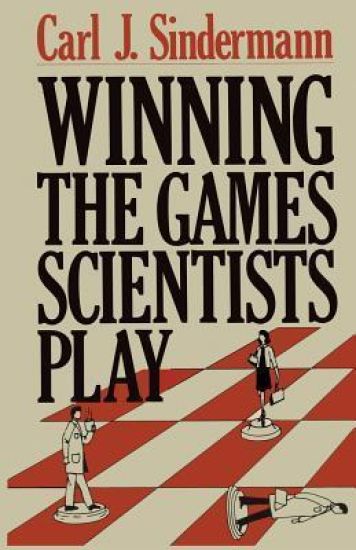
The interpersonal strategies that surround the act of doing good science--hereafter referred to as scientific game play ing-have received some published attention, and many of the game rules are almost axiomatic among successful prac titioners of science. There is a need, however, to review pe riodically what we know and what we think we know about the art, and to add new insights that become available. This book is a response to that need; it has been written for science practitioners and grandstanders of the 1980s, drawing on in Sights and perceptions gained from victories and defeats of the 1970s. It seems especially important that the strategies and rules of scientific game playing be reviewed critically as we move into the decade of the 1980s, since many of those rules have changed during the 1970s--in fact each recent decade has seen significant changes. The 1950s were expansionist, when sci entific jobs were relatively easy to find, when faculties were expanding, when students were plentiful, and when federal grants were readily available. The 1960s began as a period of stabilization, and then became one of unrest and reexami nation of purpose. The climate was still good; students were v vi PREFACE still abundant, but there was less growth in faculty size, and federal grants reached a plateau. In the 1970s the student population started to decline, and federal funding for research began to dry up.