Kirjojen hintavertailu. Mukana 12 016 292 kirjaa ja 12 kauppaa.

Kirjahaku

Etsi kirjoja tekijän nimen, kirjan nimen tai ISBN:n perusteella.

1000 tulosta hakusanalla Carlo Gozzi

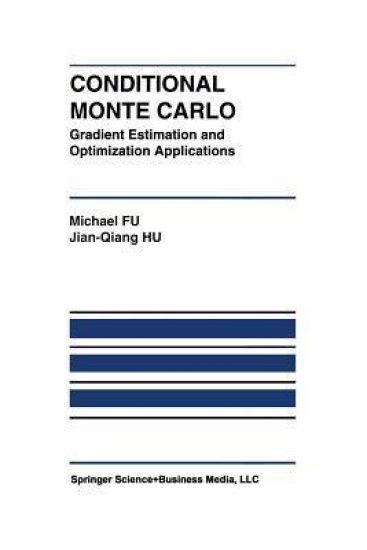
Conditional Monte Carlo

Conditional Monte Carlo

Michael C. Fu

Springer-Verlag New York Inc.
2012
nidottu
Conditional Monte Carlo: Gradient Estimation and Optimization Applications deals with various gradient estimation techniques of perturbation analysis based on the use of conditional expectation. The primary setting is discrete-event stochastic simulation. This book presents applications to queueing and inventory, and to other diverse areas such as financial derivatives, pricing and statistical quality control. To researchers already in the area, this book offers a unified perspective and adequately summarizes the state of the art. To researchers new to the area, this book offers a more systematic and accessible means of understanding the techniques without having to scour through the immense literature and learn a new set of notation with each paper. To practitioners, this book provides a number of diverse application areas that makes the intuition accessible without having to fully commit to understanding all the theoretical niceties. In sum, the objectives of this monograph are two-fold: to bring together many of the interesting developments in perturbation analysis based on conditioning under a more unified framework, and to illustrate the diversity of applications to which these techniques can be applied. Conditional Monte Carlo: Gradient Estimation and Optimization Applications is suitable as a secondary text for graduate level courses on stochastic simulations, and as a reference for researchers and practitioners in industry.
Essentials of Monte Carlo Simulation

Essentials of Monte Carlo Simulation

Nick T. Thomopoulos

Springer-Verlag New York Inc.
2012
sidottu
Essentials of Monte Carlo Simulation focuses on the fundamentals of Monte Carlo methods using basic computer simulation techniques. The theories presented in this text deal with systems that are too complex to solve analytically. As a result, readers are given a system of interest and constructs using computer code, as well as algorithmic models to emulate how the system works internally. After the models are run several times, in a random sample way, the data for each output variable(s) of interest is analyzed by ordinary statistical methods. This book features 11 comprehensive chapters, and discusses such key topics as random number generators, multivariate random variates, and continuous random variates. Over 100 numerical examples are presented as part of the appendix to illustrate useful real world applications. The text also contains an easy to read presentation with minimal use of difficult mathematical concepts. Very little has been published in the area of computer Monte Carlo simulation methods, and this book will appeal to students and researchers in the fields of Mathematics and Statistics.
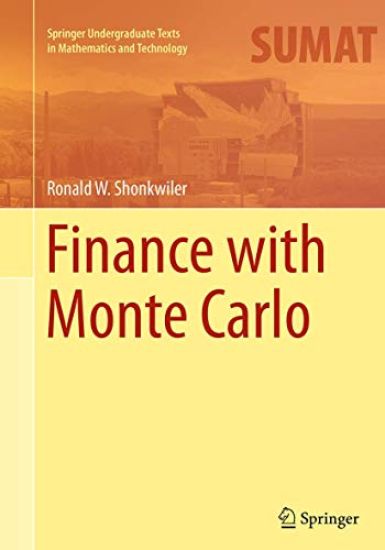
Finance with Monte Carlo

Finance with Monte Carlo

Ronald W. Shonkwiler

Springer-Verlag New York Inc.
2013
sidottu
This text introduces upper division undergraduate/beginning graduate students in mathematics, finance, or economics, to the core topics of a beginning course in finance/financial engineering. Particular emphasis is placed on exploiting the power of the Monte Carlo method to illustrate and explore financial principles. Monte Carlo is the uniquely appropriate tool for modeling the random factors that drive financial markets and simulating their implications.The Monte Carlo method is introduced early and it is used in conjunction with the geometric Brownian motion model (GBM) to illustrate and analyze the topics covered in the remainder of the text. Placing focus on Monte Carlo methods allows for students to travel a short road from theory to practical applications. Coverage includes investment science, mean-variance portfolio theory, option pricing principles, exotic options, option trading strategies, jump diffusion and exponential Lévy alternative models, and the Kelly criterion for maximizing investment growth.Novel features:inclusion of both portfolio theory and contingent claim analysis in a single textpricing methodology for exotic optionsexpectation analysis of option trading strategiespricing models that transcend the Black–Scholes frameworkoptimizing investment allocationsconcepts thoroughly explored through numerous simulation exercisesnumerous worked examples and illustrationsThe mathematical background required is a year and one-half course in calculus, matrix algebra covering solutions of linear systems, and a knowledge of probability including expectation, densities and the normal distribution. A refresher for these topics is presented in the Appendices. The programming background needed is how to code branching, loops and subroutines in some mathematical or general purpose language. The mathematical background required is a year and one-half course in calculus, matrix algebra covering solutions of linear systems, and a knowledge of probability including expectation, densities and the normal distribution. A refresher for these topics is presented in the Appendices. The programming background needed is how to code branching, loops and subroutines in some mathematical or general purpose language. Also by the author: (with F. Mendivil) Explorations in Monte Carlo, ©2009, ISBN: 978-0-387-87836-2; (with J. Herod) Mathematical Biology: An Introduction with Maple and Matlab, Second edition, ©2009, ISBN: 978-0-387-70983-3.
Making Monte Carlo: A History of Speculation and Spectacle
"A brisk historical tour of the marketing and selling of the small principality of Monaco and its famous city...A well-researched, dramatic rags-to-riches urban tale" (Kirkus Reviews) of Monte Carlo's rise from small principality to prosperous resort town of the 1920s. Monte Carlo has long been known as a dazzling playground for the rich and famous. The "vivid, entertaining" (The Wall Street Journal) Making Monte Carlo traces a narrative history of the world's first modern casino-resort, from the legalization of gambling in Monaco in 1855--passed as a desperate bid to stave off bankruptcy--through the resort's improbable emergence as a glamorous gambling destination of to its decline in the wake of WWI and its subsequent reinvention in the 1920s until the inaugural Monaco Grand Prix in 1929, on the eve of the Wall Street crash that would largely spell the end of the freewheeling era. Along the way, we encounter a colorful cast of characters, including Francois Blanc (a professional gambler and cheat and eventual founder of Monte Carlo); Basil Zaharoff (notorious munitions dealer and probable secret owner of the casino for some years in the 1920s); Elsa Maxwell (hired as the casino's publicist in the late 1920s); R n L on (a visionary Jewish businessman with murky origins); Serge Diaghilev, Jean Cocteau, Coco Chanel, Pablo Picasso, and other satellite members of the Ballet Russes dance company; as well as Gerald and Sara Murphy and other American expats, such as Ernest Hemingway and F. Scott Fitzgerald. "An engrossing examination of how politics, personality, and publicity coalesced to transform a sleepy village into a luxurious playground populated with casinos and beautiful people" (Publishers Weekly), Making Monte Carlo is a classic rags-to-riches tale set in the most scenic of European settings.
Mayhem in Monte Carlo

Mayhem in Monte Carlo

Michael Christopher Ferrier

Createspace Independent Publishing Platform
2013
nidottu
What do a Mexican beauty, a Scottish chauffeur, a British aristocrat, a Russian agent (and his Russian servant), a Monaco art dealer, a Russian oil baron, an Italian used car salesman and a French fisherman have in common ? They are all involved in an intertwined plot to rig art auctions, smuggle cocaine, and a convoluted attempt to open a new ethnic restaurant - all of which go spectacularly wrong and create "Mayhem in Monte Carlo". The plot roams from the moors of the Highlands as the lonely chauffeur tries to help his 'lady' to sell her Rolls Royce in Monaco, to the auction houses of Europe where the 'Lady' joins an art ring determined to bump the price of worthless Italian 'kitsch'. Meanwhile, Paz - the Mexican model from book one in the Trilogy, ("The little brown diamond") is lured to Monaco by her former Russian lover to open that Mexican eatery. It is a love that goes very sour as the cocaine snorting Russian slowly loses grip on reality - cocaine, by the way, that his boss is smuggling into Britain in the spare wheel of that Rolls Royce. The smuggling plot unravels and the Russian Oil Baron has to add murder to his many nefarious occupations. And the body is dumped at sea by the accommodating French fisherman. This unceremonious dumping is where the plot starts and where the novel ends. In between enjoy watching the characters get on each others nerves, cheat on each other and try and involve the palace. The author, a veteran international advertising man, knows how to keep the action going, make the reading easy and the characters amusing when they aren't being grisly and sinister. "It's a good read, fast paced and funny," says a Dutch reviewer. "Even though the twists and turns can drive you dizzy from time to time " We doubt you will get dizzy. But you will enjoy the ride
Explorations in Monte Carlo Methods

Explorations in Monte Carlo Methods

Ronald W. Shonkwiler; Franklin Mendivil

Springer-Verlag New York Inc.
2014
nidottu
Monte Carlo methods are among the most used and useful computational tools available today, providing efficient and practical algorithims to solve a wide range of scientific and engineering problems. Explorations in Monte Carlo Methods provides a hands-on approach to learning this subject. Each new idea is carefully motivated by a realistic problem, thus leading from questions to theory via examples and numerical simulations. Programming exercises are integrated throughout the text as the primary vehicle for learning the material. Each chapter ends with a large collection of problems illustrating and directing the material. This book is suitable as a textbook for students of engineering and the sciences, as well as mathematics. The problem-oriented approach makes it ideal for an applied course in basic probability and for a more specialized course in Monte Carlo methods. Topics include probability distributions, counting combinatorial objects, simulated annealing, genetic algorithms, option pricing, gamblers ruin, statistical mechanics, sampling, and random number generation.
Essentials of Monte Carlo Simulation

Essentials of Monte Carlo Simulation

Nick T. Thomopoulos

Springer-Verlag New York Inc.
2015
nidottu
Essentials of Monte Carlo Simulation focuses on the fundamentals of Monte Carlo methods using basic computer simulation techniques. The theories presented in this text deal with systems that are too complex to solve analytically. As a result, readers are given a system of interest and constructs using computer code, as well as algorithmic models to emulate how the system works internally. After the models are run several times, in a random sample way, the data for each output variable(s) of interest is analyzed by ordinary statistical methods. This book features 11 comprehensive chapters, and discusses such key topics as random number generators, multivariate random variates, and continuous random variates. Over 100 numerical examples are presented as part of the appendix to illustrate useful real world applications. The text also contains an easy to read presentation with minimal use of difficult mathematical concepts. Very little has been published in the area of computer Monte Carlo simulation methods, and this book will appeal to students and researchers in the fields of Mathematics and Statistics.
Finance with Monte Carlo

Finance with Monte Carlo

Ronald W. Shonkwiler

Springer-Verlag New York Inc.
2016
nidottu
This text introduces upper division undergraduate/beginning graduate students in mathematics, finance, or economics, to the core topics of a beginning course in finance/financial engineering. Particular emphasis is placed on exploiting the power of the Monte Carlo method to illustrate and explore financial principles. Monte Carlo is the uniquely appropriate tool for modeling the random factors that drive financial markets and simulating their implications.The Monte Carlo method is introduced early and it is used in conjunction with the geometric Brownian motion model (GBM) to illustrate and analyze the topics covered in the remainder of the text. Placing focus on Monte Carlo methods allows for students to travel a short road from theory to practical applications. Coverage includes investment science, mean-variance portfolio theory, option pricing principles, exotic options, option trading strategies, jump diffusion and exponential Lévy alternative models, and the Kelly criterion for maximizing investment growth.Novel features:inclusion of both portfolio theory and contingent claim analysis in a single textpricing methodology for exotic optionsexpectation analysis of option trading strategiespricing models that transcend the Black–Scholes frameworkoptimizing investment allocationsconcepts thoroughly explored through numerous simulation exercisesnumerous worked examples and illustrationsThe mathematical background required is a year and one-half course in calculus, matrix algebra covering solutions of linear systems, and a knowledge of probability including expectation, densities and the normal distribution. A refresher for these topics is presented in the Appendices. The programming background needed is how to code branching, loops and subroutines in some mathematical or general purpose language. The mathematical background required is a year and one-half course in calculus, matrix algebra covering solutions of linear systems, and a knowledge of probability including expectation, densities and the normal distribution. A refresher for these topics is presented in the Appendices. The programming background needed is how to code branching, loops and subroutines in some mathematical or general purpose language. Also by the author: (with F. Mendivil) Explorations in Monte Carlo, ©2009, ISBN: 978-0-387-87836-2; (with J. Herod) Mathematical Biology: An Introduction with Maple and Matlab, Second edition, ©2009, ISBN: 978-0-387-70983-3.
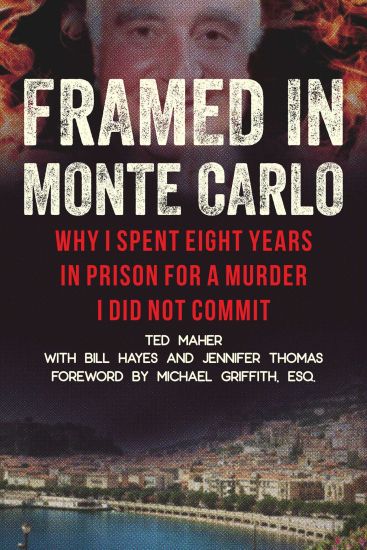
Framed in Monte Carlo

Framed in Monte Carlo

Ted Maher; Bill Hayes; Jennifer Thomas; Michael Griffith

Skyhorse Publishing
2021
sidottu
As featured on 60 Minutes, Dateline, Inside Edition, and 48 Hours, the shocking true story of banker Edmond Safra's death and the man wrongfully convicted and imprisoned for the crime. When billionaire banker Edmond Safra died in the ashes of Monaco’s La Belle Époque building on December 3, 1999, the event made international headlines—for many reasons. One, of course, was the sheer wealth of the Lebanese mogul and his formidable presence in the international banking world. But the more seductive reason for the worldwide attention was the strange and intriguing way Safra died—ensconced within the armored walls of his vigilantly secured residence in the “safest city in the world.” At 4:45 in the morning, a firestorm gutted Safra’s opulent Monte Carlo penthouse, trapping—and killing—Safra and one of his nurses, Vivian Torrente. When the fire was ruled arson, a fast finger was pointed at the only other nurse present: former Green Beret Ted Maher. The true, bizarre circumstances that led to Safra’s death and to the subsequent imprisonment of Ted Maher are contained within the pages of Framed in Monte Carlo: How I Was Wrongfully Convicted for a Billionaire’s Fiery Death. The story features a play-by-play of that deadly night, as well as Ted’s sham of a trial that put him behind bars for seven years and eight months. Brutal betrayals, harrowing kidnappings, prison breaks straight out of The Great Escape, and more pepper the pages of Framed in Monte Carlo. Ted was freed when the judge from his trial came forward with a stunning revelation. But his life was never the same. And since his return to American soil, he’s continued to unearth more and more disturbing details about his ordeal. Armed with fresh facts, a greater understanding of the players, and a wider lens of perspective, Ted now reveals all, including his never-before-released findings that seek to answer the lingering big question: Who did kill Edmond Safra? The powerful famous names legitimately put forth by the author will shock you.