"Could it be that Wallace Stevens and Gertrude Stein met in Elysium and had a son named Geoffrey Nutter?"-John Yau Bearing the visionary inheritance of ancient Chinese poets and early twentieth-century painters, Geoffrey Nutter casts a penetrating light into the colorfully shifting landscape of modern existence. Christopher Sunset reinvigorates the architecture of society's captive and captivating imaginations. Geoffrey Nutter is the author of Water's Leaves & Other Poems (Verse Press) and A Summer Evening (Center for Literary Publishing). His poems have been widely anthologized, including in the Best American Poetry series. He lives in Manhattan with his family.
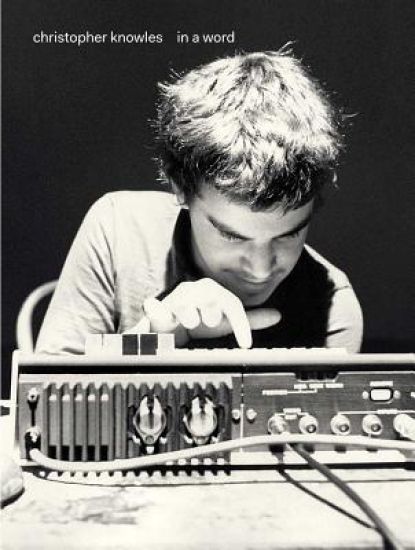
The artistic career of Christopher Knowles (born 1959) began at the age of 13, when his writings and recordings came to the notice of avant-garde theater director Robert Wilson. Still a teenager, Knowles went on to write the libretto for Wilson and Philip Glass’ opera Einstein on the Beach, and his collaborations with Wilson would continue for decades. His practice spans many mediums—text, sound, painting, sculpture and performance—and exhibits a fascination with the materiality of language. In a Word is the most comprehensive look at Knowles’ work to date, published for his exhibition of the same name, organized by Anthony Elms and Hilton Als. Containing an autobiographical text by the artist himself, new texts by Elms and curator Lauren Digiulio and a personal reflection by Als, this is an essential resource on an under-recognized artist.
Discovering a new continent, he changed the map of the earth and the course of civilization... Few men in history have changed the world as Christopher Columbus did when he sailed into the perilous and vast Atlantic Ocean. While seeking the island of Cipango and the mainland of Cathay, Columbus discovered so much more, changing the course of American history. Through extraordinary persistence and courage, Columbus discovered a new world, a continent that would ultimately change the lives of many. Despite the renowned link to his name, Columbus remains an elusive and mysterious man. Dr. Mario di Giovanni, with passionate and clear words, reveals the story of Christopher Columbus. Following his Admiral on four voyages across the Ocean Sea, di Giovanni marks the events that the recount the exploits and legacy of the best sailor in the world.
As Christopher explores his gift with carpentry and how it connects to construction, children are introduced to purposeful careers with repetition, sight words, and vivid illustrations of characters who come to life on the pages The Children's Gift Series targets early level readers, ages 5 - 7, and can serve as read-aloud books for daycare ages. The series features 10 books that will help children explore their gifts and how they connect with a variety of careers.
As Christopher explores his gift with carpentry and how it connects to construction, children are introduced to purposeful careers with repetition, sight words, vivid illustrations of characters who come to life on the pages Embark on an exciting literary journey with The Children Gift Series, a captivating 10-books series designed to be the perfect companion for young readers. Each book incorporates repetition, relatability, and proven learning strategies, while fostering engagement and empowerment for children discovering the joy of readings.
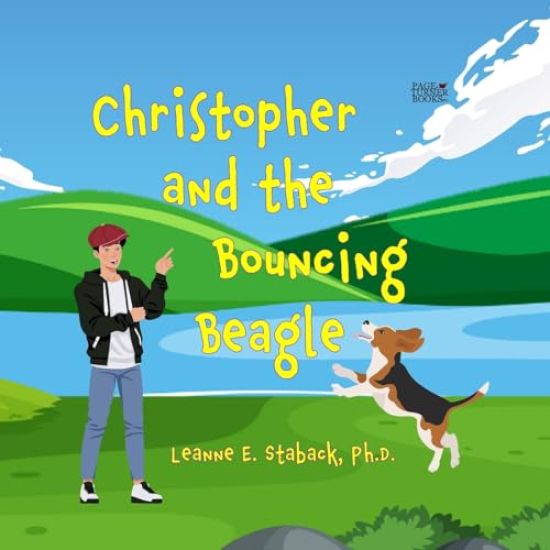
This delightful story about Christopher and his playful beagle, Britainy, is full of funny antics as Christopher teaches Britainy to bounce around the park and catch a ball. The townsfolk are joyfully entertained by their silly and loving friendship
This delightful story about Christopher and his playful beagle, Britainy, is full of funny antics as Christopher teaches Britainy to bounce around the park and catch a ball. The townsfolk are joyfully entertained by their silly and loving friendship
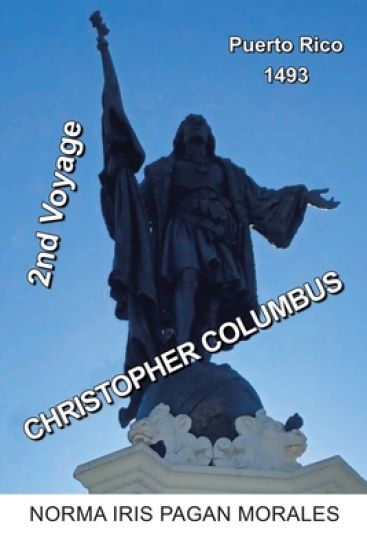
Christopher Columbus, the explorer credited with the European discovery of Puerto Rico.Juan Ponce de Le n, Santerv s de Campos, Valladolid, Spain, was the first governor of Puerto Rico. His grandson Juan Ponce de LeonII was the first indigenous governor of Puerto Rico.On September 24, 1493, Christopher Columbus set sail on his second voyage with 17 ships and 1,200 to 1,500 soldiers from C diz.On November 19, 1493, he landed on the island, naming it San Juan Bautista in honor of Saint John the Baptist. The first Europeancolony, Caparra, was founded on August 8, 1508, by Juan Ponce de Le n, a lieutenant under Columbus, who was greeted by the Ta noCacique Ag eyban and who later became the first governor of the island.Ponce de Leon was actively involved in the Higuey massacre of 1503 in Hispaniola, present-day Dominican Republic.Norma Iris Pagan Morales was born in Ponce, Puerto Rico. She comes from a very lovable family. Her parents, Juan Jose Pagan Rodriguez, and Digna Morales Figueroa, now deceased, always helped her with her projects as awriter and teaching career. Norma had three siblings, Adelin Milagros Pagan Morales, Juan Jose Pagan Morales, and Julio Manuel Pagan Morales. Julio Manuel Pagan Morales died on September 19, 1998, and Adelin MilagrosPagan Morales died on February 17, 2023.Norma did all her academic studies in New York City, Puerto Rico, and Canada. She worked in the City of New York Police Department. As an Educator, she worked in New York City Bd. of Education as an English Teacher, in Puerto Rico Bd. of Education as an English teacher and in the Puerto Rico Army National.Norma has published eleven books: Proud of My Puerto Rican Bequest, Porque Soy Boricua? Poemas del Alma, Art in Written Form, A Baffl ing Short Stories Collection, On Job in the Big Apple, Puerto Rican SoldiersServing with Pride, Nature's Rage in the Caribbean, Boricua de Pura Cepa, You are the One and The Unfaithfuls.
If artists are no longer able to fall back on the explanatory power of familiar grand narratives, or to lift up, within a story's scope, any single perspective as the key to reality, how can literature make good sense of life? What possibilities still await realistic fiction, given that earlier conventions of realism are widely received, today, as contrived, overdone, and insupportable? While walking the skeptic's tightrope, fiction writers must still find ways to recover the enduring virtues of fiction-to create sympathy between character and reader so as to truthfully render common human experience against the fragmentations of a postmodern world. Faced with the inherent limitations of fictional technique-and an audience trained to be hyper-conscious and even cynical in the face of those limitations-novelist Christopher Beha nevertheless finds ways to re-enliven the aesthetic quest to represent real life in an amorphous age. The consequential weight of free will and the restless longing for transcendence do not dissolve into lost illusions; instead, they turn out to be as demonstrably present to Beha's characters as the smooth pane of a window or the polished handle of a car door. As Beha's novels achieve an outward turn, freeing characters from solipsistic self-focus, they also move toward locales and liturgies widely supposed to be empty of any metaphysical reality-only to find these empty places uncannily occupied.
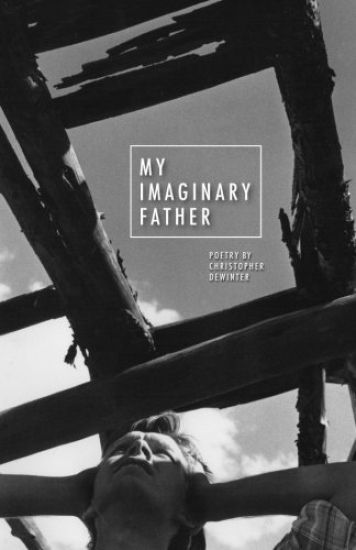
Most of these poems come from conversations I've had with "God". They're meant to reveal my relationship with this character through various philosophical adventures. There are also a few works here, that may represent other people's relationships to Him. Despite my belief that the Imagined One is gender-neutral, I tend to think of it as "The Father," hence my books title.
Christopher Crowfield pseudonym for Harriet Beecher Stowe]. Harriet Elisabeth Beecher Stowe ( June 14, 1811 - July 1, 1896) was an American abolitionist and author. She came from the Beecher family, a famous religious family, and is best known for her novel Uncle Tom's Cabin (1852), which depicts the harsh conditions for enslaved African Americans. The book reached millions as a novel and play, and became influential in the United States and Great Britain, energizing anti-slavery forces in the American North, while provoking widespread anger in the South. Stowe wrote 30 books, including novels, three travel memoirs, and collections of articles and letters. She was influential for both her writings and her public stances on social issues of the day. Life and work: Harriet Elisabeth Beecher was born in Litchfield, Connecticut, on June 14, 1811. She was the seventh of 13 children born to outspoken Calvinist preacher Lyman Beecher and Roxana (Foote), a deeply religious woman who died when Stowe was only five years old. Roxana's maternal grandfather was General Andrew Ward of the Revolutionary War. Her notable siblings included a sister, Catharine Beecher, who became an educator and author, as well as brothers who became ministers: including Henry Ward Beecher, who became a famous preacher and abolitionist, Charles Beecher, and Edward Beecher. Harriet enrolled in the Hartford Female Seminary run by her older sister Catharine, where she received a traditional academic education usually reserved for males at the time with a focus in the classics, including studies of languages and mathematics. Among her classmates was Sarah P. Willis, who later wrote under the pseudonym Fanny Fern. In 1832, at the age of 21, Harriet Beecher moved to Cincinnati, Ohio to join her father, who had become the president of Lane Theological Seminary. There, she also joined the Semi-Colon Club, a literary salon and social club whose members included the Beecher sisters, Caroline Lee Hentz, Salmon P. Chase (future governor of the state and Secretary of Treasury under President Lincoln), Emily Blackwell and others. Cincinnati's trade and shipping business on the Ohio River was booming, drawing numerous migrants from different parts of the country, including many free blacks, as well as Irish immigrants who worked on the state's canals and railroads. Areas of the city had been wrecked in the Cincinnati riots of 1829, when ethnic Irish attacked blacks, trying to push competitors out of the city. Beecher met a number of African Americans who had suffered in those attacks, and their experience contributed to her later writing about slavery. Riots took place again in 1836 and 1841, driven also by native-born anti-abolitionists. It was in the literary club that she met Calvin Ellis Stowe, a widower who was a professor at the seminary. The two married on January 6, 1836. He was an ardent critic of slavery, and the Stowes supported the Underground Railroad, temporarily housing several fugitive slaves in their home. Most slaves continued north to secure freedom in Canada. The Stowes had seven children together, including twin daughters.............
Christopher Houston Carson (December 24, 1809 - May 23, 1868), better known as Kit Carson, was an American frontiersman. He was a mountain man (fur trapper), wilderness guide, Indian agent, and U.S. Army officer. Carson became a frontier legend in his own lifetime via biographies and news articles. Exaggerated versions of his exploits were the subject of dime novels. Carson left home in rural present-day Missouri at age 16 to become a mountain man and trapper in the West. In the 1830s, he accompanied Ewing Young on an expedition to Mexican California and joined fur trapping expeditions into the Rocky Mountains. He lived among and married into the Arapaho and Cheyenne tribes. In the 1840s, he was hired as a guide by John C. Fremont. Fremont's expedition covered much of California, Oregon, and the Great Basin area. Fremont mapped and wrote reports and commentaries on the Oregon Trail to assist and encourage westward-bound American pioneers. Carson achieved national fame through Fremont's accounts of his expeditions. Under Fremont's command, Carson participated in the uprising against Mexican rule in California at the beginning of the Mexican-American War. Later in the war, Carson was a scout and courier, celebrated for his rescue mission after the Battle of San Pasqual and for his coast-to-coast journey from California to Washington, DC to deliver news of the conflict in California to the U.S. government. In the 1850s, he was appointed as the Indian agent to the Ute Indians and the Jicarilla Apaches. During the American Civil War, Carson led a regiment of mostly Hispanic volunteers from New Mexico on the side of the Union at the Battle of Valverde in 1862. When the Confederate threat to New Mexico was eliminated, Carson led forces to suppress the Navajo, Mescalero Apache, and the Kiowa and Comanche Indians. Carson was breveted a Brigadier General and took command of Fort Garland, Colorado. He was there only briefly: poor health forced him to retire from military life. Carson was married three times and had ten children. The Carson home was in Taos, New Mexico. Carson died at Fort Lyon, Colorado, of an aortic aneurysm on May 23, 1868. He is buried in Taos, New Mexico, next to his third wife Josefa Jaramillo.............. Elizabeth Eleanor Greatorex (1854-1917) was an American painter and illustrator.... John Stevens Cabot Abbott (September 19, 1805 - June 17, 1877), an American historian, pastor, and pedagogical writer, was born in Brunswick, Maine to Jacob and Betsey Abbott. Early life: He was a brother of Jacob Abbott, and was associated with him in the management of Abbott's Institute, New York City, and in the preparation of his series of brief historical biographies. Dr. Abbott graduated at Bowdoin College in 1825, prepared for the ministry at Andover Theological Seminary, and between 1830 and 1844, when he retired from the ministry in the Congregational Church, preached successively at Worcester, Roxbury and Nantucket, all in Massachusetts. Literary career: Owing to the success of a little work, The Mother at Home, he devoted himself, from 1844 onwards, to literature. He was a voluminous writer of books on Christian ethics, and of popular histories, which were credited with cultivating a popular interest in history. He is best known as the author of the widely popular History of Napoleon Bonaparte (1855), in which the various elements and episodes in Napoleon's career are described. Abbott takes a very favourable view towards his subject throughout. Also among his principal works are: History of the Civil War in America (1863-1866), and The History of Frederick II, Called Frederick the Great (New York, 1871). He also did a forward to a book called Life of Boone by W.M. Bogart, about Daniel Boone in 1876. In general, except that he did not write juvenile fiction, his work in subject and style closely resembles that of his brother, Jacob Abbott....
CHRISTOPHER Name Tracing Workbook - Preschoolers Kindergarten Practice Workbook - Toddlers Writing Notebook - Learn How to Write CHRISTOPHER - Preschoolers Activities Teaching your child the basics of writing is a difficult task especially if he or she is full of energy and finds it more difficult to focus. In order to give him a push in the first years of school or kindergartner, we are presenting a revolutionary way of teaching your baby the basics of the alphabet: the name tracing workbook for children. Why our workbook? The name tracing workbook has been designed specifically to teach children the basic of spelling and writing. By learning to write his own name, your child will develop the abilities and skills needed in the first years of schools while having fun. The 100 pages activity book is the perfect choice if you are searching to invest in your child's education from the beginning so don't hesitate and get him the only workbook he needs LEARNING THE FIRST LETTERS teaching your toddler the first letters and how to spell his or her name is difficult, which is why we have designed a special workbook that will make the learning process easier and a lot more fun, adding to the baby's educational fund. PERSONALIZED WORKING: the name is the first word any child should learn how to spell, but it is almost impossible to find special help for that task. CHRISTOPHER Name Tracing Workbook is divided in 12 themed chapters that will teach your toddler how to spell his or her name in a fun and interactive way. WHAT IT CONTAINS: CHRISTOPHER Name Tracing Workbook counts no less than 100 pages divided in 12 themed sheets that propose recognition activities, letter tracing practice and letter games, that are sure to teach your child the basics of writing and spelling. FOR TODDLERS: CHRISTOPHER Name Tracing Workbook is made especially for children aged 3 to 6 so your son or daughter will be well prepared for both kindergarten and first grade Learning the alphabet will be a piece of cake if your kid will already have the foundation letter tracing so why not give him a head start in school. THE PERFECT GIFT: offering a present to a toddler that is both fun and parents-approved is an almost impossible task, but the name tracing workbook has it all: it is educational, personalized and made especially for youngsters ages 3 to 6 so, if you're trying to bring a smile on a kid's face, this is it
Sara Ware Bassett was a prolific American author of fiction and nonfiction. Her novels primarily deal with New England characters, and most of them are set in two fictional Cape Cod villages she created, Belleport and Wilton.



![The chimney-corner. By: Christopher Crowfield, [pseudonym for Harriet Beecher Stowe].: Novel (World's classic's)](/covers/9781977860927.jpg)