
Kirjahaku
Etsi kirjoja tekijän nimen, kirjan nimen tai ISBN:n perusteella.
1000 tulosta hakusanalla Conrad Mbewe
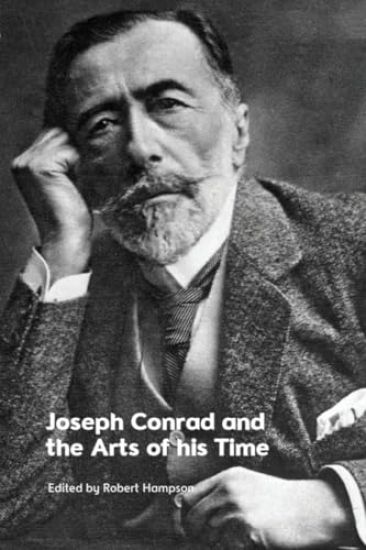
Joseph Conrad and the Arts of his Time
EDINBURGH UNIVERSITY PRESS
2026
sidottu
This volume is the product of new research on Conrad’s engagement with the arts during his lifetime. Beginning with nineteenth-century Polish landscape painting and Polish theatre, the essays move through music and the performing arts during Conrad’s time in Marseilles; the opera Conrad encountered in Australia; and Conrad’s later-life knowledge of recent and contemporary classical music. Subsequent essays demonstrate his familiarity with contemporary visual art (particularly through his friendships with various artists in London); his interest in dance; and his active involvement in contemporary theatre and screen-writing. The volume concludes with a discussion of Conrad’s art as a novelist and playwright, his ‘theatrical imagination’, in relation to developments in theatre theory of the time.
Joseph Conrad and the Narration of Silence investigates how Conrad’s narrators speak without speaking, focusing first on what is unsayable and then on what is unsaid. Silences (both literal and metaphorical) occur throughout Conrad’s writings, and all connect in a meaningful manner to the speech of Conrad’s narrators. Readers have frequently commended Conrad’s distinct narrative style. These commentaries on narrative have made many valuable contributions. However, this book considers what happens when Conrad’s narrators do not narrate – when they are instead silent. In these gaps between what is said and what is unsaid, meaning may emerge. In short, the absence of speaking brings about meaningful moments of narrative memory when one discovers what cannot be contained within the narrator’s narrative alone: An incremental progression toward questions concerning the nature of knowledge, the nature of human existence, and the nature of the universe.
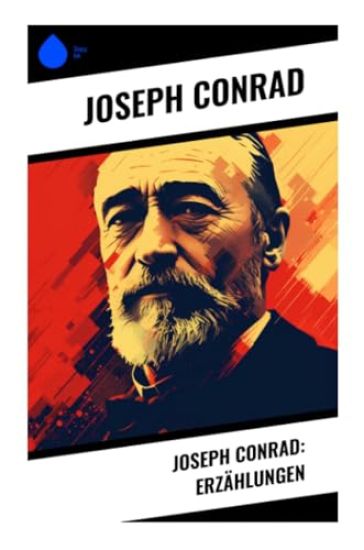
Joseph Conrad: Erzählungen
Sharp Ink
2023
pokkari
Joseph Conrad
BRILL
2004
nidottu
Joseph Conrad: The Short Fiction offers a wide range of perspectives on Conrad’s short stories. Nine essays, by established and emerging scholars, deal with early and classic stories as well as the relatively neglected works of Conrad’s later career. The essays explore in depth the historical and publishing contexts of individual stories and provide insights into Conrad’s practice as a writer of short fiction. These new readings, based on contemporary theoretical and interpretive perspectives, will appeal not only to specialists of literary Modernism but also to the advanced student and the general reader.
This is the second of the projected eight-volume edition comprising all the surviving letters of Joseph Conrad. Once completed the edition will have assembled over 3,500 letters, one third of them as yet unpublished and many others only published before in inaccurate versions. The period covered by this volume, 1898–1902, was one of considerable achievement and anxiety for Conrad. The birth of his first child, the death of Stephen Crane, the murder of a friend's son, an encounter with an early X-ray machine, imperial wars in Cuba and South Africa - these events forced Conrad to face the problems of identity in terms of family, nation, history, and the cosmic order. This is also the period of 'Youth', 'Amy Foster', 'Typhoon', Lord Jim, and 'Heart of Darkness'. Often funny, always thoughtful, full of verbal energy even in the toils of severe depression, the letters in Volume Two present Conrad at a crucial though vulnerable moment of his life and literary career.
Joseph Conrad 1882-1982
Bond Research
1982
nidottu
Joseph Conrad and the Intersection of Narrative, Epistemology, and Cosmology
John G. Peters
TAYLOR FRANCIS LTD
2026
sidottu
This volume presents a comprehensive collection of critical essays on Joseph Conrad's works, developed over three decades of scholarly engagement. While addressing diverse aspects of Conrad's oeuvre, these studies are unified by a consistent methodological approach and thematic focus that distinguishes this collection from existing scholarship. Methodologically, this work employs an inductive hermeneutical framework that diverges from predominantly deductive approaches in contemporary literary criticism. Rather than imposing predetermined theoretical constructs, these analyses proceed from close examination of specific textual elements to derive broader interpretive conclusions, allowing for more nuanced readings of Conrad's complex narrative strategies. Thematically, the essays concentrate on three interconnected dimensions: narrative methodology, worldview, and epistemological concerns—elements constituting the foundational architecture of Conrad's fictional universe. The collection demonstrates how these aspects function as an integrated system of meaning-making within his works. The volume includes a substantial introduction elucidating the relationship between epistemology, cosmology, and narratology in Conrad's fiction. This framework reveals how Conrad's understanding of human knowledge's nature and limits finds expression through his distinctive narrative techniques, while his cosmological vision manifests in fundamental questions of what can and cannot be known within the Conradian cosmos.
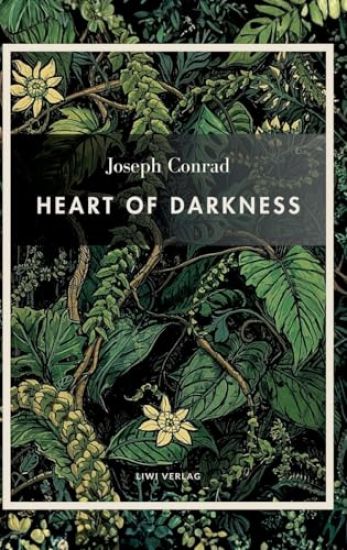
Joseph Conrad: Heart of Darkness (English Edition): The legendary novella that inspired Apocalypse Now
Joseph Conrad
Liwi Literatur- Und Wissenschaftsverlag
2026
sidottu
Heart of Darkness traces a voyage upriver into the depths of empire-and into the depths of the human soul. Recognized among the Modern Library's 100 greatest English-language novels of the twentieth century, Conrad's masterpiece recounts Charles Marlow's search for Kurtz, a gifted agent whose brilliance has curdled into tyranny. In the oppressive stillness of the Congo, ideals of progress collapse, and the boundary between civilization and savagery dissolves. The novella's haunting power would echo through the twentieth century, most famously in its influence on Francis Ford Coppola's Apocalypse Now. This is the English-language hardcover edition of the novel. Heart of Darkness. First published in: Blackwood's Magazine, United Kingdom 1899. First published in book form in: Youth, a Narrative; and Two Other Stories, William Blackwood and Sons, 1902. The text of this edition follows the text of the 1902 book publication. Includes a photograph of the Belgian riverboat commanded by Joseph Conrad on the Upper Congo in 1889. Neuausgabe, 1. Auflage, G ttingen 2026.

William Conrad
VDM Publishing House
2010
nidottu
Observera att förlaget som ger ut denna produkt baserar innehållet i sina produkter på fria källor som Wikipedia. Boken är med stor sannolikhet endast ett utdrag ur dessa informationskällor, alltså inte en vanlig bok i den bemärkelsen.

Hermes Conrad
OmniScriptum
2026
pokkari

Tom Conrad
OmniScriptum
2026
pokkari

Joseph Conrad (Ship)
OmniScriptum
2026
pokkari

Kevin Conrad
OmniScriptum
2026
pokkari
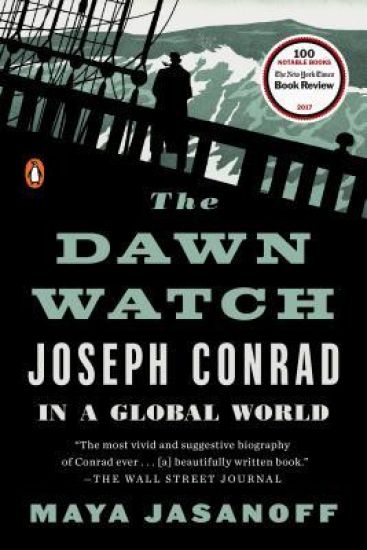
"Enlightening, compassionate, superb" --John Le Carr Winner of the 2018 Cundill History Prize A New York Times Book Review Notable Book of 2017One of the New York Times 100 Notable Books of 2017A visionary exploration of the life and times of Joseph Conrad, his turbulent age of globalization and our own, from one of the most exciting young historians writing today Migration, terrorism, the tensions between global capitalism and nationalism, and a communications revolution: these forces shaped Joseph Conrad's destiny at the dawn of the twentieth century. In this brilliant new interpretation of one of the great voices in modern literature, Maya Jasanoff reveals Conrad as a prophet of globalization. As an immigrant from Poland to England, and in travels from Malaya to Congo to the Caribbean, Conrad navigated an interconnected world, and captured it in a literary oeuvre of extraordinary depth. His life story delivers a history of globalization from the inside out, and reflects powerfully on the aspirations and challenges of the modern world. Joseph Conrad was born J zef Teodor Konrad Korzeniowski in 1857, to Polish parents in the Russian Empire. At sixteen he left the landlocked heart of Europe to become a sailor, and for the next twenty years travelled the world's oceans before settling permanently in England as an author. He saw the surging, competitive "new imperialism" that planted a flag in almost every populated part of the globe. He got a close look, too, at the places "beyond the end of telegraph cables and mail-boat lines," and the hypocrisy of the west's most cherished ideals. In a compelling blend of history, biography, and travelogue, Maya Jasanoff follows Conrad's routes and the stories of his four greatest works--The Secret Agent, Lord Jim, Heart of Darkness, and Nostromo. Genre-bending, intellectually thrilling, and deeply humane, The Dawn Watch embarks on a spell-binding expedition into the dark heart of Conrad's world--and through it to our own.

Best known as the author of Heart of Darkness (1899), Joseph Conrad (1857-1924) is one of the most widely taught writers in English. His mastery of the English language is especially notable, for he was born in a Ukrainian area of Poland under Czarist Russian rule and began a sea career in France. He joined the British merchant fleet, and his travels took him to European imperial outposts throughout Asia, South America, and Africa. To pass the monotonous time on land between journeys, he began to write fiction in English. Never quite at home anywhere, he spoke a thickly accented mix of English, Polish, and French. He sometimes posed as a flirtatious Frenchman, a fallen Polish nobleman, and an English country squire and man of letters. Like many writers, his works reflect his experiences. Interest in his writings has become especially strong, in light of their relationship to marginality and postcolonialism.As a reference book, this volume is a comprehensive guide to Conrad's troubled life and enduring literary legacy. An opening biographical chapter tells the story of his difficulties, adventures, and achievements. It also summarizes the current state of biographical research on Conrad and provides a useful context for approaching his works. The chapter that follows builds on the biography by discussing the importance of Conrad's letters to our understanding of his life and writings. Additional chapters examine each of his major works, while others address clusters of his later novels, his short fiction, and his essays and memoirs. Each chapter is written by an expert contributor and offers a combination of summary and original scholarship. Thus the volume provides important biographical, bibliographical, and contextual information to those readers new to Conrad, while it simultaneously gives experienced readers a wealth of fresh critical perspectives.
Joseph Conrad (1857-1924) is widely considered one the great modern writers in English literature. This 21-volume set contains titles, originally published between 1976 and 1990 as well as a biography from 1957 written by one of his closest friends. The first 18 books are a set of concordances and indexes to Conrad’s printed works, which were part of a project directed by Todd K. Bender at the University of Wisconsin-Madison, USA and are among the first attempts to use the power of computers to enhance our reading environment and assist in lexicography, scholarly editing, and literary analysis. The set also contains a meticulously compiled bibliography of writings on Joseph Conrad, as well as an original and powerful analysis of his major work.
A Concordance to Conrad's Lord Jim
James W. Parins; Robert J. Dilligan; Todd K. Bender
Routledge
2020
sidottu
Originally published in 1976, this publication falls into three parts: The Verbal Index, The Word Frequency Table, and The Field of Reference. A scholar interested in the full range of connotation for the word heart in Conrad would look first to the word frequency table to see how often the word in question occurs in Lord Jim. If the word is indeed part of the vocabulary of the novel, he then would turn to its alphabetical listing in the verbal index and the line numbers in which it appears. Then turning to the field of reference, he could locate the lines cited and look at each occurrence of the word in context.The authors feel that the data provided by these tables is of basic importance to both the editor and the literary critic.
A Concordance to Conrad's Lord Jim
James W. Parins; Robert J. Dilligan; Todd K. Bender
TAYLOR FRANCIS LTD
2022
nidottu
Originally published in 1976, this publication falls into three parts: The Verbal Index, The Word Frequency Table, and The Field of Reference. A scholar interested in the full range of connotation for the word heart in Conrad would look first to the word frequency table to see how often the word in question occurs in Lord Jim. If the word is indeed part of the vocabulary of the novel, he then would turn to its alphabetical listing in the verbal index and the line numbers in which it appears. Then turning to the field of reference, he could locate the lines cited and look at each occurrence of the word in context.The authors feel that the data provided by these tables is of basic importance to both the editor and the literary critic.