Kirjojen hintavertailu. Mukana 12 376 504 kirjaa ja 12 kauppaa.

Kirjahaku

Etsi kirjoja tekijän nimen, kirjan nimen tai ISBN:n perusteella.

1000 tulosta hakusanalla Constance Sayers

Narrative, Identity, and the Map of Cultural Policy

Narrative, Identity, and the Map of Cultural Policy

Constance DeVereaux; Martin Griffin

CRC Press Inc
2017
nidottu
The story of arts and cultural policy in the twenty-first century is inherently of global concern no matter how local it seems. At the same time, questions of identity have in many ways become more challenging than before. Narrative, Identity, and the Map of Cultural Policy: Once Upon a Time in a Globalized World explores how and why stories and identities sometimes merge and often clash in an arena in which culture and policy may not be able to resolve every difficulty. DeVereaux and Griffin argue that the role of narrative is key to understanding these issues. They offer a wide-ranging history and justification for narrative frameworks as an approach to cultural policy and open up a wider field of discussion about the ways in which cultural politics and cultural identity are being deployed and interpreted in the present, with deep roots in the past. This timely book will be of great interest not just to students of narrative and students of arts and cultural policy, but also to administrators, policy theorists, and cultural management practitioners.

Brotherhood In Rhythm

Brotherhood In Rhythm

Constance Valis Hill

Cooper Square Publishers Inc.,U.S.
2002
pokkari
Tap dancing legends Fayard (b. 1914) and Harold (1918-2000) Nicholas amazed crowds with their performances in musicals and films from the 30s to the 80s. They performed with Gene Kelly in The Pirate, with Cab Calloway in Stormy Weather, with Dorothy Dandridge (Harold's wife) in Sun Valley Serenade, and with a number of other stars on the stage and on the screen. Author Hill not only guides readers through the brothers' showstopping successes and the repressive times in which their dancing won them universal acclaim, she also offers extensive insight into the history and choreography of tap dancing, bringing readers up to speed on the art form in which the Nicholas Brothers excelled.
The Future of an Illusion

The Future of an Illusion

Constance Penley

University of Minnesota Press
1989
nidottu
The Future of an Illusion was first published in 1989. Minnesota Archive Editions uses digital technology to make long-unavailable books once again accessible, and are published unaltered from the original University of Minnesota Press editions.The Future of an Illusion documents the pivotal role Constance Penley has played in the development of feminist film theory. Penley analyzes the primary movements that have shaped the field: the conjunction of feminism, film theory, and psychoanalysis, and the inherent debates surrounding the politics of women and representation. These debates center on the position of women in the classical Hollywood narrative, the construction of the spectator's desire in pornography and eroticism, and the implicitly male bias in psychoanalytically oriented film theory. Essential to anyone studying the sexual policies of representation, The Future of an Illusion ranges from avant-garde films to video, popular cinema, television, literature, and critical and cultural theory.Constance Penley is associate professor of English and film studies at the University of Rochester. A co-editor of the journal Camera Obscura,she is the editor of Feminism and Film Theory.
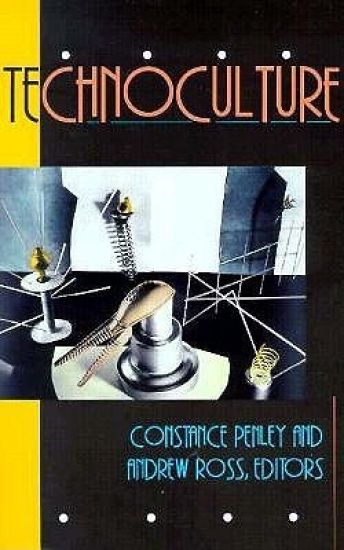
Technoculture

Technoculture

Constance Penley

University of Minnesota Press
1991
nidottu
Wary, on the one hand, of the disempowering habit of viewing technology as a satanic mill of domination, and weary, on the other, of postmodernist celebrations of the technologically sublime, Constance Penley and Andrew Ross have compiled a group of provocative case studies by contributors whose critical knowledge provides a realistic assessment of the politics currently at stake in those cultural practices touched by advanced technology. The groups examined here range from high-tech office workers, "Star Trek" fans, and Japanese technoporn producers, to teenage hackers, AIDS activists, rap groups, and rock stars. Each has something to tell us about both the production and the management of repressive technocultures and about the politics of creative appropriation. But above all, "Technoculture" suggests some new and timely possibilities for the encouragement of technoliteracy - a crucial requirement not just for postmodern survival but also for the decolonization, demonopolization and democratization of social communication. Constance Penley teaches English and Film Studies at the University of Rochester. Andrew Ross teaches English at Princeton University.
Male Trouble

Male Trouble

Constance Penley

University of Minnesota Press
1993
nidottu
The contributors provide a thought-provoking, comprehensive study of masculinity in American culture today.Contributors: Parveen Adams, Ian Balfour, Ray Barrie, Sabrina Barton, Steven Cohan, Rey Chow, Alexander Doty, Henry Jenkins III, Lynne Kirby, Constance Penley, Kaja Silverman, Sasha Torres, and Sharon Willis.
Immaterial Transcendences

Immaterial Transcendences

Constance G. Janiga-Perkins

Peter Lang Publishing Inc
2001
sidottu
Brazil's "Letter" of discovery, "Carta a El Rei D. Manuel" (1500) by Pero Vaz de Caminha, continues to merit critical analysis. This book considers the Carta as a journey beyond the boundaries of conventional consciousness into a jungle or outback. "Immaterial Transcendences" details how the writing in the "Carta" carries on the process of colonial subjectivity by examining the function of stutters in the discourse. Lifting the masks of whiteness and Amerindianness (Otherness) in the text, it traces the agony of presence and active resistance of the Other as process (Othering), giving critical consideration of the "Carta" a completely new focus.
Lobbying For Higher Education

Lobbying For Higher Education

Constance Ewing Cook

Vanderbilt University Press
1998
nidottu
Historically, many faculty and administrators in higher education have regarded themselves as above the fray--part of the national interest, not a special interest--and considered lobbying a dirty business unworthy of their lofty enterprise. Now that academia no longer enjoys all the respect and good will that federal policy makers once afforded it, that attitude has changed. The Republican sweep of the 1994 Congressional elections served as a wake-up call for the higher education community. In response, it made a spirited effort to gain attention for its own policy preferences.Lobbying for Higher Education is about how the major higher education associations and the constituent American colleges and universities try to influence federal policy, especially congressional policy. In clear prose Cook explains how the higher education community organizes itself in Washington, how it lobbies, and how its major interest groups are perceived both by their own members and by public officials. The book focuses on the crucial development in 1995-1996 of a new lobbying paradigm, which included the greater use of campus-based resources and ad hoc coalitions. The most engrossing part of its story is higher education's creative response to the policy turmoil and disruption of the status quo that resulted from the shift in congressional party control.The author, Constance Cook, uses sources unique to this project: over 1,500 survey responses from college and university presidents (a 62% return rate) and nearly 150 interviews with institutional and association leaders. Fortuitously, the 1994 electoral upheaval provided her with an opportunity to capture, analyze, and interpret the responses of her subjects in a period of unusually sweeping change.Lobbying for Higher Education is a timely book with an interesting and important story at its core.
How to Slay

How to Slay

Constance C. R. White; Valerie Steele

Rizzoli International Publications
2018
sidottu
One of the few surveys of Black style and fashion ever published, How to Slay offers a lavishly illustrated overview of African American style through the twentieth century, focusing on the last thirty-five years. Through striking images of some of the most celebrated icons of Black style and taste, from Josephine Baker, Michelle Obama, Maya Angelou, and Miles Davis to Rihanna, Naomi Campbell, Kanye West, and Pharrell Williams, this book explores the cultural underpinnings of Black trends that have become so influential in mainstream popular culture and a bedrock of fashion vernacular today. A preponderance of Black musicians, who for decades have inspired trends and transformed global fashion, are featured and discussed, while a diverse array of topics are touched upon and examined hats, hair, divas, the importance of attitude, the use of colour, 60s style, the influence of Africa and the Caribbean, and the beauty of black skin.
The Health Care Provider's Guide to Facing the Malpractice Deposition
An anesthesiologist chips a patient's tooth during a difficult intubation. A surgeon leaves tiny abrasions on a patient's abdomen during a delicate surgical procedure. And an operating room nurse accidentally nips a patient's finger with a pair of scissors. Not all of these examples of medical mistakes will result in malpractice suits. But for the ones that do, health care providers must invariably come to grips with facing the most important step in defending a medical malpractice lawsuit - the deposition phase. Whether or not a malpractice case ends in settlement or at trial, depositions are the most important pieces of evidence because a witness' performance during this phase is literally carved in stone, and facts elicited from depositions often play a major role throughout the remainder of the litigation. The Health Care Providers Guide To Facing The Malpractice Deposition can provide anyone in the health care industry with the tools necessary to come out of a malpractice deposition unscathed or with as few bruises as possible. This exhaustive book includes excerpts from actual depositions, and addresses topics such as law and legal thinking, the standard of care, preparing for the deposition, and common forms of interrogation. While this text will not protect health care providers from malpractice litigation or prevent pricey settlements and judgments, it can help prevent medical personnel from becoming self-damaging witnesses and their own worst enemies.
Philosophy in the Sixteenth and Seventeenth Centuries

Philosophy in the Sixteenth and Seventeenth Centuries

Constance Blackwell; Sachiko Kusukawa

Variorum
1999
sidottu
This volume offers an important re-evaluation of early modern philosophy. It takes issue with the received notion of a ’revolution’ in philosophical thought in the 17th-century, making the case for treating the 16th and 17th centuries together. Taking up Charles Schmitt’s formulation of the many ’Aristotelianisms’ of the period, the papers bring out the variety and richness of the approaches to Aristotle, rather than treating his as a homogeneous system of thought. Based on much new research, they provide case studies of how philosophers used, developed, and reacted to the framework of Aristotelian logic, categories and distinctions, and demonstrate that Aristotelianism possessed both the flexibility and the dynamism to exert a continuing impact - even among such noted ’anti-Aristotelians’ as Descartes and Hobbes. This constant engagement can indeed be termed ’conversations with Aristotle’.
NASA/TREK

NASA/TREK

Constance Penley

Verso Books
1997
nidottu
This wry and highly readable investigation of the role of space travel in popular imagination looks at the way NASA has openly borrowed from the TV show Star Trek to reinforce its public standing. It also celebrates the work of a group of the show's fans who rewrite its storylines in porno-romance fanzines. Constance Penley advocates that scientific experimentation be accompanied by social and sexual experimentation, and devoted to exploring inner as well as outer space.
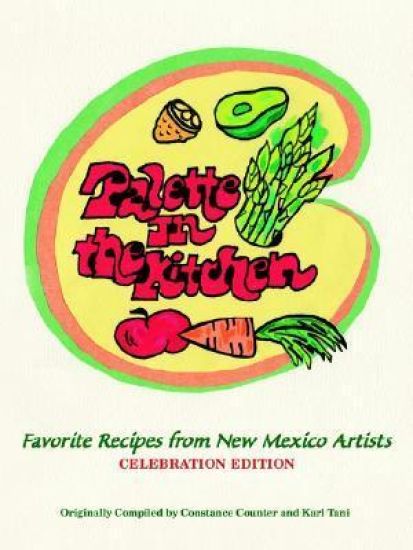
Palette in the Kitchen

Palette in the Kitchen

Constance Counter

Sunstone Press
2003
pokkari
Santa Fe, New Mexico--a wonderful art center--was much smaller in 1974 when the original edition of PALETTE IN THE KITCHEN was published, and most of the artists knew each other. This led to a lot of parties: parties after gallery openings, parties to plan exhibitions, and parties to plan parties. Looking back on all this--and the photographs from that time--conjures up cartoon mental images of cars careening around Santa Fe, and up and down the road to Taos; car-filled artists, a bottle or two of wine, and huge casseroles of main dishes, and plates of desserts. Of course, there were the times when everyone showed up with a pasta dish, or everyone brought a dessert. But most of the time there was a wonderful array of creative cooking from their special recipes.And here they are again, to remind us of that wonderful time.Now, sadly, too many of the artists who contributed to the original edition are gone; some at young ages and some at the end of long productive lives. The late Constance Counter who, along with Karl Tani, put together the first edition of PALETTE IN THE KITCHEN, loved a party, loved to cook, loved a good time, and a good story. Constance asked artists for their favorite recipes, and asked others for dishes they had invented. Some artists gave recipes discovered on their travels, and others contributed recipes from their heritage; and all the artist added their own inventiveness.This Celebration Edition is in memory of Constance Counter and the other artists in this book who are no longer with us. And it is in memory of a smaller, more village-like Santa Fe that is no more. Although times have changed, artists are still taking their creative skills to the kitchen--usually with wonderful, if not surprising, results.
Adolescent Sexuality

Adolescent Sexuality

Constance H Shapiro; Paula Allen-Meares

Routledge Member of the Taylor and Francis Group
1989
sidottu
Here is an invaluable resource to help professionals understand the broad range of issues and challenges that adolescents face as they grapple with their sexuality. This highly informative volume addresses the most compelling issues of adolescent sexuality. Sexual orientation, acquaintance rape, new social roles, and sexually transmitted diseases are among the numerous topics that social workers confront daily in helping adolescents define and seek solutions to their sex-related concerns. Adolescent Sexuality highlights the importance of innovative approaches and client empowerment in prevention and treatment programs for youth, particularly in this era of declining federal support. This timely volume reveals the reluctance of adolescents to confide in their families; therefore, experts offer valuable suggestions for social workers to strengthen and use community resources--the church, family planning agencies, schools, and support groups--to supplement the efforts of many families.
Teaching Grammar in Context

Teaching Grammar in Context

Constance Weaver

Boynton/Cook Publishers Inc US
1996
nidottu
More than fifteen years ago, Constance Weaver's "Grammar for Teachers" (NCTE, 1979) broke new ground by responding to widespread concern about the place of grammar in the curriculum. Suggesting that teachers need to know key aspects of grammar in order to teach writing more effectively, Weaver also argued that students need to be guided in learning and applying grammatical concepts as they revise and edit their writing. Attention to sentence structure and mechanics during the process of writing would result in better products. With "Teaching Grammar in Context," Weaver extends her philosophy by offering teachers a rationale and practical ideas for teaching grammar not in isolation but in the context of writing. She begins by introducing some common meanings of "grammar" and provides a historical overview of traditional reasons for teaching grammar as a school subject. After examining those reasons, she questions them, citing decades of research which suggests that grammar taught in isolation has little, if any, effect on most students' writing. To lay the groundwork for a more effective approach, Weaver considers how preschoolers learn the basic structures of their native language and how second-language grammar is acquired. She goes on to suggest a research-based perspective on the concept of error and on the writing "errors" our students make, concluding with practical alternatives to what Lois Rosen has dubbed "the error hunt." Equally useful is Weaver's examination of the aspects of grammar on which we might focus as we guide our students in writing and revising sentences and in editing selected pieces. Her final chapter addresses the teaching of grammar from the perspective of learning theory. The appendix includes numerous sample lessons from Weaver's own teaching, illustrating the five broad topics suggested in the text: teaching concepts of subject, verb, clause, sentence, and related editing concepts teaching style through sentence combining and generating teaching sentence sense and style through manipulation of syntactic elements teaching the power of dialects and dialects of power teaching punctuation and mechanics for convention, clarity, and style. "Teaching Grammar in Context" fills a long-standing gap in the literature on teaching writing. It will prove invaluable to all practicing and preservice teachers, especially those at the middle and high school levels, where grammar is taught most intensively.
Careers for Students of History

Careers for Students of History

Constance Shulz; Page Putnam Miller; Aaron Marrs

American Historical Association
2002
nidottu
This pamphlet demonstrates the range of jobs in which you might enter the historical profession as an ongoing career. You can apply your history degree in a variety of workplaces and under a variety of job titles, including educator, researcher, writer, editor, information manager, advocate, businessperson, or simply as a history professional.
Diabetes Guide to Enjoying Foods of the World

Diabetes Guide to Enjoying Foods of the World

Constance Brown-Riggs; Jessica Jones

American Dietetic Association,U.S.
2018
nidottu
In this convenient guide, people with diabetes will find a welcome resource to help them enjoy all the flavors of the world while still following a healthy meal plan. Whether learning to choose better options from familiar ethnic cuisines, or branching out to try new dishes, this guide provides information on native foods and flavors, strategies for healthy eating, recommended healthful pleasures, dishes for special occasions (or smaller portions), and carbohydrate counts for popular dishes for 11 popular ethnic cuisines. Help your clients learn to quickly identify the best choices for their meal plan, whether preparing ethnic foods at home, eating in restaurants, or traveling abroad.